Bangladesh Defense
Saif
Senior Member
- Jan 24, 2024
- 21,435
- 9,743
- Nation

- Residence
- Axis Group

The Financial Express | First Financial Daily of Bangladesh
Get latest stock share market news, financial news, economy news, politics news, breaking news, Bangladesh economy news at The Financial Express.
BPDB still clueless about Rooppur N power plant tariff as test run begins
M Azizur Rahman
Published :
Jun 17, 2026 09:53
Updated :
Jun 17, 2026 09:53
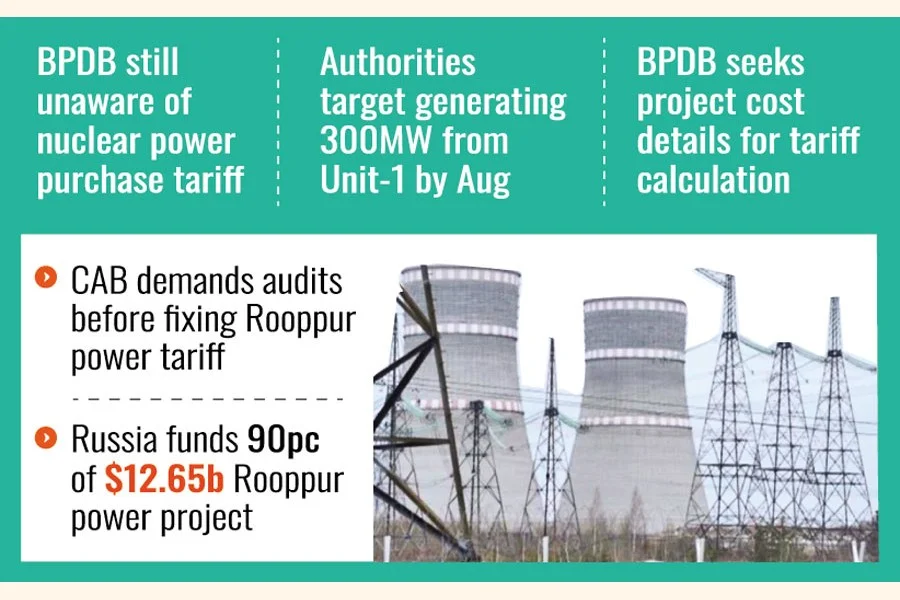
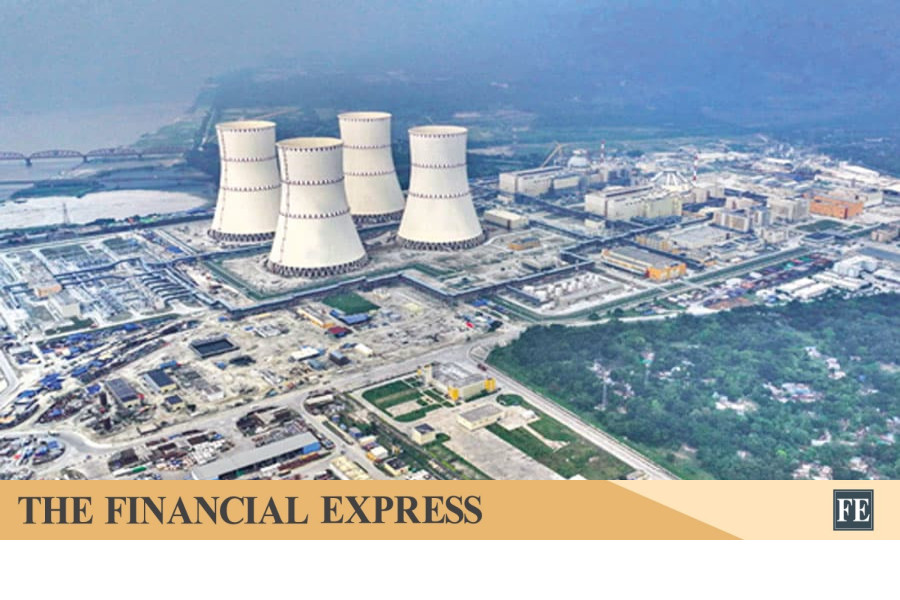
The lone buyer of electricity from the Rooppur Nuclear Power Plant (RNPP) is still unaware of the tariff it will have to pay for purchasing power from the country's first nuclear power facility.
"I don't have any information about how much the tariff of the RNPP will be," Chairman of the state-run Bangladesh Power Development Board (BPDB), Md Rezaul Karim, told The Financial Express (FE) on Tuesday.
The BPDB will be the sole purchaser of electricity generated by the Rooppur plant and will subsequently sell the power to different state-owned distribution companies.
Although the RNPP tariff has yet to be fixed and the overall costs remain undisclosed, authorities have started test operations of the plant after completing fuel loading on May 13.
The authorities aim to generate around 300 MW of electricity from Unit-1 of the RNPP by August.
"Despite repeated letters and queries to the Rooppur power plant authorities, we are yet to receive any information regarding the total project cost, operation and maintenance (O&M) expenses and other related costs, if any," the BPDB chairman alleged.
According to him, the BPDB has been trying for the past one and a half years to obtain information on the RNPP's costs to assess the tariff and determine whether the government will need to provide subsidies, as it does for many other power plants.
The RNPP tariff will be fixed as a bulk tariff, as the BPDB will purchase electricity directly from the plant authorities, he said.
"We also have not heard anything about the tariff of the RNPP," Chairman of the Bangladesh Energy Regulatory Commission (BERC) Jalal Ahmed told the FE on Tuesday.
He said the RNPP authorities have not yet submitted any proposal for fixing the nuclear power tariff. A public hearing may not be required to determine the tariff rate, according to the BERC chairman.
The BPDB chairman echoed the same view, saying that a public hearing may not be necessary because the RNPP is a cost-based project.
The tariff should be determined considering the plant's lifespan of around 60 years, he said.
Calculating the tariff based on a shorter lifespan could increase the tariff rate and place an additional subsidy burden on the government, he warned. The project director of the RNPP could not be reached for comment despite repeated attempts over the telephone.
When contacted, Consumers Association of Bangladesh (CAB) Energy Adviser Prof M Shamsul Alam called for forensic, technical and energy audits of the RNPP to uncover any irregularities and determine the project's actual cost before fixing the tariff. He also demanded that a detailed cost analysis of the RNPP be made public.
Alleging large-scale corruption in the project, he called for a proper investigation to identify and punish those responsible.
Only standard costs comparable to those of other nuclear power plants around the world should be considered when determining the tariff, he added.
Officials said Russia will supply fuel for the first three years under the existing contract. Thereafter, Bangladesh will have to import uranium to operate the Rooppur plant.
The RNPP has a design lifespan of 60 years, which can be extended by another 30 years through proper maintenance.
Financially, Rooppur is Bangladesh's largest single infrastructure project.
The plant's first unit is expected to enter commercial operation in January 2027, while full generation capacity of 2,400 MW from both units will be achieved after the second unit becomes operational.
The construction cost of the Rooppur project stands at US$12.65 billion, with Russia providing 90 per cent of the funding through a loan.
Construction of Unit-1 began on November 30, 2017, while work on Unit-2 started on July 14, 2018. Unit-1 was originally scheduled to begin operations in December 2022 and Unit-2 in October 2023.
However, the Covid-19 pandemic and payment-related complications arising from the Russia-Ukraine war delayed the commissioning of the project.
M Azizur Rahman
Published :
Jun 17, 2026 09:53
Updated :
Jun 17, 2026 09:53
The lone buyer of electricity from the Rooppur Nuclear Power Plant (RNPP) is still unaware of the tariff it will have to pay for purchasing power from the country's first nuclear power facility.
"I don't have any information about how much the tariff of the RNPP will be," Chairman of the state-run Bangladesh Power Development Board (BPDB), Md Rezaul Karim, told The Financial Express (FE) on Tuesday.
The BPDB will be the sole purchaser of electricity generated by the Rooppur plant and will subsequently sell the power to different state-owned distribution companies.
Although the RNPP tariff has yet to be fixed and the overall costs remain undisclosed, authorities have started test operations of the plant after completing fuel loading on May 13.
The authorities aim to generate around 300 MW of electricity from Unit-1 of the RNPP by August.
"Despite repeated letters and queries to the Rooppur power plant authorities, we are yet to receive any information regarding the total project cost, operation and maintenance (O&M) expenses and other related costs, if any," the BPDB chairman alleged.
According to him, the BPDB has been trying for the past one and a half years to obtain information on the RNPP's costs to assess the tariff and determine whether the government will need to provide subsidies, as it does for many other power plants.
The RNPP tariff will be fixed as a bulk tariff, as the BPDB will purchase electricity directly from the plant authorities, he said.
"We also have not heard anything about the tariff of the RNPP," Chairman of the Bangladesh Energy Regulatory Commission (BERC) Jalal Ahmed told the FE on Tuesday.
He said the RNPP authorities have not yet submitted any proposal for fixing the nuclear power tariff. A public hearing may not be required to determine the tariff rate, according to the BERC chairman.
The BPDB chairman echoed the same view, saying that a public hearing may not be necessary because the RNPP is a cost-based project.
The tariff should be determined considering the plant's lifespan of around 60 years, he said.
Calculating the tariff based on a shorter lifespan could increase the tariff rate and place an additional subsidy burden on the government, he warned. The project director of the RNPP could not be reached for comment despite repeated attempts over the telephone.
When contacted, Consumers Association of Bangladesh (CAB) Energy Adviser Prof M Shamsul Alam called for forensic, technical and energy audits of the RNPP to uncover any irregularities and determine the project's actual cost before fixing the tariff. He also demanded that a detailed cost analysis of the RNPP be made public.
Alleging large-scale corruption in the project, he called for a proper investigation to identify and punish those responsible.
Only standard costs comparable to those of other nuclear power plants around the world should be considered when determining the tariff, he added.
Officials said Russia will supply fuel for the first three years under the existing contract. Thereafter, Bangladesh will have to import uranium to operate the Rooppur plant.
The RNPP has a design lifespan of 60 years, which can be extended by another 30 years through proper maintenance.
Financially, Rooppur is Bangladesh's largest single infrastructure project.
The plant's first unit is expected to enter commercial operation in January 2027, while full generation capacity of 2,400 MW from both units will be achieved after the second unit becomes operational.
The construction cost of the Rooppur project stands at US$12.65 billion, with Russia providing 90 per cent of the funding through a loan.
Construction of Unit-1 began on November 30, 2017, while work on Unit-2 started on July 14, 2018. Unit-1 was originally scheduled to begin operations in December 2022 and Unit-2 in October 2023.
However, the Covid-19 pandemic and payment-related complications arising from the Russia-Ukraine war delayed the commissioning of the project.