Wars 2026 02/28 Israel-Iran War 3.0

Wars 2026 02/28 Israel-Iran War 3.0
243
3K
More threads by RayKalm

G War Archive

US temporarily lifts sanctions on Iranian oil until 21 Aug
Reuters
Washington

1782172205121.webp

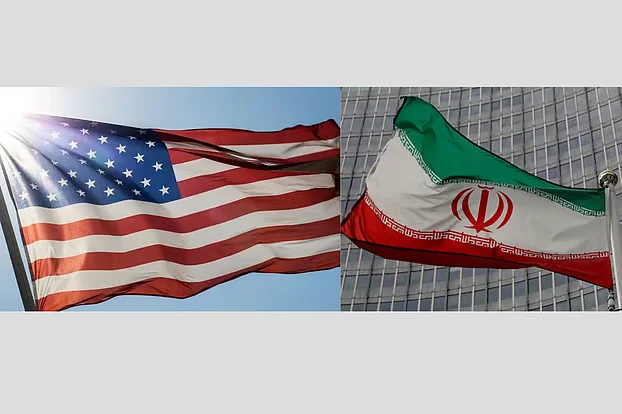
Flags of US, Iran Reuters, AFP

The United States authorised Iranian oil sales on Monday, easing decades-old sanctions as it pushes toward a final peace deal with Tehran in return for commitments on nuclear inspections and free transit through the Strait of Hormuz.

The general license, announced by the Treasury Department, allows the sale of crude oil and petrochemical and petroleum products of Iranian origin through 21 August.

The license says Iranian oil can be imported into the U.S. when necessary to complete its sale, delivery or offloading. The U.S. has not meaningfully imported Iranian oil since Washington imposed measures after the 1979 revolution.

"In line with the ongoing productive talks in Switzerland, Iran has committed to free and open transit in the Strait of Hormuz and to permit International Atomic Energy Agency (IAEA) inspectors into their country," Treasury Secretary Scott Bessent wrote on X.

"As part of the framework, Treasury has issued a temporary 60-day general license authorizing the production, delivery and sale of Iranian oil."

Under a memorandum of understanding signed last week between Washington and Tehran, the U.S. agreed to issue waivers for the export of Iranian crude oil, petroleum products and derivatives, and all associated services, including banking transactions, insurances and transportation.

Payment of funds to Iran may be made in U.S. dollar-denominated funds, according to the license.

Cuba, North Korea and Crimea are among those excluded from the license.

Washington first sanctioned Iran in 1979 when revolutionary students seized the U.S. embassy in Tehran, holding diplomats hostage. Numerous additional sanctions have been imposed since then over the nuclear program and Iran's support for groups the U.S. deems terrorist organizations.

Independent Chinese refiners have been the main buyers of sanctioned Iranian oil, taking advantage of deep discounts as others avoided such purchases. India, South Korea, Japan, Italy, Greece, Taiwan and Turkey were also major buyers of Iranian crude before U.S. sanctions were reimposed in 2018.

Mediators said on Monday that Washington and Tehran made "encouraging progress" at the first round of talks aimed at reaching a final peace deal. The talks began under the terms of the memorandum of understanding reached last week to extend a tenuous ceasefire from April for at least another 60 days.

Oil prices had risen sharply when Tehran started blockading the Strait of Hormuz, prompting a U.S. blockade of Iranian ports, but after the interim deal, fell to their lowest since before the war began on February 28 with U.S.-Israeli attacks on Iran.​
 

Key points from the first round of Iran-US talks

AFP
Switzerland
Published: 22 Jun 2026, 10: 18

1782172473197.webp


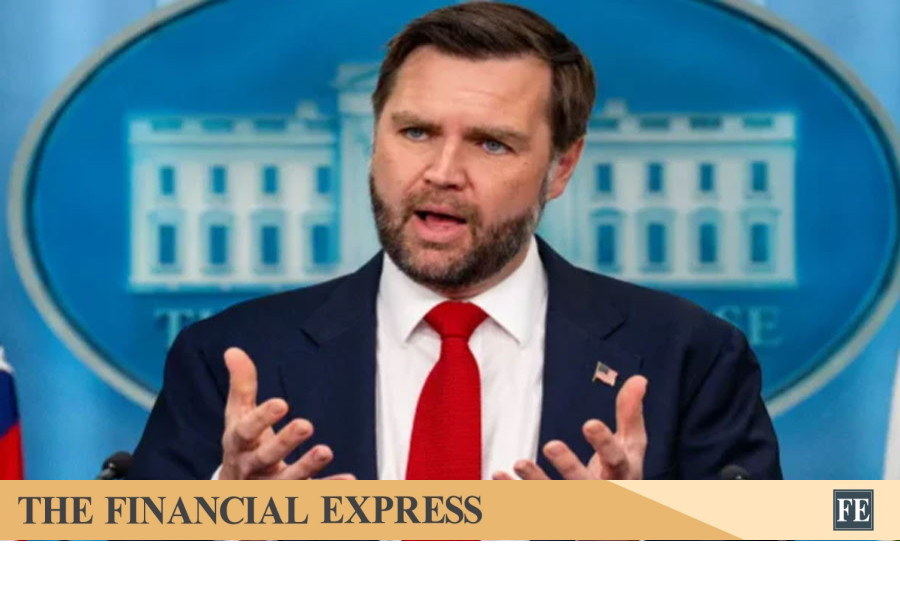
TOPSHOT - (L to R) US Vice President JD Vance speaks next to Pakistan's Prime Minister Shehbaz Sharif, Qatar's Prime Minister Sheikh Mohammed bin Abdulrahman bin Jassim al-Thani and Pakistan's Chief of Army Staff Field Marshal Asim Munir during a quadrilateral meeting between the United States, Iran, Pakistan and Qatar at the Burgenstock luxury hotel complex overlooking Lake Lucerne, Switzerland, on 21 June, 2026, as part of high-level talks aimed at advancing a deal to end the Middle East conflict.AFP

Iran and the United States wrapped up the first round of talks to end the Middle East war at the Burgenstock resort in Switzerland on Monday, with technical talks to continue.

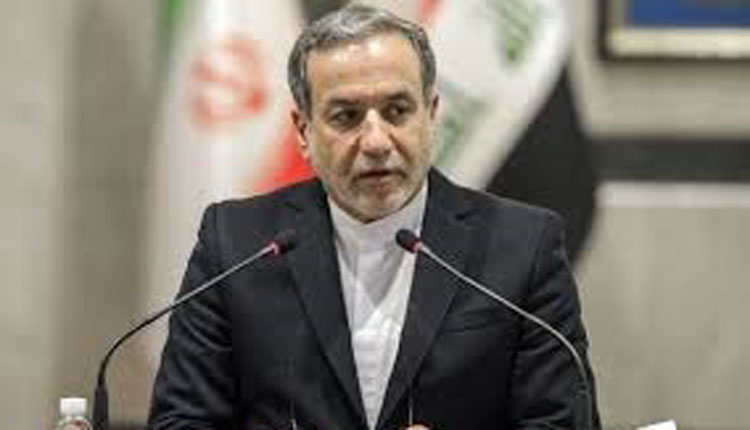
Iran's Foreign Minister Abbas Araghchi hailed the "major progress" achieved with the help of mediators Pakistan and Qatar, while the United States government has yet to issue a statement.

Here are the main points from the joint Qatar-Pakistan statement at the conclusion of first-round talks:

Roadmap to final deal agreed

The High Level Committee set up by Tehran and Washington to oversee the talks has "agreed upon a roadmap towards reaching a final deal within 60 days, laying the foundation for the immediate commencement of further technical talks", according to the statement.

"Technical talks will continue for the remainder of the week at the Burgenstock resort on all issues."

Lebanon 'de-confliction cell'

The United States and Iran "agreed on the creation of a de-confliction cell, between the parties, the Lebanese Republic and facilitated by the Mediators, to ensure the adherence of the termination of military operations in Lebanon", the joint statement read.

Lebanon was dragged into the Middle East war in early March when the Iran-backed Hezbollah fired rockets at Israel in retaliation for the killing of Iran's supreme leader in US-Israeli strikes.

Fighting in Lebanon in recent days has threatened to derail the peace deal.

Iran's Araghchi wrote in an X post on Monday that the Lebanon de-confliction cell will be the "1st real test".

Hormuz 'communication line'

Tehran and Washington have set up a "communication line" to "avoid incidents and miscommunication with the aim of safe passage for commercial vessels through the Strait of Hormuz", according to the statement.

The communication line is applicable for the 60-day period outlined in the memorandum of understanding signed earlier by both sides, in which Iran vowed "best efforts" to ensure safe passage of commercial ships.

Iran said Saturday it was closing the Strait of Hormuz again over Israeli attacks in Lebanon.

Some assets unfrozen

Araghchi wrote on Monday on X "oil and petrochem exports are waived, blockade lifted, some frozen assets released, and major reconstruction & development plan launched for Iran".

The Pakistan-Qatar joint statement does not mention any unfreezing of Iranian assets.

In the memorandum of understanding, the United States undertakes to "terminate all types of sanctions against" Iran, and to "make fully available for use the frozen or restricted funds and assets" of Iran.

The White House did not immediately respond to AFP's request for comment on Araghchi's statement.

Pakistan, Qatar in key roles

Pakistan and Qatar have gained international prominence as mediators in the Iran-US deal, with the two nations issuing a joint statement to mark the conclusion of the first round of talks.

"The mediating parties will continue to do their utmost to ensure that the negotiations continue to be conducted in a constructive atmosphere with the aim of reaching a final deal," the statement said.

Araghchi in his X post gave credit to "tireless Pakistani and Qatari mediation".​
 

US, Iran at odds on nuclear inspections, frozen assets in deal to end war

REUTERS

Published :
Jun 24, 2026 09:38
Updated :
Jun 24, 2026 09:38

1782275824445.webp


A woman walks near a mural depicting the late leader of the Islamic Revolution, Ayatollah Ruhollah Khomeini, and Iran's late Supreme Leader Ayatollah Ali Khamenei, on a street in Tehran, Iran, June 18, 2026. — WANA (West Asia News Agency) via REUTERS

US President Donald Trump said on Tuesday that Iran had agreed to nuclear inspections into "infinity," while Tehran said it had made no such concession in negotiations, raising questions about ‌the viability of their fragile peace deal.

The two countries, which held a first round of negotiations in Switzerland that ended on Monday, also offered conflicting accounts about financial incentives for Iran, control of the Strait of Hormuz, and Israel's parallel war in Lebanon - all major aspects of the framework deal they signed last week that aims to end the war.

Nevertheless, Trump said negotiations were going smoothly with Iran. "We're getting along quite well," he said at a rally in Pennsylvania.

The US also relaxed travel restrictions on Iran's World Cup soccer team, allowing the squad to travel from Tijuana, Mexico, to Seattle two days before its next match instead of one.

In signs of withering domestic support for the war, Trump's poll numbers weakened while the Republican-controlled Senate defied the president and voted to halt the war, in a largely symbolic move that highlighted fissures ⁠in his party.

A Reuters/Ipsos poll found 35 per cent of Americans think the US is now in a weaker position with Iran than it was before the war, while 23 per cent believe it is in a stronger position.

The Senate vote of 50-48 endorsed a resolution that passed the House of Representatives early this month, reflecting growing concern even among some of Trump's Republicans about the unpopular conflict that began on February 28.

It was the first time both chambers of Congress had passed a resolution directing a president to remove US armed forces from hostilities under the War Powers Act, though it was not immediately clear how the votes might affect the conflict.

RESCUING SEAFARERS

Though prospects for a lasting peace are far from certain, the initial agreement between Washington and Tehran has allowed traffic to flow again through the strait, which typically handles one-fifth of global energy supply.

Oil prices on Tuesday were at their lowest level since before the war began on February 28, and the United Nations' shipping agency said a it was working to evacuate 11,000 seafarers stranded when Iran closed the strategic waterway.

The agreement calls for Iran to allow traffic to flow freely for 60 days, but Iran has said it might impose tolls or other fees on shipping after that point.

Iran and Oman, which controls the other side of the strait, issued a joint statement on ‌Tuesday stressing their "sovereign ⁠rights" in the waterway and saying they would work together to manage traffic, along with associated costs.

Oman said it had coordinated with the International Maritime Organization to provide a temporary maritime corridor for vessels seeking to transit the Strait of Hormuz.

US Secretary of State Marco Rubio, visiting Gulf allies unsettled by the peace deal, said Iran would not be allowed to charge tolls in the strait as part of any final agreement.

The deal calls for an immediate end to the war, including in Lebanon, lifting US sanctions on Tehran and unfreezing Iranian assets held abroad. It also outlines a $300 billion investment fund for the Islamic Republic's reconstruction.

AT ODDS OVER NUCLEAR INSPECTIONS, FROZEN ASSETS

The framework itself imposes no limits on Iran's nuclear programme, a ⁠subject to be tackled in 60 days of negotiations.

Trump claimed that Iran had agreed to allow international inspectors indefinite access to its damaged nuclear sites.

"Iran has fully and completely agreed to highest level Nuclear inspections long into the future (Infinity!!!)," Trump said on social media.

Iran denied it had discussed its nuclear program at the talks and said it had not agreed to invite International Atomic Energy Agency inspectors back to the country.

The two sides also disagreed on details of a provision that would give ⁠Iran access to funds that have been frozen in overseas accounts.

Trump said any unfrozen assets would be used to buy food and medical supplies from the US, while Iran's ambassador to the United Nations in Geneva, Ali Bahreini, said Iran would decide how to spend that money.

Washington has already agreed to waive sanctions on Iran for 60 days, allowing Tehran to sell oil and related products and receive payment for them.

Israel's parallel war against Iran-backed ⁠Hezbollah in Lebanon also remains a sticking point. Bahreini said the deal requires Israel to withdraw its troops from Lebanon, while Israel has said it will maintain a security zone in southern Lebanon and continue to act to "neutralize" threats against Israeli soldiers and citizens.

Even as Israel and Lebanon renewed talks in Washington on Tuesday, Israeli gunfire killed two people in southern Lebanon on Tuesday, Lebanon's Civil Defence and health ministry said, prompting Iran-backed Hezbollah to accuse Israel of violating a ceasefire that has largely held since Sunday.​
 

US Congress passes symbolic Iran war rebuke to Trump
Agence France-Presse . Washington, United States 24 June, 2026, 01:59

1782280217908.webp

Donald Trump | AFP photo

The US Senate passed a largely symbolic resolution on Tuesday calling for an end to president Donald Trump’s war with Iran, delivering a fresh rebuke to the White House as it tried to negotiate a lasting settlement with Tehran.

The House-passed measure, adopted by the Senate in a 50-48 vote, directs Trump to remove US forces from hostilities with Iran unless Congress explicitly authorised military action.

Because the measure is a ‘concurrent resolution,’ it does not go to Trump’s desk for signature and carries disputed legal force.​
 

Latest Posts

Back