
 Bangladesh Defense
Saif
Senior Member
- Jan 24, 2024
- 21,724
- 9,794
- Nation

- Residence
- Axis Group

Dhaka needs a consolidated transport system
For millions who depend on public transport every day, travelling through Dhaka can feel like an exercise in uncertainty. Which bus should I take? Where will it stop? How much will I pay? When will it arrive? What happens if it takes another route? Late at night, safety concerns add another layer o
Dhaka needs a consolidated transport system
For millions who depend on public transport every day, travelling through Dhaka can feel like an exercise in uncertainty. Which bus should I take? Where will it stop? How much will I pay? When will it arrive? What happens if it takes another route? Late at night, safety concerns add another layer of anxiety to an already unpredictable commute.
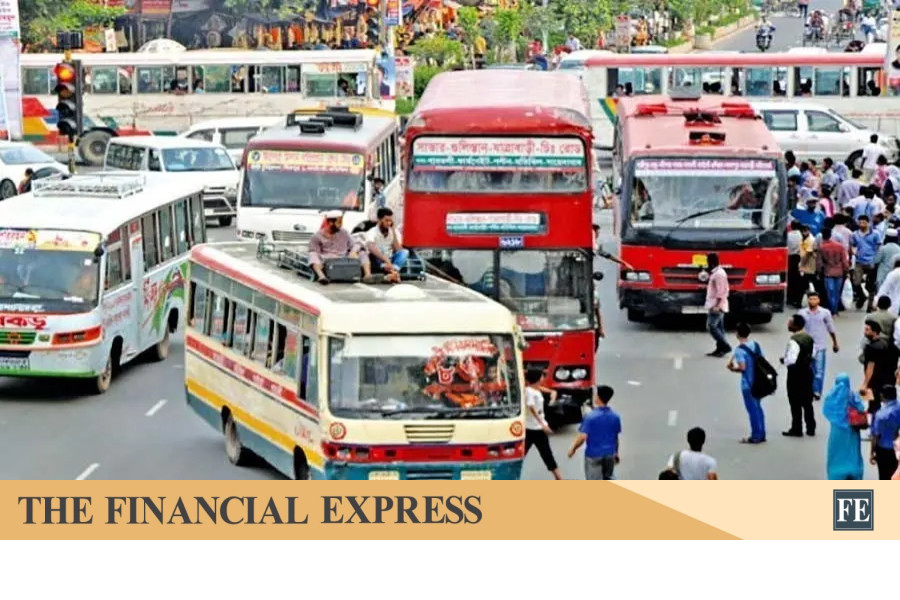
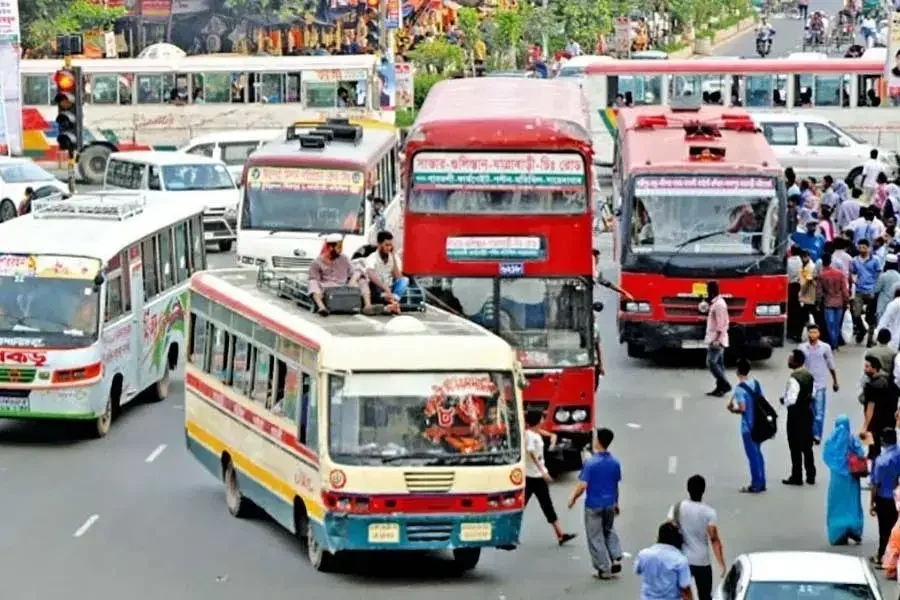
The problem isn't that Dhaka has too many buses; it's that the city's public transport system is fragmented.
Numerous operators, inconsistent bus standards, overlapping routes, varying fares and inadequate passenger information make commuting complicated. Dhaka doesn't necessarily need fewer private operators; it needs a consolidated system where passengers experience public transport as a single, coordinated network.
Singapore offers an instructive example, and I experienced its integrated transport system myself last year. The country, one-third the size of Dhaka, retains multiple bus operators, but passengers do not need to understand their ownership structures to use the network. Under its Bus Contracting Model, the Land Transport Authority (LTA) plans bus services, owns the buses and supporting infrastructure, and sets service standards. The LTA selects operators through competitive tendering and pays them to deliver specified services. Singapore's four public bus operators manage 14 bus packages.
The lesson is straightforward: operators can compete while passengers experience one transport system. Dhaka could adopt the same principle, adapted to its own circumstances.
Imagine an official Dhaka Transport app. A commuter enters a destination and sees the available options: which bus to take, where to board, where to transfer, the expected journey time and the total fare. If the journey includes Metro Rail, the app incorporates it into the itinerary. Passengers would no longer need to navigate a maze of company names and disconnected routes to reach their destinations.
The same platform could integrate ticketing, payments and journey records. Passengers could pay through Rapid Pass, bank cards, mobile financial services or other approved digital channels. A journey involving two buses and Metro Rail could be treated as one connected trip, with coordinated fares and transfers under clearly defined rules.
Bangladesh has already established part of the foundation. Rapid Pass is the Dhaka Transport Coordination Authority's integrated e-ticketing initiative, designed around the principle of one card for multiple transport modes. It currently works on Metro Rail and selected bus services, with wider integration planned. The priority should now be to connect existing investments rather than create another disconnected digital system.
A consolidated Dhaka Transport platform could combine route information, real-time bus locations, Metro Rail schedules, fares, ticketing, digital payments, service alerts, accessibility information, lost-and-found services and complaints. Its value, however, would extend well beyond convenience.
Consider passenger grievances. When a bus ignores a designated stop, deviates from its route, demands an arbitrary fare or puts passengers at risk, people often have little practical recourse. Under an integrated system, every bus would have a unique digital identity. Passengers could report incidents against a specific vehicle, route, time and location, then track complaints until they are resolved. Authorities could identify repeat violations and hold operators accountable.
The same data could improve network planning. Actual operating records, rather than occasional surveys alone, could identify persistent overcrowding, excessive waiting times, underused routes, and repeated deviations.
The need is evident in Dhaka's ongoing route-rationalisation efforts. In July 2026, Dhaka Transport Coordination Authority (DTCA) reported that its survey identified 418 approved bus routes, of which only 98 were operating. The authority said around 60 routes could meet commuter demand and discussed assigning designated companies a fixed number of buses for individual routes. Previous initiatives, including Nagar Paribahan and the pink-bus project, have also faced implementation difficulties, highlighting the gap between policy ambitions and operational realities.
This is why an app alone cannot solve Dhaka's transport problem. Digital integration must go hand in hand with regulatory and operational reform.
Private bus companies can continue to own or lease vehicles, employ drivers and manage fleets. But they should operate within clearly defined routes, schedules, safety requirements, vehicle standards and service-quality targets. Authorities could gradually introduce performance-based contracts that reward punctuality, route adherence, safe driving and passenger satisfaction.
Such a model could also change the economics of driving. When earnings depend heavily on the number of passengers collected, competition can encourage buses to race, stop indiscriminately and fight for passengers. Contracts based on delivering scheduled services could reduce these incentives while making operators more accountable for service quality.
The city already has several pieces of the puzzle-Metro Rail, Rapid Pass, transport authorities, digital payment services and route-rationalisation initiatives. What is missing is a unified architecture connecting them, backed by an authority capable of enforcing common standards.
Dhaka doesn't need another standalone app that shows where buses are. It needs a Dhaka Transport system with one trusted digital interface through which people can plan, pay, travel, receive updates and seek redress.
If the city can make public transport predictable, safe and understandable, it will achieve something far more consequential than digitising commuting. It will take a meaningful step towards building a transport system worthy of a modern megacity.
For millions who depend on public transport every day, travelling through Dhaka can feel like an exercise in uncertainty. Which bus should I take? Where will it stop? How much will I pay? When will it arrive? What happens if it takes another route? Late at night, safety concerns add another layer of anxiety to an already unpredictable commute.
The problem isn't that Dhaka has too many buses; it's that the city's public transport system is fragmented.
Numerous operators, inconsistent bus standards, overlapping routes, varying fares and inadequate passenger information make commuting complicated. Dhaka doesn't necessarily need fewer private operators; it needs a consolidated system where passengers experience public transport as a single, coordinated network.
Singapore offers an instructive example, and I experienced its integrated transport system myself last year. The country, one-third the size of Dhaka, retains multiple bus operators, but passengers do not need to understand their ownership structures to use the network. Under its Bus Contracting Model, the Land Transport Authority (LTA) plans bus services, owns the buses and supporting infrastructure, and sets service standards. The LTA selects operators through competitive tendering and pays them to deliver specified services. Singapore's four public bus operators manage 14 bus packages.
The lesson is straightforward: operators can compete while passengers experience one transport system. Dhaka could adopt the same principle, adapted to its own circumstances.
Imagine an official Dhaka Transport app. A commuter enters a destination and sees the available options: which bus to take, where to board, where to transfer, the expected journey time and the total fare. If the journey includes Metro Rail, the app incorporates it into the itinerary. Passengers would no longer need to navigate a maze of company names and disconnected routes to reach their destinations.
The same platform could integrate ticketing, payments and journey records. Passengers could pay through Rapid Pass, bank cards, mobile financial services or other approved digital channels. A journey involving two buses and Metro Rail could be treated as one connected trip, with coordinated fares and transfers under clearly defined rules.
Bangladesh has already established part of the foundation. Rapid Pass is the Dhaka Transport Coordination Authority's integrated e-ticketing initiative, designed around the principle of one card for multiple transport modes. It currently works on Metro Rail and selected bus services, with wider integration planned. The priority should now be to connect existing investments rather than create another disconnected digital system.
A consolidated Dhaka Transport platform could combine route information, real-time bus locations, Metro Rail schedules, fares, ticketing, digital payments, service alerts, accessibility information, lost-and-found services and complaints. Its value, however, would extend well beyond convenience.
Consider passenger grievances. When a bus ignores a designated stop, deviates from its route, demands an arbitrary fare or puts passengers at risk, people often have little practical recourse. Under an integrated system, every bus would have a unique digital identity. Passengers could report incidents against a specific vehicle, route, time and location, then track complaints until they are resolved. Authorities could identify repeat violations and hold operators accountable.
The same data could improve network planning. Actual operating records, rather than occasional surveys alone, could identify persistent overcrowding, excessive waiting times, underused routes, and repeated deviations.
The need is evident in Dhaka's ongoing route-rationalisation efforts. In July 2026, Dhaka Transport Coordination Authority (DTCA) reported that its survey identified 418 approved bus routes, of which only 98 were operating. The authority said around 60 routes could meet commuter demand and discussed assigning designated companies a fixed number of buses for individual routes. Previous initiatives, including Nagar Paribahan and the pink-bus project, have also faced implementation difficulties, highlighting the gap between policy ambitions and operational realities.
This is why an app alone cannot solve Dhaka's transport problem. Digital integration must go hand in hand with regulatory and operational reform.
Private bus companies can continue to own or lease vehicles, employ drivers and manage fleets. But they should operate within clearly defined routes, schedules, safety requirements, vehicle standards and service-quality targets. Authorities could gradually introduce performance-based contracts that reward punctuality, route adherence, safe driving and passenger satisfaction.
Such a model could also change the economics of driving. When earnings depend heavily on the number of passengers collected, competition can encourage buses to race, stop indiscriminately and fight for passengers. Contracts based on delivering scheduled services could reduce these incentives while making operators more accountable for service quality.
The city already has several pieces of the puzzle-Metro Rail, Rapid Pass, transport authorities, digital payment services and route-rationalisation initiatives. What is missing is a unified architecture connecting them, backed by an authority capable of enforcing common standards.
Dhaka doesn't need another standalone app that shows where buses are. It needs a Dhaka Transport system with one trusted digital interface through which people can plan, pay, travel, receive updates and seek redress.
If the city can make public transport predictable, safe and understandable, it will achieve something far more consequential than digitising commuting. It will take a meaningful step towards building a transport system worthy of a modern megacity.
