Home Watch Videos Wars Movies Login

[🇧🇩] Mecca Pact & Bangladesh

[🇧🇩] Mecca Pact & Bangladesh
6
52
More threads by Saif

G Bangladesh Defense

Saif

Senior Member
Joined
Jan 24, 2024
Messages
20,971
Likes
9,685
Nation

Residence

Axis Group

Date of Event: Aug 24, 2026
The question the Mecca pact has raised for Bangladesh

Altaf Parvez

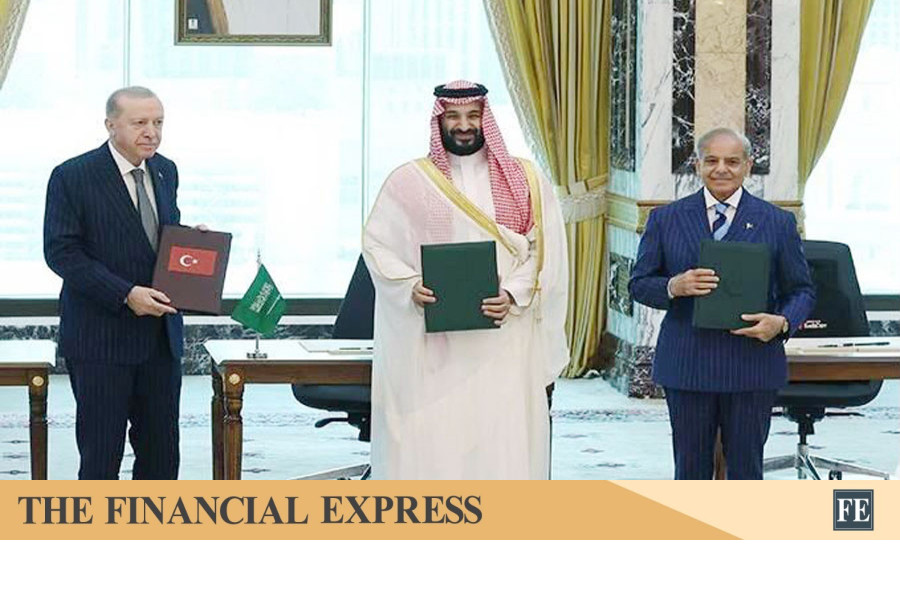
Turkish President Tayyip Erdogan, Saudi Crown Prince Mohammed bin Salman and Pakistan's Prime Minister Shehbaz Sharif sign a joint defence agreement in Mecca, Saudi Arabia, 7 August 2026. Reuters

To Muslims, Mecca is much more than any city. It is significant that the rulers of Saudi Arabia, Turkey, and Pakistan chose this city as the place to sign a defence pact. Even selecting Friday for the pact signing holds similar importance.

This trilateral alliance may desire a religious facade, something that Mohammed bin Salman, Recep Tayyip Erdoğan, and Shehbaz Sharif may have been hoping for. Such a religious facade might help them in terms of voter polarisation in their respective countries. While these rulers have done little to significantly curb the aggressors in Gaza.

Signing any agreement in Mecca on a Friday also shows the firmness of their commitment. Questions arise as to what exactly these countries seek to protect with this defence agreement? Does the convergence of these three mid-sized military powers bear additional significance for South Asia?

Strategic diversification begins on all fronts

These trilateral signatories do not share borders. Thus, it cannot be called a regional alliance. It can be assumed that Saudi Arabia's extra interest is what has drawn Shehbaz Sharif and Erdoğan to Mecca.

The rulers in the Middle East who have long relied on the United States to protect their thrones are gradually seeing that longstanding advantage come to an end. The royal families of this region have been safely ensconced in such a security arrangement for a long time. However, by challenging the US -Israel axis, Iran has shattered the old sense of security for Washington's Arab allies.

Many countries around the world have taken immediate lessons from this scenario. Everyone is reevaluating and rearranging their defence policies and strategies. Strategic diversification has started everywhere.

The Mecca Agreement is its first major manifestation. The harsh reality has brought these three distant powers closer. Moreover, without relinquishing decision-making freedom, all those involved in the agreement were able to add additional weight to their international image. Yet, Riyadh-Washington and Islamabad-Beijing ties persist. Turkey does not have to leave NATO either.

The economic backdrop of this agreement is also worth considering. Gulf countries serve as major centres for global capitalism. Iran's counterattack in the face of aggression has shaken down assets and investments in that area. Securing these capitalist centres is crucial for many. Hence, the Mecca Agreement does not solely involve the interests of three countries; it has a significant political economy component. However, more than the moment of the agreement, everyone is interested in seeing how much importance the three countries attach to utilising it. It's still unclear whether it will have a unitary command structure like NATO.

The Mecca agreement brings India and Israel closer

The conflict between Iran and Israel and the US and its consequences have set the backdrop for this agreement. All three signing rulers are more or less close to the US. For these reasons, many have wondered whether Iran was the intended counterpart to the agreement. Some may also have thought of Israel.

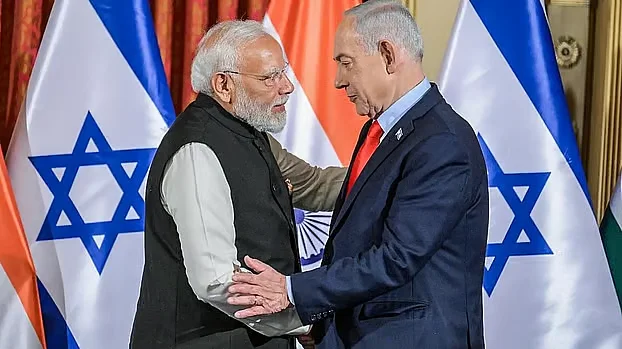
News emerged that just before the agreement was signed, the Prime Minister of Israel called the Prime Minister of India. Naturally, the question arises, how significant is this agreement for them? Particularly against the backdrop of India's adversarial relationship with Pakistan, has this trilateral military alliance created additional pressure for New Delhi? Will they, therefore, seek to join with someone else to enhance their ''defense'' capability.

The agreement states that if any of the three allies are attacked, it will be considered an attack on all three countries. This clause is similar to NATO's Article 5. This also means that in any future India-Pakistan war, Turkey and Saudi Arabia will stand by Islamabad. Or, in any Iran-Saudi military conflict, Pakistan and Turkey will fight against Tehran. Pakistan has already deployed some air defence systems and troops in Saudi Arabia. Prior to this trilateral agreement, Pakistan had signed another separate military agreement with Saudi Arabia in the previous September. The subsequent agreement is undoubtedly a significant advancement over the previous one.
1787527700016.webp

Netanyahu calling Narendra Modi in front of the Mecca Agreement signing is certainly indicative. Photo: ANI

These are clear indications that military thinking and structure are set for upheaval in Asia. Pakistan’s Deputy Prime Minister has already said, "This agreement is open to other countries as well." After his statement, curiosity has arisen about which other countries might be potential partners.

The call from Netanyahu to Narendra Modi ahead of the Mecca Agreement signing is certainly indicative. Saudi Arabia, Turkey, or Pakistan is not currently facing any new hostilities. But they have taken the news of this military alliance of three Muslim-majority countries as a distant warning signal. This is equally true for Iran.

Turkey has competition with Tel Aviv in Syria and other places. Besides Iran, several Israeli politicians have recently labeled Turkey as a ''threat'' despite Turkey being their oldest diplomatic friend in the Muslim world. They also find the nuclear capability of Muslim-majority Pakistan to be ‘dangerous’. For these reasons, Tel Aviv has no reason to view this trilateral agreement favourably. On 9 August, the Jerusalem Post wrote, "The Mecca Agreement will further develop Israel-India relations." Both countries want to bring the UAE closer to the same goal.

Under pressure of increased militarisation in South Asia

The Mecca Agreement has also posed new questions for Bangladesh. Should Bangladesh become part of such a coalition? Or, in response to increased Israel-India military proximity, what should be Bangladesh's course of action? Surely, policy makers in Bangladesh have already begun to ponder these questions.

The way the US-Iran conflict is coming to an end has helped create a strong and courageous image of Tehran in the Muslim world. To maintain leadership positions in Muslim-majority countries, Saudi Arabia and Turkey have entered a competition. They will continually seek Bangladesh as a partner to manage that rivalry. Turkey has shown a keen interest in enhancing military relations with Bangladesh for two to three years.

Simultaneously, the Indo-Pakistan military competition in South Asia is accelerating rapidly. Increased India-Israel closeness as a reaction to the trilateral agreement will undoubtedly intensify military rivalry in South Asia. As a side effect, we may witness numerous regional proxy wars.

Pakistan's economy was unable to sustain its vast military structure and manpower. Yet, its military personnel enriched with experiences from many wars. Saudi finance and Turkey's military industry could rejuvenate this. All three countries will benefit from this process.

In response, if advanced Israeli technology starts entering India's military framework, New Delhi's military capabilities will also reach new heights. Post-Mecca Agreement, the motivation to form a counter-military block among India's policymakers is increasing. Serious discussions about the trilateral defence agreement are underway there.

Such retaliatory agreements and coalitions will impact and pressure Bangladesh, Nepal, and Sri Lanka. These countries find it challenging to match the militarisation of larger powers. These nations have been floundering to address the economic crisis sparked by wars in the Middle East in recent months. Now ahead of them awaits a long-term militarily complex phase. Just as the Mecca Agreement directly connects Turkey and Saudi Arabia with the situation in South Asia, it has also driven Israel’s increased activism.

*Altaf Parvez is a researcher on history​
 
Analyze

Analyze Post

Add your ideas here:
Highlight Cite Respond

Should Bangladesh join Makkah defence pact?

1787699161283.webp

(From left) Turkish President Recep Tayyip Erdogan, Saudi Crown Prince Mohammed bin Salman and Pakistan's Prime Minister Shehbaz Sharif after signing a joint defence agreement in Mecca, Saudi Arabia, on August 7 2026 —Agency Photo

The Makkah Joint Defence Agreement, signed by Pakistan, Türkiye and Saudi Arabia on August 7 2026, could become one of the most consequential new security arrangements in the Muslim world. Its central provision is straightforward: an armed attack against one member will be regarded as an attack against all three. The governments concerned describe the pact as defensive, consistent with Article 51 of the UN Charter, and not directed against any particular country.

For Bangladesh, however, the real question is not whether closer association with three friendly Muslim states is politically attractive. It is whether membership would strengthen national security sufficiently to justify the military obligations, diplomatic repercussions and possible loss of strategic flexibility involved.

Strategic importance of the Pact: The agreement appears to serve several wider objectives.

First, it seeks to create a greater degree of regional strategic autonomy. For decades Middle Eastern security has depended heavily upon the United States. The new arrangement brings together complementary capabilities: Saudi financial and political influence, Türkiye’s large military and sophisticated defence industry, and Pakistan’s experienced armed forces and nuclear capability.

Second, it could strengthen collective deterrence. Although officially directed against no country, the pact inevitably affects strategic calculations concerning Iran, Israel and other possible regional conflicts.

Third, cooperation in defence industries may prove almost as important as collective defence itself. Türkiye possesses an expanding drone, missile, electronics and naval industry; Pakistan has significant missile, aircraft and weapons-development capabilities; Saudi Arabia can provide capital and procurement capacity.

Finally, the agreement may represent an attempt by major Muslim states to acquire greater security autonomy without becoming wholly dependent upon Washington, Beijing or Moscow.

Yet considerable uncertainty remains. Unlike NATO, the new organisation does not yet possess a mature integrated military command, permanent multinational force structure or decades of common operational planning. Publicly available details of specific military commitments remain limited.

Its credibility will therefore depend upon some difficult questions: 1. Would Pakistan actually fight if Saudi Arabia were attacked? 2. Would Saudi Arabia become involved in a Pakistan–India conflict? 3. Would Türkiye risk confrontation with a major power on Pakistan’s behalf? 4. Would all three interpret the expression “armed attack” identically?

Pakistan’s nuclear arsenal undoubtedly strengthens the psychological deterrent value of the arrangement. It should not, however, automatically be interpreted as a formal Pakistani nuclear umbrella over Saudi Arabia or Türkiye. Saudi officials have specifically stated that the agreement is not linked to nuclear ambitions or an arms race.

Could the Pact weaken or break apart: Its greatest structural weakness is that its members do not necessarily share the same principal adversary.

Pakistan’s traditional strategic concern is India. Saudi security priorities lie mainly in the Gulf and wider Middle East. Türkiye must simultaneously manage relations and tensions involving NATO, Russia, Syria, Iran, Israel, Europe and the eastern Mediterranean.

Military alliances are generally strongest when their members possess broadly similar threat perceptions. The Makkah Pact may therefore face difficulties whenever the interests of one member do not coincide with those of the others.

International reaction: India has particularly strong reasons to scrutinise the arrangement because Pakistan is a founding member. New Delhi has publicly stated that it is “closely following” developments. Nevertheless, Saudi Arabia maintains major economic and strategic relations with India and will probably seek to prevent the pact from becoming an explicitly anti-Indian organisation.

Israel is likely to view the combination with caution because Türkiye–Israel relations have deteriorated, Pakistan does not recognise Israel, and Saudi Arabia occupies a central position in Middle Eastern diplomacy. Yet Riyadh’s relationship with Washington and its broader Western interests make an openly anti-Israel military bloc unlikely.

The United States may adopt a mixed approach. All three members maintain important relationships with Washington and Türkiye remains a NATO member. American opposition would probably intensify only if the pact evolved into an explicitly anti-American bloc, facilitated nuclear proliferation, directly confronted Israel, or became strategically subordinate to China or Russia.

European governments are similarly likely to remain cautious but pragmatic.

Expansion of the Pact: Expansion appears possible. Pakistan has publicly stated that the Makkah Accord remains open to countries willing to uphold its principles.

Any enlargement, however, would require prospective members to accept genuine reciprocal defence obligations. The significance of the organisation would increase substantially if other major Muslim military powers eventually became associated with it.

Should Bangladesh join: There are substantial arguments in favour.

Bangladesh occupies a difficult geographical position, surrounded largely by India and sharing another sensitive frontier with Myanmar. It cannot match the military capabilities of much larger neighbours merely by increasing defence expenditure.

Association with Pakistan, Türkiye and Saudi Arabia could therefore offer: (a) stronger external deterrence; (b) access to defence technology and joint production; (c) diversification away from excessive dependence on one arms supplier; (d) greater intelligence, cyber and maritime cooperation; (e) enhanced security in the Bay of Bengal; and (f) greater diplomatic influence.

Bangladesh could also contribute significantly to the arrangement. As one of the world’s largest Muslim-majority countries, it possesses substantial armed forces, extensive UN peacekeeping experience and an important strategic location linking South and Southeast Asia with the Bay of Bengal.

There are, however, equally serious arguments against immediate membership.

The greatest danger is that Bangladesh could inherit other members’ wars. A renewed Pakistan–India confrontation, a Saudi–Iran conflict or a major Turkish military crisis could create pressure upon Dhaka to become involved in disputes far removed from Bangladesh’s immediate national interests.

Relations with India could also deteriorate. Whatever the present state of bilateral relations, geography cannot be changed. India remains central to Bangladesh’s border security, river-water questions, connectivity, trade and regional calculations. Formal Bangladeshi membership in an alliance containing Pakistan could therefore provoke diplomatic, economic or military counterbalancing by New Delhi.

Membership could also reduce Bangladesh’s traditional strategic flexibility. Article 25 of the Constitution emphasises sovereignty, equality, non-interference, peaceful settlement of disputes, international law and the UN Charter. A defensive alliance is not inherently incompatible with these principles, but Bangladesh should avoid treaty obligations that automatically surrender its independent decision on when its Armed Forces should enter a war.

China must also be considered. Beijing would not necessarily regard an organisation containing Pakistan as hostile, but Bangladesh should ensure that any new alignment does not undermine its important economic and defence relationship with China.

The economic dimension is equally important. Saudi Arabia was Bangladesh’s largest source of remittances in FY2025–26, while Bangladesh also depends heavily upon Western, Chinese and regional markets, investment and trade. A defence arrangement that strengthened military security but damaged exports, remittances or investment could ultimately weaken national power.

A more prudent middle course: Bangladesh should therefore avoid an immediate choice between full membership and complete disengagement. A better approach would be phased association. Dhaka could initially seek observer, associate or dialogue-partner status and expand cooperation in: (a) joint military exercises and officer exchanges; (b) intelligence and counterterrorism; (c) cyber defence; (d) naval and maritime security; (e) defence production and technology transfer; (f) humanitarian assistance and disaster relief.

Before accepting a collective-defence obligation, Bangladesh should obtain explicit answers to several questions:

What legally constitutes an attack? Is military intervention automatic, or may each member determine its own response? Would the treaty apply to Kashmir or other disputed territories? Does it cover overseas deployments? How would Türkiye reconcile pact obligations with NATO commitments? Does Pakistani nuclear deterrence extend to other members? What are the mechanisms for withdrawal?

Above all, Bangladesh must ask:

Would the other members genuinely defend Bangladesh if Bangladesh itself were attacked?

Without a convincing answer, Dhaka could assume major obligations without receiving equivalent security in return.

Conclusion: The Makkah Joint Defence Agreement should not be dismissed as symbolic. Saudi financial power, Turkish military-industrial capability and Pakistan’s conventional and strategic strength give the arrangement considerable potential.

For Bangladesh, closer association could improve defence capability, technology access, maritime security, procurement diversification and diplomatic leverage.

But immediate accession to an automatic mutual-defence commitment would presently be unwise.

Bangladesh should move closer to the Makkah Pact, participate extensively in defence cooperation and carefully observe how its institutions and doctrines develop before considering full membership.

If the joint pact ultimately establishes a credible joint command and puts in place clear rules governing military intervention and protecting members from being automatically dragged into one another's bilateral conflicts, Bangladesh could consider full accession.

eventually become an important eastern pillar of a wider security architecture stretching from the Mediterranean and Arabian Peninsula through Pakistan to the Bay of Bengal.

The fundamental test must remain simple: the alliance should strengthen Bangladesh’s sovereignty without compromising Bangladesh’s sovereign right to decide when, where and why its Armed Forces go to war.

Lt Col Mudassir Hussain Khan (rtd) is a Bir Protik​
 
Analyze

Analyze Post

Add your ideas here:
Highlight Cite Respond

Joining Mecca pact could test Bangladesh’s foreign policy balancing act: Reuters

Analysts say joining a defence alliance with Saudi Arabia, Turkey and Pakistan could affect ties with competing regional and global powers

Star Online Report

1787700963391.webp

From left, Turkish President Recep Tayyip Erdogan, Saudi Crown Prince Mohammed bin Salman and Pakistani Prime Minister Shehbaz Sharif pose after signing a defence agreement in Mecca, Saudi Arabia, on 7 August. Photo: Saudi Press Agency/Handout via Reuters.

Bangladesh could consider joining the Mecca pact, a mutual defence agreement signed this month between Saudi Arabia, Turkey and Pakistan, a minister has said.

"If there is a security arrangement among Islamic nations in the Middle East, it is not unusual for us to consider participating. It is being viewed positively," said State Minister for Foreign Affairs Humaiun Kobir.

"They are inviting the leadership of Bangladesh, particularly Prime Minister Tarique Rahman, to come and participate," he told reporters on Monday.

A source in the Bangladesh foreign ministry told Reuters that Saudi Arabia had invited Dhaka to join the ⁠pact, but did not say when the invitation was made. The source sought anonymity as he was not authorised to speak to media.

However, when contacted, Foreign Secretary Asad Alam Siam told The Daily Star he is not aware of any invitation for joining the Mecca pact or any decision to join it.

The three Sunni Muslim-majority countries signed the agreement, modelled on NATO's collective-defence principle, in the Saudi holy city of Mecca this month.

They pledged that an armed attack on one member would be treated as an attack on all, amid heightened tension in the regional conflagration that has brought Iranian missile fire across the Middle East.

More than 90% of Bangladesh's population identifies as Sunni Muslim.

Asked for comment on the minister's remarks, the embassies of Saudi Arabia, Turkey and Pakistan in Bangladesh did not immediately respond.

Turkey, which has NATO's second-largest army, has said the pact with nuclear-armed Pakistan and top oil exporter Saudi Arabia was open to expansion.

Analysts say joining a military alliance would test Bangladesh's long-standing foreign policy of avoiding rival geopolitical camps to help it attract investment, expand exports and maintain economic ties ‌with competing ⁠powers.

The economy relies on exports of readymade garments, most of which go to Britain, the European Union and the United States, while remittances from millions of workers abroad, mainly in the Middle East, are a major source of foreign exchange.

Formal alliance membership could complicate Bangladesh's ties not just with India, but also China, Iran, Japan, Kuwait, Oman, Qatar, Russia, the United Arab Emirates and the United States, said geopolitical analyst Kollol Kibria.

"These relationships would not automatically break, but once Bangladesh joins a military bloc, the question of which side Bangladesh is on becomes much harder to ⁠avoid," Kibria said.

The invitation comes at a delicate moment in Bangladesh's relations with India under the six-month-old government, despite efforts by both to ensure cordial ties.

Prime Minister Tarique Rahman has yet to decide whether to visit India, his spokesperson said this month, as Dhaka awaits New Delhi's response to its extradition request for Sheikh Hasina. Dhaka has previously called for a "propitious environment" for such ⁠a visit after Hasina spoke to journalists in New Delhi this month, a move criticised by Bangladesh.​
 
Analyze

Analyze Post

Add your ideas here:
Highlight Cite Respond

Bangladesh considering joining Mecca Pact: Shama Obaed
Staff Correspondent 26 August, 2026, 17:49

1787787255757.webp

Shama Obaed | Collected photo

Bangladesh is considering joining the Mecca Joint Defence Agreement involving Saudi Arabia, Pakistan and Türkiye, state minister for foreign affairs Shama Obaed said in an interview with a private television channel.

She said the government would assess whether joining the pact would serve Bangladesh's national and economic interests and benefit its people.

‘Global politics has become such that now every country is joining a larger alliance. Like we have SAARC, BIMSTEC, the Indo-Pacific, the Quad, and BRICS. There are different alliances all over the world.’

She said the Mecca Pact emerged from concerns over regional security and that its central provision was collective defence.

‘The Mecca Pact, I think, in the post-war period, Saudi Arabia, Pakistan, Turkey, they are very... thinking about regional security... that made a defence pact whose first point is that if any one country is attacked, it will be assumed that three countries have been attacked.’

Describing the nature of the agreement, she said it was intended to protect the economies and people of the member countries and was open to other interested countries.

‘Basically, it is a security pact to protect the country's economy and people. And it's open to all who are interested in joining.’

Asked whether Bangladesh would join the pact, Shama said the government was considering the matter and would first assess the potential benefits for the country.

‘In response to whether Bangladesh will join or not, [I would say] the Bangladesh government is considering it. But first of all, from Bangladesh's policy, if we think that joining the pact will benefit Bangladesh more.’

She then pointed to the possible economic and employment benefits of joining the agreement, as well as Bangladesh's close relations with Türkiye and Saudi Arabia.

‘It will benefit our economy. It will create employment for us. You know that we have very close relations with Turkey. Recently, high-level delegates from Turkey visited. We have very deep relations with Saudi Arabia. Around 4 million Bangladeshis are working there.’

She said these existing ties would be taken into account, but stressed that the final decision would depend on what Bangladesh stood to gain from the agreement.

‘So, judging from that point, Bangladesh will consider it [joining the pact]. But again, the final decision would depend on what we will gain from the agreement. If we think that our gain is heavy, our benefit will be more, the benefit will be for the people of the country, then, of course, the government will take a decision accordingly.’

The Ministry of Foreign Affairs said in a Facebook post on Wednesday that Shama spoke ‘about various important issues’ during the interview.

Her remarks came amid growing speculation over Bangladesh's possible participation in the Mecca Pact, which was signed in the Saudi city on August 7 by Saudi Crown Prince Mohammed bin Salman, Pakistani Prime Minister Shehbaz Sharif and Turkish President Recep Tayyip Erdogan.

The agreement commits the three countries to collective defence, with an armed attack against any one of them to be regarded as an attack against all three. The pact is described by its signatories as defensive and aimed at strengthening collective security and regional stability.

The agreement is also open to other countries, according to officials from the signatory states. Türkiye has said the pact is not intended as an alternative or rival to NATO, while the three countries are expected to establish mechanisms for greater coordination among their foreign and defence ministries and military chiefs.

Bangladesh's possible participation has drawn attention because of its close ties with all three signatories, particularly Saudi Arabia and Türkiye. Around four million Bangladeshis work in Saudi Arabia, while Türkiye has developed close economic, defence and diplomatic ties with Bangladesh.

A senior Bangladeshi diplomat, Humayun Kabir, said on Monday that Bangladesh had expressed interest in the pact and that the matter was being viewed positively.

However, Shama's remarks indicate that Dhaka is weighing the possible economic and national-interest implications before making a final decision. She specifically pointed to employment, economic benefits and Bangladesh's existing relations with Saudi Arabia and Türkiye as factors in the government's consideration.​
 
Analyze

Analyze Post

Add your ideas here:
Highlight Cite Respond

Decision on Mecca pact after reviewing situation: Law minister


1788045109182.webp

Law, Justice and Parliamentary Affairs Minister Md Asaduzzaman -- File Photo

The government will decide on the Mecca Joint Defence Agreement after evaluating the overall situation, Law, Justice and Parliamentary Affairs Minister Md Asaduzzaman has said.

He made the remarks on Saturday while speaking to reporters following a reception for meritorious students on the Jhenaidah Collectorate School and College grounds, local media have reported.

Asked about bilateral ties with neighbouring India, the minister said: "India will pursue its own foreign policy, and we will be guided by ours. India will go its own way; Bangladesh will go its own way."

On the country's law and order situation, Asaduzzaman said the government is working relentlessly to keep the situation normal and under control.

The minister also touched upon the full digitalisation of the judiciary, saying the government and the law ministry are working closely to roll out the e-judiciary initiative within a year.

Rashed Khan, political assistant to the prime minister, spoke at the programme as a special guest, with Deputy Commissioner Md Noman Hossain in the chair.

Jhenaidah District BNP President MA Mazid and General Secretary Jahiduzzaman Mona, among others, attended the event.​
 
Analyze

Analyze Post

Add your ideas here:
Highlight Cite Respond

The Mecca Pact: Deterrence, Israel, and the new Gulf security equation

Tariq Karim

The joint defence agreement signed in Mecca by Saudi Arabia, Türkiye and Pakistan raises an immediate question: why was a new pact necessary when Pakistan and Saudi Arabia already had a longstanding defence relationship?

Some assume the pact is aimed at Iran. I do not share that view. My understanding is that Saudi and Pakistani interlocutors spoke with Tehran before the signing and conveyed that the agreement was not directed against Iran. There have also been unconfirmed media reports that Iran was invited to join, though Tehran has neither confirmed nor denied this.

The deeper reason is that the Gulf’s security equation has shifted. Many Gulf states and Türkiye increasingly view Israel as an unpredictable “lone wolf” rogue actor, driven by openly stated territorial ambitions to expand its current frontiers into a “Greater Israel” configuration, and willing to act beyond the limits of, and even in defiance of, American restraint. In this context, Riyadh, in consultation with Islamabad, appears to have brought Ankara into a wider deterrent framework.

For decades, the Gulf monarchies relied on the United States as their principal external security guarantor. American bases were meant to protect small, wealthy states with limited indigenous defence capacity. At the same time, these bases enabled Washington to project power, protect its own strategic assets and secure the economic supply lines on which much of the world depends.

Relations between Iran and the Arab Gulf states remain historically complex, shaped by Persian-Arab rivalry, Sunni-Shia tensions and competing regional ambitions. For years, many Gulf rulers saw Iran—not Israel—as the more immediate threat and trusted Washington to contain it.

The deeper reason is that the Gulf’s security equation has shifted. Many Gulf states and Türkiye increasingly view Israel as an unpredictable “lone wolf” rogue actor, driven by openly stated territorial ambitions to expand its current frontiers into a “Greater Israel” configuration, and willing to act beyond the limits of, and even in defiance of, American restraint. In this context, Riyadh, in consultation with Islamabad, appears to have brought Ankara into a wider deterrent framework.

That assumption has now been shaken to the core. Iran has palpably demonstrated that it can make the American military presence in the Gulf costly and vulnerable by threatening or striking infrastructure at will, including radar, air-defence and logistical facilities. Tehran has also warned Gulf states that allowing their territory to be used for attacks on Iran could invite retaliation against their vital energy and public infrastructure, which is critically important for the survival not just of their current ruling regimes but of their states themselves.

This has forced Gulf leaders to reassess their survival strategy. During the conflict, Iranian diplomacy intensified with Moscow and Beijing. China called for a comprehensive Gulf security architecture, while Russia deepened strategic coordination with Tehran. The old framework, in which the United States functioned as the dominant guarantor, is being robustly contested by a new and more multipolar order.

From the beginning of this conflict, I have argued that Iran, drawing on its ancient civilisational memories and cultural resilience, could emerge as the dominant regional power, compelling neighbouring states to recalibrate their security policies around Tehran. I still see that scenario unfolding.

However, a most dangerous wild card still exists—the reported contemplation of using tactical nuclear weapons against Iran, since conventional military power has so abjectly failed and American and Israeli arsenals have been perilously depleted. Should America or Israel desperately resort to using tactical nuclear weapons against Iran, it could very likely tip the region into uncontrollable escalation and accelerate nuclear ambitions elsewhere.

Short of that, Iran may emerge stronger. Israel does not want this. It regards Iran as an existential threat and increasingly views Türkiye’s expanding regional role, especially in Syria, as a serious security challenge.

Türkiye now finds itself increasingly at odds with Israeli intentions. Tensions in Syria already point to the risk of direct confrontation. Ankara can no longer assume that Israel will behave as a restrained or rational actor; nor can it assume that NATO solidarity would operate normally if Israel and Türkiye came to blows. The United States, because of its deep and abiding political attachment to Israel, would be pulled towards Israel rather than its NATO ally. NATO’s other European members are also likely to weigh in more towards Israel than come to the aid of fellow member Türkiye, completely upending NATO’s continuing relevance or viability.

1788046863151.webp

Turkish President Tayyip Erdogan, Saudi Crown Prince Mohammed bin Salman and Pakistan's Prime Minister Shehbaz Sharif converse after signing a joint defence agreement in Mecca, Saudi Arabia, on August 7, 2026. Photo: Reuters


This is where the Mecca Pact assumes significance. It is best understood as an insurance policy for a new security environment in which Iran may be neither adversary nor ally, but an inescapable and powerful state with which Gulf states must deal and come to terms. Better, therefore, to engage Tehran from a position of balance than from one of hostility and dependence.

Saudi Arabia, Qatar and others are already talking to Iran, encouraged by China and Russia. These conversations have elevated Iran’s geopolitical profile. Alongside Iran’s ties with Beijing and Moscow, the Saudi-Turkish-Pakistani arrangement signals a new regional configuration.

This is why I believe the pact is directed less against Iran than against unpredictable Israeli action. Its purpose is deterrence: to discourage sudden moves that could destabilise the region. The fact that a Houthi attack on a Saudi asset after the pact did not trigger alliance retaliation further suggests that the agreement was not designed as an anti-Iranian instrument.

The three partners bring different strengths and vulnerabilities.

Saudi Arabia is the wealthiest of the three and can finance defence and strategic investment. Yet its oil-dependent economy and energy infrastructure remain exposed, and its armed forces are relatively small.

Türkiye, by contrast, has one of NATO’s largest standing armies and an advanced defence-industrial base. But NATO membership may not protect it in a confrontation involving Israel. Ankara therefore has reason to seek additional deterrence outside the traditional alliance structure.

If Iran emerges as the region’s major power, Bangladesh will need constructive ties with Tehran. If Türkiye, Saudi Arabia and Pakistan shape a parallel security bloc, we will also need working relations with them.
Pakistan adds the third pillar: a longstanding security relationship with Saudi Arabia and the only known nuclear capability among Muslim-majority states. That nuclear lever, even if never explicitly invoked, strengthens deterrence and may extend political reassurance to Türkiye as well.

Seen together, the Saudi purse, Turkish military capacity and Pakistani nuclear deterrent form a defensive alliance meant to discourage adventurism, especially by Israel. It also reflects the recognition that Iran, backed by Russia and China, cannot simply be contained through the old American security umbrella.

For Bangladesh, the lesson is cautionary, with the regional picture continuing to be kaleidoscopically fluid, its final shape still highly unpredictable. Our best option is to keep all doors open, maintain good bilateral relations with all sides, and avoid any arrangement that could place us disastrously on the wrong side of history. Such a mistake would be strategically costly and would worsen socio-economic pressures at home.

If Iran emerges as the region’s major power, Bangladesh will need constructive ties with Tehran. If Türkiye, Saudi Arabia and Pakistan shape a parallel security bloc, we will also need working relations with them.

We are not so powerful or richly endowed that we can afford rigid alignments. Bangladesh’s safest course is strategic autonomy and active neutrality: not joining either side when partners are in conflict, while continuing to engage constructively with all to safeguard our own national interest.

In a Middle East entering a new and uncertain phase, that is how Bangladesh can best protect its interests while preserving room for flexibility of action.

Ambassador (Retired) Tariq Karim, a former career diplomat who served as Ambassador/High Commissioner of Bangladesh to Iran and Lebanon, South Africa, the United States and India. He is currently Adviser to the School of Liberal Arts and Social Sciences and the Bay of Bengal Studies Centre at Independent University, Bangladesh, and concurrently a Distinguished Visiting Research Fellow at the Institute of South Asian Studies at the National University of Singapore.​
 
Analyze

Analyze Post

Add your ideas here:
Highlight Cite Respond

THE MECCA PACT: The cost of hesitation


1788047831054.webp


THE strategic landscape surrounding Bangladesh has shifted with unprecedented swiftness. Following the signing of the Mecca Joint Defence Agreement between Saudi Arabia, Türkiye and Pakistan, Dhaka finds itself at a pivotal crossroad.

In a recent critique titled ‘The Mecca Pact: A Door Has Opened for Bangladesh. Should We Walk Through It?’, journalist Zulkarnain Saer argues for an approach summarised as ‘engage everything, sign nothing.’ Saer deserves credit for elevating the national debate beyond simplistic slogans. His recommendation reflects a deep-rooted diplomatic prudence. Yet, from a rigorous strategic and military perspective, caution must not become a doctrine in itself.

The greatest risk for Bangladesh today may not be joining a defence collective prematurely; it may be continuing our historical pattern of strategic hesitation precisely when meaningful structural leverage becomes available.

Flaw of alliance-level benefits without commitments

THE core of the ‘engage but do not sign’ framework rests on a fundamental asymmetry: the assumption that the benefits of the Mecca Pact — deterrence, defence technology transfer and economic safeguards — can be extracted through casual cooperation without accepting formal commitments. On paper, that appears to be the ideal diplomatic hedge. In practice, however, global statecraft rarely rewards nations seeking alliance-level benefits on an à la carte basis.

As state minister for foreign affairs Humayun Kabir recently remarked, Bangladesh maintains a ‘positive approach towards the possibility of joining an economic or defence framework involving Saudi Arabia, Pakistan and Türkiye,’ stressing that Dhaka will navigate these waters by ‘taking into account its own interests and the changing dynamics of the global economy’. State minister Kabir’s openness highlights an essential truth: informal partnerships are ultimately subject to the political convenience of the moment. Formal treaties, by contrast, erect institutional frameworks — governing joint planning, deep interoperability, intelligence sharing and defence-industrial integration. They raise the costs of abandonment and force major powers to view a smaller partner not as a transient convenience, but as a strategic stake.

Deterrence is rarely built on ambiguous goodwill. It is fundamentally psychological — it relies on the explicit, institutionalised uncertainty imposed on a potential adversary regarding the international consequences of coercive action. For a nation positioned in one of the world’s most asymmetrical geopolitical environments, that institutional uncertainty holds profound strategic value.

Breaking the historical defensive mindset

BANGLADESH’S diplomatic history reveals a recurring pattern where excessive caution yielded missed opportunities. Decades ago, reluctance to commit to deeper, formal military deployment frameworks with Gulf security partners left vast economic and military dividends unrealised. Time and again, Dhaka has negotiated from a defensive posture — seeking primarily to avoid exposure to risk rather than actively maximising structural advantage. This stance may preserve short-term equilibrium, but it seldom generates long-term strategic leverage.

The argument that non-alignment forbids formal security engagement misinterprets the evolution of global power dynamics. ‘Friendship to all, malice towards none’ served Bangladesh remarkably well in the 20th century. But strategic doctrines are operational tools, not unalterable dogmas.

The post-Cold War world is neither strictly bipolar nor unipolar; it has fragmented into issue-based coalitions, security networks and trade corridors. Modern states achieve strategic autonomy not through isolated neutrality, but through dynamic, selective alignments. Bangladesh itself has already adapted in practice: our defence procurement from Ankara is expanding, military ties are shifting and Gulf capital remains vital to our financial stability. The real question is no longer whether Bangladesh is aligning with external partners — it is whether Bangladesh intends to actively shape those alignments or merely drift within their wake.

Leverage is insurance, not aggression

VALID concerns have been raised regarding how a move towards the Mecca Pact might be perceived in New Delhi. Geography is permanent, and India will inevitably remain Bangladesh’s most consequential neighbour. However, a sovereign state’s foreign policy cannot be anchored exclusively to the anticipated sensitivities of a stronger neighbour.

India itself routinely cultivates multi-vector strategic partnerships across competing global blocs — from BRICS to the Quad — whenever it serves its core interests. Türkiye, Saudi Arabia and China operate under the same logic. Why should Bangladesh be held to a narrower definition of strategic autonomy?

Building robust, diversified security networks does not signal hostility towards any regional neighbour. On the contrary, a balanced, multi-aligned posture enhances regional stability by ensuring Bangladesh approaches diplomatic tables with greater confidence and bargaining leverage. Leverage is not an act of aggression; it is a national insurance policy.

Engage deeply, negotiate hard

NOW, how we love the sterile comfort of ‘meticulous calculation.’ In Dhaka, as in so many capitals that have learned to fear their own shadows, the bureaucrats and politicians will solemnly tell you that a formal security treaty demands endless legislative scrutiny, cautious risk analysis and the slow, agonising death of momentum by a thousand committees.

But history does not wait for the timid.

The assumption that formal membership in the Mecca Pact must remain a non-starter is not just a diplomatic miscalculation; it is a profound historical blindness. The Middle East — and indeed, the shifting tectonic plates of global power — is being redrawn and instead of standing passively in the doorway, pretending that neutrality will somehow save us, Bangladesh must walk through. We are being offered a seat at a formidable table. We must take it.

Yes, we must negotiate, but with the ruthlessness of a state that finally recognises its own worth. If we are to anchor our sovereignty to this emerging security architecture, the price of our signature must be paid in the hard currency of national survival:

The dignity of labour: We must demand iron-clad, legally binding protections for the millions of Bangladeshi labourers who build the gleaming, sun-baked towers of the Gulf. Their sweat has subsidised those economies for decades; it is time their labour bought our strategic leverage.

The steel of self-reliance: We do not just want to buy weapons; we must extract the technology. Direct co-production and the transfer of advanced Turkish defence capabilities to our own soil.

The architecture of intelligence: We need the raw data, the shared maritime intelligence and the hardened military education that only integrated commands can provide.

The guarantee of sovereignty: And, of course, the legal ironwork to ensure our soldiers do not bleed in foreign sands for distant vanity wars. We commit to collective defence, not imperial adventurism.

But to demand these things, we must actually step inside the room. Invitations of this magnitude — a sudden, rare acknowledgement of our immense demographic muscle, our economic gravity and our undeniable strategic geography — do not linger in the geopolitical ether. Doors left ajar by history have a nasty habit of slamming shut, usually leaving the hesitant locked out in the cold.

The purpose of strategy is not to cower in the shadow of stronger neighbours, forever trying to avoid danger. It is to seize power when it is offered and transform it into an enduring shield. We can no longer afford to merely ‘keep the option alive.’ The time for diplomatic hedging is over. We must step through the door, sign the pact and forge an alliance that guarantees our place in a ruthless world. To do anything less is not caution. It is capitulation.

Abdul Monaiem Kudrot Ullah, a retired captain of the Bangladesh navy, is an informed voice on institutional reform, geo-strategy, strategic governance and supply chain management.​
 
Analyze

Analyze Post

Add your ideas here:
Highlight Cite Respond

Latest Posts

Back
 
G
O
 
H
O
M
E