Bangladesh Defense
Saif
Senior Member
- Joined
- Jan 24, 2024
- Messages
- 20,930
- Likes
- 9,685
- Nation

- Residence
- Axis Group

Date of Event:
Aug 24, 2026
The question the Mecca pact has raised for Bangladesh
Altaf Parvez
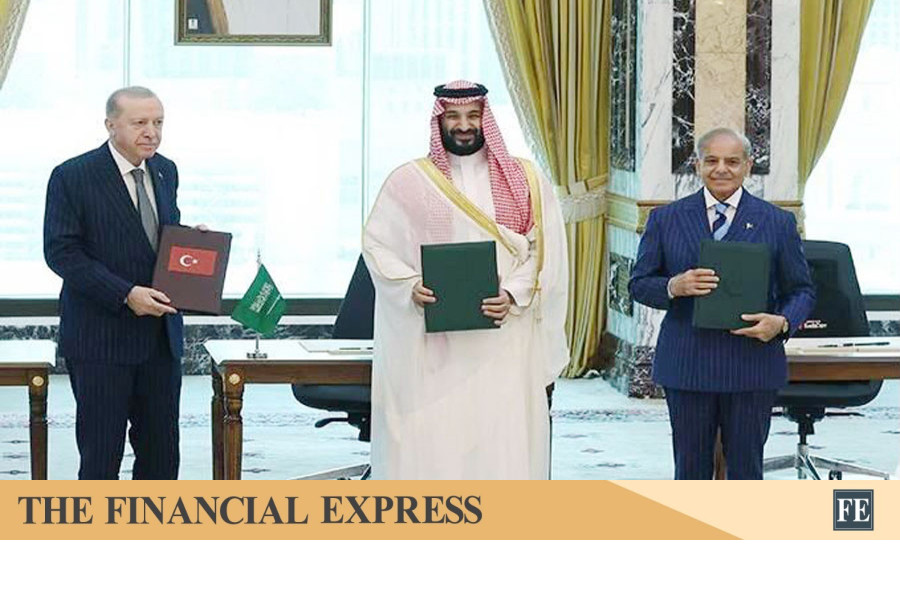
Turkish President Tayyip Erdogan, Saudi Crown Prince Mohammed bin Salman and Pakistan's Prime Minister Shehbaz Sharif sign a joint defence agreement in Mecca, Saudi Arabia, 7 August 2026. Reuters
To Muslims, Mecca is much more than any city. It is significant that the rulers of Saudi Arabia, Turkey, and Pakistan chose this city as the place to sign a defence pact. Even selecting Friday for the pact signing holds similar importance.
This trilateral alliance may desire a religious facade, something that Mohammed bin Salman, Recep Tayyip Erdoğan, and Shehbaz Sharif may have been hoping for. Such a religious facade might help them in terms of voter polarisation in their respective countries. While these rulers have done little to significantly curb the aggressors in Gaza.
Signing any agreement in Mecca on a Friday also shows the firmness of their commitment. Questions arise as to what exactly these countries seek to protect with this defence agreement? Does the convergence of these three mid-sized military powers bear additional significance for South Asia?
Strategic diversification begins on all fronts
These trilateral signatories do not share borders. Thus, it cannot be called a regional alliance. It can be assumed that Saudi Arabia's extra interest is what has drawn Shehbaz Sharif and Erdoğan to Mecca.
The rulers in the Middle East who have long relied on the United States to protect their thrones are gradually seeing that longstanding advantage come to an end. The royal families of this region have been safely ensconced in such a security arrangement for a long time. However, by challenging the US -Israel axis, Iran has shattered the old sense of security for Washington's Arab allies.
Many countries around the world have taken immediate lessons from this scenario. Everyone is reevaluating and rearranging their defence policies and strategies. Strategic diversification has started everywhere.
The Mecca Agreement is its first major manifestation. The harsh reality has brought these three distant powers closer. Moreover, without relinquishing decision-making freedom, all those involved in the agreement were able to add additional weight to their international image. Yet, Riyadh-Washington and Islamabad-Beijing ties persist. Turkey does not have to leave NATO either.
The economic backdrop of this agreement is also worth considering. Gulf countries serve as major centres for global capitalism. Iran's counterattack in the face of aggression has shaken down assets and investments in that area. Securing these capitalist centres is crucial for many. Hence, the Mecca Agreement does not solely involve the interests of three countries; it has a significant political economy component. However, more than the moment of the agreement, everyone is interested in seeing how much importance the three countries attach to utilising it. It's still unclear whether it will have a unitary command structure like NATO.
The Mecca agreement brings India and Israel closer
The conflict between Iran and Israel and the US and its consequences have set the backdrop for this agreement. All three signing rulers are more or less close to the US. For these reasons, many have wondered whether Iran was the intended counterpart to the agreement. Some may also have thought of Israel.
News emerged that just before the agreement was signed, the Prime Minister of Israel called the Prime Minister of India. Naturally, the question arises, how significant is this agreement for them? Particularly against the backdrop of India's adversarial relationship with Pakistan, has this trilateral military alliance created additional pressure for New Delhi? Will they, therefore, seek to join with someone else to enhance their ''defense'' capability.
The agreement states that if any of the three allies are attacked, it will be considered an attack on all three countries. This clause is similar to NATO's Article 5. This also means that in any future India-Pakistan war, Turkey and Saudi Arabia will stand by Islamabad. Or, in any Iran-Saudi military conflict, Pakistan and Turkey will fight against Tehran. Pakistan has already deployed some air defence systems and troops in Saudi Arabia. Prior to this trilateral agreement, Pakistan had signed another separate military agreement with Saudi Arabia in the previous September. The subsequent agreement is undoubtedly a significant advancement over the previous one.
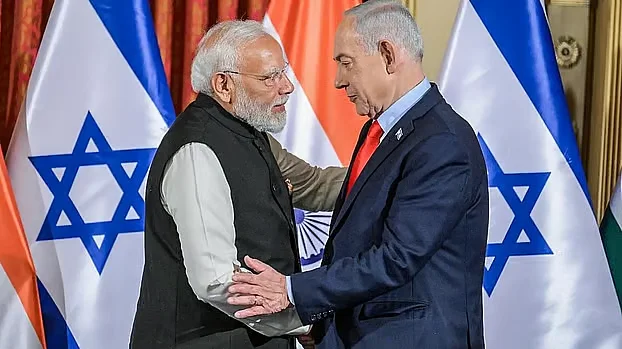
Netanyahu calling Narendra Modi in front of the Mecca Agreement signing is certainly indicative. Photo: ANI
These are clear indications that military thinking and structure are set for upheaval in Asia. Pakistan’s Deputy Prime Minister has already said, "This agreement is open to other countries as well." After his statement, curiosity has arisen about which other countries might be potential partners.
The call from Netanyahu to Narendra Modi ahead of the Mecca Agreement signing is certainly indicative. Saudi Arabia, Turkey, or Pakistan is not currently facing any new hostilities. But they have taken the news of this military alliance of three Muslim-majority countries as a distant warning signal. This is equally true for Iran.
Turkey has competition with Tel Aviv in Syria and other places. Besides Iran, several Israeli politicians have recently labeled Turkey as a ''threat'' despite Turkey being their oldest diplomatic friend in the Muslim world. They also find the nuclear capability of Muslim-majority Pakistan to be ‘dangerous’. For these reasons, Tel Aviv has no reason to view this trilateral agreement favourably. On 9 August, the Jerusalem Post wrote, "The Mecca Agreement will further develop Israel-India relations." Both countries want to bring the UAE closer to the same goal.
Under pressure of increased militarisation in South Asia
The Mecca Agreement has also posed new questions for Bangladesh. Should Bangladesh become part of such a coalition? Or, in response to increased Israel-India military proximity, what should be Bangladesh's course of action? Surely, policy makers in Bangladesh have already begun to ponder these questions.
The way the US-Iran conflict is coming to an end has helped create a strong and courageous image of Tehran in the Muslim world. To maintain leadership positions in Muslim-majority countries, Saudi Arabia and Turkey have entered a competition. They will continually seek Bangladesh as a partner to manage that rivalry. Turkey has shown a keen interest in enhancing military relations with Bangladesh for two to three years.
Simultaneously, the Indo-Pakistan military competition in South Asia is accelerating rapidly. Increased India-Israel closeness as a reaction to the trilateral agreement will undoubtedly intensify military rivalry in South Asia. As a side effect, we may witness numerous regional proxy wars.
Pakistan's economy was unable to sustain its vast military structure and manpower. Yet, its military personnel enriched with experiences from many wars. Saudi finance and Turkey's military industry could rejuvenate this. All three countries will benefit from this process.
In response, if advanced Israeli technology starts entering India's military framework, New Delhi's military capabilities will also reach new heights. Post-Mecca Agreement, the motivation to form a counter-military block among India's policymakers is increasing. Serious discussions about the trilateral defence agreement are underway there.
Such retaliatory agreements and coalitions will impact and pressure Bangladesh, Nepal, and Sri Lanka. These countries find it challenging to match the militarisation of larger powers. These nations have been floundering to address the economic crisis sparked by wars in the Middle East in recent months. Now ahead of them awaits a long-term militarily complex phase. Just as the Mecca Agreement directly connects Turkey and Saudi Arabia with the situation in South Asia, it has also driven Israel’s increased activism.
*Altaf Parvez is a researcher on history
Altaf Parvez
Turkish President Tayyip Erdogan, Saudi Crown Prince Mohammed bin Salman and Pakistan's Prime Minister Shehbaz Sharif sign a joint defence agreement in Mecca, Saudi Arabia, 7 August 2026. Reuters
To Muslims, Mecca is much more than any city. It is significant that the rulers of Saudi Arabia, Turkey, and Pakistan chose this city as the place to sign a defence pact. Even selecting Friday for the pact signing holds similar importance.
This trilateral alliance may desire a religious facade, something that Mohammed bin Salman, Recep Tayyip Erdoğan, and Shehbaz Sharif may have been hoping for. Such a religious facade might help them in terms of voter polarisation in their respective countries. While these rulers have done little to significantly curb the aggressors in Gaza.
Signing any agreement in Mecca on a Friday also shows the firmness of their commitment. Questions arise as to what exactly these countries seek to protect with this defence agreement? Does the convergence of these three mid-sized military powers bear additional significance for South Asia?
Strategic diversification begins on all fronts
These trilateral signatories do not share borders. Thus, it cannot be called a regional alliance. It can be assumed that Saudi Arabia's extra interest is what has drawn Shehbaz Sharif and Erdoğan to Mecca.
The rulers in the Middle East who have long relied on the United States to protect their thrones are gradually seeing that longstanding advantage come to an end. The royal families of this region have been safely ensconced in such a security arrangement for a long time. However, by challenging the US -Israel axis, Iran has shattered the old sense of security for Washington's Arab allies.
Many countries around the world have taken immediate lessons from this scenario. Everyone is reevaluating and rearranging their defence policies and strategies. Strategic diversification has started everywhere.
The Mecca Agreement is its first major manifestation. The harsh reality has brought these three distant powers closer. Moreover, without relinquishing decision-making freedom, all those involved in the agreement were able to add additional weight to their international image. Yet, Riyadh-Washington and Islamabad-Beijing ties persist. Turkey does not have to leave NATO either.
The economic backdrop of this agreement is also worth considering. Gulf countries serve as major centres for global capitalism. Iran's counterattack in the face of aggression has shaken down assets and investments in that area. Securing these capitalist centres is crucial for many. Hence, the Mecca Agreement does not solely involve the interests of three countries; it has a significant political economy component. However, more than the moment of the agreement, everyone is interested in seeing how much importance the three countries attach to utilising it. It's still unclear whether it will have a unitary command structure like NATO.
The Mecca agreement brings India and Israel closer
The conflict between Iran and Israel and the US and its consequences have set the backdrop for this agreement. All three signing rulers are more or less close to the US. For these reasons, many have wondered whether Iran was the intended counterpart to the agreement. Some may also have thought of Israel.
News emerged that just before the agreement was signed, the Prime Minister of Israel called the Prime Minister of India. Naturally, the question arises, how significant is this agreement for them? Particularly against the backdrop of India's adversarial relationship with Pakistan, has this trilateral military alliance created additional pressure for New Delhi? Will they, therefore, seek to join with someone else to enhance their ''defense'' capability.
The agreement states that if any of the three allies are attacked, it will be considered an attack on all three countries. This clause is similar to NATO's Article 5. This also means that in any future India-Pakistan war, Turkey and Saudi Arabia will stand by Islamabad. Or, in any Iran-Saudi military conflict, Pakistan and Turkey will fight against Tehran. Pakistan has already deployed some air defence systems and troops in Saudi Arabia. Prior to this trilateral agreement, Pakistan had signed another separate military agreement with Saudi Arabia in the previous September. The subsequent agreement is undoubtedly a significant advancement over the previous one.
Netanyahu calling Narendra Modi in front of the Mecca Agreement signing is certainly indicative. Photo: ANI
These are clear indications that military thinking and structure are set for upheaval in Asia. Pakistan’s Deputy Prime Minister has already said, "This agreement is open to other countries as well." After his statement, curiosity has arisen about which other countries might be potential partners.
The call from Netanyahu to Narendra Modi ahead of the Mecca Agreement signing is certainly indicative. Saudi Arabia, Turkey, or Pakistan is not currently facing any new hostilities. But they have taken the news of this military alliance of three Muslim-majority countries as a distant warning signal. This is equally true for Iran.
Turkey has competition with Tel Aviv in Syria and other places. Besides Iran, several Israeli politicians have recently labeled Turkey as a ''threat'' despite Turkey being their oldest diplomatic friend in the Muslim world. They also find the nuclear capability of Muslim-majority Pakistan to be ‘dangerous’. For these reasons, Tel Aviv has no reason to view this trilateral agreement favourably. On 9 August, the Jerusalem Post wrote, "The Mecca Agreement will further develop Israel-India relations." Both countries want to bring the UAE closer to the same goal.
Under pressure of increased militarisation in South Asia
The Mecca Agreement has also posed new questions for Bangladesh. Should Bangladesh become part of such a coalition? Or, in response to increased Israel-India military proximity, what should be Bangladesh's course of action? Surely, policy makers in Bangladesh have already begun to ponder these questions.
The way the US-Iran conflict is coming to an end has helped create a strong and courageous image of Tehran in the Muslim world. To maintain leadership positions in Muslim-majority countries, Saudi Arabia and Turkey have entered a competition. They will continually seek Bangladesh as a partner to manage that rivalry. Turkey has shown a keen interest in enhancing military relations with Bangladesh for two to three years.
Simultaneously, the Indo-Pakistan military competition in South Asia is accelerating rapidly. Increased India-Israel closeness as a reaction to the trilateral agreement will undoubtedly intensify military rivalry in South Asia. As a side effect, we may witness numerous regional proxy wars.
Pakistan's economy was unable to sustain its vast military structure and manpower. Yet, its military personnel enriched with experiences from many wars. Saudi finance and Turkey's military industry could rejuvenate this. All three countries will benefit from this process.
In response, if advanced Israeli technology starts entering India's military framework, New Delhi's military capabilities will also reach new heights. Post-Mecca Agreement, the motivation to form a counter-military block among India's policymakers is increasing. Serious discussions about the trilateral defence agreement are underway there.
Such retaliatory agreements and coalitions will impact and pressure Bangladesh, Nepal, and Sri Lanka. These countries find it challenging to match the militarisation of larger powers. These nations have been floundering to address the economic crisis sparked by wars in the Middle East in recent months. Now ahead of them awaits a long-term militarily complex phase. Just as the Mecca Agreement directly connects Turkey and Saudi Arabia with the situation in South Asia, it has also driven Israel’s increased activism.
*Altaf Parvez is a researcher on history