Home Watch Videos Wars Movies Login

[🇧🇩] Nepal---A bosom Friend of Bangladesh

[🇧🇩] Nepal---A bosom Friend of Bangladesh
23
1K
More threads by Saif

G Bangladesh Defense

Nepal, Bangladesh foreign ministers meet on sidelines of Indian Ocean Conference

UNB
Published :
Apr 10, 2026 22:58
Updated :
Apr 10, 2026 22:58

1775868210200.webp


Nepal's Minister for Foreign Affairs Shisir Khanal held a meeting on Friday with Bangladesh Foreign Minister Dr Khalilur Rahman on the margins of the Indian Ocean Conference in Port Louis, Mauritius.

Both sides expressed satisfaction over the cordial state of bilateral relations.

They deliberated on diverse sectors to further consolidate cooperation and enhance mutual ties.

Prime Minister’s Foreign Affairs Adviser Humaiun Kobir was also present at the meeting, an official told UNB.

Foreign Minister Dr Khalilur is now in Port Louis, the capital of the East African country Mauritius, to attend the 9th Indian Ocean Conference (IOC-2026), which began on Friday.

It brought together leaders, policymakers, and experts from across the Indian Ocean Region to deliberate on shared responsibilities, cooperative frameworks, and the future of regional governance.

On the sidelines, Dr Khalilur is expected to hold discussions with counterparts from other participating nations, a senior official told UNB, noting that this is also an opportunity to seek support for Bangladesh’s candidacy for the presidency of the 81st United Nations General Assembly (2026–27).

The India Foundation, in association with the Government of Mauritius and the Ministry of External Affairs of India, is organizing the 9th Indian Ocean Conference.

The Foreign Minister had a number of meetings in New Delhi on Wednesday and reached Mauritius on Thursday.

Indian External Affairs Minister Dr S Jaishankar is also attending the 9th Indian Ocean Conference.

He will deliver the keynote address at the event. The visit, India said, underscores its ‘Neighbourhood First’ policy, Vision MAHASAGAR, and commitment to the Global South.

The Indian Ocean Conference was started in 2016 by the India Foundation in association with think tanks and institutions from the region, with participation from 30 countries.

In recent years, the conference has emerged as a flagship forum for countries to discuss and deliberate on issues of mutual interest.​
 
Analyze

Analyze Post

Add your ideas here:
Highlight Cite Respond

Bangladesh pavilion largest attraction in Kathmandu fair
Bangladesh Sangbad Sangstha . Dhaka 09 May, 2026, 05:01


The Bangladesh Pavilion has emerged as the largest international attraction at the ‘2nd South Asian Trade Fair 2026’ in Kathmandu, showcasing the country’s growing export strength and expanding trade engagement in the South Asian market.Diaspora Community Forum

The pavilion was formally inaugurated on Thursday at the Bhrikuti Mandap Exhibition Hall in the Nepalese capital with financial support from the Export Promotion Bureau (EPB) and under the supervision of the Bangladesh Embassy in Kathmandu, said a press release here.

Bangladesh Ambassador to Nepal Md Shafiqur Rahman inaugurated the pavilion as the chief guest in the presence of senior Nepalese government officials, diplomats, business leaders, and media representatives.

A large number of Nepalese visitors thronged the venue during the inauguration ceremony, demonstrating strong interest in Bangladeshi products and regional trade cooperation.

Featuring participation from 24 Bangladeshi companies, the pavilion is displaying a wide range of export-oriented products, including readymade garments (RMG), leather goods, jute products, handicrafts, and apparel items

While visiting the stalls, the ambassador said Bangladesh’s extensive participation in the fair reflects the country’s growing position as a regional economic force and its increasing competitiveness in international trade.

To facilitate trade promotion and assist prospective buyers and investors, the EPB has also established a dedicated information booth within the pavilion.

Officials concerned said the participation aims to strengthen the global image of the ‘Made in Bangladesh’ brand and expand the country’s export opportunities in South Asian markets.

As part of the five-day event, organizers have also arranged several business-oriented programmes, including business-to-business (B2B) meetings, consultations with trade bodies, sourcing dinners, seminars, and market visits to explore new commercial opportunities in Nepal.

The ‘2nd South Asian Trade Fair 2026’ has been jointly organized by the Nepal Chamber of Commerce (NCC) and Introduction Trade Shows Nepal.

The fair will continue at the Bhrikuti Mandap Exhibition Hall until May 11 and remain open daily from 10:30 am to 6:30 pm.​
 
Analyze

Analyze Post

Add your ideas here:
Highlight Cite Respond

Nepal to start exporting electricity to Bangladesh with symbolic 40MW from Monday

Published :
Jun 14, 2026 23:34
Updated :
Jun 14, 2026 23:34

1781480124470.webp


Bangladesh is set to receive 40 megawatts of electricity from Nepal via India for five months, starting from June 15 to November, under a tripartite agreement signed between Bangladesh, Nepal and India on October 3, 2024.

Though it is symbolic given the demands that Bangladesh has now, both sides see potential to increase in the future, officials said, UNB reports.

Nepal’s hydropower potential and the increasing energy needs of Bangladesh provide ample opportunities to enhance energy cooperation between the countries.

In the first ten months of the current fiscal, Nepal exported electricity worth almost Rs 21 billion (about Tk 25.6 billion) to India and Bangladesh. Last year, the number stood at above Rs 13 billion.

Bangladesh and Nepal signed a Memorandum of Understanding (MoU) on Cooperation in the Field of Power Sector on 10 August 2018.

Under this MoU, a Joint Steering Committee (JSC) at the energy/power secretary level and a Joint Working Group (JWG) at the joint secretary level were established to facilitate collaboration and advance initiatives in the power sector.

The 7th meetings of JSC and JWG on Nepal-Bangladesh Cooperation in Power Sector were held in Dhaka on 26-27 November 2025.

A tripartite Power Sales Agreement (PSA) to export 40 MW of electricity from Nepal to Bangladesh was signed on 3 October 2024 between the Nepal Electricity Authority (NEA), the Bangladesh Power Development Board (BPDB), and NTPC Vidyut Vyapar Nigam Ltd. (NVVN) of India.

The agreement came into fruition with the commencement of the export of 40 MW of electricity from Nepal to Bangladesh on 15 November 2024.

As per the Agreement, Nepal has been exporting 40 MW of electricity to Bangladesh each year from 15 June to 15 November.

Negotiations are also underway regarding the 683 MW Sunkoshi III hydropower project on a joint venture basis.

Bangladesh highlighted its commitment to working on long-term plans to ensure strategic partnerships, and said that increasing trade volume between the two countries would be mutually beneficial.​
 
Analyze

Analyze Post

Add your ideas here:
Highlight Cite Respond

Journalist delegates visit Bangladesh embassy in Kathmandu


1786751327252.webp


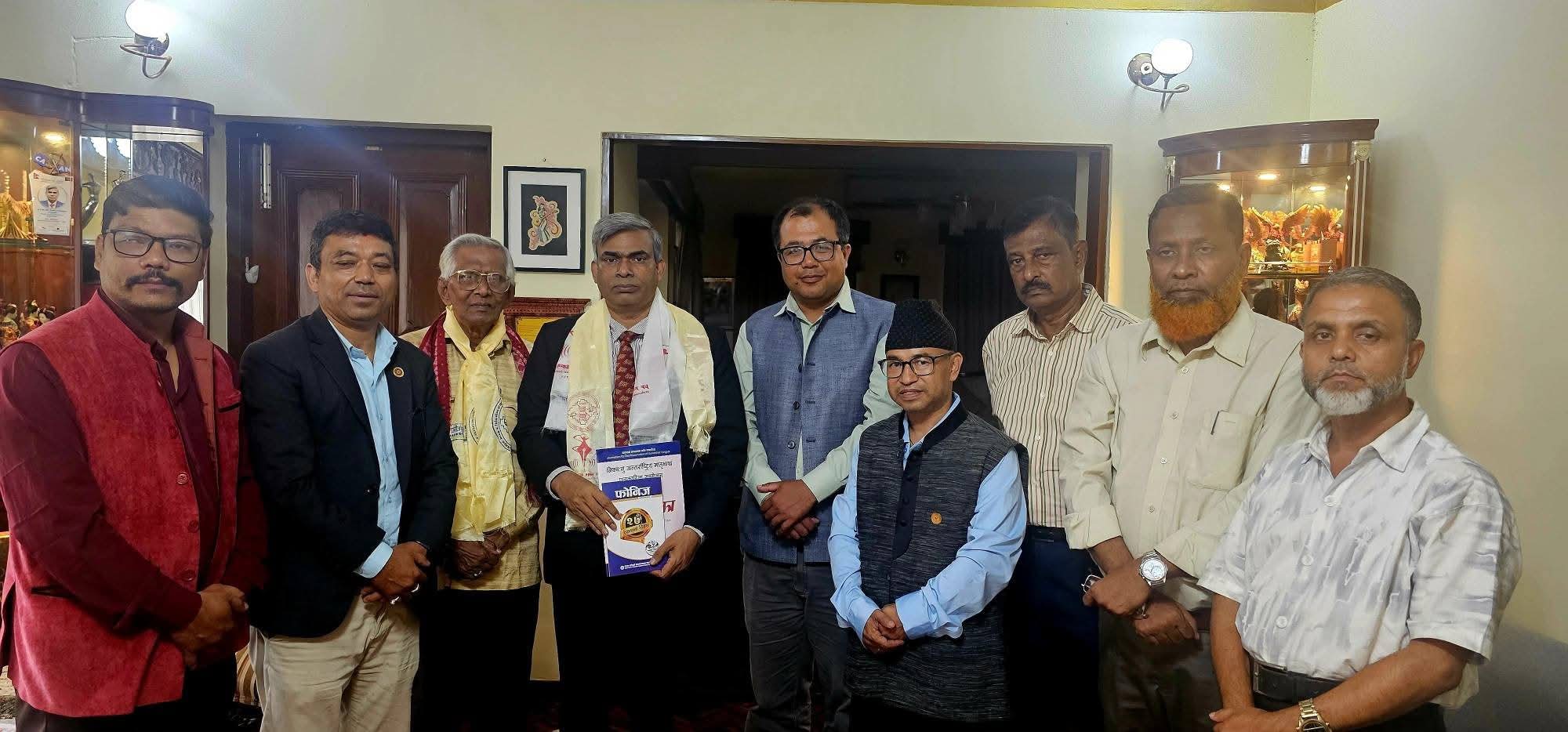
A joint delegation of senior journalists from Bangladesh and Nepal visited the Bangladesh Embassy in Kathmandu on Thursday.

The delegates, who attended the recently concluded 3rd International Indigenous Language Conference-2026, visited Bangladesh House in Kathmandu.

Bangladesh Ambassador Shafiqur Rahman received the 10-member delegation and exchanged views with them on various issues concerning Nepal-Bangladesh relations, the recently concluded conference, indigenous language journalism and Bangladesh's role in this regard.

A 13-member Bangladeshi delegation is currently in Kathmandu in connection with the four-day conference.

The conference was held from August 9 to 12 in Kathmandu to mark World Indigenous Day on August 9. About 35,000 people attended the World Indigenous Day events, including delegations from 17 countries.

The Bangladesh delegation was led by Ziaur Rahman and included Md Abdur Rahman, secretary general of the SAARC Journalist Forum and senior correspondent of The Bangladesh Post; Mustaq Ahmed Mubaraqui, editor of The Daily Bangabani; Md Ziaur Rahman, special correspondent of The Daily Ajkal; Mohammad Moniruzzaman, editor of Daily Bank Bima Arthority; Panna Zaman, managing editor of Daily Amar Bangla; and Md Abu Bakar Siddique, senior correspondent of Daily Ajker Probhat.

The Nepali representatives who accompanied the Bangladesh delegation at the embassy included Nripendra Lal Shrestha, president of the National Forum of News Journalists and editor of Lahana Media; Sunil Maharjan, vice president of the National Forum of News Journalists; Surendra Bhakta Shrestha of Lahana Weekly; and Raju Napit of AP1 TV.

The meeting was followed by a lunch hosted in honour of the delegation. The event took place in a warm and cordial atmosphere.​
 
Analyze

Analyze Post

Add your ideas here:
Highlight Cite Respond

PM mourns deaths in Nepal flash floods


1787785183705.webp


Prime Minister Tarique Rahman has expressed deep shock and sorrow over the tragic loss of lives caused by devastating flash floods in Nepal and conveyed condolences to the Nepalese government and people.

In a condolence message, he conveyed heartfelt sympathy on behalf of the government and people of Bangladesh to Nepalese Prime Minister Balendra Shah and the people of Nepal.

In the condolence message, the Prime Minister said, "Deeply shocked and saddened to learn of the tragic loss of lives, caused by the devastating floods that have struck Nepal. On behalf of my people and Government, I convey our deepest condolences to Prime Minister Balendra Shah and the people of Nepal."

"Our thoughts and prayers are with those who have lost their lives, and with their families and loved ones as they bear this immense loss. We stand ready to extend any support that Nepal may need at this time of distress," added the Prime Minister.​
 
Analyze

Analyze Post

Add your ideas here:
Highlight Cite Respond

Bangladesh ready to assist Nepal after deadly floods


1787785289654.webp


Bangladesh, on Wednesday, expressed deep shock over the loss of lives and devastation caused by sudden flash floods and mudslides in Nepal, saying Dhaka stands ready to assist Kathmandu in relief and rescue efforts.

"The people of Bangladesh are shocked and saddened by the sudden flash floods and mudslides in Nepal causing death and destruction," the Ministry of Foreign Affairs said in a press release.

It said Bangladesh is closely following reports of the disaster, with hundreds of people reported missing and many feared dead, including tourists.

"The people and government of Prime Minister Tarique Rahman express solidarity with the government and the friendly people of Nepal in this difficult time," the ministry said.

Bangladesh also conveyed its deep condolences over the loss of lives and expressed hope for the early recovery of those affected by the disaster.

"We express our deep condolences for the deceased. We hope for early recovery and treatment of those missing," the statement said.

Reaffirming Bangladesh's solidarity with Nepal, the foreign ministry said Dhaka is prepared to extend assistance in dealing with the aftermath of the disaster.

"Bangladesh stands ready to assist Nepal in any possible way in relief and rescue efforts," it said.​
 
Analyze

Analyze Post

Add your ideas here:
Highlight Cite Respond

Nepal's disaster and need for regional action

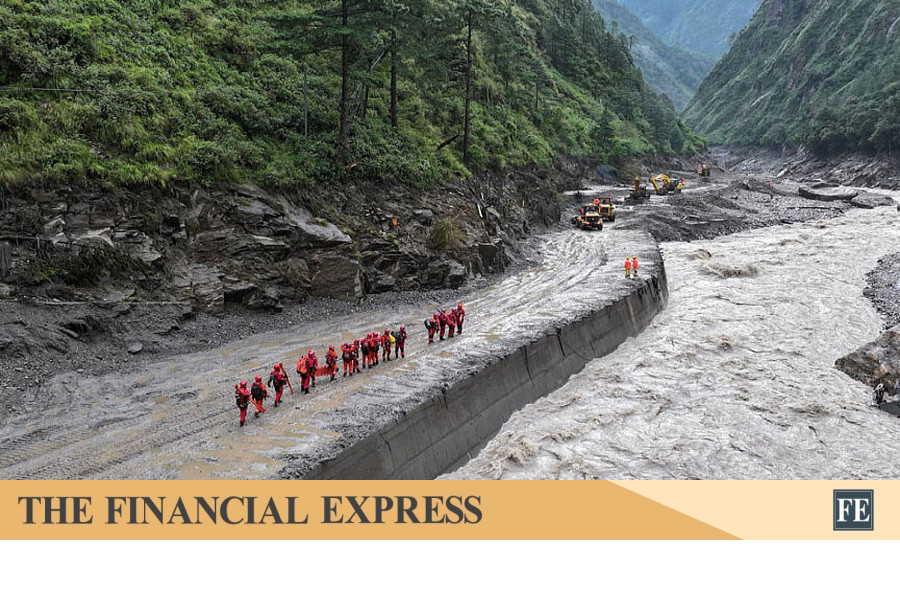
The extent of the disaster in Nepal is becoming clearer by the hour and it is devastating to say the least. The death toll has already reached 547 while more than 1,400 people are still missing. Rescue teams are working through land cut off by broken roads and collapsed bridges, and they warn that the number of dead will likely rise as they reach villages buried under mud and rock. At the start there was confusion about what had happened, and many believed the ground shook because of an earthquake. Scientists later confirmed that the shaking came from a massive piece of ice breaking off a high glacier. That ice, together with a wall of rock, mud and water, crashed through the valleys below. Whole villages along the Bhote Koshi and Trishuli rivers have been swept away, along with bridges, roads and the power plants that communities relied on for electricity and jobs. Satellite images show settlements that have simply ceased to exist.

This is not the first time such destruction has visited these mountains. The border shared by Nepal and Tibet saw similar flood last year, and the Sikkim disaster of October 2023 showed how one cracking glacier can wreck buildings and roads. Scientists have been warning for years that the Himalayan region is warming about twice as fast as the rest of the planet. Glaciers are melting faster than before and glacial lakes are growing larger and more dangerous. The glacial lakes across Nepal, India and Tibet number in the thousands and most go unwatched because they sit in terrain that is difficult to reach. Knowing exactly when a glacier will break is still hard even with satellites watching from above, but that difficulty is no excuse for having so little regular tracking in a region everyone knows is at risk.

Attention has by now turned from why this happened to how the world is responding. Help has been offered from several directions, though Nepal has been slow to accept it. Foreign ministry spokesman Lok Bahadur Chhetri said on Friday that such offers were only natural but that Nepal's own security forces were handling the operation and did not need this kind of help for now. South Korea has already sent a rapid response team to Kathmandu, but it has not been deployed. Reports say India, China, the United States, Britain, Japan, South Korea, Sri Lanka and Bangladesh had all asked for permission to send search and rescue teams. Relying mainly on its own forces is understandable given that the terrain is known best by those already working it, but with over a thousand still missing and whole areas cut off, some help from outside may still be worth accepting sooner rather than later.

More importantly, search and rescue is only the first part of Nepal's need. Thousands who have lost their homes will need food, clean water, medicine and shelter in the days ahead. Many will also have lost their livelihoods, while the destruction of roads, bridges and power plants will make recovery even harder. The international community has shown willingness to help and that help must be directed at long-term recovery. But the region also owes itself better protection against what comes next. Countries across the Himalayas all face the same danger from melting glaciers and weak slopes and it makes far more sense for them to watch this risk together instead of each one working alone.​
 
Analyze

Analyze Post

Add your ideas here:
Highlight Cite Respond

Nepal resumes flood rescue, seeks technical help and billions of dollars

Reuters
Kathmandu, Nepal

1788045897298.webp

Rescue workers clear debris during search operations near the Gyirong port after a mudslide, in Shigatse, Tibet Autonomous Region, China August 29, 2026. Reuters

Nepal resumed search and rescue work on Saturday after a brief weather-related suspension as authorities searched for nearly 3,000 missing people following a devastating flood that killed hundreds and tore through a region bordering Tibet.

The impoverished Himalayan nation of 30 million people called for specialist foreign assistance and its finance minister told Reuters it would also need about USD 4 billion to USD 5 billion to rebuild after the disaster.

Triggered by a glacier collapse, a torrent of rock, ice, mud and debris hurtled through mountain river systems on Wednesday, killing at least 669 people in Nepal and seven in China's Tibet and sweeping away buildings, bridges and power stations.

Nearly 3,000 people remain missing, including about 2,426 in Nepal and 554 in Tibet's Gyirong County, among them at least 540 foreign nationals, many of them Hindu pilgrims from India.

Decomposed, unrecognisable bodies to be buried

Search and rescue operations were temporarily halted because of rain and fog but resumed later in the afternoon, a police officer in hard-hit Rasuwa district said.

"Helicopters are flying and the operation resumed following some improvement in weather," he said, on condition of anonymity as he is not authorised to speak to the media.

Authorities had also suspended rescue work on Friday when a lake, formed across the Nepal-China border after the flood, began overflowing into Nepal's Lhende Khola and Trishuli rivers.

By Saturday, the risk had eased and parts of the lake bed were visible, Chinese authorities and state broadcaster CCTV said. Satellite images suggested water was slowly draining from the lake, gradually reducing its size, CCTV reported.

The lake is one of two upstream of the flood zone being monitored by Nepal. Flood risks will persist until both have fully drained, an official warned.

Three days after the disaster, authorities said some bodies being recovered had decomposed beyond recognition. They would be buried after legal formalities because of health risks and a fear of disease outbreaks.

"DNA samples will be collected, and the bodies will be buried in an open space," the Chitwan district administration said in a notice.

Families search for the missing

In Kathmandu, families of missing people gathered outside Maharajgunj Medical Campus, where some bodies had been taken. Many tried to identify relatives from photographs of the bodies displayed on gates and boundary walls.

In Malaysia, families of 91 citizens listed as "uncontactable" across Tibet and Nepal also waited for news.

1788045947504.webp

A woman cries as she waits for updates on whereabouts of her missing family member, in the aftermath of flash floods, outside the Maithili Barrack, an army training center which serves as a primary base to airlift survivors from Rasuwa at Trishuli in Nuwakot district, Nepal, August 27, 2026.REUTERS

Manivannan Rethinam, a representative for some of them, urged the foreign ministry to establish a communication channel for faster updates, saying the lack of information was "profoundly painful" for relatives awaiting news.

Malaysia's foreign ministry said search and rescue and verification efforts were continuing.

For survivors, the ordeal is far from over as they face the task of rebuilding their lives.

Saraswati Ghale, 43, said her home was destroyed in the flood. She recalled scrambling uphill as the water struck, shaking the ground "like there was an earthquake".

"I don’t have anything (left) ... I am saved but who knows how things will pan out," she said.

Nepal's Finance Minister Swarnim Wagle told Reuters the government's initial estimate was that rebuilding would cost between USD 4 billion and USD 5 billion.

"This is just an estimate. Loss and damage is being assessed," he said.

Technical aid heads to Nepal

Nepal's Foreign Minister Shisir Khanal said the country did not need help with search and rescue but required specialist assistance to rescue people trapped in tunnels, restore transport and communication lines where bridges had been destroyed, identify bodies, conduct DNA testing and store bodies for longer periods.

"We have already made requests for such specialised services and technical assistance in areas where we don't have enough expertise and technical know-how," he told Reuters late on Friday.

A team of Indian tunnel experts arrived in Nepal on Saturday, he said, while China's Xinhua news agency reported Beijing had dispatched five tunnel experts to support rescue efforts, with four more due to join them.
India has already sent three flights carrying 60 tons of relief supplies, including blankets, medicines, and food.

It has also offered disaster-response personnel, prefabricated bridges and technical teams to help restore connectivity, the foreign ministry said.
Chinese authorities are also racing to trace more than 500 people still missing after the flood.

Rescuers reached the worst-hit Gyirong border crossing complex on Friday, using ropes to navigate forests and cliffs after roads leading to the site were destroyed.

In bleak, rainy conditions on Saturday morning, more than 50 rescue workers combed through the rubble of boulders and mud, looking for signs of life and calling out for survivors, CCTV reported.

Surveillance footage from the crossing showed torrents of water and debris engulfing buildings when the flood hit, as people tried to flee.​
 
Analyze

Analyze Post

Add your ideas here:
Highlight Cite Respond

Latest Posts

Back
 
G
O
 
H
O
M
E