Home Watch Videos Wars

[🇧🇩] Monitoring Bangladesh's Economy

[🇧🇩] Monitoring Bangladesh's Economy
955
25K
More threads by Saif

G Bangladesh Defense

BD's move to join trade blocs
Published :
May 17, 2025 00:54
Updated :
May 17, 2025 00:54

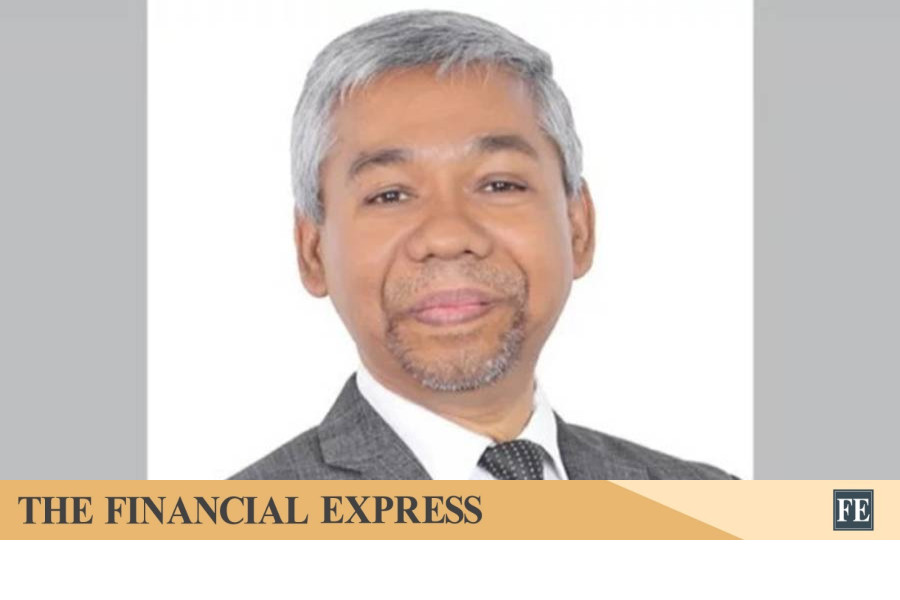
1747438824404.webp


Rising protectionism and tariff wars among the world's leading economies in recent years have put the case for multilateralism at a disadvantage. Encouraging local manufacturing by reducing reliance on imported goods or the so-called policy of import substitution might now gain a stronger ground. Unfortunately, the opposite is true. No doubt, high tariffs on imported items raise relative profitability of industries serving the domestic market in the short run. But in the long run, it hampers production for overseas markets, that is, exports. Obviously, for an economy highly dependent on export, the existing policy of high tariffs on imports has created an uneven playing field for Bangladeshi exporters when competing in global markets.

The issue again came to the fore when the ADB chief economist Albert Park was talking to this paper on the sidelines of the multilateral donor agency's recently held annual meeting at an overseas location. In fact, the ADB economist made no bones about the fact that other countries are unwilling to reach both bilateral and multilateral trade arguments with Bangladesh. But the fact that high internal tariff is a number one stumbling block to Bangladesh's expanded trade relations with many international and regional trade blocs is not a realization brought home for the first time. The issue came up on multiple occasions at discussions forums where local experts pointed out that Bangladesh's average nominal tariffs are higher than those in other low-income, middle income and high income countries. The nominal tariff, for instance, is 27.6 per cent in Bangladesh which is higher than many of its neighbouring economies such as India where it is 18.1 per cent and in Sri Lanka 22.4 per cent. But it cannot also be said that those South Asian neighbours have liberal tariff regimes. To tell the truth, their differences, when it comes to liberal tariff policies, are just a matter of degree compared to Bangladesh. So, it is not hard to understand why the South Asian Association for Regional Cooperation (SAARC) could not succeed even four decades after its inception. However, intense political rivalries between two nuclear members, India and Pakistan, are no less to blame for SAARC's stunted growth.

By comparison, the South East Asian economies like Thailand, Vietnam, Malaysia and Indonesia with their 9.7 per cent, 9.6 per cent, 5.6 per cent and 8.0 per cent nominal tariffs are indeed better placed than Bangladesh in reaching mutually beneficial deals with their regional competitors. Small wonder that the 10-member ASEAN with a total GDP of US$4.249 trillion and a population of 683.29 million is a mammoth economic bloc sharing some 8.0 per cent of the global export. Bangladesh could have immensely benefited by being a member of such forward looking trade blocs known for less protectionist trade policies.

The good news is Bangladesh has shown interest, thanks to Chief Adviser, Dr Muhammad Yunus's overture to Malaysia's diplomatic mission in Bangladesh soon after his assumption of office in late August last year, to join ASEAN. Also, Bangladesh's effort to join the Regional Comprehensive Economic Partnership (RCEP) to retain preferential trade access to major markets like China, Japan, South Korea and the ASEAN countries after its LDC graduation in 2026 is also commendable. However, while making these moves to join less protectionist trade blocs, Bangladesh should also redouble its efforts to widen and diversify its export basket. Out of its some 1,377 non-RMG export items, 174 are highly competitive. What is urgent is to proactively develop and explore the overseas markets for these products.​
 
Analyze

Analyze Post

Add your ideas here:
Highlight Cite Fact Check Respond
  • Love (+3)
Reactions: Bilal9

Forex reserves stand at $25.44b: Bangladesh Bank

Published :
May 19, 2025 20:04
Updated :
May 19, 2025 20:06

1747697656291.webp


Bangladesh's foreign exchange reserves have stood at $25.44 billion.

But, as per the International Monetary Fund (IMF) methodology under the Balance of Payments and International Investment Position Manual (BPM6), Bangladesh's foreign exchange reserves stood at $20.07 billion, BSS reports citing a Bangladesh Bank press release.​
 
Analyze

Analyze Post

Add your ideas here:
Highlight Cite Fact Check Respond
  • Love (+3)
Reactions: Bilal9

Division of NBR was not done properly: Debapriya Bhattacharya
Staff Correspondent Dhaka
Published: 19 May 2025, 22: 13

1747699611954.webp

CPD’s distinguished fellow Debapriya Bhattacharya addresses a dialogue titled “Policy reforms and the upcoming national budget” organised by Citizen’s Platform at a Gulshan hotel in Dhaka on 20 May 2025 Prothom Alo

Debapriya Bhattacharya, a distinguished fellow at the private research organisation Centre for Policy Dialogue (CPD), criticised the process of dividing the National Board of Revenue (NBR) into two divisions.

“It was right to divide the National Board of Revenue into two parts. This was also recommended in our white paper. But the way it has been done is not right,” he said at an event on Monday.

According to him, the method of division was flawed as it reduced the space for professionals without proper discussion and maintained excessive control over other autonomous areas.

Ensuring a proper division has become a critical issue now, he remarked.

Debapriya Bhattacharya made these remarks today at a dialogue titled “Policy reforms and the upcoming national budget” organised by Citizen’s Platform at a Gulshan hotel in Dhaka.

During the dialogue, the CPD distinguished fellow pointed out that during the previous government, those involved in kleptocracy or systemic looting included politicians who have now fled, while business groups are not so active now. However, bureaucrats have been revitalised.

Mentioning the government’s lack of attention to economic reform, he said, “Our general concern is that while the government focuses significantly on other reforms, we do not see the same level of attention given to economic reforms. This is a major issue, and they fail to realise that if there is no stability in the economy, no other reform can be sustainable.”

Despite so many shortcomings and inconsistencies, Debapriya Bhattacharya thinks that the implementation of the budget will largely depend on four factors: the outcome of the ongoing dialogue on national unity, a clear roadmap regarding the election, whether the promised justice will be delivered before or after the elections, and the overall situation of law, order, and security.

He further stated, “The current components necessary for investment are not very encouraging. As a result, employment is not increasing. The rate of wage growth for workers is below the rate of inflation, which means their real income is declining. Therefore, we cannot firmly say that the economy is on a way to recovery.”

The chief guest at the event was Anisuzzaman Chowdhury, special assistant to the Chief Adviser, and the special guest was Amir Khasru Mahmud Chowdhury, a standing committee member of the Bangladesh Nationalist Party.​
 
Analyze

Analyze Post

Add your ideas here:
Highlight Cite Fact Check Respond

How is the economy doing?
The silver lining is that the economy isn’t falling apart


1747701543476.webp


Globally celebrated American musician's lyrics, "the answer, my friend, is blowing in the wind," might provide a poetic response—though not entirely. A portion of the answer about Bangladesh's economic trajectory can indeed be gleaned from tangible and verifiable realities.

The "blowing" element captures the uncertainty surrounding where the economy is heading. This uncertainty stems less from Bangladesh's economic fundamentals—like resource endowments, technology, geography, or culture—and more from profound unpredictability both locally and globally.

Not surprisingly, from the perspective of history, given the sudden political shift in August 2024, Bangladesh is yet to cohesively unite social forces in a way that drives sustained development. The silver lining is that the economy isn't falling apart. It has, in fact, managed to recover remarkably, coming from behind on several fronts amidst deep fragilities and hard bumps.

The point of departure

The post-August 5 political regime inherited an economy grappling with severe distress across multiple fronts. Concrete evidence of this distress was visible in data reflecting quarterly GDP growth, monthly inflation trends, escalating prices of staples like food and medicine, forex reserves held by Bangladesh Bank and domestic banks, rising non-performing loans, deteriorated assets in the banking system, accumulated arrears in the energy sector, mounting interest expenditures within the government budget, and the composition and scale of the government's domestic and public debt.

The White Paper dismantled the overly optimistic development narrative left by the previous regime. It presented a data-driven analysis of an economy stuck in a low middle-income trap, plagued by stagnating investment rates (quality concerns notwithstanding), a narrow manufacturing base reliant on an even narrower export sector, a persistently high share of informal production and exchange, a growing pool of youth excluded from employment, education, and training opportunities, a declining tax intensity falling below peer benchmarks, entrenched rent-seeking in markets, and systemic corruption in public service delivery.

Yes, Bangladesh did face significant spillovers from successive global crises. High inflation, tight financial conditions, a stronger US dollar, and weak activity in large economies amid heightened geopolitical tensions have characterized the post-pandemic global landscape. But the real question is why Bangladesh, unlike many of its peers in South and East Asia, fared so poorly in responding to these challenges. This is attributable largely to domestic policy failures.

Recovery and stabilisation

Over the past nine months, Bangladesh's economic path has been marked by a mix of progress and enduring hurdles. Gradual improvements in key indicators have emerged despite Dhaka—the centre of Bangladesh's economic gravity—being mired in regular demonstrations, often bringing disruptions to daily life and traffic, almost as if woven into the city's routine.

One of the most noteworthy shifts is the recovery in GDP growth. By the fourth quarter of 2024, GDP expanded to over 4%, a significant improvement from the dismal 2% recorded in the first quarter. Despite being below the historic corrected average of 4.2%, it marks a positive turn driven primarily by industry.

This recovery is mirrored in other indicators of economic activity, such as merchandise exports, which averaged $4 billion per month from July to April in the current fiscal year, compared to $3.4 billion per month last year. Similarly, remittances climbed from $1.75 billion per month to over $2.7 billion per month during the same period, probably reflecting, at least in part, slumping illicit financial outflows. Imports rose from $5.2 billion per month to $5.5 billion per month from July to March. The government was successful in providing uninterrupted electricity, notwithstanding the changed political economy in the sector and frequent gas shortages.

Inflation has decreased by 172 basis points since December, reflecting some easing of price pressures that had been fuelled by high food and energy costs, as well as rising import prices due to the depreciation of the taka and expansionary policies. Signs of relief became evident in the third quarter of FY25. Bangladesh Bank has maintained a firm monetary stance. The real policy rate turned positive in January 2025, marking the first occurrence of such a shift since February 2020.

Forex reserves, which experienced post-Asian Clearing Union lows, have seen a modest rise, with net international reserves consistently hovering in the $15–16 billion range. The narrowing of the current account deficit and persistence of the financial account surplus helped the overall balance of payments deficit to decline. Banking system net forex balances maintained positive daily positions between $200–700 million. Correspondent banking relationships, which faced setbacks in the aftermath of July 36, are gradually normalising. Government arrears have declined steadily. The differential between risky and risk-free interest rates is returning to relative normalcy.

Fragilities and bumps

These improvements coexist with significant underlying issues. Labour market weaknesses persisted through the second quarter of FY25. Both employment and real wages are down, indicating demand weaknesses affecting vulnerable populations disproportionately and widening social and economic disparities. The World Bank's April Bangladesh Development Update projects an additional 3 million people pushed into extreme poverty in 2025.

Weaknesses in labour demand are corroborated by subdued domestic and foreign investments. A historic low of $812 million per month in capital goods imports between July and February FY25 indicates bearish sentiment among investors. Capital goods import degrowth is also persistent in LC opening data. Private credit growth has hit recent lows. The frictional undercapacity in key industries such as textiles, garments, steel, and ceramics—exacerbated by energy shortages—constrains production and employment potential.

Financial distress remains pronounced, afflicting numerous state-owned banks and several private domestic banks. Both revenue collection and expenditure growth have regressed, reflecting systemic speed breakers. Bureaucratic inertia and unpredictably variable regulatory practices continue to hamper effective governance and economic management. The ability to identify problems, make informed decisions, and implement solutions in time is somehow unable to grow to scale in public administration. Corruption is thriving in a culture of impunity the nation is begging to be dented.

Global trade and geopolitical shocks are anticipated to influence FY26 significantly. The extent of these disruptions remains uncertain due to deep and wide policy ambiguity on the international stage. According to the World Bank, the combination of a global economic slowdown and rising inflation could lead to reductions in Bangladesh's exports and real GDP growth by 1.7 and 0.5 percentage points, respectively, compared to earlier forecasts. Despite these headwinds, GDP growth is projected to rise from an estimated 3.3% (World Bank) to 3.9% (IMF) in FY25, to 4.9% (World Bank) and 6.5% (IMF) in FY26.

Rising to the occasion

Bangladesh stands at a juncture where existing rules are being contested, while new ones are yet to emerge. Political change is inevitable, but its form and impact remain uncertain. The economy can never be decoupled from the larger political ecosystem. The shockwaves in this nest make effective macroeconomic management and structural reforms more critical as well as challenging, to unlock sustainable growth, equity, and resilience.

Good economics does not naturally lead to good politics. Policymakers should recognise how economic reforms affect political equations and anticipate resistance from entrenched interests. Long-term economic success depends on building institutions that constrain political actors from making decisions harmful to economic progress. Failure to rise to the post–August 5 occasion to build such institutions will make 2025 a year of missing yet another path-changing opportunity.

Dr Zahid Hussain is a former lead economist of the World Bank's Dhaka office​
 
Analyze

Analyze Post

Add your ideas here:
Highlight Cite Fact Check Respond
  • Love (+3)
Reactions: Bilal9

GDP growth target may be revised down to 5.25%

The GDP growth target may be brought down to 5.25 percent in the revised budget for the current fiscal year due to the damage caused by multiple floods and the interim government's contractionary monetary policy to contain high inflation.

The previous government had set the growth target at 6.75 percent in the original budget.

A discussion on the revised budget for the current fiscal year was held among top officials from the finance, commerce, and planning ministries, as well as Bangladesh Bank, at the Chief Adviser's Office on Tuesday, with Chief Adviser Professor Muhammad Yunus in the chair.

Finance ministry officials said they presented the current macroeconomic indicators and the revised budget during the meeting.

"The growth of the agriculture sector will decrease due to repeated floods at the beginning of the current fiscal year," said a finance ministry official.

Additionally, Bangladesh Bank introduced a tight monetary policy and raised the policy rate, reducing overall GDP growth, he added.

This comes as the World Bank, International Monetary Fund (IMF), and Asian Development Bank (ADB) have also lowered their GDP growth projections for Bangladesh for the current fiscal year.

The ADB has revised its growth forecast for Bangladesh to 5.1 percent from 6.6 percent, citing supply chain disruptions caused by political unrest in July and August.

The World Bank has slashed its growth forecast for the Bangladesh economy by 1.7 percentage points to 4 percent for the fiscal year 2024-25 due to "significant uncertainties following recent political turmoil" and "data unavailability."

The IMF has also revised the growth forecast for Bangladesh for this year, saying political uncertainty, industrial unrest, and floods continue to weigh heavily on economic activities.

In its flagship World Economic Outlook, the IMF lowered Bangladesh's growth projection by 2.1 percentage points to 4.5 percent, the lowest since fiscal 2019-20, when the global coronavirus pandemic struck.

In a visit last December, an IMF delegation revised the growth to 3.8 percent.

The inflation target may rise to 8 percent, up from 6.5 percent in the original budget.

Although the latest data showed that inflation in Bangladesh eased for the second consecutive month in January to 9.94 percent, it remains high.

On Tuesday, Finance Adviser Salehuddin Ahmed said the government was working on reducing inflation to 7 percent by June.​
5.25% is not bad at all provide inflation remains in control.
 
Last edited:
Analyze

Analyze Post

Add your ideas here:
Highlight Cite Fact Check Respond
  • Like (+1)
Reactions: Bilal9 and Saif

Members Online

No members online now.

Latest Posts

Back
 
G
O
 
H
O
M
E