Home Watch Videos Wars

[🇧🇩] Monitoring Bangladesh's Economy

[🇧🇩] Monitoring Bangladesh's Economy
955
25K
More threads by Saif

G Bangladesh Defense

Bangladesh at the crossroads of sustainable progress

Matiur Rahman
Published :
Jul 25, 2025 22:26
Updated :
Jul 25, 2025 22:26

1753489037409.webp


In July 2025, the United Nations released its 'Sustainable Development Goals Report 2025', offering a sobering and urgent assessment of the global effort to meet the 2030 Agenda for Sustainable Development. The report reveals that only 35 per cent of the 169 SDG targets are on track or making moderate progress, while nearly half are either stagnating or progressing too slowly, and an alarming 18 per cent are regressing.

Described by UN Secretary-General António Guterres as a "global development emergency," the report calls for unprecedented political will, multilateral action, and investment to avert the unraveling of the SDG framework. For Bangladesh-a country often highlighted as a model of development in the Global South-the report serves not only as a global reckoning but also as a mirror reflecting its complex and uneven journey toward sustainable development.

Bangladesh's progress since adopting the SDGs in 2015 has been both visible and significant. Child mortality rates have declined, girls' access to education has improved, rural electrification has expanded, and innovative social programs-many led by NGOs and supported by development partners-have deepened inclusion.

However, the 2025 SDG report makes clear that global turbulence from climate change and pandemics to economic shocks and geopolitical crises is putting even the most resilient development models under strain. Bangladesh is no exception. The country stands at a critical inflexion point: either accelerate progress through systemic reform and investment, or risk undoing decades of social and economic gains.

The report identifies six "critical transitions" where the SDG agenda must now be concentrated: food systems, energy access, digital connectivity, education, employment and social protection, and climate-biodiversity action. These are not abstract global goals, but rather deeply relevant to the Bangladeshi context. Each sector reveals both the strides already made and the vulnerabilities yet to be addressed.

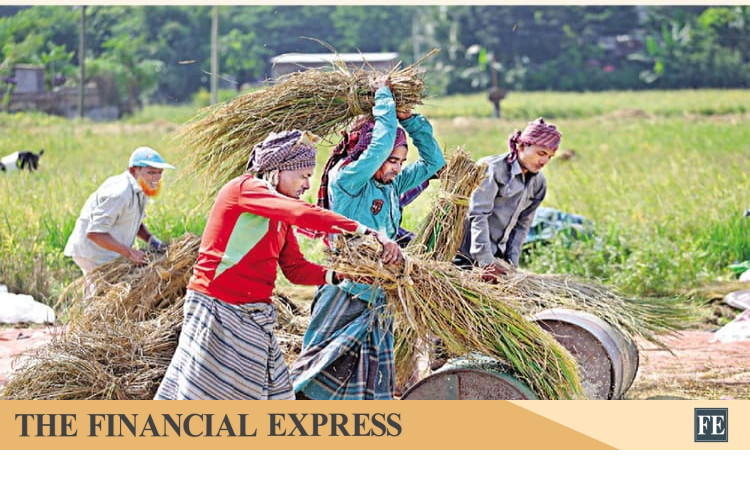
In the realm of food systems, Bangladesh presents a story of contrasts. On one hand, the country has achieved near self-sufficiency in rice production, bolstered by widespread agricultural mechanisation and rural microfinance. On the other hand, malnutrition remains stubbornly high. According to the report, nearly one in eleven people globally experienced hunger in 2023, while over two billion faced moderate to severe food insecurity.

Bangladesh mirrors this pattern. Despite national food availability, undernutrition persists due to poor dietary diversity, food price volatility, and the fragile status of small-scale producers. These producers-who dominate the agricultural sector-often earn less than $500 annually, lack formal land rights, and have limited access to credit, insurance, and modern farming technologies.

The country's agricultural orientation index remains low relative to its GDP contribution, echoing the global finding that despite record-high public agricultural investment, resources are not translating into equitable or sustainable outcomes. Structural reform in rural agrifood systems, support for women farmers, and investments in value chains and cold storage infrastructure are now urgent.

On energy access, the picture is again mixed. Electrification in Bangladesh has expanded significantly, reaching over 96 per cent of the population. The country has successfully scaled solar home systems in off-grid areas, a notable achievement in South Asia. However, the clean cooking agenda lags far behind. The continued use of biomass and inefficient stoves in rural areas contributes to indoor air pollution, health risks, and deforestation.

The UN report highlights that while access to electricity has improved globally, the transition to affordable, renewable, and clean energy is progressing too slowly. In Bangladesh, the share of renewables in the energy mix is under 5 per cent, and fossil-fuel-based energy-particularly coal and imported LNG-remains dominant.

Energy subsidies are not aligned with long-term sustainability, and green financing mechanisms are still in their early stages of development. To meet SDG 7, Bangladesh must commit to a deeper energy transition through expanded investment in decentralised solar grids, incentives for green entrepreneurship, and policies that prioritise energy justice for low-income and climate-vulnerable communities.

In digital inclusion, Bangladesh has made commendable progress. With the rise of "Digital Bangladesh" as a national vision, internet penetration has surpassed 70 per cent. E-governance, mobile banking, and online education platforms have experienced rapid expansion, particularly since the COVID-19 pandemic. However, the digital divide remains stark. Rural areas continue to suffer from poor connectivity and limited access to devices.

Women, especially in conservative and low-income households, face barriers to digital access, usage, and literacy. The UN report notes that while global internet usage increased from 40 per cent in 2015 to 68 per cent in 2024, inequalities in digital access persist. In Bangladesh, digital progress risks reproducing pre-existing inequalities unless proactively addressed through targeted policy. Without addressing digital illiteracy, affordability, cyber-security risks, and gender bias, the country will not harness the transformative power of technology for inclusive development.

Education has long been a development stronghold in Bangladesh. The country has achieved near gender parity in school enrollment and has invested significantly in stipend programs and the distribution of textbooks. Yet, the SDG report highlights a growing global concern: education quality is stagnating.

In Bangladesh, the problem is acute. Learning outcomes in reading and numeracy remain low, and dropout rates increase sharply at the secondary level, especially among girls. COVID-19 disrupted learning trajectories, particularly for children from rural and urban low-income backgrounds who lacked access to online learning.

The teacher-student ratio remains sub-optimal, and public investment in secondary and vocational education is insufficient to meet future labour market demands. The education system must now shift its focus from access to quality, investing in teacher training, curriculum modernisation, and school safety, while also prioritising digital literacy and climate education.

Employment and social protection are perhaps the most pressing challenges. The UN report warns that over 800 million people globally remain trapped in extreme poverty, and 3.8 billion are without any form of social protection. In Bangladesh, despite progress in employment generation in the garment and construction sectors, the labour market remains dominated by informality, precarity, and gendered segmentation. Youth unemployment, underemployment, and skill mismatches are growing problems.

Only a small fraction of the workforce is covered by pensions, health insurance, or unemployment benefits. Social protection programmes exist-such as old age allowances, widow pensions, and disability stipends-but they are fragmented, poorly coordinated, and vulnerable to political manipulation. The gender gap in access is significant.

According to the report, globally, only 9.7 per cent of people in low-income countries are covered by social protection. For Bangladesh, expanding the coverage, adequacy, and digital delivery of social protection is essential. This will require integrating national ID systems, mobile payments, and robust grievance redress mechanisms to build trust and reduce leakage.

Climate change and biodiversity loss represent the most critical existential threats to Bangladesh. The country's geographic location makes it one of the most climate-vulnerable nations globally. Cyclones, floods, river erosion, sea-level rise, and salinity intrusion are already displacing thousands of people annually and undermining livelihoods.

The 'SDG Report 2025' Global climate finance remains fragmented and insufficient. Despite pledges, disbursements to countries like Bangladesh are slow, bureaucratic, and conditional. Loss and damage negotiations have yielded some commitments at the international level; however, translating these commitments into tangible support for affected communities in Bangladesh remains pending. SDGs 13 and 15 will remain unattainable without climate justice and scaled-up adaptation finance.

One of the most profound takeaways from the UN report is the data crisis. Monitoring SDG progress depends on reliable, timely, and disaggregated data. Yet, as the report notes, statistical systems in many countries remain underfunded and fragmented. The abrupt termination of the USAID-supported Demographic and Health Survey (DHS) in early 2025 exposes the fragility of global data systems.

For Bangladesh, this means losing key data on family planning, child nutrition, gender-based violence, and slum populations-data that inform national budgeting, policy design, and international benchmarking. Without a national investment in data sovereignty-through stronger statistical institutions, interoperable data platforms, and partnerships with academia and civil society-Bangladesh will be flying blind into the final years of the SDGs.

Institutionally, the governance landscape is increasingly recognised as a key determinant of SDG delivery. SDG 16-on peace, justice, and strong institutions-remains one of the least funded and least prioritised goals, globally and in Bangladesh. Yet its relevance is paramount. Transparent public financial management, inclusive planning, judicial independence, press freedom, and civic space are all necessary to ensure that development is democratic and accountable.

The SDG report calls for "urgent multilateralism"-a new social contract that places equity and participation at the heart of development. For Bangladesh, this means investing in local government capacity, opening political space for youth and civil society, and strengthening public service delivery mechanisms.

As the world moves toward 2030, the message from the United Nations is clear: the SDG framework remains within reach, but only if action is taken decisively and immediately. The final five years to 2030 are not merely a countdown-they are a choice. Bangladesh can choose to accelerate toward justice, resilience, and sustainability. Or, it can remain trapped in a cycle of incrementalism and vulnerability. The future is still unwritten-but time is running out.

Dr Matiur Rahman is a researcher and development professional.​
 
Analyze

Analyze Post

Add your ideas here:
Highlight Cite Fact Check Respond
  • Love (+3)
Reactions: Bilal9

S&P affirmed ‘B+/B’ ratings for Bangladesh

FE ONLINE REPORT
Published :
Jul 25, 2025 15:43
Updated :
Jul 25, 2025 15:44

1753489225776.webp


The global rating agency ---S&P Global Ratings ---affirmed Bangladesh’s credit rating at B+/B, citing mainly recent improvement in its official foreign exchange reserve.

It also said Bangladesh’s outlook is stable.

“We affirmed our long-term sovereign credit ratings on Bangladesh at B+ and our short ratings at B. The outlook is stable,” said S&P on Friday.

It said macroeconomic polices enacted over the past 18 months – such as transitioning opt a more flexible exchange rate regime, allowing local currency Taka to depreciate and tightening the monetary policy – are helping to build foreign exchange liquidity.

But it said that the country faces heightened trade risk from relatively high US tariffs.

It also said that mooted elections in the first half of 2026 are likely to be a critical pivot point for more lasting political stability following the abrupt collapse of the Sheikh Hasina government in July 2024.​
 
Analyze

Analyze Post

Add your ideas here:
Highlight Cite Fact Check Respond
  • Love (+3)
Reactions: Bilal9

No significant shift in non-RMG export earnings
Saddam Hossain 25 July, 2025, 22:49

1753493566128.webp

Export of non-RMG products remained almost static over the past several years, indicating the country’s overreliance on RMG.

According to the Export Promotion Bureau, non-RMG sectors have accounted for only 17 per cent to 18 per cent of Bangladesh’s total export earnings for the past several years.

Exporters stated that insufficient and non-uniform policy support, economic challenges in buyer countries, and a lack of proper diversification continued dependence on RMG export.

In the financial year 2024-25, Bangladesh shipped export items worth $48.28 billion to its global destinations, where the earnings from RMG were $39.35 billion or about 81.49 per cent, meaning the share of non-RMG items only 18.51 per cent.

The major non-RMG items, including leather and leather goods, jute and jute goods, agricultural products, home textiles, and engineering products, generated $1.14 billion, $820.16 million, $988.62 million, $871.57 million, and $535.56 million respectively.

Apart from RMG items, only leather was able to reach the milestone of $1 billion, according to the EPB data.

‘Due to a lack of governmental policy support, the leather sector had been unable to break out of the $1 billion cycle for decades,’ said Md Nasir Khan, vice-president of the Leather Goods and Footwear Manufacturers and Exporters Association of Bangladesh.

Speaking to New Age, he also stated that Bangladesh lacks a unified policy and incentive facilities for all export-oriented sectors.New Age specials

‘Despite having domestic supply of raw materials and high-quality products, leather sector is lagging behind years after years,’ he added.

He also stated that the leather sector has the capacity to earn $10 billion, as it can add value of up to 90 per cent, thanks to its raw materials. However, the government destroyed this opportunity by transferring the industry to Savar without proper establishment and the required CETP.

According to the EPB data, the leather and leather goods sector earned $797.7 million in FY20, $1.17 billion in FY23, and $1.14 billion in FY25, indicating that the industry was unable to break the $1 billion cycle.

The jute and jute goods sector, once the country’s largest export earner, has experienced negative growth for a prolonged period.

In FY20, the sector earned $882.35 million, $911.51 million in FY23, and $820.16 million in FY25.

Speaking to New Age, KS Alam Babul, chairman of the Bangladesh Jute Goods Exporters Association, stated that the anti-dumping duty imposed by India on Bangladeshi jute goods has caused a setback.New Age specials

‘Some major buyers like Sudan, Syria and Iran are addressing either war situation or economic turmoil and sanctions, which impacted their imports,’ he added.

Moreover, they couldn’t accept large orders as all the government jute mills were closed, he added, saying that the private jute mills don’t have the capacity for bulk production.

‘We urged the government several times about reopening the jute mills under BJMC. However, we think an elected government could take the initiatives,’ he added.

Meanwhile, Farhad Ahmed Akand, chairman of the Bangladesh Jute Association, said that due to high time and cost consumption, farmers have lost interest in jute farming.

‘Along with commerce ministry, we are running a project through farmers so that they can produce jute in less time by using less water and space,’ he added.

They also stated that, due to the low price of fibre at the growers› level and the emergence of plastic products as an alternative, jute exports were impacted, along with the slashing of incentives on jute goods.

The agricultural products earned $862.06 million in FY20, $827.10 million in FY23, and $988.62 million in FY25.

An official of Alin Foods Exports Ltd. said that the government›s incentive cut, higher import costs of agri-inputs and other ingredients, impacted the export.

For instance, the rate of cash incentive for the sector has been reduced to 10 per cent from 20 per cent, he added.

Engineering products, another promising sector, has earned $529 million in FY20, $495 million in FY23, and $535.56 million in FY25.

Abdur Razzaque, president of the angladesh Engineering Industry Owners’ Association, told earlier that they need a dedicated industrial park or zones to establish compliant and global standard factory units to compete with international competitors so that they could tap $7 trillion global market of light engineering.

He also demanded that the policy be supported by removing tax and VAT-related issues.

Talking to New Age, M Masrur Reaz, chairman of the Policy Exchange Bangladesh, said that the country didn’t utilise its capacity and potential on non-RMG products.New Age specials

‘For leather sector, the authority didn’t strengthen the seamless connections among different value chains like rawhide collecting, processing, finishing and backward linkage,’ he added.

He also stated that a significant number of companies in the sector lacked standard certificates, such as LWG, which deterred foreign buyers from importing.

‘Most of our sectors beside RMG couldn’t achieve the proper efficiency of the global competitiveness. We also don’t have integrated planning, especially on infrastructure, finance, and skill,’ he added.

Bangladesh hasn’t witnessed sufficient FDI in emerging sectors besides the RMG, and these emerging sectors also have limitations in areas like global competitiveness, skills, and efficiencies. He urged the government to work for product diversification.

The exporters said that sometimes it seemed that policymakers didn’t want other sectors to export more, as it didn’t receive sufficient policy support.

To diversify products, the government must remove the discrimination between the RMG sector and all other export-oriented sectors, they added.​
 
Analyze

Analyze Post

Add your ideas here:
Highlight Cite Fact Check Respond

Handling the economy under stress

Muhammad Mahmood
Published :
Jul 26, 2025 22:19
Updated :
Jul 26, 2025 22:27

1753575508299.webp


Since taking over the rein of the country the interim government has been facing numerous challenges, from slow growth, high inflation and unemployment to delays in implementing crucial reforms across the judiciary, political system and economy. The law-and-order situation also remains unsatisfactory partly due to the lingering effects of the July uprising. Furthermore, there is a growing concern that the criminal syndicates run by ousted Hasina are regrouping and becoming active as reflected in the incidents that happened in Gopalganj recently.

Thus after almost close to a year in power, there remains a sense of unease about the future and optimism that the Yunus government can get the economy back on track while spearheading political reforms needed to rebuild a durable open democratic system and prevent another dictator from emerging. It is a monumental challenge.

The military has historically been involved in the country's politics as a major actor and its influence over the government in a democratic process is concerning and this has contributed to significant political instability. There are concerns now that in this unstable political situation, the army may decide to take a more direct hand in political governance.

While it is clearly understood what steps need to be taken to forestall the re-emergence of a Hasina type regime returning to power over the last 11 months, no clear policy outline has yet been made public by the interim government. And the reason for this delay remains a mystery given that some peripheral issues such as the humanitarian corridor and port management issues appear to have captured the media attention and public debate.

However, many are expressing concern that the interim government is being hemmed in by various political interests at home and abroad. The wide-ranging reform programmes that have been undertaken appear to be going nowhere including the constitutional reform which is possibly the most crucial reform issue to forestall emergence of another Shekh Hasina or a similar type of tyrant.

The new policy direction is important because political stability based on a well-functioning democratic process is the most essential prerequisite for the government to not only to attain political stability but to gain the ability to reform and revive the economy. In fact, the July uprising has provided "once in a life time opportunity" to bring about systemic change in the country's political system and culture.

The Bangladesh economy historically has shown resilience to global challenges and internal issues that usually contribute to causing major economic stress. Despite positive signs in exports and remittances, a combination of slow growth, high inflation and rising unemployment and income inequality suggest a potential stagflationary trend.

For a LDC like Bangladesh stagflation can have particularly severe consequences. It can lead to reduced growth, increased poverty, and greater vulnerability to debt crises. Stagflation can, in essence, act as a major impediment to economic growth and potentially destabilise the political and social system. Over and above, the country's reliance on exports makes it highly susceptible to fluctuations in the world economy. Now Trump Tariffs have added a new challenge.

On the other hand, the rise in global commodity prices (e.g., energy, food) directly impacts Bangladesh because the country is heavily reliant on import of those products. This increases production costs and can make goods less competitive in the global market. Uncertainty and high inflation can discourage both domestic and foreign investment, further hindering economic growth.

High inflation erodes the purchasing power of consumers, particularly low-income individuals who spend a larger portion of their income on essential goods and increases misery and hopelessness. Growing social misery and hopelessness are also reflected in an unprecedented rise in crimes. The government is addressing the issues of poverty and lawlessness with rhetoric instead of firm action.

Bangladesh has achieved, as claimed, an annual average growth rate of about 6.5 per cent over the last decade and a half. But the growth rate has slowed down considerably since the onset of the pandemic and the Russia-Ukraine conflict. The current macroeconomic crisis is manifested in slowing GDP growth, high inflation and unemployment, looming debt burden and a banking system in deep trouble.

The Bangladesh Bureau of Statistics (BBS) recently published the provisional GDP estimate for 2024-25 and it stands at 3.9 per cent. Early this year, multilateral and regional organisations such as the WB, IMF and ADB have downgraded Bangladesh GDP growth rate for 2025 to 3.3 per cent, 3.8 per cent and 3.9 per cent respectively. But they all provided a better growth forecast for 2026.

The economic slowdown is due to declining exports, reduced domestic and foreign investment, and falling agricultural output. Additionally, the fiscal year started in 2024 amid a turbulent and unstable political environment.

In 2024, Bangladesh's public debt was $181,008 million. This amount represented 40.13 per cent of the GDP. Bangladesh's private debt and household debt stand at 36.92 per cent and 6.69 per cent respectively of GDP in 2025.

Now the debt/GDP ratio is also set to rise further at the end of fiscal 2025-26 due to further deficit financing as evident in the current fiscal year's budget. Interest payment will account for 22 per cent of total revenue budget or 15.5 per cent of total spending. Between 1979-80 and 2024-25, Bangladesh always ran budget deficits except for four years. It indicates the budget has a structural deficit problem rather than cyclical.

According to the World Bank during the interim government's tenure, more than 2.7 million people have become new-poor. Of these, 1.8 million are women. Sluggish investment contributes to unemployment, leading to increased poverty. The interim government failed to prop up investment climate or investor confidence. Also, not much has been done to deal with underinvestment in infrastructure, a self-serving financial sector, educational decline, and a dysfunctional healthcare system.

The budget presented for fiscal year 2025-26 continued with the past fiscal practices except trimming the size by decreasing annual development expenditure by 13.2 per cent from the original allocation in the previous budget. The budget included unrealistic inflation and growth forecasts, which will not enhance investor confidence due to issues like infrastructure deficiency, bureaucratic corruption and delays and extortion rackets which cause distribution costs to outstrip production costs.

The proposed fiscal deficit of TK 1.25 trillion will further balloon the already accumulated public debt despite the austerity measures. In 2024, Bangladesh's public debt was $181,008 million. This amount represented 40.13 per cent of the country's GDP. Bangladesh's debt per capita in 2024 was $1,056. The public debt is composed of domestic debt (56 per cent of total debt) and external debt (44 per cent).

The RMG industry that grew and expanded since the early 1980s, reflects a structural inability to explore markets beyond primarily to the US and a few west European countries or to go up in value addition or product diversification. Wages have not kept up with inflation, reducing real incomes. High inflation and increasing unemployment are indicators of an economy potentially experiencing stagflation. Domestic and foreign investment are stagnant, and income inequality is increasing, thus further worsening economic turmoil. Worsening economic crisis cannot be addressed by ramping up rhetoric rather than action.

In 2024, Bangladesh exported goods worth nearly $8.4 billion to the US, of which US$7.34 billion were ready-made garments (RMG). More than four million people work in the RMG industry. If Bangladesh wishes to continue to rely on RMG exports, the industry needs to keep pace with technological progress and innovate to remain a relevant player in global apparel trade.

Bangladesh faces multifrontal economic challenges. The country's economic fortune is too closely linked to low-tech and low-skill based manufacturing and remittances coming from expatriate workers. And this has been the case for a long a time and that indicates deep inbuilt structural rigidities. Policymakers in Bangladesh appear to be unable or unwilling to address domestic structural deficiencies. The government must ensure a stable and predictable policy environment with a firm commitment to economic openness and to growth and that will help ease the structural limitations.

The interim government must implement reforms to attract investment, including FDI. That implies a strong focus should be placed on policies to reinvigorate investment, innovation and productivity. Far more importantly, a more radical reimagining of the economy is crucial that could create new opportunities and spark a long-overdue economic transformation. The effect of Bangladesh's multifrontal challenges depends on how quickly and effectively the government addresses them.​
 
Analyze

Analyze Post

Add your ideas here:
Highlight Cite Fact Check Respond

Remittances: Bangladesh receives $1.93b in 26 days of July

UNB Dhaka
Published: 27 Jul 2025, 22: 06

1753662265357.webp

Remittance Prothom Alo illustration

Bangladeshi expatriates sent US$1.93 billion in remittances during the first 26 days of July, the opening month of the 2025–26 fiscal year, said Arif Hossain Khan, executive director and Spokesperson of Bangladesh Bank.

Data from the central bank shows that remittance inflow during the same period of the previous fiscal year (FY2024–25) stood at $1.55 billion, marking a 23.97 per cent year-on-year growth.

Expatriates sent $106 million in remittances on 24 and 25 July alone.

In FY2024–25, Bangladeshi expatriates remitted a total of $30.32 billion—an all-time high.​
 
Analyze

Analyze Post

Add your ideas here:
Highlight Cite Fact Check Respond

Members Online

Latest Posts

Back
 
G
O
 
H
O
M
E