Home Watch Videos Wars

[🇧🇩] Monitoring Bangladesh's Economy

[🇧🇩] Monitoring Bangladesh's Economy
955
25K
More threads by Saif

G Bangladesh Defense

Economic stability remains under threat without bank resolution regime: Experts at a seminar

UNB
Published :
Dec 12, 2025 00:19
Updated :
Dec 12, 2025 00:23

1765500004530.webp


Speakers and policy makers in a seminar on Thursday warned that Bangladesh's economic stability remains severely threatened without the immediate establishment of a credible bank resolution regime.

The warning was issued from a seminar hosted by the Policy Research Institute of Bangladesh (PRI), with support from the Foreign, Commonwealth & Development Office (FCDO), titled "Bank Failures and Resolution Regime: Understanding the Challenges for Bangladesh".

Lutfey Siddiqi, Special Envoy to the Chief Adviser for International Affairs, attended as the Chief Guest and stressed the critical need for change.

He stated, "If the banking sector continues with business as usual, nothing will change. Ensuring good governance regardless of which political party forms the government is essential."

Dr. Ashikur Rahman, Principal Economist at PRI, delivered a trigger presentation focusing on the necessary follow-up to legislative reform. He argued that simply "passing the Banking Resolution Ordinance is only half the job". The real challenge lies in making a serious investment in the "processes, systems, and institutional capacities" needed for the Bangladesh Bank and the financial sector to actually implement the resolution regime.

"Without the ability to execute orderly resolutions, manage failing banks efficiently, and protect depositors while minimising systemic risks, the Ordinance will remain a promise on paper," Dr. Rahman cautioned.

Dr. Zaidi Sattar, Chairman of PRI, chaired the event and highlighted the unique crisis facing the nation's financial sector. He noted that the recent rise of non-performing loans (NPLs) to nearly 35 percent is "unprecedented," exceeding levels seen even in countries affected by the global financial crisis.

Dr. Sattar described the situation where many distressed banks are "too toxic to fail," as allowing them to collapse could cause severe economic contagion.

The impact of this instability on external investment was underscored by Professor Dr. Mohammad Akhtar Hossain, Chief Economist at Bangladesh Bank.

Dr. Akhtar pointed out that the already low Foreign Direct Investment (FDI)-to-GDP ratio is being hampered by the "combination of high NPLs and ongoing political uncertainty," making it extremely difficult to attract foreign capital.

The seminar concluded with an open-floor discussion among participants—including policymakers, business leaders, and financial sector experts—who exchanged insights on priority reforms such as legislative updates, strengthened deposit protection, and enhanced crisis preparedness.​
 
Analyze

Analyze Post

Add your ideas here:
Highlight Cite Fact Check Respond
  • Like (+1)
Reactions: Bilal9

Collapse of Hasinomics and the fight for real growth

1765502071575.webp

FILE VISUAL: SHAIKH SULTANA JAHAN BADHON

The human psyche is wired for justice—this is not metaphor but science. When injustice accumulates beyond a threshold, it does not dissipate; it detonates. That is what happened in July 2024. For a fleeting moment in those days, it seemed as if the country might finally locate its collective self. But rage, on its own, cannot rebuild; it merely exposes the wound. And here we stand again—precariously close to square one.

As we move forward, we must confront the wrong in its totality. Yet while the horror was visceral, the remedy cannot be. The challenge before us is not emotional. It is structural.

Let me state the argument plainly: Hasinomics did not collapse because it was authoritarian; it collapsed because it destroyed the engines of sustainable development. It hollowed out the structural drivers of productivity, mobility, and resilience. By 2024, these fractures converged into a complete blockade on social mobility, ultimately triggering the political explosion we witnessed.

Bangladesh's production base remained fundamentally weak because both of the main sectors, agriculture and RMG, were stuck in a low-productivity equilibrium. Agriculture, still employing nearly 40 percent of the labour force, consistently grew at a slower pace than inflation. For over a decade, rural incomes declined in real terms even as GDP increased. When a sector that employs the majority of labour produces less output per worker, transformation becomes mathematically impossible.

What makes this more tragic is what never occurred. Peer economies built the basic infrastructure of modern agriculture: cold-chains, storage ecosystems, agro-processing hubs, salinity-resistant seeds, and digital commodity platforms. Bangladesh built none of these at a meaningful scale. Capital that should have funded this transition was diverted into choreographed megaprojects and loan defaults.

The RMG sector followed identical logic. Comparable economies such as Vietnam boosted their exports by shifting into higher-value textiles, synthetics, technical fabrics, automated processes, and design-rich manufacturing. Bangladesh remained locked in low-value stitching lines. Data suggest Vietnam's textile and apparel exports are approaching $44 billion, a growth model predicated on value-addition and upgrading, not bare labour advantage.

Meanwhile, Bangladesh's labour productivity stagnated because capital never returned to the factory floor. Politically connected conglomerates understood that higher returns lay in loan-capture, land speculation, and public contracts rather than genuine industrial upgrading. By 2024, this diversion had produced a Tk 7.56 lakh crore distressed-asset crater—capital that should have financed innovation and diversification.

The clearest indicator of this extraction-driven stagnation lies in wages. In 2024, real wages fell across the board: two percent for low-skilled workers, 0.5 percent for high-skilled. Despite rising exports, wages declined because productivity did not rise. The economy generated two kinds of jobs: low-skill sewing-line roles or high-skill managerial positions often filled by foreign-educated elites. Domestic graduates were trapped in the "missing middle": overeducated for factories, underprepared for elite roles, and excluded by insider networks. That missing middle is not a theoretical abstraction; it is the very real absence of the technicians, supervisors, digital operators, and process controllers that every modern industrial economy needs to thrive.

By 2024, less than one percent of depositors, i.e. 1,13,586 accounts controlled 43.35 percent of all bank deposits with at least Tk 1 crore in the accounts. This was no statistical quirk; it was the political settlement in full display. The economy was engineered to pool capital at the top, not to circulate it through SMEs, innovators, or workers. SMEs were not starved by accident, but by design.

This top-heavy economy left bottom-of-the-pyramid communities exposed to climate change. Climate inequality hardened into a permanent economic trap for many: the poor lived directly in the path of environmental destruction while the wealthy insulated themselves with generators, air filtration and offshore accounts.

In the coastal belt, salinity and cyclones erased livelihoods. In the riverine north, erosion repeatedly destroyed land, savings, and the possibility of intergenerational progress. Instead of channelling resources into adaptation—embankments, drainage, green infrastructure, community shelters—national wealth continued flowing upwards through the perfected extraction mechanism.

The extraction machine operated at peak efficiency. First, politically connected groups received enormous loans from state and private banks, often without meaningful collateral or even a door to hang their signboard above. Second, those loans were systematically defaulted, creating a ballooning distressed-asset hole. Third, when banks began to falter, the state intervened with taxpayer funds to recapitalise them—turning private theft into public liability. Fourth, the same networks siphoned money abroad—an estimated $16 billion annually—draining the country of the investment capital needed for industrial upgrading. Fifth, inflated megaprojects and politically allocated contracts provided an additional rent pipeline. Finally, the liquidity that remained inside the country pooled at the very top. This was not mismanagement—it was a weaponised political economy brutally calibrated for extraction.

But we must stop attributing novelty to Hasinomics. Its genius lay in perfecting an extractive machinery with roots traceable to colonial administration—centralised, coercive, and designed to drain. Just because the regime has fallen, it does not follow that the machine has been destroyed.

A sustainable development strategy must begin with a simple and non-negotiable principle: growth must be productive, inclusive, and resilient. That means diversifying beyond low-value sectors, building middle-skill industries, investing in community-level climate adaptation, and rewiring finance so that capital circulates through the real economy rather than escaping it.

The window of Bangladesh's demographic dividend closes by the mid-2030s. Time is not on our side. If we hesitate, the system will revert. We would be another generation that wasted a generational opportunity.

Saba El Kabir is a development practitioner and founder of Cultivera Limited.​
 
Analyze

Analyze Post

Add your ideas here:
Highlight Cite Fact Check Respond
  • Love (+3)
Reactions: Bilal9

Pran Group's Banga Building signs $25 million deal with German firm

1765762464641.webp

Photo: Pran Group

Banga Building Materials Ltd (BBML), a concern of Pran-RFL Group, has signed a $25 million deal with a German development finance institution to expand its production at the Habiganj Industrial Park.

The total project cost of BBML's expansion is $29 million, for which DEG-Deutsche Investitions- und Entwicklungsgesellschaft mbH will give a loan to finance import capital, machinery and raw materials, according to a press release.

The loan will be partially guaranteed by the European Union's EFSD+ programme under its Global Gateway Initiative.

Under the new financing, BBML will expand production of recycled products and soft PVC items such as PU leather, floor mats and PVC ceiling boards, while introducing household cleaning brushes for export to the US and European markets.

BBML currently employs around 9,500 people. The expansion at Habiganj Industrial Park is expected to create an additional 1,000 jobs.

BBML began commercial operations in 2008 at its industrial park in Shayestaganj, Habiganj.

The company's product portfolio includes PVC doors, fittings, electrical switches, and recycled plastic products.

DEG is a subsidiary of KfW Group, a German state-owned development bank, providing long-term financing and advisory services to private companies in developing and emerging countries.

DEG's support is a strong endorsement of the company's vision to produce import-substitute products while creating rural employment, said Ahsan Khan Chowdhury, chairman and CEO of PRAN-RFL Group.

Monika Beck, chief investment officer and member of the management board of DEG, said the agreement reflects the strength of the long-term partnership and underscores a shared commitment to sustainable growth.

The signing ceremony took place on December 11 at PRAN-RFL Group's head office in Dhaka.

Uzma Chowdhury, director for corporate finance of PRAN-RFL Group, and Parvez Akhter, vice president for industries and services for Asia at DEG, signed the agreement.​
 
Analyze

Analyze Post

Add your ideas here:
Highlight Cite Fact Check Respond
  • Like (+1)
Reactions: Bilal9

Austerity and its uneven burden on revised ADP

Wasi Ahmed
Published :
Dec 17, 2025 00:48
Updated :
Dec 17, 2025 00:48

1765931026849.webp


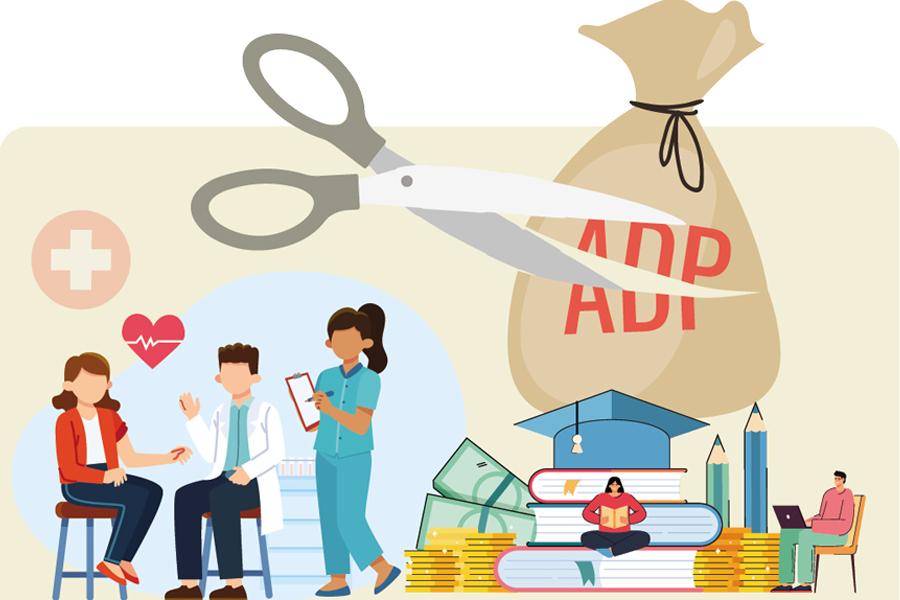
The scale and composition of the Revised Annual Development Programme (RADP) for the current fiscal year reveal a far larger contraction than many had anticipated, particularly in sectors that underpin human development. While some degree of rationalisation was inevitable amid tight fiscal space, revenue shortfall and sluggish project execution, the magnitude of the cuts -- especially in health, education, and social protection -- raises deeper questions about development priorities at a critical juncture of the economy.

According to Planning Commission officials, the Programming Division has already circulated project-wise allocations of the proposed RADP among the Commission's divisions for review. The exercise reflects the government's effort to realign spending with implementation capacity and fiscal realities. Yet the revised allocations also expose stark trade-offs. While overall development spending is being compressed, a few sectors such as science and ICT, general public services, and defence are set to receive higher allocations even as core human-capital sectors absorb some of the steepest reductions.

Economists note that while a downward revision was widely expected, the severity of the cuts in health and higher education is particularly concerning. Investment in these areas yields returns over a longer time, and abrupt contractions risk weakening the foundations of productivity, innovation and social resilience. Reduced spending on university research, digital learning, and medical infrastructure may not show immediate damage, but the cumulative effects could become evident in the medium term through slower skill formation and constrained healthcare capacity.

Among the hardest-hit sectors in absolute terms is transport and communications, traditionally the largest component of the ADP. The revised allocation of Tk 386.25 billion represents a cut of Tk 203.48 billion -- around 34.5 per cent -- from the original Tk 589.73 billion. This deep reduction is expected to slow implementation across several infrastructure projects, including metro rail lines, expressways, railway modernisation, and major road expansions. Executing agencies have reportedly been instructed to prioritise essential works and defer non-urgent components, a move that may help contain costs but could also extend project timelines and dilute anticipated growth.

The education sector has undergone a substantial contraction, with its allocation reduced by 34.77 per cent to Tk 186.28 billion. This translates into a loss of Tk 99.30 billion from the original allocation of Tk 285.57 billion, making education the second most affected sector after transport. More worrying is the uneven distribution of these cuts. The Secondary and Higher Education Division -- which oversees universities, colleges, and technical and digital upgrades -- faces a massive reduction of Tk 56.02 billion, or nearly 47 per cent. Such a contraction could hinder university capacity development, slow the expansion of research initiatives, and delay the adoption of technology-driven learning.

In contrast, the Ministry of Primary and Mass Education emerges as one of the biggest beneficiaries of the revised programme. Its allocation increases by 38.78 per cent, or Tk 22.51 billion, reflecting the government's renewed focus on foundational learning. Officials attribute the rise largely to the approval of a new mega project aimed at ensuring midday meals for primary school students. The emphasis on early-grade literacy, nutrition, and school infrastructure signals a strategic choice to strengthen the foundation of education, even as higher tiers face retrenchment.

Nowhere, however, is the contraction more severe in proportional terms than in the health sector. Its allocation plunges by 63.27 per cent to Tk 47.33 billion, triggering alarm among public health experts. Within the sector, the Medical Education and Family Welfare Division sees a staggering 72 per cent cut, while the Health Services Division faces a reduction of 58.35 per cent. Such sharp declines threaten to stall hospital expansion, delay medical college infrastructure projects, and constrain the procurement of equipment and recruitment-linked components of ongoing schemes. These cuts come at a time when public hospitals are already grappling with rising patient loads, the growing burden of non-communicable diseases and chronic shortages of resources and personnel.

Transport-focused agencies also bear a disproportionate share of the adjustment. Dhaka Mass Transit Company Limited (DMTCL), the implementing agency for metro rail projects, experiences the single largest cut-78.92 per cent-bringing its allocation down to Tk 24.17 billion. The Road Transport and Highways Division loses Tk 118.23 billion, while the railways ministry's allocation declines by 34.65 per cent. Such reductions may help contain short-term fiscal pressures but risk slowing momentum in sectors that have strong backward linkages to construction, manufacturing, and employment.

Economists express deep disappointment over the reduced allocations for health, specialised education and social protection at a time when increased investment in these areas is viewed essential. Spending in these sectors not only strengthens human capital but also channels resources directly to lower-income households through ADP implementation, creating both social and economic multipliers.

In infrastructure, slower progress on roads, railways and urban transit could push back completion deadlines for mega projects, undermining transport efficiency and dampening growth prospects. Reduced capital spending may also weaken demand for construction materials and limit private sector participation, further softening economic activity.

The revised ADP thus reflects more than a fiscal adjustment; it reveals a set of policy choices with long-lasting implications. As the government navigates fiscal constraints, the challenge will be to ensure that short-term austerity does not erode the very foundations of long-term development.​
 
Analyze

Analyze Post

Add your ideas here:
Highlight Cite Fact Check Respond
  • Like (+1)
Reactions: Bilal9

Govt unveils new 5-year plan to bolster fiscal governance

1766022181401.webp


The Finance Division under the finance ministry has launched its third Public Financial Management (PFM) Reform Strategy, a five-year plan designed to shift fiscal governance from system-based reforms to outcome-driven accountability and service delivery.

For the first time, the plan mainstreams climate-smart PFM, gender-responsive budgeting, and sector-specific reforms in health, education, and social protection, reads a press statement issued by the division today.

The strategy, unveiled by Finance Adviser Salehuddin Ahmed, comes as the country grapples with rising public expenditure, climate pressures, and global economic volatility.

Speaking at the ceremony, he stressed that the framework is intended to strengthen transparency and ensure citizens receive tangible benefits from public spending.


The Finance Division states that the 2025-2030 roadmap sets out 15 reform pillars, ranging from fiscal sustainability and debt management to procurement, oversight, and digital transformation.

Finance Secretary Md Khairuzzaman Mozumder described the strategy as the product of "sustained and collaborative efforts" across ministries, constitutional bodies, and development partners.

Comptroller and Auditor General Md Nurul Islam underscored the role of independent audit in ensuring fiscal discipline and citizen‑focused services.

Jean Pesme, World Bank's Division Director for Bangladesh and Bhutan, highlighted progress in reforms such as iBAS++ and pension digitalisation, which have enhanced oversight and credibility.

Yet, he cautioned that institutional capacity, fiscal management, and public debt remain pressing challenges.

Bangladesh's tax‑to‑GDP ratio is among the lowest in South Asia, while liabilities from state‑owned enterprises and contingent risks continue to expand, the Finance Division noted.

The new framework emphasises resilience through improved macro‑fiscal forecasting, integrated debt management, and transparent reporting of fiscal risks, it added.

The division expects the PFM Reform Strategy to position public finance as a cornerstone of economic governance, equity, and public trust as Bangladesh advances toward upper‑middle‑income status.

Its success will depend on sustained political commitment, stronger inter‑agency coordination, and investment in public sector capacity, it added.​
 
Analyze

Analyze Post

Add your ideas here:
Highlight Cite Fact Check Respond
  • Like (+1)
Reactions: Bilal9

Members Online

Latest Posts

Back
 
G
O
 
H
O
M
E