Donate ☕
201 Military Defense Forums
[🇧🇩] - Monitoring Bangladesh's Economy | Page 3 | PKDefense
Home Login Forums Wars Movies Watch Videos
Serious discussion on defense, geopolitics, and global security.

[🇧🇩] Monitoring Bangladesh's Economy

Reply (Scroll)
Press space to scroll through posts
G Bangladesh Defense
[🇧🇩] Monitoring Bangladesh's Economy
948
25K
More threads by Saif

Challenges on the road to becoming the 28th largest economy​


1707959861055.webp

Investment, both domestic and foreign, plays a pivotal role in fostering economic growth. PHOTO: REUTERS

Bangladesh undeniably stands out as one of the most promising economies in the region. Despite facing resource constraints, the country has made commendable economic and social progress since independence. This success is a testament to the indomitable spirit of the Bangladeshi people, their relentless struggle for survival, and their remarkable commitment, determination, and entrepreneurial spirit. With an average annual GDP growth of six percent since the 2000s, Bangladesh currently holds the 35th position among global economies, and it is projected to become the 28th largest economy by 2030. However, this ambitious journey toward economic advancement is not without its challenges. The critical hurdles on our path include tackling poverty, addressing income inequality, managing high inflation and external debt burden, attracting foreign investment, improving resource mobilisation, addressing foreign exchange shortages, curbing corruption, ensuring the stability of the financial sector, and others.

In recent years, Bangladesh has borrowed heavily to finance various mega projects. Consequently, annual debt servicing has been on the rise, which now constitutes a substantial share of the government's expenditures. According to data from the Bangladesh Bank, the total government debt, comprising both domestic and foreign, reached around the $100-billion mark at the end of June 2023. While some of these projects may yield long-term benefits, the immediate requirements for debt servicing pose a challenge for the government's financial capacity. Currently, Bangladesh has to repay foreign loans ranging from $2-2.76 billion annually, and this amount is expected to rise in the coming years. According to a finance ministry projection, foreign debt repayments, including interests, will reach $4.5 billion in 2025-2026. The increasing external debt service payments are straining the country's foreign exchange reserves.​

1707959897795.webp

With an average annual GDP growth of six percent since the 2000s, Bangladesh currently holds the 35th position among global economies. VISUAL: TEENI AND TUNI

Concurrently, debt-service payments are diverting already scarce fiscal resources from critical sectors such as healthcare, education, social assistance, and infrastructure development. While experts argue that Bangladesh's current debt-GDP ratio is not a cause for concern, it shouldn't be seen as a green light for indiscriminate loan accumulation. To secure the nation's economic future, it is crucial for policymakers to prioritise projects by carefully assessing payback periods, thus preventing potential debt traps. Ensuring the efficient utilisation of borrowed funds is paramount to sustaining the economic cycle in the face of challenges.

Investment, both domestic and foreign, plays a pivotal role in fostering economic growth, improving the skills of the local workforce through the transfer of technology, leading to job creation, higher incomes, and improved standards of living. Research shows that to transform Bangladesh into a high-income country, it would need to raise its investment-to-GDP ratio to around 40-44 percent of GDP. Regrettably, private investment has shown little growth, hovering at around 23-24 percent of GDP for the past decade, as reported by the Bangladesh Bureau of Statistics (BBS). We are also lagging behind in attracting foreign direct investment (FDI). While even during the pandemic (2020) FDI flow to developing countries in Asia increased by four percent to $535 billion, according to figures from the UN Conference on Trade and Development (UNCTAD), Bangladesh could not achieve the expected FDI. As per Bangladesh Bank's data for the fiscal year 2023, the nation attracted approximately $3.2 billion in foreign direct investment. The rate of FDI inflow in Bangladesh is only around one percent of GDP, one of the lowest in Asia.

1707959948717.webp

ILLUSTRATION: Salman Sakib Shahryar

It's crucial to recognise that the level of convenience in doing business holds significant importance for foreign investors when deciding where to invest. The ease of doing business and global competitiveness are key factors influencing their investment choices. Investors assess various aspects, including the clarity of existing policies, reliability of government officials, taxation policies, adherence to rules and regulations and, most importantly, the security provided for their investments.

Regrettably, in the case of Bangladesh, investors often express frustration due to bureaucratic hurdles that impede smooth business operations. These challenges include bureaucratic red tape, inadequate socio-economic and physical infrastructure, inconsistent energy supply, corruption, underdeveloped money and capital markets, a complicated tax system, along with delays in decision-making processes. Furthermore, hidden costs related to procedures, policies, laws, and infrastructure significantly impact the overall cost of doing business.

Therefore, in light of the current economic challenges, it is essential to boost investment inflow by making timely adjustments to policies. The government should remove the impediments that are responsible for the high cost of investment and promptly take measures to improve public goods and services, including roads, electricity, gas, water, and sewerage. Additionally, the government should implement business-friendly policies safeguarding the rights of enterprises, workers, consumers, the environment and, most importantly, ensure a stable political environment to attract both domestic and foreign investments.

1707959994813.webp

Bangladesh undeniably stands out as one of the most promising economies in the region. VISUAL: REHNUMA PROSHOON

Bangladesh's export portfolio is primarily dominated by its ready-made garments (RMG) sector. In the fiscal year 2022-2023, the total export from Bangladesh amounted to $55.56 billion, with RMG exports contributing $46.99 billion. Currently, the RMG sector accounts for 85 percent of the country's total exports, with primary destinations being the European Union and the United States. The RMG sector has played a transformative role in shaping our economy, job market, and income, but due to ongoing global geopolitical conflicts, energy price hike, domestic political unrests, currently, the RMG sector is in a sluggish state. Hence, for Bangladesh to sustain its growth trajectory, diversification of the export basket and tapping into new markets is imperative.

Industry insiders say that there are promising export sectors such as pharmaceuticals, bicycles, shipbuilding, leather and leather goods, frozen and live fish, terry towels, furniture, and agricultural products, if the government provides adequate policy support, similar to what is offered to the RMG sector.
1707960028547.webp

According to a finance ministry projection, foreign debt repayments, including interests, will reach $4.5 billion in 2025-2026. VISUAL: TEENI AND TUNI

Foreign remittance is Bangladesh's lifeline. Despite an increasing number of Bangladeshis leaving for jobs abroad, in recent times, the remittance inflow has been decreasing at an alarming rate. In September 2023, migrant workers sent home $1.34 billion—the lowest since April 2020, according to data from Bangladesh Bank. Large remittances are sent through informal channels like hundi despite a 2.5 percent incentive for the remitters through the banking channel. Many argue that the widening gap between official and unofficial exchange rates, lack of motivation, and institutional barriers such as high transaction costs and formalities for sending remittances through formal channels hinder remitter's use of banking services. Currently, Bangladesh is struggling with a prolonged dollar crisis and is compelled to restrict imports due to falling reserves. Remittances play a vital role in growing foreign exchange reserves and economic growth. Hence, an urgent policy focus is required to shift remittances from informal to formal channels.

One of the biggest concerns for the economy is our ailing banking sector, which has, on numerous occasions, been tarnished by unwanted malpractices. It is now an open secret that the country's banking sector has been entangled in a series of scams and irregularities, such as the funnelling of loans worth billions of taka by violating banking rules and procedures to influential people known for lax repayments. Unfortunately, violators of banking norms and regulations are hardly ever punished, and they are allowed to continue to default on loans with impunity. As a result, at the end of FY 2022-23, defaulted loans in the banking sector stood at a record Tk 156,040 crore.

Banks are the lifeblood of the economy; therefore, regulators should take pre-emptive measures to control the current situation before it worsens and gets out of control. A combination of strong policy reforms and good governance in the banking sector is the need of the hour. Measures should include legal action against wilful loan defaulters, enhanced banking regulation and supervision, addressing banking sector weaknesses, tighter criteria for loan rescheduling/restructuring, and improved legal systems to accelerate loan recovery. If enforcement authorities take these measures with the right intentions, Bangladesh will embark on a path to creating a stronger economy.
1707960065757.webp

A vendor sells fish at a market in Dhaka. PHOTO: REUTERS

Over the past decade, Bangladesh has consistently demonstrated impressive economic growth. However, one may ask: has everyone been able to share its benefits equally? The answer, sadly, is "no." The growth has, unfortunately, bypassed the majority of the population while higher-income groups have been its main beneficiaries. The country has experienced a rapid increase in income inequality, with 10 percent of the population owning 40 percent of the national income, while the bottom 50 percent possess only 19.05 percent of GDP. The primary factors which deprive poor and vulnerable people of their most elementary rights—and which lead to greater income inequality—are unequal access to education and employment opportunities, low-wage jobs, unchecked corruption and systemic irregularities (such as those enabling the various scams in the banking sector), tax evasion, money laundering, and so on.

The growing gap between the rich and poor not only hinders sustainable growth but also increases the risk of social and political unrest. As such, it's essential for our policymakers to stop favouring the wealthy and start focusing on fair treatment for everyone. The main goal should be to achieve inclusive growth. We need to address issues like wealth sharing, good governance, and social policies that promote fairness and equality. It may be noted that a society that is happy, equal, and just will always experience peace and prosperity.

Inflation has been adversely affecting the common people in Bangladesh. Prices of daily essentials, including eggs, chicken, onions, potatoes, sugar, and oil, have consistently increased, contrasting with the global trend of decreasing prices. Purchasing daily necessities has become increasingly challenging, as highlighted in a recent report by the World Bank. According to the report, 71 percent of families are being affected by rising food prices. This alarming statistic implies that out of the 4.10 crore families, almost 2.91 crore are facing food insecurity, a matter of grave concern. If the current trajectory of inflation and escalating living costs persists, there is a significant risk of more families falling into poverty.

1707960125820.webp

VISUAL: STAR

Experts say that soaring food inflation rates in the country are linked to flawed government policies, poor market management and the profit-seeking behaviours of certain businessmen involved in syndicates. Moreover, the control of essential commodity imports by powerful businesses has resulted in market monopoly. The government has to address all the underlying reasons behind food inflation through a well-formulated action plan.

The need for continued investment in education and skill development is another challenge that Bangladesh must address. Over the past few years, numerous experiments have been carried out in the name of modernising and updating our primary, secondary, and higher secondary education. Yet, the existing education curriculum is not aligned with industry needs. While educational institutions worldwide emphasise soft skills like team-building, problem-solving, critical thinking, communication, negotiation, and decision-making, our education system is still stuck in the past.

So, often, we hear complaints from the business community about their inability to find skilled workers, leading them to hire foreign professionals due to a lack of efficient local human resources. This not only hampers the country's job market but also increases the strain on Bangladesh's depleting foreign-currency reserves.

Regrettably, our education budget doesn't reflect the urgency of developing human resources. The country spends around two percent of its GDP on education, which is the lowest among South Asian countries. It is high time for Bangladesh to focus on enhancing its education system, ensuring that the workforce is equipped with the skills necessary for the evolving job market. A well-educated and skilled population is not only vital for fostering innovation but also for attracting high-value industries and investments.

It's unfortunate that, even after 52 years of independence, the country's healthcare sector is in shambles. It is shameful that a nation on the path to becoming the 28th largest economy in the world still witnesses a substantial number of its citizens, including politicians, businessmen, and ordinary people, seeking medical treatment abroad each year. This trend reflects a lack of confidence in our own healthcare system. While individuals choosing overseas medical care may argue that they owe no public explanation, the scenario takes a more alarming turn when Bangladeshi leaders and politicians follow suit. Their decision to seek medical treatment abroad is not just a personal matter but a cause for concern, as they bear the responsibility for the development of a robust healthcare system for their fellow citizens.

This prevailing culture needs to be transformed urgently, given its detrimental impact on our hard-earned foreign currency reserves and the nation's image. The government should prioritise and guarantee equitable access to high-quality health services for all citizens. Failing to improve our health sector not only jeopardises the well-being of our population but also threatens to erode the significant economic gains Bangladesh has achieved over the years. Therefore, concerted efforts are imperative to instigate a paradigm shift and ensure that the healthcare system becomes a source of pride and reliability for every citizen, discouraging the need for seeking medical treatment abroad.

Corruption is a global problem, and Bangladesh is no exception to this pervasive issue. While the country holds the 147th position out of 180 countries in the Corruption Perceptions Index (CPI) for 2022, according to Transparency International, it is important to recognise that this ranking does not implicate every citizen in the web of corruption. I firmly believe that the majority of Bangladeshis are honest and possess integrity. Nevertheless, the harsh reality persists that a handful of people within key sectors such as government offices, businesses, healthcare, education, and political institutions are involved in corrupt practices such as bribery, embezzlement of public funds, bank loan scams, money laundering, under/over invoicing, adulteration of food and drugs, and various forms of cheating.

It is unfortunate that despite governmental claims of zero tolerance for corruption, there is a disconcerting trend where powerful individuals often escape accountability. It should be noted that instances of overlooking or condoning corrupt practices among associates, friends, and political supporters erode public trust, perpetuating a culture where dishonesty might be perceived as justifiable. The need to break free from this complacency is urgent. Holding wrongdoers accountable and instituting stringent measures against corruption are imperative. Currently, the absence of severe consequences for influential figures engaged in corrupt activities not only perpetuates a cycle of impunity but also undermines public confidence in the democratic process. It is time to revisit and reinforce our commitment to eradicating corruption.

Effective law enforcement is a critical pillar in ensuring that the corrupt face justice and that the culture of impunity is dismantled. However, punitive measures alone are insufficient, a comprehensive approach that includes legal reforms, institutional strengthening, and increased societal awareness is indispensable to combatting corruption. These measures are not only vital for sustained economic growth but are also fundamental for elevating Bangladesh's standing on the international stage.​
 

Analyze Post

Add your ideas here:
Highlight Cite Respond

Banking reform for whom?​

FE
Published :​
Feb 12, 2024 21:41
Updated :​
Feb 13, 2024 21:45

1708153135941.webp


In his speech at the launching ceremony of the fifth edition of the Banking Almanac held at the National Press Club on Saturday, eminent economist Wahiduddin Mahmud made quite a few critical observations on the much hyped banking reform and the recipes the multilateral lenders such as the World Bank (WB) and the International Monetary Fund (IMF) suggest for Bangladesh. By banking reform he was referring to the roadmap of banking reform the Bangladesh Bank (BB) unveiled last week. Although the roadmap has as many as 17 key issues for the authorities to decide action plans, they can broadly be encapsulated to five. These are reduction of defaulted loans, prevention of anonymous loans and fraudulent activities, developing mechanism for appointment of competent directors, appointment of qualified independent directors and merger of weaker banks with stronger ones.


Referring to his involvement with two bank reform commissions earlier, Dr Mahmud made it amply clear that banking rules and regulations of international order were formulated and had those been included in the Banking Company (amendment) Act, there would be no need for the roadmap. The action plans are mere words instead of strong measures. As for the guidelines put forward now cannot control the damage but may stem future rot. An analysis of the fault lines responsible for rendering the tougher rules and regulations inoperative is essential. Dr Mahmud's example of removal of 70 directors from bank boards, compelling some to repay loans and others opt for voluntary resignation in 2003 due to action by the BB and judiciary serves as a pointer. The question is why such tough measures were not followed up subsequently; rather banking regulations were rendered inoperative or made further relaxed to the advantage of motivated loan defaulters. Their undue influence not only stalled the inclusion of those rules and regulations in the Banking Company Act, but also helped establish their family monopoly in banking business by just purchase of shares of several banks.

How the rules and regulations were systematically tinkered with in the interest of certain coteries is clear from former BB governor Saleh Uddin Ahmed's reference to the advantageous manoeuvring by those involved and the authorities' submission to it. During his time, there was no provision for more than two family members on the board of a bank and their tenure was for three years. The number of family members was raised to four and the tenure to six years and lately nine years. Monopoly at its outrageous! The rescheduling policy that went from 10 per cent of the outstanding loans to 20 per cent and then to 30 per cent has now been slashed to just 2.0 per cent. Similarly, the scheduled time for writing off bad loans has been brought to two years from three years. All these are done purposefully to allow defaulters a leeway and give the balance sheet a fresh and clean look. But in the process loans amounting to billions of taka is gobbled up by the loan sharks.

Clearly, the banking conundrum is there for all to see but the areas requiring urgent attention have been ignored. The roadmap has bypassed the reconstructive surgery in favour of a cosmetic one. Dr. Mahmud stressed the need for inclusion of the written off bad loans in the Banking Almanac in the interest of receiving an authentic picture of the banking sector. His doubt that the merger theory will fall flat seems to be well founded. Why should healthy private banks accept liabilities of a sick one? Incorporation may be the right word in case the sick one is taken over on its asset value. If the national interests are given preference to coterie interests, the problem, however daunting it may look, can be solved.​
 
Analyze

Analyze Post

Add your ideas here:
Highlight Cite Fact Check Respond

Saudi investors keen to set up SEZ in Payra​

FE ONINE REPORT
Published :​
Feb 07, 2024 18:13
Updated :​
Feb 07, 2024 18:13

1708153322657.webp


Saudi investors have expressed their interest in setting up a special economic zone (SEZ) at the Payra area in Kalapara upazila of Patuakhali district of Bangladesh.


Salman F Rahman, private industry and investment adviser to the prime minister, said this on Tuesday in a press conference at Bangladesh Investment Development Authority (BIDA) premises in Dhaka after his three-day visit to Saudi Arabia (SA).

The government wants to offer the investment opportunity to the SA for establishing an Economic Zone in Bangladesh, he told the conference.

Their investment minister has also expressed willingness to set up the SEZ in Payra, he said.

Also, Bangladesh is willing to establish a urea fertiliser factory in SA under the ownership of both countries to ensure an uninterrupted supply of the major agricultural input, he said.

“A joint venture fertiliser factory is under consideration which Bangladesh would import entirely after production,” he said.

The Saudi government is interested in moving forward with the proposal and its feasibility study would be completed by March 2024, he added.

There is a scope for private sector investors to join the initiative too, he added.

Bangladesh has sought the cooperation of SA to resolve the ongoing dollar crisis in the country.

“We have requested to allow Bangladesh one year time span, instead of the existing 45 days, to foot the energy import bills due to the dollar crisis. The counterpart assured to consider the request,” he said.

In the IMTC meeting, both countries came to a consensus on several issues including curbing terrorism in the name of Islam, strengthening cooperation between the Islamic countries, condemning of attack in Gaza, and cooperating to resolve Rohingya issues in Bangladesh.

The SA is also keen to invest in food security issues such as the production of vegetables, fish and other food products and import those to their country.

The advisor also discussed on joint research by Bangladesh and SA Rice Research Institute to produce long-grade rice.

Mr Rahman joined the Islamic Military Counter Terrorism Coalition (IMCTC) on behalf of the PM and defence minister.​
 
Analyze

Analyze Post

Add your ideas here:
Highlight Cite Fact Check Respond

Roadmap for banking reforms: Implementation is key​


1708299345231.webp


Although the roadmap drawn up to reform the banking industry of Bangladesh may seem attractive on the surface, there are questions regarding its efficacy in ensuring good governance in the scam-hit sector.

The Bangladesh Bank outlined 17 action plans under the roadmap released on February 4.

The initiative mainly aims to bring down the ratio of non-performing loans (NPLs) to below 8 percent and ensure good governance in the sector by June 2026.

The overall NPL ratio was 9 percent by the end of last year.

The state-run banks accounted for the bulk of the bad loans as 20.99 percent of their disbursed funds had soured by the end of 2023.

As such, the BB has included measures to reduce the NPL ratio of public banks to less than 10 percent within the deadline.

Although most of the action plans and policy reforms already exist while others were added in the Bank Company (Amendment) Act 2023, the governance in the sector is getting worse.

For example, the roadmap shows that the banking regulator will provide necessary instructions to prevent lenders from exceeding the single-borrower exposure limit.

However, the provision is not new as it has existed in the Bank Company Act for more than a decade. Still, exceeding the single-borrower exposure limit has become a regular practice in the banking industry.

Around 89 borrowers of four state-run banks, namely Sonali Bank, Janata Bank, Agrani Bank and Rupali Bank, had exceeded the limit as of June last year, as per a central bank report.

Under the current single-borrower exposure limit, banks are allowed to disburse loans equal to 25 percent of their total capital to an individual client.

Against this backdrop, economists and financial experts said that implementing the existing policies is more important than introducing new ones.

Salehuddin Ahmed, a former central bank governor, recently said regulatory bodies are failing to adequately punish those who do not follow banking laws.

As per the first policy change included in the roadmap, banks are allowed to write off loans that remain in the "bad and loss" category for two years while it was three years previously.

The central bank expects that NPLs will be reduced by Tk 43,300 crore because of the policy change.

However, the fact is that when banks write off bad loans, the figure is hidden from the balance sheet but the liabilities still remain.

Usually, loans are written off only when they are 100 percent provisioned and there are no realistic prospects of recovery. These loans are transferred to the off-balance sheet records.

And although the practice of writing off loans is accepted worldwide, some analysts call it a "window dressing".

He criticised the policy change, saying it would not help reduce the volume of defaulted loans.

The banking sector's defaulted loans climbed 20.7 percent to Tk 145,633 crore in 2023.

A provision in the roadmap allowing weak banks to merge with financially sound ones was welcomed by experts. They, however, focused on visible actions to this effect.

"The central bank should restructure the board and management of the weak banks and conduct a comprehensive audit before allowing mergers," said Ahsan H Mansur, executive director of the Policy Research Institute.

Under the roadmap, the central bank toughened the rules for appointing both shareholder directors and independent directors by fixing age and educational requirements. The regulator also raised the allowance of independent directors.

Former central bank governor Ahmed said the central bank must have enough strength to tackle political interference and pressure from influential groups to implement the roadmap.

In a press briefing in January, BB Governor Abdur Rouf Talukder said the central bank's activities have never been influenced by outside forces.​
 

Analyze Post

Add your ideas here:
Highlight Cite Respond

Lack of trust in financial sector adversely impacting economy​

Economists say

1708299952974.webp


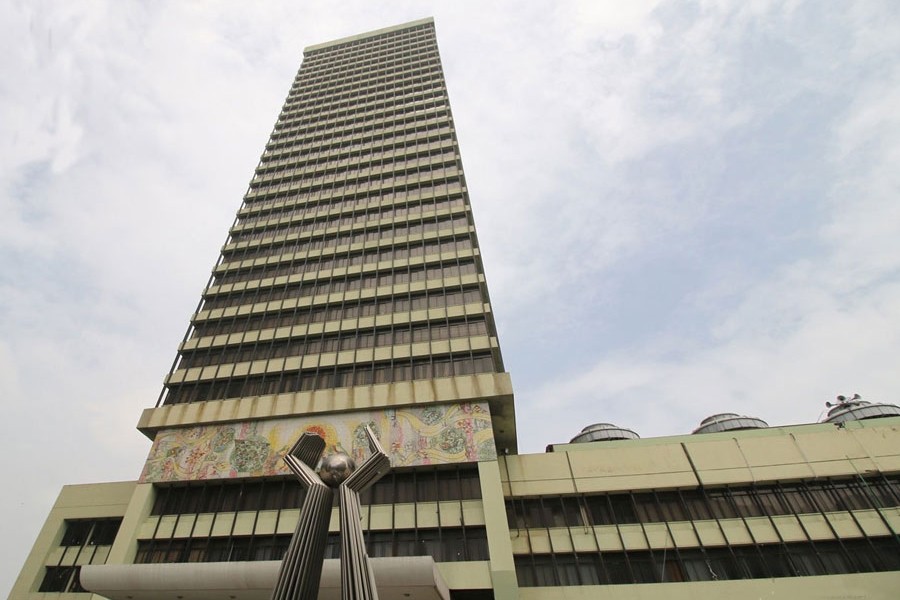
There is a lack of trust in the financial sector of Bangladesh, which is adversely impacting the country's overall economy, according to economists at discussion.

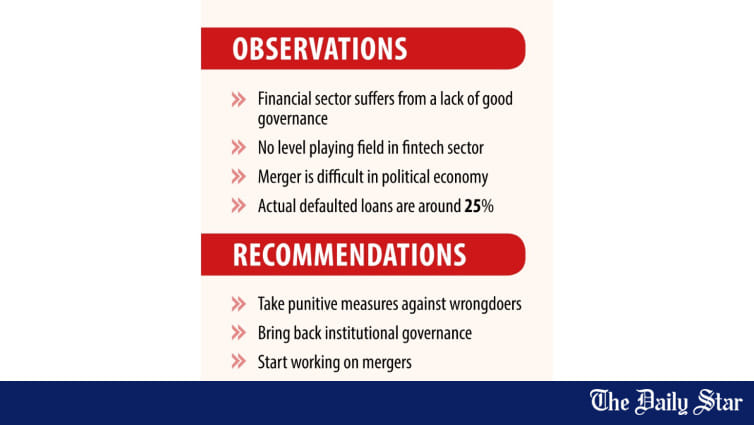
Against this backdrop, they urged the government and related regulatory bodies to ensure good governance and take punitive measures on all who disobey the guidelines.

These recommendations came during a panel discussion, styled "Transformation of the financial sector: Adapting to constraints", at the Muzaffar Ahmed Chowdhury Auditorium of Dhaka University yesterday.

The discussion was organised by the Economics Study Center in collaboration with the International Labour Organisation as a part of its three-day 5th Bangladesh Economics Summit 2024.

Ahsan H Mansur, executive director of the Policy Research Institute (PRI), said the domestic financial sector comprising banks, the stock market, bond market, and insurance sector has seen less development compared to that of neighbouring countries.

"The financial sector cannot support the real economy due to a lack of good governance," he added.

The economist also said people have lost trust in the financial sector, and that is adversely affecting the overall economy.

"There is a lot of talk about reforms in the banking sector," said Mansur, adding that it is expected that mergers will take place and non-performing loans will reduce but no steps have been taken to this end.

He informed that the actual amount of bad loans accounts for around 24-25 percent of the total loans disbursed. This includes loan repayments that are being held up until the dismissal of related court cases and loan write-offs.

The liabilities of the bad loans are ultimately borne by depositors and good borrowers, Mansur said.

The economist suggested ensuring institutional governance, saying that plans for the banking sector will have to be introduced with political willingness.

Salehuddin Ahmed, former governor of Bangladesh Bank, said everything is now going backwards as the laws and regulations are not being followed but there is no one to punish the offenders.

Firstly, borrowers had to pay 10 percent of their loan to reschedule it but now, they have to pay only 2 percent. If this continues, then influential borrowers will not repay their loans, Ahmed added.

He criticised the latest banking sector reform roadmap, saying it would allow banks to write off bad loans in two years whereas it was three years previously.

Ahmed also urged to bring good governance and accountability to the financial sector.

Lila Rashid, financial inclusion specialist at the Centre for Research and Development, said the financial technology sector lacks a level playing field.

For example, licenses for forming digital banks have been awarded to a particular group, she added.

Kanti Kumar Saha, CEO of Alliance Finance PLC, said there are several laws and regulations in the financial sector, but implementation remains absent.

In response to a query, the PRI's Mansur said the practice of mergers is accepted worldwide and although it is possible in Bangladesh, it could be difficult given the country's political environment.

He said that before any merger, the central bank should restructure the board and management of some weak banks and it will have to conduct a comprehensive audit of the merging firms.

The discussion was chaired by Selim Raihan, a professor of economics at the University of Dhaka.​
 
Analyze

Analyze Post

Add your ideas here:
Highlight Cite Fact Check Respond

BB introduces currency swap with banks​

The move is designed to temporarily raise forex reserves

1708300125641.webp

Photo: Star/File

The Bangladesh Bank has introduced currency swaps with banks for the first time, a move that will enable the country to meet the net reserve condition set by the International Monetary Fund (IMF) with its $4.7 billion loan programme.

Usually, the central bank has to buy the greenback if it needs to raise the reserve to meet the condition. Now, it may get foreign currencies from banks for a certain period in exchange for only interest.

A currency swap involves the exchange of interest -- and sometimes of principal -- in one currency for the same in another currency. Companies doing business abroad often use currency swaps to get more favourable loan rates in the local currency than if they borrowed money from a local bank.

A forex swap has two legs or stages: a near leg date and a far leg date.

On the near leg date, one swaps a currency for another at an agreed spot foreign exchange rate and agrees to swap the same currency back again on a future date (far leg date) at a forward foreign exchange rate.

For conventional commercial banks, the central bank said, the taka will be sold in exchange for approved foreign currencies at the spot rate at the near-leg.

At the far-leg, the deal will be settled by applying the same exchange rate with a swap point based on the interest rate differential considering the prevailing benchmark rate of foreign currencies. Here, the three-month term SOFR for US dollars and the policy rate of the BB for the taka will be applicable.


The secured overnight financing rate (SOFR) is a benchmark interest rate for dollar-denominated derivatives and loans that replaced the Libor (London Inter-Bank Offered Rate).

The SOFR rate presently stands at 5.38 percent while the policy rate in Bangladesh is 8 percent, figures from the Federal Reserve of the US and the BB showed.

The treasury head of a private commercial bank said while the interest rate is flexible in currency swaps with other commercial banks, it is almost fixed in the case of the central bank.

"So, banks will analyse which one is more profitable."

For Shariah-based banks, at the near-leg, the taka will be sold in exchange for foreign currencies at the spot rate. At the far-leg, the deal will be settled by applying the same exchange rate, the BB said.

The swap deal will be executed within the counterparty limit to be set by the Forex Reserve and Treasury Management Department of the central bank.

Each deal will be in multiples of one million of foreign currency, starting from a minimum value of five million and equivalent taka with a tenure of seven days to 90 days.

The rollover may be allowed by applying the prevailing rates, the notice said.

"It seems that the central bank opened an alternative window to raise the foreign exchange reserve without buying dollars from commercial banks," said Zahid Hussain, a former lead economist of the World Bank's Dhaka office.

According to the IMF's conditions, the central bank was supposed to keep a net forex reserve of $17.78 billion in December.

However, there was a $58 million shortfall despite the central bank buying over $300 million from several commercial banks.

The reserve must stand at $19.27 billion by next March and $20.11 billion by June as part of the loan programme. However, the net reserve is still below the targets.

Hussain says if a bank had excess or idle dollars, there was previously no provision to keep it in the central bank. So, they had no interest income from it.

"Now, an option has been created to keep those idle dollars with the central bank in exchange for interest if the banks do not need it."

On the other hand, if a bank has excess dollars but a shortage of the taka, it can raise its liquidity in the form of the local currency through a currency swap.

At present, many banks have no excess dollars. On top of that, the demand for the currency is high.

However, there are questions about whether banks will be interested in engaging in currency swaps with the central bank as they can only avail the official rate exchange rate, which is much lower than the actual market rate, according to Hussain.

Banks also have the option to go for currency swaps between themselves and the rate is market-driven.​
 
Analyze

Analyze Post

Add your ideas here:
Highlight Cite Fact Check Respond

Members Online

⤵︎

Latest Posts

Latest Posts