[🇧🇩] Monitoring Bangladesh's Economy

[🇧🇩] Monitoring Bangladesh's Economy
1K
35K
More threads by Saif

G Bangladesh Defense

IMF forecast hints at Bangladesh’s economic recovery​

1745818188054.webp


Bangladesh’s economy is showing signs of recovery, with the latest forecast from the International Monetary Fund (IMF) projecting a significant upturn.

In its World Economic Outlook released on Tuesday night (Washington time), the IMF projected a GDP growth of 3.8 per cent for Bangladesh in the current fiscal year (2024-25).

The outlook further anticipates an increase in growth to 6.5 per cent in the following fiscal year (2025-26), reports UNB.

The report was unveiled on the second day of the World Bank-IMF Spring Meetings, currently taking place in Washington, USA.

Alongside global trends, the IMF updated country-specific data in this outlook. It projects inflation in Bangladesh to remain at 10 per cent.

The country has been grappling with persistent inflationary pressure over the past two years.

According to the Bangladesh Bureau of Statistics (BBS), inflation stood at 9.35 per cent in March, with an annual average of 10.26 per cent over the past year.

The Awami League government initially targeted a GDP growth rate of 6.75 per cent when it presented the budget for FY 2024-25 in June.

But, the interim administration recently revised the target downward to 5.25 per cent, citing ongoing financial challenges, business stagnation, and political instability following the change in government.

Earlier this month, the Asian Development Bank (ADB) projected a GDP growth of 3.9 per cent for Bangladesh this fiscal year—slightly higher than the IMF’s updated estimate.

Globally, the IMF expects average GDP growth to be 2.8 per cent, while the average for Asia is forecast to be 4.5 per cent.

A 15-member Bangladesh delegation, led by Finance Advisor Dr Salehuddin Ahmed, is participating in the Spring Meetings, which began on April 21 and will continue until April 26.
 

Taka gets stronger against US dollar
UNB
Published :
Apr 28, 2025 20:59
Updated :
Apr 28, 2025 20:59

1745890383679.webp


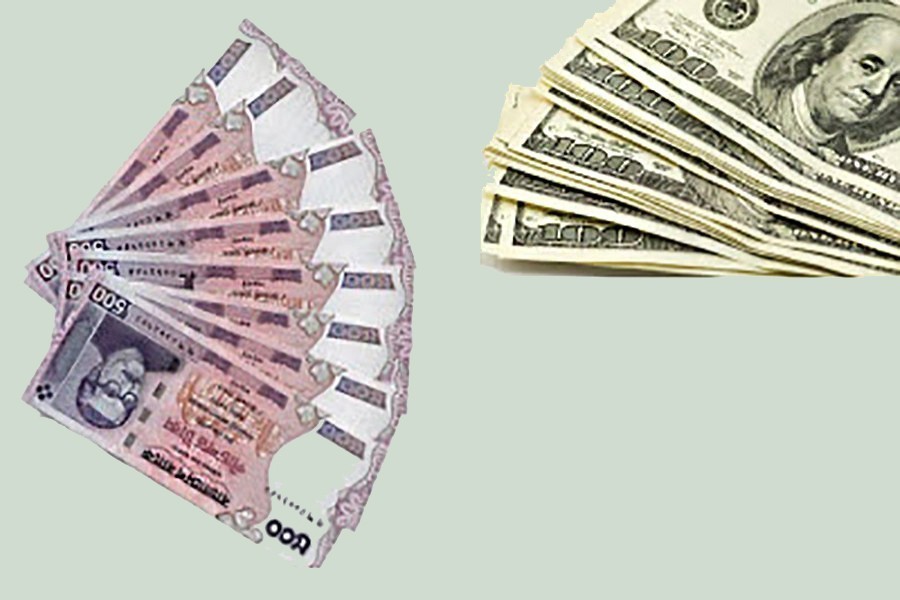
Bangladesh’s currency, the Taka, has become stronger against the US dollar, bolstered by recent growth in remittances and exports as well as reduced pressure on paying import bills.

Bankers believe the price may continue to decline in the coming days.

On Thursday, banks were paying between Tk 122.50 and Tk 122.60 to exchange a dollar in remittance. In contrast, just in the second week of this month, banks were paying between Tk 123 and Tk 123.20 for the same, reflecting a decrease of Tk 0.50 to Tk 0.70 in the dollar’s price within two weeks.

Bank officials predict a further decline in the dollar's value in the near future.

They argue that there is little likelihood of increased dollar demand in the next few months, as many investors are awaiting the upcoming elections before making new investment decisions. So, imports related to investment are unlikely to increase, they said.

Meanwhile, the Bangladesh Bank has said the dollar supply in the market is normal.

Central bank spokesperson Arif Hossain Khan said the dollar’s price will not be fully floated on the market immediately due to pressure from international donor agencies.​
 

Can domestic policies alone boost trade?
Wasi Ahmed
Published :
Apr 30, 2025 00:08
Updated :
Apr 30, 2025 00:10

1745970412817.webp


The question whether domestic policies alone can effectively boost trade has no easy and simple answers. External factors may determine its course. To understand the impact and limitations of such policies, it is essential to consider them within the broader context of today's global trading environment-an environment shaped as much by external forces as by internal ones.

It is commonly acknowledged that the power of domestic policies to stimulate trade has certain limits, particularly when considered against the backdrop of an ever more interconnected and interdependent global economy. Trade today is less about isolated national efforts and more about navigating a web of regional agreements, international regulations, and cross-border market dynamics. While domestic policy frameworks-such as competition policy, export-import (exim) policy, and industrial policy-play a crucial role in shaping the trade potential of a country, their influence is significantly constrained by external variables over which countries, especially developing and less-developed ones, have limited control.

Domestic policies are generally geared towards creating an enabling environment within the national economy. They aim to ensure price stability, encourage fair business practices, enhance industrial productivity, and create infrastructure conducive to trade. These measures support domestic firms in becoming more competitive, both at home and abroad. For example, a well-formulated industrial policy may promote sector-specific growth, leading to increased production for export. Similarly, competition policy can reduce monopolistic tendencies and improve consumer choice and pricing, thereby indirectly influencing the global competitiveness of domestic firms.

However, this is only one side of the coin. The other side presents a more challenging picture. No matter how sound a country's internal policies are, they often fall short of addressing trade barriers imposed by foreign partners. This includes non-tariff barriers, restrictive standards, subsidies, and protectionist measures that distort fair competition. The imbalance in economic strength and negotiating power between trading partners further complicates matters. Developing countries, for instance, frequently find themselves at the receiving end of trade negotiations, having to comply with rules that do not favour their interests.

It is precisely because of these challenges that nations increasingly seek alternative strategies to facilitate trade, such as forming regional alliances or entering into bilateral agreements. These arrangements are often seen as more achievable and less demanding than global trade negotiations. Regional trade agreements (RTAs) and bilateral deals offer a more manageable framework for cooperation--- one in which countries can expect a certain degree of mutual understanding and benefit. Geographical proximity often leads to shared challenges and goals, which can be more effectively addressed through joint efforts. For example, neighbouring countries may have similar agricultural concerns, infrastructure limitations, or energy needs, making cooperation more practical and result-driven.

The rise of regionalism in trade, therefore, has been largely driven by the desire for a level playing field-something that multilateralism, despite its broader reach, has frequently failed to provide. Yet, regionalism is not without its flaws. Asymmetries in the economic strength of countries within regional trade blocs have often resulted in unequal benefits. In several such arrangements, smaller or economically weaker members have struggled to keep up, unable to take full advantage of market access opportunities due to their limited production capacity or lack of export-ready goods. These internal disparities can undermine the broader goals of equitable trade and shared prosperity.

Coming back to domestic policies, their role in boosting trade, though undeniably important, must be viewed within these wider limitations. At best, domestic policies can serve to strengthen a country's internal supply base, address inefficiencies, improve product quality, and invest in research and innovation. They can enhance infrastructure, facilitate logistics, streamline customs procedures, and improve the business climate. All of these factors contribute to trade readiness and resilience.

However, domestic policies alone cannot address or overcome the external challenges that come with international trade. These include policy-induced barriers from partner countries, such as anti-dumping duties, phytosanitary standards that act as disguised restrictions, and sudden regulatory changes that disadvantage exporters. No matter how proactive or well-designed a country's internal policies are, they cannot shield it from the shifting landscape of international trade rules that may be tilted in favour of stronger players. For instance, many developing countries have experienced market access difficulties despite liberalising their own markets and aligning domestic policies with international norms. This suggests that mere adoption of trade-friendly policies is not enough to guarantee success in global markets. The external environment, particularly the actions and decisions of trade partners, plays a critical role in shaping outcomes. Without reciprocal openness, supportive international institutions and fair dispute resolution mechanisms, the potential of domestic policies remains unrealised.

Therefore, while domestic policies form the foundation of a country's trade strategy, they must be complemented by strategic engagement in regional and multilateral forums, capacity-building for trade negotiations and efforts to diversify trade partners and products. Furthermore, building alliances with like-minded countries, investing in regional value chains, and advocating for fairer international trade rules are all critical elements in a broader trade policy framework.​
 

'We are no longer IMF-World Bank-dependent'
BD won't take loan accepting all conditions: Salehuddin


He says so as Washington talks also end with deal on two strings-tied loan tranches still put on backburner

FE REPORT
Published :
Apr 30, 2025 01:16
Updated :
Apr 30, 2025 01:16

1745970798284.webp


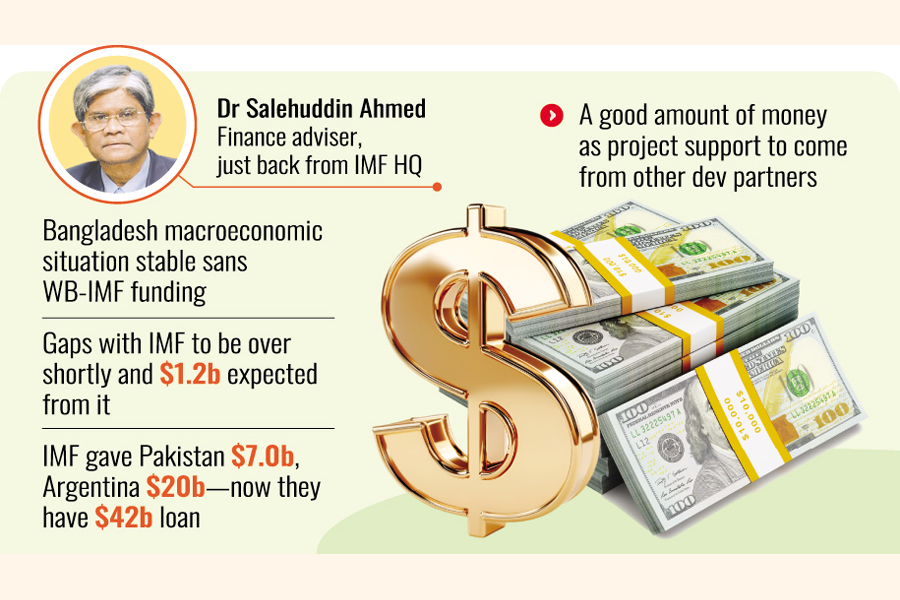
Bangladesh will not borrow from the International Monetary Fund by accepting umpteen conditions binding loans, Finance Adviser Dr Salehuddin Ahmed said Tuesday, adding that the country is no longer IMF-World Bank-dependent.

"If IMF doesn't agree to pay the budget-support credit, we will prepare budget on our own," he told reporters after a meeting of the Advisers Council Committee on Government Purchase at Bangladesh secretariat.

He notes that there are some issues with the International Monetary Fund that are not major things. "But we don't want to follow all these conditions."

The custodian exchequer under the current post-uprising government takes a stand as Washington negotiations, led by him, also ended with the necessary deal on two strings-tied loan tranches still put on the backburner.

Mr Ahmed mentions that during meeting with the IMF officials in Washington last week, they suggested implementing some conditions they found not palatable in the current context of the country's economy.

"But we said we won't walk that way," he said, adding that Bangladesh's macroeconomic stability is much better in a rebound that the last IMF mission to Dhaka also acknowledged.

He said the country's foreign-exchange market and reserves are stable without taking money from the IMF. "We didn't get money from the IMF after this government took office."

The finance adviser apprised the press that they had told the IMF side that "we have reached macroeconomic stability without your money".

Mr Ahmed, just back from Washington, referred to a press conference on IMF's Regional Economic Outlook for Asia and the Pacific and noted that its director Krishna Srinivasan said "we are arriving towards agreement".

According to the transcript of the briefing, Mr Srinivasan said there are two areas-greater exchange-rate flexibility and revenue mobilisation-where further discussion was needed. "Good progress is being made, but I won't put a timeline on when we can reach agreement."

Mr Ahmed thinks the gaps with the IMF will be over in a couple of days and from there the country will get $1.2 billion.

He hopes the country is set to get a good amount of money as project support from different development partners. The funds will come from the World Bank, the Asian Development Bank, New Development Bank and the Islamic Development Bank.

Bangladesh has already got $1.0 billion from the Asian Infrastructure Investment Bank (AIIB), he mentions.

In case of IMF loans, there are many conditions to get budget support. "If we don't get budget support from the IMF, we will prepare budget on our own."

Replying to a query, Mr Ahmed said the IMF wants the opening up of foreign-exchange market. "By opening the market we can't afford exchange rate of Tk 280 like in Pakistan and Tk 400 in Sri Lanka."

He said the exchange rate is already stable at Tk 120-122. IMF wants no band in case of exchange rate of the local currency.

The Fund offered to provide $1.0 billion worth of stabilisation fund if the band was removed. "But I said I won't make a commitment (of removing the band)."

About larger economic implications of exchange-rate free float, the finance adviser notes that if foreign-exchange rate remains volatile, investors will get wrong signal about the market.

Also, it will not give a good message to the private-sector investors.

To a query, he agreed that if the IMF regrets to provide the budget-support loan, other development partners would be cautious.

He also has a watchword about debt buildup from hard-term borrowing. The IMF gave Pakistan $7.0 billion, Argentina $20 billion-now they have $42-billion loan. And it is not sure whether they will be able to repay.

"We don't want to take loan burden," the adviser told the press.

Mr Ahmed said the government itself is to decide whether will stay in loan programme with the IMF or not. "If we don't take loan tranches, you will see many of the IMF officials lose jobs."

Citing examples, he said the incident of job loss of IMF officials happened centring loan dispute with Indonesia and Malaysia.

Regarding reciprocal tariffs imposed by the United States, he said discussion was held with the US officials on cotton and liquefied natural gas (LNG) imports in higher volume from there.

On financial-sector reforms, he said an ordinance would be promulgated soon on separation of the National Board of Revenue.

Mr Ahmed said Bangladesh should not make any retaliatory comment on some administrations like with the US government. China is now failing to save the situation after making bad comments.​
 

'We are no longer IMF-World Bank-dependent'
BD won't take loan accepting all conditions: Salehuddin


He says so as Washington talks also end with deal on two strings-tied loan tranches still put on backburner

FE REPORT
Published :
Apr 30, 2025 01:16
Updated :
Apr 30, 2025 01:16

View attachment 16973

Bangladesh will not borrow from the International Monetary Fund by accepting umpteen conditions binding loans, Finance Adviser Dr Salehuddin Ahmed said Tuesday, adding that the country is no longer IMF-World Bank-dependent.

"If IMF doesn't agree to pay the budget-support credit, we will prepare budget on our own," he told reporters after a meeting of the Advisers Council Committee on Government Purchase at Bangladesh secretariat.

He notes that there are some issues with the International Monetary Fund that are not major things. "But we don't want to follow all these conditions."

The custodian exchequer under the current post-uprising government takes a stand as Washington negotiations, led by him, also ended with the necessary deal on two strings-tied loan tranches still put on the backburner.

Mr Ahmed mentions that during meeting with the IMF officials in Washington last week, they suggested implementing some conditions they found not palatable in the current context of the country's economy.

"But we said we won't walk that way," he said, adding that Bangladesh's macroeconomic stability is much better in a rebound that the last IMF mission to Dhaka also acknowledged.

He said the country's foreign-exchange market and reserves are stable without taking money from the IMF. "We didn't get money from the IMF after this government took office."

The finance adviser apprised the press that they had told the IMF side that "we have reached macroeconomic stability without your money".

Mr Ahmed, just back from Washington, referred to a press conference on IMF's Regional Economic Outlook for Asia and the Pacific and noted that its director Krishna Srinivasan said "we are arriving towards agreement".

According to the transcript of the briefing, Mr Srinivasan said there are two areas-greater exchange-rate flexibility and revenue mobilisation-where further discussion was needed. "Good progress is being made, but I won't put a timeline on when we can reach agreement."

Mr Ahmed thinks the gaps with the IMF will be over in a couple of days and from there the country will get $1.2 billion.

He hopes the country is set to get a good amount of money as project support from different development partners. The funds will come from the World Bank, the Asian Development Bank, New Development Bank and the Islamic Development Bank.

Bangladesh has already got $1.0 billion from the Asian Infrastructure Investment Bank (AIIB), he mentions.

In case of IMF loans, there are many conditions to get budget support. "If we don't get budget support from the IMF, we will prepare budget on our own."

Replying to a query, Mr Ahmed said the IMF wants the opening up of foreign-exchange market. "By opening the market we can't afford exchange rate of Tk 280 like in Pakistan and Tk 400 in Sri Lanka."

He said the exchange rate is already stable at Tk 120-122. IMF wants no band in case of exchange rate of the local currency.

The Fund offered to provide $1.0 billion worth of stabilisation fund if the band was removed. "But I said I won't make a commitment (of removing the band)."

About larger economic implications of exchange-rate free float, the finance adviser notes that if foreign-exchange rate remains volatile, investors will get wrong signal about the market.

Also, it will not give a good message to the private-sector investors.

To a query, he agreed that if the IMF regrets to provide the budget-support loan, other development partners would be cautious.

He also has a watchword about debt buildup from hard-term borrowing. The IMF gave Pakistan $7.0 billion, Argentina $20 billion-now they have $42-billion loan. And it is not sure whether they will be able to repay.

"We don't want to take loan burden," the adviser told the press.

Mr Ahmed said the government itself is to decide whether will stay in loan programme with the IMF or not. "If we don't take loan tranches, you will see many of the IMF officials lose jobs."

Citing examples, he said the incident of job loss of IMF officials happened centring loan dispute with Indonesia and Malaysia.

Regarding reciprocal tariffs imposed by the United States, he said discussion was held with the US officials on cotton and liquefied natural gas (LNG) imports in higher volume from there.

On financial-sector reforms, he said an ordinance would be promulgated soon on separation of the National Board of Revenue.

Mr Ahmed said Bangladesh should not make any retaliatory comment on some administrations like with the US government. China is now failing to save the situation after making bad comments.​

@PakistanProud, @Ghazi52 bhais take a look, we in South Asia all need to wean ourselves off of IMF and World Bank dependency.

Only loans (if at all) acceptable are Chinese and Japanese loans w/out slavery type pre-conditions.
 

Respite for BD economy from external front
Forex reserves steadily rise over $27b now

Mark 20-month high even after payout of overseas debts

JUBAIR HASAN

Published :
May 01, 2025 00:55
Updated :
May 01, 2025 00:55

1746057784391.webp


Bangladesh economy feels some respite as the country's foreign-exchange reserves rebound to a 20-month high of US$27.41 billion by the end of April 2025 by official count, despite major payouts.

Bangladesh Bank (BB) sources say the recorded reserves size was the highest since August 2023 when the figure was $29.26 billion.

Despite the government having to make substantial payment in clearing accumulated external overdue bills in recent months, they add, the forex reserves continued rising, which gives an indication of steady rebound in foreign-exchange reserves.

As a matter of fact, the volume of net international reserves (NIR) also crossed $16.0-billion mark by the end of this past month of April.

Officials and money-market analysts say significant rises in inflow of remittances and export receipts largely prop up the country's foreign-exchange reserves notwithstanding a steady increase in import orders and settlements.

According to the latest statistics of the BB, the country's central bank, the gross forex reserves stood at $27.41 billion and $22.05 billion in BB and IMF's BPM6 calculations respectively.

On the other hand, the NIR rose to $16.12 billion after April 30, 2025, according to the official data.

Seeking anonymity, a BB official says the country's forex reserves continued to grow to cross $27 billion even after paying off too many external overdue bills, which is a "significant achievement".

"And this remarkable turnaround comes without assistance of the IMF (International Monetary Fund)," the official told The Financial Express-a day after the finance adviser of the post-uprising government said Bangladesh's economy is no longer IMF-World Bank-dependent as the Fund still kept loan release on the backburner.

The central banker said BB Governor Dr Ahsan H. Mansur, soon after +taking charge of the banking regulator in August last year, instructed them to clear all the overdue bills to improve image of the country globally.

As part of the instructions, the official said, they cleared all external payments backlog, like payments to Chevron and Qatar Energy. Despite the major payments, the reserves keep on the upturn.

Giving full credit to where credit is due--remitters and exporters--for bolstering the reserves, the BB official said, "The way the remittance is coming in recent days, the reserves will stay over $25 billion even after paying ACU liabilities amounting to $1.90 billion due in May."

The BB data showed remitters sent foreign currencies equivalent to $2.61 billion until April 29, 2025. With the latest injections, the country bagged $24.40 billion in remittances so far this fiscal (FY'25), the second-highest in the history after the FY'21 receipt of $24.77 billion.

In terms of export, the country registered a 10.52-percent increase in export earnings with $37.19 billion bagged in the first nine months of the FY'25 from $33.65 billion earned during the corresponding period of the last fiscal (FY'24).

As the feel-good mode prevails, Petrobangla in a press release Wednesday said they had managed to clear all external debts amounting to $3.74 billion two months before the cutoff time till June 2025.

The corporation mentioned that it cleared liabilities worth $1.45 billion of four types of creditors in the last two months (March and April).

The actual import in terms of settlement of letters of credit (LCs) grew by 4.07 per cent to US$45.99 billion during the July-February period of the current fiscal year (FY) 2024-25, from $44.19 billion in the same period of the previous fiscal year.

On the other hand, the opening of fresh LCs, generally known as import orders, rose by 4.62 per cent to $47.28 billion in the first eight months of this fiscal from $45.19 billion in the same period of FY'24.

Talking to the FE, Chairman of Policy Exchange Bangladesh Dr M Masrur Reaz said the steady rise in forex reserves gives an early but clear indication that the country's external sector like BoP is on right track for recovery.

"And the increase comes at a time when the import orders and settlements keep rising, which is quite encouraging, and the growth is robust," says the economist.

He notes that the significantly rising inflows of foreign currencies through remittance and export help bolster the reserves.​
 

Efforts are on to turn Bangladesh into regional manufacturing hub cashing potential of Chattogram
BSS
Published :
May 02, 2025 22:45
Updated :
May 02, 2025 22:45

1746233445953.webp


The interim government is actively working to turn Bangladesh into a regional manufacturing hub by cashing in on the huge potential of greater Chattogram, and enhancing the capacity building of Chattogram port is top priority to implement the visionary plan.

Press Secretary to the Chief Adviser Shafiqul Alam made the remarks while speaking at a press briefing on his maiden Chattogram visit after assuming power by the interim government led by Professor Muhammad Yunus.

Regarding the humanitarian corridor to Rakhine State of Myanmar through the south-eastern border of Cox’s Bazar, he said, “The government has categorically made clear its stance over the issue earlier.

First of all, such a corridor must be initiated under UN involvement, and then Bangladesh will give consent to such a facility after having a nod from the two countries involved in it. And before finalising the decision, the government must talk with all domestic stakeholders.”

The press briefing, held at Ctg circuit house conference room this afternoon, was also attended by deputy commissioner Farida Khanom, deputy press secretary Abul Kalam Azad Majumder, Chattogram Press Club Member Secretary Zahidul Karim Kachi, Chattogram Metropolitan Union of Journalists President Mohammed Shah Nowaz and General Secretary Saleh Noman.

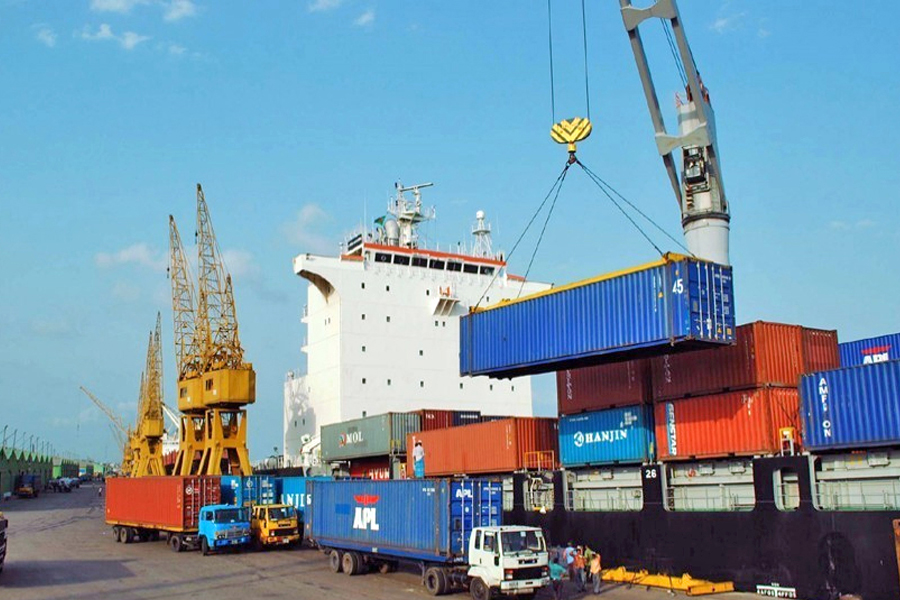
Shafiqul Alam said that plan is underway to increase existing container handling capacity of Ctg port to six times by 2030, and otherwise, the country will not be able to attract foreign investors.

“Turning Bangladesh into a regional manufacturing hub is one of the core agendas of the interim government led by Prof. Muhammad Yunus aiming to take our economy to a new height and create job opportunities for the huge young workforce,” the press secretary said.

He said there will be no alternative to simplifying the export process as well as speedy upgrading of overall port efficiency for encouraging the foreign investors, which will help create scope for investments worth billions of dollars.

“We’ve a plan to engage globally leading port operating companies in our port sector which have a proven track record in managing and operating ports efficiently, and discussion is underway to this end,” he said, setting a target to accomplish the task by next September.

He said there is a target to increase the existing 1.27 million TEUs container handling capacity of the terminals in operation and under construction, including those at Laldia, Bay Terminal, Patenga and Matarbari, to 7.86 million TEUs by 2030.

Criticising the ousted AL government, Shafiqul Alam said, “AL has no right to talk over the Rohingya issue, as they were afraid of uttering the word ‘Rohingya' and were used to saying the Rohingya Bangalee term for the community as FDMN (Forcibly Displaced Myanmar Nationals)”.

Deputy Press Secretary Abul Kalam Azad Majumder said the government is trying to start repatriation of Rohingya refugees to Myanmar with vigorous efforts through convincing all stakeholders at Myanmar and other states.​
 

NBR Chairman suggests paying taxes first and spending later
FE ONLINE DESK
Published :
May 03, 2025 23:39
Updated :
May 03, 2025 23:39

1746317312169.webp


National Board of Revenue (NBR) Chairman Md Shahriar Alam Saturday urged the citizens to pay taxes first and then spend them on the social sector and public welfare. Abdur Rahman Khan, according to local media.

Mentioning that paying tax is a very important responsibility, he said, "After paying tax, think about how much you will spend for the welfare of the people and how much you will spend for yourself and how much money you will save."

The NBR chairman made the call while addressing a function titled 'Gunijon Sammanana and Pahela Baishakh 1432' at Dhanmondi in the capital on Saturday evening. Lakshmipur District Youth Welfare Association, Dhaka accorded him a reception as a talented son of Lakshmipur district. ’

Md. Abdur Rahman Khan said, "Many people of our country think that after spending in the social sector, after giving zakat-sadaqah, there is no need to pay tax. ’

Highlighting the fragile system of revenue collection, the NBR chairman said, "We are far behind from this side. The biggest problem is that we still collect taxes from the poor, two-thirds of our total taxes are still collected from the poor through 'indirect taxes'. We can only collect one-third from income tax. We have a lot of work to do in these places. ’

He urged everyone to work together. Abdur Rahman said, "Let us all work together to establish a developed nation. We all work together so that we do not have to take loans, so that we can run the economy of Bangladesh with our own money. ’​
 

Posts you haven't read yet..

Latest Posts

Back