[🇧🇩] Monitoring Bangladesh's Economy

[🇧🇩] Monitoring Bangladesh's Economy
1K
32K
More threads by Saif

G Bangladesh Defense

Relevance of a single VAT rate in BD

Md Abdur Rouf

Published :
Apr 10, 2026 23:13
Updated :
Apr 10, 2026 23:13

1775868929996.webp


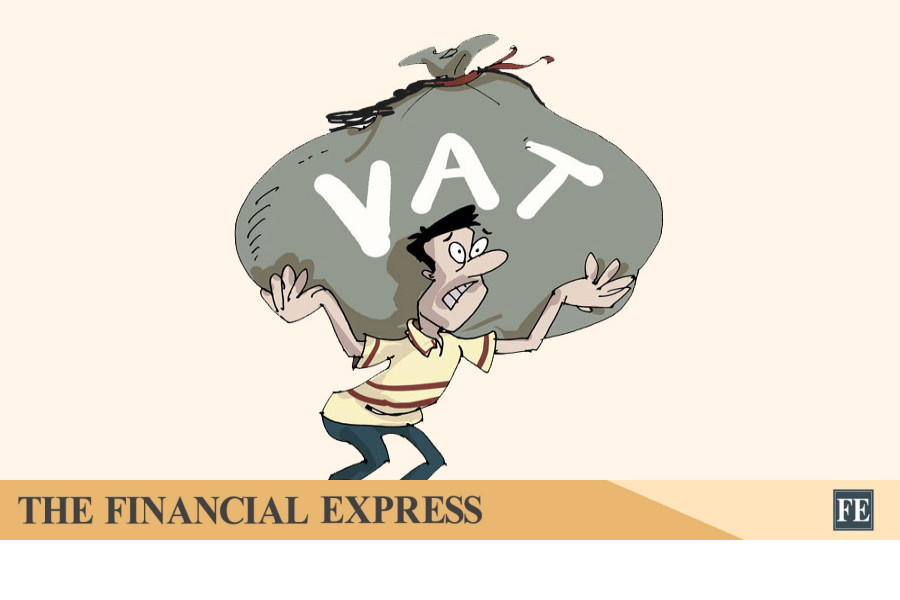
Much has been said about value added tax (VAT) reform in Bangladesh, and considerable work has also been undertaken so far. However, the ultimate result is that our tax-GDP ratio remains one of the lowest in the world. This demonstrates that the reform measures were not properly aligned with field-level realities. Having worked in Bangladesh’s VAT management system for more than 30 years, I have come to understand that less important issues are discussed more, and less important initiatives are started. These initiatives neither progress well nor conclude effectively. Introduction of VAT software, Electronic Cash Registrar (ECR), Electronic Fiscal Devise (EFD), policy-implementation separation efforts are the examples. The most crucial step needed in our VAT administration is rarely discussed and scarcely implemented.

The reason is that discussions on VAT reform in Bangladesh are often initiated by donor groups and agencies. Subsequently, some economists, researchers, civil society activists and intellectuals in our country merely echo those discussions. As a result, less important issues come to the forefront, while more critical issues remain overlooked.

One of the most frequently discussed topics about VAT reform in Bangladesh is the introduction of a single VAT rate. Currently, Bangladesh has essentially 10 VAT rates: 15, 10, 7.5, 5, 4.5, 4, 2.4, 2, 1.5, and 0 (per cent). However, 15 per cent VAT is applicable to the majority of VATable economic activities. The other reduced rates have relatively narrow bases. Despite this, there are repeated calls to introduce a single VAT rate—meaning that the reduced rates should be raised to 15 per cent which is considered as a major VAT reform.

In terms of the number of goods and services, most are currently subject to 15 per cent VAT. The Third Schedule of the VAT Act lists goods and services subject to reduced VAT rates. According to the schedule, 5 per cent VAT rate applies at the production stage to goods under only 60 headings and to just 7 services. Seven and half (7.5) per cent VAT rate applies to goods under only 7 headings and to 2 services. No goods at the production stage are now subject to 10 per cent VAT; only 5 services fall under that rate. Fixed VAT applies to goods under 22 headings at the production stage and to 1 service only. Beyond these, hundreds and thousands of goods at import and production stages, as well as other services, are subject to 15 per cent VAT rate. At the trading stage, the application of 15 per cent VAT is left to the seller’s discretion.

From revenue perspective, the major VAT-contributing goods and services are already taxed at 15 per cent. These include cigarettes, gas, pharmaceuticals, petroleum products, bidis, cement, beverages, soap and detergents, telecommunications, banking, leasing, warehousing, insurance, hotels etc. Only three major VAT-contributing services are now subject to reduced rates. Those are construction contractor (10 per cent), procurement provider—commonly known as supplier (10 per cent), and electricity distributor (5 per cent).

An analysis of VAT rates in 142 countries worldwide shows that 70 countries maintain reduced VAT rates. Countries such as Austria, Belgium, Brazil, France, Finland, Germany, Greece, Hungary, Ireland, Italy, Luxembourg, Norway, Poland, Portugal, Spain, and Sweden all have reduced VAT rates. Reduced VAT rates are, therefore, a global reality. Economic, social, cultural, and geographical considerations often justify reduced rates. The existence of reduced VAT rates is not inherently problematic, nor does eliminating them automatically solve all issues of VAT management.

In homogeneous economies, a single VAT rate is generally easier to implement. Countries such as Australia, Canada, Denmark, Fiji, Georgia, Israel, Jamaica, South Korea, Lebanon, Mauritius, the Netherlands, Singapore, Switzerland, and Taiwan have adopted a single VAT rate.

In contrast, heterogeneous economies often require multiple VAT rates, and implementing a single rate can be challenging. Countries such as Algeria, Brazil, Cyprus, the Czech Republic, France, Finland, India, Ireland, Italy, Mongolia, Nigeria, Pakistan, Panama, Tunisia, and Venezuela operate multiple VAT rates. Bangladesh’s economy is not homogeneous; therefore, like many other similar countries, maintaining multiple VAT rates is in conformity with the local realities.

In the United Kingdom, the standard VAT rate is currently 20 per cent. Historically, the UK has tested VAT rates at 15 per cent, 20 per cent, and 25 per cent at different periods. After evaluation of revenue impact, economic stability, and consumer response, policymakers concluded that 20 per cent was the most balanced and beneficial standard rate for the country’s economic structure. The UK also maintains reduced and zero rates for certain goods and services. This demonstrates that VAT rate decisions are context-specific and depend on national economic realities rather than universal formulas.

As mentioned earlier, most goods and services in Bangladesh are already taxed at 15 per cent. Has that solved all problems? Is there no VAT evasion in these sectors? The answer is clear. Problems persist, and VAT evasion remains widespread. Therefore, extending the 15 per cent rate to all remaining goods and services would not resolve systemic issues.

On January 09, 2025, a good number of goods and services attracting reduced rates were brought under 15 per cent rate. So far, we have not heard any report that the presumed objectives have been met.

The core problem is not whether the VAT rate is 15 per cent or less. The fundamental problem in our VAT management system is underreporting of sales. It is difficult to find any business that fully reports its actual sales. If true sale volumes were accurately determined, VAT revenue could multiply even under the existing rates.

Although it may sound surprising, reduced VAT rates sometimes generate more net revenue than the 15 per cent rate. Under the 15 per cent rate, businesses are allowed input tax credit. In practice, they often claim input tax credit amounting to 10–12 per cent, meaning that effectively only 3–5 per cent VAT is paid. Under reduced VAT rates, input tax credit is not allowed. Therefore, businesses pay the full 5 per cent, 7.5 per cent, or 10 per cent directly to government coffer. In many cases, this results in higher effective revenue for the government.

Thus, converting reduced rates to 15 per cent could potentially decrease revenue. Proponents of a uniform 15 per cent rate often cite international best practices. However, international practices require to be adapted to domestic realities. Otherwise, reforms may cause more harm than benefit as is evident in the current performance of our VAT management system.

Another argument is that universal input tax credit would create an ideal VAT system. However, this requires universal issuance of VAT invoices. Without ensuring proper invoicing, implementation of a single VAT rate would likely become another failed reform attempt. Conversely, ensuring proper invoicing under current rates could significantly increase VAT collection.

Regardless of the VAT rate, if all sales were properly recorded, VAT collection in Bangladesh would increase several times. Most sellers do not pay VAT on their actual sales. Discrepancies are often found between the turnover declared in CA audit report and VAT returns. Market observations clearly indicate substantial VAT evasion in our trading and service sectors.

The culture of issuing and demanding VAT invoices has not yet developed in Bangladesh. Therefore, the main focus of VAT reform should be proper recording of sales information through invoice automation. Invoice automation is the most critical step in our VAT reform. Issuing all VATable and non-VATable sales invoices through automated systems and storing data on central servers would create transformative success in our VAT collection. This task is not difficult. What is required is decisive commitment and initiative.

Md. Abdur Rouf is Chairman, Bangladesh VAT Professionals Forum and International VAT Training Institute.​
 

Jul-Jan fiscal deficit narrows 5.0pc

FE REPORT
Published :
Apr 11, 2026 08:36
Updated :
Apr 11, 2026 08:36

1775952955394.webp


Bangladesh's fiscal deficit narrowed slightly during the first seven months of the current fiscal year compared to the same period a year earlier, although government spending continued to outpace revenue collection.

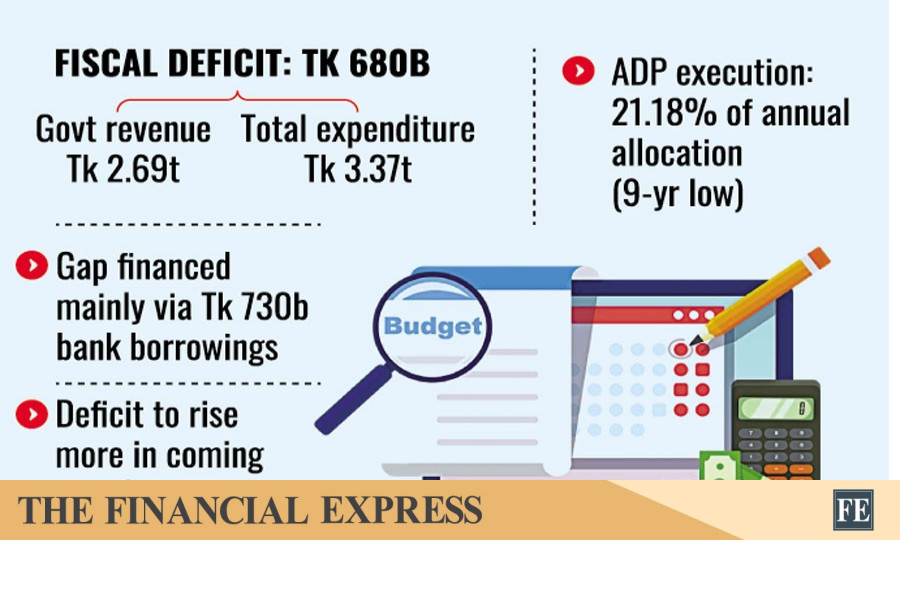
Data from the Bangladesh Bank shows the deficit stood at Tk 680 billion during July 2025-January 2026, about 5.0-percent lower than the Tk 717 billion recorded in the same period of the previous fiscal year.

Government revenue during the period under review totalled Tk 2.69 trillion, including both tax and non-tax receipts, while total expenditure reached Tk 3.37 trillion, resulting in the deficit.

Public spending, however, remained subdued in the development sector.

The implementation of the Annual Development Programme (ADP) - the government's main public investment programme - fell to a nine-year low during the period.

In the first seven months of the 2025-26 fiscal year, ADP implementation reached only 21.18 per cent of the annual allocation, reflecting slower progress in executing development projects.

According to official figures, development expenditure amounted to about Tk 420 billion during July-January, compared with the total ADP allocation of Tk 2.39 trillion for the whole FY26.

People familiar with the development say weak implementation of development projects has become a recurring issue, often linked to bureaucratic delays, slow procurement processes, and limited project readiness at the beginning of the fiscal year.

They, however, say in the coming months, the deficit will be higher, including higher subsidies and fuel payments.

The fiscal gap was financed mainly through domestic sources, particularly borrowing from the banking sector.

The Bangladesh Bank data shows net bank borrowing by the government reached around Tk 730 billion during the period under review.

However, the government also made repayments against earlier borrowings, partly offsetting the overall increase in bank-based financing.

Higher borrowing from the banking sector can help bridge the government's financing needs in the short term, but economists warn that excessive reliance on banks could put pressure on liquidity in the financial system and potentially crowd out private sector credit.

With several months remaining in the fiscal year, the pace of revenue collection and development spending will be closely watched to assess whether the government can maintain fiscal stability while supporting economic growth, which has already been forecast by the World Bank at 3.9 per cent.​
 

Govt plans more loans for higher expenditure
Staff Correspondent 12 April, 2026, 00:19

The newly elected Bangladesh Nationalist Party-led government is planning to expand public expenditure in the next financial year by taking more loans from the local and external sources against the backdrop of the revenue collection shortfall.

Finance ministry officials said that it was imperative for the BNP-led government to place an expansionary national budget to implement election pledges like the introduction of family card, farmer card and health card.

The overall projected costs for the cards are about Tk 50,000 crore in the 2026-27 financial year which will begin on July 1.

The government is also under pressure to implement the new pay scale for the government officials and employees partly, which will require about Tk 25,000 crore.

Besides, more allocations on energy items and fertiliser will be required to absorb price shocks of energy items and fertiliser due to the war in the Gulf destabilising maritime trade through the Strait of Hormuz.

With hundreds of ships stranded in the Gulf because of the closure of the Strait by the Iranian authorities after the United States and Israel attacked Iran on February 28, peace talks among the warring parties began in Pakistan’s capital Islamabad on Saturday amid a two-week truce.

Finance ministry officials said that more time would need to normalise the situation, especially the maritime trade through the Strait, accounting for 20 per cent supply of the global fuel oils.

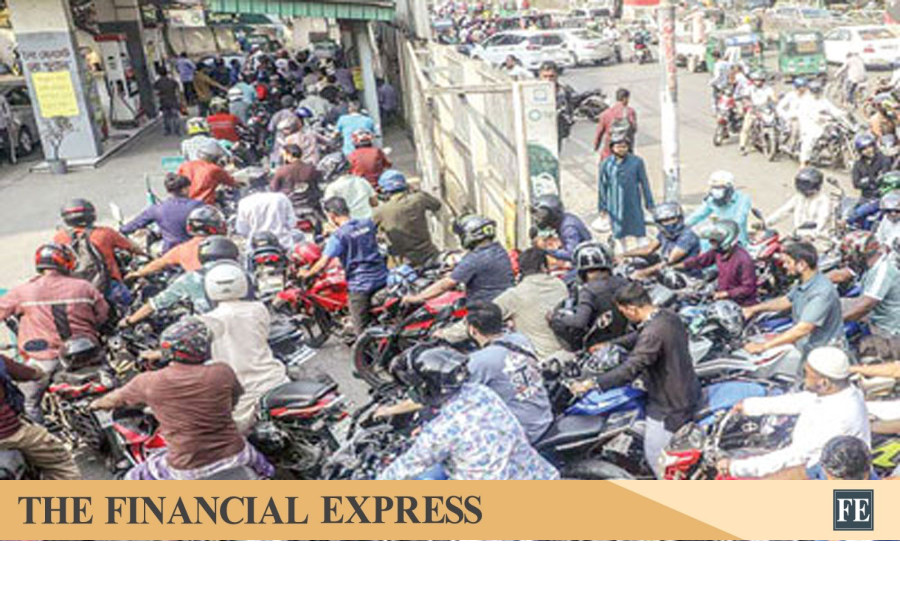
Bangladesh is already feeling pinches from the supply disruption, evident from a huge rush for fuel oil by consumers at the filling stations amid the supply shortage and hoarding.

Finance ministry officials said the less-than-expected revenue collection would force the government to obtain loans worth about Tk 3 lakh crore from the local and foreign sources to meet the next national budget deficit of about 5 per cent of the gross domestic product.

In the current financial year, the projected budget deficit of 3.5 per cent of the GDP of Tk 62,44,578 crore was set by the interim government, the tenure of which ended in March following the February 12 national election.

Besides, the FY26 national budget of Tk 7.9 lakh crore has been aimed at prioritising economic recovery over high growth as it is roughly 1 per cent smaller than the original budget for the FY25.

Of the overall loans, the government is looking to ensure more than Tk 1.2 lakh crore from the foreign sources and the rest — about Tk 1.6 lakh crore — from the local sources.

On April 10, a meeting of the coordination council on budget and macro-economy outlined the provisional targets for the forthcoming financial year, aiming at the overall outlay of over Tk 9 lakh crore for achieving 6.5 per cent GDP growth.

Presided over by finance and planning minister Amir Khasru Mahmud Chowdhury, the online meeting also set the inflation target at 7 per cent.

The country has been grappling with high inflation over recent years, with the rate hitting the double digit in 2023. In March 2026, the point-to-point general inflation eased slightly to 8.71 per cent from 9.13 per cent in February, according to Bangladesh Bureau of Statistics data.

On April 9, an update by the General Economics Division of the planning ministry highlighted mounting challenges from energy crisis and persistent inflation, despite some improvement in foreign exchange reserves.

The report warned that the ongoing energy crisis was affecting fiscal balances, external accounts and investment activities.

Amir Khasru, who is expected to place the new national budget in parliament on June 11, is likely to project the revenue income at Tk 6.5 lakh crore. The size of the FY27 annual development programme is likely to be over Tk 3 lakh crore.

For the FY26 budget, the revenue target has been set at Tk 5.64 lakh crore and the revised ADP at Tk 2 lakh crore. The National Board of Revenue has been missing the tax collection targets over the years.​
 

A refuge for men in the Eid mall chaos​


Fast forward many years and we have modern shopping malls with air conditioning, glass elevators and food courts -- but one important facility still seems strangely missing. A proper relaxation area for men
https://www.dhakatribune.com/405635

A refuge for men in the Eid mall chaos
Anando Mostofa Anando Mostofa

Published : 16 Mar 2026, 09:13 PM

Update : 19 Mar 2026, 04:18 PM

One of my earliest childhood memories of shopping is not actually about shopping.

It is about waiting.

When I was a child, my father used to take me with him to Karwan Bazar in Dhaka to buy the family’s monthly groceries.

The market was always noisy and energetic -- vendors shouting prices, porters moving through narrow lanes with heavy baskets on their heads, and the air filled with the smell of vegetables, fish, and spices.

But my father had a clever system.

He would place me at a particular spot, usually a quiet corner beside a shop, and ask me to sit there comfortably.

My job was simple: guard the growing pile of groceries.

My father would go off to buy fish, return and leave it with me, then disappear again to buy vegetables, rice or lentils.

Piece by piece, the pile would grow beside me like a small warehouse.

I would sit there watching the lively drama of Karwan Bazar unfold -- people bargaining fiercely, porters rushing with baskets, tea sellers circulating with kettles.

When the shopping was finally complete, my father would gather everything, pick me up from my “station,” and we would head home together.

Looking back, I realize my father had unknowingly invented something brilliant: the original waiting zone for shopping companions.

Fast forward many years and we have modern shopping malls with air conditioning, glass elevators and food courts -- but one important facility still seems strangely missing.

A proper relaxation area for men.

And if there is ever a time when such spaces are urgently needed, it is Eid shopping season.

Anyone who has visited a mall in Dhaka before Eid knows what I mean.

The parking lot is full, the escalators are overflowing and the corridors resemble a festive river of humanity flowing from store to store.

For many women, Eid shopping is not just an errand. It is a mission.

The energy is impressive.

A single dress may require visiting four stores, comparing three colors and consulting two friends on WhatsApp before a final decision is made. Shoes must match the outfit. Bags must match the shoes.

And sometimes the entire process begins again because a better option appears in the next shop.

Meanwhile, the accompanying men -- husbands, brothers, fiances or fathers -- slowly discover their true purpose in the expedition.

They are not there to decide.

They are there to carry the bags.

In fairness, most women do not actually need male advice while shopping.

They already know exactly what they want.

Asking “How does this look?” is often more a polite ritual than a request for serious consultation.

The man’s real responsibility is logistical support, a role he performs heroically while gradually accumulating shopping bags on both arms.

After two hours, the mall becomes less a shopping centre and more a personal endurance challenge.

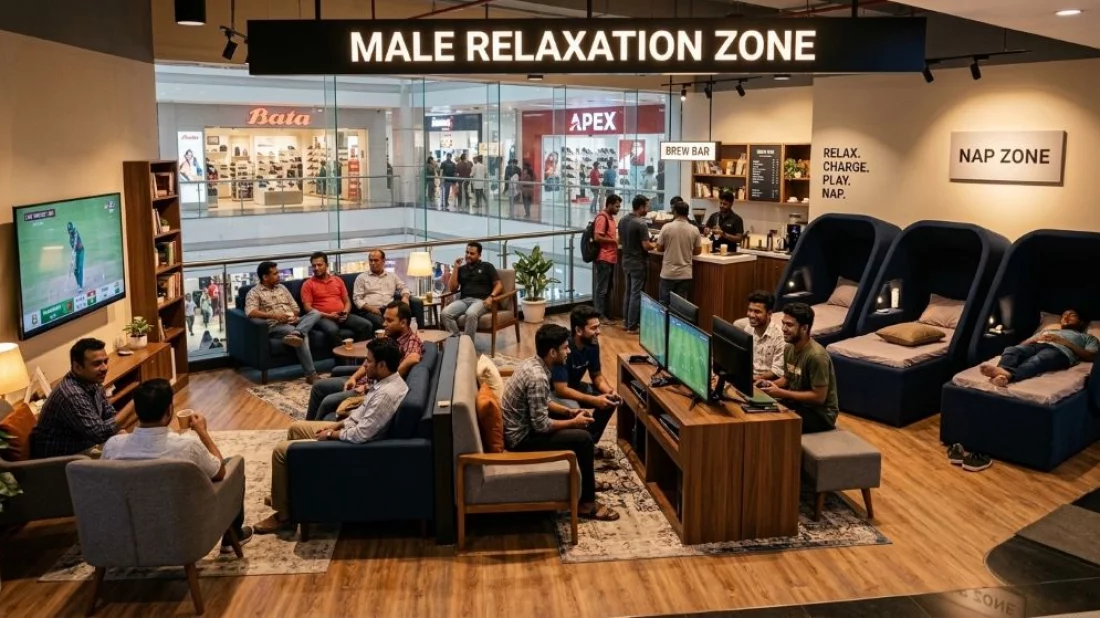
This is precisely why malls should seriously consider introducing “male relaxation zones.”

Think of them as the modern version of my childhood corner in Karwan Bazar, only with better furniture.

Imagine comfortable couches where exhausted companions can sit and recharge.

Large televisions broadcasting football matches. Gaming consoles for quick entertainment. Coffee machines, Wi-Fi and perhaps even quiet nap-friendly corners.

While women conquer the retail battlefield, the logistics department could safely regroup in a comfortable lounge.

The idea may sound humorous, but interestingly, several countries have already experimented with it.

In China, some shopping centres have introduced what social media jokingly calls “husband storage pods.” These small glass booths contain comfortable chairs, screens and video games where men can relax while their partners continue shopping.

Germany has explored similar ideas through spaces humorously referred to as “Männergarten,” or men’s waiting areas -- lounges where companions can unwind with comfortable seating and entertainment.

In parts of Australia and Canada, modern malls increasingly include relaxation zones with couches, charging stations and large entertainment screens, recognizing that shopping centres are not just retail spaces but full-day leisure environments.

These innovations acknowledge something important: shopping is an experience, not just a transaction.

And every good experience requires rest stops.

Eid shopping in particular can stretch for hours.

Families move from clothing stores to shoe stores, from jewellery counters to cosmetics sections, often ending with dinner at the food court.

By the time the final purchase is made, some of the male companions look as though they have completed a marathon.

A small, well-designed lounge could transform this experience.

Instead of standing awkwardly outside fitting rooms, men could watch a cricket match, sip coffee or simply rest their feet.

Meanwhile, women would enjoy the freedom to explore shops without worrying about bored companions asking the most dangerous question in the shopping universe:

“Are we done yet?”

From a business perspective, malls could benefit too.

Relaxed men buy snacks. Relaxed men order coffee.

Relaxed men might even wander into electronics stores and make impulse purchases.

In other words, comfort can be profitable.

More importantly, such spaces would make the entire Eid shopping experience smoother and happier for everyone.

Because at the end of the day, shopping is meant to be joyful -- especially during Eid, when the excitement of new clothes, gifts and celebrations fills the air.

So perhaps it is time for malls to borrow a little wisdom from my father’s Karwan Bazar strategy.

Give the shopping companions a comfortable corner.

Let them guard the bags.

And when the mission is finally complete, everyone can return home together -- tired, satisfied and ready for Eid.
 

36.5pc growth of remittance inflow till April 12

Published :
Apr 13, 2026 17:17
Updated :
Apr 13, 2026 17:17

1776126733553.webp


Inflow of remittances witnessed a year-on-year growth of 36.5 percent reaching US$1,437 million in the first 12 days of April, according to the latest data of Bangladesh Bank (BB) issued today (Monday).

Last year, during the same period, the country's remittance inflow was $1,052 million, BSS reports.

During the July to April 12, 2026, of the current fiscal year, expatriates sent remittances of $27,645 million, which was $22,838 million during the same period of the previous fiscal year.​
 

What foreign investors want to see in Bangladesh

Mohd Akhtaruzzaman

Published :
Apr 13, 2026 23:51
Updated :
Apr 13, 2026 23:56

1776126898254.webp


Bangladesh stands at a critical juncture in its economic trajectory. With sustained gross domestic product (GDP) growth, a large domestic market, and a favorable demographic profile, the country possesses the structural fundamentals required to attract significantly higher levels of Foreign Direct Investment (FDI). However, actual inflows remain below potential.

The gap does not reflect a shortage of opportunities. Rather, it indicates persistent system-level inefficiencies that increase transactional costs, delay project implementation, and elevate perceived investment risk.

In an increasingly competitive global environment, investment decisions are influenced not only by cost advantages, but by predictability, execution speed, and institutional reliability. In this context, Bangladesh is not competing with economies offering higher incentives; it is competing with those offering more efficient and dependable systems.

A recurring pattern across sectors indicates that while investment approvals are often secured, project implementation is delayed. Time overruns in land acquisition, infrastructure readiness, regulatory clearances, and utility connections significantly alter project economics.

Industrial and energy projects frequently face prolonged delays at the land acquisition stage due to fragmented ownership structures and legal complexities. Subsequent delays in site preparation, utility connections, and approvals further extend timelines, increasing financing costs and eroding expected returns.

These constraints are not isolated. They represent systemic friction across multiple, interlinked domains.

Policy uncertainty remains a primary concern. Although regulatory frameworks are in place, inconsistent interpretation across institutions reduces predictability over the investment lifecycle.

Administrative complexity persists despite reform efforts. The One Stop Service under the Bangladesh Investment Development Authority (BIDA) has improved coordination, but investors continue to engage with multiple agencies, often facing duplication of procedures and unclear timelines.

Foreign exchange management presents additional challenges. While repatriation of profits is legally permitted, operational delays and access constraints create uncertainty regarding capital mobility.

Land acquisition remains a structural bottleneck. The absence of readily available, dispute-free, and serviced industrial land delays project initiation.

Infrastructure constraints, though gradually improving, continue to affect reliability. Port congestion, energy supply inconsistencies, and incomplete last-mile connectivity increase operational risk and cost.

Legal enforcement mechanisms further contribute to perceived risk. Contract enforcement and dispute resolution processes remain time-consuming, reducing the practical effectiveness of legal protections.

Taxation adds complexity through multiple instruments, frequent adjustments, and delays in refund mechanisms, increasing compliance burden.

Governance and transparency challenges also persist. Limited visibility into approval processes and decision timelines reduces investor confidence.

The financial ecosystem remains relatively shallow, with limited availability of long-term financing instruments and underdeveloped capital markets.

Finally, while Bangladesh benefits from an abundant labour force, there is a shortage of mid- and high-level technical and managerial skills required for modern industrial operations.

Taken together, these factors create a system where investment becomes slower, riskier, and more expensive than in competing economies.

Addressing these constraints requires a shift from incremental reform to redesigning of system.

The objective should be to establish a plug-and-play investment framework, where policy, approvals, land, infrastructure, finance, and skills are aligned and delivered in a coordinated manner.

Policy certainty is the starting point. A unified investment framework, supported by legally enforceable stability provisions and advance ruling mechanisms, can reduce ambiguity and enhance predictability.

Administrative processes must be streamlined. The One Stop Service should evolve into a fully empowered single-window authority, enabling parallel processing of approvals within defined timelines. Time-bound service delivery should be enforced to ensure accountability.

Foreign exchange management should move toward a rules-based framework. A dedicated FDI window, combined with guaranteed repatriation timelines, can strengthen investor confidence.

The most significant reform opportunity, however, lies in land.

Bangladesh should transition from investor-led land acquisition to a government-led industrial land delivery system. A National Industrial Land Bank can be developed, where land is acquired, legally cleared, and fully serviced in advance, including internal roads, utilities, and drainage.

Investors would then receive ready-to-build plots, allowing construction to commence within a defined timeframe—ideally within 30 to 45 days.

Infrastructure development should be integrated with industrial planning. Industrial corridors linking land, logistics, energy, and ports—particularly facilities such as Chattogram Port—can enhance efficiency and reduce cost.

Legal reforms should focus on enforceability. The establishment of specialised commercial courts and time-bound dispute resolution mechanisms can improve contract reliability.

Tax administration must be simplified. A unified tax framework, combined with stability agreements and automated refund systems, can reduce uncertainty and compliance burden.

Governance systems should become more transparent through digital platforms that enable real-time tracking of applications and decisions.

Financial sector reform should focus not only on expanding capital availability, but on improving its structure.

In addition to project finance facilities, infrastructure bonds, and blended finance models, Bangladesh should introduce a hybrid capital framework aligned with project expenditure.

Under this approach, foreign capital would primarily finance imported equipment and technology, while domestic capital could be mobilised for local expenditure components such as civil works and services.

Local participation should remain optional, based on investor preference, and capped at no more than 50 per cent of total project financing. This ensures flexibility while maintaining investor confidence.

This model offers several advantages. It reduces pressure on foreign exchange reserves, lowers financing costs, and accelerates financial closure.

At the same time, it allows broader participation of domestic investors. Institutional investors—and, importantly, individual investors—can participate through structured and regulated instruments such as infrastructure bonds, Sukuk, mutual funds, and listed securities.

Retail participation should be channelled through such instruments to ensure appropriate risk management, transparency, and investor protection.

Workforce development must be aligned with industry requirements. Sector-specific training programs, apprenticeship models, and continuous skill development initiatives are essential to address gaps at the mid- and high-skill levels.

The effectiveness of these reforms depends on their integration into a coherent system.

An efficient investment ecosystem is one in which an investor can obtain approvals within a predictable timeframe, access ready-to-use land, connect to infrastructure without delay, secure financing efficiently, and recruit a skilled workforce.

Under such conditions, project implementation timelines can be significantly reduced.

The potential impact of such reforms is substantial. FDI inflows could increase significantly over the medium term. Reduced project timelines would lower financing costs and improve project viability. Industrial output would expand, supporting export growth and employment generation.

More importantly, Bangladesh would reposition itself as a reliable and execution-efficient investment destination.

In the current global investment landscape, countries compete not only on cost, but on system performance.

Bangladesh has the necessary fundamentals. The challenge now is to ensure that its systems enable, rather than delay, investment.

The country does not need to rely on additional incentives. It needs to ensure that its institutional and operational frameworks function efficiently and predictably.

If Bangladesh improves its systems, investment inflows will increase naturally—without the need for extraordinary incentives.

Maj (Retd.) Mohd. Akhtaruzzaman is Former Member of Parliament (1991–1996 and 1996–2001).​
 

Banks flush with cash, but businesses starved of credit: DCCI

Published :
Apr 15, 2026 17:28
Updated :
Apr 15, 2026 20:20

1776298225371.webp


Dhaka Chamber of Commerce & Industry (DCCI) President Taskeen Ahmed on Wednesday said Bangladesh’s banking sector is facing a “paradoxical landscape” where banks are holding record excess liquidity but private sector borrowers – particularly industries and CMSMEs – are struggling to access credit, hampering investment and growth.

He made the remarks while presenting a paper titled ‘Synergising the Banking Sector: Lenders’ and Borrowers’ Perspective’ at a focus group discussion held at the DCCI auditorium, reports UNB.

According to the presentation, total liquid assets in the banking system has risen to Tk 6,26,044.90 crore, while excess liquidity stood at Tk 3,21,255.47 crore, indicating banks are accumulating funds as a buffer against credit risk instead of deploying them for productive lending.

At the same time, private sector credit growth slowed to 6.03%, reflecting contraction in lending despite strong deposit growth.

The paper noted that the overall non-performing loan (NPL) ratio reached 31.2% by December 2025, while industrial loan recovery declined by more than 50% year-on-year, creating stress across the real economy. Overdue industrial loans stood at Tk 71,066.82 crore, while CMSME overdue loans accounted for 35.43%, highlighting mounting financial distress among borrowers.

Taskeen observed that rising NPLs, capital shortfalls and stricter risk governance have pushed banks towards defensive lending strategies. Capital shortages in 23 banks amounting to Tk 2.82 lakh crore have further increased risk aversion, slowing credit disbursement and limiting access to finance for productive sectors.

He also pointed out a widening divergence between public and private sector credit. Government borrowing from banks surged to Tk 73,035 crore during July-January of fiscal year 2025-26, marking a sharp increase compared to Tk 9,442 crore in the same period of FY25, which has further crowded out private sector lending.

From the borrowers’ perspective, the presentation highlighted severe revenue pressures, high lending rates and limited access to working capital. With the policy rate at 10%, lending rates climbed to around 14-15%, increasing repayment burdens and discouraging new investments, particularly for SMEs operating with thin margins.

The paper warned that the banking sector is caught in a vicious cycle where rising defaults lead to tighter lending standards, which in turn constrain business activity and weaken repayment capacity, ultimately creating more NPLs and further credit tightening.

To address the situation, Taskeen proposed a three-pillar “synergy framework” focusing on stabilising the banking system, expanding credit and strengthening governance. Key recommendations included enforcing NPL reduction targets, prosecuting wilful defaulters, restoring capital adequacy, and completing asset quality reviews of vulnerable banks.

He also called for reducing SME lending rates through credit guarantee schemes, expanding digital financial inclusion, diversifying lending portfolios and developing alternative financing channels to ease pressure on bank financing.

The DCCI president further stressed implementing risk-based supervision, strengthening cybersecurity, investing in digital credit infrastructure and enforcing Basel III compliance to ensure long-term resilience of the banking sector.

He noted that stronger coordination between lenders and borrowers is essential to restore confidence, revive private investment and support sustainable business growth in Bangladesh.​
 

Why Bangladesh must build its brand before the world builds one for it

Hisham Khan AND Tanjim Hasan Chowdhury

Published :
Apr 12, 2026 11:24
Updated :
Apr 12, 2026 11:24

1776298999259.webp


When a business owner in California types "hire virtual assistant" into a search engine, the results are not random. They are the product of years of deliberate positioning, cultural fluency in the global market, and a country that decided its workers would not merely compete but would come to define an entire category of professional service. That country is the Philippines, and the lesson it holds for Bangladesh is one that no training programme alone can deliver.

Freelancing is no longer solely about skill, because at a certain point the market stops evaluating individuals and starts evaluating countries, and that shift rewards reputation far more than it rewards competence alone.

The brand Bangladesh has not built: Bangladesh occupies a genuinely strong position but mostly on paper. With approximately 650,000 registered freelancers and a market share estimated at 16 per cent of global online labour supply, the country is the second-largest supplier of freelance services in the world. The names and faces that global clients associate with remote work, however, are rarely Bangladeshi. The country exports talent in enormous quantities while exporting almost no narrative about that talent.

"I have clients in Germany and the UK who were genuinely surprised to learn I was from Bangladesh," says Sabbir Hossain, a Dhaka-basedfreelancer who has worked remotely for global agencies and professionals as their virtual assistant. "They assumed I was from the Philippines or India. That is not an insult. It just shows how little the world knows about us despite what we produce."That gap between output and perception is precisely where country branding operates.

Case study—what the Philippines built, and how: Over the past two decades, the Philippines did not merely enter the global services market. It claimed a corner of it so thoroughly that the phrase "virtual assistant" has become functionally synonymous with Filipino professionals in the minds of Western clients and business owners, and none of that happened by chance.

The Philippine government, working in close alignment with industry bodies such as the IT and Business Process Association of the Philippines (IBPAP), invested in a coherent national narrative: Filipino professionals are communicative, culturally attuned to Western norms, proficient in English, and dependable. That narrative was reinforced through export data, community visibility, and a generation of freelancers who presented themselves collectively rather than as isolated individuals.

Filipino professionals cultivated a reputation for warmth and reliability that became one of the most commercially valuable soft-skill brands in the global services industry. Their communication style, characteristically patient, respectful, and measured even under pressure, translated well across cultures that prize approachability in client-facing roles. A strong command of English, shaped in part by the country's history with American education systems and an entertainment culture saturated with Western media, meant that Filipino workers could handle client correspondence with care, conduct calls without friction, and produce content that required minimal revision. The quality of those interactions lodged itself in client memory, and word spread through the small-business networks and entrepreneur communities of the English-speaking world in the way that reliable service always spreads: quietly, persistently, and faster than any marketing campaign.

What accumulated over time was more durable than goodwill. Filipino agencies today do not simply supply remote workers to clients in the United States and Europe but sit at the other side of the hiring table altogether. Platforms such as Virtual Staff Finder, OnlineJobs.ph, and Remote Staff operate as intermediaries who package Filipino labour for foreign markets, building their own commercial standing on top of a national reputation. A business owner in London seeking a customer service team does not search for candidates one by one but approaches platforms that already carry the trust the Philippines built over two decades.

The scale of what that trust built is visible in the revenue figures. The Philippines' IT and business process management sector generated approximately 32.5 billion US dollars in 2022, employing more than 1.5 million workers, with industry projections placing the total above 59 billion dollars by 2028. Remote freelancing and virtual assistance form a growing share of that figure, channelling foreign exchange directly into household incomes across provinces far removed from Manila. Country branding, understood in this light, is not a cultural indulgence but a long-term economic investment with returns that the Philippines has already collected.

"When a client asks where I am from, I still notice a small hesitation when I say Bangladesh," says Nusrat Jahan, a content writer who has been working with Australian and Canadian clients since 2021. "Filipino freelancers don't face that. They already have a reputation. We have to earn trust individually every single time, and that is exhausting," she adds.That exhaustion is not a personal failing but a structural cost that falls on individual workers precisely because no institution has been built to shoulder it at a national level.

Brand is now an infrastructure: Policymakers sometimes treat country branding as a communications exercise: a logo, a tagline, a presence at international trade expos. The Philippine model demands something far more rigorous. Brand, in the freelancing context, is built through consistent quality signals over time, through sector specialisation, through professional communities that are visible internationally, and through regulatory frameworks that give clients abroad confidence in the people they are hiring.

Bangladesh launched its National Freelancer ID Card in January 2026, a meaningful first step toward formal institutional recognition. Labour Act amendments passed the same month extended legal protections to platform-based workers for the first time in the country's history. These are the foundations on which a credible brand can be constructed. The question is whether the government treats them as ends in themselves or as the opening chapter of a longer and more deliberate positioning effort.

"The ID card matters, but clients abroad don't know it exists," says Rafiqul Islam, who runs a small digital agency in Chattogram that sources contracts from UK-based businesses. "For country branding to work, it has to be visible to the people doing the hiring, not just to us."

What Rafiqul describes points to the missing actor in Bangladesh's freelancing story: the private sector institution willing to carry the national brand as part of its commercial mission.

The lesson from Sony: When Akio Morita co-founded Sony in post-war Japan, the country's manufacturing reputation in Western markets was poor. "Made in Japan" was a phrase associated with inexpensive imitation goods rather than precision engineering. Morita understood that Sony's commercial future depended on rehabilitating that association, and he pursued it with the same discipline he applied to product design. Sony did not merely sell transistor radios but sold the idea that Japan made things of quality, and it did so consistently, visibly, and over decades, until the world accepted that proposition as obvious.

From supplier to authority: The Philippines did not brand itself broadly but it chose sectors, principally business process outsourcing, virtual assistance, and customer support, and drove depth in those areas until Filipino professionals became the default association in the minds of hiring managers worldwide. Bangladesh has well-established strengths in software development, graphic design, and digital marketing that could anchor a comparable sectoral identity. The country also has a diaspora spread across the United Kingdom, the United States, Canada, and the Gulf states, communities that could carry a story about Bangladeshi professional quality into markets where it has not taken hold.

Bangladesh already has the workforce to be taken seriously; what it has not built is the institutional and commercial architecture that would make the rest of the world take it seriously without being told to.​
 

Latest Posts

Back