Bangladesh Defense
Saif
Senior Member
- Jan 24, 2024
- 21,077
- 9,688
- Nation

- Residence
- Axis Group

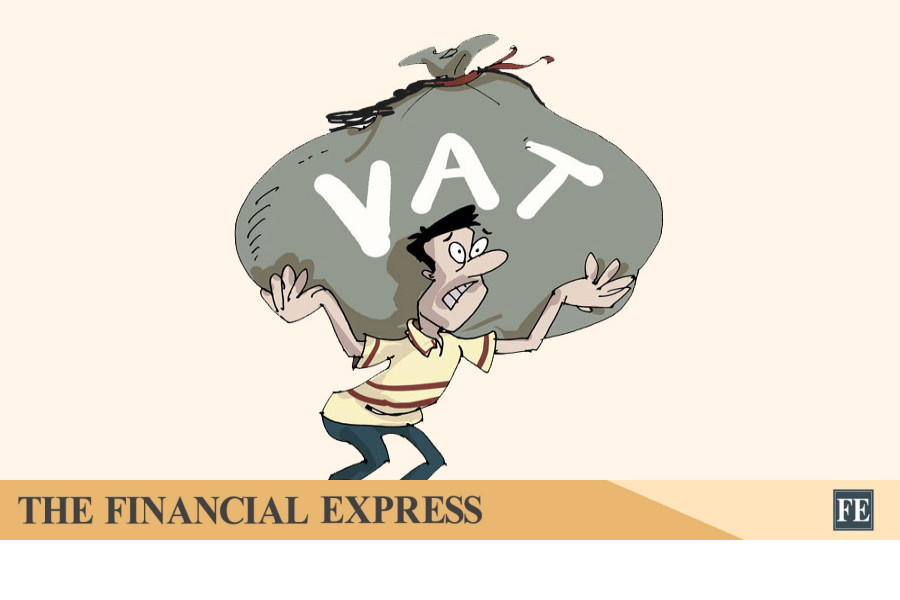
Relevance of a single VAT rate in BD
Much has been said about value added tax (VAT) reform in Bangladesh, and considerable work has also been undertaken so far. However, the ultimate result is that our tax-GDP ratio remains one of the lowest in the world. This demonstrates that the reform measures were not properly aligned with field-
Relevance of a single VAT rate in BD
Md Abdur Rouf
Published :
Apr 10, 2026 23:13
Updated :
Apr 10, 2026 23:13

Much has been said about value added tax (VAT) reform in Bangladesh, and considerable work has also been undertaken so far. However, the ultimate result is that our tax-GDP ratio remains one of the lowest in the world. This demonstrates that the reform measures were not properly aligned with field-level realities. Having worked in Bangladesh’s VAT management system for more than 30 years, I have come to understand that less important issues are discussed more, and less important initiatives are started. These initiatives neither progress well nor conclude effectively. Introduction of VAT software, Electronic Cash Registrar (ECR), Electronic Fiscal Devise (EFD), policy-implementation separation efforts are the examples. The most crucial step needed in our VAT administration is rarely discussed and scarcely implemented.
The reason is that discussions on VAT reform in Bangladesh are often initiated by donor groups and agencies. Subsequently, some economists, researchers, civil society activists and intellectuals in our country merely echo those discussions. As a result, less important issues come to the forefront, while more critical issues remain overlooked.
One of the most frequently discussed topics about VAT reform in Bangladesh is the introduction of a single VAT rate. Currently, Bangladesh has essentially 10 VAT rates: 15, 10, 7.5, 5, 4.5, 4, 2.4, 2, 1.5, and 0 (per cent). However, 15 per cent VAT is applicable to the majority of VATable economic activities. The other reduced rates have relatively narrow bases. Despite this, there are repeated calls to introduce a single VAT rate—meaning that the reduced rates should be raised to 15 per cent which is considered as a major VAT reform.
In terms of the number of goods and services, most are currently subject to 15 per cent VAT. The Third Schedule of the VAT Act lists goods and services subject to reduced VAT rates. According to the schedule, 5 per cent VAT rate applies at the production stage to goods under only 60 headings and to just 7 services. Seven and half (7.5) per cent VAT rate applies to goods under only 7 headings and to 2 services. No goods at the production stage are now subject to 10 per cent VAT; only 5 services fall under that rate. Fixed VAT applies to goods under 22 headings at the production stage and to 1 service only. Beyond these, hundreds and thousands of goods at import and production stages, as well as other services, are subject to 15 per cent VAT rate. At the trading stage, the application of 15 per cent VAT is left to the seller’s discretion.
From revenue perspective, the major VAT-contributing goods and services are already taxed at 15 per cent. These include cigarettes, gas, pharmaceuticals, petroleum products, bidis, cement, beverages, soap and detergents, telecommunications, banking, leasing, warehousing, insurance, hotels etc. Only three major VAT-contributing services are now subject to reduced rates. Those are construction contractor (10 per cent), procurement provider—commonly known as supplier (10 per cent), and electricity distributor (5 per cent).
An analysis of VAT rates in 142 countries worldwide shows that 70 countries maintain reduced VAT rates. Countries such as Austria, Belgium, Brazil, France, Finland, Germany, Greece, Hungary, Ireland, Italy, Luxembourg, Norway, Poland, Portugal, Spain, and Sweden all have reduced VAT rates. Reduced VAT rates are, therefore, a global reality. Economic, social, cultural, and geographical considerations often justify reduced rates. The existence of reduced VAT rates is not inherently problematic, nor does eliminating them automatically solve all issues of VAT management.
In homogeneous economies, a single VAT rate is generally easier to implement. Countries such as Australia, Canada, Denmark, Fiji, Georgia, Israel, Jamaica, South Korea, Lebanon, Mauritius, the Netherlands, Singapore, Switzerland, and Taiwan have adopted a single VAT rate.
In contrast, heterogeneous economies often require multiple VAT rates, and implementing a single rate can be challenging. Countries such as Algeria, Brazil, Cyprus, the Czech Republic, France, Finland, India, Ireland, Italy, Mongolia, Nigeria, Pakistan, Panama, Tunisia, and Venezuela operate multiple VAT rates. Bangladesh’s economy is not homogeneous; therefore, like many other similar countries, maintaining multiple VAT rates is in conformity with the local realities.
In the United Kingdom, the standard VAT rate is currently 20 per cent. Historically, the UK has tested VAT rates at 15 per cent, 20 per cent, and 25 per cent at different periods. After evaluation of revenue impact, economic stability, and consumer response, policymakers concluded that 20 per cent was the most balanced and beneficial standard rate for the country’s economic structure. The UK also maintains reduced and zero rates for certain goods and services. This demonstrates that VAT rate decisions are context-specific and depend on national economic realities rather than universal formulas.
As mentioned earlier, most goods and services in Bangladesh are already taxed at 15 per cent. Has that solved all problems? Is there no VAT evasion in these sectors? The answer is clear. Problems persist, and VAT evasion remains widespread. Therefore, extending the 15 per cent rate to all remaining goods and services would not resolve systemic issues.
On January 09, 2025, a good number of goods and services attracting reduced rates were brought under 15 per cent rate. So far, we have not heard any report that the presumed objectives have been met.
The core problem is not whether the VAT rate is 15 per cent or less. The fundamental problem in our VAT management system is underreporting of sales. It is difficult to find any business that fully reports its actual sales. If true sale volumes were accurately determined, VAT revenue could multiply even under the existing rates.
Although it may sound surprising, reduced VAT rates sometimes generate more net revenue than the 15 per cent rate. Under the 15 per cent rate, businesses are allowed input tax credit. In practice, they often claim input tax credit amounting to 10–12 per cent, meaning that effectively only 3–5 per cent VAT is paid. Under reduced VAT rates, input tax credit is not allowed. Therefore, businesses pay the full 5 per cent, 7.5 per cent, or 10 per cent directly to government coffer. In many cases, this results in higher effective revenue for the government.
Thus, converting reduced rates to 15 per cent could potentially decrease revenue. Proponents of a uniform 15 per cent rate often cite international best practices. However, international practices require to be adapted to domestic realities. Otherwise, reforms may cause more harm than benefit as is evident in the current performance of our VAT management system.
Another argument is that universal input tax credit would create an ideal VAT system. However, this requires universal issuance of VAT invoices. Without ensuring proper invoicing, implementation of a single VAT rate would likely become another failed reform attempt. Conversely, ensuring proper invoicing under current rates could significantly increase VAT collection.
Regardless of the VAT rate, if all sales were properly recorded, VAT collection in Bangladesh would increase several times. Most sellers do not pay VAT on their actual sales. Discrepancies are often found between the turnover declared in CA audit report and VAT returns. Market observations clearly indicate substantial VAT evasion in our trading and service sectors.
The culture of issuing and demanding VAT invoices has not yet developed in Bangladesh. Therefore, the main focus of VAT reform should be proper recording of sales information through invoice automation. Invoice automation is the most critical step in our VAT reform. Issuing all VATable and non-VATable sales invoices through automated systems and storing data on central servers would create transformative success in our VAT collection. This task is not difficult. What is required is decisive commitment and initiative.
Md. Abdur Rouf is Chairman, Bangladesh VAT Professionals Forum and International VAT Training Institute.
Md Abdur Rouf
Published :
Apr 10, 2026 23:13
Updated :
Apr 10, 2026 23:13
Much has been said about value added tax (VAT) reform in Bangladesh, and considerable work has also been undertaken so far. However, the ultimate result is that our tax-GDP ratio remains one of the lowest in the world. This demonstrates that the reform measures were not properly aligned with field-level realities. Having worked in Bangladesh’s VAT management system for more than 30 years, I have come to understand that less important issues are discussed more, and less important initiatives are started. These initiatives neither progress well nor conclude effectively. Introduction of VAT software, Electronic Cash Registrar (ECR), Electronic Fiscal Devise (EFD), policy-implementation separation efforts are the examples. The most crucial step needed in our VAT administration is rarely discussed and scarcely implemented.
The reason is that discussions on VAT reform in Bangladesh are often initiated by donor groups and agencies. Subsequently, some economists, researchers, civil society activists and intellectuals in our country merely echo those discussions. As a result, less important issues come to the forefront, while more critical issues remain overlooked.
One of the most frequently discussed topics about VAT reform in Bangladesh is the introduction of a single VAT rate. Currently, Bangladesh has essentially 10 VAT rates: 15, 10, 7.5, 5, 4.5, 4, 2.4, 2, 1.5, and 0 (per cent). However, 15 per cent VAT is applicable to the majority of VATable economic activities. The other reduced rates have relatively narrow bases. Despite this, there are repeated calls to introduce a single VAT rate—meaning that the reduced rates should be raised to 15 per cent which is considered as a major VAT reform.
In terms of the number of goods and services, most are currently subject to 15 per cent VAT. The Third Schedule of the VAT Act lists goods and services subject to reduced VAT rates. According to the schedule, 5 per cent VAT rate applies at the production stage to goods under only 60 headings and to just 7 services. Seven and half (7.5) per cent VAT rate applies to goods under only 7 headings and to 2 services. No goods at the production stage are now subject to 10 per cent VAT; only 5 services fall under that rate. Fixed VAT applies to goods under 22 headings at the production stage and to 1 service only. Beyond these, hundreds and thousands of goods at import and production stages, as well as other services, are subject to 15 per cent VAT rate. At the trading stage, the application of 15 per cent VAT is left to the seller’s discretion.
From revenue perspective, the major VAT-contributing goods and services are already taxed at 15 per cent. These include cigarettes, gas, pharmaceuticals, petroleum products, bidis, cement, beverages, soap and detergents, telecommunications, banking, leasing, warehousing, insurance, hotels etc. Only three major VAT-contributing services are now subject to reduced rates. Those are construction contractor (10 per cent), procurement provider—commonly known as supplier (10 per cent), and electricity distributor (5 per cent).
An analysis of VAT rates in 142 countries worldwide shows that 70 countries maintain reduced VAT rates. Countries such as Austria, Belgium, Brazil, France, Finland, Germany, Greece, Hungary, Ireland, Italy, Luxembourg, Norway, Poland, Portugal, Spain, and Sweden all have reduced VAT rates. Reduced VAT rates are, therefore, a global reality. Economic, social, cultural, and geographical considerations often justify reduced rates. The existence of reduced VAT rates is not inherently problematic, nor does eliminating them automatically solve all issues of VAT management.
In homogeneous economies, a single VAT rate is generally easier to implement. Countries such as Australia, Canada, Denmark, Fiji, Georgia, Israel, Jamaica, South Korea, Lebanon, Mauritius, the Netherlands, Singapore, Switzerland, and Taiwan have adopted a single VAT rate.
In contrast, heterogeneous economies often require multiple VAT rates, and implementing a single rate can be challenging. Countries such as Algeria, Brazil, Cyprus, the Czech Republic, France, Finland, India, Ireland, Italy, Mongolia, Nigeria, Pakistan, Panama, Tunisia, and Venezuela operate multiple VAT rates. Bangladesh’s economy is not homogeneous; therefore, like many other similar countries, maintaining multiple VAT rates is in conformity with the local realities.
In the United Kingdom, the standard VAT rate is currently 20 per cent. Historically, the UK has tested VAT rates at 15 per cent, 20 per cent, and 25 per cent at different periods. After evaluation of revenue impact, economic stability, and consumer response, policymakers concluded that 20 per cent was the most balanced and beneficial standard rate for the country’s economic structure. The UK also maintains reduced and zero rates for certain goods and services. This demonstrates that VAT rate decisions are context-specific and depend on national economic realities rather than universal formulas.
As mentioned earlier, most goods and services in Bangladesh are already taxed at 15 per cent. Has that solved all problems? Is there no VAT evasion in these sectors? The answer is clear. Problems persist, and VAT evasion remains widespread. Therefore, extending the 15 per cent rate to all remaining goods and services would not resolve systemic issues.
On January 09, 2025, a good number of goods and services attracting reduced rates were brought under 15 per cent rate. So far, we have not heard any report that the presumed objectives have been met.
The core problem is not whether the VAT rate is 15 per cent or less. The fundamental problem in our VAT management system is underreporting of sales. It is difficult to find any business that fully reports its actual sales. If true sale volumes were accurately determined, VAT revenue could multiply even under the existing rates.
Although it may sound surprising, reduced VAT rates sometimes generate more net revenue than the 15 per cent rate. Under the 15 per cent rate, businesses are allowed input tax credit. In practice, they often claim input tax credit amounting to 10–12 per cent, meaning that effectively only 3–5 per cent VAT is paid. Under reduced VAT rates, input tax credit is not allowed. Therefore, businesses pay the full 5 per cent, 7.5 per cent, or 10 per cent directly to government coffer. In many cases, this results in higher effective revenue for the government.
Thus, converting reduced rates to 15 per cent could potentially decrease revenue. Proponents of a uniform 15 per cent rate often cite international best practices. However, international practices require to be adapted to domestic realities. Otherwise, reforms may cause more harm than benefit as is evident in the current performance of our VAT management system.
Another argument is that universal input tax credit would create an ideal VAT system. However, this requires universal issuance of VAT invoices. Without ensuring proper invoicing, implementation of a single VAT rate would likely become another failed reform attempt. Conversely, ensuring proper invoicing under current rates could significantly increase VAT collection.
Regardless of the VAT rate, if all sales were properly recorded, VAT collection in Bangladesh would increase several times. Most sellers do not pay VAT on their actual sales. Discrepancies are often found between the turnover declared in CA audit report and VAT returns. Market observations clearly indicate substantial VAT evasion in our trading and service sectors.
The culture of issuing and demanding VAT invoices has not yet developed in Bangladesh. Therefore, the main focus of VAT reform should be proper recording of sales information through invoice automation. Invoice automation is the most critical step in our VAT reform. Issuing all VATable and non-VATable sales invoices through automated systems and storing data on central servers would create transformative success in our VAT collection. This task is not difficult. What is required is decisive commitment and initiative.
Md. Abdur Rouf is Chairman, Bangladesh VAT Professionals Forum and International VAT Training Institute.