[🇧🇩] Monitoring Bangladesh's Economy

[🇧🇩] Monitoring Bangladesh's Economy
1K
37K
More threads by Saif

G Bangladesh Defense

Economy requires two-year cushion to recover from weaknesses: Finance minister

BSS

Published :
Jun 12, 2026 21:48
Updated :
Jun 12, 2026 21:48
1781317713644.webp


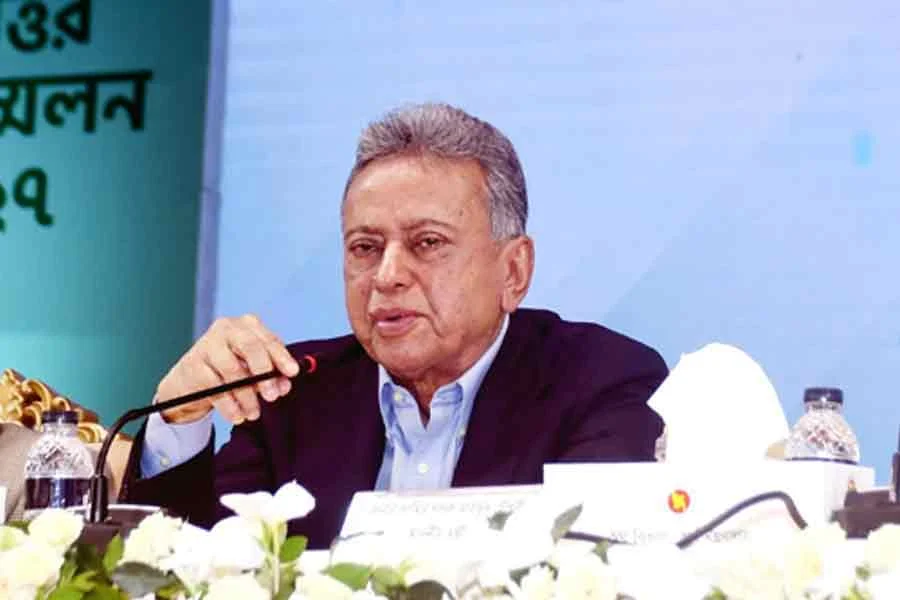
Finance Minister Amir Khosru Mahmud Chowdhury today said Bangladesh’s economy requires a two-year cushion to recover from deep-rooted structural weaknesses, expressing confidence that the country would enter a phase of stronger growth from the third year and achieve full recovery by the fourth and fifth years.

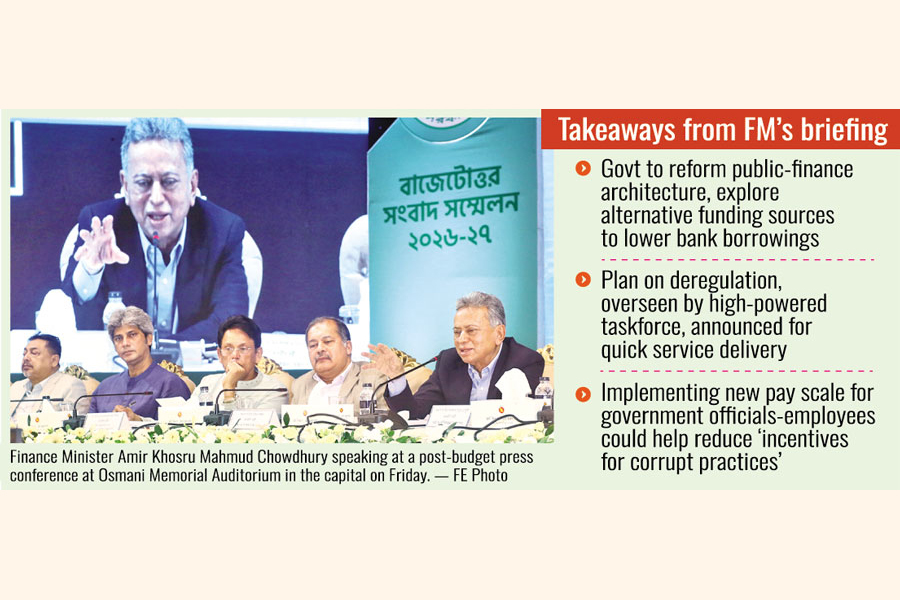
Speaking at a post-budget press conference at the Osmani Memorial Auditorium in the capital, the minister said the government inherited an economy burdened by banking-sector distress, weak institutions, rising poverty, declining investment and years of policy distortions.

“Bangladesh’s economy is now at a stage where it needs a two-year cushion. We are setting the direction and laying the foundation for recovery,” he said.

According to the minister, the government’s immediate priorities are stabilisation, institutional reforms, social protection and investments in human capital.

“From the third year, the economy will start moving forward more strongly. It will become stable and then move towards prosperity. By the fourth and fifth years, the economy will fully recover and stand firmly on its own feet,” he said.

The finance minister said the budget has been designed to address both immediate social challenges and long-term economic transformation.

Khosru highlighted what he described as the largest social-sector investment package in Bangladesh’s history, including Family Card, Farmer Card, universal health coverage initiatives and expanded preventive healthcare programmes.

“The purpose is to protect people whose living standards have declined while simultaneously preparing them for better economic opportunities,” he said.

The finance minister stressed that the government is investing heavily in education, vocational training, reskilling and upskilling programmes to improve workforce productivity.

“If a worker becomes skilled, employment opportunities increase both at home and abroad. That is why we are placing such importance on education and skills development,” he added.

Referring to Bangladesh’s large low-income population, he said the government is pursuing an apparent dual-track strategy: expanding social protection for vulnerable groups while creating pathways to sustainable employment.

The minister also emphasised support for educated unemployed youths, saying the budget includes measures aimed at generating jobs and helping graduates acquire market-relevant skills.

A key component of the government’s strategy is the newly introduced Creative Economy initiative, which seeks to bring rural artisans, craftsmen, performers and cultural workers into the mainstream economy.

“For decades many of these people remained outside the economic mainstream. We want to connect them with markets, finance, skills and technology so that their incomes improve,” he said.

The finance minister said the government has deliberately moved away from a mega-project-centred development model and is instead prioritising investments that generate jobs, create value and directly improve people’s lives.

“We are not chasing large prestige projects. We are focusing on projects that create employment, improve living standards and provide value for money,” he said.

Despite existing fiscal and institutional constraints, he expressed confidence that the reform agenda would gradually transform the economy and deliver sustained growth over the medium term.

“We are establishing the trend now. The benefits will become increasingly visible in the years ahead,” he added.

Information and Broadcasting Minister Zahir Uddin Swapon, Power, Energy and Mineral Resources Minister Iqbal Hassan Mahmood, Education minister Dr. A N M Ehsanul Hoque Milon, Health and Family Welfare Minister Sardar Md. Sakhawat Husain, Agriculture Minister Mohammed Aminur Rashid, State Minister for Planning Zonayed Abdur Rahim Saki, Adviser to the Prime Minister on Post, Telecommunication and Information Technology Rehan Asif Asad, Prime Minister's Adviser and PMO Spokesperson Dr Mahdi Amin, Prime Minister's Special Assistant on Investment and Capital Market Tanvir Gani, Cabinet Secretary Nasimul Gani, Principal Secretary to the Prime Minister A B M Abdus Sattar, Bangladesh Bank Governor Md Mostaqur Rahman, Finance Secretary Dr. Md Khairuzzaman Mozumder, chairman of the National Board of Revenue (NBR) Md. Abdur Rahman Khan were present at the dais.​
 

Bangladesh receives $34b in remittances with 20 days left in fiscal year

bdnews24.com

Published :
Jun 12, 2026 20:36
Updated :
Jun 12, 2026 20:36

1781317845488.webp


Remittances sent by Bangladeshi expatriates have continue to surged in the wake of Eid-ul-Azha, with the crucial economic indicator crossing $34 billion with 20 days left in the current fiscal year.

Bangladesh Bank officials estimate that it will exceed $36 billion by the end of the 2025-26 fiscal year on Jun 30.

Bangladesh Bank spokesperson and Executive Director Arief Hossain Khan gave an update on the remittance situation on Friday, stating that expatriates from different countries across the world sent in $1.20 billion in the first 10 days of June, the last month of the outgoing fiscal year.

This figure is about a 26 percent year-on-year jump from the same period last year.

In total, expatriates sent approximately $34 billion in the 11 months and 10 days of the outgoing fiscal year (Jul 1, 2025 to Jun 10, 2025). This is 19.31 percent higher than in the same period in the previous fiscal year and a 12 percent increase from total remittances throughout the entire fiscal year (Jul 1, 2024 to Jun 30, 2025).

If remittances keep pace for the remaining 20 days of June, the total for the month could exceed $3.6 billion, the second highest in a single month. Accordingly, at the end of the fiscal year (Jul 1, 2025 to Jun 30, 2026), the amount will exceed $36 billion.

In the first 10 days of June last year, $956.2 million in remittances came in. The total for the month was $2.82 billion.

Previously, the highest incoming remittances in a single month was in March, with $3.75 billion. Last May saw an inflow of $3.42 billion.

Currently, remittances have crossed the $3 billion threshold for six consecutive months. If that level is passed in June, it will be seven.

Bangladesh celebrated Eid-ul-Azha on May 28. Bangladesh Bank spokesman Arief said that more remittances came in during the month of May as expatriates sent their families additional funds to meet their needs ahead of and during the festival.

The $3.75 billion that came in last March was due to the Eid-ul-Fitr holiday, he said.

Arief told bdnews24.com, “We have seen in the past that remittance flow usually decreases quite a bit after Eid. But this time, even after two Eid holidays, the positive trend in expatriate income transfers has continued.”

“So, all in all, we have calculated that remittances will exceed $36 billion by the end of this fiscal year.”

The Bangladesh Bank official noted there had been fears remittance flows would decrease due to the Iran war. But so far, there has been no impact, he said.

Banks are currently paying Tk 123 per dollar on remittances. Accordingly, expatriates sent Tk 147.98 billion to the country in the first 10 days of June. The daily average was $120.3 million per day, which is Tk 14.78 billion.

Of the economy’s major indicators, remittances are performing the best, helping to keep the gears of the economy turning in the face of adversity.

More than $3 billion in remittances came to Bangladesh each month from December to May.

The number was $3.17 billion in April, $3.22 billion in December, $3.17 billion in January, and #3.02 billion in February.

In July, the first month of the outgoing fiscal year, remittance inflow was $2.48 billion. The second month – August – saw $2.42 billion.

September, October and November recorded inflows of $2.68 billion, $2.56 billion and $2.89 billion respectively.

Even in the face of the Iran war and global economic headwinds, remittances have propped up the Bangladesh government’s foreign currency reserves, a significant relief following an extended dollar crunch under the Awami League regime.

On Thursday, the last day of the week, Bangladesh had $30.07 billion in reserves, according to the BPM-6 measure. The gross amount was $34.73 billion.​
 

KHOSRU UPBEAT ABOUT STEERING BANGLADESH OUT OF MIASMA
Economy to attain full stability and prosperity after two years

Finance minister airs his optimism a day after presenting an upscale Tk 9.38t national budget
Jasim Uddin Haroon

Published :
Jun 13, 2026 00:31
Updated :
Jun 13, 2026 00:31

1781318761408.webp


Bangladesh may need two years to take off from the present miasma and make the economy get full stability and prosperity, says Finance Minister Amir Khosru Mahmud Chowdhury.

"The country's economy will need two years from where it stands now. After that, the economy will stabilise and fully turn around in the fourth and fifth years."

He came up with the optimism a day after presenting in parliament an upscale Tk 9.38-trillion national budget replete in projected upgraded macroeconomic parameters and a wide recipe of reforms to get to the goal.

At a post-budget press conference held Friday in Dhaka, the finance and planning minister highlighted government intent to reform the country's public-finance architecture and explore alternative sources of funding to lower borrowing from banking sector.

"This year we have reduced bank borrowing by Tk 60 billion, and once the new public finance is fully designed, alterative sources will have significant contributions to the funding," he told journalists.

The minister in his budget speech Thursday said that Tk 1.12 trillion (net) will be borrowed from the banking system, down by Tk 60 billion from the revised budget of the current year (2025-26)

He notes that the proposed budget for fiscal year 2026-27 has been designed as an inclusive one aimed at bringing all sections of society into the economic mainstream.

"No class, profession, religion or caste is outside the scope of the budget this time," he told the press about the maiden budget of the Tarique Rahman-headed government that assumed office amid uprising-spurred popular aspirations for sociopolitical and economic recast.

Mr. Khosru says preparing the budget has been particularly challenging because of severe time constraints and resource constrains.

"Normally, the budget-preparation process takes at least six months. We had only one and a half to two months. Despite that, we completed the task with the cooperation of all concerned, including the journalists."

He notes that this budget has been prepared in a fundamentally different political and economic environment. "By budget, we basically mean a reflection of the will of the people."

The minister says the new government's objective is to build a more people-oriented economy rather than one benefiting only a limited group of individuals or businesses.

He claims the budget includes targeted allocations, programmes and implementation plans for different social and professional groups despite resource constraints.

Mr Khosru also highlights shifts in the global economic landscape, saying that the world is gradually moving away from a rules-based system towards greater protectionism. "This year's budget has been formulated keeping those global changes in mind."

Responding to questions on inflation, the finance minister said effective policies, improved management and lower business costs would be more effective than administrative crackdowns in controlling prices.

"There is no alternative to strengthening the supply system, reducing inefficiencies and implementing reforms."

He links the recent inflationary pressures to a combination of international and domestic factors, including global conflicts, higher import prices, shortages of capital in the banking sector and money laundering which have increased the cost of funds.

"High borrowing costs, port inefficiencies and logistical expenses continue to raise the cost of doing business," he told the journalists

"It can take six months to a year to establish a company or obtain the necessary approvals. Businesses ultimately pass those costs on to consumers," he further explains the price hikers.

The government has already initiated regulatory reforms aimed at lowering business costs and improving efficiency.

Mr Khosru stresses the importance of maintaining an efficient supply chain and building strategic reserves of key commodities.

Long-term planning and stronger buffer stocks for fuel, food and fertiliser are underscored and that Bangladesh should maintain at least three months' energy reserves to strengthen energy security.

In the past, he says, excessive reliance on spot purchases often left the country exposed to volatile prices.

"With long-term planning, adequate storage facilities and strategic stocks, costs can be reduced substantially."

The minister announces plans for deregulation, overseen by a high-powered taskforce.

"A dedicated online platform will allow businesses and citizens to report licensing and regulatory obstacles, enabling authorities to respond quickly."

The custodian of exchequer had a word on corruption, an incendiary issue in all quarters. He thinks implementing new pay scale for the government officials and employees could help reduce incentives for corrupt practices.

"When people face shortages, there is naturally a tendency to resort to corruption. There is no point in denying this reality."

The finance minister says pressure on living standards, particularly among low-income households, has prompted the government to allocate the largest-ever amount for social protection and welfare programmes.

Significant resources have been earmarked for family-support schemes, agriculture, universal healthcare and primary healthcare services.

He mentions that employment generation and skills development remain central priorities of the budget.

Major investments are being planned in education, technical training and vocational programmes to help workers secure higher-paying jobs both at home and abroad.

To support the rural economy, the government plans to provide financing, training, design support, and market access to traditional occupations under a new "Creative Economy" initiative.

This administration places greater emphasis on employment creation and quality-of-life improvements rather than pursuing large-scale megaprojects.

"Value for money and employment generation are being considered in every project," he says.

A major component of the government's strategy involves developing Bangladesh's creative economy as a new growth driver.

Mr. Khosru mentions plans for an integrated creative centre on 160 acres in Purbachal, bringing together theatre, arts, design, entertainment and cultural activities.

The project aims to create jobs, attract visitors and transform culture into an economically productive sector.

"We have to monetise creativity."

The government is launching an investment programme worth around Tk 8.0 billion to support the initiative.

The minister argues that Bangladesh possesses significant cultural assets, including music, folk traditions and performing arts, but has yet to commercialise them effectively.

He points to the global success of Korean music and drama industries as examples of how cultural products can generate export earnings and international influence.

Thousands of artists, musicians, actors and other creative professionals currently lack sufficient income opportunities, he says, adding that the new programme would help create sustainable livelihoods.

Responding to questions about tourism, Mr. Khosru said domestic tourism offers substantial untapped potential.

While foreign tourist arrivals remain limited, he argues that stronger entertainment and tourism infrastructure could stimulate economic activity and improve quality of life.

"Bangladesh is also lagging behind in soft power," he says. "Our goal is to create opportunities through culture and entertainment that generate employment, support growth and strengthen the country's global presence."

Present at the news conference were Power, Energy and Mineral Resources Minister Iqbal Hassan Mahmud Tuku, Information and Broadcasting Minister Zahir Uddin Swapan, Education Minister Dr. ANM Ehsanul Haque Milon, Agriculture, Fisheries and Water Resources Minister Mohammad Amin Ur Rashid, Health Minister Sardar Mohammad Sakhawat Hossain and State Minister for Finance and Planning Jonayed Saki.

Also present were Prime Minister's Adviser Mahdi Amin, Posts, Telecommunications and Information Technology Adviser Rehan Asif Asad, Cabinet Secretary Dr. Nasimul Ghani, Bangladesh Bank Governor Md. Mostaqur Rahman, National Board of Revenue (NBR) Chairman Md. Abdur Rahman Khan and Prime Minister's Special Assistant on Investment and Capital Market Tanvir Ghani.​
 

Bangladesh receives $34b in remittances with 20 days left in fiscal year

bdnews24.com

Published :
Jun 12, 2026 20:36
Updated :
Jun 12, 2026 20:36

1781318882908.webp


Remittances sent by Bangladeshi expatriates have continue to surged in the wake of Eid-ul-Azha, with the crucial economic indicator crossing $34 billion with 20 days left in the current fiscal year.

Bangladesh Bank officials estimate that it will exceed $36 billion by the end of the 2025-26 fiscal year on Jun 30.

Bangladesh Bank spokesperson and Executive Director Arief Hossain Khan gave an update on the remittance situation on Friday, stating that expatriates from different countries across the world sent in $1.20 billion in the first 10 days of June, the last month of the outgoing fiscal year.

This figure is about a 26 percent year-on-year jump from the same period last year.

In total, expatriates sent approximately $34 billion in the 11 months and 10 days of the outgoing fiscal year (Jul 1, 2025 to Jun 10, 2025). This is 19.31 percent higher than in the same period in the previous fiscal year and a 12 percent increase from total remittances throughout the entire fiscal year (Jul 1, 2024 to Jun 30, 2025).

If remittances keep pace for the remaining 20 days of June, the total for the month could exceed $3.6 billion, the second highest in a single month. Accordingly, at the end of the fiscal year (Jul 1, 2025 to Jun 30, 2026), the amount will exceed $36 billion.

In the first 10 days of June last year, $956.2 million in remittances came in. The total for the month was $2.82 billion.

Previously, the highest incoming remittances in a single month was in March, with $3.75 billion. Last May saw an inflow of $3.42 billion.

Currently, remittances have crossed the $3 billion threshold for six consecutive months. If that level is passed in June, it will be seven.

Bangladesh celebrated Eid-ul-Azha on May 28. Bangladesh Bank spokesman Arief said that more remittances came in during the month of May as expatriates sent their families additional funds to meet their needs ahead of and during the festival.

The $3.75 billion that came in last March was due to the Eid-ul-Fitr holiday, he said.

Arief told bdnews24.com, “We have seen in the past that remittance flow usually decreases quite a bit after Eid. But this time, even after two Eid holidays, the positive trend in expatriate income transfers has continued.”

“So, all in all, we have calculated that remittances will exceed $36 billion by the end of this fiscal year.”

The Bangladesh Bank official noted there had been fears remittance flows would decrease due to the Iran war. But so far, there has been no impact, he said.

Banks are currently paying Tk 123 per dollar on remittances. Accordingly, expatriates sent Tk 147.98 billion to the country in the first 10 days of June. The daily average was $120.3 million per day, which is Tk 14.78 billion.

Of the economy’s major indicators, remittances are performing the best, helping to keep the gears of the economy turning in the face of adversity.

More than $3 billion in remittances came to Bangladesh each month from December to May.

The number was $3.17 billion in April, $3.22 billion in December, $3.17 billion in January, and #3.02 billion in February.

In July, the first month of the outgoing fiscal year, remittance inflow was $2.48 billion. The second month – August – saw $2.42 billion.

September, October and November recorded inflows of $2.68 billion, $2.56 billion and $2.89 billion respectively.

Even in the face of the Iran war and global economic headwinds, remittances have propped up the Bangladesh government’s foreign currency reserves, a significant relief following an extended dollar crunch under the Awami League regime.

On Thursday, the last day of the week, Bangladesh had $30.07 billion in reserves, according to the BPM-6 measure. The gross amount was $34.73 billion.​
 

Bangladesh now half a trillion dollar economy

GDP growth rebounds to 4.14pc from 3.49pc a year ago: BBS
FHM Humayan Kabir

Published :
Jun 11, 2026 09:01
Updated :
Jun 11, 2026 09:01

View attachment 27544

Bangladesh is now a half-trillion-dollar economy, as its gross domestic product (GDP) has crossed USD 500 billion mark.

It has achieved this unique feat in the outgoing fiscal year (FY) 2025-26, marking a significant step towards its ambition of becoming a $1.0-trillion economy by 2034.

At the same time, the country's gross domestic product (GDP) growth at constant prices expanded by 4.14 per cent, recovering from the low 3.49 per cent recorded in FY2024-25, according to Bangladesh Bureau of Statistics (BBS) data unveiled on Wednesday.

Per capita gross national income (GNI) has also crossed the $3,000 mark, with the BBS estimating average income at $3,020 in FY2025-26.

Provisional data released by the BBS revealed that the total size of the economy at current prices surged to $501.067 billion (Tk 61.202 trillion) in FY2025-26.

This marks a substantial leap from the $456 billion economy recorded in FY2024-25.

Meanwhile, the estimated economic growth of 4.14 per cent is well below the government's GDP growth target of 5.5 per cent for the current fiscal year.

Earlier, several multilateral development partners, including the International Monetary Fund (IMF), projected Bangladesh's GDP growth at 4.7 per cent, while the World Bank forecast 3.9 per cent and the Asian Development Bank (ADB) 4.0 per cent.

According to the BBS, the breakthrough into the $500-billion-plus club comes as a major boost to national economic ambitions, supported by stronger growth in the agriculture and services sectors.

The BBS showed that although GDP growth in the industrial sector slowed in FY2025-26 compared with FY2024-25, growth in the agriculture and services sectors improved in the latest estimates.

According to the official data, GDP growth in the agriculture sector was estimated at 2.78 per cent, 0.36 percentage points higher than the 2.42 per cent recorded in the previous fiscal year.

Similarly, the services sector achieved GDP growth of 4.59 per cent in FY2025-26, up from 4.35 per cent in FY2024-25.

On the other hand, GDP growth in the industrial sector slowed to 2.86 per cent, 0.85 percentage points lower than the 3.71 per cent recorded in FY2024-25, the BBS data showed.

The milestone provides a critical foundation for the government's key election pledge of transforming Bangladesh into a $1.0-trillion economy.

While the ultimate goal is to reach the trillion-dollar mark, crossing the halfway point ahead of the next decade validates the nation's long-term macroeconomic expansion plans.

Top policy strategists note that reaching $501 billion establishes the financial momentum needed to achieve future industrial and digital development goals.

A senior General Economics Division (GED) official told The Financial Express that economic growth and sectoral performance, driven largely by robust domestic production and consumer activity, helped the economy expand by 4.14 per cent in FY2025-26.

This outpaced the 3.49 per cent growth rate recorded in the previous fiscal year, signalling a steady post-inflation recovery.

The industrial and manufacturing sectors faced global headwinds, with growth slowing to 2.86 per cent due to subdued export demand.

Reflecting the expanding economy, citizens also experienced a notable increase in income levels.

Bangladesh's per capita income climbed to $3,020 in FY2025-26, reinforcing the country's position as a rising middle-income economy in South Asia.

BBS officials indicated that final data validation would be completed by the end of the fiscal year on June 30.

With the half-trillion-dollar milestone firmly secured, the focus now shifts to implementing structural reforms to unlock the next half-trillion dollars over the coming years.

Policy Exchange Bangladesh Chairman Dr M Masrur Reaz told the FE that the achievement was indeed good news for Bangladesh.

He said the government should not become complacent but instead focus on attracting more private investment and creating jobs.

Given higher inflationary pressures, sluggish investment growth, weak employment opportunities and external shocks, the government needs innovative policies and reforms to attract private-sector investment, boost exports and generate employment, Dr Reaz added.​

Based on the article above, Bangladesh has just crossed $500 billion GDP in FY 2025–26, reaching about $501 billion. The government's stated ambition is to become a $1 trillion economy by 2034.

How fast would Bangladesh need to grow?​

To go from $501 billion to $1 trillion:
  • GDP must roughly double.
  • From 2026 to 2034 is about 8 years.
  • Doubling in 8 years requires nominal GDP growth of roughly 9% per year (including both real growth and inflation/currency effects).
Using a simple compound-growth calculation:
Average nominal GDP growthTime to reach $1 trillion
6%~12 years (2038)
8%~9 years (2035)
9%~8 years (2034)
10%~7 years (2033)

Reasons Bangladesh could reach $1 trillion around 2033–2035​

The article points to several positive factors:
  1. Large domestic market
    • Population exceeds 170 million, providing strong consumer demand.
  2. Services sector expansion
    • Services grew 4.59% in FY2025–26 and remain the largest contributor to GDP growth.
  3. Continued industrialization
    • Even though industrial growth slowed recently, manufacturing and exports still provide a foundation for long-term expansion.
  4. Rising incomes
    • Per-capita GNI has exceeded $3,000, supporting consumption and investment.
  5. Historical growth record
    • Before the pandemic and recent economic shocks, Bangladesh often achieved real GDP growth of 6–8%, suggesting higher growth rates are possible if conditions improve.

Reasons Bangladesh might miss the 2034 target​

The article also highlights significant challenges:
  1. Current growth is relatively modest
    • Real GDP growth in FY2025–26 was only 4.14%, far below the rates usually associated with rapid economic transformation.
  2. Weak private investment
    • Economists quoted in the article emphasize the need for stronger private-sector investment.
  3. Export vulnerabilities
    • Industrial growth slowed partly because of weaker export demand. Bangladesh remains heavily dependent on garments.
  4. Inflation and employment pressures
    • High inflation, sluggish investment, and job creation challenges were specifically identified as risks.
  5. Need for structural reforms
    • The article notes that the next stage of growth will depend on reforms, productivity improvements, and attracting more investment.

Bottom line​

If Bangladesh can restore stronger growth, attract investment, diversify exports, and maintain macroeconomic stability, reaching $1 trillion around 2034–2035 is plausible and broadly consistent with the government's target.

If growth remains closer to the current 4–5% real rate and reforms stall, the trillion-dollar milestone would more likely arrive in the late 2030s (around 2037–2040) rather than 2034.

My estimate: 2034–2036 is the most realistic window, with 2034 achievable but requiring noticeably stronger investment and export growth than Bangladesh is experiencing today.
 
Based on the passing of GDP level above 500 Billion (which is similar to that of Vietnam's GDP - which is estimated at $514 billion for 2026, while Thailand's GDP is also estimated at $580 billion for the same year - 2026), one may ask if the scale, sequence and pattern of GDP growth similar to that of Thailand and Vietnam? If not - what would be the differences and why? What are they "doing right" with much smaller populations, and what are we "doing wrong"?

In actuality - if one looks deeper, Bangladesh's growth trajectory is not similar to Thailand's, and is only partially similar to Vietnam's. The headline GDP numbers can look comparable at certain points, but the underlying growth model, timing, and economic structure differ significantly.

Quick comparison​

CountryCurrent GDP (approx.)Main growth engineGrowth pattern
Bangladesh~$500BGarments, remittances, domestic consumptionLabor-intensive manufacturing + domestic demand
Vietnam~$500B+Export manufacturing, FDI, electronicsExport-led industrialization
Thailand~$550B+Manufacturing, tourism, servicesEarlier industrialization, now mature economy

Bangladesh vs Thailand: very different sequence​

Thailand's growth "miracle" happened mainly from the mid-1980s through the mid-1990s.
The sequence was:

  1. Agricultural modernization

  2. Large inflows of Japanese and East Asian manufacturing investment

  3. Rapid industrialization

  4. Auto and electronics production

  5. Middle-income transition

  6. Massive service and tourism sectors
Thailand effectively became a middle-income manufacturing economy before Bangladesh became a major exporter.
Today Thailand's challenge is not growth acceleration but avoiding the middle-income trap.
Bangladesh is roughly where Thailand was several decades ago:

  • lower productivity

  • lower capital stock

  • lower per-capita income

  • larger pool of cheap labor

  • still urbanizing rapidly

Why this matters​

Thailand reached roughly $500 billion GDP with only about 70 million people.
Bangladesh reached roughly the same GDP with more than 170 million people.
That means Thailand's GDP per capita remains substantially higher.

The difference is that Thailand's growth was driven by productivity gains and industrial upgrading, while Bangladesh's growth has relied more heavily on expanding labor participation and garment exports.


Bangladesh vs Vietnam: more similar, but still different​

This is the more interesting comparison.

Both countries:
  • Have large low-cost labor forces.

  • Relied on export manufacturing.

  • Benefited from demographic dividends.

  • Experienced strong poverty reduction.

  • Attracted foreign buyers looking for alternatives to higher-cost producers.
However, the sequence differs.

Vietnam's path​


Vietnam's growth model was:
  1. Market reforms after the 1980s.

  2. Aggressive attraction of foreign direct investment.

  3. Integration into global supply chains.

  4. Diversification into electronics and high-value manufacturing.
Today Vietnam produces goods for companies such as:
Electronics account for a huge share of exports.

Bangladesh's path​

Bangladesh concentrated heavily in one sector:
  • Ready-made garments (RMG)
The garment industry has been extraordinarily successful, but it creates less value-added than electronics, semiconductors, machinery, or automotive manufacturing.

As a result:
  • exports are less diversified

  • productivity growth is slower

  • upgrading is harder
Vietnam's economy is therefore generally viewed as having a higher long-term growth ceiling.

Scale matters​

Another important difference is population.
Approximate populations:

Country​
Population​
Thailand​
~70 million​
Vietnam​
~100 million​
Bangladesh​
~170+ million​
Bangladesh's larger population makes reaching a trillion dollars easier in aggregate GDP terms.

For example:
  • Thailand at $550 billion already has much higher income per person.

  • Bangladesh can reach $1 trillion while still having significantly lower income per person than Thailand today.
This is why aggregate GDP can sometimes be misleading.

A trillion-dollar Bangladesh would not automatically mean a rich Bangladesh.

What Bangladesh needs to do - to follow the Vietnam path​


To reach $1 trillion by the mid-2030s and sustain growth afterward, Bangladesh probably needs to do what Vietnam did:

1. Diversify exports​

Move beyond garments into:
  • electronics assembly

  • electrical equipment

  • pharmaceuticals

  • machinery

  • IT services

2. Increase FDI​


Vietnam attracts much more mfg. FDI relative to GDP (the proximity to China definitely helps, unlike Bangladesh).

Bangladesh needs:
  • reliable electricity

  • logistics improvements

  • regulatory predictability

  • easier land acquisition

3. Upgrade human capital​

Vietnam's manufacturing workforce is generally more integrated into higher-value industries.

Bangladesh will need:
  • technical education

  • engineering capacity

  • vocational training

4. Improve infrastructure​

The opening of the Padma Bridge is an example of the kind of infrastructure that can raise productivity, but much more investment is needed in ports, rail, and energy.

The most likely outcome​

If Bangladesh simply continues its current model:
  • garments remain dominant

  • moderate investment growth

  • gradual productivity gains
then it will probably become a $1 trillion economy around 2034–2038, but with income levels still well below Thailand's.

If Bangladesh successfully replicates parts of Vietnam's strategy—especially attracting large-scale electronics and manufacturing investment—it could not only reach $1 trillion sooner but also achieve much faster gains in productivity and living standards.

In that sense, Bangladesh today looks less like Thailand before its boom and more like a Vietnam that has not yet completed the transition from garment-led growth to diversified industrial growth.
 

Bangladesh fully committed to improving ease of doing business, foreign minister says

UNB

Published :
Jun 13, 2026 21:03
Updated :
Jun 13, 2026 21:19

1781407020888.webp


Foreign Minister Dr Khalilur Rahman on Saturday said the government is fully committed to implementing deep, structural reforms to improve the ease of doing business stressing that the government holds the political will and strategic vision to make Bangladesh the most competitive investment destination in South Asia.

"Our government possesses the political will, the strategic vision, and the unwavering commitment to make Bangladesh the most competitive investment destination in South Asia," he said while describing the local business community as primary strategic partners.

Speaking at the high-level conference titled “Roadmap for Trade, Growth & Economic Diplomacy 2026: Navigating Risks, Leveraging Resilience” in a city hotel, the Foreign Minister and President-elect of the 81st UN General Assembly said they view every foreign ambassador, not just as a diplomat, but as a crucial partner of their development.

"We view every business leader here, not just as an investor, or a taxpayer, but a stakeholder in our national success," he added.

Organised by the Ministry of Foreign Affairs in collaboration with the Bangladesh Investment Development Authority (BIDA), the conference brought together senior government leaders, heads of diplomatic missions, development partners, and representatives from the private sector to chart a forward-looking agenda for Bangladesh’s economic engagement.

Local Government, Rural Development and Cooperatives Minister Mirza Fakhrul Islam Alamgir, Finance Minister Amir Khosru Mahmud Chowdhury, State Minister for Foreign Affairs Shama Obaed Islam, Prime Minister’s Foreign Affairs Adviser Humaiun Kobir, Prime Minister’s Adviser on Education Mahdi Amin, BIDA Executive Chairman Chowdhury Ashik Mahmud and Foreign Secretary Asad Alam Siam, among others, spoke at the event.

The Foreign Minister said they must remain connected. "We must remain in dialogue. We must get feedbacks from you.... work with us as we rebuild trust and unlock the true vibrant potential of Bangladesh."

Today, faced with the energy crisis and developments in the international trade, finance and technology, Foreign Minister Dr Khalilur said Prime Minister Tarique Rahman also has a clear vision to transform the challenges to new opportunities with three key goals: stabilise, reform and elevate.

"We need to convert his vision into concrete action as it comes to our work on economic and trade diplomacy," he said.

As the new government begins its work, Dr Khalilur said they have before them the challenge of redesigning their international economic engagements against the backdrop slowing global economic and trade growth, geopolitical tensions, trade policy uncertainties, calamites rising trade barriers and structural shifts in supply chains.

Moreover, the ongoing energy crisis has added a new layer of complications, he said.

"We are not immune to these developments, which have crucial implications for our approaches to overall policy making, in general, and economic diplomacy, in particular," said the Foreign Minister.

This is the very reason why the Ministry of Foreign Affairs and the Bangladesh Investment Development Authority (BIDA) decided to organise today's event that brings together our partners and stakeholders for open and purposeful deliberations with a view to helping informed policymaking, he said.

"The challenges we face are critical. The growth prospects in our major markets remain in the positive territory but at a moderate level. This is likely to translate into sluggish consumer demand, which will affect our exports to these markets," Dr Khalilur said.

He said they will need to compete ever more fiercely in order to maintain and expand our export position.

Secondly, he said, financial markets and institutions are increasing affecting production of goods and services.

"Trade flows have become increasingly susceptible to movements in interest rates or changes in investor sentiments," Dr Khalilur said.

Countries like Bangladesh find it harder to raise capital, pay significantly higher borrowing costs and remain acutely vulnerable to swings in market sentiment, said the Foreign Minister.

While advanced economies are able to borrow at roughly 1-4%, the rate for emerging developing countries range typically from 6-12% or even higher.

"Thus, our access to affordable and secure financing remains significantly restricted," the Foreign Minister said.

Like many other developing countries, Bangladesh remains acutely susceptible to factors such as currency volatility, shifts in risk-taking appetite and financial volatility, said the Foreign Minister.

Thirdly, he said, climate vulnerability has introduced another difficulty in access to finance.

According to UNCTAD, which recently carried out an Investment Policy Review of Bangladesh, some climate-vulnerable countries are paying an extra 20 billion dollar annually in interest due to their climate risk.

"External debt and climate crisis are become intertwined," said the Foreign Minister.

Fourthly, he said, the ongoing energy crisis has already caused them to spend more on imported fuel. "Increased fuel prices directly affect our cost of production and competitiveness."

"By taking away critical funding that would have gone for development activities, we are likely to witness second round effects of the crisis in the form of reduced funding for development in the years to come," the Foreign Minister said.

The International Energy Association opined that the scope of the current energy crisis could be larger than that of the twin oil shocks of the 1970s, which was a major cause for the 1980s to become a lost decade of development for many developing countries.

The Foreign Minister said trade tech, which is the intersection of trade, investment and technology, is fast redefining the global economy and trade by making cross border transactions quicker and more efficient through the increasing use of innovations like AI, Internet of Things, Blockchain and 5G.

"This poses both a challenge and an opportunity depending on how quickly and effectively countries can take advantage of the fast moving Trade Tech landscape," he said.

The conference featured three thematic sessions: 1. The Policy Compass – Advancing Trade & Investment, focusing on policy predictability, market access, and investor confidence, 2 Capital for Growth – Finance, Commerce and Trade, addressing financing reforms and investment mobilisation, 3 The New Stage - Government Policy, AI, Creative Industries and Sport, exploring emerging growth sectors and diversification opportunities.

The “Roadmap for Trade, Growth & Economic Diplomacy 2026” was held at a critical juncture of global transitions, risks and uncertainties.

The event aims to foster greater coordination between policy and implementation, enhance Bangladesh’s economic diplomacy, and build stronger partnerships with the international community.​
 

Govt targets creative economy to contribute 1.5% of GDP

Star Business Report

1781409412914.webp


The government aims to raise the creative economy’s contribution to the country’s gross domestic product (GDP) to 1.5 percent, viewing the largely untapped sector as a potential source of growth, jobs and export earnings, according to Finance Minister Amir Khosru Mahmud Chowdhury.

Speaking at an economic diplomacy conference in Dhaka yesterday, he said Bangladesh should invest more in culture, arts, entertainment and design to diversify its economy.

Drawing a comparison with the United Kingdom’s thriving creative industries, the minister said creative products and services generate significant economic value and serve as an important source of soft power.

According to UNCTAD estimates, the global creative economy accounts for about 3 percent of world GDP, or around $2.25 trillion. In India, the sector contributes around 1.5 percent of GDP.

“Bangladesh possesses strong creative talent but has yet to adequately protect, promote and commercialise it,” said Khosru at the conference, titled “Roadmap for Trade, Growth and Economic Diplomacy”, jointly organised by the foreign ministry and the Bangladesh Investment Development Authority (Bida) at Pan Pacific Sonargaon Dhaka.

In his proposed budget for fiscal year 2026-27, the finance minister outlined the 1.5 percent target, alongside a 10-year investment strategy and time-bound action plans aimed at creating 5 lakh new jobs in the creative economy.

Currently, there is little data available on how many activities such as performing arts, design, stand-up comedy and other creative pursuits contribute to the economy.

The finance minister said there are plans to establish a dedicated “theatre district” on 150 acres of land. Such a hub would create new opportunities for spending and economic activity while strengthening the country’s cultural influence.

He highlighted the budget’s focus on developing the creative economy by supporting artisans, designers, performers and cottage industry entrepreneurs through financing, skills development, branding support and access to digital marketplaces.

“We have to protect it, promote it and monetise it,” he said.

He also spoke about streamlining business approvals and deregulation. Khosru said deregulation is central to the government’s efforts to create a more business-friendly environment.

Responding to concerns from foreign investors about higher taxes on compliant businesses, Khosru said the government’s priority is to expand the tax net rather than increase the burden on existing taxpayers.

He added that reforms, including separating tax policy formulation from tax administration, are aimed at improving efficiency and making tax collection more predictable.

He called for a rethink of Bangladesh’s public finance architecture, citing rising borrowing costs and growing interest payments.

Khosru urged greater reliance on the capital market for large investments and said state-owned enterprises should raise funds independently.

He also pledged financial sector reforms and faster regulatory simplification to improve the business environment.

Foreign Minister Khalilur Rahman said Bangladesh must redesign its international economic engagement to cope with slowing global trade and growth, geopolitical tensions, climate risks, rising protectionism and supply chain disruptions.

He cautioned that weaker demand in major export markets, high borrowing costs, climate vulnerability and the global energy crisis pose significant challenges.

Developing countries, he noted, face much higher financing costs and remain vulnerable to volatility in global financial markets.

Rahman said the government’s strategy focuses on stabilisation, reforms and economic transformation, while assuring investors and development partners that Bangladesh remains open for business.

Bida Executive Chairman Ashik Chowdhury said Bangladesh’s biggest achievement over the past year was restoring democratic accountability through a free and fair election, which had strengthened policy stability and investor confidence.

He outlined reforms to support an investment-led growth strategy aimed at creating more than 1 crore jobs, including reducing factory permit approval times to 14 days, expanding digital services and streamlining regulatory procedures.

Acknowledging energy and logistics constraints, he said Bangladesh would accelerate solar power projects, diversify energy sources and fast-track LNG infrastructure development.

He also announced plans to privatise or develop partnerships for around 20 underperforming state-owned enterprises.

“The biggest challenge is execution,” he said.

LGRD and Cooperatives Minister Mirza Fakhrul Islam Alamgir said the government is committed to building a self-reliant and resilient industrial economy in which every citizen could share in prosperity and dignity.

He described the proposed budget as a roadmap towards that goal and said small and informal businesses would be promoted as important drivers of growth.

NBR Chairman Md Abdur Rahman Khan said Bangladesh must raise domestic revenue to support economic transformation, but cautioned against tax policies that could undermine business growth and employment.

He said reforms are focused on lowering compliance costs, simplifying procedures and helping businesses expand. Exporters would receive broader bonded warehouse facilities, while automation is being expanded across tax administration.

More than 45 lakh taxpayers filed returns online last year, while more than 12 lakh users obtained licences and permits through the National Single Window platform, he said.

Among others, Shama Obaed Islam, state minister for foreign affairs; Humayun Kabir, foreign affairs adviser to the prime minister; Mahadi Amin, adviser to the prime minister; Jahrat Adib Chowdhury, member of parliament; Asad Alam Siam, foreign secretary; and M Masrur Reaz, chairman and chief executive officer of Policy Exchange Bangladesh, spoke in separate sessions.

Senior government leaders, diplomats, development partners and private sector representatives attended the event.​
 

Latest Posts

Back