[🇧🇩] Monitoring Bangladesh's Economy

[🇧🇩] Monitoring Bangladesh's Economy
1K
38K
More threads by Saif

G Bangladesh Defense

CLEARING DECKS FOR BUSINESS, INVESTMENT REBOUND
Anyone hindering deregulation drive to face tough action
Fin minister conveys govt warning from a budget dialogue

FE Report

Published :
Jun 22, 2026 00:23
Updated :
Jun 22, 2026 00:23

View attachment 27796

Anyone trying to obstruct the government-adopted deregulation agenda would face tough action as the new administration is bent on simplifying business regulations and improving the investment climate, says the finance minister.

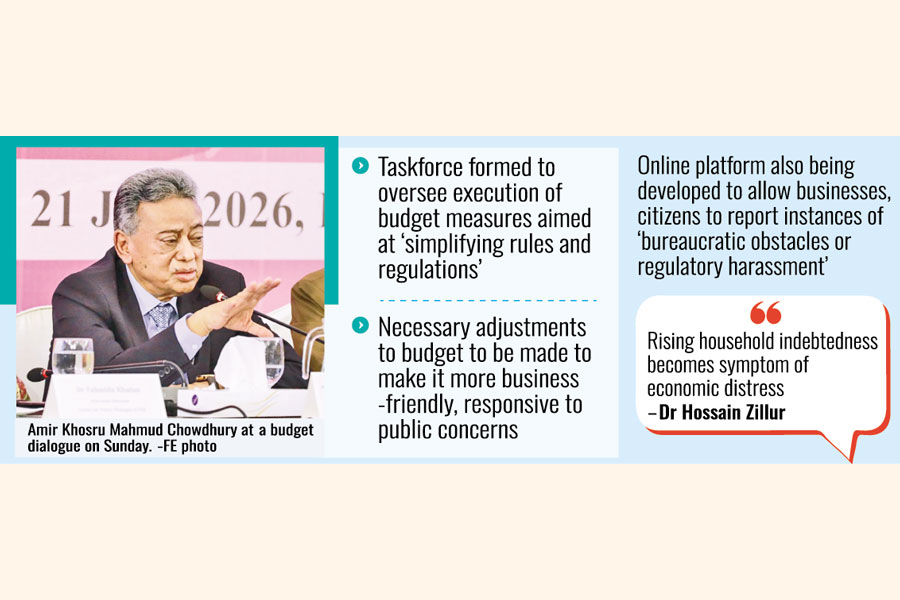
"If anybody obstructs the deregulation process, he or she will be shown the door," Finance and Planning Minister Amir Khosru Mahmud Chowdhury told his audience at a budget dialogue organised Sunday by the Centre for Policy Dialogue (CPD) at a Dhaka hotel.

Delivering an extended address focused on regulatory reforms, meant for unblocking business and investment, he argued that the country had become "overregulated", creating unnecessary barriers to businesses and citizens.

"The government has been elected with commitments to the people. We intend to fulfill those commitments," he says in clear terms.

Mr. Khosru announces the formation of a taskforce to oversee the implementation of budget measures aimed at simplifying rules and regulations.

A dedicated online platform is also being developed to allow businesses and citizens to report instances where bureaucratic obstacles or regulatory harassment persist despite the government's reform initiatives.

"If any citizen or businessman feels that they are being hindered because of the violation or improper implementation of these reforms, they will be able to report it through the website," Mr. Khosru says about the government's vow.

The minister acknowledges that the proposed budget remained a work in progress and says the government is reviewing feedback from stakeholders.

"We are reviewing the budget. I am not claiming that this is a perfect budget," he says, adding that adjustments would be made to make it more business-friendly and responsive to public concerns.

Mr. Khosru feels that it could take at least two years to restore the economy to a fully stable footing following years of accumulated challenges.

"We expect to reach a turnaround point in the third year and subsequently move towards sustained prosperity."

Addressing concerns over energy shortages, the minister describes gas and electricity supply as among the country's most pressing economic constraints.

"I cannot solve these problems in three months. Even with money, everything cannot be fixed immediately," he says.

He criticises the previous administration for failing to pursue sufficient gas exploration and says the current government has begun new initiatives.

However, the finance minister mentions that bringing additional gas supplies into the system would take time. "It will take at least 18 months to secure, store and distribute additional gas supplies."

Reaffirming the government's ambition to transform Bangladesh into a trillion-dollar economy, Mr. Khosru says reliable gas, electricity and robust internet connectivity are essential prerequisites for sustained growth.

"We are investing in all three areas."

The minister also announces the introduction of a digital dashboard from early July to strengthen monitoring of public development projects.

"Instead of quarterly reviews, every project will be monitored daily through a digital dashboard," he told the meet, adding that the system is designed to tackle long-standing delays and inefficiencies in project implementation.

On trade policy, the finance minister says the government had reduced customs duties and taxes on imported industrial raw materials and expanded export incentives beyond the readymade garments sector.

Under the revised framework, exporters across industries will be able to access bonded-warehouse facilities or import raw materials duty-free against bank guarantees.

The requirement to open letters of credit (LCs) for certain imports has also been eased.

Also, the government is exploring ways to raise the tax-to-GDP ratio by bringing more small retail businesses onto the tax net through a simplified minimum tax regime.

"You will not need to fill out complicated paperwork. Many small businesses are afraid of tax procedures and tax officials," he says.

Responding to criticism over the size of block allocations in the proposed budget, Mr. Khosru insists that the funds are intended solely for development purposes. "We have not kept block allocations for operating expenditure. Whatever has been allocated is for development work."

The minister says the government inherited around 1,300 ongoing projects, claiming that many had been designed without adequate economic justification.

He also defends the government's family card social-protection programme, saying that pilot projects had found a low rate of targeting errors and that further efforts were underway to improve beneficiary selection.

On public borrowing, the chancellor of exchequer reiterates concerns about the crowding-out effect of government financing on private-sector investment.

"The bank borrowing rates are too high and even many private-sector borrowers to survive. Under such rates, how to survive by relying on expensive bank borrowing," he wonders.

He mentions that debt servicing for the next fiscal year are estimated at around Tk 1.25 trillion, stressing the need for alternative cheap financing mechanisms and reforms in public finance management.

State Minister for Planning Jonayed Abdur Rahim Saki told the function that the government was examining why development projects frequently fail to meet implementation schedules and budget targets.

"A comprehensive action plan will be prepared within the next one to two months."

Akhtar Hossain, a Member of Parliament from the National Citizens Party (NCP), describes the proposed budget as "unrealistic" and excessively dependent on deficit financing and borrowing in the current economic environment.

He also calls for greater transparency in budget implementation and urges the government to provide regular public reporting on the utilisation of sectoral allocations.

Among other speakers, PPRC Executive Chairman Dr. Hossain Zillur Rahman says rising household indebtedness became a symptom of economic distress rather than investment.

"Low-income households are cutting food consumption, postponing healthcare and taking on multiple jobs. New challenges, including mental health concerns, are emerging."

Dr. Rahman has identified three major weaknesses in the government's economic strategy: an employment crisis, an investment crisis and deterioration in the quality of education.

RAPID Chairman Dr MA Razzaque presents his organisation's estimates that suggest that the wealthiest 1.0 per cent of the population controlled nearly half of the country's total wealth.

Economist Professor Barkat-e-Khuda argues that structural reforms are essential for achieving the objectives outlined in the budget and cautions that the proposed revenue target appeared overly ambitious.

Montu Ghosh, president of the Garment Workers Trade Union Centre, urges the government to strengthen social-protection measures, including the provision of rationing support for workers.

Executive Director of the CPD Dr. Fahmida Khatun presented the keynote paper at the event, which was chaired by CPD distinguished fellow Dr. Mostafizur Rahman.

Other participants included representatives from business organisations and associations. Among them were Grameen Phone CEO Mr. Yasir Azman and BGMEA Senior vice-president Mr. Inamul Haq Khan.​

So far I like Amir Khasru's actions - crossing my fingers...
 

Finance Minister rolls out 3R strategy to address economic shocks
16 sectors to be brought under specific VAT regime, JS told

FE ONLINE REPORT

Published :
Jun 24, 2026 19:40
Updated :
Jun 24, 2026 19:40

1782343443051.webp


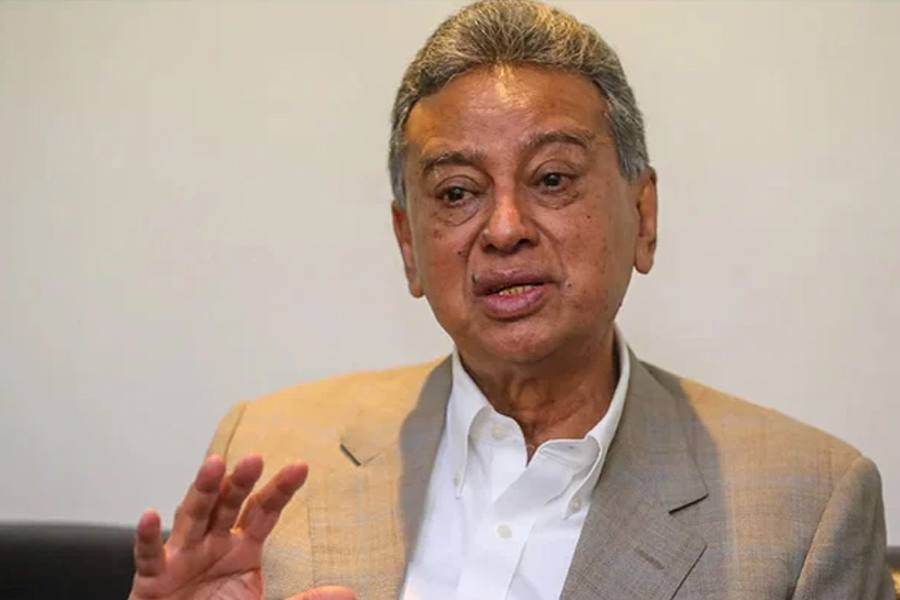
Finance Minister Amir Khasru Mahmud Chowdhury has unveiled a three-pronged economic resilience strategy aimed at shielding Bangladesh from global economic turbulence and the fallout of continuing instability in the Middle East, while broadening the domestic tax base to strengthen public finances.

In written responses submitted to Parliament on Wednesday, the minister outlined what he described as a "Three-R Strategy" — Recovery and Stabilisation, Restoration, and Reconstruction for Acceleration — designed to safeguard macroeconomic stability, diversify exports and enhance the economy's competitiveness.

The announcement comes as policymakers grapple with a series of external challenges, including volatile energy prices, uncertainty in global trade and concerns that prolonged conflict in the Middle East could disrupt overseas employment opportunities for Bangladeshi workers and weaken remittance inflows, a key source of foreign exchange.

To reduce those risks, the government is pursuing new labour agreements with Russia, Portugal, Romania, Brazil, Greece, Serbia and North Macedonia, while also seeking to reopen labour markets in Malaysia, Oman, the United Arab Emirates and Kuwait.

The government will maintain its 2.5 per cent cash incentive for remittances sent through formal channels and continue efforts to bolster foreign exchange reserves through export diversification, tighter controls on non-essential imports and exchange-rate stability.

The finance minister also said Bangladesh was preparing contingency measures to offset potential increases in global fuel, liquefied natural gas (LNG) and fertiliser prices. These measures include diversifying energy sources, accelerating domestic gas exploration and maintaining subsidies where necessary.

Alongside the broader economic strategy, Chowdhury announced plans to bring 17 additional business sectors under a fixed value-added tax (VAT) regime from fiscal year 2026-27 as part of efforts to increase revenue collection.

Responding to another question in the House, the minister said the sectors include grocery stores, garment and clothing retailers, confectionery businesses, cosmetics shops, sellers of plastic and ceramic household goods, shoe retailers, hardware stores, decorators, mobile phone and electronics retailers, paint and sanitary fittings businesses, tile dealers, corrugated sheet retailers, rod and cement traders, furniture stores, beauty parlours, sweet shops and restaurants.

According to the finance minister, VAT collection reached Tk 1.42 trillion in fiscal year 2024-25.

In a separate parliamentary response, the minister said it remained difficult to determine the precise amount of money illegally transferred abroad from Bangladesh due to the lack of sufficient internationally accepted data.

However, citing findings from the White Paper Committee formed by the interim government, he said Bangladesh experienced an estimated US$234 billion in illicit financial outflows between 2009 and 2023, averaging about US$16 billion a year.

The committee estimated that the outflows were equivalent to 3.4 per cent of GDP in fiscal year 2023-24, nearly one-fifth of the country's combined export and remittance earnings, more than 11 per cent of national savings and almost double the volume of net foreign aid and foreign direct investment inflows.

The figures highlight the scale of the challenge facing the government as it seeks to restore confidence in the economy, strengthen foreign exchange reserves and improve fiscal sustainability amid a turbulent global environment.​
 

'Ten Commandments' for Bangladesh economy

N N Tarun Chakravorty

Published :
Jun 24, 2026 23:46
Updated :
Jun 24, 2026 23:46

1782344216500.webp


Bangladesh's economic success over the past two decades is undeniable. Yet behind this narrative of steady growth lies a fundamental weakness that threatens the sustainability of that progress-namely, sustainable development. This weakness is the abnormally low tax-to-GDP ratio.

With tax collection amounting to only 7-7.5 per cent of gross domestic product (GDP), Bangladesh ranks among the lowest in South Asia and remains far below international standards. While many lower-middle-income countries collect a significantly higher share of revenue, and developing economies on average collect around 18-25 per cent of GDP in taxes, Bangladesh continues to operate with a narrow and structurally weak revenue base. Even within South Asia, several peer economies outperform Bangladesh by a considerable margin.

This is not merely a statistical shortfall-it is a structural constraint. A state that cannot collect adequate revenue cannot invest sufficiently in its own agricultural and social welfare sectors, cannot build strong institutions, and cannot sustain inclusive development. In other words, Bangladesh's growth is outpacing its revenue capacity.

Therefore, increasing the tax-to-GDP ratio is not a technical adjustment, it is an economic necessity. Without a certain expansion of the tax base, the strengthening of tax administration, and the proper use of tax revenues, the country's development is bound to remain fragile. Under these circumstances, it is impossible for Bangladesh to enter the next stage of development.

Over the past two decades, Bangladesh's economic performance has been widely praised. From attaining lower-middle-income status in 2015 to maintaining respectable GDP growth rates, the country has often been presented as a development success story. Yet behind these achievements lies a more fragile reality: an economy that has reached a crossroads, where the past drivers of growth are losing momentum and structural weaknesses are becoming increasingly difficult to ignore.

The question is no longer whether Bangladesh can achieve growth; rather, the question is whether the country can grow well, sustainably, and inclusively.

At this crossroads, let us consider what the "Ten Commandments," or "ten essential imperatives," for Bangladesh's economy should be.

First, investment is the driving force of growth. Therefore, mobilising funds for investment is the most important task. The first and foremost means of raising these funds is tax collection. For this reason, expanding the tax base and making the collection process efficient and free from corruption are essential duties.

Second, for the country's hundreds of thousands of small savers to participate in investment, a well-organised, credible, strong, well-regulated, vibrant, and effective system-namely, a capital market-is needed. In Bangladesh, such a system is entirely absent. Most dynamic economies have such a capital market. In Bangladesh, the stock market has remained largely ineffective for years, marked by volatility, governance failures, and a continuous erosion of investor confidence. As a result, small savers are either discouraged from participating or exposed to undue risks, while institutions become excessively dependent on bank loans.

Third, to encourage hundreds of thousands of small savers to save, interest rates on savings certificates and government bonds need to be increased. To encourage savings, bank deposit rates should be increased. At the same time, lending rates for loans taken for consumption and investment purposes should be reduced. Expert opinion suggests that the difference between deposit and lending rates, known as spread, should be 5 per cent, but in Bangladesh this gap is much wider. To restore health to the banking sector, the recommendations of the Banking Reform Committee must be implemented. The main point is that rise in default loans will not stop unless political considerations are removed. It should be mentioned here that almost all loan defaults are intentional; only a small portion is due to inefficiency.

Fourth, there is a strong belief that foreign debt is not good because once a country is trapped in a debt cycle, it becomes difficult to escape. Many cite Pakistan as an example of a country caught in such a debt trap. American economist Jeffrey Sachs holds a different view on this matter. If funds are not available from domestic sources, he believes, borrowing becomes essential, because without development in sectors such as education, health, and infrastructure, achieving growth is impossible. However, certain conditions must be observed in the case of foreign borrowing. Loans must be long-term, at least 40 years, bearing low rate of interest. If so, repayment becomes easier and can be covered from government revenue. Bangladesh would not have to borrow again to repay loans, as Pakistan has done. Again, the benefits of investing borrowed funds-especially in education, health, and infrastructure-take around ten years to materialise. Once returns from investments in these sectors begin to appear, the economy will move forward rapidly.

Fifth, without increasing allocations to education and health, achieving the desired level of growth is impossible. Growth depends on resources and on how efficiently those resources are used. The efficient use of resources is productivity. This means that the quantity of resources alone is not enough. The principal determinant of growth is productivity. Without productivity, growth is bound to remain limited. For example, productivity played the central role in Japan's economic development. Higher allocations to education and health will create this productivity by producing an educated, trained, healthy, and skilled workforce.

Sixth, the future of Bangladesh's economy will depend on its ability to mobilise funds for investment and allocate them efficiently. But here, too, a structural weakness remains. The financial system is heavily bank-dependent, and the banking sector itself is burdened by defaulted loans, weak governance, and politically influenced lending. This has obstructed the efficient flow of capital into productive sectors.

Seventh, Daron Acemoglu and James A. Robinson won the Nobel Prize in 2024 for their book, 'Why Nations Fail: The Origins of Power, Prosperity, and Poverty'. The conclusion of their book is that a country's economic success or failure is not determined by geography, culture, or natural resources, but by its political and economic institutions. In Bangladesh, however, institutions have been nearly destroyed by political misuse and corruption. Development will be impossible unless these institutions are genuinely revived.

Eighth, capital flight must be stopped at any cost, and that capital must be ensured for investment within the country.

Ninth, all necessary measures must be taken to build import-substituting industries and factories. In this regard, public-private partnership (PPP) projects may produce good results. The rapid and remarkable development of China has been rooted in the role of the state. However, what happened in China is somewhat different from the usual PPP model. There, the state provides capital and all kinds of guidance to capable and genuine entrepreneurs so that they invest in designated sectors with the aim of increasing national welfare and competing in international markets with other countries. If an enterprise incurs losses instead of profits, the state provides subsidies.

Tenth, diversification of export markets is a basic principle of economics. In this regard, Bangladeshi embassies or high commissions located abroad can play a role.

N N Tarun Chakravorty is a Professor of Economics at Independent University, Bangladesh, and Editor-at-Large of South Asia Journal.​
 

Latest Posts

Back