Bangladesh Defense
Saif
Senior Member
- Jan 24, 2024
- 21,040
- 9,686
- Nation

- Residence
- Axis Group

The Financial Express | First Financial Daily of Bangladesh
Get latest stock share market news, financial news, economy news, politics news, breaking news, Bangladesh economy news at The Financial Express.
Bangladesh's cashless economy
Paradox of employment, tax evasion and corruption
Abdullah A Dewan and Asjadul Kibria
Published :
Jul 08, 2026 00:18
Updated :
Jul 08, 2026 00:18
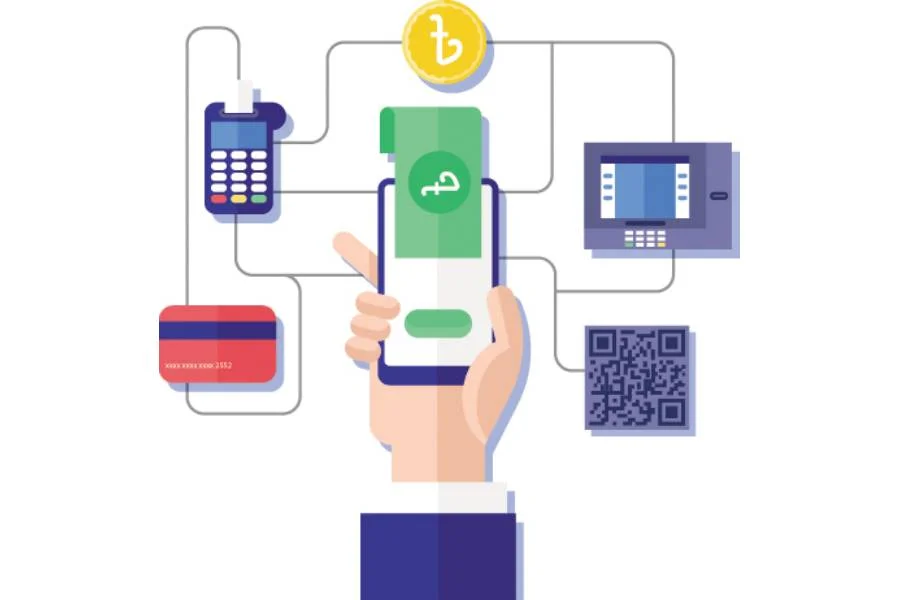
Bangladesh’s digital payment ecosystem has made remarkable progress over the past decade. Mobile financial services have accumulated hundreds of millions of registered accounts, transaction volumes continue to grow at double-digit rates, and Quick Response (QR) code-based payment systems are steadily expanding across the country. On the surface, the foundations of a modern cashless economy appear to be firmly in place.
Yet beneath these encouraging statistics lies a striking paradox. Despite rapid growth in digital payment infrastructure, cash remains the dominant medium of exchange for a large share of everyday economic activity. Consumers receive digital payments only to withdraw cash. Merchants accept electronic transfers but often prefer cash transactions. Money enters the digital ecosystem only to find its way back into the cash economy. Bangladesh Bank statistics showed that the cash base of the economy, currency in circulation and balances with the central bank, stood at Tk 4.12 trillion at the end of fiscal year 2024-25.
Most discussions of Bangladesh’s transition toward a cashless economy focus on technology. They emphasise mobile wallets, QR codes, banking applications, and digital infrastructure. Technology, however, is no longer the principal constraint. Bangladesh already possesses much of the infrastructure required to support a modern digital payments ecosystem. The more important challenge lies in the interaction of incentives, transaction costs, market structure, interoperability, governance, trust, and the informal economy. Bangladesh’s cashless challenge is therefore not merely a technology problem. It is an ecosystem problem.
The Employment Dimension: At the heart of the cashless puzzle lies the informal economy. A substantial share of Bangladesh’s workforce earns a living through activities that operate outside formal systems of taxation, regulation, and official record-keeping. Street vendors, small traders, day laborers, household service providers, transport operators, and countless microenterprises form an indispensable part of the country’s economic fabric.
The informal economy performs a vital social function. It provides employment opportunities for millions of people who might otherwise struggle to find work in the formal sector. It acts as a safety net during economic hardship and creates pathways to entrepreneurship with relatively low barriers to entry. For many households, participation in the informal economy is not a matter of preference but a matter of necessity.
This reality is often overlooked in policy discussions. Informality is frequently viewed solely as a problem to be eliminated. Yet doing so ignores its contribution to employment and economic survival. The challenge for policymakers is therefore not simply to suppress informality but to create incentives that gradually encourage greater participation in the formal economy.
Yet the very characteristics that make the informal economy an important source of employment also create its most significant economic challenges. Activities that operate outside formal systems of registration, accounting, and taxation generate livelihoods, but they also reduce transparency and weaken the state’s ability to monitor economic activity. This duality lies at the heart of the cashless paradox.
Tax Evasion Dimension: The same characteristics that make the informal economy flexible and accessible also create significant challenges. Cash transactions leave limited documentation and often escape formal reporting systems. As a result, a portion of economic activity remains outside the tax net.
The consequence is a narrower tax base. Governments lose potential revenue that could otherwise be used to finance infrastructure, education, healthcare, public safety, and other public services. The issue is not merely the loss of revenue itself. A narrow tax base places a greater burden on compliant taxpayers while reducing the state’s fiscal capacity to meet growing developmental needs.
Digital transactions create records. Those records improve transparency and make economic activity more visible. As more transactions move into the formal financial system, governments gain a more accurate picture of economic activity and a stronger foundation for fiscal planning.
Corruption Dimension: The implications extend beyond taxation. Informality can also create conditions that facilitate corruption. When economic activities occur outside formal reporting systems, opportunities emerge for discretionary enforcement, unofficial payments, and rent-seeking behavior. Businesses seeking to avoid regulatory requirements may become vulnerable to demands for informal payments. Public officials may acquire opportunities to overlook violations in exchange for favors or compensation.
This does not imply that participants in the informal economy are inherently corrupt. Most are simply trying to earn a living. Yet systems characterised by limited transparency and weak documentation inevitably create environments in which corruption becomes more difficult to detect and easier to sustain. The result is a paradox. The same informal economy that provides employment and economic resilience can simultaneously weaken institutional accountability and public trust.
A deeper constraint lies in the political economy of cash dependence. Cash-based opacity can sustain informal rents for segments of bureaucracy, enforcement systems, and economic actors who benefit from limited transparency. The transition toward a cashless ecosystem therefore challenges not only habits and business practices but also entrenched interests. Reform is consequently as much an institutional and political challenge as it is a technological one.
Hidden Costs of Cash: The persistence of cash imposes costs that are often invisible to the public. Currency must be designed, printed, transported, secured, distributed, stored, and periodically replaced. Currency notes wear out and must be withdrawn and reissued. Cash handling requires extensive logistical networks, security arrangements, and administrative oversight. These costs are ultimately borne by society through public institutions and taxpayer resources.
Every transaction that remains digital reduces the need for physical currency handling. The savings may appear modest at the level of an individual transaction, but across millions of daily transactions the cumulative effect can be substantial. The transition toward digital payments is therefore not merely a matter of convenience. It is also a matter of economic efficiency and fiscal prudence.
Financial Inclusion & Economic Visibility: Digital payments create more than convenience. They create economic visibility. Transaction histories help establish creditworthiness. Small businesses with digital records are often better positioned to access loans, insurance products, and other financial services. Households become more integrated into the formal financial system. Financial institutions gain better information for risk assessment and lending decisions.
This process strengthens financial inclusion while simultaneously improving the quality of economic information available to policymakers. An economy that is more visible is generally easier to govern, regulate, and support.
Greater digitalisation also improves macroeconomic visibility. As transactions become increasingly traceable, liquidity flows, spending patterns, and credit conditions become easier to observe. Better information enhances monetary policy transmission, improves fiscal planning, and reduces the blind spots that often complicate economic management. A cashless ecosystem therefore contributes not only to microeconomic efficiency but also to the broader financial architecture that supports economic stability.
Yet visibility alone does not guarantee adoption. Trust remains a decisive factor. In environments where institutional reliability is uncertain, some citizens may fear surveillance, data misuse, cyber fraud, or arbitrary enforcement. Cash retains cultural familiarity, immediacy, and a sense of personal control. Without strengthening trust in institutions and payment systems, even sophisticated digital infrastructure may struggle to displace entrenched cash preferences.
Efficiency Dimension: The costs of informality extend beyond taxation and corruption. They also affect the efficiency with which an economy allocates resources. When businesses remain intentionally small to avoid regulatory scrutiny, when transactions are structured to remain invisible, and when economic decisions are shaped by incentives to stay outside formal institutions, resources may not flow toward their most productive uses. Productivity growth slows, access to finance becomes constrained, and investment opportunities may be missed.
Economists often describe this broader consequence in terms of Pareto efficiency. While the concept originates in welfare economics, its practical meaning is straightforward. An economy moves closer to Pareto-efficient outcomes when resources are organized in ways that improve welfare without unnecessarily sacrificing opportunities elsewhere.
Persistent informality can prevent society from realising gains in productivity, public services, financial inclusion, and economic welfare that might otherwise be attainable. In this sense, the costs of informality extend far beyond lost tax revenue. They represent a broader loss of economic potential.
Put differently, society may be foregoing opportunities to increase productivity, expand public services, improve financial inclusion, and strengthen governance simultaneously. The economy continues to function, but not necessarily at its most efficient frontier. The result is a gradual erosion of welfare gains that could otherwise be achieved through greater transparency, broader participation in formal institutions, and more efficient allocation of resources.
Building a Cashless Ecosystem: International experiences demonstrate that technology alone does not transform payment behaviour, incentives do. Consumers and merchants remain within digital ecosystems when transactions are seamless, inexpensive, interoperable, and widely accepted. Conversely, when digital balances must frequently be converted into cash or when transaction costs remain significant, the payment system itself encourages a return to cash.
Bangladesh has already taken important steps through initiatives such as Bangla QR and Binimoy. The mandatory use of Bangla QR code, with effect from July 1, provides a universally accessible digital payment system. These platforms seek to create a more integrated payment ecosystem connecting banks, mobile financial service providers, businesses, and consumers. Their success, however, will depend on the extent to which they reduce friction, encourage competition, and align incentives across the entire economy.
The digital payments landscape is also shaped by market structure and regulation. When a small number of providers dominate pricing, customer access, or interoperability, incentives for innovation may weaken and transaction costs may remain stubbornly high. A more competitive and harmonised regulatory environment can help ensure that digital adoption is driven by efficiency, convenience, and consumer value rather than by the strategic interests of incumbents.
International experiences reinforce this lesson. Kenya’s M-Pesa, India’s Unified Payments Interface (UPI), and China’s digital payment ecosystems demonstrate that technology alone is insufficient. Adoption accelerates when digital payments solve real frictions, reduce transaction costs, and become more convenient than cash in everyday life.
At the same time, policymakers must recognize that a digital ecosystem introduces new vulnerabilities. Cybersecurity threats, system outages, operational failures, and the exclusion of digitally inexperienced populations represent genuine risks. A resilient transition therefore requires safeguards that protect users, provide system redundancy, and ensure that digitalisation does not create new forms of inequality.
The objective should not simply be to increase the number of wallets, QR codes, or mobile applications. Nor should a cashless economy be viewed as an end in itself. The ultimate objective is to create an environment in which transparency, inclusion, efficiency, and productivity reinforce one another, making participation in the formal economy more attractive than remaining outside it.
Conclusion: Bangladesh’s transition toward a cashless economy is ultimately about far more than payment technology. It is about the relationship between economic incentives, employment, taxation, governance, transparency, trust, and development.
The persistence of cash reflects the realities of a large informal economy that provides livelihoods for millions while simultaneously contributing to tax evasion, corruption, fiscal leakage, and economic inefficiency. This duality lies at the heart of the country’s cashless paradox.
A successful transition toward digital payments can therefore deliver benefits that extend well beyond convenience. It can broaden the tax base, strengthen financial inclusion, reduce the costs of currency management, improve institutional accountability, enhance economic visibility, and move the economy closer to its productive potential.
The future of Bangladesh’s payment system should not be judged solely by the number of digital transactions recorded each day. It should be judged by whether the country succeeds in building an economic ecosystem in which transparency, efficiency, inclusion, and good governance reinforce one another.
The paradox of employment, tax evasion, and corruption is therefore not a contradiction at all. It is the natural consequence of an economic structure in which millions depend on informality for their livelihoods while the nation seeks greater transparency, accountability, and efficiency. The challenge is not to eliminate the informal economy overnight, but to create incentives that gradually make formal participation more attractive than remaining outside the system.
Successful reform also requires careful sequencing. Trust must precede enforcement, interoperability must precede compulsion, and incentives must precede penalties. Without a coherent sequence of reforms, digitalisation may generate resistance rather than adoption. A gradual, incentive-driven pathway offers the most sustainable route toward behavioural change.
Dr Abdullah A Dewan is Professor Emeritus of Economics, Eastern Michigan University (USA); aadeone@gmail.com; Asjadul Kibria is a senior economic journalist
Paradox of employment, tax evasion and corruption
Abdullah A Dewan and Asjadul Kibria
Published :
Jul 08, 2026 00:18
Updated :
Jul 08, 2026 00:18
Bangladesh’s digital payment ecosystem has made remarkable progress over the past decade. Mobile financial services have accumulated hundreds of millions of registered accounts, transaction volumes continue to grow at double-digit rates, and Quick Response (QR) code-based payment systems are steadily expanding across the country. On the surface, the foundations of a modern cashless economy appear to be firmly in place.
Yet beneath these encouraging statistics lies a striking paradox. Despite rapid growth in digital payment infrastructure, cash remains the dominant medium of exchange for a large share of everyday economic activity. Consumers receive digital payments only to withdraw cash. Merchants accept electronic transfers but often prefer cash transactions. Money enters the digital ecosystem only to find its way back into the cash economy. Bangladesh Bank statistics showed that the cash base of the economy, currency in circulation and balances with the central bank, stood at Tk 4.12 trillion at the end of fiscal year 2024-25.
Most discussions of Bangladesh’s transition toward a cashless economy focus on technology. They emphasise mobile wallets, QR codes, banking applications, and digital infrastructure. Technology, however, is no longer the principal constraint. Bangladesh already possesses much of the infrastructure required to support a modern digital payments ecosystem. The more important challenge lies in the interaction of incentives, transaction costs, market structure, interoperability, governance, trust, and the informal economy. Bangladesh’s cashless challenge is therefore not merely a technology problem. It is an ecosystem problem.
The Employment Dimension: At the heart of the cashless puzzle lies the informal economy. A substantial share of Bangladesh’s workforce earns a living through activities that operate outside formal systems of taxation, regulation, and official record-keeping. Street vendors, small traders, day laborers, household service providers, transport operators, and countless microenterprises form an indispensable part of the country’s economic fabric.
The informal economy performs a vital social function. It provides employment opportunities for millions of people who might otherwise struggle to find work in the formal sector. It acts as a safety net during economic hardship and creates pathways to entrepreneurship with relatively low barriers to entry. For many households, participation in the informal economy is not a matter of preference but a matter of necessity.
This reality is often overlooked in policy discussions. Informality is frequently viewed solely as a problem to be eliminated. Yet doing so ignores its contribution to employment and economic survival. The challenge for policymakers is therefore not simply to suppress informality but to create incentives that gradually encourage greater participation in the formal economy.
Yet the very characteristics that make the informal economy an important source of employment also create its most significant economic challenges. Activities that operate outside formal systems of registration, accounting, and taxation generate livelihoods, but they also reduce transparency and weaken the state’s ability to monitor economic activity. This duality lies at the heart of the cashless paradox.
Tax Evasion Dimension: The same characteristics that make the informal economy flexible and accessible also create significant challenges. Cash transactions leave limited documentation and often escape formal reporting systems. As a result, a portion of economic activity remains outside the tax net.
The consequence is a narrower tax base. Governments lose potential revenue that could otherwise be used to finance infrastructure, education, healthcare, public safety, and other public services. The issue is not merely the loss of revenue itself. A narrow tax base places a greater burden on compliant taxpayers while reducing the state’s fiscal capacity to meet growing developmental needs.
Digital transactions create records. Those records improve transparency and make economic activity more visible. As more transactions move into the formal financial system, governments gain a more accurate picture of economic activity and a stronger foundation for fiscal planning.
Corruption Dimension: The implications extend beyond taxation. Informality can also create conditions that facilitate corruption. When economic activities occur outside formal reporting systems, opportunities emerge for discretionary enforcement, unofficial payments, and rent-seeking behavior. Businesses seeking to avoid regulatory requirements may become vulnerable to demands for informal payments. Public officials may acquire opportunities to overlook violations in exchange for favors or compensation.
This does not imply that participants in the informal economy are inherently corrupt. Most are simply trying to earn a living. Yet systems characterised by limited transparency and weak documentation inevitably create environments in which corruption becomes more difficult to detect and easier to sustain. The result is a paradox. The same informal economy that provides employment and economic resilience can simultaneously weaken institutional accountability and public trust.
A deeper constraint lies in the political economy of cash dependence. Cash-based opacity can sustain informal rents for segments of bureaucracy, enforcement systems, and economic actors who benefit from limited transparency. The transition toward a cashless ecosystem therefore challenges not only habits and business practices but also entrenched interests. Reform is consequently as much an institutional and political challenge as it is a technological one.
Hidden Costs of Cash: The persistence of cash imposes costs that are often invisible to the public. Currency must be designed, printed, transported, secured, distributed, stored, and periodically replaced. Currency notes wear out and must be withdrawn and reissued. Cash handling requires extensive logistical networks, security arrangements, and administrative oversight. These costs are ultimately borne by society through public institutions and taxpayer resources.
Every transaction that remains digital reduces the need for physical currency handling. The savings may appear modest at the level of an individual transaction, but across millions of daily transactions the cumulative effect can be substantial. The transition toward digital payments is therefore not merely a matter of convenience. It is also a matter of economic efficiency and fiscal prudence.
Financial Inclusion & Economic Visibility: Digital payments create more than convenience. They create economic visibility. Transaction histories help establish creditworthiness. Small businesses with digital records are often better positioned to access loans, insurance products, and other financial services. Households become more integrated into the formal financial system. Financial institutions gain better information for risk assessment and lending decisions.
This process strengthens financial inclusion while simultaneously improving the quality of economic information available to policymakers. An economy that is more visible is generally easier to govern, regulate, and support.
Greater digitalisation also improves macroeconomic visibility. As transactions become increasingly traceable, liquidity flows, spending patterns, and credit conditions become easier to observe. Better information enhances monetary policy transmission, improves fiscal planning, and reduces the blind spots that often complicate economic management. A cashless ecosystem therefore contributes not only to microeconomic efficiency but also to the broader financial architecture that supports economic stability.
Yet visibility alone does not guarantee adoption. Trust remains a decisive factor. In environments where institutional reliability is uncertain, some citizens may fear surveillance, data misuse, cyber fraud, or arbitrary enforcement. Cash retains cultural familiarity, immediacy, and a sense of personal control. Without strengthening trust in institutions and payment systems, even sophisticated digital infrastructure may struggle to displace entrenched cash preferences.
Efficiency Dimension: The costs of informality extend beyond taxation and corruption. They also affect the efficiency with which an economy allocates resources. When businesses remain intentionally small to avoid regulatory scrutiny, when transactions are structured to remain invisible, and when economic decisions are shaped by incentives to stay outside formal institutions, resources may not flow toward their most productive uses. Productivity growth slows, access to finance becomes constrained, and investment opportunities may be missed.
Economists often describe this broader consequence in terms of Pareto efficiency. While the concept originates in welfare economics, its practical meaning is straightforward. An economy moves closer to Pareto-efficient outcomes when resources are organized in ways that improve welfare without unnecessarily sacrificing opportunities elsewhere.
Persistent informality can prevent society from realising gains in productivity, public services, financial inclusion, and economic welfare that might otherwise be attainable. In this sense, the costs of informality extend far beyond lost tax revenue. They represent a broader loss of economic potential.
Put differently, society may be foregoing opportunities to increase productivity, expand public services, improve financial inclusion, and strengthen governance simultaneously. The economy continues to function, but not necessarily at its most efficient frontier. The result is a gradual erosion of welfare gains that could otherwise be achieved through greater transparency, broader participation in formal institutions, and more efficient allocation of resources.
Building a Cashless Ecosystem: International experiences demonstrate that technology alone does not transform payment behaviour, incentives do. Consumers and merchants remain within digital ecosystems when transactions are seamless, inexpensive, interoperable, and widely accepted. Conversely, when digital balances must frequently be converted into cash or when transaction costs remain significant, the payment system itself encourages a return to cash.
Bangladesh has already taken important steps through initiatives such as Bangla QR and Binimoy. The mandatory use of Bangla QR code, with effect from July 1, provides a universally accessible digital payment system. These platforms seek to create a more integrated payment ecosystem connecting banks, mobile financial service providers, businesses, and consumers. Their success, however, will depend on the extent to which they reduce friction, encourage competition, and align incentives across the entire economy.
The digital payments landscape is also shaped by market structure and regulation. When a small number of providers dominate pricing, customer access, or interoperability, incentives for innovation may weaken and transaction costs may remain stubbornly high. A more competitive and harmonised regulatory environment can help ensure that digital adoption is driven by efficiency, convenience, and consumer value rather than by the strategic interests of incumbents.
International experiences reinforce this lesson. Kenya’s M-Pesa, India’s Unified Payments Interface (UPI), and China’s digital payment ecosystems demonstrate that technology alone is insufficient. Adoption accelerates when digital payments solve real frictions, reduce transaction costs, and become more convenient than cash in everyday life.
At the same time, policymakers must recognize that a digital ecosystem introduces new vulnerabilities. Cybersecurity threats, system outages, operational failures, and the exclusion of digitally inexperienced populations represent genuine risks. A resilient transition therefore requires safeguards that protect users, provide system redundancy, and ensure that digitalisation does not create new forms of inequality.
The objective should not simply be to increase the number of wallets, QR codes, or mobile applications. Nor should a cashless economy be viewed as an end in itself. The ultimate objective is to create an environment in which transparency, inclusion, efficiency, and productivity reinforce one another, making participation in the formal economy more attractive than remaining outside it.
Conclusion: Bangladesh’s transition toward a cashless economy is ultimately about far more than payment technology. It is about the relationship between economic incentives, employment, taxation, governance, transparency, trust, and development.
The persistence of cash reflects the realities of a large informal economy that provides livelihoods for millions while simultaneously contributing to tax evasion, corruption, fiscal leakage, and economic inefficiency. This duality lies at the heart of the country’s cashless paradox.
A successful transition toward digital payments can therefore deliver benefits that extend well beyond convenience. It can broaden the tax base, strengthen financial inclusion, reduce the costs of currency management, improve institutional accountability, enhance economic visibility, and move the economy closer to its productive potential.
The future of Bangladesh’s payment system should not be judged solely by the number of digital transactions recorded each day. It should be judged by whether the country succeeds in building an economic ecosystem in which transparency, efficiency, inclusion, and good governance reinforce one another.
The paradox of employment, tax evasion, and corruption is therefore not a contradiction at all. It is the natural consequence of an economic structure in which millions depend on informality for their livelihoods while the nation seeks greater transparency, accountability, and efficiency. The challenge is not to eliminate the informal economy overnight, but to create incentives that gradually make formal participation more attractive than remaining outside the system.
Successful reform also requires careful sequencing. Trust must precede enforcement, interoperability must precede compulsion, and incentives must precede penalties. Without a coherent sequence of reforms, digitalisation may generate resistance rather than adoption. A gradual, incentive-driven pathway offers the most sustainable route toward behavioural change.
Dr Abdullah A Dewan is Professor Emeritus of Economics, Eastern Michigan University (USA); aadeone@gmail.com; Asjadul Kibria is a senior economic journalist