[🇧🇩] Monitoring the activities of DGFI & NSI

[🇧🇩] Monitoring the activities of DGFI & NSI
4
99
More threads by Saif

G Bangladesh Defense

Saif

Senior Member
Joined
Jan 24, 2024
Messages
18,256
Likes
8,613
Nation

Residence

Axis Group

DGFI gets a battle-tested chief

Ahsan Habib
Published :
Feb 25, 2026 23:29
Updated :
Feb 25, 2026 23:29

1772066894426.webp


Whenever a powerful appointment drops in Bangladesh, one question pops up like clockwork: Was this about merit or was this about quota?

The appointment of Major General Kaiser Rashid as the Director General of Directorate General of Forces Intelligence (DGFI) lands squarely in that debate. But a look at his track record makes the answer is pretty unambiguous – this is a textbook merit pick.

He did not just pass through the Bangladesh Military Academy (BMA); he dominated it. Commissioned as the second-best cadet of the 29th BMA Long Course, he later rose to become the top officer of his batch. Among peers, there is a running joke that he never finished second at anything that mattered in training. In a system where rankings are ruthless, that consistency is not luck; it is elite performance.

He completed Staff Course twice — once at home and once in the UK due to the best performance at home — and sharpened his artillery and gunnery expertise through advanced courses in Turkey and Pakistan. That kind of professional exposure is not ceremonial; it is competitive, technical, and earned.

Quota does not carry you through multinational military standards. Performance does. Operationally, he handled demanding responsibilities in the Chittagong Hill Tracts as a Brigade Major. Intellectually, he shaped officers for years as Directing Staff (Instructor) and later Chief Instructor at the Defense Services Command and Staff College (DSCSC).

In 2019, he was selected for UN Headquarters through an open global competitive process – the first Bangladesh officer to serve as Chief of Force Generation in UNHQ. After joining UNHQ, he made Bangladesh a top Troops Contributing Country (TCC) and maintained that position for four years by generating more than 1500 vacancies for Bangladesh which earned hundreds of crores of taka in remittances for the country.

The General played a hands-on role in expanding deployment opportunities for Bangladesh’s security forces. His performance earned the trust of the Military Adviser to the UN Secretary-General (MILAD) — a level of professional confidence that is built through competence, not connections.

People who trained with him still tell the same story years later – he set the standard early. One former officer recalls learning the basics of military life — from wearing boots properly to delivering a first salute — under his guidance at the academy. Across training, operations, and administration, peers describe him as relentlessly sharp and professionally disciplined. That kind of reputation does not travel by rumour; it travels by results.

DGFI is not a ceremonial posting. It is one of the country’s most sensitive intelligence platforms, where judgment errors can ripple into national consequences. The role demands strategic depth, calm under pressure, international exposure, and an instinct for both people and power. On paper and in practice, this profile fits him disturbingly well.

If quota were the driver, we would see soft edges in the résumé. Instead, what stands out is pressure-tested excellence — elite training results, hard operational roles, high-stakes teaching appointments, and credibility on the global stage.

This appointment does not read like favouritism. It reads like a system, for once, choosing its strongest card.​
 

DGFI chief’s visit to Delhi: Hint of thaw in Bangladesh–India ties

Indian newspapers view the visit as a sign of a possible thaw in the diplomatic frost that has characterised relations between the two neighbouring countries for the past two and a half years.

Diplomatic Correspondent
Dhaka
Updated: 15 Mar 2026, 22: 27

1773620668261.webp


Within weeks of the formation of the government in Bangladesh under the leadership of Tarique Rahman, the chief of the Directorate General of Forces Intelligence (DGFI), Major General Mohammad Kaiser Rashid Chowdhury, travelled to India earlier this month.

During the visit, he held meetings with India’s National Security Adviser Ajit Doval as well as several senior military and civilian intelligence officials.

Indian newspapers view the visit as a sign of a possible thaw in the diplomatic frost that has characterised relations between the two neighbouring countries for the past two and a half years.

India’s online news portal The Print headlined its report: “A hush-hush visit last week lays groundwork for thaw in Delhi-Dhaka ties.” Meanwhile, Hindustan Times carried a report under the heading: “Top Bangladesh security official visits India for meetings.”

Both news reports suggest that the trip signals a potential normalisation of relations between the two countries.

Relations between Bangladesh and India took a sharp downturn after Sheikh Hasina was ousted from power during a student-led mass uprising in August 2024 and subsequently fled to India.

Many young leaders of the uprising expressed anger towards India for giving her refuge. Tensions continued to escalate even after the interim government led by Professor Muhammad Yunus assumed the office.

A combination of trade restrictions, suspension of visas and diplomatic protests pushed bilateral relations to one of their coldest points in recent history.

Several channels of communication between India and Bangladesh had effectively stalled after the fall of the Hasina government, which had ruled for more than a decade and a half. Until Tarique Rahman assumed office, contacts between the two countries had largely been maintained through the offices of the national security advisers.

Following the general election on 12 February, however, the Bangladesh Nationalist Party (BNP) returned to power. Since the formation of the new government in Dhaka, the administration of Indian Prime Minister, Narendra Modi, has signalled its willingness to move relations forward, a gesture that has also received a positive response from Bangladesh.

It was against this backdrop that the DGFI chief visited Delhi. During the trip, Major General Kaiser Rashid Chowdhury also met Parag Jain, chief of India’s intelligence agency, Research and Analysis Wing (RAW), and Lieutenant General RS Raman, director general of India’s military intelligence, among others.

Citing individuals familiar with the meetings, The Print reported that the DGFI chief and the two senior Indian intelligence officials reached an understanding to ensure that no individual or group would be allowed to use the territory of either country to undertake activities harmful to the other’s interests. They also discussed the possibility of reactivating communication channels that had remained largely dormant for more than two years.

Several channels of communication between India and Bangladesh had effectively stalled after the fall of the Hasina government, which had ruled for more than a decade and a half. Until Tarique Rahman assumed office, contacts between the two countries had largely been maintained through the offices of the national security advisers.

Bangladesh’s former national security adviser Khalilur Rahman now serves as foreign minister in Tarique Rahman’s cabinet. During the interim government’s tenure, he and India’s national security adviser Ajit Doval had maintained communication between the two sides.

According to The Print, although the DGFI chief’s trip was officially described as a “medical visit”, it carried significance in light of New Delhi’s security concerns regarding developments in Bangladesh. India fears that escalating violence in Bangladesh could affect peace and stability in its north-eastern states.

New Delhi has for several months been signalling its interest in working with the BNP under Tarique Rahman and in restoring normal relations.

After the death of BNP chairperson and former Prime Minister Khaleda Zia, Prime Minister Narendra Modi sent India’s external affairs minister S Jaishankar to Dhaka. During a visit in December, Jaishankar met Tarique Rahman and held a discussion lasting nearly half an hour. He also handed over a condolence message from New Delhi to Tarique Rahman.

Jaishankar’s brief trip to Dhaka was limited to that meeting and did not include talks with the interim government’s chief adviser.

Later, in February, Om Birla, Speaker of India’s Lok Sabha, and foreign secretary Vikram Misri attended Tarique Rahman’s swearing-in ceremony.

The move was seen as another signal of India’s willingness to normalise relations that had become strained during the interim administration of Professor Muhammad Yunus.

According to The Print, however, several challenges still remain in Bangladesh–India relations, including Dhaka’s internal political situation. India continues to provide shelter to Sheikh Hasina, who has been sentenced to death in Bangladesh for crimes against humanity. There have been calls in Bangladesh for her extradition.

Nevertheless, BNP secretary general and local government minister Mirza Fakhrul Islam Alamgir told The Hindu that Bangladesh–India relations would not be “held hostage” over the issue of Sheikh Hasina.

Several bilateral agreements remain important for both countries. Among them is the 1996 India–Bangladesh Ganges water-sharing treaty, which is due to expire in December this year. In addition, economic restrictions imposed by both sides over the past two years remain in place.

In this context, India announced on Sunday the arrest of Faisal Karim Masud and Alamgir Hossain, the principal accused in the killing of Inquilab Moncho leader Shaheed Sharif Osman Hadi. The two suspects were detained by the West Bengal Special Task Force.

Following the killing of Osman Hadi, convener of the Inquilab Moncho, in December last year, protests erupted in Bangladesh, with India also becoming a focus of public anger.

On 17 December, demonstrators under the banner of “July Oikya (unity)” marched towards the Indian High Commission in Dhaka demanding the arrest and extradition of the prime suspect.

The arrest of the main accused in India is now also being viewed as a sign of a possible new beginning in relations between the two countries. Bangladesh is expected to pursue diplomatic efforts with India to secure the return of the suspects.​
 

Former DGFI chief Sheikh Mamun Khaled detained by DB

Arrest made in Mirpur DOHS; accused in International Crimes Tribunal case

Star Online Report

1774486522134.webp

Photo: Collected

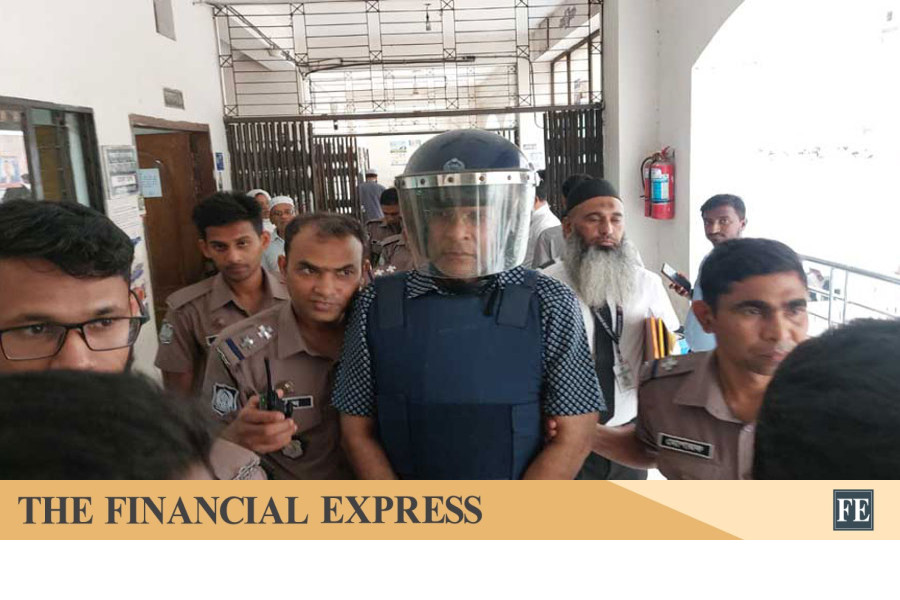
The Detective Branch (DB) of Dhaka Metropolitan Police detained former director general of the Directorate General of Forces Intelligence (DGFI), Lt Gen (retd) Sheikh Mamun Khaled, in the early hours of Thursday.

Additional Commissioner (DB) Shafiqul Islam confirmed that a DB team arrested him from Mirpur DOHS around 1:15am.

"Sheikh Mamun Khaled has been accused in a case filed with the International Crimes Tribunal," he added.

Defence sources claimed the former intelligence chief faces multiple allegations, including amassing illegal wealth, involving DGFI in political activities, and orchestrating controversial “militant drama” narratives.

He is also alleged to have misappropriated hundreds of crores of taka from the Jolshiri Housing Project and linked to “Aynaghor.”

Sources further alleged that during Sheikh Hasina’s regime, Khaled used the influence of Sajeeb Wazed Joy to accumulate vast illegal wealth.

However, no official statement detailing these allegations has been issued by authorities.

Police said further investigation into the matter is ongoing.​
 

‘If I were guilty, I wouldn’t have returned from UK’

Former DGFI chief Mamun Khaled tells court he had supported July Uprising

1774572933317.webp

Photo: Star/Emrul Hasan Bappi

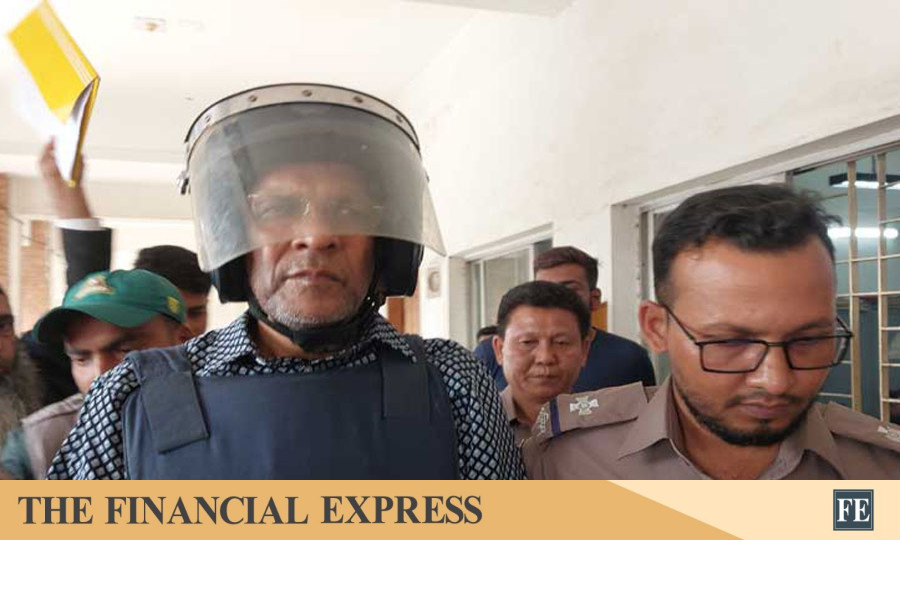
Lt Gen (retd) Sheikh Mamun Khaled, former director general of the Directorate General of Forces Intelligence (DGFI), was placed on a five-day remand today after a Dhaka court heard arguments from both prosecution and defence in a case over the killing of furniture trader Mohammad Delowar Hossain during the 2024 July Uprising.

The hearing unfolded in a packed courtroom where Mamun Khaled remained largely silent yet visibly anxious.

With his right wrist handcuffed, he appeared attentive and composed, raising his hand a few times, smiling twice during the defence’s submissions, and briefly conferring with his lawyer.

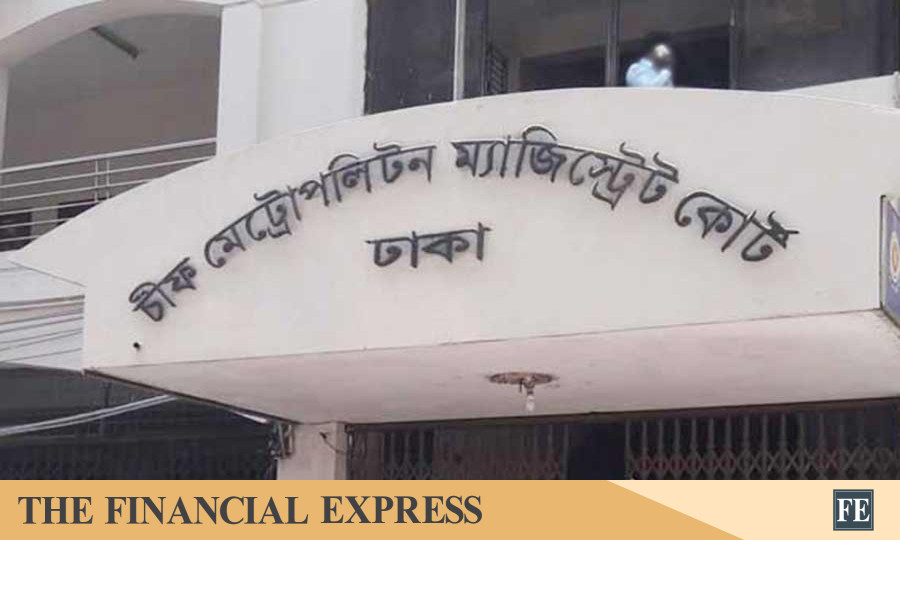
Dhaka Metropolitan Magistrate Md Siddique Azad took his seat shortly after the former DGFI chief was brought to a courtroom of the Chief Metropolitan Magistrate’s Court around 3:10pm under tight security.

The investigation officer then placed submissions seeking a seven-day remand in the case.

Dhaka Metropolitan Public Prosecutor Omar Faruq Faruqi argued in favour of the plea, saying Mamun Khaled should be remanded.

“On this accused’s orders, shots were fired at students during the protests in Mirpur,” the prosecutor told the court.

He also referred to Mamun Khaled’s role during the 1/11 army-backed caretaker government, saying, “The accused is one of those who carried out the events of 1/11. He detained and tortured political leaders and businessmen at that time.”

“He was involved in picking up and torturing political leaders and activists at ‘Aynaghor’. He was among those who politicised the DGFI,” the prosecutor added,

“The accused played a key role in evicting BNP Chairperson Khaleda Zia from her cantonment residence,” he said.

Defence lawyer Nazrul Islam Khan then placed his submissions, arguing that his client was not involved in any killing and should be granted bail.

During the defence arguments, Mamun Khaled raised his hand twice, indicating his intention to speak. Upon receiving permission, he presented point-by-point rebuttals to the prosecution’s claims.

He told the court he had supported the July Uprising.

Referring to his tenure as the founding vice-chancellor of Bangladesh University of Professionals, he said, “I served as vice-chancellor of BUP for four years. If students were inspired during the anti-discrimination movement, they were inspired through their vice-chancellor.”

“In July 2024, I held no power; I was an ordinary civilian. I was living in DOHS. My regular route to home is via the Kalshi flyover; I have no reason or necessity to go towards Mirpur-10, where the victim was shot,” he said.

He also spoke about his tenure at the DGFI.

“I joined the Forces Signal Intelligence Bureau of the DGFI in 2007, which primarily deals with communications... in all the cases in which (current) Prime Minister Tarique Rahman was granted bail, I personally called the judges. Clearances were given from our side in each of those instances,” he said.

Addressing allegations surrounding “Aynaghor”, he said he had appeared before the Commission on Enforced Disappearances hearings two to three times and that no such complaints arose during his tenure.

“You may ask then Lt Gen Matiur Rahman and Lt Gen Hakim; during that period, in our unit, later known as ‘Aynaghor’, there was no incident of detaining any people,” he told the court.

He also noted that five of the seven DGFI chiefs during the tenure of Sheikh Hasina are currently abroad.

“I am in the country. If I had been involved in any crime, I would not have returned from the United Kingdom on September 18. My daughter is pursuing a PhD, and I went abroad in July to provide her emotional support before returning. Had I any fear or doubt, I too could have stayed abroad like others,” he said.

After hearing all sides, the magistrate granted a five-day remand.

On July 6 last year, deceased Mohammad Delowar Hossain’s widow Liza filed a case with Mirpur Model Police Station, accusing 74 people.

According to police forwarding report, Mamun Khaled was arrested in the case as a suspect.

Case documents state that Delowar was shot in the Mirpur-10 area on July 19, 2024 during the July uprising. He died while undergoing treatment at City Care General Hospital in the capital’s Shyamoli area on July 21 the same year.​
 

'DGFI stint was a black chapter of my career,' former general Mamun tells court

bdnews24.com
Published :
Apr 09, 2026 20:17
Updated :
Apr 09, 2026 20:17

1775779283727.webp


Former director general of the Directorate General of Forces Intelligence (DGFI) retired lieutenant general Sheikh Mamun Khaled has described his tenure at the helm of the military intelligence agency as a "black chapter" of his career.

He made the remark on Thursday while pleading for clemency before the court of Additional Chief Metropolitan Magistrate Awlad Hossain Muhammad Jonaid.

The court placed him on a three-day police custody for questioning in connection with the 2022 murder of BNP activist Mokbul Hossain.

"I served for 44 years. Out of that, I was the head of DGFI for one year and eight months. That period was a black chapter for me," Mamun told the court.

He emphasised his academic background, noting that he holds three PhDs and five Master’s degrees.

"I have never been involved in politics. I spent 22 years in academic life and served as the vice-chancellor of BUP. After retirement, I taught at a Canadian university. I seek compassion," he added.

The defence’s plea for bail was opposed by Dhaka Metropolitan Public Prosecutor Omar Faruq Faruqi.

The prosecutor alleged that during Mamun’s leadership from 2011 to 2013, the DGFI was "extremely politicised".

"He was an associate of the ‘fascist’ [Sheikh] Hasina. Hundreds of Army officers who did not support her were forced out, while those who cooperated were rewarded with postings even after retirement," Faruqi argued.

He sought a seven-day remand to investigate the general's alleged involvement in the 2022 Naya Paltan violence.

Mamun was produced in court on Thursday after completing 14 days of remand in a separate murder case involving the death of one Delwar Hossain during the July Uprising.

While he was sent to jail in that case, he was granted fresh remand for the Mokbul murder case.

The hearing was marked by a brief moment of tension when a police officer, Assistant Sub-Inspector (ASI) Mosharraf Hossain, reportedly shouted at the retired general for attempting to speak with his two daughters behind the dock.

When asked about the incident, the ASI said: "He was constantly talking. Is it allowed to talk this much without the court's permission? That is why I stopped him."

One of his daughters later told bdnews24.com they were merely checking on their father’s health.

Mamun was arrested by detectives in Mirpur in the wee hours of Mar 26.

The fresh case in which Mamun was remanded centred on the death of Mokbul, who was fatally shot on Dec 7, 2022.

The incident occurred during a police raid on the BNP's central office in Naya Paltan, just days before the party’s scheduled mass rally.

The raid, allegedly led by high-profile police officials such as Harun-or-Rashid and Biplob Kumar Sarker, resulted in widespread vandalism and clashes.

Following the fall of the Awami League government in August 2024, a formal complaint was lodged on Sept 30 by one Mahfuzur Rahman.

The murder case names former prime minister Hasina and 255 others as suspects.​
 

Latest Posts

Back