Home Watch Videos Wars Movies Login

[🇧🇩] Operation Devil Hunt

[🇧🇩] Operation Devil Hunt
20
540
More threads by Saif

G Bangladesh Defense

Operation Devil Hunt: 566 more arrested on fifth day
UNB
Published :
Feb 13, 2025 19:50
Updated :
Feb 13, 2025 19:56

1739493059970.webp


The joint forces have arrested 566 people across the country under 'Operation Devil Hunt' on the fifth day of the operation, according to the police headquarters.

This brings the total number of arrests under the operation to 3,415 as of Thursday afternoon, it said.

Some 1099 of the arrests were in connection with different cases, it said.

During the fifth day's operations, the joint forces also recovered arms and ammunition, including two foreign-made pistols, two magazines, five bullets, and two sharp weapons.

The government launched the nationwide security operation on Saturday night, ostensibly aiming to curb unrest and ensure public safety.​
 
Analyze

Analyze Post

Add your ideas here:
Highlight Cite Respond
  • Like (+1)
Reactions: Bilal9

Operation Devil Hunt: 509 more arrested across the country

1739574383586.webp

Illustration: Star Digital Graphics

The joint forces arrested 509 people across the country on the sixth day of Operation Devil Hunt, according to the police headquarters.

This brings the total number of arrests under the operation to 3,924 as of Friday afternoon, it said.

A further 948 arrests were made on the day, which fell outside the purview of Operation Devil Hunt.

During the sixth day's operations, the joint forces also recovered arms and ammunition including one shooter gun, one a barrel gun and some local weapons.

The government launched the nationwide security operation on Saturday night, aiming to curb unrest and ensure public safety.​
 
Analyze

Analyze Post

Add your ideas here:
Highlight Cite Respond
  • Like (+1)
Reactions: Bilal9

Devils, heroes, or something in between?

1739576652519.webp

It is crucial to understand the difference between fighting actual fascism and scoring symbolic victories in an already triumphant landscape. FILE PHOTO: PALASH KHAN

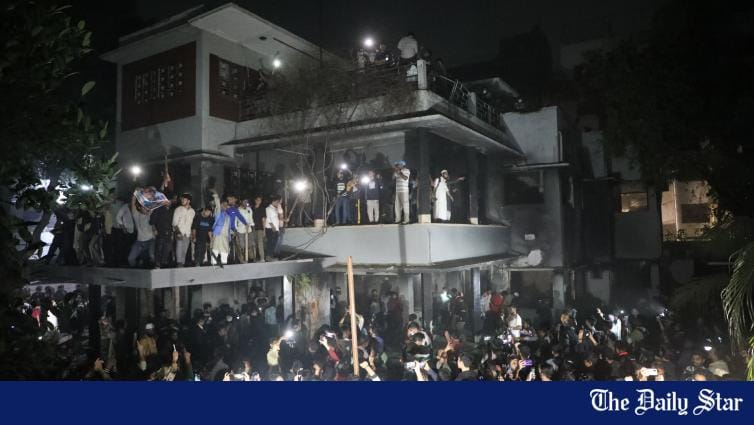
What's in a name? Quite a lot, actually. Names define identities. Names shape perceptions. They also help set narratives, assign blame, and even influence outcomes. It, therefore, makes sense that the simple act of naming a "mob" has suddenly become contentious because of all the baggage it brings with it in present-day Bangladesh. This debate—triggered by the launch of the Operation Devil Hunt following renewed anti-fascist campaigns and Adviser Mahfuj Alam's characterisation of mobs as "devils" in a stern warning to the Touhidi Janata—was perhaps inevitable in a country reborn through a violent uprising by individuals who would have been branded terrorists or anarchist mobs, and severely punished, had they failed. In a remarkable turnaround, they are now national heroes, and rightly so.

The question is, who qualifies as a mob then? Can such a generic term even capture the diversity and nuances of different groups? While Mahfuz was more specific in his portrayal, the home ministry was less so as it alluded to "saboteurs who attacked students," individuals with warrants against them, "troublemakers", and even the eponymous "devils" as targets of the joint forces operation. This could encompass, among others, anyone involved in the events between the demolition of the historic Dhanmondi 32 residence of Sheikh Mujibur Rahman and the Gazipur incident, where anti-fascist protesters themselves became targets of a mob allegedly including Awami League activists. In other words, their identities can be as overlapping as conflicting. Despite their shared aggression, whether a group is labelled as protesters, agitators, or simply a mob can lead to vastly different public perceptions and politico-legal consequences.

So before diving into these complexities, let's establish the basics. A mob, by definition, is a large, disorderly crowd intent on causing disturbance or violence. If you search online, you will come across context-specific variations such as "woke mobs," "vigilante mobs," "nationalist mobs," "religious mobs," "troll mobs," etc. I remember writing about "lynch mobs" in 2019 when mass hysteria over a bizarre rumour—that human heads were being collected for Padma Bridge construction—led to seven people being killed. As I argued back then, mob violence "is not justice—it's what justice looks like when it is privatised and leased out to the most dominant groups in society." And whatever form it takes, and however justified the motive seems to be, it remains unacceptable in a democratic system where due process and rule of law are considered sacrosanct.

Since the fall of the Awami League government, there has been a wave of mob-related incidents leaving debilitating effects across various sectors, including education. On Monday, a group of individuals besieged a stall at the Amar Ekushey Boi Mela over a book by controversial writer Taslima Nasrin, forcing it to close. A day earlier, a mob torched the house of a double-murder suspect in Rangpur's Pirganj upazila. Similar disturbances, big or small, are surfacing almost regularly—a trend often attributed to the previous regime's authoritarian rule that fostered deep-seated anger and distrust among people. While such behaviour cannot be condoned, things get trickier when the target of this anger is Awami League itself, or what remains of it.

Another danger of encouraging mobism is how easily it can morph into various expressions of fanaticism. For instance, the same mobs that destroyed Mujib's murals and statues over the past months could feel emboldened to attack any structure, symbol or event that they perceive to be anti-religious. In fact, some already are. A recent video shows a man standing before the Raju Memorial Sculpture at Dhaka University, calling it a "murti" (Hindu idol) and urging its destruction. Monday's book fair assault, the disruptions of women's football matches in Joypurhat and Dinajpur, or the spate of attacks on shrines in recent months—all point to the uncontrollable effects of encouraging mobism.

The argument of those opposing the labelling of such acts as mob violence is, if I understand correctly, that any actions targeting the symbols of the ousted regime are necessary to prevent its resurgence. Theoretically, you cannot deny the logic—the gross human rights violations committed by the party during July-August alone, as highlighted again by the just-released fact-finding report of the UN human rights office, make this non-negotiable. The question, however, is not about the goal but the methods being used to achieve it. After the uprising, there was broad consensus that what happened during this period, including the destruction of public property and infrastructure, served a greater cause, and as such, participants faced no legal repercussions. But should such concessions still be granted six months later, when the nation is trying to claw its way back to some much-needed stability? The answer is self-evident.

"But what if there are provocations?" ask some. True, the Dhanmondi 32 demolition was largely a reaction to Sheikh Hasina's virtual speech from India—an act that, given the trauma of her reign of terror, was bound to provoke outrage. Had she not shown the audacity to attempt a political comeback while evading justice for her many crimes, the destruction could perhaps have been avoided. But this reasoning is tenuous at best and dangerous at worst.

Expecting a former dictator to behave responsibly is a naivety we cannot afford at this stage. What about our own responsibility to pre-empt her move, and more importantly, protect the greater interests of the nation? The anti-fascist camp's headlong dive into a trap ostensibly designed to raise questions about the direction of "new Bangladesh" exposes the fallacy of their campaign. Understanding the difference between fighting actual fascism and scoring symbolic victories in an already triumphant landscape is crucial. Moreover, a mob is a deeply unstable force that may take on a will of its own once activated. It is no surprise that the call to disrupt Hasina's speech set off a domino effect of attacks, vandalism, and arson targeting Awami League-linked houses and establishments in as many as 35 districts. Will anti-fascist mobilisers take responsibility for these attacks, or the reputational damage thus caused to Bangladesh? The UN has already warned about meeting international standards in trials for the perpetrators of July-August massacre. We cannot expect fair justice and global support for our bid while condoning extrajudicial actions against the remnants of Awami League.

The reason we focus more on the Dhanmondi incident and its aftermath is because of the insistence by some anti-fascist voices on challenging any labelling or questioning of their supporters, as if they are an organised force governed by strict discipline. They are not. The truth is, under the broad anti-fascist umbrella, there are numerous student, political and ideological banners—just as there are numerous types of mobs. A mob, however you characterise it, cannot be expected to see reason or exercise restraint. It cannot distinguish between political and criminal actions, between "reactions" and "revenges," or between legitimate targets and collateral damage.

Another danger of encouraging mobism is how easily it can morph into various expressions of fanaticism, which is perhaps what led Mahfuj Alam to directly address the Touhidi Janata. For instance, the same mobs that destroyed Mujib's murals and statues over the past months could feel emboldened to attack any structure, symbol or event that they perceive to be anti-religious. In fact, some already are. A recent video shows a man standing before the Raju Memorial Sculpture at Dhaka University, calling it a "murti" (Hindu idol) and urging its destruction. Monday's book fair assault, the disruptions of women's football matches in Joypurhat and Dinajpur, or the spate of attacks on shrines in recent months—all point to the uncontrollable effects of encouraging mobism.

As part of the Operation Devil Hunt, the authorities have so far detained nearly 3,000 individuals, many likely linked to recent incidents of chaos and aggression. But security crackdowns alone cannot prevent this trend. It demands deeper reflection. Should we continue to condone unregulated public outbursts? Should we so easily fall for "provocations?" Or can we channel our grievances into structured responses that can solidify our transition to democracy, prevent the resurgence of any form of fascism, and restore Bangladesh's global standing?

Whatever we do, the idea of a mob must be left in the past.

Badiuzzaman Bay is assistant editor at The Daily Star.​
 
Analyze

Analyze Post

Add your ideas here:
Highlight Cite Respond
  • Like (+1)
Reactions: Bilal9

Operation Devil Hunt: 3,924 arrested in 7 days
Staff Correspondent
Dhaka
Published: 14 Feb 2025, 22: 49

1739580187674.webp


Another 509 people have been arrested in the joint force’s special drive, “Operation Devil Hunt” across the country.

With the new detentions, a total of 3,924 people have been arrested in this operation in the last seven days, starting from last Saturday night to Friday afternoon, the police headquarters said this evening.


In the last 24 hours (until Friday afternoon), as many as 509 people have been arrested in the operation, and several weapons have been recovered. Those include one single-barrel gun, one one-shooter gun, one cartridge, 10 machetes, two knives, and two cleavers.

According to the police headquarters, 948 more people were arrested in the last 24 hours in various cases outside the “Operation Devil Hunt”.

Following a terrorist attack on students and the people in Gazipur, a decision was taken at a meeting of law enforcement agencies at the home ministry to launch “Operation Devil Hunt”.

Some 15-16 students were attacked at the house of former liberation war affairs minister Mozammel Haque in Gazipur on 7 February night.

Leaders of the Anti-Discrimination Student Movement said that the students went there to prevent the robbery after receiving news of it that night. At that time, they were attacked.

One of the injured in the incident died while undergoing medical treatment at a hospital.​
 
Analyze

Analyze Post

Add your ideas here:
Highlight Cite Respond
  • Like (+1)
Reactions: Bilal9

OPERATION DEVIL HUNT: 477 more people arrested
Staff Correspondent 16 February, 2025, 01:04

1739664177937.webp


Law enforcement agencies and security agencies on Saturday arrested 1,347 individuals, including 477 in the ongoing Operation Devil Hunt, said a police headquarters press release.

They also seized firearms and ammunition, including one foreign pistol, two magazines and 20 rounds along with several sharp weapons. The statistics was for the past 24 hours ending at 8:00am Saturday.

Outside the Operation Devil Hunt, 870 arrests were made on Friday in different types of cases across the country, the release added.

Earlier on Friday, 1,457 people, including 509 in the Operation Devil Hunt, were arrested.

In the past seven days since the interim government launched Operation Devil Hunt on February 8, at least 10,759 people, mostly Awami League leaders and activists, were arrested.

On February 9, total 1,308 people were arrested, according to police officials.

On February 10, total 1,521, including 343 in the Operation Devil Hunt, were arrested. On February 11, another 1,775 people, including 607 in the Operation Devil Hunt, were arrested. On February 13, total 1,686, including 591 in the Operation Devil Hunt, were arrested.

At least 13 people, including leaders and activists of AL and its affiliated organisations, were detained on Friday night in Sylhet city in Operation Devil Hunt, United News of Bangladesh reported on Sunday quoting Sylhet Metropolitan Police assistant deputy commissioner Mohammad Saiful Islam.

At least 15 members of the Student Against Discrimination were injured in a counter attack by local people over attacking the ousted AL government’s liberation war affairs minister AKM Mozammel Haque on February 7 night, leading to the death of Abdul Kashem, 17, one of the injured, while undergoing treatment at Dhaka Medical College Hospital.

The Operation Devil Hunt was announced in the aftermath of a spate of attacks carried out on the houses of Awami League leaders, party offices, and the murals and portraits of the country’s founding president, Sheikh Mujibur Rahman, and his daughter deposed prime minister Sheikh Hasina since February 5 when the Bangabandhu Memorial Museum building at Dhanmondi 32 in Dhaka was razed to the ground.

The chaotic situation ensued when different groups on their social media platforms called on people to join the ‘Bulldozer procession’ to demolish the Dhanmondi 32 building over the speech of Sheikh Hasina, now sheltered in India following her ouster amid a mass uprising, to the country’s student community online on February 5 evening.​
 
Analyze

Analyze Post

Add your ideas here:
Highlight Cite Respond
  • Like (+1)
Reactions: Bilal9

389 more arrested under ‘Operation Devil Hunt’
FE Online Desk
Published :
Feb 16, 2025 19:41
Updated :
Feb 16, 2025 19:41

1739752862645.webp


As part of the ongoing nationwide joint forces crackdown “Operation Devil Hunt”, 389 more miscreants were arrested in the last 24 hours.

The police headquarters (PHQ) in a short message service today said 1140 more were arrested across the country. Of them, 751 were arrested in various criminal cases along with the accused with warrants, reports BSS.

During Sunday’s operation, a locally made pipe gun and a hammer were seized.

On Saturday, 1347 individuals were arrested from different parts of the country. Of the total arrestees, 477 were nabbed under Operation Devil Hunt, while 870 were in different criminal cases along with warrants.

With the aim of bringing the anarchists and their associates under the law across the country, the ‘Operation Devil Hunt’ campaign has been launched from February 8.​
 
Analyze

Analyze Post

Add your ideas here:
Highlight Cite Respond
  • Like (+1)
Reactions: Bilal9

Operation Devil Hunt: 532 arrested across Bangladesh
FE Online Desk
Published :
Feb 19, 2025 19:29
Updated :
Feb 19, 2025 19:29

1740010842764.webp


A total of 532 people were arrested across the country as part of the ongoing "Operation Devil Hunt" in 24 hours till Wednesday afternoon, according to the police headquarters.

Besides, 1,051 others were arrested in connection with various warrants and ongoing cases during the same period in countrywide drives conducted by local police, UNB reports.

During this period, the joint forces also recovered a range of weapons and materials, including one foreign-made pistol.

Launched on the night of February 9, "Operation Devil Hunt" is ostensibly aimed at curbing unrest and ensuring public safety across the country.

The operation followed an attack on students and civilians in Gazipur on the night of February 7, an area known to be a stronghold of the Awami League.​
 
Analyze

Analyze Post

Add your ideas here:
Highlight Cite Respond

OPERATION DEVIL HUNT: 461 more arrested across Bangladesh
United News of Bangladesh . Dhaka 21 February, 2025, 23:50

1740181718100.webp

Image description

At least 461 people were arrested across Bangladesh as part of the ongoing ‘Operation Devil Hunt’ in 24 hours till Friday afternoon, according to the police headquarters.

Besides, 1,189 others were arrested in connection with various warrants and ongoing cases during the same period in countrywide drives conducted by local police.

During this period, the joint forces also recovered a range of weapons and materials, including three locally made pipe guns and one foreign-made pistol.

Launched on the night of February 9, "Operation Devil Hunt" is aimed at curbing unrest and ensuring public safety across the country.

The operation followed an attack on students and civilians in Gazipur on the night of February 7, an area known to be a stronghold of the Awami League.​
 
Analyze

Analyze Post

Add your ideas here:
Highlight Cite Respond

Members Online

Latest Posts

Back
 
G
O
 
H
O
M
E