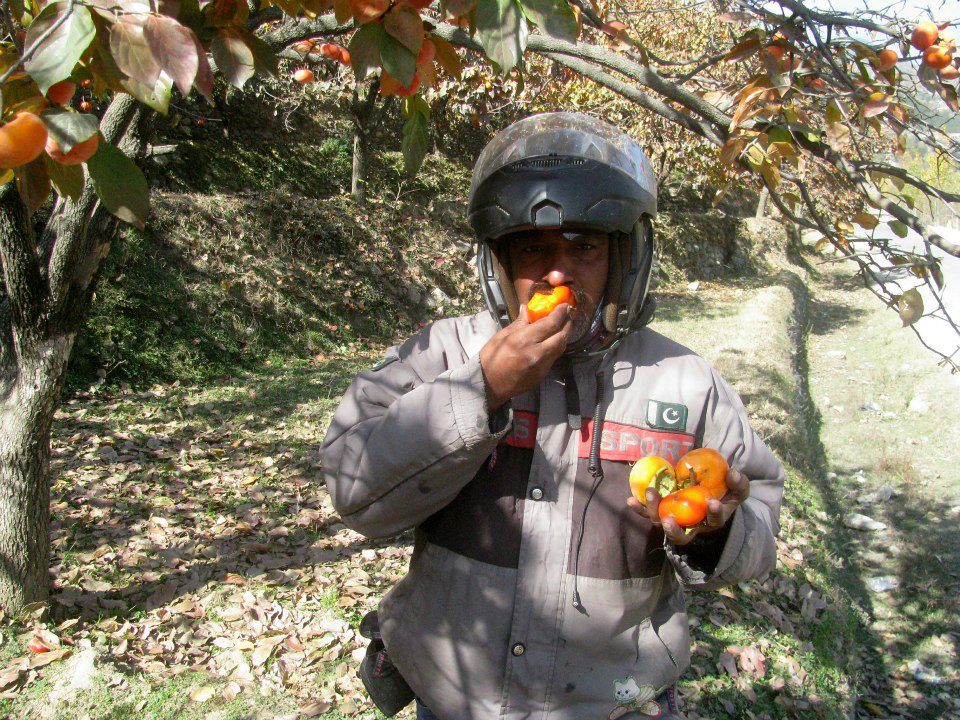
Persimmons has a lot of vitamins, minerals, fiber and beneficial plant compounds. It has a sweet taste. What’s more, they may promote heart health, reduce inflammation, support healthy vision and keep the digestion controlled. Keeping the body system healthy. In Pakistan they are known as “AMLOOK” or “Japanese fruit”.although they originate from china. In India they are called “Tendu Phal”. Pakistan also produces persimmon.
They are usually available in early winters during the months of September, October and November. This is a very delicate fruit. This beautiful fruit have many advantages that includes high blood pressure control fruit , fluid retention, constipation, hiccough, and stroke. It also improves blood flow and reducing body temperature. It also increase vision. reduces inflammation and used for skin clearance fruit. It covers vitamins, fibre and potassium need of the body. Its sunnah to eat fresh and seasonal fruit in the beginning of the season. It keeps the body immune to fight for seasonal changes.
Persimmons can be eaten fresh, dried or cooked and are commonly used around the world in jellies, drinks, pies, curries and puddings. eatable persimmon is usually very soft.it can be eaten with skin or without skin, depending on personal taste. This is a loaded nutrient fruit. One persimmon daily contain 20% of the daily food portion.
Persimmon have huge list of benefits other than its only taste that is super delicious. One must try persimmon juice or shake without milk this winter it will never be forgotten.
SHANGLA: Persimmon is the popular fruit of Shangla where over 2,000 orchards exist and trees of red and tasty persimmon line the roads of the valley.
Local people say that the persimmon produced in Shangla has a unique taste and its beautiful shape and colour attract buyers. The fruit is locally known as “Soor Amlok” or red persimmon.
“There is no proper market and facility in the district to preserve and export the fruit. We can play our role in increasing foreign exchange for the country if such arrangements were made by the government,” said Amir Zeeb Khan, a farmer, while talking to this correspondent.
He said that these days the fruit was being supplied in big quantities to the markets in Lahore, Rawalpindi, Karachi and other cities. “Score of workers can be seen in the gardens and orchards picking persimmon and earning a handsome amount of money. The fruit harvest this year is more than the previous seasons and the business is increasing with the passage of time,” Mr Khan said.
He regretted that there was no proper market to supply the fruit on time to the cities and export it. He said that 25 per cent of the persimmon fruit was wasted in the orchards. He added that the government should take steps to make sure in time supply of persimmon to the market.
Farooq, owner of several persimmon orchards at Bely Baba, said he had been supplying packed persimmon fruit to different parts of the country. He said that the persimmon business was also a source of income for the poor workers, while students also used to pick the fruit at orchards to earn pocket money.
“The government’s interest to find foreign markets for persimmon would contribute to revenue generation,” he said, adding that owing to the government’s negligence growers of persimmon had been suffering.
A local agricultural expert said that persimmon was the only fruit which did not need fertilizer and water. He said that the fruit was more useful for human health than other types of fruit.
Jamun is one of the less known tropical fruits, but due to its high nutrient content and unique health benefits, it is a fruit that more people should be seeking out to boost their overall health.
What is Jamun?
Jamun is an evergreen fruiting tree bearing the scientific name Syzygium cumini. It is more commonly known as a black plum, but may also be called jambul, java plum or jamblang, depending on where you are in the world. This tree is native to the Indian subcontinent but has spread to other Asian nations and islands, in addition to being naturalized in the United States and some parts of South America. This tree is primarily cultivated for its fruit, which bears the same name and looks similar to a small plum or a large berry. The color changes from light green to pink to dark purple when it is fully mature.
The jamun fruit has a sweet and sour flavor and is known to be quite astringent, although this taste can vary depending on when you pick the fruit from. While it has been a part of cultural, religious, and culinary traditions in certain parts of the world for centuries, it is only recently becoming popular in the rest of the world.
Black Plum Nutrition Facts
Black plums contain a significant amount of vitamin C, iron, magnesium, B-family vitamins, and dietary fiber, as well as potassium, vitamin A and small amounts of protein. There is a moderate amount of calories, roughly 75 per cup, but there is a minimal amount of fat and no cholesterol to speak of.
Nutrition Facts
Java-plum, (jambolan), raw
NutrientValue
Water [g] 83.13
Energy [kcal] 60
Protein [g] 0.72
Total lipid (fat) [g] 0.23
Carbohydrate, by difference [g] 15.56
Calcium, Ca [mg] 19
Iron, Fe [mg] 0.19
Magnesium, Mg [mg] 15
Phosphorus, P [mg] 17
Potassium, K [mg] 79
Sodium, Na [mg] 14
Vitamin C, total ascorbic acid [mg] 14.3
Thiamin [mg] 0.01
Riboflavin [mg] 0.01
Niacin [mg] 0.26
Vitamin B-6 [mg] 0.04
Vitamin B-12 [µg] 0
Vitamin A, RAE [µg] 0
Vitamin A, IU [IU] 3
Fatty acids, total trans [g] 0
Cholesterol [mg] 0
Black Plum Health Benefits
Jamun is a black plum that aids in skin care and weight loss, relieves stomach pain, and boosts immunity. It can be used in salads, desserts, juices, and smoothies.
Skin Care
The Food Chemistry journal suggests that antioxidant-rich foods help treat many skin diseases. With plenty of vitamin A, vitamin E, and other antioxidants, jamun can improve the appearance of the skin by reducing oxidative stress and lowering inflammation levels.
Protects Heart
Regular consumption of jamun fruit or juice will help with high blood pressure, as the fruit contains notable levels of potassium, which is a vasodilator and reduces your risk of atherosclerosis and heart attacks.
Boosts Immune System
There is a good amount of vitamin C and other antioxidants in this fruit, which can help to stimulate the production of white blood cells and increase the strength of the immune system. Also, according to the Food Research International journal, black plums have antibacterial, antifungal, and anti-viral properties that help keep you protected from many diseases.
Improves Circulation
The antioxidant enzymes in jamun extracts are critical for the production of hemoglobin, which the body needs to maintain healthy circulation and the delivery of oxygen and nutrients.
Weight Loss
Being low in calories, jamun is a cherished addition to all weight loss diets. Plus it is also a source of dietary fiber so it helps to optimize digestion as well!
Prevents Cancer
Black plum has been known to have abundant antioxidants that inhibit the free radical activity in the body. This is confirmed by a study conducted in 2005. Another research published in 2011 has also confirmed that black plums have anticancer and chemopreventive properties. So it is not only good at preventing cancer but is also an aid when it comes to treating cancer!

 Pakistan Economic