[🇺🇸] USA and EU/China/Canada Trade War

[🇺🇸] USA and EU/China/Canada Trade War
18
1K
More threads by Saif

G   American Defense

Weak US economic outlook persists despite brief trade truce with China: Reuters poll

REUTERS
Published :
May 21, 2025 21:52
Updated :
May 21, 2025 21:52
1748737258147.webp

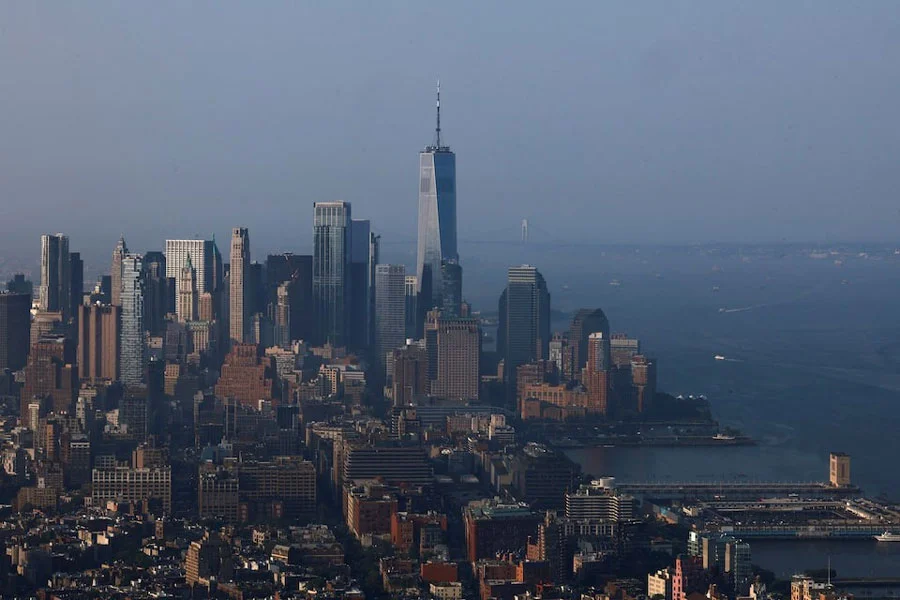
The One World Trade Center building stands amid the Manhattan skyline in New York City, US, July 26, 2023. Photo : REUTERS/Amr Alfiky/Files

The outlook for the US economy remains weak despite a temporary cooling of the US-China trade war, a Reuters poll of economists showed, with a debate over the country's fiscal health hanging in the balance.

A 90-day truce to temporarily slash steep US-China import duties has marginally reduced US recession risks, but the fiscal outlook is worsening ahead of an imminent vote in Congress on President Donald Trump's sweeping tax-cut bill following a sovereign credit rating downgrade from Moody's on Friday.

Economists in a May 14-21 Reuters poll were unanimous the Trump administration's policies have hurt the economy, with over 55 per cent saying "significantly hurt".

But after big downgrades to their growth and upgrades to inflation forecasts in April, economists kept these broadly unchanged in May.

"Moody's is likely sending a message that the proposed tax bill is fiscally profligate... unless there is an abrupt move, the risk is that by the time Washington gets serious about the US's fiscal problems, tariffs might be the only available lever to meaningfully reduce the deficit," noted Aditya Bhave, a senior US economist at Bank of America.

"Another round of large tariff hikes would probably be more painful for the economy than a less expansionary fiscal package."

The economy, which contracted 0.3 per cent last quarter largely due to a record surge in imports, is forecast to grow 1.5 per cent this quarter. It would grow just 1.4 per cent this year, a sharp slowdown from last year's 2.8 per cent. Next year, it was forecast to expand 1.5 per cent.

The median probability of a US recession over the coming year did, however, decline to 35 per cent from 45 per cent in April.

Economists barely changed their views on inflation, expected to average above the Fed's 2 per cent target until at least 2027, echoing consumer expectations which are already at a multi-decade high.

"The bad news is the detente virtually locks in a slow growth, sticky inflation environment as the base case for the US economy. The effective tariff rate at 13 per cent is still substantially higher than where it was coming into the year (around 2 per cent)... Policy uncertainty is high and recession risks remain elevated," said Michael Gapen, chief US economist at Morgan Stanley.

Fed officials have highlighted elevated risks of a resurgence in inflation, primarily due to US tariff policies and appear to be in no hurry to cut rates anytime soon. The federal funds rate has stayed in a 4.25 per cent-4.50 per cent range since the start of this year.

Just over half of economists, 52 of 103, predicted the Federal Open Market Committee (FOMC) would resume cutting its key interest rate next quarter, most likely in September. That was in line with interest rate futures pricing.

A significant minority, 25, expected the reduction in the final quarter and 18 saw no cuts this year. Only eight forecast a June cut, compared to nearly 40 per cent expecting at least one reduction by end-Q2 in the April survey.​
 

US and China set for trade talks in London on Monday

REUTERS
Published :
Jun 08, 2025 18:58
Updated :
Jun 08, 2025 23:00

1749425173608.webp

A drone view shows shipping containers from China at the Port of Los Angeles, in San Pedro, California, U.S., May 1, 2025. Photo : REUTERS/Mike Blake

Three of U.S. President Donald Trump’s top aides will meet with their Chinese counterparts in London on Monday for talks aimed at resolving a trade dispute between the world’s two largest economies that has kept global markets on edge.

U.S. Treasury Secretary Scott Bessent, Commerce Secretary Howard Lutnick and Trade Representative Jamieson Greer will represent the United States in the talks, Trump announced in a post on his Truth Social platform without providing further details.

China’s foreign ministry said on Saturday that vice premier He Lifeng will be in the United Kingdom between June 8 and June 13, adding that the first meeting of the China-U.S. economic and trade consultation mechanism would be held during this visit.

“The meeting should go very well,” Trump wrote.

Trump spoke to Chinese President Xi Jinping on Thursday in a rare leader-to-leader call amid weeks of brewing trade tensions and a dispute over critical minerals.

Trump and Xi agreed to visit one another and asked their staffs to hold talks in the meantime.

Both countries are under pressure to relieve tensions, with the global economy under pressure over Chinese control over the rare earth mineral exports of which it is the dominant producer and investors more broadly anxious about Trump’s wider effort to impose tariffs on goods from most U.S. trading partners.

China, meanwhile, has seen its own supply of key U.S. imports like chip-design software and nuclear plant parts curtailed.

The countries struck a 90-day deal on May 12 in Geneva to roll back some of the triple-digit, tit-for-tat tariffs they had placed on each other since Trump returned to the presidency in January.

That preliminary deal sparked a global relief rally in stock markets, and U.S. indexes that had been in or near bear market levels have recouped the lion’s share of their losses.

The S&P 500 stock index, which at its lowest point in early April was down nearly 18% after Trump unveiled his sweeping “Liberation Day” tariffs on goods from across the globe, is now only about 2% below its record high from mid-February. The final third of that rally followed the U.S.-China truce struck in Geneva.

Still, that temporary deal did not address broader concerns that strain the bilateral relationship, from the illicit fentanyl trade to the status of democratically governed Taiwan and U.S. complaints about China’s state-dominated, export-driven economic model.

Trump has repeatedly threatened an array of punitive measures on trading partners, only to revoke some of them at the last minute. The on-again, off-again approach has baffled world leaders and spooked business executives.

China sees mineral exports as a source of leverage. Halting those exports could put domestic political pressure on the Republican U.S. president if economic growth sags because companies cannot make mineral-powered products.

In recent years, U.S. officials have identified China as its top geopolitical rival and the only country in the world able to challenge the United States economically and militarily.​
 

Analysts react to US-China trade agreement

REUTERS
Published :
Jun 11, 2025 20:28
Updated :
Jun 11, 2025 20:28

1749684407885.webp

Treasury Secretary Scott Bessent and Chinese vice premier He Lifeng meet in London. Photo : United States Treasury/Handout

U.S. and Chinese officials said they had agreed on a framework to put their trade truce back on track and remove China's export restrictions on rare earths while offering little sign of a durable resolution to longstanding trade differences.

China's Vice Commerce Minister Li Chenggang said the two teams had agreed on implementing their Geneva consensus and would take the agreed framework back to their leaders.

A White House official said the deal allows the U.S. to charge a 55% tariff on imported Chinese goods. This includes a 10% baseline "reciprocal" tariff, a 20% tariff for fentanyl trafficking and a 25% tariff reflecting pre-existing tariffs. China would charge a 10% tariff on U.S. imports.

MARKET REACTION:

Equity markets and the dollar were muted, with S&P 500 up 0.1%, while awaiting more detail of what was decided and whether it would stick.

QUOTES:

GENE GOLDMAN, CHIEF INVESTMENT OFFICER AT CETERA INVESTMENT MANAGEMENT, EL SEGUNDO, CA:

"Equity markets breathed a sigh of relief on news of a potential US-China trade deal. However, I would take this news with a bit of caution. While President Trump indicated favorable news that imports on Chinese imports would rise from 30% to 55% and Chinese rare-earth exports may resume, there is little news on what China gets in return. I doubt this is a one-way deal and hence the market caution seen overnight."

SAM STOVALL, CHIEF INVESTMENT STRATEGIST, CFRA RESEARCH, ALLENTOWN, PENNSYLVANIA:

“We’ve seen a relatively muted reaction to the news of a ‘deal’ with China, and to me that signals indifference. It says, OK, you have agreed to continue talking and set up a framework for future talks, but nothing all that significant has really been resolved. The market is saying, tell me something worth knowing about. And we all know that if we don’t have a comprehensive solution, it’s not going to be good. It would mean we have to purchase our 30 dolls for Christmas somewhere else, which will be much more expensive.

"This is just my own reading of this, but in the face of better-than-expected inflation numbers today, the market is struggling to hold onto its gains and I can only think that it’s that people needed to see more from the China talks. Perhaps investors sold on strength, out of the opinion that we’re overbought at this stage.”

OLIVER PURSCHE, SENIOR VICE PRESIDENT, ADVISOR, WEALTHSPIRE ADVISORS, WESTPORT, CONNECTICUT:

"It's a done deal according to President Trump, but we haven't seen any details, which is why I think the market is not reacting to it yet. As with just about everything, the devil is in the details... The other big piece of news is the U.S. and China seem to have a framework for further discussions, and that contradicts a statement of, it's a done deal.

"This morning's inflation report, while softer than expected, was largely due to falling energy prices and an indication of a further slowdown in U.S. economic activity."

ADAM BUTTON, CHIEF CURRENCY ANALYST, FOREXLIVE, TORONTO:

“Obviously, it's good news that China and the U.S. have reached some sort of agreement, and Trump has certainly tried to spin it positively. But it's not clear what path the U.S. and China are on and what they're trying to achieve. Trump hinted at this, saying he wants to expand China trade. In some ways, the U.S.-China talks have created more questions than answers. Is this tariff rate going to stick? And what exactly are the U.S. and China working towards?

“The ultimate takeaway on China is that things aren't getting worse. So, that's good. We probably built in some expectations of maybe material progress.”

JOHN PRAVEEN, MANAGING DIRECTOR, PALEO LEON, PRINCETON, NJ:

"The worst-case scenario is probably behind us. There's a little bit of face saving for both sides. From the U.S. point of view the rare earth thing was a big deal. They got an agreement. The question is whether it will be implemented. The fact they have some kind of agreement is probably at least a relief for the market."

"Both sides got a little bit of what they wanted. The fact that things that things are de-escalating is the important point. It's probably a relief for the markets."

"We'll have to wait and see if they will further scale it down. When the dust settles it will probably come down a little bit further because this level of tariff will probably cause inflationary pain for the consumer."

"When Trump and Xi meet they'll probably scale it down further. You need to save something for that meeting."

PETER CARDILLO, CHIEF MARKET ECONOMIST, SPARTAN CAPITAL SECURITIES, NEW YORK:

"That's good news, obviously. We're still waiting for the full details, and it has to be ratified by both Trump and Xi, but I think that's a foregone conclusion that it will be. That's good news and relieves worries... Of course, the real thing is there is an agreement that would allow perhaps China to resume its exports of rare earth products, which I think was key to this."

ROBERT PAVLIK, SENIOR PORTFOLIO MANAGER, DAKOTA WEALTH, FAIRFIELD, CONNECTICUT:

"It's at least a positive headline. The exchange of technology for rare earth materials is a positive and it's encouraging that the two countries are trying to work together. We'll see if Xi will approve it and we'll see what Trump does."

WASIF LATIF, PRESIDENT AND CHIEF INVESTMENT OFFICER, SARMAYA PARTNERS, PRINCETON, NEW JERSEY"

“It's getting clearer that the initial round of big, high levels of tariffs were negotiation tactics. And when you finally saw what were the chips that each side had on the table - China with its rare earth and then the US with different kind of trade related chips, including the impact to any students at universities here - you got some clarity on them both wanting to come to an agreement of sorts. Now that's good news for the market.

"However, the market had already anticipated that because that the rally that we saw from the tariff lows was already beginning to bake in a better outcome than what had initially been being put out. So the proof of that was that when the agreement was announced late last night to early this morning, you saw the futures actually begin to decline. So it felt like a little bit of sell-the-news type of situation as opposed to a real market impact because a lot of the anticipated benefits had been backed in.

"The incremental news that’s moving markets right now is the CPI print. On the longer term, the trade impact from tariffs will be interesting to see. Many folks are saying tariffs are inflationary but then other folks are saying it will be deflationary. But I think the truth will be somewhere in between.”

CHRIS WESTON, HEAD OF RESEARCH, PEPPERSTONE, MELBOURNE:

"The devil will be in the details but the lack of reaction suggests this outcome fully expected.

"While clearly a positive outcome, the lack of reaction in S&P500 futures, and the incremental moves seen in CNH or AUD, suggests achieving the framework on the Geneva agreement was fully expected – the details matter, especially around the degree of rare earths bound for the US, and the subsequent freedom for US produced chips to head East, but for now as long as the headlines of talks between the two parties remain constructive, risk assets should remain supported."

LIN GENGWEI, CO-FOUNDER AND CEO, RAIN TREE PARTNERS, SINGAPORE:

"Both sides have the pressure, and willingness to reach an agreement. This is temporary achievement in talks but will not alter the pattern of perennial Sino-U.S. rivalry.

"The U.S. will not completely remove restrictions on chip exports to China, but may relax the curbs in response to pressure from both Beijing and the domestic semiconductor sector."

MARK DONG, CO-FOUNDER OF MINORITY ASSET MANAGEMENT, HONG KONG:

"This is positive news to the market. At least now there's a bottom line that neither side is willing to cross.

"Going forward, both sides will move toward reducing the trade imbalance."

ZENG WENKAI, CHIEF INVESTMENT OFFICER, SHENGQI ASSET MANAGEMENT, HONG KONG:

"The market likely anticipated this — Trump is just TACO (Trump always chickens out)."

"Look at how countries are negotiating with the U.S. these days; it’s no longer like how Vietnam approached things early on. Japan and South Korea are taking a tougher stance. People have realised that kneeling gets you nowhere — in fact, it only invites more bullying."

CHARU CHANANA, CHIEF INVESTMENT STRATEGIST, SAXO, SINGAPORE:

"Markets will likely welcome the shift in tone from confrontation to coordination. But with no further meetings scheduled, we’re not out of the woods yet. The next step depends on Trump and Xi endorsing and enforcing the proposed framework.

"It’s important not to mistake this tactical de-escalation for a full reversal of strategic decoupling. The underlying competition around technology, supply chains, and national security remains very much intact. New issues can always emerge, and the real test will be how far this "new old deal" is implemented."

TAN XIAOYUN, FOUNDING PARTNER OF ZONSO CAPITAL, GUANGDONG:

"Talks will continue under the agreed framework, and I believe the U.S. will give in more than China to reach a deal."

"Under the current circumstances, the U.S. side faces more pressing challenges, while the Chinese side has more breathing space. China was defensive, but has turned offensive, leveraging on rare earth and market access. This marks a rebalancing in strength and clout."

MICHAEL MCCARTHY, CHIEF EXECUTIVE OFFICER, MOOMOO AUSTRALIA, SYDNEY:

"I'll be watching to see how bonds trade today on the back of this. The currency markets are taking it in stride, and given the equity markets are back to all-time highs or thereabouts, it does appear that this was very much anticipated.

"For weeks, there have been expectations of the deal. The delivery of it will likely be a market positive, with a weakening dollar and stronger equities, but it’s not a step change."

CAROL KONG, CURRENCY STRATEGIST, COMMONWEALTH BANK OF AUSTRALIA, SYDNEY:

"I think in this environment... any hints on progress on a potential trade agreement will be positive for markets.

"It will still be very hard and it will take a long time for both sides to reach a comprehensive trade agreement. That sort of comprehensive deal usually takes years to be reached, so I'm skeptical that a framework reached at the meeting in London will be comprehensive. Tensions might be de-escalated for now, but they will certainly escalate again in coming months."

RAY ATTRILL, HEAD OF FX STRATEGY AT NATIONAL AUSTRALIA BANK, SYDNEY:

"It's way too early to say that we know we're in the midst of establishing a cast iron, new US-China trade agreement. The whole year has been littered with positive omens about reaching agreements and then we haven't really seen substantial progress or we've seen backsliding on things that were seemingly agreed so.

"Our view is still that whatever does get agreed in the coming weeks and months, the baseline view is that we're going to end up with a global tariff situation which is far worse than existed prior to Trump's ascent to the presidency so we're still going to have a tariff environment we believe will be detrimental as far as global growth is concerned."

TONY SYCAMORE, MARKET ANALYST, IG, SYDNEY:

"If we keep the terms of the Geneva Agreement, we're looking at US tariffs on Chinese goods staying at 30% for a period of time and Chinese tariffs on US goods at 10%. So that's down from 145% and 125% respectively. That would be fantastic.

"Now that for me was probably the market consensus ... and now people just trying to work out whether they're gonna buy or sell the US dollar and that's I think reflecting a bit of that indecision.

"That's why U.S. equity markets are holding at this point of time. I still feel like they're overcooked and they need to pull back. It's just been a remarkable run and we're sort of pushing up now against the record highs from February, so for me, it would make sense for them to take a breather."

DAVID CHAO, GLOBAL MARKET STRATEGIST, ASIA PACIFIC, INVESCO, HONG KONG:

"The recent headlines that we've seen is that the US and China - they're ready to make a deal, I think from both sides, and that is a very good sign for markets as well as for policymakers in both countries. Because ultimately, cooler heads will prevail, and we think that the road has been laid for closer dialogue between the top leaders between the two countries.

"Today's news about the US and China striking a potential deal on things like rare earths or access to semiconductors or jet engine equipment, that is a very good indication that we have moved through peak tariff uncertainty."​
 

Lutnick says US tariff levels on China won't change

REUTERS
Published :
Jun 11, 2025 21:55
Updated :
Jun 11, 2025 21:55

1749684569332.webp

US Secretary of Commerce Howard Lutnick waves as he arrives at Lancaster House, on the second day scheduled for trade talks between the US and China, in London, Britain, June 10, 2025. Photo : REUTERS/Toby Melville/Files

US Commerce Secretary Howard Lutnick said on Wednesday that the 55% tariffs imposed by the United States on China will not change after a trade deal was struck between the two countries.

A US-China trade deal is "done," US President Donald Trump said earlier in the day, hours after negotiators from Washington and Beijing agreed on a framework to get a fragile trade truce back on track.

"You can definitely say that," Lutnick told CNBC in an interview when asked if the tariff levels on China would not change.

The trade deal, which needs to signed by both Trump and Chinese President Xi Jinping, would remove Chinese export restrictions on rare earth minerals and other critical industrial components.

Lutnick also said China has agreed to examine how it can do more business with the US. He said that trade deals with other countries can be expected starting next week.​
 

Oil rises to 7-week high on US-China trade deal

REUTERS
Published :
Jun 11, 2025 21:06
Updated :
Jun 11, 2025 21:06

1749684694254.webp

Miniatures of oil barrels and a rising stock graph are seen in this illustration taken January 15, 2024. Photo : REUTERS/Dado Ruvic/Illustration

Oil prices rose to their highest in seven weeks on Wednesday as U.S. President Donald Trump said a deal had been done with China, heightening expectations of a de-escalation in trade tensions between the world's two largest economies.

Brent crude futures were up $1.15, or 1.7%, to $68.02 a barrel at 1249 GMT, while U.S. West Texas Intermediate crude was up $1.31, or 2%, to $66.29. At that level, WTI reached its highest in more than two months.

Trump said Beijing would supply magnets and rare earth minerals and the U.S. will allow Chinese students in its colleges and universities. Trump added the deal is subject to final approval by him and President Xi Jinping.

The trade-related downside risk in oil has been temporarily removed, although the market reaction has been tepid as it is not clear how economic growth and global oil demand will be affected, PVM analyst Tamas Varga said.

Meanwhile, Trump said he was less confident that Iran would agree to stop uranium enrichment in a nuclear deal with Washington, according to an interview released on Wednesday.

For its part, Iran threatened to strike U.S. bases in the Middle East if nuclear negotiations fail and conflict arises with the United States.

Ongoing tension with Iran means its oil supplies are likely to remain curtailed by sanctions.

Supplies will increase though as OPEC+ plans to increase oil production by 411,000 barrels per day in July as it looks to unwind production cuts for a fourth straight month.

"Greater oil demand within OPEC+ economies – most notably Saudi Arabia – could offset additional supply from the group over the coming months and support oil prices," said Capital Economics' analyst Hamad Hussain in a note.

In the U.S., consumer prices increased less than expected in May, deepening the conviction in financial markets that the Federal Reserve will start cutting interest-rate cuts by September. Lower interest rates can spur economic growth and demand for oil.

Later on Wednesday, markets will focus on the weekly U.S. oil inventories report from the Energy Information Administration.

U.S. crude oil stocks fell by 370,000 barrels last week, according to market sources who cited American Petroleum Institute figures on Tuesday.


US, China sign trade deal
Trump hopeful of deal with India

FE ONLINE DESK
Published :
Jun 27, 2025 13:30
Updated :
Jun 27, 2025 13:30


1751067290838.webp


President Donald Trump has announced that the United States and China have signed a trade agreement, and expressed optimism about reaching a similar deal with India in the near future.

Speaking late Thursday, Trump confirmed, “We just signed with China the other day,” though he provided no further details.

US Commerce Secretary Howard Lutnick, in an interview with Bloomberg TV, also confirmed the development, stating that the agreement was “signed and sealed” two days ago.

However, like Trump, he did not disclose specifics of the deal, reports AP.

The agreement comes after earlier negotiations in Geneva in May, where both countries agreed to postpone significant tariff hikes that threatened to disrupt trade flows. Subsequent talks in London laid the groundwork for a formal agreement, which Trump and Lutnick referenced.

“The president likes to personally close these deals. He's the ultimate dealmaker. We’re going to see one deal after another,” Lutnick added.

Meanwhile, Beijing has not formally confirmed the signing of a new agreement. However, the Chinese government announced earlier this week that it is expediting approvals for rare earth exports—critical materials used in advanced technologies like electric vehicles. Restrictions on rare earth exports have been a major sticking point in US-China trade relations.

The Chinese Commerce Ministry stated on Thursday that authorities are accelerating the review of rare earth export licenses and have already approved a number of qualified applications.​
 

Trump, EU's von der Leyen to meet on Sunday to clinch trade deal

REUTERS
Published :
Jul 27, 2025 18:57
Updated :
Jul 27, 2025 18:57

1753661395077.webp

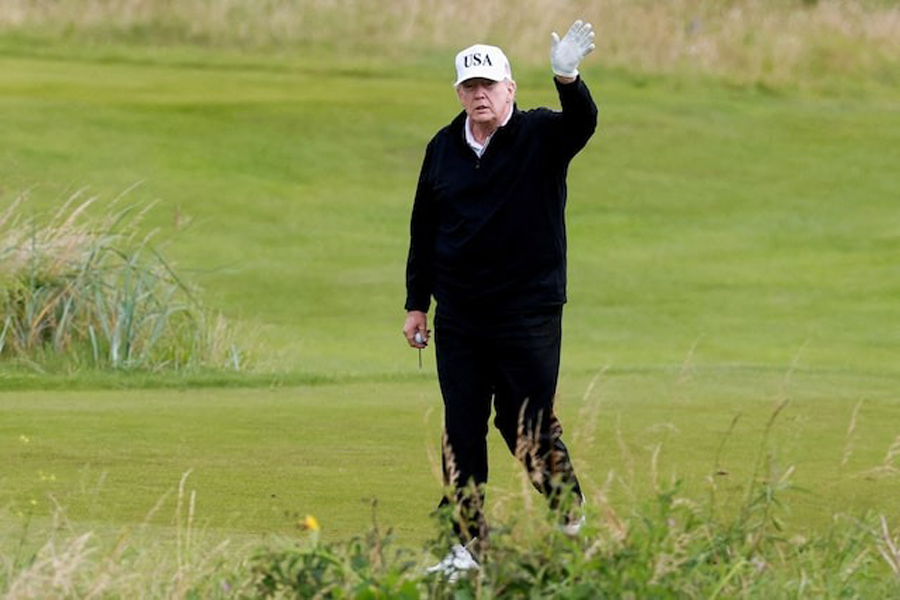
US President Donald Trump waves on the golf course at Trump Turnberry resort in Turnberry, Scotland, Britain, July 26, 2025. Photo : REUTERS/Phil Noble/Files

European Commission President Ursula von der Leyen is set to meet US President Donald Trump on Sunday to clinch a trade deal for Europe that would likely see a 15 per cent baseline tariff on most EU goods, but end months of uncertainty for EU companies.

Before the meeting, expected at 1530 GMT on Trump's golf course in Turnberry, western Scotland, US and EU teams were in final talks on tariffs for crucial sectors like cars, steel, aluminium or pharmaceuticals.

US Trade Representative Jamieson Greer and Commerce Secretary Howard Lutnick flew to Scotland on Saturday and EU Trade Commissioner Maros Sefcovic arrived on Sunday morning.

"We're cautiously optimistic that there will be a deal reached," said a Trump administration official, who spoke on condition of anonymity. "But it's not over till it's over."

Ambassadors of EU governments, on a weekend trip to Greenland organised by the Danish presidency of the EU, held a teleconference with EU Commission officials on Sunday to agree on the amount of leeway von der Leyen would have in the talks.

In case there is no deal and the US imposes 30 per cent tariffs from August 1, the EU has prepared counter-tariffs on 93 billion euros ($109 billion) of US goods.

EU diplomats have said a deal would likely include a broad 15 per cent tariff on EU goods imported into the US, mirroring the US-Japan trade deal, along with a 50 per cent tariff on European steel and aluminium for which there could be export quotas.

The EU deal would be a huge prize, given that the US and EU are each other's largest trading partners by far and account for a third of global trade.

EU officials are hopeful that a 15 per cent baseline tariff would also apply to cars, replacing the current 27.5 per cent auto tariff.

POSSIBLE EXEMPTIONS

Some expect the 27-nation bloc may be able to secure exemptions from the 15 per cent baseline tariff for its aerospace industry and for spirits, though probably not for wine.

The EU could also pledge to buy more liquefied natural gas from the US, a long-standing offer, and boost investment in the United States.

Trump told reporters there was "not a lot" of wiggle room on the 50 per cent tariffs that the US has on steel and aluminium imports, adding, "because if I do it for one, I have to do it for all."

The US president, in Scotland for a few days of golfing and bilateral meetings, told reporters upon his arrival on Friday evening that von der Leyen was a highly respected leader and he was looking forward to meeting with her.

He said there was a 50-50 chance that the two sides could reach a framework trade pact, adding that Brussels wanted to "make a deal very badly".

The EU now faces US tariffs on more than 70 per cent of its exports, with 50 per cent on steel and aluminium, an extra 25 per cent on cars and car parts on top of the existing 2.5 per cent and a 10 per cent levy on most other EU goods. Trump has said that without a deal, he would hike the rate to 30 per cent on August 1, a level EU officials said would wipe out whole chunks of transatlantic commerce.

Further tariffs on copper and pharmaceuticals are looming. The uncertainty and higher tariffs have already hit profits of EU companies in several sectors.

A 15 per cent tariff on most EU goods would remove uncertainty but would be seen by many in Europe as a poor outcome compared to the initial European ambition of a zero-for-zero tariff deal on all industrial goods.

Seeking to learn from Japan, which secured a 15 per cent baseline tariff with the US in a deal earlier this week, EU negotiators spoke to their Japanese counterparts in preparation for Sunday's meeting.

For Trump, aiming to reorder the global economy and reduce decades-old US trade deficits, a deal with the EU would be the biggest trade agreement, surpassing the $550 billion deal with Japan.

So far, he has reeled in agreements with Britain, Japan, Indonesia and Vietnam, although his administration has failed to deliver on a promise of "90 deals in 90 days."​
 

Trump’s 'trade tsunami' unsettles geopolitics

REUTERS
Published :
Aug 08, 2025 11:46
Updated :
Aug 08, 2025 11:46

1754700639038.webp

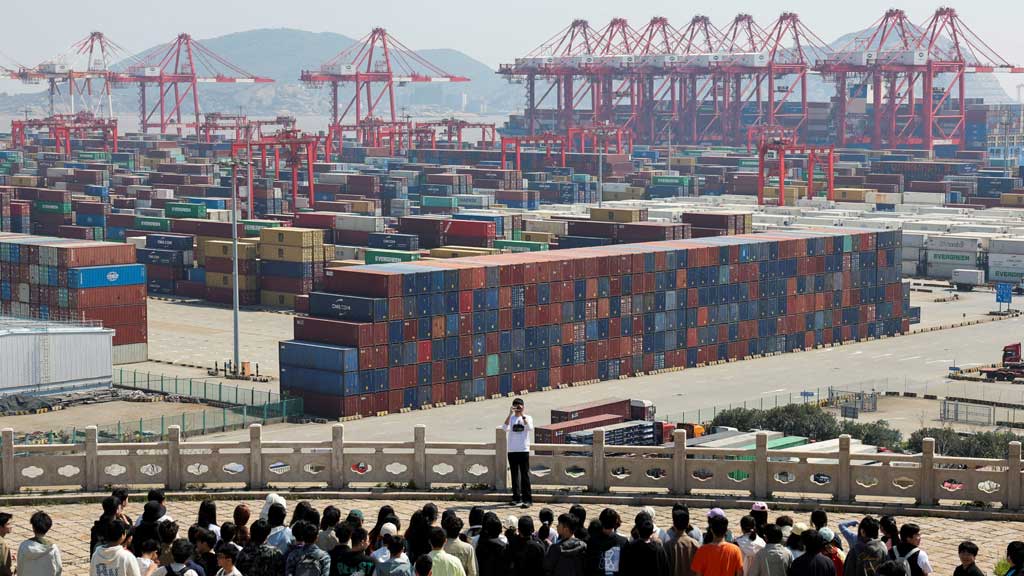
FILE PHOTO: Visitors pose for photos at a lookout in Yangshan Port outside of Shanghai, China, Apr 15, 2025. REUTERS/Go Nakamura /File Photo

Visiting Beijing at the height of US President Donald Trump's "Liberation Day” trade war rhetoric this April, Kenyan President William Ruto described a “broken ... global order". He declared that Kenya would work with China to build a "fair, inclusive and sustainable ... world order".

Even at the time, it looked like a particularly brazen example of a developing nation that traded heavily on its ties with the US, and had become the only declared “major non-NATO ally” of Washington on the African continent in 2024 largely as a result of its declared support for Ukraine.

Now, Kenya faces a review in the US Senate of whether it deserves to retain that position given its ties with Iran and China in particular.

And with Kenyan newspapers reporting an imminent trade deal with Beijing with zero apparent trade barriers, just as Trump imposes 10% tariffs on Kenya, Ruto implied there was now little choice which side to pick.

"I have a bit of a problem with some of our friends," Ruto told an investment event in Nairobi this week, citing worries about the closer relations with Beijing. "But it's what I must do for Kenya ..."

Trump’s administration sees its embrace of tariffs as key to its approach to the wider world, including matters of war and peace including Russia and Ukraine, China and Taiwan as well as efforts to stem cross-border drug flows from Mexico and Canada.

For multiple nations in the so-called “Global South”, what Indian newspapers have called a “trade tsunami” have come as a dramatic shock to countries that have long been used to walking an awkward path between various foreign power blocs.

In some cases, as with Kenya, that may simply have accelerated shifts already underway. In others, such as India, the world's most populous democracy and fifth largest economy, it risks reversing decades of gradually built improvements in relations with successive US administrations.


It is a dynamic that reached a particular height this month, with Trump's administration unveiling its latest tariffs on every nation in the world, just as Trump threatened to impose further trade costs on Russia’s trading partners – particularly India and China – if there was no ceasefire in Ukraine soon.

The 10% US import tax imposed on Kenyan goods is in fact one of the lower rates – Brazil and India may grapple with tariffs up to 10 times that, with dozens of other nations facing levels somewhere in between and in multiple cases explicitly linked to specific political objectives.

DIPLOMACY BEYOND TRADE

As well as US envoy Steve Witkoff visiting Moscow, this month has seen Treasury Secretary Scott Bessent and Trade Representative Jamieson Greer sitting down with Chinese counterparts for discussions that already appear to be moving beyond a potential trade deal to much wider US-China issues.

The knock-on effects of that are still being digested in Taiwan, where the United States, in seeking to soothe relations with Beijing ahead of a potential meeting between Trump and Chinese President Xi Jinping later in the year, appear to have snubbed Taiwanese leaders.

According to multiple reports, that included cancelling a planned Washington visit for Taiwanese Defence Minister Wellington Koo as well as denying the island’s President Lai Ching-te permission to land and refuel in New York on a now-cancelled visit to Central America.

Taiwan is well used to the shifting tides of US support, and is not unused to taking second place to Washington’s overtures to Beijing – not just on trade but many broader issues. However, multiple other nations appear to have been genuinely shocked by the way they have been targeted by Trump.

GENUINE OUTRAGE?

India’s foreign ministry described as "unjustified and unreasonable" comments from Trump describing Indian oil purchases as “fuelling the Russian war machine" in Ukraine.

It described the purchases as "necessary measures to safeguard ... national interests and economic security” and criticised both the United States and European nations for continuing some of their own trade with Russia.

Some Indian newspapers were considerably blunter, describing the US position as hypocrisy.

The reality is a touch more complicated – although it is true that neither the US nor European nations have gone as far as they might have in seizing Russian assets or blocking Russian trade themselves, a point repeatedly made by Ukraine itself.

On multiple occasions, Trump has described trade tariffs as one of his preferred tactics to end armed conflict and minimise further bloodshed.

And when it comes to both ending fighting in Ukraine as well as years of unrest in the Democratic Republic of the Congo in Central Africa, he has also explicitly pursued linked mineral deals critics say may benefit the US before the host nations.

For countries that need to shape their own long-term policies to the US and other major powers, however, the second-order effects of these developments can be hard to approach clearly – and matters get even worse when they are wrapped in the president’s own more personal ambitions.

Within India, for example, there remains widespread disquiet that the US was seen as siding much more with Pakistan – normally regarded as a clear ally of China – during its recent clash with India, with the government in Islamabad requesting US help to manage escalation.

Pakistan’s nomination of Trump shortly afterward for a Nobel Peace Prize may have won it friends in Washington – with a growing list of other nations making similar suggestions.

The fact that one of those nominations comes from Israeli Prime Minister Benjamin Netanyahu, though, who has presided over a devastating war in Gaza deeply unpopular across much of the wider world, has done little to reduce already rising talk of Western and particularly US double standards.

Some other dynamics already look relatively steady.

The Trump administration is unlikely to fix relations with Brazil under its current government, given its anger at the treatment of former right-wing president Jair Bolsonaro, under house arrest in a move that has prompted US sanctions.

Meanwhile, Trump’s relations with Gulf Arab states seem relatively secure for now given common business interests.

But other dynamics remain wildly unpredictable, including with Israel over future developments in Gaza.

In a sign of just how fast-shifting the world has now become, Myanmar’s military strongman – one of the world's most isolated leaders, albeit supported by Moscow and Beijing – responded to Trump’s letter imposing 40% tariffs on goods from his country with a fawning letter describing his “sincere appreciation” – an apparent precursor to potential talks with Washington over rare earth minerals.

CHINA AND RUSSIA CHOICES

Much of this tariff-related turmoil, so far at least, has been to the benefit of both Moscow and Beijing, creating ready divisions and frustration for them to exploit with trade deals and sometimes propaganda.

Whether that can remain the case for the remainder of the year, though, is a very different question – particularly as both are now the focus of what the US sees as arguably its most important negotiations, balancing trade and geopolitics.

If the Kremlin is genuinely not willing to move towards a ceasefire in Ukraine – and few for now believe it is – then it is incredibly difficult to predict the effect of US sanctions, both on Russia itself but even more on India and China.

In the short term, Trump's tariff blitz might well move those nations all closer to each other, helping cement the sort of Russian-Chinese leadership of the BRICS group of emerging economies that both Moscow and Beijing have long hoped they might achieve.

Without a doubt, China has made it clear it does not want to see the Kremlin lose badly in Ukraine. Particularly likely, Beijing fears an outcome in which President Vladimir Putin’s rule collapses, at worst raising speculation of a similar fate for Xi. But the more this is tied to wider trade and other issues with the US and beyond, the more complex that calculus.

Even more importantly, Beijing must also make its own decision on what deal it wants to strike if any – and again, how that affects its other strategic priorities particularly Taiwan.

If an agreement can be reached, the Trump administration is giving the impression that it might pull back on support to the Taipei government, perhaps including weapons sales.

Simultaneously, both Moscow and Beijing will be looking at the US Pentagon strategic posture review due to be published in the autumn for direction on worldwide US military deployments. Both will be hoping Washington pulls back forces in the vicinity of their borders – but the rougher relations are when that report is published, the less likely that might be.

And all of that, of course, means the second and third order effects rolling down to other nations become even less predictable. That is unsettling enough even for major US allies, with the European Union, Britain, Japan, South Korea and other major partners moving fast this summer to seal their own deals with Trump before the strategic chessboard moves again.

By the end of the year, more clarity is possible.

Either Trump will have met with Xi as a start to ongoing dialogue, or relations with Beijing will have fractured further – and similarly with Moscow things might well be either notably more hostile or considerably friendlier.

That would at least give the rest of the world something more solid to work with. In the meantime, expect nations caught in the middle to either try to keep their options open – or make a virtue of jumping early to one side or the other.​
 

Latest Posts

Back