[🇧🇩] Pharmaceutical and Chemical Industry in Bangladesh

[🇧🇩] Pharmaceutical and Chemical Industry in Bangladesh
59
4K
More threads by Saif

G Bangladesh Defense

PM urges faster registration of patented drugs

Star Business Report
1780361057479.webp

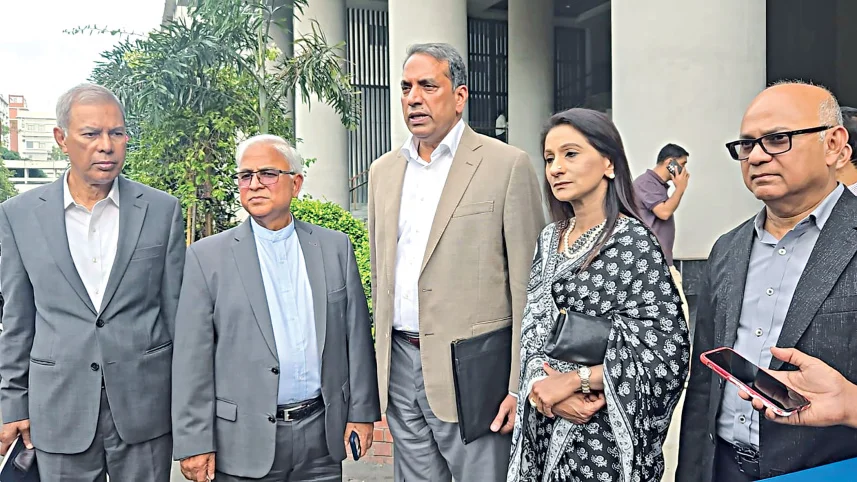
Abdul Muktadir (centre), president of Bangladesh Association of Pharmaceutical Industries, spoke to journalists after a meeting with Prime Minister Tarique Rahman at the Secretariat in Dhaka yesterday. Photo: Star

Prime Minister Tarique Rahman yesterday urged local pharmaceutical manufacturers to speed up the registration of patented medicines so they can be produced domestically.

The prime minister wants these medicines to be made locally rather than imported, making them more affordable and accessible for consumers, said Abdul Muktadir, president of the Bangladesh Association of Pharmaceutical Industries (BAPI), after a meeting with the premier at the Secretariat.

The meeting focused on the future growth of the pharmaceutical sector and the government’s commitments to the industry.

Muktadir, who led a delegation of industry representatives, said the registration of patented medicines had been stalled for the past two years.

Bangladesh is set to graduate from the least developed country (LDC) category later this year. After graduation, the World Trade Organization’s TRIPS waiver for Bangladeshi drugmakers will expire. In the post-LDC era, local pharmaceuticals will have to pay royalties on patented medicines, which may increase the cost of life-saving drugs and place an additional burden on consumers.

Muktadir said the prime minister also urged manufacturers to strengthen the pharmaceutical sector to help it navigate the challenges of LDC graduation.

Bangladesh is scheduled to graduate on November 24 this year unless the United Nations approves a request from the government to defer it by three years until 2029.

According to the BAPI president, the premier listened carefully to the industry’s concerns and reaffirmed full government support to help the sector expand and supply quality medicines both at home and abroad.

He said the prime minister has pledged continued policy support, describing the sector as a highly promising export industry not only for medicines but also for vaccines, active pharmaceutical ingredients and biological products.

“We are expecting good days ahead for the medicine sector,” Muktadir added.

He said the government would also help remove barriers to medicine exports. “The prime minister assured that the government will extend full support to struggling production units so they can perform well and contribute to quality medicine for both local markets and exports, as Bangladesh now supplies drugs to 140 countries after meeting domestic demand.”

Square Pharmaceuticals Ltd Managing Director Tapan Chowdhury said patented medicines could become more expensive in the domestic market once manufacturers are required to pay royalties after the TRIPS waiver expires.

He added that the premier advised drugmakers to complete the registration of new medicines more quickly, as the process usually takes a long time.

Simeen Rahman, CEO of Transcom Group, M Mosaddek Hossain, senior vice-president of BAPI, and Muhammad Halimuzzaman, secretary-general of the organisation, were also present at the meeting.​
 

Govt to withdraw import duty on 51 active pharmaceutical ingredients

Refayet Ullah Mirdha

1781234388471.webp


The government has proposed the complete withdrawal of import duty on 51 new raw materials used in the manufacture of active pharmaceutical ingredients (APIs) to make medicines more affordable for consumers in the domestic market.

Moreover, to make the domestic pharmaceutical industry more capable and self-reliant in producing affordable and economically viable anti-cancer medicines locally, the government has proposed amending the existing notification on concessional customs duty facilities by adding nine more raw materials for import.

The import duty and VAT on these materials will be reduced to zero, the finance minister said in his budget proposal.

To sustain the growth of Bangladesh's pharmaceutical exports in the international market, he also proposed including 17 additional basic raw materials in the existing notification on concessional facilities and reducing the import duty on these materials to zero percent.

The government has been facilitating the pharmaceutical sector because local drug manufacturers will have to pay royalties to foreign companies for patent rights after the country's graduation from the group of least developed countries (LDCs) to a developing nation, which is scheduled for November this year.

There is a possibility that medicine prices in the domestic market will increase if manufacturers have to pay for patent rights to produce medicines.

Therefore, the government has been encouraging manufacturers to invest more in APIs so that they do not have to pay for patent rights acquired from foreign companies.

Bangladesh is scheduled to graduate from the LDC group to a developing nation this November, unless the transition period is extended.

The country will also lose the benefits it currently enjoys under the Trade-Related Aspects of Intellectual Property Rights (TRIPS) framework.

The government will also maintain and strengthen policy support for the API (Active Pharmaceutical Ingredient) industry in the areas of infrastructure, research and investment.

In the context of graduation from LDC status, the continued development of the pharmaceutical industry, enhancement of its innovation capacity, and strengthening of its position in the global market should be supported through necessary financial incentives and favourable policy measures.

A sustainable and modern global medicine and vaccine supply network should be established so that essential medicines and vaccines can be delivered to remote areas in a timely manner.​
 

Beximco Pharma's delayed reports show record annual earnings

FE REPORT

Published :
Jun 24, 2026 09:33
Updated :
Jun 24, 2026 09:33

1782275497756.webp


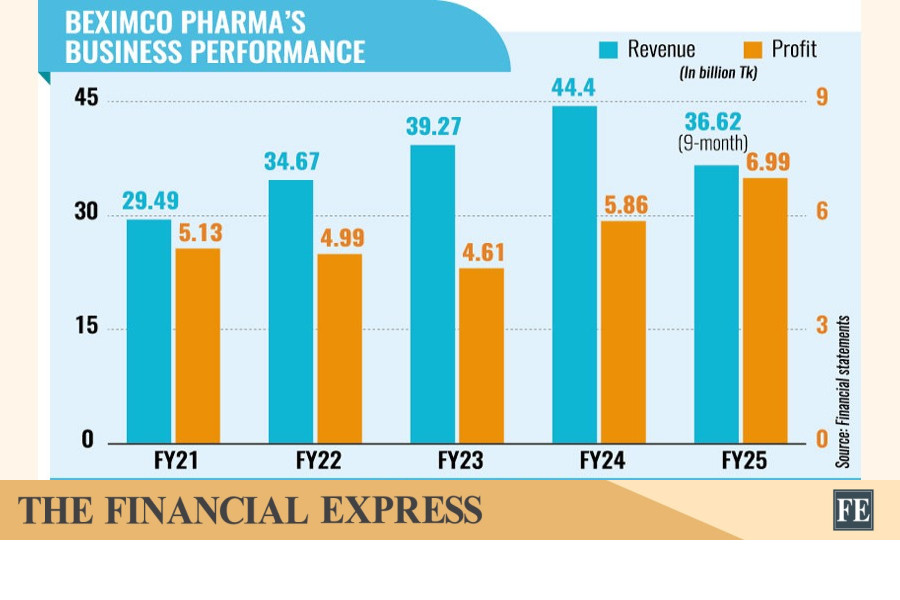
Despite significant challenges, Beximco Pharmaceuticals posted a profit of Tk 6.99 billion in FY25, the highest annual earnings since its stock market listing, driven by strong sales growth.

In a significant development, the drug maker approved its overdue quarterly financial statements and the audited annual financial statement for FY25 at a special board meeting on Tuesday.

The drug manufacturer's consolidated earnings per share (EPS) rose about 20 per cent year-on-year to Tk 15.56 in FY25. Its stand-alone profit also surged around 20 per cent year-on-year to Tk 6.71 billion, also the highest annual profit.

Riding on the record earnings, the board of directors declared a 47.5 percent cash dividend for FY25, also the highest cash payout in the company's history.

The company is yet to disclose the detailed financial statements for FY25.

However, its nine-month sales jumped 11 per cent year-on-year to Tk 36.62 billion through March 2025.

Nine-month financial performance

The board of directors published nine-month financial reports on Tuesday. The company's profit in July-March of FY26 jumped 33 per cent year-on-year to Tk 7 billion, surpassing its previous year's annual profit.

Its sales also climbed 13 per cent year-on-year to Tk 41.43 billion during the period.

After the completion of the fiscal year in June 2025, Beximco Pharma failed to publish its annual financial statements within the stipulated time amid a prolonged regulatory and legal impasse, leaving investors without updated financial information for months. It also failed to publish quarterly reports for the same reasons.

The delay had raised concerns among investors, including foreigners, some of whom approached the Bangladesh Securities and Exchange Commission (BSEC) seeking regulatory intervention.

Beximco Pharma was also at risk of being delisted from the London Stock Exchange (LSE) where the company issued Global Depository Receipts (GDRs) on the Alternative Investment Market (AIM).

Subsequently, the market regulator permitted the company to hold a board meeting to approve the pending financial statements and stave off delisting from the LSE.

Market analysts said the approval of the overdue accounts removes uncertainties surrounding the company and is expected to improve investor confidence.

Beximco Pharma has experienced a surge in the demand for its products in recent years, both in domestic and export markets.

The latest financial results reinforce Beximco Pharma's position as one of the country's leading pharmaceutical manufacturers and among the most profitable companies listed on the stock exchanges.​
 

Big duty cuts to power up API supply chain: pharma leaders

Jagaran Chakma

1782346243305.webp


Bangladesh's pharmaceutical manufacturers are hoping for a more stable supply of active pharmaceutical ingredients (APIs) and improved production efficiency under the proposed budget for fiscal year 2026-27, which expands duty-free access to a wide range of raw materials used in medicine production.

Industry leaders say the inclusion of 77 raw materials under new or expanded duty concessions -- 51 for API production, nine for cancer drug manufacturing, and 17 to support pharmaceutical exports -- will help reduce procurement uncertainties, support the production of new molecules and strengthen local manufacturing capacity.

Presenting the budget proposals on June 11, Finance Minister Amir Khosru Mahmud Chowdhury said the incentives are designed to support local API production, lower dependence on imported finished products and enhance the competitiveness of Bangladesh's pharmaceutical sector.

To further support medicine production in high-cost therapeutic segments, the minister proposed adding nine new raw materials used in cancer drug manufacturing to the existing concessionary facility, with import duty and VAT on these items reduced to zero.

Another 17 pharmaceutical raw materials have also been added to the existing concessionary list under the proposals, with import duty on these items reduced to zero, specifically to sustain the country's pharmaceutical export growth in international markets.

Industry insiders say the measure will help companies maintain uninterrupted production and improve overall cost management.

The budget further proposes reducing the existing 25 percent import duty on Biological Safety Cabinets to 1 percent, and the duty on Sandwich Panel Rooms from the existing 5 percent to 1 percent -- both critical components of modern pharmaceutical manufacturing facilities.

Zahangir Alam, chief financial officer of Square Pharmaceuticals, said the inclusion of additional APIs and raw materials under duty exemptions would help manufacturers secure a more reliable supply chain for newly introduced molecules.

"Many new molecules are not specifically covered under the existing duty structure, which creates complications for manufacturers. Updating the list and extending duty benefits is a positive move," he said.

According to Alam, the measures will help pharmaceutical companies maintain a stable supply of inputs, reduce procurement uncertainties and improve cost efficiency across production operations.

He noted that Bangladesh's healthcare sector has expanded significantly over the years, increasing demand for a wider range of medicines and therapeutic products. Ensuring timely access to raw materials, he said, has become increasingly important for sustaining growth.

Alam also highlighted the industry's export potential, saying that reducing production costs through duty support could help Bangladeshi manufacturers compete more effectively in international markets.

However, he noted that regulatory requirements and market-entry costs continue to pose challenges for exporters.

"Export growth requires long-term investment. Additional policy support could help the industry expand its global footprint more rapidly," he added.

According to him, the duty benefits are expected to improve the availability of medicines for patients suffering from chronic illnesses, particularly cancer and kidney diseases.

Abdul Muktadir, chairman and managing director of Incepta Pharmaceuticals Ltd and president of the Bangladesh Association of Pharmaceutical Industries (BAPI), said the inclusion of additional raw materials reflects the industry's evolving manufacturing needs.

"Whenever a company starts producing a new API, it informs the authorities and the required raw materials are added to the duty-free list," he said.

According to him, the addition of 51 API raw materials and 17 other essential inputs will support manufacturers as they continue to develop new medicines and expand local production.

Md Abu Zafor Sadek, pharmacist and deputy general manager of UniMed UniHealth Pharmaceuticals, said the duty relief measures would help ease pressure from rising input costs and strengthen the availability of medicines used to treat cancer and other chronic diseases.

"These measures will help ease some cost pressures, but medicine prices are influenced by a range of factors beyond raw material costs," Sadek said.

However, he said, despite these positive steps, a significant reduction in the prices of medicines in general may remain challenging in the short term.​
 

Latest Posts

Back