Bangladesh Defense
Saif
Senior Member
- Jan 24, 2024
- 21,545
- 9,754
- Nation

- Residence
- Axis Group

Govt yet to take steps to improve media freedom: BoB talks
Staff Correspondent . Dhaka 05 October, 2026, 00:41

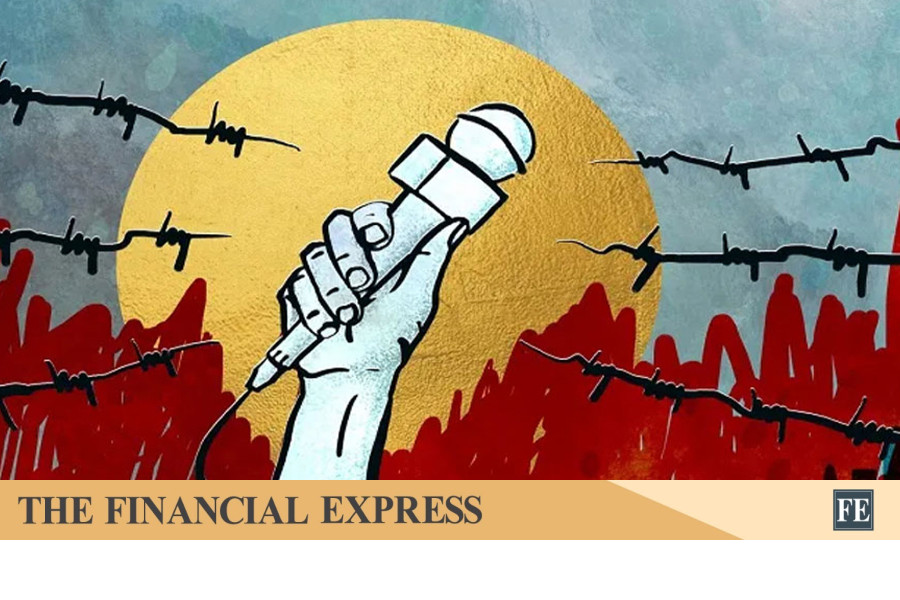
Representational image.
People in Bangladesh have repeatedly taken to the streets demanding freedom of expression and press freedom, but those rights have remained elusive despite repeated changes of government over the decades, Prothom Alo editor Matiur Rahman has said.
‘The July uprising of 2024 once again created an opportunity, but that opportunity was missed,’ he said while speaking on the second day of the three-day Bay of Bengal Conversation 2026, organised by the Centre for Governance Studies at Sonargaon Hotel in Dhaka on Sunday.
Speaking at a session titled ‘Journalism after the Turning Point’, Matiur said the incumbent government had an opportunity to improve media freedom as it had the recommendations of the media reform commission before it, but the Bangladesh Nationalist Party-led government had yet to take any such initiative.
At a separate session titled ‘Do We Know How to Govern?’, The Daily Star editor Mahfuz Anam said Bangladesh had repeatedly succeeded in removing authoritarian governments but had failed to build strong democratic institutions.
‘We have an almost enviable capacity to overthrow authoritarian rule. However, just as we are good at overthrowing authoritarianism, unfortunately, we are equally poor at building democratic institutions,’ he said.
He said the country also had ‘an almost limitless capacity to fail to build democratic institutions’ after overthrowing authoritarian rule, identifying excessive politicisation of institutions as the main reason.
Mahfuz Anam said when a political party won an election, its victory was initially seen as an expression of the people’s will, but the public mandate soon became tied to party interests rather than the public interest.
He identified corruption, politicisation, nepotism and favouritism as consequences of such a system and questioned whether governments were governing people in the way they deserved.
Earlier, speakers at a session titled ‘Beyond the Safety Net’ called for a review of Bangladesh’s social safety-net programmes.
They stressed coordinated management to avoid duplication and urged greater focus on income-generating support.
They also warned that unequal access to technology could create another form of inequality in the long term.
Former Malaysian minister Zuraida Kamaruddin said subsidised housing for the urban poor had significantly benefited low-income people in Malaysia.
Maldives education ministry director general Mariyam Nasir said health insurance, free education up to the first degree and support for single mothers had benefited people in her country.
UNDP Bangladesh assistant resident representative Anowarul Haq moderated the session, which was also addressed by Bangladesh prime minister’s political adviser Zahir Uddin Swapon and ILO Bangladesh country director Max Tuñón.
At a separate session titled ‘Diplomatic Lens’, British High Commissioner to Bangladesh Sarah Cooke said the UK was working closely with Bangladesh and continued to press for a solution to the Rohingya crisis.
Staff Correspondent . Dhaka 05 October, 2026, 00:41
Representational image.
People in Bangladesh have repeatedly taken to the streets demanding freedom of expression and press freedom, but those rights have remained elusive despite repeated changes of government over the decades, Prothom Alo editor Matiur Rahman has said.
‘The July uprising of 2024 once again created an opportunity, but that opportunity was missed,’ he said while speaking on the second day of the three-day Bay of Bengal Conversation 2026, organised by the Centre for Governance Studies at Sonargaon Hotel in Dhaka on Sunday.
Speaking at a session titled ‘Journalism after the Turning Point’, Matiur said the incumbent government had an opportunity to improve media freedom as it had the recommendations of the media reform commission before it, but the Bangladesh Nationalist Party-led government had yet to take any such initiative.
At a separate session titled ‘Do We Know How to Govern?’, The Daily Star editor Mahfuz Anam said Bangladesh had repeatedly succeeded in removing authoritarian governments but had failed to build strong democratic institutions.
‘We have an almost enviable capacity to overthrow authoritarian rule. However, just as we are good at overthrowing authoritarianism, unfortunately, we are equally poor at building democratic institutions,’ he said.
He said the country also had ‘an almost limitless capacity to fail to build democratic institutions’ after overthrowing authoritarian rule, identifying excessive politicisation of institutions as the main reason.
Mahfuz Anam said when a political party won an election, its victory was initially seen as an expression of the people’s will, but the public mandate soon became tied to party interests rather than the public interest.
He identified corruption, politicisation, nepotism and favouritism as consequences of such a system and questioned whether governments were governing people in the way they deserved.
Earlier, speakers at a session titled ‘Beyond the Safety Net’ called for a review of Bangladesh’s social safety-net programmes.
They stressed coordinated management to avoid duplication and urged greater focus on income-generating support.
They also warned that unequal access to technology could create another form of inequality in the long term.
Former Malaysian minister Zuraida Kamaruddin said subsidised housing for the urban poor had significantly benefited low-income people in Malaysia.
Maldives education ministry director general Mariyam Nasir said health insurance, free education up to the first degree and support for single mothers had benefited people in her country.
UNDP Bangladesh assistant resident representative Anowarul Haq moderated the session, which was also addressed by Bangladesh prime minister’s political adviser Zahir Uddin Swapon and ILO Bangladesh country director Max Tuñón.
At a separate session titled ‘Diplomatic Lens’, British High Commissioner to Bangladesh Sarah Cooke said the UK was working closely with Bangladesh and continued to press for a solution to the Rohingya crisis.