[🇧🇩] Indo-Bangla Relation: India's Regional Ambition, Geopolitical Reality, and Strategic Options For Bangladesh

[🇧🇩] Indo-Bangla Relation: India's Regional Ambition, Geopolitical Reality, and Strategic Options For Bangladesh
717
37K
More threads by Saif

G Bangladesh Defense

Not allowing Hasina to land would have created a different situation: Dinesh Trivedi

Diplomatic Correspondent
Dhaka
Updated: 03 Oct 2026, 21: 58
1791068578216.webp

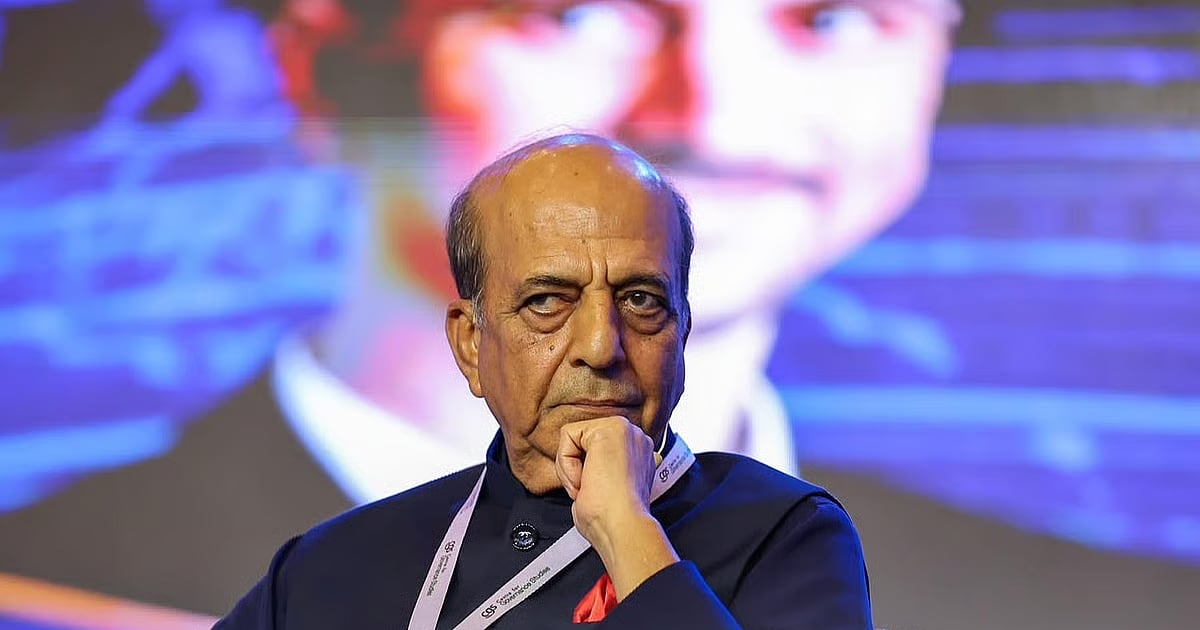
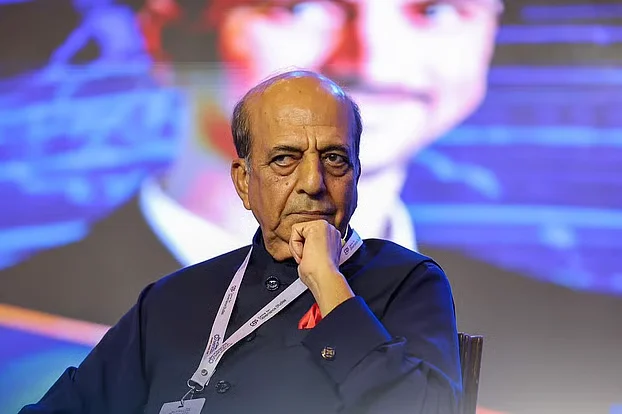
Indian High Commissioner to Bangladesh Dinesh Trivedi at a session of the Bay of Bengal Conversation 2026 at a hotel in Dhaka on 3 October 2026. Prothom Alo

Indian High Commissioner to Bangladesh Dinesh Trivedi has said, “There was no alternative but to allow former Bangladesh prime minister Sheikh Hasina to land in Delhi. If we had not allowed her to land, a completely different situation would have arisen.”

He made the remarks during a question-and-answer session at a working session of the Bay of Bengal Conversation 2026 at a Dhaka hotel on Saturday afternoon. The three-day international conference is being organised by research institute Centre for Governance Studies (CGS).

In response to a question from the audience, when India would extradite Bangladesh’s ousted prime minister Sheikh Hasina, Dinesh Trivedi said, “Hasina ji was not brought by the IAF (Indian Air Force) or the Indian Army. She came because of the tragic events in Bangladesh at that time. Such an incident should not have happened, in which innocent people lost their lives. We hope and pray that such incidents never happen again, where innocent people lose their lives, no matter where in the world they occur.”

Mentioning that “She was taken to India on a Bangladeshi military aircraft”, Dinesh Trivedi further said, “When she (Sheikh Hasina) left Dhaka, she was the prime minister of Bangladesh, and India was not prepared for this situation. If we had not allowed her to land, a completely different situation would have arisen.”

The Indian High Commissioner said, “When the military aircraft arrived in India, India was not prepared. I was watching television, and a scroll at the bottom of the screen was saying that she was going to another country. Hasina ji was still the prime minister of Bangladesh. As a neighbouring country, we had very few options other than accepting the reality.”

“Because sometimes situations take a turn for which you are not prepared in advance. What choice did we have? If we had said, ‘No, we will not allow you to land’, I do not know what the situation would have been. So, that is the historical reason for it,” he added.

Regarding the extradition of Sheikh Hasina, Dinesh Trivedi further said that the Indian government had repeatedly answered the question through its Ministry of External Affairs spokesperson, saying that there is a process for that. The process involves legal matters and is based on a specific framework. Therefore, the relevant legal process is currently underway. As the courts are involved, no one can give a specific timeline for the matter.

Expressing the expectation that Bangladesh would respect that legal process, the Indian High Commissioner said, “Just as Bangladesh is a vibrant democracy, India is also a living democracy. You will respect the legal system, and that legal process is currently underway.”

The Indian High Commissioner said, “I think there was a question about friendship with India. We have extremely good relations between the two countries. We have arrangements for cooperation at various levels. Personally, I cannot imagine a situation in which things would turn into hostility overnight. What we should do is maintain engagement as equal friends in favour of our national interests.”

In response to the moderator’s question about what’s India’s views on whether Bangladesh should change its policy towards relations between the two countries, Dinesh Trivedi said, “The relationship between Bangladesh and India is very deep-rooted, and it is difficult for other countries to understand. Our relationship is based on very strong social and societal foundations.”

“Bangladesh is an independent and democratic country, so it has every right to make decisions in the interests of its people. No country should advise Bangladesh on what it should do. In India’s case, our bilateral relationship with Bangladesh does not depend on what kind of relations Bangladesh has with other countries. As good neighbours, the key is to maintain mutual respect and dignity,” he added.

The Indian High Commissioner said that, just as there can be minor disagreements or problems within a family, it is natural for two countries in a democratic system to have issues or differences. These differences can only be resolved through dialogue, conferences and mutual trust.

Problems in a relationship cannot be resolved from a distance. He expressed the hope that, given the love and warmth between the people of the two countries, the progress in their relationship would continue.​
 

Passing clouds, storms cannot erase sunshine of Dhaka-Delhi ties: MJ Akbar

Conflicts of the 21st century a new form of 'worldwide war', he says

UNB, Dhaka

1791158411856.webp

Photo: Courtesy

Former Indian Minister of State for External Affairs MJ Akbar today said temporary “clouds or storms” cannot erase the long-standing ties between Bangladesh and India, describing the two countries as civilisational states with deep historical and cultural links.

“I never think that passing clouds or passing storms can ever remove the sunshine of Indo-Bangladesh ties,” he said while addressing the Bay of Bengal Conversation 2026 in Dhaka. Prime Minister Tarique Rahman inaugurated the three-day Bay of Bengal Conversation 2026 on Saturday.

MJ Akbar said there would be ups and downs in the relationship between the two countries, but the issues between them should be approached by looking beyond what is considered immediately possible.

“I urge that the questions -- that are addressed by the two sides-- we always think of or look at it from what is possible. Change the pivot from what is possible to why is it impossible? And suddenly, many, many more avenues will open up,” he said.

Akbar, an author of several internationally acclaimed books, said both Bangladesh and India are civilisational states and Bangladesh’s identity is deeply rooted in language and culture. “It is based on language, the power of language,” he said.

He explored the potential for BRICS to help chart a path towards peace through political and diplomatic engagement.

Akbar also congratulated Bangladesh on the election of its Foreign Minister Dr Khalilur Rahman as President of the United Nations General Assembly.

“This is a recognition of Bangladesh's credibility on the international stage and, in my view, a very long overdue recognition of the credibility,” said the veteran politician.

However, Akbar said the UN is facing the biggest challenge in its history, with the future of the institution depending on how the international community responds to growing threats to sovereignty.

He said the UN was built around the principles of sovereign equality, territorial integrity and political independence, which became the foundation of global stability after the World War II.

Akbar warned that wars are increasingly being initiated or imposed without formal declarations of war, saying failure to respect sovereignty could lead to “a period of intensifying chaos.”

He described the conflicts of the 21st century as a new form of “worldwide war”, arguing that they are not necessarily one continuous global conflict but a series of conflicts that continue or recur across different regions.

Akbar said many of the current conflicts are also linked to competition for control of strategic waterways, including the Mediterranean, Black, Red, Caspian and Arabian seas. “What we are witnessing is actually wars for the control of the seas,” he said.

He also warned about the consequences of unresolved territorial and strategic disputes, describing many countries as “unfinished states”.

On India’s foreign and security policy, Akbar said national security cannot be purchased or outsourced and must instead be built on internal strength.

He said India is increasingly playing a larger strategic role in the Indian Ocean, pointing to its naval capabilities and engagement in the region.

Akbar also referred to India’s role in BRICS and its relations with China, saying political diplomacy and dialogue are essential to managing geopolitical differences.

He said India and China had based their relationship on the principle of managing differences without allowing them to become conflicts. “The solution lies in a non-solution. Agree to disagree.”

Akbar also stressed that national strength cannot be achieved without eliminating poverty.

He referred to India’s progress in poverty reduction and its welfare programmes, saying eliminating hunger and poverty is fundamental to building national strength.

The Bay of Bengal Conversation is an international strategic dialogue platform hosted annually by the Centre for Governance Studies (CGS) in Dhaka.​
 

Rationalising Indo-Bangla train routes


1791242998959.webp


The revival of the Maitree Express should not simply mean bringing back a train that once connected Dhaka and Kolkata. It should be an opportunity to rethink the route, the economics and, ultimately, the purpose of cross-border rail travel between Bangladesh and India.

The idea of introducing Maitree Express was conceived not just to make available a railway service. Launched in April 2008, on the occasion of the Bengali New Year, it restored a passenger rail link between the two countries that had been severed in 1965 during the India- Pakistan war. Its very name - Maitree, or friendship - captured a larger idea. It shared history, culture and social bond and connectivity is one way of demonstrating that.

For thousands of passengers, however, friendship is not measured in diplomatic declarations. It is measured in ticket prices, journey times, immigration procedures and whether an elderly traveller can reach a hospital in Kolkata without enduring an unnecessarily long journey.

This is why the proposed rationalisation of the Maitree Express route deserves serious attention.

Before its suspension in July 2024, the train travelled from Dhaka through Tangail, the Jamuna Bridge, Ishwardi and Darsana before crossing into India. The approved timetable envisaged a journey of 7 hours 45 minutes from Dhaka to Kolkata and 8 hours 25 minutes in the opposite direction. In practice, congestion on the railway network could stretch the journey to nine or even 10 hours.

That is a considerable burden for a cross-border service whose principal users are Bangladeshi citizens. Railway sources indicate that about 95 per cent of the passengers using the Maitree Express between 2022-23 and 19 July 2024 were from Bangladesh. During that period, nearly 288,360 people travelled on the train, with occupancy generally between 80 and 85 per cent. During Eid and Durga Puja, occupancy exceeded 95 per cent.

Those figures tell a simple story: there is demand.

The question is whether Bangladesh and India are prepared to make the service fit that demand.

The opening of the Padma Bridge railway route has fundamentally changed Bangladesh's rail geography. A route that was once unavoidable is no longer necessarily the most efficient. The Padma Bridge connection has dramatically shortened rail travel between Dhaka and the south-western districts. The journey from Kamlapur to Benapole, which could previously take more than eight hours via the Jamuna Bridge route, has been reduced to around four hours on the new alignment. The Ruposhi Bangla Express is reportedly covering the distance in about three hours and four minutes.

The implication for the Maitree Express is obvious.

Instead of travelling through Jamuna Bridge, Ishwardi and Darsana, the train could potentially use the Padma Bridge-Benapole route and enter India through the existing cross-border connection. If the necessary operational and infrastructural arrangements can be made, the journey from Dhaka to Kolkata could be reduced to roughly six hours - a saving of around three hours.

That would transform the character of the service.

Six hours between the two cities would put the Maitree Express into a different category altogether. It would no longer merely be a cheaper alternative to flying; it could become a genuinely competitive mode of transport for ordinary people, families, tourists, students, business travellers and medical patients.

The environmental argument is also important. Rail travel generally has a lower environmental footprint than air travel, while offering passengers the possibility of carrying substantial luggage. Maitree passengers have been allowed a free accompanied luggage allowance of up to 35kg. For medical travellers and families, that can be a significant advantage.

But time is only one part of the equation. A rationalised route should also produce a more rational fare.

At present, the fare structure includes a charge of $30 for an AC seat and $20 for an AC chair-car seat on the Indian side, with no additional charge. Under the existing agreement governing cross-border passenger train operations, Bangladesh Railway receives 75 per cent of the apportioned earnings from passenger bookings, while Indian Railways receives 25 per cent.

That revenue-sharing arrangement gives Bangladesh a direct economic interest in increasing the train's passenger volume.

A shorter route, lower operating time and potentially lower fares could therefore benefit both passengers and the railways. According to people familiar with the proposal, a Padma Bridge-Benapole route could reduce the fare by around Tk1,000 per ticket.

Such a reduction would matter enormously.

For a middle-class family travelling to Kolkata for medical treatment, shopping or tourism, the difference between a train ticket and an air ticket is already substantial. But the combination of a lower fare and a six-hour journey would make rail travel considerably more attractive. It could also encourage people who currently travel by road to shift to rail.

That is precisely how cross-border rail should be judged: not merely by whether trains run, but by whether the service expands access.

There is another important lesson in Maitree's history. Its success has not depended solely on the physical railway line. The introduction of end-to-end immigration clearance was an important innovation. By reducing the need for lengthy en-route immigration procedures, particularly at Gede and Darsana, the system made international rail travel considerably more convenient.

The next stage should build on that experience.

If the route is shifted to Padma Bridge and Benapole, Bangladesh and India should ensure that immigration and customs arrangements are designed around the needs of passengers rather than the convenience of individual agencies. Border procedures should be fast, predictable and integrated. A six-hour train journey loses much of its advantage if passengers spend several hours waiting for fragmented border formalities.

The infrastructure itself should also be examined carefully. Maitree operated with 10 fully air-conditioned coaches, including four AC First Class coaches, four AC chair-car coaches and two power cars, with a seating capacity of 456 passengers. Three rakes were used to maintain its five-day-a-week frequency, two supplied by Indian Railways and one by Bangladesh Railway.

Any new route should therefore be assessed not simply for its theoretical travel time but for its capacity, signalling, track availability, locomotive requirements, border infrastructure and timetable compatibility. The objective should be a reliable six-hour service, not a six-hour journey on paper that routinely becomes eight or nine hours.

There is also a wider strategic argument.

Bangladesh and India share a border, a river system, a history and a cultural space that long predates the modern political boundary. Passenger rail can give tangible expression to that relationship. It can facilitate tourism, education, medical treatment, family visits and business while reducing pressure on roads and airports.

The suspension of the train since July 2024, prompted by security concerns, has left passengers waiting for its return. Its eventual reopening should not simply restore the old arrangement. The interruption provides an opportunity to correct its structural weaknesses.

The Padma Bridge route offers precisely that opportunity.

Bangladesh and India should conduct a joint technical and commercial assessment of shifting Maitree to the Dhaka-Padma Bridge-Benapole-Kolkata corridor. If the infrastructure permits, the change should be made. If additional investment is required, the two governments should identify it and act on it.

There is little reason for a modern cross-border railway service to follow yesterday's geography when today's infrastructure offers a shorter path.

The Maitree Express was born from the idea of restoring a connection lost in 1965. Its next chapter should be about making that connection faster, cheaper and more accessible.

Friendship between neighbours is ultimately sustained not by slogans but by useful links.

A six-hour Maitree Express could be one of them.​
 

India envoy Trivedi meets Modi over Bangladesh ties, Tarique visit


1791329737665.webp

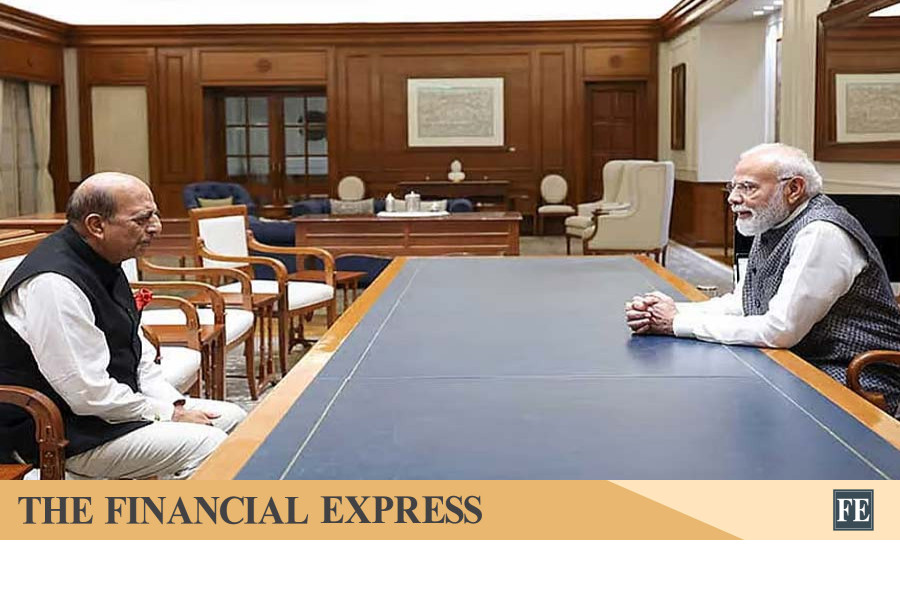
Indian Prime Minister Narendra Modi has met with India’s High Commissioner to Bangladesh Dinesh Trivedi in New Delhi, the BBC reports.

Trivedi travelled to New Delhi from Dhaka on Monday night on an unannounced visit and met Modi around 1:00 pm local time on Tuesday, according to the BBC.

Citing diplomatic sources in New Delhi, the report said Trivedi had travelled to convey Dhaka’s current position on a possible visit by Prime Minister Tarique Rahman to India and bilateral issues.

Neither the Indian High Commission in Dhaka, India’s foreign ministry, nor Modi’s office has officially commented on the visit.

India appointed veteran politician Trivedi as its envoy to Bangladesh after the 2024 mass uprising that brought down the Awami League government, amid strained ties between the neighbours.

After Trivedi took charge, India resumed all categories of visas for Bangladeshis from Jun 28.

Modi also invited Tarique to attend the BRICS summit in New Delhi as part of efforts to thaw bilateral ties, but the visit has yet to materialise.

Trivedi previously travelled directly from Dhaka to New Delhi on Aug 11 for a meeting with Modi after meeting Tarique and Home Minister Salahuddin Ahmed in Dhaka the previous day.

That trip also reportedly carried messages for the highest level of talks.​
 

PM Tarique's possible visit to India
Rebuilding relations in a new political reality


1791414383219.webp


The value of a visit to Delhi by the Bangladesh's prime minister will be measured by what Bangladesh's people gain, rather than the splendour of the official reception. Border security, a fair share of river waters, equitable trade and respect for sovereign decisions must be the true tests of improved relations.

Following the political transition of 2024 and the 2026 election, Prime Minister Tarique Rahman's government has an opportunity to rebuild Bangladesh-India relations. Its stated objective is a "Reset" grounded in mutual interests, sovereign equality and diversified international partnerships. The review of 101 agreements and memoranda signed with India under the previous government is significant in this context. Its proper purpose should be to identify and revise harmful provisions, rather than cancelling agreements indiscriminately.

INVITATION AND INDIA'S STRATEGIC INTERESTS: India's invitation remains open, but no confirmed schedule has yet been fixed. Bangladesh did not attend the BRICS summit in Delhi for understandable reasons. Though the Indian high commissioner's recent statement that there was no haste in the proposed visit to take place, India's persistent urging for the visit of Bangladesh PM has created ground for raising eyebrows by the conscious citizens. Under the circumstances, it has become more relevant to examine the purpose and potential outcomes meticulously before finalising the visit. India's apparent interests, however, are clear. A border of approximately 4,100 kilometres, connectivity with its northeastern states, the Bay of Bengal, land and river transit, energy trade and security make Bangladesh exceptionally important to their strategic planning and objectives.

DIVERSIFIED DIPLOMACY AND INDEPENDENT DECISIONS: Bangladesh's diversified diplomacy is also influencing Delhi's calculations. The prime minister's June visit to China produced commitments to expand trade, infrastructure, diplomatic and defence cooperation. Developing relations with Pakistan and Türkiye do also matter to the regional balance. India's relevant parliamentary committee has expressed concern particularly about China's expanding presence in Bangladesh. Maintaining influence through high-level engagement with Dhaka may therefore be one of Delhi's strategic objectives. India must however recognise that Bangladesh's closer relations with other countries do not necessarily constitute hostility towards lndia. An independent Bangladesh will choose partners according to its own needs. Equally, diversification must not create excessive dependence on another single power.

FAIR WATER SHARING AND BORDER SECURITY: Shared river waters present one of the most urgent tests in the improvement of relation between the two neighbours. The 30-year Ganges Water Sharing Treaty of 1996 expires in December 2026. The Teesta agreement remains unresolved, while most shared rivers lack permanent, effective allocation arrangements. Questions affecting Bangladesh's agriculture, livelihoods and environment cannot be settled through diplomatic assurances alone. Border deaths, allegations of unauthorised crossings and "push-ins", trade barriers and visa difficulties also fuel public resentment. Commitments to cooperation between border forces will matter only when they produce visible improvements in human security. The gap between declarations of friendship and conditions along the border must narrow.

EXTRADITION AS A TEST OF BILATERAL TRUST: Extradition of Sheikh Hasina, a convict meted out a death sentence by The International Crimes Tribunal, is another major obstacle in the way of normalisation of the relations between neighbours. Bangladesh's judicial proceedings against the former prime minister, ousted in a mass uprising, and its demand for her return constitute an important test of bilateral trust. India allegedly patronising subversive activities aimed at disrupting peace and stability in Bangladesh. But it seems to have decided to play a game by sending the case to the court for judicial decision. Bangladesh must as such seek transparent, responsible and timely resolution under the applicable treaty and laws.

REVIEWING AGREEMENTS FOR ECONOMIC FAIRNESS: Economic relations likewise require rigorous assessment. Each agreement must be examined separately in terms of costs and benefits, reciprocity, financial obligations, long-term consequences and provisions for amendment or termination. Identical monetary gains are not the sole measure of fairness; the central questions are whether benefits are equitable and whether Bangladesh retains freedom of taking decision. The 25-year power purchase agreement with Adani is a significant example. A government-appointed review committee has raised serious concerns about pricing and procedural shortcomings. Bangladesh should pursue transparent negotiations to secure reasonable prices and acceptable terms. Where necessary, legal remedies or international arbitration may be considered under the agreement's dispute-resolution provisions, with careful assessment of compensation exposure, costs and electricity-supply risks.

A CLEAR AGENDA BEFORE THE VISIT: A prospective India visit should therefore become a thoroughly prepared diplomatic initiative with a specific agenda. Priorities should include the Ganges treaty's future, a time-bound Teesta roadmap, prevention of border deaths and push-ins, trade and visa difficulties, the review of 101 agreements, electricity pricing, extradition and mutual security concerns.

CONCRETE RESULTS AS THE TEST OF SUCCESS: Success should be assessed through concrete progress in the above mentioned areas. Joint declarations should be accompanied by implementation responsibilities, deadlines and mechanisms for reviewing progress.

FRIENDSHIP WITH DIGNITY BANGLADESH'S WAY FORWARD: Making a visit does not itself amount to surrender, and refusing one is neither the sole proof of independence. Patriotism in diplomacy means preparation, skilled negotiation and demonstrable gains for the national interest. Geography has made Bangladesh and India neighbours; it does not however give either the right to dominate the other. Bangladesh's course should be dignified friendship, equitable cooperation and independent decision-making. Whether India's invitation reflects goodwill, strategy or both, Bangladesh's response must rest on the interests of its people and the sovereign dignity of the state.

Lt Col Mudassir Hussain Khan (retd) Bir Protik is a security analyst.​
 

Dinesh Trivedi meets Narendra Modi in New Delhi, what did they discuss?

Diplomatic Correspondent
Dhaka

1791415672771.webp


Dinesh Trivedi, the country's High Commissioner stationed in Bangladesh, with India's Prime Minister Narendra Modi on Tuesday afternoon in New Delhi. Courtesy: Indian High Commission in Dhaka

Dinesh Trivedi, the Indian High Commissioner stationed in Bangladesh, met with India's Prime Minister Narendra Modi yesterday, Tuesday afternoon, in New Delhi.

Diplomatic sources have said that, in addition to matters concerning the relationship between the two neighbouring countries, there was also a discussion between Narendra Modi and Dinesh Trivedi regarding the current position of Dhaka on the possible visit of Bangladesh's Prime Minister, Tarique Rahman, to India.

Dinesh Trivedi arrived in New Delhi from Dhaka on Monday night and met with Narendra Modi on Tuesday afternoon.

1791415699297.webp


Dinesh Trivedi, the country's High Commissioner stationed in Bangladesh, with India's Prime Minister Narendra Modi. Tuesday afternoon in New Delhi. Photo courtesy: Indian High Commission in Dhaka

Moreover, the country's High Commissioner in Dhaka met with India's Foreign Secretary Vikram Misri.

Dhaka's diplomatic sources have reported that Dinesh Trivedi is expected to return to Dhaka next Thursday.

In August, Dinesh Trivedi went to New Delhi and held a meeting with Narendra Modi.

At that time, he also discussed with the India's Prime Minister about the possible visit of Bangladesh's Prime Minister Tarique Rahman.

However, nothing has been officially communicated by India regarding the discussion this time.

Yesterday, India's High Commissioner Dinesh Trivedi also met with the country's Army Chief, General Dhiraj Seth.

The meeting discussed various aspects of strengthening bilateral cooperation and defence relations between Bangladesh and India.

This information was shared in a post on the verified Facebook page of the Indian Army yesterday.

The meeting emphasised various steps to strengthen bilateral cooperation and defence relations between India and Bangladesh.​
 

Latest Posts

Back