[🇧🇩] Press Freedom in Bangladesh

[🇧🇩] Press Freedom in Bangladesh
83
4K
More threads by Saif

G Bangladesh Defense

Govt yet to take steps to improve media freedom: BoB talks
Staff Correspondent . Dhaka 05 October, 2026, 00:41
1791159297629.webp

Representational image.

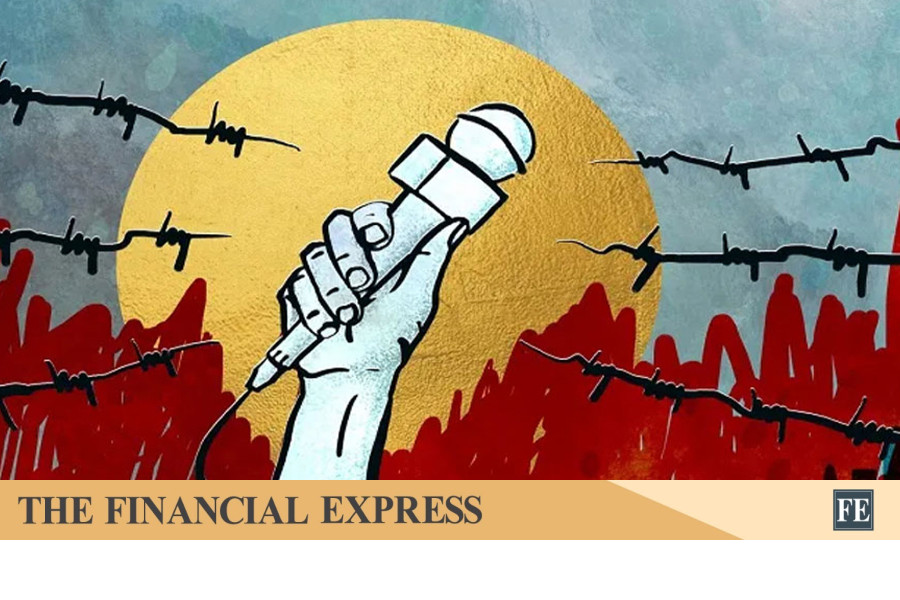
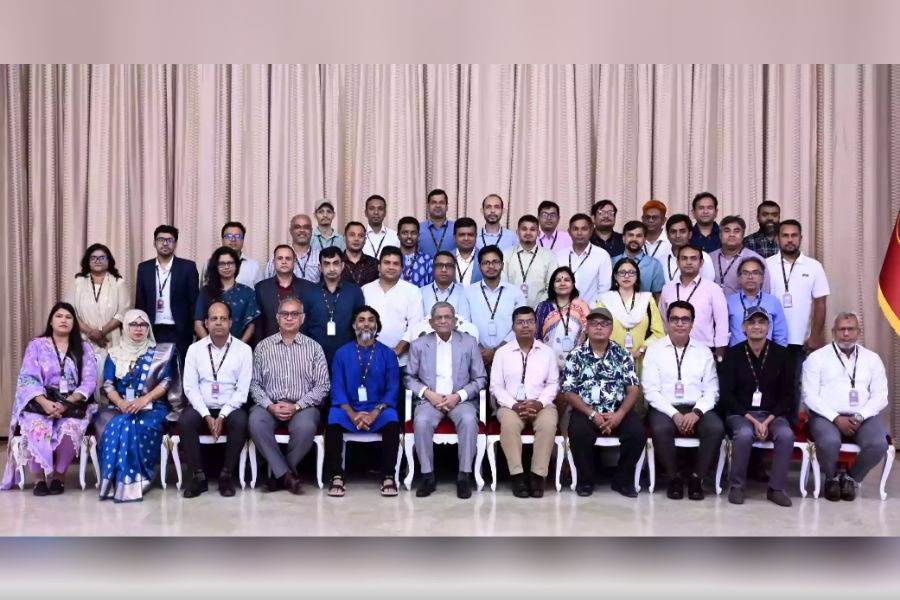
People in Bangladesh have repeatedly taken to the streets demanding freedom of expression and press freedom, but those rights have remained elusive despite repeated changes of government over the decades, Prothom Alo editor Matiur Rahman has said.

‘The July uprising of 2024 once again created an opportunity, but that opportunity was missed,’ he said while speaking on the second day of the three-day Bay of Bengal Conversation 2026, organised by the Centre for Governance Studies at Sonargaon Hotel in Dhaka on Sunday.

Speaking at a session titled ‘Journalism after the Turning Point’, Matiur said the incumbent government had an opportunity to improve media freedom as it had the recommendations of the media reform commission before it, but the Bangladesh Nationalist Party-led government had yet to take any such initiative.

At a separate session titled ‘Do We Know How to Govern?’, The Daily Star editor Mahfuz Anam said Bangladesh had repeatedly succeeded in removing authoritarian governments but had failed to build strong democratic institutions.

‘We have an almost enviable capacity to overthrow authoritarian rule. However, just as we are good at overthrowing authoritarianism, unfortunately, we are equally poor at building democratic institutions,’ he said.

He said the country also had ‘an almost limitless capacity to fail to build democratic institutions’ after overthrowing authoritarian rule, identifying excessive politicisation of institutions as the main reason.

Mahfuz Anam said when a political party won an election, its victory was initially seen as an expression of the people’s will, but the public mandate soon became tied to party interests rather than the public interest.

He identified corruption, politicisation, nepotism and favouritism as consequences of such a system and questioned whether governments were governing people in the way they deserved.

Earlier, speakers at a session titled ‘Beyond the Safety Net’ called for a review of Bangladesh’s social safety-net programmes.

They stressed coordinated management to avoid duplication and urged greater focus on income-generating support.

They also warned that unequal access to technology could create another form of inequality in the long term.

Former Malaysian minister Zuraida Kamaruddin said subsidised housing for the urban poor had significantly benefited low-income people in Malaysia.

Maldives education ministry director general Mariyam Nasir said health insurance, free education up to the first degree and support for single mothers had benefited people in her country.

UNDP Bangladesh assistant resident representative Anowarul Haq moderated the session, which was also addressed by Bangladesh prime minister’s political adviser Zahir Uddin Swapon and ILO Bangladesh country director Max Tuñón.

At a separate session titled ‘Diplomatic Lens’, British High Commissioner to Bangladesh Sarah Cooke said the UK was working closely with Bangladesh and continued to press for a solution to the Rohingya crisis.​
 

Government changes, fight for press freedom continues


1791414252571.webp


The attack on journalists at Rajshahi University by Jatiyatabadi Chhatra Dal (JCD), student wing of the ruling party, once again exposes the kind of pressure and intimidation that journalists in Bangladesh have to work under. On Saturday night, a group of Chhatra Dal activists armed with machetes, hockey sticks, pipes and bats beat up students and journalists, leaving at least 10 injured, including four reporters, mostly university correspondents of the national dailies. This is alarming for a number of reasons.

First of all, the incident is eerily similar to the oppression and torture that ordinary students and campus reporters suffered at the hands of activists of the now-banned Bangladesh Chhatra League (BCL) during the fascist Awami League regime. At that time, the unlawful and criminal activities of BCL activists had created an atmosphere of fear at many educational institutions across the country. That memory is still raw for many. Students fought back against the tyranny of the BCL as well as its mother organisation, the Awami League, during the July-August uprising of 2024. In post-uprising Bangladesh, it was hoped that unruly student politics on campuses would be a thing of the past and that a peaceful academic atmosphere would prevail. But much of that hope faded as the kind of reform that people expected did not materialise. The latest incident at RU is an indication that the country could once again be heading down the same dangerous path.

It is worth recalling that journalists have also been targeted at several other places since the 2024 uprising. In April, 10 journalists were injured in an attack allegedly carried out by JCD activists at Shahbagh Police Station. Earlier, in March, JCD activists were accused of attacking journalists at the office of the Jagannath University Journalists' Association, leaving 10 reporters injured. These disturbing incidents bode ill for a free media.

Secondly, it is being increasingly observed that journalists are being targeted for carrying out their professional duties. In all three incidents at RU, DU and JnU, journalists were targeted for doing their jobs. Meanwhile, on August 29, a journalist was reportedly assaulted by JCD activists while covering a programme of Law Minister Md Asaduzzaman in Jhenaidah. Similarly, three journalists were reportedly beaten during a BNP programme on August 25 in front of the Shariatpur Deputy Commissioner's office.

However, journalists are not being assaulted by ruling party activists alone. Intolerance and a lack of respect for dissent within the ranks of any political party can ultimately spill over into violence against journalists. On June 23, a journalist was assaulted by members of the opposition Jamaat-e-Islami while carrying out his professional duties. Such incidents suggest that hostility towards the press is not confined to any particular political camp.

And then, what further emboldens the attackers is the prevailing culture of impunity. As is customary in such cases, probe committees are formed, but hardly probe committee reports see the daylight and seldom culprits are apprehended as they take shelter behind powers that be. Following the incident at Dhaka University, the names and photographs of some of the alleged attackers were published in the media, yet the police reportedly refused to record a case. In the case of the Rajshahi University incident, a case was eventually filed, but the victims allege that although the names and photographs of the alleged attackers are widely circulated in social media, they were still described as unidentified in the case. Such practices inevitably undermine public confidence in the rule of law and embolden those who believe they can act with impunity. If only law is allowed to take its own course, regardless of the political identity or influence of the accused, we could rest assured that justice would be served.

Harassment of journalists is not confined to a few isolated attacks here or there. The statistics make the scale of the problem clear. According to data from Ain o Salish Kendra (ASK), 381 incidents of harassment and persecution of journalists were documented in 2025. The situation has not improved in the first six months of the current year either. According to the Human Rights Support Society, 383 journalists were subjected to abuse, attacks and harassment in 200 incidents between January and June.

The number is definitely pretty high. It should cause a bit of discomfiture to the ruling BNP known to be an ardent advocate of press freedom. The position taken by the BNP regarding press freedom in its 31-point reform plan is theoretically all right, but it has to make sure that there is no gap between what it preaches and what its followers practise. Press freedom in its truest sense is a lofty goal that must be attained to consolidate democracy and also to establish the rule of law. It sounds very nice when political leaders express their great determination to uphold press freedom. However, the question of freedom arises only when journalists can perform their duties honourably and safely. If they become the punching bag of the political activists whenever a report goes against their parties, the government's claim of a free media rings hollow. Do the government high-ups believe that it is enough to talk about democracy, press freedom and rule of law in public meetings while allowing its rank and files to commit all sorts of crimes? The government must act before it is too late.​
 

President stresses job security, fair wages for journalists


1791761180525.webp


President Mirza Fakhrul Islam Alamgir on Sunday called on journalists and media workers to remain united to protect their professional interests and rights.

He made the call when a 44-member delegation of Thakurgaon Journalists Forum, Dhaka, led by its president Manik Muntasir and general secretary Delwar Hossain, met him at Bangabhaban.

The president said it would be difficult to create an environment for independent, impartial and responsible journalism unless media workers’ job security, fair salary structures and other benefits were ensured, reports UNB.

Describing the failure to ensure journalists’ welfare and legitimate rights as unfortunate for society, he stressed the need for media professionals to set aside their differences and work together to protect their professional interests.

Journalists play a vital role in serving the state and society, he said, urging them to remain fearless and responsible in reporting the truth and exposing irregularities, corruption and injustice.

He also highlighted the important role of mainstream media and professional journalists in combating unethical journalism, misinformation and disinformation on social media.

During the exchange of views with journalists from Thakurgaon working in Dhaka, the president expressed his deep affection for his home district.

“I want to remain connected to the roots from which I came and where I grew up,” he said.

Expressing his determination to keep Thakurgaon free from communalism and drugs, he sought journalists’ active cooperation in achieving the goal.

The president congratulated the forum’s members for holding important positions and discharging their responsibilities in various national media outlets.

He also thanked them for their positive contributions to the development of the country and Thakurgaon, as well as for standing beside the people in their struggle to establish their rights.

He urged the journalists to remain vigilant about development initiatives undertaken in the district alongside their professional duties and to highlight Thakurgaon’s achievements and successes at the national level.

The forum’s leaders congratulated the president on assuming office and apprised him of various professional problems and challenges faced by journalists.

They sought government support to establish journalists’ legitimate rights and ensure necessary professional training.

They also drew the president’s attention to the need for a permanent office for the organisation and emergency medical treatment for its critically ill members.

The president assured them of necessary cooperation and wished the organisation continued success and the overall well-being of its members.

The president’s military secretary, secretary, press secretary and other senior Bangabhaban officials were present at the meeting.​
 

How much longer must we wait for press freedom?

Matiur Rahman

1791763267482.webp

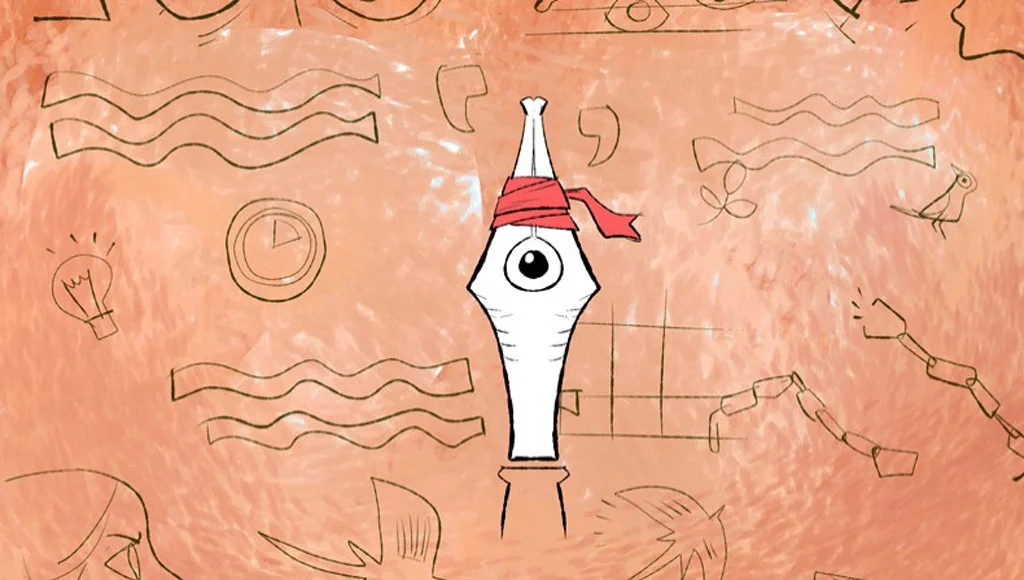
File visual: Anwar Sohel

On February 1, 1962, the first student strike and protest against Pakistan’s military rule took place at the University of Dhaka. Among the many demands raised that day was a very simple but fundamental one: “We must have the right to speak. We must have freedom of the press.” I was one of the participants in that day’s demonstration.

After that, through years of struggle and sacrifice, Bangladesh achieved independence. In the 55 years since then, the country has experienced many ups and downs. In July-August 2024, a nationwide mass uprising brought down an authoritarian ruler. It was an extraordinary and almost unbelievable moment in our history.

The interim government then ran the country for nearly 18 months. People had high expectations of that government, but in many respects, those were not fulfilled. There were initiatives towards political and constitutional reform, but many did not progress very far. Some important recommendations of the reform commissions were also not implemented.

During the interim government’s tenure, newspapers, television channels, and other media outlets faced considerable difficulties in operating freely. Under various forms of pressure, media managements changed, editors were replaced, and many journalists were forced to leave their jobs. The media industry became quite unstable. As a result, newspapers and other media outlets often had to operate amid uncertainty and self-censorship.

Speaking from the experience of Prothom Alo, I can say that we, too, went through an atmosphere of fear. Throughout that period, we faced pressure and threats from extremist groups. Hateful propaganda was directed at The Daily Star and Prothom Alo, both inside the country and from abroad. In December 2025, extremists demonstrated in front of the Prothom Alo office for nearly seven days. These activities ultimately culminated in the burning and destruction of our office. On December 18, 2025, the Prothom Alo office remained on fire for almost the entire night. There was looting and destruction of property. Only after everything had been burned and damaged did law enforcement agencies clear the way for the fire brigade to arrive.

Those responsible within the government did not issue any direct or effective instructions to the police, Rab, or members of the armed forces to prevent the destruction. One or two advisers tried to intervene in their individual capacities, but those efforts were unsuccessful. After Prothom Alo, The Daily Star office was also blockaded and set on fire. Its employees were eventually brought out under extremely difficult and suffocating circumstances.

Although the interim government made various statements, there was no significant change in the situation facing the media. The government did, however, establish a Media Reform Commission that worked extensively on important issues concerning the media, proposing a range of short- and long-term measures. There was broad and positive consensus among journalists, editors, and media managers on many of these proposals. Unfortunately, the interim government took virtually no initiative to implement them.

After all these experiences, a general election was held on February 12, 2026. The administration, armed forces, and police worked together to conduct the election, while people across the country also wanted to see a credible election. BNP secured a major victory and returned to power after nearly 19 years. The important question before us now is: what direction will Bangladesh take after this change? More specifically, how will we ensure media freedom, the safety of journalists, and an environment in which an independent and responsible press can operate freely? That is the question that matters to all of us.

During BNP’s two previous terms in government—from 1991 to 1996 and from 2001 to 2006—I was the editor of Bhorer Kagoj and then Prothom Alo, respectively. During both periods, we enjoyed considerable freedom in practising journalism. In particular, during the 2001-2006 government, we strongly criticised many of its policies and actions. Yet this did not prevent us from having access to the prime minister or other leaders. We were not subjected to major harassment or legal action simply because of our criticism.

I remember having heated arguments with Begum Khaleda Zia when she was prime minister. At times, both of us became quite agitated during our conversations. But I never had to face punishment for expressing my views. During that period, I also had disagreements and arguments with Tarique Rahman, then a young BNP leader. There were debates between us in newspaper pages as well. Those disagreements were ultimately resolved.

In contrast, during the previous authoritarian government, journalists and editors were imprisoned, with numerous cases filed against them. People were intimidated and threatened. Prothom Alo and I personally faced sustained pressure. Various efforts were made to reduce the newspaper’s circulation. Government advertisements were withdrawn and, in August 2015, advertisements from around 50 domestic and international companies were also stopped. At one stage, the number of cases filed against me came close to 80. On March 30, 2023, a case was brought against me under the Digital Security Act.

In parliament, former Prime Minister Sheikh Hasina described Prothom Alo as “an enemy of the Awami League, enemy of democracy, and enemy of the country.” The journalists of Prothom Alo were also barred from entering the Prime Minister’s Office and attending various national events. In early 2024, the military intelligence agency exerted tremendous pressure on the chief executive of our company to give up ownership of Prothom Alo. Behind that pressure was also an effort to remove the editor.

The situation reached such a point that, had that government remained in power for a few more months, the management of Prothom Alo could have been taken away from us, and I might no longer have been able to remain its editor.

Those experiences have left an indelible scar on our minds. After the authoritarian Awami League government’s tenure and the multiple crises experienced during the interim government, the return of BNP to power has created a sense of optimism among the people. Given BNP’s past experience with newspapers and the media, we hope that Prime Minister Tarique Rahman and his government will, during this important transitional period, continue to adopt a constructive attitude towards newspapers, television channels, and the broader media.

BNP’s commitments concerning the media in its 31-point reform programme and election manifesto have strengthened this expectation. Point 11 of its 31-point programme specifically addresses the media. It proposes establishing a Media Commission to ensure full media freedom and comprehensive reform of the sector. It also commits to restoring an environment conducive to honest and independent journalism and protecting freedom of speech and expression. The programme proposes amendments to relevant laws and the repeal of laws that restrict fundamental rights, as well as steps to ensure justice in cases involving the killing and torture of journalists.

BNP’s election manifesto also states that fearless and impartial journalism will be protected and recognised, and that objective criticism will be welcomed. It says that ensuring the professional independence and security of journalists who engage in constructive and objective criticism is a responsibility of the state. It also proposes legal mechanisms and a special cell to prevent the harassment and persecution of journalists.

These commitments are important. However, no significant steps have yet been taken to reform the newspaper industry and the broader media sector. The Ministry of Information and Broadcasting has expressed interest in introducing a system for auditing newspapers and clearing long-outstanding bills, but these initiatives have yet to be implemented. There was also a meeting to discuss urgent reforms needed in newspapers, television, and the wider media sector following the proposal to establish a Media Commission. Since then, however, we have heard little about the matter.

Over the past few months, there have also been reports of unwelcome interference and changes in the internal management of some newspapers and television channels. Some editors and senior journalists say they continue to operate under uncertainty and pressure. In some cases, journalists are exercising excessive caution over particular reports and opinion pieces. There are also concerns about the government’s approach to the cyber law and the possibility that journalism and freedom of expression could be placed at risk under certain circumstances.

The government has completed only seven months of its tenure, so there is still considerable time ahead. But the urgent issues facing newspapers and the broader media sector need to be addressed without delay. Otherwise, we risk falling behind once again, and the freedom and aspirations of journalists could face another crisis.

In such a situation, I repeatedly find myself thinking of that day 64 years ago—February 1, 1962. That day, we raised the demand that we must have freedom of speech and freedom of the press. Through successive movements and struggles, Bangladesh’s political circumstances have changed again and again. Governments have changed. Political leaders have changed. The political landscape has changed. But the fundamental issues underlying our demands seem to have remained largely where they were all those years ago. And that is deeply unfortunate.

After 64 years, we still have to speak about those demands. We still have to ask for them. We still have to remind those in power that freedom of speech and freedom of the press are not privileges, but fundamental rights.

At the end of my 56-year career in journalism, I find myself standing in the same place once again. So I end with the same question that has stayed with me since that day in 1962: how much longer will we have to wait?

This is a slightly abridged version of a speech that Matiur Rahman delivered on the second day of the recently held Bay of Bengal Conversation 2026, organised by the research institution Centre for Governance Studies (CGS).

Matiur Rahman is the editor and publisher of Prothom Alo.​
 

Latest Posts

Back