New Tweets

[🇧🇩] Reforms carried out by the interim/future Govts.

G Bangladesh Defense
[🇧🇩] Reforms carried out by the interim/future Govts.
215
6K
More threads by Saif


BNP’s pledge for reforms sounds good
We would like to see the party match its words with actions

1731803590033.webp

Visual: Star

BNP's acting chairperson Tarique Rahman made a number of promises on Thursday, which we hope the party sincerely intends to fulfil. Such promises, however, are nothing new. We have heard similar promises when a party was not in power only to see them being forgotten after coming to power. Nevertheless, the promises made by BNP in its reform agenda sounds promising on paper.

Tarique emphasised building a Bangladesh where not even the prime minister could abuse power, highlighting principles such as the rule of law, human rights, freedom of speech, transparency, and accountability. Drawing from BNP's "31-point Outline for Structural Reforms," he reiterated some objectives that are both novel and ambitious. For instance, no party has previously placed much emphasis on ensuring a free press. But Tarique declared his resolve to enable the media to "speak truth to power" and openly criticise the government. If implemented, this would mark a significant departure from the Awami League's harsh persecution of dissidents and journalists. Furthermore, the proposed reforms to curtail the government's excessive power—including the introduction of a bicameral parliamentary system and limiting the prime minister's tenure to two consecutive terms—suggest that the party might be embracing more mature political practices.

Unfortunately, if we observe the party's actions, we can deduce that it is already faltering in realising some promises, mainly that of curbing corruption. For example, there have been multiple reports of "BNP-linked" groups extorting citizens, with its party members or activists allegedly filling the void of AL-established syndicates—as well as regular infighting within the party. While BNP leadership has issued warnings against such behaviour, more decisive actions are necessary. Otherwise, such incidents will continue to cast doubt on assurances from BNP's leadership and make it harder for citizens to place their trust in the party.

BNP's pledge to build an inclusive, liberal, and democratic Bangladesh—by balancing power among the legislative, judicial, and executive branches and dismantling the tools of oppression used by past governments—is commendable. However, sincerity is the key to achieving such a transformation. Much of the scepticism surrounding BNP—as well as other political parties—could be addressed if the party itself practiced democratic principles, such as decentralising its decision-making process. Additionally, it could move away from the failed dynastic politics of our region, which has acted as an obstacle to the democratisation process.

The July uprising demonstrated that people are fed up with dynastic politics driven by violence, oppression, and corruption. Many have sacrificed their lives to break free from this system and secure the rights of all citizens. All political parties, including BNP, must honour these sacrifices and ensure they are not in vain.
 
Analyze

Analyze Post

Add your ideas here:
Highlight Cite Respond
  • Like (+1)
Reactions: Bilal9

Engage private sector more in reforms to energise economy
Business leaders urge govt at The Daily Star discussion

1731803773652.webp


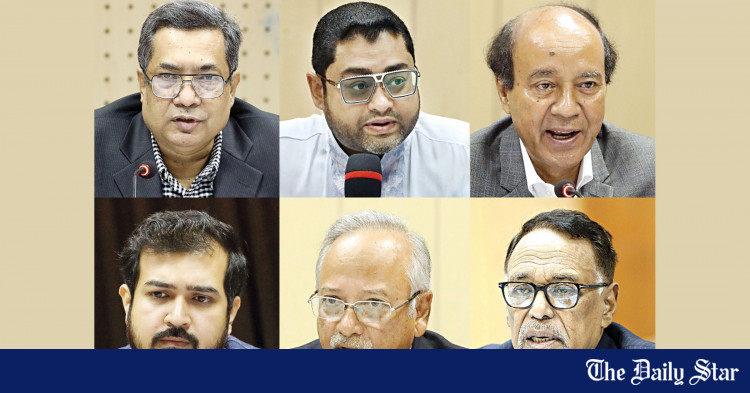
Mir Nasir Hossain
Former president of FBCCI


A tighter monetary policy taken by the Bangladesh Bank alone cannot contain inflation. The government should take steps to curb extortion and establish healthy management in the supply chain to control the rising prices.

1731803835209.webp


Mostafa Kamal
Chairman of MGI


Vietnam takes only 7 days to decide on an investment proposal, but red tape delays the process in Bangladesh to over 7 months. A law should be there to complete the process within 3 months.

1731803857543.webp


Kamran T Rahman
President of MCCI


Allocating just 10 percent of the unused lands of tea gardens can help generate up to 6,000MW of clean energy. This can be delivered to industries hit by the energy crisis through corporate power purchase agreements.

Monzur Hossain
Research director of BIDS


The government should go for thorough analysis of every sector and review the policies once every three months. Besides,
inflation will not come down if reserves do not become stable.

Tanvir Ahmed
MD of Envoy Textiles


The recent labour unrest has heavily damaged the country's image. I know a group, which lost a work order of 20 million pieces of garments to Vietnam just because of the unrest.

Abrar Hossain Sayem
President of BAYLA


Bangladesh can establish a national data platform and go for using big data analytics with the help of artificial intelligence to make informed decision for capacity expansion or investment in any sector.

The government should increase its engagement with the country's private sector in making policies and decisions amid ongoing reforms, according to prominent business leaders, who cited major challenges such as high inflation, rising interest rates and slowing demand and investment that are now plaguing private businesses.

Mentioning that the private sector is the key driver of Bangladesh's economy, they said increased engagement can better resolve their issues and remove investment bottlenecks, boosting employment and economic growth.

The businessmen were speaking at a discussion, styled "100 days of the Interim Government: Economic Review", organised by The Daily Star at its office in Dhaka.

Tanvir Ahmed, managing director of Envoy Textiles, said the local economy has stagnated and businesses have become dry. "The economy must be put in order fast. Otherwise, trouble in the financial sector will continue to rise."

He said people have a lot of expectations from this government, so it should sit with the stakeholders. But they have not seen any such interactions until now.

"We are exposed. We know our sufferings better than anyone else," Ahmed said.

Mir Nasir Hossain, a former president of the Federation of Bangladesh Chambers of Commerce and Industry (FBCCI), said there was virtually no government in Bangladesh for three days between August 5 and August 8 following the ouster of the Sheikh Hasina-led government by a mass uprising.

"Miscreants took this advantage and continued unrest."

Apart from the weak law and order situation, Hossain added that there were also logical reasons for the unrest in the garment sector. He said workers were angry as they were not being given different service benefits.

It was also due to some of the factory owners delaying regular salary payments, he said.

Moreover, instigation from outsiders was also a major cause for the labour unrest in the garment sector, he added.

Children of workers are being deprived of better education, while workers must now spend more for basic housing, he said, adding that the factory owners need to improve community engagement.

"The achievement of this government is good, though it may appear that a lot of expectations remain unfulfilled. But it is not possible to resolve all the issues in such a short time."

He said the energy supply to the production units has improved after liquefied natural gas (LNG) imports by the government. "This must continue."

However, factors including higher bank interest rates have turned into a major cause of concern. "The economy will not grow if investment suffers," he said.

He added that the law-and-order situation must be monitored and an environment of confidence must be created. Besides, political parties have responsibilities in curbing extortion, so they should address this, he said.

"Private sector engagement is necessary. Because only the wearer knows where the shoe pinches."

Mostafa Kamal, chairman and managing director of Meghna Group of Industries (MGI), said the involvement of private sectors stakeholders in decision-making should be increased, he said.

He also said ensuring a consistent energy supply is crucial, saying the government should ensure energy supply through exploration as well as consistent imports.

Kamran T Rahman, president of the Metropolitan Chamber of Commerce and Industry (MCCI), said the banking sector is now in the doldrums.

Citing the high volume of non-performing loans (NPLs) and failed merger attempts for ailing banks, he said, "NPLs have gone through the roof."

He inquired about the progress of the proposed Banking Reforms Commission and urged the interim government to act swiftly. Strengthening money loan courts by increasing the number of judges, he said, could address some immediate issues.

He noted the absence of an exit policy for industries and added many firms cannot leave the business due to a lack of mechanisms.

He also advocated granting duty-free import benefits for raw materials of all export-oriented sectors.

The MCCI president said high inflation has severely affected the population. While interest rate hikes aim to curb inflation, they are straining businesses, he added.

He commended the government for forming reform commissions but urged faster action.

Regarding exports, Rahman urgently stressed the need to meet the European Union's due diligence standards for achieving net-zero carbon emissions by 2030.

Failure, he warned, could devastate the readymade garment (RMG) sector. To support this transition, he proposed allocating 10 percent of land for solar power plants, which could generate 5,000-6,000 MW of clean energy.

This would not only reduce reliance on foreign exchange for energy imports but also bolster export-oriented industries with sustainable power solutions.

Abrar Hossain Sayem, president of Bangladesh Apparel Youth Leaders Association (BAYLA), said sacrifice by the youth played an important role in the formation of the incumbent government and Bangladesh should utilise the bright image of Chief Adviser Professor Muhammad Yunus.

For instance, many international clothing retailers and brands are coming back to Bangladesh with apparel work orders as they have confidence in the Yunus-led government.

He said some 0.4 percent of the local garment factories cannot pay their workers timely because of rises in the cost of doing business. The business cost spike includes a more than 200 percent rise in utility bills, which has been affecting the company's bulk expenditure and profitability.

He said the condition of small and medium ventures should be investigated because of abnormal spikes in the cost of doing business.

Monzur Hossain, research director of the Bangladesh Institute of Development Studies (BIDS), said managing spiralling inflation and implementing sound financial reforms are major challenges for the economy now.

He advocated continuation of the liquidity support to weak banks for their survival.

Hossain said there are private sector representations in two taskforces -- one for developing strategies to boost the economy and mobilise resources for equitable and sustainable development, and another for preparing a "white paper" on Bangladesh's economy.

Envoy Textiles' Managing Director Ahmed said efforts to stabilise the foreign currency reserves and reopen educational institutions after the uprising are some of the major achievements of the current government.

However, expecting a long-term solution from the current government will not be right as it's just an interim government, he said.

"The incumbent government should focus more on the restoration of the law and order and the restoration of confidence in the police force so they can continue. Because new recruitment and replacement of old police is not possible in a short time."

He cited a small incident of shifting a work order for 20 million pieces of garments from Bangladesh to other countries because of the labour unrest.

Ahmed also said the monthly salary of garment factories in the country is more than $600 million and annually the amount is more than $8 billion. The domestic economy is still largely dependent on the garment industry.

He feared losses of $14 billion to $18 billion in the export business of Bangladesh because of the erosion of preferential trade benefits after graduating from the least developed country club in 2026. Local exporters will have to face a 12 percent duty on export to the European Union, where Bangladesh exports more than $25 billion worth of goods in a year.

Bangladesh is still producing low-end garment items with low prices, selling items for $2.80-$2.90 per piece, whereas Pakistan and other countries' average value of garment items ranges between $4.50 per piece and the local exporters make only seven percent profit, he said.

With a higher bank interest rate at 17 percent, sales of apartments also declined to 8,000 units from 20,000 in Dhaka every year, he added.

At the discussion, Mahfuz Anam, editor and publisher of The Daily Star, said, "As a newspaper, we are committed to the growth and prosperity of Bangladesh.

"I believe the private sector is a major actor in that prosperity," he said, adding that The Daily Star wants to be a partner to entrepreneurs who are doing business with integrity and have invested in the advancement of the country.

"We want to be a part of the future growth of Bangladesh. I believe Bangladesh will advance with a healthy, well-governed private sector," he added.​
 
Analyze

Analyze Post

Add your ideas here:
Highlight Cite Respond
  • Love (+3)
Reactions: Bilal9

Institutional reform needed for an inclusive Bangladesh

1731975594018.webp

For Bangladesh the student movements represent a beacon of hope for more inclusive, equitable development. FILE PHOTO: PALASH KHAN

This year's Nobel laureates in economic sciences—Daron Acemoglu, Simon Johnson, and James Robinson—have demonstrated the importance of societal institutions for a country's prosperity. Societies with a poor rule of law as well as exploitative institutions struggle to generate growth or improve living standards. The Nobel laureates' research helps us understand how Bangladesh, trapped in extractive institutions inherited from its colonial past, failed to achieve the desired magnitude of prosperity after independence.

Extractive institutions, which concentrate power and resources among a select few, often hinder widespread economic opportunities. These institutions prioritise the interests of political elites, military leaders or certain economic groups, creating a system where wealth and decision-making authority are hoarded at the top. In such settings, most people are excluded from the economic and political benefits that promote growth and innovation. As a result, inequality grows, social mobility diminishes, and opportunities for broader development are stifled. In Bangladesh, the economic system of the past 16 years served as an example of such extractive institutions, where the primary beneficiaries were a handful of citizens and their descendants—political elites, bureaucrats and business conglomerates who maintained control over the country's resources. This era largely ended in August this year. To understand how extractive institutions might transition to more inclusive ones in Bangladesh's context, we can look at students' movements that, by protesting against discrimination and demanding equal socioeconomic opportunities, have challenged economic and power structures.

Historically, popular uprisings and social movements have played a vital role in shifting extractive institutions toward inclusivity by amplifying the voices of marginalised groups and pressuring governments to implement changes. For example, the 1952 Language Movement, which secured Bangla as the official language, and the 1990 movement, which led to the end of military rule and restored democracy in the country, are both pivotal in Bangladesh's history as they highlight the role of youth activism in confronting entrenched power structures. Most recently, students mobilised around critical issues such as road safety in 2018 and civil service quota reforms in 2018 and 2024.

The 2018 Road Safety Movement began after two students were tragically killed in a hit-and-run incident. It quickly grew into a nationwide outcry against the poor governance of our roads. The civic community became increasingly vocal about the negligence, corruption, and lack of accountability in the transport sector. Similarly, during the 2018 and 2024 quota reform protests, students successfully pressured the government to reform the civil service recruitment system, reducing job quotas reserved in favour of certain groups. These quotas, which disproportionately benefited certain families and politically connected individuals, were seen as barriers to merit-based recruitment and career advancement. The quota reform movements were a small but meaningful step towards a more inclusive system that aims to level the playing field for all citizens, regardless of their background.

Bangladesh's student movements are more than just isolated incidents of unrest—they symbolise a broader, structural challenge to the extractive institutions that dominate the political and economic landscape. If student movements continue to push for reforms addressing employment opportunities, social inequality, and corruption, they are essentially calling for a shift from extractive practices to more inclusive systems. The success of these movements hinges on their ability to connect with other discontented groups and sustain pressure on the government.

In countries like Tunisia, Egypt and South Korea, student-led movements became catalysts for regime change and reforms when they gained momentum and aligned with other social groups. In Bangladesh, the potential for such a shift exists. As student movements continue to grow, they could play a crucial role in transitioning the country to a more inclusive and participatory society. The outcome of this transition would depend on the resilience of these movements and the willingness of the ruling elite to compromise or face political and economic upheaval.

Ultimately, the battle between extractive and inclusive institutions is not just a fight over resources; it is a fight over the future direction of the country. Inclusive institutions tend to foster economic growth, innovation, and political stability by allowing broader participation in decision-making and ensuring that opportunities are available to all citizens. For Bangladesh, which continues to grapple with high levels of inequality, corruption and governance challenges, the student movements represent a beacon of hope for more inclusive, equitable development.

By challenging the status quo—whether in economics, education, governance, or public safety—students in Bangladesh are confronting the extractive nature of the system. If these movements garner broader support and align with other social forces, they could lead to reforms that make institutions more transparent and accountable. This mirrors the broader theoretical process in which social mobilisation, crises, elite conflict, and external pressures contribute to the transformation from extractive to inclusive institutions.

Dr Shamsul Arifeen Khan Mamun is a professor of economics and a member of the BCS general education cadre. He is currently attached to the Directorate of Secondary and Higher Education (DSHE) under the Ministry of Education.​
 
Analyze

Analyze Post

Add your ideas here:
Highlight Cite Respond
  • Like (+1)
Reactions: Bilal9

Political party consensus will determine speed of reforms, election
Prof Yunus says in interview with The Daily Star

1732061304572.webp


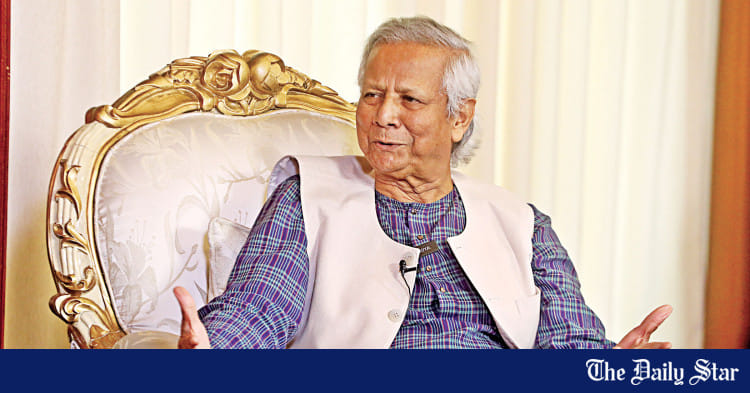
Chief Adviser Prof Muhammad Yunus has said that it is the political parties that will decide on the nature and extent of reforms, which in turn will determine how soon the election can be held.

This, however, will be entirely dependent on the consensus among the political parties only, since seeking opinion of the people would require a referendum, he said in an exclusive interview with The Daily Star Editor and Publisher Mahfuz Anam yesterday.

"The sooner the reforms, the sooner the elections. And if the political parties say they don't want reforms, then even sooner," he said.

Prof Yunus explained his vision for reforms following the reports of the six major commissions, including on electoral reforms and constitutional reforms. He said that the interim government would strive to get to a political consensus in the quickest possible time on the next polls.

"We are not going to impose anything," he said before elaborating that his administration was merely facilitating the process.

Asked about a specific timeframe of the interim government's tenure, he said he is not giving a concrete timeframe intentionally. "Then people would be looking at that and try to hurry you through to the elections regardless of the reforms."

On the election roadmap, Yunus said there would be two parallel and simultaneous processes – one for reform and one for election preparations. "The Election Commission will be declared very soon and it will proceed at its own pace of its own accord. I will have nothing further to do with that."

However, the economist turned social banker pointed out that the Election Commission would not be able to function till the electoral reforms commission submits its report. "And the report would not be enough by itself because there will have to be political consensus regarding it."

The reforms will initially depend on the six commissions' reports due by late December, he said. But the government would not be able to use those reports before there is a political consensus. "We will sit with all political parties to hear what they want."

Yunus said the news outlets would also articulate their opinion through articles and editorials. "We will also seek opinions of the civil society."

In his opinion, the timeline for reforms will depend on how soon the political parties can reach a consensus. If the political parties say they do not want reforms anymore and demand elections instead, the interim government would do exactly that. "So be it. Who am I to say no?"

The six reform commissions are expected to submit their reports by the end of December, and the government will have ample time to arrive at a consensus on the reform timeline by July 2025, he said when asked about a timeline for reforms.

"It really depends on the political parties, there is no point asking me how long it will be."

Asked how the government will find out the will of the people regarding reforms, he said that the government will hold talks with political parties as people's representatives. "Otherwise, we would have to go for a referendum and that would be too cumbersome."

When asked whether the Awami League would be a part of those discussions, the Nobel laureate said that would also be entirely up to the political parties. "If the parties want the Awami League to be part of the process, then it will very well be there. We have nothing to say about that."

Asked about random murder cases against journalists without any evidence, the chief adviser acknowledged the unfairness, saying, "This was hurriedly done, following the old laws and practices."

About the cancellation of accreditation cards of journalists, Prof Yunus said that he was briefed that the cancellation does not and will not affect their work as journalists, and that it will only bar them from freely entering the Secretariat.

He did not give a direct reply when pointed out that the cancellation did not conform to the rules.

Turning to the government's foreign policy, the chief adviser said although he was admittedly closer to the Democrats, his government would surely be able to work with a Trump White House. He explained that when he was awarded the Congressional gold medal it was a unanimous decision. "Even Republicans voted for me. And no one has told me that they do not like me."

Regarding the narrative in the Indian media and its portrayal of the changed scenario in Bangladesh, Yunus said he had even brought it up during his conversation with his Indian counterpart Narendra Modi. He said he had urged Modi to have Indian journalists visit Bangladesh to ascertain whether minorities were being persecuted. "Some of them have come since, but the narrative has not changed."

Yunus said that he really wanted to revive Saarc because he thought it was a great means to further cooperation within South Asia and the sub-continent. "All the countries are actually keen on it. But India is not taken with the idea."

But the chief adviser stressed that relations between Bangladesh and India were far more amicable and grounded in genuine friendship than what might appear at the moment. He said there may well be a difference of opinion but it would not define Bangladesh's relationship with India.

He explained that the two neighbours have such a long history and are positioned in such a way and so close to each other that one could not really sustain without being friends with the other.

About China, Prof Yunus recounted from his recent New York trip to attend the UN General Assembly where the Chinese delegation wanted to meet him but it could not be an official sit-down for protocol issues.

Nevertheless, he held a long discussion with the Chinese foreign minister. "It was not an official meet, but we got together."

The chief adviser said the Chinese delegation headed by their foreign minister had prepared a detailed and long statement which he reciprocated in kind. Both sides exchanged ideas about what they could do together.​
 
Analyze

Analyze Post

Add your ideas here:
Highlight Cite Respond
  • Like (+1)
Reactions: Bilal9

Yunus invites GOP leaders to witness Bangladesh's democratic reforms

1732146669483.webp


Chief Adviser Professor Muhammad Yunus yesterday urged top Republican Party leaders to visit Bangladesh to observe the interim government's efforts to restore democracy in the country.

He made the call when senior officials of the International Republican Institute (IRI) met him at the state guest house Jamuna in Dhaka, according to the press wing of the CA.

IRI, a think tank associated with the Republican Party, promotes democracy worldwide. Led by Steve Cima, the institute's regional chief, the IRI officials have been meeting with politicians, student groups, and civil society leaders during their ongoing visit.

Steve Cima said the IRI's priority is to support the interim government's reform initiatives, especially amid widespread calls to fix the country's key institutions.

"Under the Awami League, the real concern was over the true trajectory of the country," Steve Cima said.

"It is in the US's interests to see reforms succeed here," he added.

Professor Yunus said his government would hold elections after carrying out vital reforms. He emphasised that the process was already underway, with a new election commission preparing for the general elections.

He added that Bangladesh seeks to work closely with the newly elected US President Donald Trump's administration. Yunus also expressed his intention to invite top Republican Senators and Congressmen s to visit Bangladesh to witness the unprecedented changes brought about by the student-led mass uprising.

IRI official Geoffrey Macdonald, IRI country chief Joshua Rosemblum, and Senior Secretary of the Bangladesh Government Lamiya Morshed were also present during the meeting.​
 
Analyze

Analyze Post

Add your ideas here:
Highlight Cite Respond
  • Like (+1)
Reactions: Bilal9

Experts call for reforms to ensure smooth LDC graduation
FE REPORT
Published :
Nov 25, 2024 01:03
Updated :
Nov 25, 2024 01:03

1732497812578.webp


Experts, economists, and policymakers have called for reforms and structural shifts to support Bangladesh's transition to the next phase of development, known as high-road economic development, as the country is preparing to graduate from the status of Least Developed Countries (LDC).

They urged the government to prioritise quality enhancement and ensure compliance with international standards to maintain export competitiveness in the post-LDC period.

The recommendations came at a validation workshop on National Smooth Transition Strategy jointly arranged by the Economic Relations Division (ERD) and the United Nations Department of Economic and Social Affairs (UN DESA) at a city hotel on Sunday.

Finance Adviser Dr. Salehuddin Ahmed attended the workshop as the chief guest, while Special Envoy on International Affairs to the chief adviser Lutfey Siddiqi, Principal Secretary to the chief adviser M Siraz Uddin Miah, Principal Coordinator (SDG) Lamiya Morshed, and the UN Resident Coordinator in Bangladesh Gwyn Lewiswere were present as special guests.

Member of the UN Committee for Development Policy (CDP) Taffere Tesfachew, President of Leathergoods and Footwear Manufacturers and Exporters Association of Bangladesh (LFMEAB) Syed Nasim Manzur and Chief Representative of JICA Bangladesh Ichiguchi Tomohide spoke, among others, at the event chaired by ERD Secretary Shahriar Kader Siddiky.

Dr Salehuddin Ahmed laid emphasis on increasing productivity, ensuring decent working conditions and adopting advanced technology to prepare the country for LDC graduation. He also underscored the need for ensuring equitable and inclusive growth to make the LDC graduation sustainable.

Highlighting the country's challenges like large population, limited land and low productivity, he said that the interim government is working to address these issues.

"We have no personal agenda. The reforms we are carrying out now will leave a positive footprint for the next government. However, if we can't cope with the change, graduating to a middle-income country will not make sense," said the finance adviser.

Lutfey Siddiqi emphasised that Bangladesh's journey towards LDC graduation reinforces the need for robust reforms.

Principal Secretary M Siraz Uddin Miah put emphasis on easing business environment, facilitating the customs procedure, and enhancing productivity through technological upgradation and skill enhancement to increase the competitiveness of the local products.

Lamiya Morshed said Smooth Transition Strategy offers a roadmap to align the country's graduation with the Sustainable Development Goals.

During the workshop, National Consultant for Smooth Transition Strategy Dr M A Razzaque presented a keynote paper on the draft strategy.

He said that challenges will arise in various economic and non-economic sectors after the graduation.

Currently, in the LDC category, 75 per cent of Bangladesh's products receive duty-free export benefits which will no longer be available after the graduation while 20 per cent of duty on average may be imposed depending on the destination.

Bangladesh is set to graduate from LDC status in November 2026, following a five-year preparatory period. The United Nations has recommended that graduating countries develop a Smooth Transition Strategy during this time in partnership with development and trading partners, along with UN system support.

He said that the strategy focuses on five strategic pillars including ensuring macroeconomic stability, securing trade preferences and favourable transition measures, promoting export diversification and competitiveness, building productive capacity, and fostering partnerships and international cooperation.

Gwyn Lewis said that the opportunities of LDC graduation can be maximized by creating an enabling environment for businesses, improving productive capacity, increasing investment in human capital, and complying with international standards.

Syed Nasim Manzur said that the economy of Bangladesh is unique among LDCs as majority of export items from the country are utilizing preferential market access.

He urged policymakers to focus on non-RMG exports, warning that tariffs on items like jute, furniture, and light engineering could reduce export volumes by over 20 percent.

Chief Representative of JICA Bangladesh Ichiguchi Tomohide called for ensuring congenial business environment and said development of economic zones, export processing zones and high-tech parks should be expedited. He also suggested updating the Economic Zone Act and implementing a single one-stop service centre.

Representatives from various government ministries and divisions as well as private sector leaders, think tanks and civil society organisations participated in the workshop.​
 
Analyze

Analyze Post

Add your ideas here:
Highlight Cite Respond
  • Like (+1)
Reactions: Bilal9

State reforms not possible without fixing certain mistakes
Mainul Islam
Published: 25 Nov 2024, 17: 30

1732582722412.webp


This particular piece is aimed at drawing the attention of the constitution reform commission. At the very outset, let me assert that I am not in favour of rewriting the constitution, I am in favour of reforms.

Many people have the misconception that Bangladesh has a very good constitution. I stand against such a belief and from way back have been strongly been asserting that certain grievous mistakes remain in the constitution, or have been added to it. These repeatedly make the state character autocratic and anti-people. I try to briefly highlight these mistakes in this column.

1. Article 70 is the biggest mistake of this constitution. This article allows the leader of a political party, whether ruling or opposition, to exert full control over the party's elected members of parliament, thus fully obliterating their freedom to express any divergent views. If an MP speaks against any decision of the party chief or votes against the decision, his or her membership to the parliament will be cancelled. This constitution has reduced the parliament to a forum of fawning sycophants. So Article 70 must be amended, only keeping the clause making it compulsory to support the party in a 'no-confidence motion'. The prohibitions on expressing views on other matters of enacting laws and expressing views, must be lifted.

2 (a). Another grievous blunder in the constitution is the provision that gives the prime minister the power of an all-powerful 'elected autocrat'. When the constitution was drawn up on 1972, Bangabandhu Sheikh Mujibur Rahman had been in the seat of power. When the committee formed to draw up the constitution prepared the draft and handed it over to Bangabandhu, he himself made changes to the party regarding powers of the prime minister, making the prime minister's power absolute and unchallenged, as compared to the president's power. This rendered the president powerless. A member of that committee, the late editor of the daily Azadi, respected Professor Khaled, told me about this. When the draft was send back to the committee with the changes, no one in the committee dared to say anything against the changes made by Bangabandhu himself.

(b) Then on January 1975 when the presidential form of government was introduced in place of parliamentary democracy by means of the Fourth Amendment, all the powers of the prime minister, and more, were given to the president, in order to strengthen the one-party BKSAL system, so that the president would not face any obstruction in establishing so-called socialism. So after Bangladesh and family were killed on 15 August 1975, the boundless authority of an all-powerful president was enjoyed from 1975 to 1990 by Khandakar Mushtaque who grabbed power illegally, then Ziaur Rahman and then the autocrat Ershad.

(c) When Khaleda Zia was elected prime minister through the 1991 national polls, her first preference was for the prevailing presidential form of government. For the first five months she did not take initiative to amend the constitution in keeping with the declaration of the three alliances that she herself had signed. But under pressure from the president of the interim government, Justice Shahabuddin Ahmed, and also under huge public demand, she was obliged in August 1991 to take the decision of reverting to parliamentary democracy.

The task of preparing the draft of the Twelfth Amendment was given to Barrister Moudud Ahmed, Barrister Salam Talukdar and Col. Oli Ahmed. The three of them, in a very astutely planned manner, constitutionally handed over all powers of the president to the prime minister by means of the Twelfth Amendment, with even some additional 'procedural powers' for Khaleda Zia to wield.

In order to ensure the independence of the judiciary, the appointments, transfers, salaries and allowances and dismissal of judges at all levels must be made by a judicial service commission.

So these three leaders of BNP bear the liability of making the prime minister a 'constitutional autocrat'. Of the three, only Oli Ahmed is still alive. A year or so ago, Oli Ahmed admitted their mistake in a statement made to a newspaper.

In the span of 1996-2001, Sheikh Hasina may have adhered to several democratic norms, but after ascending to power in 2009, she was assailed with the deadly obsession of clinging on to power forever. When the justices of the Supreme Court's Appellate Division, with a three-fourth majority ruled that the caretaker government system unelected and hence unconstitutional, the ruling ended on the note that the next two elections could be held under the caretaker system if the parliament so wanted. But Hasina ignored that advice of the Appellate Division and completely on her own accord, by means of the Fifteenth Amendment, revoked Thirteenth Amendment that held provision for the caretaker government.

After being freed from the compulsion to hold elections under the caretaker government system, Hasina ventured ahead to fulfill her dream of life-long power by means three one-sided elections held in 2014, 2018 and 2024.

Unless reins are pulled on the boundless powers of the "world's most constitutionally powerful prime minister", will state reforms be possible at all? The French constitution has a balance between thee powers of the president and the prime minister, and this can give us direction.

3. Another constitutional amendment has become cardinally essential. And that is not to allow anyone to become prime minister more than two times. Another point can be added to this -- to hold the parliamentary election every four years instead of five.

4. The constitution keeps the judiciary heavily dependent on the executive. This must be changed immediately. In order to ensure the independence of the judiciary, the appointments, transfers, salaries and allowances and dismissal of judges at all levels must be made by a judicial service commission. The commission will be formed as per decision of the Appellate Division of the Supreme Court. Appointment of judges of the High Court and the Supreme Court's Appellate Division cannot be kept in the prime minister's power. Based on the recommendation of the Supreme Judicial Council, the president will make these appointments. The council will comprise the chief justice and two senior judges of the Appellate Division. The appointment of the chief justice must be on the sole decision of the president, but it is best if there can be no superseding of seniority of judges in the Appellate Division.

5. The system for the president to be elected by direct vote of the people must be put in place.

6. The system of proportional representation in the parliamentary election can be introduced. The parliament can have two Houses where, on the basis of proportional votes, provision can be made for 100 members of the Upper House to be nominated by the top policymakers of the political parties. The 300-seat of the Lower House will be elected in the existing manner. The constitutions of various countries around the world can guide a balance between the Upper House and Lower House in drawing up laws.

7. The provision for 50 reserved seats for women in parliament can be dropped and one-third of the seats reserved for women, where the women will be elected by direct votes of the people. On the basis of rotation, in every election there must be provision for only women to be able to contest in one-third of the seats in every district.

8. The election-time caretaker government system must be restored immediately. But the judiciary must not be drawn into the appointment process of the chief advisor and other advisors of the caretaker government.

9. There is also undeniably a need to hold a referendum to incorporate all the recommendations of commission in the constitution. Later, in the elected parliament, these amendments can be given legal basis by means of ratification by a two-thirds majority in parliament.

*Moinul Islam is an economist and former professor at the economics department of Chittagong University.​
 
Analyze

Analyze Post

Add your ideas here:
Highlight Cite Respond
  • Like (+1)
Reactions: Bilal9

Reimagining reform: civic engagement
Mohammad Jashim Uddin 01 December, 2024, 00:00

1733014687289.webp

Protesters hold celebrations at Shahbagh in Dhaka on August 5 after the fall of the Awami League government. | Agence France-Presse/Munir uz Zaman

THE July uprising of 2024 marked a pivotal turning point in our nation’s history, a moment when people collectively voiced their frustrations against systemic inequalities, unresponsive governance, and widespread corruption. The events of that revolutionary monsoon were not just an eruption of anger but a call for meaningful change and societal reform. At its core, the uprising highlighted the power of civic engagement — individuals and communities coming together to demand accountability, propose solutions, and reshape the social contract. Now, as the dust settles, the real work begins — reimagining reform by channelling the energy of civic engagement into sustainable, transformative change.

Civic engagement is the cornerstone of a functioning democracy. It encompasses actions that enable citizens to contribute to the betterment of their communities, whether through grassroots activism, public dialogue, policy advocacy, or participating in electoral processes. The July uprising was a testament to the power of collective civic action, demonstrating how ordinary people can challenge the status quo and push for systemic reform. But for true transformation, this engagement must evolve from protest to participation, ensuring that citizens remain actively involved in shaping the policies and structures that govern their lives.

In the wake of the uprising, people’s expectations for reform are clear: they demand transparency, justice, and inclusivity. The movement has underscored the need for governance that reflects the will of the people and prioritises their needs over entrenched interests. This involves addressing the following critical areas:

Trust in institutions: Public trust in governmental and social institutions has eroded over the years due to corruption, inefficiency, and a lack of accountability. Civic engagement can play a key role in rebuilding this trust. Citizen-led watchdog groups, participatory budgeting, and open data initiatives can ensure that institutions operate transparently and responsibly.

Social equity and inclusion: The July uprising shone a spotlight on the marginalisation of vulnerable groups. Reform must prioritise inclusivity, addressing disparities in education, healthcare, and employment opportunities. Civic movements can amplify the voices of under-represented communities, advocating for policies that promote social equity.

Youth and education as catalysts for change: The energy and determination of the youth were instrumental in the uprising. Harnessing this momentum requires reforms in the education system to promote civic literacy, critical thinking, and leadership skills. Schools and universities must become spaces for dialogue and innovation, empowering the next generation to actively engage in societal reform.

Economic justice and opportunity: Economic disparities were a major driver of the uprising. Reform must address the structural inequalities that perpetuate poverty and unemployment. Civic engagement can play a role here by fostering community-based economic initiatives, supporting local businesses, and advocating for fair labour practices.

Environmental stewardship and sustainability: No vision for reform is complete without addressing the pressing need for environmental sustainability. Civic movements can push for policies that prioritise renewable energy, sustainable development, and the preservation of natural resources for future generations.

The July uprising demonstrated the strength of grassroots movements in mobilising communities and driving change. These movements operate outside traditional power structures, giving voice to those who are often overlooked by mainstream politics. Moving forward, grassroots organisations must continue to play a central role in the reform process, fostering local solutions to national problems and bridging the gap between citizens and policymakers.

Grassroots efforts can also inspire innovation in governance. Participatory democracy models, such as citizen assemblies or town hall meetings, can ensure that diverse perspectives are included in decision-making processes. By creating platforms for dialogue and collaboration, these initiatives can help build a more inclusive and responsive society.

Technology offers new opportunities for civic engagement and reform. Digital platforms can facilitate communication, organise movements, and hold leaders accountable. In the aftermath of the uprising, technology must be leveraged to ensure that the momentum for change is not lost. Online petitions, social media campaigns, and civic tech tools like open data portals can enable citizens to monitor progress, share ideas, and collaborate on solutions.

However, the use of technology must be accompanied by measures to address digital divides and misinformation. Ensuring access to technology for all citizens, particularly in rural and underserved areas, is critical to fostering inclusive civic participation.

While the energy of the uprising is vital, sustainable reform requires translating civic action into policy change. This involves fostering a culture of accountability and collaboration between citizens, civil society, and government institutions. Mechanisms such as public consultations, citizen advisory councils, and participatory policy development can institutionalise the principles of civic engagement, ensuring that reform is not just a response to crisis but an ongoing process.

Reimagining reform through civic engagement is not without its challenges. Resistance from entrenched power structures, the risk of co-optation by political agendas, and the fatigue of sustained activism can hinder progress. Overcoming these obstacles requires persistence, solidarity, and a commitment to shared values.

Leadership is also crucial. Reform efforts need champions — individuals and organisations that can inspire trust, bridge divides, and guide the process of change. These leaders must embody the principles of civic engagement, prioritising collaboration and inclusivity over personal gain.

The July uprising was a wake-up call, a reminder that the power to shape a nation lies in the hands of its people. As we move forward, civic engagement must remain at the heart of the reform process. By fostering a culture of participation, inclusivity, and accountability, we can reimagine a society that reflects the aspirations and needs of its citizens.

Reforming a nation is not a one-time event but a continuous journey. It requires the collective efforts of individuals, communities, and institutions working together towards a shared vision of justice, equity, and progress. The July uprising has given us an opportunity to reimagine what is possible. Let us seize this moment to build a future that honours the sacrifices and hopes of all who have fought for change.

Mohammad Jashim Uddin is an associate professor of English at the Northern University Bangladesh.​
 
Analyze

Analyze Post

Add your ideas here:
Highlight Cite Respond
  • Like (+1)
Reactions: Bilal9

Latest Posts

Back
PKDefense - Recommended Toggle