Donate ☕
201 Military Defense Forums
[🇧🇩] - Save the Rivers/Forests/Hills-----Save the Environment | Page 90 | PKDefense
Home Post Alerts Inbox Watch Videos

[🇧🇩] Save the Rivers/Forests/Hills-----Save the Environment

Reply (Scroll)
Press space to scroll through posts
G Bangladesh Defense
[🇧🇩] Save the Rivers/Forests/Hills-----Save the Environment
521
12K
More threads by Saif


Displaced by climate or design?
26 June, 2025, 21:39

1750984034602.webp

People stand on the eroded river bank in Munshiganj.

If we are to genuinely address the crisis of climate-induced displacement, we must challenge the depoliticised and sanitised narratives that currently dominate policy discourse and media representation, write Aminur Rahman and Quazi Arunim Rahman

AS RISING seas swallow coasts, floods wash away livelihood and droughts parch once-fertile lands, the image of the climate-displaced person has become an emblem of the unfolding climate crisis. These stark environmental shifts are no longer distant projections but daily realities for millions across the globe. The world, especially countries in the Global North, has adopted this narrative with increasing ease — citing ‘climate displacement’ as a tragic but seemingly unavoidable consequence of global warming. However, beneath this seemingly empathetic framing lies a troubling normalisation of forced displacement, one that often conceals the deeper roots of responsibility, historical exploitation and entrenched power imbalances.

Is climate change the sole villain displacing millions from their homes? Or is this displacement, often portrayed as an inevitable act of nature, also manufactured — shaped and accelerated by the unchecked activities, consumption patterns, and political choices of the Global North? We must ask whether the movement of people is truly about nature’s wrath or the calculated outcomes of global inequality and systemic injustice.

Politics of naming

THE term ‘climate displacement’ sounds neutral, even sterile — as if it were a natural event, like rainfall or an earthquake. It de-emphasises human agency and obscures the deeper structural injustices that have led us here. In reality, what we often call ‘climate displacement’ is a form of forced uprooting driven largely by the extractive economies, fossil fuel dependencies and high-carbon lifestyles of wealthier nations. These patterns of overconsumption and environmental degradation have created a planetary crisis, the consequences of which are most intensely felt in the Global South. In countries like Bangladesh, where communities have contributed the least to global emissions, people now face the most severe climate impacts — rising tides, salinization, river erosion and the collapse of agricultural systems.

Labelling this as ‘climate-induced displacement’ alone serves to erase the culpability of the Global North. It subtly shifts the discourse from one of accountability to one of adaptation, from justice to humanitarianism. In this framing, the Global North often emerges not as the historical polluter or instigator of structural inequalities, but as the benevolent saviour offering aid and support. This clever narrative repositioning distances the powerful from responsibility and reframes displacement as an unfortunate — but blameless — side effect of climate change.

Displacement as managed outcome

WHAT if displacement isn’t just a regrettable side effect of climate change, but a managed outcome — one that fits comfortably within the Global North’s geopolitical and economic frameworks? Climate displacement has increasingly become a policy category within development, climate adaptation and disaster response plans. Yet these plans are often crafted without reference to political histories, colonial legacies or the socio-economic systems that created vulnerability in the first place. Instead of working towards deep, structural climate justice that interrogates root causes, we now witness the institutionalisation of climate refugees as a manageable, predictable group within global governance frameworks.

Aid flows, resettlement programmes, and climate finance packages are offered — often presented with public relations fanfare — but these rarely challenge the global systems that create and perpetuate environmental harm. Worse, such policies can reinforce existing inequalities by treating displaced populations as passive recipients of charity, rather than active holders of rights, knowledge and demands. Displacement becomes framed as a technical issue, solvable with logistics and funding, rather than as a political issue that demands fundamental changes in global systems of extraction and accumulation.

Who gets to stay?

CLIMATE change does not impact everyone equally — nor does it displace everyone equally. Wealthier populations in flood-prone or wildfire-risk areas may relocate with government support, insurance coverage and a pathway to reestablish their lives in safer zones. They often have the privilege of mobility, safety nets and institutional recognition. In stark contrast, marginalised communities, particularly in the Global South, are left with few viable options. They must either remain in deteriorating environments or undertake dangerous and uncertain migrations — often without formal recognition, protection under international law, or access to rights and services in destination areas.

This disparity is not accidental or coincidental. It reflects a deeply entrenched global order where some lives are protected and others are rendered disposable. In such a framework, displacement becomes not merely a consequence but a deliberate mechanism — a way to keep the Global South in a continuous state of precarity, dependency and subjugation. The decision of who gets to stay and who is forced to move reveals uncomfortable truths about whose lives are valued and whose suffering is tolerated.

Reclaiming the narrative

IF WE are to genuinely address the crisis of climate-induced displacement, we must challenge the depoliticised and sanitised narratives that currently dominate policy discourse and media representation. We must move beyond the passive label of ‘climate migrants’ or ‘climate displaced’ or ‘climate refugee’ and ask deeper, more difficult questions: Who created the conditions for their displacement? Who benefits from the way this crisis is framed? And who is made invisible or voiceless in the process?

It is time for the Global North to confront its historical and ongoing role in producing climate harm — not merely through symbolic gestures or pledges but through concrete acts of responsibility. This includes not only reducing emissions at home but also paying reparations for historical damage, transferring clean technologies without conditions, and most importantly, upholding the rights, dignity, and autonomy of displaced communities. This is not a matter of charity — it is a matter of justice, accountability, and shared humanity.

Ultimately, climate displacement is not just about the climate. It is about power, inequality and responsibility. And unless we are willing to name those truths, we risk turning one of the greatest moral challenges of our time into just another managed crisis — with the most vulnerable paying the highest price.

Aminur Rahman is a researcher and seasoned development professional. Quazi Arunim Rahman is a lecturer at the University of Brahmanbaria.​
 
Analyze

Analyze Post

Add your ideas here:
Highlight Cite Fact Check Respond

Lightning kills 350 annually in Bangladesh

Published :
Jun 28, 2025 21:25
Updated :
Jun 28, 2025 21:25

1751152451236.webp


Lightning strikes continue to pose a growing threat in Bangladesh, claiming nearly 350 lives every year, with the northeastern districts of Sunamganj, Netrokona and Sylhet identified as the most vulnerable zones.

Khan Mohammad Golam Rabbani, a weather expert from the intergovernmental organisation Regional Integrated Multi-Hazard Early Warning System (RIMES), shared the data at a seminar held on Saturday at the Bangladesh-China Friendship Conference Centre to mark International Lightning Safety Day.

“On average, 3.36 million lightning strikes occur in Bangladesh annually, causing around 350 fatalities,” he said.

He named Sunamganj, Netrokona and Sylhet as the districts most at risk, as per a bdnews24.com report.

“The risk peaks in April and May. Recently, lightning incidents have increased by 10 per cent, with further rises expected,” Rabbani added.

The seminar was jointly organised by RIMES and the Bangladesh Meteorological Department (BMD).

At the same event, Disaster Management Secretray Mostafizur Rahman said: “Work is under way to transform the Cyclone Preparedness Programme (CPP) into a full-fledged department.

“It won’t just focus on cyclones -- it will serve all forms of disaster preparedness. Its role will include everything from raising awareness across the country to engaging local volunteers.

“These volunteers will receive training not just on cyclones but across all disaster types,” he added.

The seminar also shared key safety tips during lightning strikes:
  • Stay indoors if dark clouds appear or thunder is heard​
  • If working outdoors without access to shelter, crouch low with limbs tucked in. Do not lie flat on the ground​
  • If in water, stay under the boat canopy​
  • Without a canopy, reduce contact with the boat floor as much as possible​
  • Stop fishing​
  • Avoid water bodies​
  • Do not take shelter under trees or on elevated ground​
  • Stay away from torn power lines​
Places deemed unsafe during lightning strikes include:
  • Tents set up in open areas​
  • Shelters with open roofs​
  • Metal structures such as uncovered passenger sheds​
  • Umbrellas are also unsafe​

The seminar recommended staying indoors for at least 30 minutes after the last thunderclap is heard.​
 
Analyze

Analyze Post

Add your ideas here:
Highlight Cite Fact Check Respond

Why Dhaka has become unliveable

1751156696102.webp

FILE PHOTO: STAR

Picture this: you're standing in the middle of Shahbagh at 8:30am. The sun is already a vengeful orb, the air tastes like exhaust fumes and unfulfilled promises, and the traffic—oh, the traffic—is a fossilised river of cars, rickshaws, and humanity. A man in a sweat-soaked shirt argues with a CNG-run autorickshaw driver over a fare increase of Tk 10. A schoolgirl hops over a sludge-filled pothole, her uniform skirt flapping like a surrender flag.

Somewhere, a protest slogan echoes, muffled by the honking symphony. Welcome to Dhaka, the city that never sleeps, because it's too busy being stuck in traffic, dodging waterlogged streets, or wondering if today's political demonstration will be the one that finally tips the collective sanity into the abyss.

A recent editorial by The Daily Star, titled "This is not how a city can survive", is a primal scream into the void. It catalogues Dhaka's daily crucifixion: protests that gridlock entire neighbourhoods, infrastructure that crumbles faster than a biscuit in cha, and a government that seems to treat citizen welfare as an afterthought in its grand political opera. But how does one survive here? Not just exist, not just endure, but carve out a sliver of dignity—or at least a functioning Wi-Fi connection—amid the chaos? Let's muse.

Dhaka operates on a unique principle: maximum effort, minimum progress. You leave home at 7am to reach your office five kilometres away by 9am, only to discover that a spontaneous protest has turned the road into a car park. The protesters, bless their democratic hearts, are exercising their right to dissent. The traffic police, meanwhile, are exercising their right to vanish. You sit. You sweat. You contemplate the existential irony of a metro rail gliding overhead while your CNG-run autorickshaw dies.

The editorial nails it: this isn't just inconvenience, it's systemic erosion. When protests metastasise into daily blockades, when VIP movements reroute entire neighbourhoods, when monsoon rains turn roads into Venetian canals (sans the romance), the city becomes less a habitat and more a stress simulator. The elderly, the sick, the parents hauling toddlers through sludge—these aren't extras in a dystopian film. They're us. And the tragedy isn't just the suffering, it's the normalisation of it. We have mastered the art of shrugging, "Ki ar korar? Eitai to Dhaka."

But here's the twist: Dhaka's chaos is also its alchemy. The same streets that trap you for hours host impromptu tea stalls where strangers bond over shared misery. The protests that infuriate you also remind you that dissent, however disruptive, is a heartbeat this city refuses to silence. Survival here isn't about avoiding the chaos; it's about learning to dance in the rubble.

Let's be honest: optimism in Dhaka feels like bringing a parasol to a tsunami. The just-revealed Global Liveability Index 2025 ranks us 171st out of 173 cities, below even Kyiv, a city currently hosting an actual war. Our air quality rivals industrial chimneys. Our infrastructure budget seems to evaporate faster than rainwater in July. And don't get me started on the mosquitoes—Aedes aegypti, the unofficial mascot of our public health nightmares.

Yet, cynicism is a luxury this city can't afford. The editorial's plea to prioritise citizens' well-being isn't just a policy suggestion; it's a survival manifesto.

The government's inertia—whether in tackling air pollution, fixing roads, or addressing inflation—is a masterclass in absurdity. The new metro rail? A Band-Aid on a bullet wound. The real solution—disciplined traffic management, green spaces, functional public transport—remains as elusive as a quiet afternoon in Gulistan.

Surviving Dhaka demands a sense of humour. Not the slapstick kind, but the gallows variety. Take the Great Waterlogging Chronicles: you invest in waterproof shoes, only to discover the real enemy is the floating garbage island blocking the drain. Or the VIP Movement Saga, where your entire commute is derailed because someone's convoy needs to glide through the city like a pampered comet. And then there's the Protest Paradox: you support the right to demonstrate but draw the line when it turns your 20-minute errand into a three-hour odyssey.

The editorial's call for "responsible protest" is noble but feels like asking a tornado to mind its manners. Protests here aren't just political theatre; they're catharsis. When the system grinds you down, blocking a road feels like the only megaphone you've got. The problem isn't dissent—it's the collateral damage. A city can't thrive when its arteries are clogged daily, when ambulances are trapped behind slogan-chanting crowds, when students miss exams because the streets are a battleground.

But imagine this: What if protests were organised with precision? What if the government actually planned for them, rerouting traffic, designating zones, ensuring that emergencies aren't collateral damage? What if, instead of adversarial standoffs, we had dialogue?

To survive Dhaka, you need a strategy. Start by embracing the absurd: treat every crisis as a plot twist. Stuck in traffic? Perfect time to memorise a poem. Power outage? Candlelit introspection hour. Find your oasis—a rooftop garden, a quiet cafe, a library corner—and claim a sliver of peace amid the bedlam. Channel your inner Tagore; the man wrote about birds and freedom while colonialism loomed. Create beauty anyway. Demand better, but build resilience: advocate for change, but don't wait for it. Plant a tree. Mentor a kid. Fix a pothole yourself (if the city won't). And above all, laugh. Loudly. Because if you don't, you'll cry.

The editorial ends with a plea for collaboration—government, parties, citizens—to stop treating civic life as a hostage. But collaboration requires trust, and trust is in shorter supply than parking spots here. Yet, hope persists, in the students demanding safer streets, architects designing vertical gardens, journalists chronicling both collapse and resilience.

Dhaka is a city of contradictions. It's a place where you can attend a rooftop art exhibition overlooking a slum, where a phuchka vendor philosophises about inflation, where the smell of rain on concrete mingles with the stench of neglect. It's unliveable. It's home.

The editorial is a mirror held up to our collective face, reflecting exhaustion, yes, but also a stubborn refusal to surrender. Survival here isn't passive; it's a daily rebellion. So, the next time you're trapped in traffic, roll down your window. Share a snack with the rickshaw wala. Complain about the potholes. Dream of a better city. And remember: Dhaka's chaos is also its pulse. As long as it beats, so do we.

Zakir Kibria is a writer and policy analyst.​
 
Analyze

Analyze Post

Add your ideas here:
Highlight Cite Fact Check Respond

Govt should step up forecasting, warning of lightning strikes
30 June, 2025, 00:00

BANGLADESH has, as Regional Integrated Multi-Hazard Early Warning System data suggest, the highest rate of death by lightning strike in South Asia. Whilst more than 3.3 million lightning strikes happen in Bangladesh every year, the rate of death by strikes remains at 1.21 per 1,000 square kilometres, with India trailing by 0.86 and Nepal by 0.62. Records show that 270 people have so far died by lightning strike this year. The figure of death by lightning strike was 322 in 2024, as records available with the disaster management department say. In 2020, considered the worst year since 2015 in terms of the disaster, lightning strikes killed 427 people. Data show that 62 per cent of more than 3.3 million lightning strikes happening in Bangladesh every year occur between April and June, with May being the month when most of the strikes take place. And, lightning strikes happen mostly in Jamalganj, an upazila in the north-eastern district of Sunamganj, with 103 strikes per square kilometre on an average every year. Other areas where lightning strikes happen frequently are Netrakona and Moulvibazar, near Sunamganj.

Meteorologists say that the north-eastern haor region sits on massive, static water bodies in the background of Meghalaya which offers a perfect condition for lightning strikes. An analysis of 13 years of lightning strike data points to a conclusion that the frequency of the strike has increased by about 10 per cent, viewed on par with the global knowledge that an increase in temperature by one degree Celsius accounts for an increase in the frequency of lightning strikes by 10 per cent. A typical lightning strike is said to have about 300 million volts and 30,000 amperes of current. And, death by lightning strike remains a problem, which may not be eliminated but can be minimised with an efficient warning system. An early forecast of lightning strike is difficult but specific warning, as experts say, is possible six to 12 hours before lightning strikes. A meteorologist at the Met Office says that Bangladesh has introduced an experimental advanced lightning forecasting system which since April 1 has been able to forecast lightning strikes one to six hours before the disaster happens. Experts now demand that the government should ask mobile operators to broadcast lightning warnings to communities vulnerable to lightning strikes so that death by lightning strikes could be minimised.

Whilst the government should, in such a situation, step up the forecasting so that warnings could be flagged six to 12 hours before the happening, it should put in place a warning broadcast system to make the best use of the forecast.​
 
Analyze

Analyze Post

Add your ideas here:
Highlight Cite Fact Check Respond

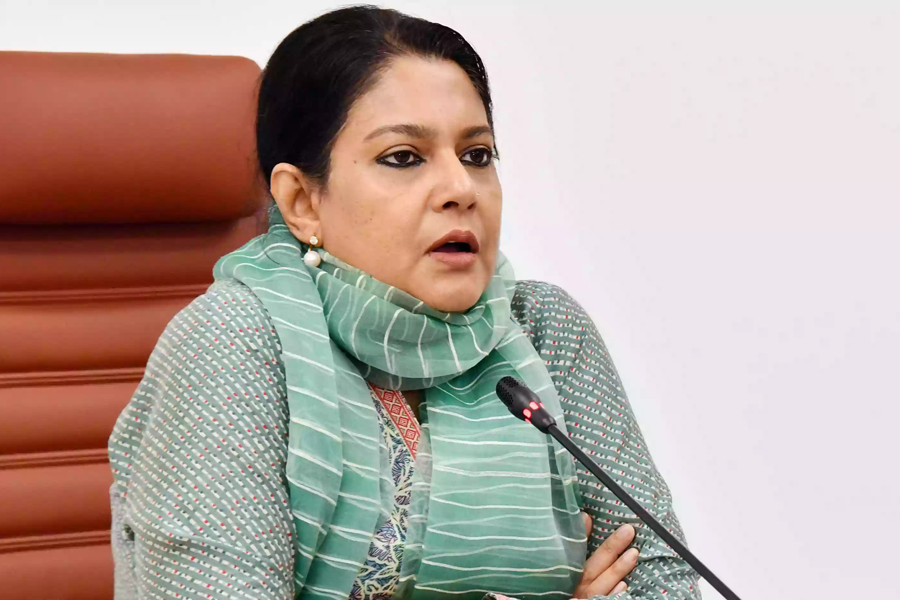
Govt focused on reducing dust to control air pollution in Dhaka: Rizwana

UNB
Published :
Jun 30, 2025 23:01
Updated :
Jun 30, 2025 23:01

1751324406734.webp


Syeda Rizwana Hasan, Advisor to the Ministry of Environment, Forests, Climate Change and Water Resources, has announced a series of proactive steps aimed at tackling air pollution, with a strong focus on controlling dust pollution in Dhaka ahead of winter.

Rizwana also outlined the government's comprehensive plan addressing immediate, mid-term, and long-term solutions under the Bangladesh Clean Air Project (BCAP).

The adviser came up with the information while talking to journalists at the Bangladesh Secretariat following a productive meeting with a visiting team of Chinese air pollution experts.

“As part of short-term measures, all road repair works in Dhaka are targeted to be completed before winter. Surface covering, fencing and water spraying systems will be implemented to control dust,” she said.

Additional initiatives including using watering carts, land hardening and enforcing a “zero soil” policy will be taken to prevent dust from exposed surfaces, she added.

To curb vehicular pollution—a major contributor to poor urban air quality—the Bangladesh Road Transport Authority (BRTA) will remove outdated vehicles and introduce 250 new ones.

Plans are also in place to establish 10 automatic vehicle inspection centers to enforce emission standards.

Besides, a working group will be formed in consultation with the Chinese experts to develop long-term strategies, said the adviser.

She also stressed the importance of accurate data collection and analysis for policy formulation and sustainable progress.

Mid- and long-term goals include establishing an advanced air quality emission monitoring system, aligning emission standards with global norms, introducing sanitary landfills and waste incineration plants and promoting liquefied petroleum gas (LPG) for cleaner cooking.

Meanwhile, tax incentives for environmentally friendly practices and technologies are also under review.

Under BCAP, the Department of Environment (DoE) will launch a continuous emission monitoring system for high-polluting industries and conduct training and awareness programs nationwide.

Meanwhile, the Dhaka Transport Coordination Authority (DTCA) will install road fencing and introduce 50 electric vehicles to promote cleaner transport.

A Japan-funded initiative will establish eight real-time air quality monitoring stations to support evidence-based policymaking and the BEST project will also be implemented to complement these efforts.

Advisor Rizwana expressed optimism about the collaboration with the Chinese expert team, noting that their expertise will significantly enhance Bangladesh’s capacity to fight air pollution.

She reaffirmed the government's strong commitment to creating a cleaner and healthier environment for all.

Dr. Farhina Ahmed, Secretary, Ministry of Environment, Forest and Climate Change; Professor Yu Zhao, Executive Dean, School of Environment, Nanjing University; Dr. Haikun Wang, Vice Dean, Nanjing-Helsinki Institute in Atmospheric and Earth System Sciences; and Dr. Tengyu Liu, Associate Professor, School of Atmospheric Sciences, Nanjing University, were present among others.

The meeting emphasized the importance of developing a national emission inventory and conducting chemical analyses to identify pollution sources.

These steps will lay the foundation for a robust source apportionment study—key to designing targeted, science-based interventions across the country.​
 
Analyze

Analyze Post

Add your ideas here:
Highlight Cite Fact Check Respond

Members Online

⤵︎

Latest Posts

Latest Posts