Donate ☕
201 Military Defense Forums
[🇧🇩] - Save the Rivers/Forests/Hills-----Save the Environment | Page 92 | PKDefense
Home Post Alerts Inbox Watch Videos

[🇧🇩] Save the Rivers/Forests/Hills-----Save the Environment

Reply (Scroll)
Press space to scroll through posts
G Bangladesh Defense
[🇧🇩] Save the Rivers/Forests/Hills-----Save the Environment
521
12K
More threads by Saif


We need long-term climate solutions
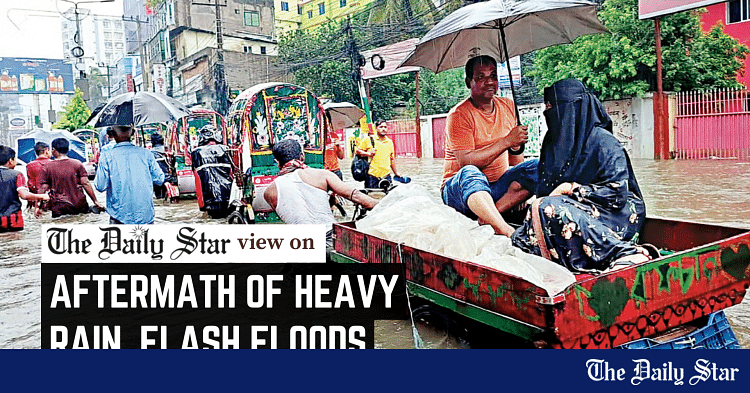
Flash floods reignite call for measures beyond quick fixes or relief operations

1752195464800.webp

VISUAL: STAR

Flash floods, waterlogging, and landslide risks have once again disrupted many lives and livelihoods as heavy rain lashed a number of districts across the country. In Feni, breaches in embankments along the Muhuri, Selonia, and Kohua rivers have reportedly triggered flash floods, marooning thousands and submerging at least 30 villages. Meanwhile, urban areas in Patuakhali, Cox's Bazar, Chattogram, Barishal, Khulna, Noakhali, Bandarban, Khagrachhari, and Rangamati are suffering from severe waterlogging, while crops and vegetable fields in rural areas have been damaged. Landslide warnings have also been issued in the broader region of Chattogram.

While we cannot stop nature from taking its own course, effective preparations could have significantly reduced the extent of the damage. This should have been prioritised especially after last year's devastating floods in the southeast. At the time, political instability and disrupted local governance hampered relief efforts. Now, with a more stable administration in place, timely and efficient flood response is expected. Yet, in places like Feni, locals are dissatisfied with the preventive actions taken so far, particularly the lack of sturdy embankments and the maintenance of existing ones. Though some repairs were carried out since last year, people rightly expect permanent, not piecemeal, solutions. In Noakhali municipality, no substantial initiative to tackle waterlogging has been taken. The local administration cites lack of funds as the reason for not repairing its drainage system since last year's disaster, which is troubling given the recurrent nature of these events.

Though the situation may ease if rainfall subsides, local authorities must remain ready to provide immediate support to affected communities. More importantly, long-term measures are essential to protect people from recurring climate-driven disasters. We are told that at an Advisory Council meeting held on Thursday, discussions were held on building climate-resilient infrastructure and mobilising funds for sustainable solutions. We urge the government to expedite the implementation of these projects. At the same time, we must continue to advocate for a fair share of international climate finance to ease our burdens. That said, the government must also ensure transparency and regular public updates on the use of the domestic flood relief fund launched last year.

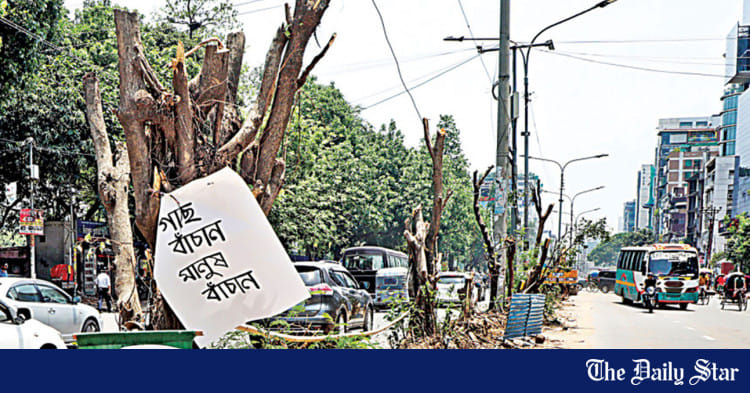
Additionally, environmental destruction—such as rampant hill cutting, unchecked sand extraction from rivers, and encroachment on canals—must be stopped to reduce the impact of natural calamities. Climate change is already amplifying the frequency and intensity of these events. Without long-term planning, robust infrastructure, and strong environmental protection, we will continue to suffer the same fate every monsoon.​
 
Analyze

Analyze Post

Add your ideas here:
Highlight Cite Fact Check Respond

Rizwana for alternative livelihoods, sustainable planning to protect Saint Martin's Island

BSS Dhaka
Published: 12 Jul 2025, 21: 59

1752366130321.webp

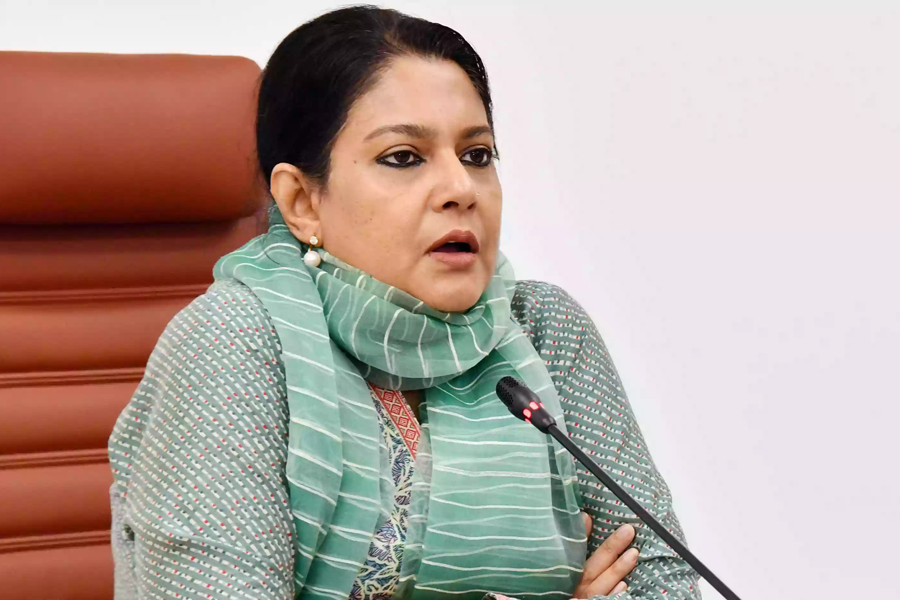
Environment, Forest and Climate Change Adviser Syeda Rizwana Hasan speaks at a meeting at the Department of Environment in Agargaon, Dhaka on 12 July 2025.PID

Environment, Forest and Climate Change Adviser Syeda Rizwana Hasan on Saturday said the incumbent government is emphasising integrated planning and environment-friendly alternative livelihoods to protect the endangered Saint Martin's Island.

She said improving the quality of life for the island's local people is an essential part of the conservation strategy.

Rizwana made the remarks while presiding over a meeting held at the Department of Environment in Agargaon here, a ministry press release said.

The meeting focused on developing strategies for conserving the island's ecosystem and biodiversity and ensuring sustainable livelihoods for its residents.

The environment adviser highlighted that poor agriculture families would receive support for cultivating salt- and climate-resilient vegetables and crops.

Initiatives will include training, demonstration programmes, and technical assistance, she said, adding support will also be provided for compost and vermicompost production.

"Training will be offered on organic pest control in coconut cultivation, along with assistance for poultry and livestock farming and establishing small home nurseries," she said.

Rizwana further announced that food assistance would be increased during the fishing ban period.

Fisherfolk will receive sustainable fishing equipment, including eco-friendly nets, she said.

The environment adviser said skill development programmes will be introduced for tailoring, cap making, midwifery, and trades like computer operations, motor driving, boat navigation, electronics, and hotel management.

She said local youths will be trained as tourist guides, and a group of "Environment Guards" will be formed and trained to support conservation efforts.

PowerPoint presentations were made at the meeting on four key areas: "Studies and Planning," "Environment-Friendly Alternative Livelihood Project," "Eco-Tourism Development Proposal," and "Sustainable Solid Waste Management Plan."

Detailed discussions were held, and it was unanimously decided to formulate a sustainable plan to protect the biodiversity of Saint Martin's Island.

Notable attendees included Farhina Ahmed, Secretary of the Ministry of Environment; Additional Secretaries Md. Navid Shafiullah, Fahmida Khanom and Md. Khayrul Hasan; Director General of the Department of Environment Md Kamruzzaman; and Chief Conservator of Forests Md. Amir Hosain Chowdhury.

Representatives from the Coast Guard, Tourist Police, CEGIS, Department of Fisheries, and various other public and private organidations also participated.​
 
Analyze

Analyze Post

Add your ideas here:
Highlight Cite Fact Check Respond

Climate vulnerability should be prioritised in dev programmes

Tuhin Wadud
Published: 15 Jul 2025, 08: 05

1752626063582.webp


There is also significant disparity in the number of capable individuals at the district level when it comes to tackling the impacts of climate change File photo

My work with the environment and rivers often takes me to remote areas across different regions of the country. I’ve seen up close how climate change is making life unbearable for people in these areas. That’s what made me realise why these places need greater government attention. While studying the allocation of government resources in areas affected by climate change, I came to learn about the term "climate vulnerability".

I learned from a government circular issued by the local government ministry that to ensure appropriate development allocations for climate-affected areas, the government has introduced an initiative called the Climate Vulnerability Index. This initiative has been strategically supported and advanced by the United Nations Capital Development Fund (UNCDF) and the UNDP’s Local Government Initiative on Climate Change (LoGIC) project.


There had been no such initiative before. This programme marks the beginning of such efforts. The government’s circular also mentioned that the project was launched under this initiative. It is a commendable and praiseworthy step. However, after searching online and speaking with a few individuals working on disaster relief allocations, I found that this initiative has not received much publicity.

The LoGIC project, implemented under the Local Government Division of the Ministry of Local Government, Rural Development and Cooperatives (LGRD), is a joint initiative of the Government of Bangladesh, Sweden, Denmark, UNCDF, and UNDP.

Shortly after the interim government took office, it launched a very positive initiative for areas affected by climate change. On 26 September last year, a directive was issued by amending the Union Parishad Development Assistance Utilisation Guidelines 2021.

The amendment stated that to enhance the adaptive capacity of highly climate-vulnerable areas in response to the adverse impacts of climate change, and in determining the general allocation for local government institutions, climate vulnerability will be considered a key indicator alongside area, population, and underdevelopment.

In our country, there is no special allocation for people in crisis due to natural causes. The minimal general allocations that exist often fail to reach the most affected areas because of power dynamics, influence and a flawed allocation system.

It outlines that specific percentages of funds should be allocated based on climate vulnerability at the city corporation, municipality, upazila, and union levels.

This initiative should have been taken much earlier. Since it wasn’t, the current government’s amendment of the guidelines is a welcome move. However, such need-based and people-focused considerations should not be limited to local government allocations alone. It is essential that they guide all resource allocations across the board.

According to a government circular, in the 2021 guidelines, 75 per cent of the allocation for Union Parishads was distributed based on area and population. In a revision made in September 2024, that distribution was changed. Now, of the 75 per cent share, 40 per cent is based on area, 30 per cent on population, and 30 per cent on the Climate Vulnerability Index of the Union Parishad. The percentages vary across different tiers of the Local Government Division’s institutions. Close attention must also be paid to how effectively this revised policy is being implemented at the Union Parishad level.

In Bangladesh, development needs are not the same across city corporations, pourashavas (municipalities), upazilas or unions. Climate change and its impacts further diversify these needs. From division to district to individual union, the disparities in needs are significant. Many unions are partially or entirely riverine while others lie along the seacoast.
Some areas are hilly.

In the Rajshahi region, many places face water shortage during the dry season. In many coastal areas, access to safe drinking water is scarce. The challenges in hilly areas are different. Some places are ravaged by drought, others by floods.

Certain regions of the country experience flooding multiple times a year while others are never affected. When upstream India releases water into the rivers, people along some riverbanks face sudden suffering. There are also areas heavily affected by river erosion. Every year, thousands of homes are swallowed by rivers in the same locations. Hundreds of thousands are displaced annually and migrate to different parts of the country. The government does nothing for those who lose their homes to river erosion.

Cities through which rivers flow also face severe pollution. In short, the needs to cope with climate impacts vary widely across the country. Drought is worsening in some areas, while others are experiencing colder winters. Rivers are being destroyed continuously, and as a result, the environment is becoming increasingly endangered.

In our country, there is no special allocation for people in crisis due to natural causes. The minimal general allocations that exist often fail to reach the most affected areas because of power dynamics, influence and a flawed allocation system. If funds were disbursed based on the nature and severity of the problems, the most vulnerable people would benefit significantly. Even the small emergency allocations provided during extreme crises tend to be inadequate.

The city corporations, municipalities, upazilas and unions have been grouped into different categories, but the basis for this classification is unclear to me. Some districts that do not experience floods or do not need urgent climate adaptation still receive allocations, while other genuinely vulnerable areas receive less support.

Back in 2020, during the COVID-19 pandemic, I asked the state minister for disaster management and relief, Enamur Rahman, on a television talk show what criteria had been used to classify the districts. He was unable to provide a clear answer. I also asked him why there was such extreme disparity in rice allocations for the poor during the pandemic. Again, there was no satisfactory explanation.

In some districts, the number of poor people is around 60,000. In others, it's over two million. Similarly, the number of individuals able to cope with climate impacts varies greatly from district to district. These disparities must be taken into account in allocation decisions. But during the pandemic, rice allocations were made without considering poverty levels.

As a result, it was found that poor people in Munshiganj and Narsingdi received nearly three maunds (about 120 kg) of rice per person, while in Kurigram and Dinajpur, they received only four to five kilograms. This happened because districts were classified solely based on population and area. The lack of disaster-related statistics meant the government treated all districts the same, leading to such inequities in allocation.

Many ministries are involved in addressing climate vulnerability, such as the ministry of water resources and the ministry of environment, forest and climate change. Policies like this need to be introduced for their work in this regard. In several districts of Rangpur division, there are no measures in place to prevent erosion along the Teesta River.

As a result, hundreds of thousands of people living on both banks of the river are becoming homeless. Due to the absence of a comparative policy based on urgency, the government has allocated funds for work on the Ghaghot River, which is relatively less damaging, rather than on the Teesta. Yet, had that money been spent on the Teesta, it would have benefited many more people.​
 
Analyze

Analyze Post

Add your ideas here:
Highlight Cite Fact Check Respond

Plastic dependency: The environmental cost of food delivery in Bangladesh

1752628501113.webp


It is high time to check the growth of the single-use plastic sector to avoid environmental degradation and promote public health. PHOTO: FREEPIK

Over the last couple of years, cities in Bangladesh have seen a rapid growth in online food delivery services. From local catering houses to global fast food chains, everything is a matter of a tap away. However, the unchecked use of single-use plastic in food delivery is a matter of concern.

Multiple layers of plastic, including containers, cutlery, sauce sachets, and plastic bags, are used in packaging during the delivery of the meals. In Dhaka, thousands of orders for daily meals are a usual scenario. Food packed in plastic package contributes to worsening environmental degradation. According to Somoy TV, 30,000 tonnes of solid waste are generated on a daily basis in the country, where 10 percent is single-use plastic.

The business model of food delivery platforms primarily relies on the use of plastic, particularly cheap plastic containers, to minimise costs. Few businesses have experimented with eco-friendly paper boxes or biodegradable packaging, which are associated with high production costs and limited suppliers.

Moreover, the current business regulations in the country do not include special incentives for entrepreneurs who offer food in eco-friendly paper boxes or biodegradable packaging.

If we look at the global lesson, we see that India and Indonesia have already piloted the "Green Delivery" business model for food delivery with biodegradable packaging. In contrast, Bangladesh has made very little progress in regulating single-use plastic in the digital food economy. The country declared a complete ban on using polybags in 2002. However, single-use plastic was not included in the ban. The legal vacuum encouraged the growth of the single-use plastic sector.

However, can biodegradable alternatives cover the demand? Some socially responsible businesspeople have started using biodegradable packaging made from jute, bagasse, and cornstarch. This initiative is considered an emerging market in Bangladesh, but scaling up is a challenge due to prices that are several times higher than traditional plastic packaging. There is also a lack of government subsidies, tax relief, and public-private partnerships.

The government, private sector, and consumers altogether need to put a coordinated effort to address this issue. The government can review the existing laws and regulations. It should also create accountability for businesses by imposing mandatory reporting to the relevant departments. Incentives and lower taxation can promote biodegradable packaging in food delivery. Food delivery platforms should introduce themselves as socially responsible businesses by providing biodegradable packaging and educating other franchises about sustainable practices. People's consumption habits need to be shifted towards green delivery. The Bangladesh Bank nowadays encourages start-up businesses targeting the young generations. They can provide incubation and investment support for affordable biodegradable packaging.

The food delivery in our cities reflects the digital food economy progress as well as the urban transformation. It is now high time to check the growth of the single-use plastic sector to avoid environmental degradation and promote public health. The path is not easy, but redefining sustainability is crucial, considering that it is an integral part of how we eat, deliver, and live.

Md. Ziaul Hoque is a PhD fellow at the University of Chittagong and a development practitioner.​
 
Analyze

Analyze Post

Add your ideas here:
Highlight Cite Fact Check Respond

World risks up to $39 trillion in economic losses from vanishing wetlands, report says

REUTERS
Published :
Jul 16, 2025 10:11Wo
Updated :
Jul 16, 2025 10:16

1752709474500.webp

A drone view shows turf from Derryrush bog left out to dry after being harvested from the blanket bog, in Derryrush, Ireland on April 22, 2024. Ireland's bogs were formed over thousands of years as decaying plants formed a thick layer of peat in wetland areas — Reuters/File

The global destruction of wetlands, which support fisheries, agriculture and flood control, may mean the loss of $39 trillion in economic benefits by 2050, according to a report by the Convention on Wetlands released on Tuesday.

Some 22 per cent of wetlands, both freshwater systems such as peat lands, rivers and lakes, and coastal marine systems including mangroves and coral reefs, have disappeared since 1970, according to the intergovernmental report, the fastest pace of loss of any ecosystem.

Pressures, including land-use change, pollution, agricultural expansion, invasive species, and the impacts of climate change - such as rising sea levels and drought - are driving the declines.

"The scale of loss and degradationis beyond what we can afford to ignore," said Hugh Robertson, the lead author of the report.

The report called for annual investments of $275 billion to $550 billion to reverse the threats to the remaining wetlands, and said current spending was a "substantial under-investment" without giving figures.

The world has lost 411 million hectares of wetlands, the equivalent of half a billion football pitches, and a quarter of the remaining wetlands are now classified as in a state of degradation, according to the report.

Wetlands' economic benefits include flood regulation, water purification and carbon storage - key as water levels rise and tropical storms and hurricanes intensify due to climate change.

They also support the fishery and agriculture industries and offer cultural benefits.

The report launches a week before the Victoria Falls, Zimbabwe, meeting of the parties of the Convention on Wetlands, a global agreement of 172 countries signed in 1971 to spearhead preservation of the ecosystem.

The group, which includes China, Russia and the United States, meets every three years, but it is unclear if all nations will send delegates.

Wetland deterioration is particularly acute in Africa, Latin America, and the Caribbean, but is worsening in Europe and North America, the report said.

Rehabilitation projects are underway in countries including Zambia, Cambodia and China.​
 
Analyze

Analyze Post

Add your ideas here:
Highlight Cite Fact Check Respond

Members Online

⤵︎

Latest Posts

Latest Posts