New Tweets

[🇧🇩] Save the Rivers/Forests/Hills-----Save the Environment

G Bangladesh Defense
[🇧🇩] Save the Rivers/Forests/Hills-----Save the Environment
531
14K
More threads by Saif


Rizwana for alternative livelihoods, sustainable planning to protect Saint Martin's Island

BSS Dhaka
Published: 12 Jul 2025, 21: 59

1752366130321.webp

Environment, Forest and Climate Change Adviser Syeda Rizwana Hasan speaks at a meeting at the Department of Environment in Agargaon, Dhaka on 12 July 2025.PID

Environment, Forest and Climate Change Adviser Syeda Rizwana Hasan on Saturday said the incumbent government is emphasising integrated planning and environment-friendly alternative livelihoods to protect the endangered Saint Martin's Island.

She said improving the quality of life for the island's local people is an essential part of the conservation strategy.

Rizwana made the remarks while presiding over a meeting held at the Department of Environment in Agargaon here, a ministry press release said.

The meeting focused on developing strategies for conserving the island's ecosystem and biodiversity and ensuring sustainable livelihoods for its residents.

The environment adviser highlighted that poor agriculture families would receive support for cultivating salt- and climate-resilient vegetables and crops.

Initiatives will include training, demonstration programmes, and technical assistance, she said, adding support will also be provided for compost and vermicompost production.

"Training will be offered on organic pest control in coconut cultivation, along with assistance for poultry and livestock farming and establishing small home nurseries," she said.

Rizwana further announced that food assistance would be increased during the fishing ban period.

Fisherfolk will receive sustainable fishing equipment, including eco-friendly nets, she said.

The environment adviser said skill development programmes will be introduced for tailoring, cap making, midwifery, and trades like computer operations, motor driving, boat navigation, electronics, and hotel management.

She said local youths will be trained as tourist guides, and a group of "Environment Guards" will be formed and trained to support conservation efforts.

PowerPoint presentations were made at the meeting on four key areas: "Studies and Planning," "Environment-Friendly Alternative Livelihood Project," "Eco-Tourism Development Proposal," and "Sustainable Solid Waste Management Plan."

Detailed discussions were held, and it was unanimously decided to formulate a sustainable plan to protect the biodiversity of Saint Martin's Island.

Notable attendees included Farhina Ahmed, Secretary of the Ministry of Environment; Additional Secretaries Md. Navid Shafiullah, Fahmida Khanom and Md. Khayrul Hasan; Director General of the Department of Environment Md Kamruzzaman; and Chief Conservator of Forests Md. Amir Hosain Chowdhury.

Representatives from the Coast Guard, Tourist Police, CEGIS, Department of Fisheries, and various other public and private organidations also participated.​
 

Climate vulnerability should be prioritised in dev programmes

Tuhin Wadud
Published: 15 Jul 2025, 08: 05

1752626063582.webp


There is also significant disparity in the number of capable individuals at the district level when it comes to tackling the impacts of climate change File photo

My work with the environment and rivers often takes me to remote areas across different regions of the country. I’ve seen up close how climate change is making life unbearable for people in these areas. That’s what made me realise why these places need greater government attention. While studying the allocation of government resources in areas affected by climate change, I came to learn about the term "climate vulnerability".

I learned from a government circular issued by the local government ministry that to ensure appropriate development allocations for climate-affected areas, the government has introduced an initiative called the Climate Vulnerability Index. This initiative has been strategically supported and advanced by the United Nations Capital Development Fund (UNCDF) and the UNDP’s Local Government Initiative on Climate Change (LoGIC) project.


There had been no such initiative before. This programme marks the beginning of such efforts. The government’s circular also mentioned that the project was launched under this initiative. It is a commendable and praiseworthy step. However, after searching online and speaking with a few individuals working on disaster relief allocations, I found that this initiative has not received much publicity.

The LoGIC project, implemented under the Local Government Division of the Ministry of Local Government, Rural Development and Cooperatives (LGRD), is a joint initiative of the Government of Bangladesh, Sweden, Denmark, UNCDF, and UNDP.

Shortly after the interim government took office, it launched a very positive initiative for areas affected by climate change. On 26 September last year, a directive was issued by amending the Union Parishad Development Assistance Utilisation Guidelines 2021.

The amendment stated that to enhance the adaptive capacity of highly climate-vulnerable areas in response to the adverse impacts of climate change, and in determining the general allocation for local government institutions, climate vulnerability will be considered a key indicator alongside area, population, and underdevelopment.

In our country, there is no special allocation for people in crisis due to natural causes. The minimal general allocations that exist often fail to reach the most affected areas because of power dynamics, influence and a flawed allocation system.

It outlines that specific percentages of funds should be allocated based on climate vulnerability at the city corporation, municipality, upazila, and union levels.

This initiative should have been taken much earlier. Since it wasn’t, the current government’s amendment of the guidelines is a welcome move. However, such need-based and people-focused considerations should not be limited to local government allocations alone. It is essential that they guide all resource allocations across the board.

According to a government circular, in the 2021 guidelines, 75 per cent of the allocation for Union Parishads was distributed based on area and population. In a revision made in September 2024, that distribution was changed. Now, of the 75 per cent share, 40 per cent is based on area, 30 per cent on population, and 30 per cent on the Climate Vulnerability Index of the Union Parishad. The percentages vary across different tiers of the Local Government Division’s institutions. Close attention must also be paid to how effectively this revised policy is being implemented at the Union Parishad level.

In Bangladesh, development needs are not the same across city corporations, pourashavas (municipalities), upazilas or unions. Climate change and its impacts further diversify these needs. From division to district to individual union, the disparities in needs are significant. Many unions are partially or entirely riverine while others lie along the seacoast.
Some areas are hilly.

In the Rajshahi region, many places face water shortage during the dry season. In many coastal areas, access to safe drinking water is scarce. The challenges in hilly areas are different. Some places are ravaged by drought, others by floods.

Certain regions of the country experience flooding multiple times a year while others are never affected. When upstream India releases water into the rivers, people along some riverbanks face sudden suffering. There are also areas heavily affected by river erosion. Every year, thousands of homes are swallowed by rivers in the same locations. Hundreds of thousands are displaced annually and migrate to different parts of the country. The government does nothing for those who lose their homes to river erosion.

Cities through which rivers flow also face severe pollution. In short, the needs to cope with climate impacts vary widely across the country. Drought is worsening in some areas, while others are experiencing colder winters. Rivers are being destroyed continuously, and as a result, the environment is becoming increasingly endangered.

In our country, there is no special allocation for people in crisis due to natural causes. The minimal general allocations that exist often fail to reach the most affected areas because of power dynamics, influence and a flawed allocation system. If funds were disbursed based on the nature and severity of the problems, the most vulnerable people would benefit significantly. Even the small emergency allocations provided during extreme crises tend to be inadequate.

The city corporations, municipalities, upazilas and unions have been grouped into different categories, but the basis for this classification is unclear to me. Some districts that do not experience floods or do not need urgent climate adaptation still receive allocations, while other genuinely vulnerable areas receive less support.

Back in 2020, during the COVID-19 pandemic, I asked the state minister for disaster management and relief, Enamur Rahman, on a television talk show what criteria had been used to classify the districts. He was unable to provide a clear answer. I also asked him why there was such extreme disparity in rice allocations for the poor during the pandemic. Again, there was no satisfactory explanation.

In some districts, the number of poor people is around 60,000. In others, it's over two million. Similarly, the number of individuals able to cope with climate impacts varies greatly from district to district. These disparities must be taken into account in allocation decisions. But during the pandemic, rice allocations were made without considering poverty levels.

As a result, it was found that poor people in Munshiganj and Narsingdi received nearly three maunds (about 120 kg) of rice per person, while in Kurigram and Dinajpur, they received only four to five kilograms. This happened because districts were classified solely based on population and area. The lack of disaster-related statistics meant the government treated all districts the same, leading to such inequities in allocation.

Many ministries are involved in addressing climate vulnerability, such as the ministry of water resources and the ministry of environment, forest and climate change. Policies like this need to be introduced for their work in this regard. In several districts of Rangpur division, there are no measures in place to prevent erosion along the Teesta River.

As a result, hundreds of thousands of people living on both banks of the river are becoming homeless. Due to the absence of a comparative policy based on urgency, the government has allocated funds for work on the Ghaghot River, which is relatively less damaging, rather than on the Teesta. Yet, had that money been spent on the Teesta, it would have benefited many more people.​
 

Plastic dependency: The environmental cost of food delivery in Bangladesh

1752628501113.webp


It is high time to check the growth of the single-use plastic sector to avoid environmental degradation and promote public health. PHOTO: FREEPIK

Over the last couple of years, cities in Bangladesh have seen a rapid growth in online food delivery services. From local catering houses to global fast food chains, everything is a matter of a tap away. However, the unchecked use of single-use plastic in food delivery is a matter of concern.

Multiple layers of plastic, including containers, cutlery, sauce sachets, and plastic bags, are used in packaging during the delivery of the meals. In Dhaka, thousands of orders for daily meals are a usual scenario. Food packed in plastic package contributes to worsening environmental degradation. According to Somoy TV, 30,000 tonnes of solid waste are generated on a daily basis in the country, where 10 percent is single-use plastic.

The business model of food delivery platforms primarily relies on the use of plastic, particularly cheap plastic containers, to minimise costs. Few businesses have experimented with eco-friendly paper boxes or biodegradable packaging, which are associated with high production costs and limited suppliers.

Moreover, the current business regulations in the country do not include special incentives for entrepreneurs who offer food in eco-friendly paper boxes or biodegradable packaging.

If we look at the global lesson, we see that India and Indonesia have already piloted the "Green Delivery" business model for food delivery with biodegradable packaging. In contrast, Bangladesh has made very little progress in regulating single-use plastic in the digital food economy. The country declared a complete ban on using polybags in 2002. However, single-use plastic was not included in the ban. The legal vacuum encouraged the growth of the single-use plastic sector.

However, can biodegradable alternatives cover the demand? Some socially responsible businesspeople have started using biodegradable packaging made from jute, bagasse, and cornstarch. This initiative is considered an emerging market in Bangladesh, but scaling up is a challenge due to prices that are several times higher than traditional plastic packaging. There is also a lack of government subsidies, tax relief, and public-private partnerships.

The government, private sector, and consumers altogether need to put a coordinated effort to address this issue. The government can review the existing laws and regulations. It should also create accountability for businesses by imposing mandatory reporting to the relevant departments. Incentives and lower taxation can promote biodegradable packaging in food delivery. Food delivery platforms should introduce themselves as socially responsible businesses by providing biodegradable packaging and educating other franchises about sustainable practices. People's consumption habits need to be shifted towards green delivery. The Bangladesh Bank nowadays encourages start-up businesses targeting the young generations. They can provide incubation and investment support for affordable biodegradable packaging.

The food delivery in our cities reflects the digital food economy progress as well as the urban transformation. It is now high time to check the growth of the single-use plastic sector to avoid environmental degradation and promote public health. The path is not easy, but redefining sustainability is crucial, considering that it is an integral part of how we eat, deliver, and live.

Md. Ziaul Hoque is a PhD fellow at the University of Chittagong and a development practitioner.​
 

World risks up to $39 trillion in economic losses from vanishing wetlands, report says

REUTERS
Published :
Jul 16, 2025 10:11Wo
Updated :
Jul 16, 2025 10:16

1752709474500.webp

A drone view shows turf from Derryrush bog left out to dry after being harvested from the blanket bog, in Derryrush, Ireland on April 22, 2024. Ireland's bogs were formed over thousands of years as decaying plants formed a thick layer of peat in wetland areas — Reuters/File

The global destruction of wetlands, which support fisheries, agriculture and flood control, may mean the loss of $39 trillion in economic benefits by 2050, according to a report by the Convention on Wetlands released on Tuesday.

Some 22 per cent of wetlands, both freshwater systems such as peat lands, rivers and lakes, and coastal marine systems including mangroves and coral reefs, have disappeared since 1970, according to the intergovernmental report, the fastest pace of loss of any ecosystem.

Pressures, including land-use change, pollution, agricultural expansion, invasive species, and the impacts of climate change - such as rising sea levels and drought - are driving the declines.

"The scale of loss and degradationis beyond what we can afford to ignore," said Hugh Robertson, the lead author of the report.

The report called for annual investments of $275 billion to $550 billion to reverse the threats to the remaining wetlands, and said current spending was a "substantial under-investment" without giving figures.

The world has lost 411 million hectares of wetlands, the equivalent of half a billion football pitches, and a quarter of the remaining wetlands are now classified as in a state of degradation, according to the report.

Wetlands' economic benefits include flood regulation, water purification and carbon storage - key as water levels rise and tropical storms and hurricanes intensify due to climate change.

They also support the fishery and agriculture industries and offer cultural benefits.

The report launches a week before the Victoria Falls, Zimbabwe, meeting of the parties of the Convention on Wetlands, a global agreement of 172 countries signed in 1971 to spearhead preservation of the ecosystem.

The group, which includes China, Russia and the United States, meets every three years, but it is unclear if all nations will send delegates.

Wetland deterioration is particularly acute in Africa, Latin America, and the Caribbean, but is worsening in Europe and North America, the report said.

Rehabilitation projects are underway in countries including Zambia, Cambodia and China.​
 

Embankments in Sundarbans delta: Wall of hope or risk?

1752713418157.webp

Infrastructure like embankments may be designed and built by engineers, but it is maintained by the community. FILE PHOTO: HABIBUR RAHMAN

"I have been living here for more than ten years. The embankment collapse caused by Amphan destroyed my whole house. Though we rebuilt it in the same location, we still feel fear when we hear cyclone warnings. This year is no exception."

At the end of May 2025, when the Bangladesh Meteorology Department announced a depression in the Bay of Bengal and its potential to develop into a cyclone, I had this conversation with Bariul Islam, whom I came to know through my ongoing dissertation fieldwork (2024-25) in the lower delta of the Bangladesh Sundarbans. Bariul's house is situated at the edge of the embankment that separates the village from the Sundarbans.

Living close to the embankment produces both hope and fear for people like Bariul. Here, I will highlight how embankments turn into ambivalent infrastructures and argue that infrastructure is not neutral; rather, it produces mixed and often contradictory impacts shaped by both nature and human actions.

In the lower delta, a traditional tidal river management system, known as austomashi badh, involved cutting dams during early monsoons to allow tidal waters to irrigate low-lying paddy fields. The delta's entire riverine network was disrupted during British rule by the construction of railways and river-based infrastructure such as bridges, culverts, and canals, as documented poignantly in Chas A Bentley's Malaria and Agriculture in Bengal and Sir William Willcocks' Lectures on the Ancient System of Irrigation in Bengal.

Modern embankments with polders and sluice gates were introduced in the 1960s through the Coastal Embankment Project (CEP), supported by Dutch consultants, USAID, and the World Bank, aiming to boost rice production by controlling floods during the Green Revolution. Many critics viewed the CEP as a "Eurocentric," technocratic solution that overlooked the delta's ecological complexity and its social and political dynamics.

After Cyclones Sidr (2007) and Aila (2009), the lower delta emerged as a new "climate frontier." The recent Coastal Embankment Improvement project aims to make existing embankments higher and wider to protect people and ecosystems from rising sea levels, salinity, and the increasing frequency of cyclones.

My ethnographic immersion with local people reveals competing experiences with the embankments. I found many landless families, displaced by riverbank erosion, had built homes on the southern (outer) side of the embankment. Embankments also serve as temporary refuges during cyclones, floods, and erosion.

On a large island near the Sundarbans, I observed a 31-kilometre concrete embankment under construction, already transforming local life. Battery-powered vans now provide quicker and more affordable transportation for goods and people. Islanders hope the embankment will shield them from cyclones and protect their homes, shrimp, and fish ghers. Almost everyone believes the new embankment will protect them from future cyclones. I found a clear sense of security when they spoke about it. To them, the embankment is more than soil and concrete; it is a social stage, a "wall of hope" where society performs its everyday life.

Despite its promised and expected benefits, embankments in the lower delta often fail to provide adequate protection for both humans and non-humans. Embankment collapses during cyclones like Sidr, Aila, Amphan, and Remal caused devastating floods, salinisation, and prolonged waterlogging.

Each time an embankment collapses, people immediately blame climate change. But this form of climate reductionism conceals the political ecology behind such collapses. Even if built with high-quality materials and sound engineering, one of the key causes of deterioration is damage by shrimp and fish gher owners. They cut into the base of embankments to bring saline water into their enclosures—an illegal practice often carried out by bribing government officials.

These gher owners are typically powerful local elites, closely connected to national politics, against whom government authorities rarely dare to act. It is, therefore, crucial to understand the politics behind embankment collapse rather than blindly blaming climate change.

I also visited several villages near the Sundarbans where many shrimp farmers now wish to return to paddy cultivation. In one village, farmers' collective efforts to resume rice farming turned into a signed petition to the UNO. But local elites blocked the process, making it difficult for small farmers to shift away from aquaculture, despite growing interest.

On May 25, people in the lower delta observed 16 years since Cyclone Aila. During my fieldwork, I encountered many damaged parts of embankments still awaiting government repair. "This embankment collapsed not because of the cyclone but because no one cared to repair it," one of my interlocutors told me bitterly. Another claimed that the government acquired his brother-in-law's land for embankment construction without offering any financial compensation. Eventually, embankments in the lower delta have become a deeply politicised infrastructure.

Despite living with constant risk, the encouraging aspect is the power of local people's remarkable adaptability. Embankment collapses frequently occur in the lower delta, yet men, women, and even children do not wait for government assistance.

When the water begins to recede during the ebb, announcements are made over mosque microphones, calling people to gather at the site with spades, baskets, and shovels. This collective spontaneity provides an important insight: infrastructure may be designed and built by engineers, but it is maintained by the community.

For them, the embankment is a lifesaver. Yet, they speak of it with uncertainty, aware that the same structure can collapse and drag them into danger. This coexistence of hope and risk, protection and insecurity, defines the delta's embankment. Unlike outsiders who view it as a technical fix, locals understand it as intertwined with memory, loss, labour, and solidarity.

Each part of an embankment's biography—its construction, use, collapse, and repair—tells us something profound about human society.

Fahmid Al Zaid is associate professor in Department of Anthropology, University of Dhaka, and a PhD candidate at Durham University, UK.​
 

Restored canal brings relief to residents in Ctg’s Raozan

1752887683450.webp


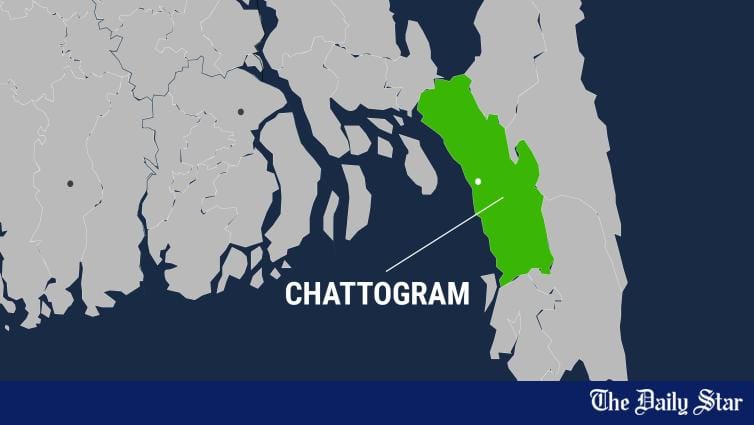
For years, even light monsoon rains would leave Hajipara, a neighbourhood in Chattogram's Raozan municipality, submerged.

Roads and courtyards turned into temporary ponds, forcing residents indoors and disrupting daily life.

SM Asad Ullah, a former ward councillor, said, "Our neighbourhood's drainage canal -- the Kashkhali -- had become heavily silted with sediment from nearby hills. Even a brief spell of rain used to cause flooding."

But this year, the situation has taken a dramatic turn, thanks to the re-excavation of the canal.

"This year, we are yet to face any waterlogging due to restoration of the canal," said SM Asad Ullah.

The canal was re-excavated by the Bangladesh Agricultural Development Corporation (BADC) under a project titled "Surface Water Irrigation Development Project in Chattogram and Cox's Bazar districts."

During a recent visit to the area, this correspondent observed that the two-kilometre stretch of the canal has been cleared and restored, while an embankment beside the newly excavated canal bank is also under construction.

Raozan Municipality data showed that around 1,800 to 1,900 residents live in the waterlogging-prone area.

The 8.5km Kashkhali canal starts from the hilly area of Raozan and flows into the Kagatia canal, a water body linked directly to the Halda river.

"But there is no waterlogging this year as the canal has been re-excavated after nearly a decade," said Irfan Uddin, an official of the Raozan Municipality.

BADC data showed that the re-excavation of the canal is also expected to restore hope for hundreds of farmers, as reinstating the waterbody would help convert over 560 acres of land into three-crop fields.

Tamal Das, assistant engineer at BADC's Chattogram region, said farmers will now be able to grow vegetables alongside paddy as the canal ensures access to freshwater for irrigation.

Nurul Islam, superintendent engineer of BADC and director of the project, said the canal was re-excavated with the goal of ensuring sustainable improvement in both livelihoods and living conditions.

"Hundreds of farmers and residents had long been suffering due to the poor state of this waterway. But now the suffering is over," he said.​
 

Dhaka’s canals bear the brunt of haphazard waste disposal
20 July, 2025, 00:00

THE deplorable condition of Dhaka’s canals and water bodies can hardly be overstated. Nearly all the canals in and around the capital have either deteriorated significantly or are heading towards complete extinction because of unregulated waste disposal and persistent encroachment. A waste-choked Dholaipar Canal in Jatrabari, as a photograph that New Age published on July 19 shows, serves as a stark example of the broader neglect afflicting almost all of Dhaka’s canals and wetlands, which remain critically unprotected and unpreserved. Unplanned dumping of domestic waste, market waste, faecal sludge, medical and electronic waste continues to degrade these vital waterways — polluting the environment, causing water stagnation and endangering public health. According to the office of the Dhaka deputy commissioner, the city has 54 canals. The Institute of Water Modelling lists 50, while the National River Conservation Commission records 77. Responsibility for the maintenance and preservation of these canals lies primarily with the two city corporations, both of which have made repeated pledges to protect them. Yet not a single canal in Dhaka today is free from pollution or encroachment. Many have lost their natural flow, and some have disappeared altogether due to relentless encroachment.New age products

The existence of several canals is now only nominal, with physical traces of them entirely lost. Many others are heading in the same direction amid inaction by the authorities concerned. The city’s Flood Action Plan and Detailed Area Plan had identified 5,523 acres of water retention zones, 20,093 acres of canals and rivers, and 74,598 acres of flood flow zones for preservation. However, nearly two-thirds of these designated areas have been occupied — often by state agencies and influential actors. Alarming estimates suggest that around 2,000 acres of flood flow zones vanish every year. A 2017 RAJUK study found that only 1,744 acres of the projected 5,523 acres of water retention areas remained intact. In 2016, following severe waterlogging, the Dhaka South City Corporation, Dhaka WASA, the district administration, police and the Bangladesh Water Development Board launched a joint initiative to identify land grabbers and initiate evictions. Although a list was prepared and some limited reclamation drives were conducted, these proved unsustainable. Many of the evicted encroachers returned — and new ones joined them. This failure is particularly egregious given that numerous laws, regulations, policies and guidelines exist to ensure environmentally sound waste management and to prevent encroachment.

It is high time the authorities moved beyond hollow rhetoric and demonstrated genuine political will to reclaim and protect the city’s canals, wetlands, green spaces and water bodies. The government must adopt an integrated approach that addresses all the factors, including waste management, contributing to the degradation of these vital ecological assets.​
 

Environmental justice
GM Tafsir Ahmed 21 July, 2025, 00:00

UNDERSTANDING the concept of environmental crime is a complex attempt that seeks consideration of the overall socio-cultural as well as political structure of a particular area. And the narrow view of criminology and criminal justice theories are changing over time. The idea of environmental justice within the criminological literature started to become prevalent in the world around the late 1980s and early 1990s. Green criminology can be segmented as a major portion of critical criminology, which challenges and goes beyond the idea of traditional criminology.

Traditional criminology is rooted in the enduring practice of individualistic and positivistic approaches, as usual focusing on the direct breach of provided laws related to the environment and identifying the specific offenders (who can be called polluters). On the other hand, critical criminology tries to adopt a broader view, holistic structural analysis and addressing the underlying social inequalities, imbalance of power, and socio-economic gaps deeply related to the society that also has a significant contribution to environmental harm. This perspective subscribes to concepts such as environmental justice, eco-justice, and evolving notions like climate criminology and глобал disparities, especially focusing on the interconnection between the degradation of our environment and global inequality, consequently affecting the idea of social justice.

Built upon and enriched by these theories, green criminology has become an excellent approach which integrates the environmental concerns with criminological inquiry. In contrast, green criminology seeks a wider purview of harm than traditional criminology. That means it tries to promote the idea of harm not only by petty offences or street crime but also by the act against the ecosystem or the environment. Prioritising the life of both human and non-human green criminology has expanded the boundaries to recognise all types of environmental harm regardless of the existence of any legislation in a particular state. In broader terms, there is a precise difference regarding the treatment of victims and methods of interpretation. Traditional criminology usually requires direct harm from another human to initiate any legal action against that person. In green criminology, it can be contended that the causation between the offender and victim need not be direct. It incorporates the idea of recognising the injustices against the non-human entities, like fish, birds and all other living bodies or organisms existing in the environment.

The consequence of environmental crime is constantly harming all living being: human and non-human. In Bangladesh, the people have accepted the reality of breathing in the air heavy with dust and consuming unsafe water. Dumping industrial waste into rivers like the Buriganga and Turag, unaddressed air pollution in Dhaka due to brick kilns and vehicle emissions, plastic waste blocking waterways, and deforestation in the Sundarbans are the major environmental crimes drastically harming public health and biodiversity. Enduring the environmental injustice became part and parcel of life.

Despite the seriousness of these issues, probably our state organs have failed to combat such crimes. Ecological integrity is compromised to implement economically beneficial projects. Nature has consistently been the one to make sacrifices in the name of societal progress and development. This reality is not limited to Bangladesh; the same situation prevails globally. Industrialisation and economic development are undeniably a driving factor and fundamentally necessary for the overall advancement of any country. It is no secret that the primary objective of every government is to provide a better standard of living for its citizens. In addition, the expansion of the private sector has consequently opened the paths of significant employment opportunities and reduced the problem of unemployment. However, such progress carries its own burdens. While prioritising industrial growth, environmental concerns are mostly overlooked, leading to hazardous emissions and ecological harm. It is an unsettling paradox: the quest for progress and improved lifestyles is simultaneously contributing to the overall deterioration of the environment. The adverse effects arising from industrialisation are significantly jeopardising the public health and compromising the well-being of affected populations. There should be a mindful balance that needs to be maintained between the development and the protection of the environment. Economic development at the cost of the environment may lead to irreversible loss.

The non-profit organisations, such as the Bangladesh Environmental Lawyers Association and other civic groups, have already played a significant role in sustainable policies. The legislature of our country has already addressed this ecological harm by enacting laws — Bangladesh Environment Conservation Act,1995, The Environment Court Act, 2010. However, the effectiveness of these legislative measures remains highly questionable. It is a matter of concern whether these laws are truly delivering justice to the affected communities or merely existing on paper. The problem lies within the loopholes of the ECA, which prescribes the prior approval by the Department of Environment to file it as a complaint to the court. Here, the intervention by the executive in judicial matters restricts access to justice for the people, as there is a possibility of the department being politicised by any other means. Environmental crime is a multidisciplinary area that requires specialised knowledge to address, understand, and resolve effectively. However, there is no clear procedural framework for dealing with it, nor is there any requirement for a specialised person to assist the judge in resolving such disputes. The number of courts specifically allocated to adjudicate environmental litigation is considerably limited. Similarly, the judges appointed to the environmental courts have to discharge their responsibilities alongside their regular judicial duties to other courts. These overlapping responsibilities put considerable strain on the judges, making it troublesome for them to dedicate adequate time and attention to environmental disputes.

Therefore, it is imperative to introduce effective legal reforms to environmental laws to align the justice system with prevalent environmental issues, reduce procedural complexities, and curb environmental crimes.

GM Tafsir Ahmed is a law student at Bangladesh University of Professionals.​
 

Members Online

Latest Posts

Back
PKDefense - Recommended Toggle