☕ Support Us
[🇧🇩] - Save the Rivers/Forests/Hills-----Save the Environment | PKDefense

[🇧🇩] Save the Rivers/Forests/Hills-----Save the Environment

Reply (Scroll)
Press space to scroll through posts
G Bangladesh Defense
[🇧🇩] Save the Rivers/Forests/Hills-----Save the Environment
506
12K
More threads by Saif

Saif

Senior Member
Joined
Jan 24, 2024
Messages
16,252
Likes
8,072
Nation

Axis Group

Stop disturbing the Sundarbans!​

Restrain traffic of ships through the forest

1711232731282.png


It is deeply concerning that on top of projects, megaprojects, illegal occupations and deforestation ravaging the Sundarbans, traffic of ships through the forest has increased dramatically in recent years. A recent report sheds light on how ships, discharging harmful fumes and sound pollution, and often carrying toxic materials through the forest, have nearly doubled in a decade—from 357 trips monthly in 2012 to 837 trips in 2022, and 701 trips monthly so far this year.

Under the first Protocol on Inland Water Transit and Trade between Bangladesh and India, signed in 1972, lighter cargo vessels can operate between the two countries using the waterways mostly through the Sundarbans. A major route for these ships goes through at least 100 km of the river system inside the mangrove forest, which takes around eight hours for the vessels to travel. While any motor vehicle, including boats and ships, is strictly prohibited from operating through the forest after sunset till sunrise, ships continue to operate 24/7 unrestrained. The customs station in Angtihara, the entry point to the forest on this route, only logs the trips of the ships and does not monitor if any laws have been broken. While the customs and immigration in India close off at night, our customs office continues to operate throughout the night.
By allowing these activities, we are now destroying the Sundarbans from the inside. The toxic fumes and loud sounds greatly impact wildlife habitats and breeding environments. The propellers disrupt the marine ecosystem, and the waves cause severe erosions. For instance, the width of rivers on this route has increased from 20-30 metres to 50-60 metres. Most of the ships on this route contain fly ash, coal, and stones from India for our riverside cement factories. In the last seven years, at least 15 such ships have capsized inside the forest, spilling these harmful materials directly into the river.

Bangladesh has now become a land of lost forestlands and dead ecosystems. We have irredeemably destroyed a number of forests and major sources of biodiversity throughout this delta, and even in the hill tracts. The Sundarbans is the last hope for any unique and great population of wildlife to survive. The government must ensure that any activity harming this forest is halted immediately, and look for an alternative route for maritime trade with India as well as consider moving major power plants and factories from the area.​
 

Save Sundarbans at any cost​

Speakers tell event

1711232885843.png

To raise awareness among students regarding the importance of the world’s largest mangrove forest, artists perform at an event yesterday. Tour Operator Association of Sundarbans organised the programme at Khulna Lions School and College, marking Sundarbans Day. Photo: Habibur Rahman

National and international conspiracies are going on to destroy the Sundarbans, the world's largest mangrove forest, speakers alleged at a programme yesterday.

Stressing that the Sundarbans is a vital part of Bangladesh's national identity rather than being just a forest, the speakers said the forest is crucial for the country's ecological balance, and economic well-being both at present and in future.

A group of environmentalists and rights activists joined a human chain demanding all illegal activities destroying the Sundarbans be stopped. It was organised by Bangladesh Poribesh Andolon in Dhaka's Shahbagh area.

"Since the current government took office, development projects have been focused on the Sundarbans, which, according to our observation, has caused more harm than benefit. The trees, biodiversity, and waterways of the Sundarbans are being destroyed one by one," said Bapa president Prof Nur Mohammad Talukder, who chaired the event.

"The Sundarbans protected the country from all natural calamities that have occurred till date. If it survives, Bangladesh will survive," he also said.

"At the national and international levels, there are numerous plans and conspiracies to destroy the Sundarbans. Using its existing rules and regulations, the government must take decisive action to safeguard the forest at all cost," he added.

"Bangladesh will be a developed country in 2041. What will be the condition of the Sundarbans then? We don't want a developed Bangladesh by destroying the Sundarbans," said Shahidul Islam, Bapa co-chairman and professor of geography and environment department at Dhaka University.

Mihir Biswas, joint secretary of Bapa, alleged that the current government has consistently been approving projects that are harming the Sundarbans in the name of development.

Bapa general secretary Alamgir Kabir called upon the government to refrain from undertaking such projects.

Bapa joint secretary Hassan Yousuf Khan, executive members Halim Dad Khan and Parvin Akter, spoke among others.​
 

No highways or infrastructure in forest: Saber​

FE ONLINE REPORT
Published :​
Mar 21, 2024 18:51
Updated :​
Mar 21, 2024 18:57

1711320846648.png


The Environment and Forest Minister on Thursday said that forests must be viewed as a resource and that they cannot be destroyed by the construction of highways or any other infrastructure through them.
Minister Saber Hossain Chowdhury said this at an event marking International Forest Day.

He also said that laws are being formulated for forest conservation. Forest research will also be increased.

The environment minister said these things as the chief guest at a discussion programme organised by the Forest Department on International Forest Day with the theme "Forests and Innovation: New Solutions for a Better World".

The introduction of smart patrolling systems in the Sundarbans has resulted in effective forest monitoring and crime prevention, the minister said.

Mobile apps are being developed to enable tourists in the Sundarbans and other protected regions to purchase tickets and receive other services online, he said, adding that the existing laws, rules and regulations are being revised to achieve various targets.

Chief Forest Conservator Md Amir Hossain Chowdhury presided over the program, whereas Environment Secretary Farhana Ahmed spoke, among others.

Cheques were distributed to the beneficiaries of social forestry and prizes were given to the winners of the 'Tree Identification' competition held on the occasion of International Forest Day.​
 

Pollution claims 2.72 lakh lives in one year​

Finds 2019 WB environment analysis on Bangladesh

1711664429880.png


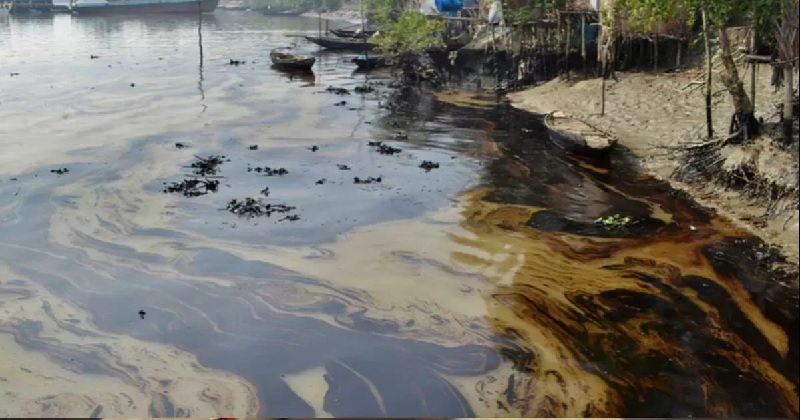
The Louhajang river in Tangail is choking on toxic waste from factories in BSCIC Industrial Area. The heavily contaminated water is destroying the aquatic biodiversity and making life difficult for the locals. The photo was taken from Khudirampur in Sadar upazila recently. PHOTO: MIRZA SHAKIL

Alarming levels of air pollution, unsafe water, poor sanitation, and exposure to lead caused over 2.72 lakh premature deaths in Bangladesh in 2019.

Environmental degradation also cost the country Tk 92,081 crore, which was 17.6 percent of its GDP that year, according to the Bangladesh Country Environment Analysis of World Bank.

Pollution disproportionately harms the poor, children under five, the elderly, and women, says the report released yesterday.

Addressing an event where the report was launched, Saber Hossain Chowdhury, minister of environment, said combating environmental degradation was a main agenda of the government.

"We admit that there are many environmental problems in our country. The present government has taken a 100-day programme to address the most crucial environmental issues," he said.

Some environmental problems are caused here while others are caused by the developed nations, he said while speaking as the chief guest.

"Development partners should offer grants, not loans, to resolve the environmental degradation caused by climate change."

The World Bank report says household and outdoor air pollution have the most detrimental effect on health, leading to nearly 55 percent of premature deaths, which alone cost around Tk 43,529 core or 8.32 percent of the GDP in 2019.

The presence of PM2.5 was more than twelve times higher than WHO's annual air quality standard, mentions the report.

Particulate matter, especially PM2.5, is the fine particles that float in the air. It is linked to asthma, heart and lung diseases, cancer, respiratory illnesses, and premature deaths.

Lead poisoning is causing irreversible damage to children's brain development, resulting in an estimated annual loss of nearly 20 million IQ points.

Major rivers in Bangladesh experienced a severe decline in water quality due to industrial discharge and unmanaged waste, including plastic and untreated sewage, the report states.
RIVER POLLUTION: About 60,000 cubic metres of toxic waste from more than 7,000 factories dumped into Dhaka rivers per day​

The rivers surrounding Dhaka receive about 60,000 cubic metres of toxic industrial waste every day from more than 7,000 industries mainly located mostly in Tongi, Hazaribagh, Tejgaon, Tarabo, Narayanganj, Savar, Gazipur, Ghorashal, and the Dhaka Export Processing Zone.

Untreated industrial waste and chemicals used for agriculture are significantly polluting the soil which ultimately affects the rivers through groundwater flows.

Abdoulaye Seck, World Bank country director for Bhutan and Bangladesh, said, "We have seen around the world that when economic growth comes at the cost of the environment, it cannot sustain. But it is possible to grow cleaner and greener without growing slower.

"To sustain its strong growth path and improve the liveability of cities and the countryside, Bangladesh simply cannot afford to ignore the environment."

Timely and urgent interventions for air pollution control; improved water, sanitation, and hygiene; and control of lead exposure could prevent over 133,000 premature deaths per year, he said.
"We have seen around the world that when economic growth comes at the cost of the environment, it cannot sustain."
— Abdoulaye Seck WB Country Director for Bangladesh and Bhutan​

Other speakers said investments in cleaner power generation, cleaner cooking fuel, and stricter control of industrial emissions could help reduce air pollution.

Enforcing environmental regulations coupled with investments and other incentives for clean cooking, scaling up green financing, setting up efficient carbon markets, and raising awareness to reduce pollution should be emphasized, they added.

Ana Luisa Gomes Lima, World Bank senior environmental specialist and co-author of the report, said, "With timely and right set of policies and actions, Bangladesh can reverse its environment degradation."​
 

Eight ways to overcome waste pollution crisis​

29 Mar 2024, 2:38 pm

water-pollution.jpg


UNB:
Humanity generates between 2.1 billion and 2.3 billion tonnes of municipal solid waste a year, according to UN Environment Programme (UNEP).

When improperly managed, much of that refuse—from food and plastics to electronics and textiles—emits greenhouse gases or poisonous chemicals.

This damages ecosystems, inflicts disease and threatens economic prosperity, disproportionately harming women and youth.

On 30 March, the world will mark the International Day of Zero Waste.

The observance, led by the United Nations Environment Programme (UNEP) and the UN Human Settlements Programme (UN-Habitat), highlights the importance of proper waste management.

It also focuses on ways to rein in the conspicuous consumption that is feeding the waste crisis.

“Overconsumption is killing us. Humanity needs an intervention,” says UN Secretary-General António Guterres. “On this Zero Waste Day, let’s pledge to end the destructive cycle of waste, once and for all.”
Here are eight ways to embrace a zero waste approach:
  1. Combat food waste​

Some 19 per cent of food available to consumers is wasted annually despite 783 million people going hungry. Around 8 to 10 per cent of the planet’s greenhouse gas emissions come from the production of food that is ultimately squandered.

There are lots of ways to turn that tide. Municipalities can promote urban agriculture and use food waste in animal husbandry, farming, green-space maintenance and more. They can also fund food waste composting schemes, segregate food waste at source and ban food from dumpsites. Meanwhile, consumers can buy only what they need, embrace less appealing but perfectly edible fruits and vegetables, store food more wisely, use up leftovers, compost food scraps instead of throwing them away, and donate food before it goes bad, something made easier by a bevy of apps.
  1. Take on textile waste​

Less than 1 per cent of the material used to produce clothing is recycled into new items, resulting in over US$100 billion in annual material value loss. The textiles industry also uses the equivalent of 86 million Olympic-sized swimming pools of water every year.

To counter that, the fashion industry needs to become more circular. Brands and retailers can offer more circular business models and products that last longer and can be remade, governments can provide infrastructure for collecting and sorting used textiles, communicators—including influencers and brand managers—can shift fashion’s marketing narrative, and consumers can assess if their clothing purchases are necessary.

“Zero waste makes sense on every level,” says Michal Mlynár, UN-Habitat Acting Executive Director. “By retaining materials within the economy and enhancing waste management practices, we bring benefits to our economies, our societies, our planet and ourselves.”
  1. Avoid electronic waste​

Electronics, from computers to phones, are clogging dumpsites around the world as manufacturers continually encourage consumers to purchase brand-new devices.

Through robust policymaking, governments can encourage consumers to keep their products for longer while pushing manufacturers to offer repair services, a change that would bring a host of economic benefits. They can also implement extended producer responsibility, a policy that can ensure producers of material goods are responsible for the management and treatment of waste. This can keep raw materials and goods in the economic cycle and inspire consumer waste prevention, eco-design, and optimization of waste collection.

“As the world drowns in waste, humanity must act,” says Sheila Aggarwal-Khan, Director of UNEP’s Industry and Economy Division. “We have the solutions to solve the waste pollution crisis. We just need commitment, collaboration and investment from governments, businesses and individuals to implement them.”
  1. Reduce resource use in products​

Raw material use has more than tripled over the last 50 years, driving the destruction of natural spaces and fueling the triple planetary crisis of climate change, nature and biodiversity loss, and pollution and waste.

Producers can follow nationally determined eco-design standards to reduce energy and resource use while minimizing hazardous chemicals in production. These standards also ensure products are durable, repairable and recyclable while use.

This should be part of a larger effort to design products through what is known as the lifecycle approach. This entails reducing resource use and emissions to the environment throughout all stages of a product’s life, from production to recycling.
  1. Crack down on plastic pollution​

Plastics are commonly used in electronics, textiles and single-use products. Some 85 per cent of single-use plastic bottles, containers and packaging end up in landfills or are mismanaged. Because plastic does not biodegrade, it contributes to major health impacts as microplastics infiltrate food and water sources.
In addition to phasing out single-use plastics and improving waste management, establishing a global monitoring and reporting system can help end plastic pollution.
  1. Take on hazardous waste​

Chemicals are prevalent in daily life – electronics can contain mercury, cosmetics may have lead and cleaning supplies often have persistent organic pollutants. Chemical and hazardous waste require specialized treatment and disposal, yet some governments fail to meet standards set in the Basel, Rotterdam and Stockholm (BRS) conventions. Hazardous chemicals and waste cross borders, unauthorized or even illegally.

Governments can commit to multilateral environmental agreements (MEAs), like the BRS conventions, which institutionalize intergovernmental and cross-sectoral cooperation through binding targets and action plans.

Citizens can educate themselves about substances and waste types that are restricted or banned under the MEAs and demand that governments and industries remove them from the global market.
  1. Rethink how cities are designed and managed​

By 2050, 68 per cent of the world is expected to live in cities. Investing in energy-efficient buildings leads to long-term reductions in construction and demolition, which generate significant amounts of waste and account for 37 per cent of greenhouse gas emissions.
  1. Bolster waste management through investment and training​

Globally, around 25 per cent of waste is left uncollected, while 39 per cent is not managed in controlled facilities. Global waste management incurs a total net cost of US$361 billion annually. By ending uncontrolled disposal, reducing waste generation, and increasing recycling, governments can generate an annual net gain of US$108.1 billion by 2050.​
 

Why do policymakers care so little about pollution?
Each day of inaction translates to more lives lost

1711836557548.png

Visual: Star

That pollution is killing us is no news. What is shocking, however, is the harrowing extent of the environmental crisis gripping our country. According to the recently published Bangladesh Country Environment Analysis of World Bank, alarming levels of air pollution, unsafe water, poor sanitation, and exposure to lead caused over 2.72 lakh premature deaths in Bangladesh in 2019. The economic burden of environmental degradation amounted to Tk 92,081 crore, a staggering 17.6 percent of the GDP of that year. These figures are not mere statistics; they represent the profound suffering inflicted upon our people, particularly the most vulnerable among us—the poor, children under five, the elderly, and women.

The World Bank highlighted the devastating health impacts of air pollution, especially from household and outdoor sources. Levels of PM2.5, fine particles known to cause respiratory illnesses and premature deaths, far exceed WHO standards, posing a grave threat to public health. Moreover, lead poisoning, primarily affecting children, is robbing our future generations of their potential, with an estimated loss of 20 million IQ points annually. Our rivers, once lifelines of our nation, are now choked with industrial waste and untreated sewage, jeopardising both human health and ecosystem stability.

What is even more alarming than these statistics is the apathy of our policymakers to reverse the current trend, leaving us wondering if they truly grasp the magnitude of the situation. Time and time again, we have seen government agencies either turn a blind eye towards pollution or actively participate in the process of environmental degradation, prioritising ruthless development and their own personal benefit over the future of the nation. Despite repeated appeals, in this column and elsewhere, our rivers continue to be killed, our air remains thick with pollutants and our land saturated with toxins. Industrial regulations exist in theory alone, and promises of clean energy remain unmet, with the government still insisting on investing in dirty energy that is not only unsustainable but also expensive.

We are glad to hear from Saber Hossain Chowdhury, minister of environment, that combating environmental degradation is a main agenda of the government and that he has undertaken a 100-day programme to address the most crucial environmental issues. Sadly, we have heard such promises before, only to be proven ineffective. We fervently hope that the government's actions match the rhetoric this time around. Ad hoc solutions cannot save the country—we need an all-out effort and the declaration of a public health emergency—to address the loss of valuable years of our lives to preventable pollution. Our policymakers need to change their priorities and align them with those of the people. Each day of inaction translates to more lives lost, more ecosystems irreversibly damaged, and more economic potential squandered.​
 

HILL CUTTING
Forest officer killed during drive

Our Correspondent . Cox's Bazar | Published: 16:29, Mar 31,2024 | Updated: 00:08, Apr 01,2024

1711925972993.png

Md Sajjaduzzaman.

A forest official was crushed under the wheels of a mini truck during a drive against hill cutting at Harinmara in Cox's Bazar early Sunday.

The deceased Sazzaduzzaman, 30, a native of Gazaria upazila of Munshiganj, was in-charge of Dochari forest beat of Ukhiya range.

According to the forest department, on information that a group of soil lifters was cutting hills in Harinmara area to steal soil, the forest officer went to the spot on a motorcycle.

However, the truck, also known as dumper, ran over him and fled the scene, leaving him dead on the spot.

Ukhiya Range officer Gazi Shafiul Alam said that police recovered the body and sent to Cox's Bazar Sadar hospital for post-mortem examinations.

The divisional forest officer of the Cox's Bazar South Forest Department, Md Sarwar Alam, who visited the spot, said that Sajjad gave his life to protect the forest.

Contacted, Md Shamim Hossain, officer-in-charge of Ukhiya police station, told New Age that no case was filed till 9:45pm. But a case was under process over the incident, he added.

Meanwhile, a group of citizens sent a letter to the chief conservator of forests on Sunday, demanding exemplary punishment for the killer through legal process immediately.

They also demanded proper compensation for the families of Sazzaduzzaman and Md Yusuf, another forest officer who was killed in 2020.

They have also requested taking necessary measures to combat the recurrence of such incidents in the protection of the country's forests, including ensuring protection for the workers who are at risk of land robbers and taking initiatives to create safe workplaces.

Signatories to the statement included Sultana Kamal, founding president of the Manabadhikar Shongskriti Foundation, Khushi Kabir, coordinator of Nijera Kori, Iftekharuzzaman, executive director of Transparency International Bangladesh, and Syeda Rizwana Hasan, chief executive of the Bangladesh Environmental Lawyers Association.​
 

Bangladesh's struggle with GHG emissions in textile and RMG

1712098391933.png

VISUAL: STAR

Bangladesh's ready-made garment (RMG) sector contributes 15.4 percent of the country's greenhouse gas (GHG) emissions while the textile sector emits 12.4 percent, leading in carbon emissions and posing a challenge to achieving GHG reduction targets set in the Paris Agreement. On the other hand, despite contributing significantly to the GDP, these industries suffer from operational inefficiency, exacerbated by the use of outdated machinery and ineffective energy management.

The surge in industrial energy intensity raises concerns, casting a shadow over Bangladesh's ability to manage escalating energy demands while meeting its GHG emission reduction commitments. Textile and RMG manufacturers grapple with insufficient financial incentives, a shortage of technical expertise, and an absence of an enabling environment, which hinder energy-efficient practices.

Failure to overcome these barriers jeopardises Bangladesh's nationally determined contributions (NDC). The updated NDC commits to a 6.73 percent GHG reduction in the unconditional scenario and an additional 15.12 percent reduction in the conditional scenario with international support by 2030.

The textile and RMG industries in Bangladesh exhibit high energy intensity. Inefficient production processes and limited natural resource supply significantly contribute to elevated energy consumption, resulting in heightened CO2 emissions. The adoption of energy-efficient technologies poses a substantial financial hurdle for many enterprises. Additionally, Bangladesh heavily depends on fossil fuels such as coal and natural gas for its energy mix. This reliance on non-renewables accentuates the industries' carbon footprint.

Furthermore, these industries generate significant volumes of waste, encompassing chemicals and by-products from dyeing and finishing processes. Inadequate waste management practices amplify environmental pollution, placing additional strain on the ecosystem. Finally, the industry's notable contribution to water pollution arises from the discharge of untreated waste into water bodies, posing risks to both the environment and human health.

In response, Bangladesh Bank introduced the Program to Support Safety Retrofits and Environmental Upgrades in the Bangladeshi Ready-Made Garment (RMG) Sector Project (SREUP) in 2018. With 64.29 million euros in consortium support, this project has extended credit fund support to 23 factories and granted investment fund support to seven factories.

One such success story is Snowtex Outerwear Ltd, whose factory achieved significant reduction in light energy consumption, decrease in carbon footprint, and savings in machine energy usage. This case emphasises the broader potential for positive transformation within the industry through strategic interventions and collaboration.

Beyond Bangladesh, success stories from Welspun India and Mavi in Turkey showcase proactive sustainability integration in the textile industry. Welspun India prioritises sustainability through advanced water management, solar power integration, and responsible raw material sourcing. The company's commitment extends to sustainable farming practices, ensuring environmental and social well-being in its supply chain, showcasing how major players can actively contribute to environmental conservation, reduce carbon footprints, and champion ethical business practices.

Mavi, a well-known Turkish denim and apparel brand, has been actively involved in sustainable practices within the RMG industry, showing a commitment to using organic cotton and recycled materials into its manufacturing processes, reducing the environmental impact of raw material production.

As Bangladesh endeavours to harmonise economic growth with environmental responsibility, key steps include incentivising energy-efficient initiatives, nurturing technical expertise, and formulating policies that champion sustainable practices. This would involve encouraging textile and RMG manufacturers to embrace energy-efficient practices through a comprehensive incentive system comprising tax breaks, subsidies, or financial benefits, igniting motivation for investments in energy-saving technologies.

To address the shortage of technical expertise, the establishment of training programmes and partnerships within the textile and RMG sectors can be a strategic move. Collaborating with educational institutions and industry experts to craft specialised courses and workshops will also be pivotal. The development and implementation of a robust policy framework are imperative, setting clear environmental standards, offering guidelines for energy-efficient processes, and enforcing compliance to ensure businesses adhere to sustainable practices.

Facilitating collaborative efforts between the public and private sectors should urge dialogue and partnerships that unite government agencies, businesses, and non-governmental organisations. This can help both sectors address challenges, share best practices, and collectively work towards shared sustainability goals.

Lastly, an independent body should be set up and tasked with regularly assessing and reporting on the environmental impact of the textile and RMG industries. By weaving sustainability into their fabric, these industries can stitch together a narrative of resilience, meeting global standards not merely as an obligation but as a promise to the communities they call home. In each conscientious choice, they can thread a tapestry of hope, leaving an indelible mark that resonates not only with the industries but with the very soul of our shared future.

Growth is crucial, but it should never come at the expense of the environment and human life.

Erica Shuvra Halder is a private sector expert, currently working with SREUP project in Bangladesh.
Mohammed Norul Alam Raju is a development practitioner and currently studying development policy and management in Belgium.
 

Attachments

  • 1712098310777.png
    1712098310777.png
    416 KB · Views: 30

Drive against resorts occupying Gazipur forest land soon: Saber

1712184151276.png

PHOTO: PID

Environment, Forest and Climate Change Minister Saber Hossain Chowdhury yesterday said that operations will be conducted soon against the resort and other establishments illegally established by occupying forest land in Gazipur.

A map of illegal forest land encroachment will be prepared. Irrespective of government institutions, private individuals, and organisations encroaching on forest land, action will be immediate. There will be no compromise on this, he said.

The minister said 26,000 acres of forest land have been restored. Urgent measures will be taken in the districts around Dhaka.

Saber Hossain said these things at the meeting held in the conference room of the Ministry of Environment, Forests and Climate Change today regarding the protection of forest land and the control of environmental pollution in Gazipur.

Saber said due to excessive pollution, even vegetables cannot grow in some areas of Gazipur, and fish cannot survive. The challenges here are clear, not all problems will be solved at once. If accountability is ensured, then no one can encroach on forest land or harm the environment in the future.

Dumping stations will be designated for the development of waste management. Gazipur will be developed as a model city through the overall development of the environment.
The minister said to the officials that working with transparency and coordination will improve the environment.​
 

Why the Himalayan Third Pole is crucial in climate governance
1712530112126.png

Glaciers in the Hindu Kush Himalaya are melting at unprecedented rates and could lose up to 75 percent of their volume by 2100. FILE PHOTO: REUTERS

The future of the Himalayan region is linked inextricably with three Cs: Climate, Connectivity, and Community. Of these, perhaps the climate cluster is primus inter pares among them; the other two feed into it as they walk hand in hand, weaving into our lives and existence, and affecting the survivability not only of our planet but also of our own species.

The UN secretary general, during a press conference at the UN in July 2023, famously said, "Humanity is in the hot seat… Climate change is here. It is terrifying. And it is just the beginning… The era of global warming has ended; the era of global boiling has arrived… The air is unbreathable. The heat is unbearable… And the level of fossil fuel profits and climate inaction is unacceptable.

Leaders must lead… No more hesitancy. No more excuses. No more waiting for others to move first. There is simply no more time for that."

At COP28 in Dubai, he asserted, "We are miles from the goals of the Paris Agreement—and minutes to midnight for the 1.5-degree limit… We cannot save a burning planet with a firehose of fossil fuels… So, allow me to have a message for fossil fuel company leaders: your old road is rapidly ageing. Do not double down on an obsolete business model."

The UN secretary general is perhaps the conscience of humanity, but humanity appears to be paying scant attention to him.
The Hindu Kush Himalaya region is of seminal importance to climatic changes affecting our planet. Stretching as it does 3,500 kilometres across, from China in the east to Afghanistan in the west, it is referred to by climatologists as the world's "Third Pole," because of the vast ice contained there. Together with the oceans, it comprises over 71 percent of Planet Earth. The vast forested areas scattered across our seven continents, the hills and valleys through which rivers flow and which connect the mountains to the oceans, the ice caps of the Arctic, Antarctic, and the Hindu Kush Himalaya comprise one holistic ecosystem that has sustained Planet Earth for millennia, through maintaining an equilibrium between themselves, governing the variations in the climate through a natural process of balancing air flows and precipitation cycles.

The Himalayan glaciers help sustain several major rivers in Asia. These rivers provide nearly two billion people with drinking water and irrigation systems used for farming. Additionally, they hold the potential for harvesting hydropower for millions of people living in South and Southeast Asia. They play a part in regulating the regional climate, as they influence monsoon patterns and help to ensure an ecological balance in the surrounding areas.

ALL scientific data in recent decades point to an alarming decrease in ALL these three ice poles. According to the International Centre for Integrated Mountain Development (ICIMOD), glaciers in the Hindu Kush Himalaya are melting at unprecedented rates and could lose up to 75 percent of their volume by the end of the century. Some other estimates project a higher volume of loss. This would result in dangerous flooding and water shortages for nearly two billion people who live downstream of the rivers that originate in the Himalayas, with flash floods and avalanches becoming commonplace events. This would also seriously adversely affect availability of fresh water for at least 240 million people who live in the Himalayan region, as well as 1.65 billion who live downstream of the 12 rivers originating from the Himalayas.

Current adaptation measures have proven to be grossly inadequate. Data reveal that the Mt Everest glaciers have lost 2,000 years of ice in just 30 years, while the Himalayan glaciers have disappeared 65 percent faster since 2010 than in the previous decade. These losses of glaciers, snow, and permafrost are unprecedented and perhaps largely irreversible. Glaciers across the entire Himalayan region will lose 30-50 percent of the volume by 2100 at 1.5 degrees Celsius or 2 degrees Celsius warming above pre-industrial levels. However, glaciers in eastern Himalayas, Nepal and Bhutan will likely lose up to 75 percent at 3 degrees Celsius warming and 80 percent at 4 degrees Celsius warming.

Flows in the region's 12 river basins, including the Ganges, Indus and Mekong, are likely to peak around the mid-century with adverse consequences for the more than 1.6 billion people who depend on these waters. The rise of waters in these rivers from increased glacier melt will not be manifested as a steady flow, but as possibly violent flash floods from bursting of glacier lake dams that store huge quantities of fresh water. In 2022, record high temperatures in March and April in the high peaks of Gilgit-Baltistan resulted in abnormally rapid melting of the Shisper Glacier, creating a lake that swelled and burst through a glacial dam. A torrent of water and debris flooded the valley below, damaging fields and houses, wrecking two power plants, and washing away parts of the main highway and a bridge connecting Pakistan and China. At least 200 glacier lakes are identified as being in a dangerous state and in danger of bursting. However, after the initial deluge following such outbursts, water supplies of rivers will dwindle exponentially thereafter.

The consequences of losing this cryosphere are unimaginably foreboding. According to the World Meteorological Organization, the annual mean global near-surface temperature for each year between 2023 and 2027 is predicted to be between 1.1 degrees Celsius and 1.8 degrees Celsius higher than the 1850-1900 average, skewing snowfall and rainfall patterns increasingly out of sync with seasonality, adversely affecting all life species. There are reports of yaks having died due to a lack of food in India, Nepal and Bhutan, leaving farmers with huge income losses. Other unique species also threatened by adverse changes to the climate of the diverse ecosystems include tropical and subtropical rainforests and temperate coniferous forests. Fourteen species of butterflies have already reportedly become extinct from the Murree Hills of Pakistan, while endemic frog species are among the most impacted by climate change as they experience breeding problems and developmental deformities.

The loss of the Himalayan ice cap has grave consequences, as described above, not only for the people of the Himalayan region, but also for those living in the plains and the deltaic region and the Bay of Bengal as well. It will trigger a cascading set of chain reactions adversely impacting all parameters of human security: water security, food security, health security, habitat security, and livelihood security. At the very local level in Bangladesh, which connects the Himalayan mountains with the Indian Ocean through the Bay of Bengal, our ambitious development plans, such as the Mujib Climate Prosperity Plan 2041 or the even more ambitious Delta Plan 2100, will come crashing down on us, with unimaginable consequences for the country and the region.

While climate change is a global problem, it is increasingly clear that efforts so far toward a global solution, in which every player enthusiastically participates, are not going to happen any time soon. We are all aware that the aeroplane we are on is going to crash into a mountain soon. While many countries are already working desperately to stave off disaster, woefully they all work in silos. Our ready embrace of the Westphalian model of nation-state and state sovereignty with inviolable borders led to our partitioning not only our lands but also the vast ecologically important commons that constitute our shared hydrosphere and natural commons. Most perniciously, it partitioned our very mindsets.

Commons that can only thrive and survive and continue to sustain us are dying because the ecological integrity that had held them together—the mountains, the valleys, the forestry, the wildlife—and kept them healthy for millennia, are now hostage to different versions of "resource nationalism." While European Westphalian states, from whom we blindly accepted the model of state sovereignty at our independence, learnt long ago to pool their sovereignty to manage their shared ecosystems, and in the process also arrived at innovative ways of deriving benefits from these commons without undermining their national or cultural integrity, our stubborn reluctance to go that route for fear of ceding sovereignty is actually slowly stifling the life of these ecosystems.

In South Asia, the partition of the subcontinent spawned in us this accursed "Partition Syndrome," severing connectivity that used to be the driver of trade, economic development, as well as movement of not only humans, but other species across natural migration borders, and goods and services, ideas and cultural exchanges. It is this same syndrome that keeps us prisoners from engaging in cooperation that would address our development dilemmas and also translate into climate mitigation measures of beneficial consequence for all.

We all need power as fuel for our industrial engines to chug at speed, without hiccups. While we in the region have a vast but latent, untapped reservoir of clean renewable energy that we could transition to very easily if we wanted to, we have all fallen to being heavily dependent on imported fossil fuels, which are now clearly identified as the darkest culprit in global warming, and for which we pay exorbitant costs. Our ambitions are huge, but our quick realisation of those are stymied by an acute shortage of reliable power—and our singular inability, or sheer unwillingness, to work on regional collaborative ventures.

I had once dreamt, and openly and actively espoused, that at least in the Bangladesh, Bhutan, India, Nepal (BBIN) sub-region of the subcontinent, we could collaboratively move towards putting in place an interlinked power grid of symbiotic interdependence that would not only be derived from clean, renewable energy, but also impel us on water basin management in a holistic manner beneficial to all. But our movement in that direction has been inordinately long and slow. The recent summit level decision between Nepal and India to identify and upgrade a dedicated grid line in India to connect with Nepali, Bhutanese and Bangladeshi grids is a huge leap forward, but we need to move fast to operationalise it. Questions related to the origin of investment funds for such power projects continue to bedevil this process. They can be overcome by entering into joint venture schemes with other partners, like international development agencies or acceptable private sector, or the countries together forming a joint stock company and raising monies regionally through clean energy bonds.

We must also restore those severed connectivities, to restore trust among the partitioned peoples of the subcontinent. But we must not forget that at the heart of those connectivities are the communities of peoples who populate our lands. We must make them active participants in such activities.

While a global operational solution to our global climate disaster appears to be a stubbornly elusive dream, the myriad local and national solutions that we are striving at can be given greater relevance through synergising those activities in a collaborative manner, through cooperation across communities within the nation states, and then enlarging and expanding them to collaboration between states in the region. The new globalisation has to be a bottom-up, community-level fanning outwards, grassroots-spawned process.

This column is based on the author's keynote address at the inaugural session of the Himalayan Future Forum Conference, held in Kathmandu, Nepal on February 16, 2024.


Tariq Karim is a retired ambassador of Bangladesh, and is currently the director of the Centre for Bay of Bengal Studies at Independent University, Bangladesh (IUB), and concurrently distinguished visiting research fellow at the Institute of South Asian Studies in the National University of Singapore (NUS).​
 

Members Online

Latest Posts

Latest Posts