Donate ☕
201 Military Defense Forums
[🇧🇩] - Save the Rivers/Forests/Hills-----Save the Environment | PKDefense
Home Login Forums Wars Watch Videos
Serious discussion on defense, geopolitics, and global security.

[🇧🇩] Save the Rivers/Forests/Hills-----Save the Environment

Reply (Scroll)
Press space to scroll through posts
G Bangladesh Defense
[🇧🇩] Save the Rivers/Forests/Hills-----Save the Environment
523
13K
More threads by Saif

Stop disturbing the Sundarbans!​

Restrain traffic of ships through the forest

1711232731282.webp


It is deeply concerning that on top of projects, megaprojects, illegal occupations and deforestation ravaging the Sundarbans, traffic of ships through the forest has increased dramatically in recent years. A recent report sheds light on how ships, discharging harmful fumes and sound pollution, and often carrying toxic materials through the forest, have nearly doubled in a decade—from 357 trips monthly in 2012 to 837 trips in 2022, and 701 trips monthly so far this year.

Under the first Protocol on Inland Water Transit and Trade between Bangladesh and India, signed in 1972, lighter cargo vessels can operate between the two countries using the waterways mostly through the Sundarbans. A major route for these ships goes through at least 100 km of the river system inside the mangrove forest, which takes around eight hours for the vessels to travel. While any motor vehicle, including boats and ships, is strictly prohibited from operating through the forest after sunset till sunrise, ships continue to operate 24/7 unrestrained. The customs station in Angtihara, the entry point to the forest on this route, only logs the trips of the ships and does not monitor if any laws have been broken. While the customs and immigration in India close off at night, our customs office continues to operate throughout the night.
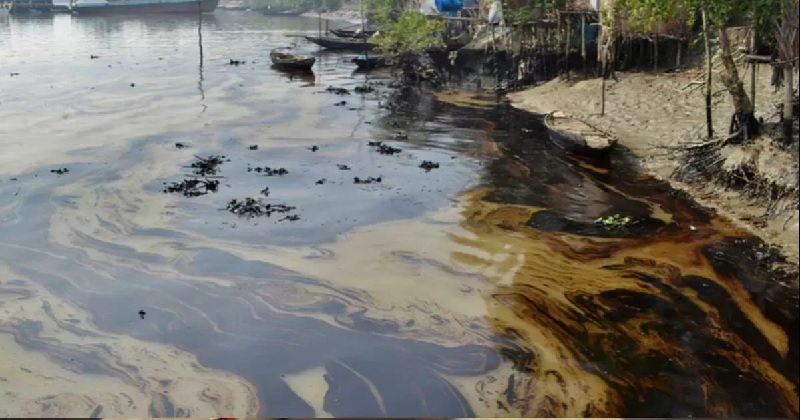
By allowing these activities, we are now destroying the Sundarbans from the inside. The toxic fumes and loud sounds greatly impact wildlife habitats and breeding environments. The propellers disrupt the marine ecosystem, and the waves cause severe erosions. For instance, the width of rivers on this route has increased from 20-30 metres to 50-60 metres. Most of the ships on this route contain fly ash, coal, and stones from India for our riverside cement factories. In the last seven years, at least 15 such ships have capsized inside the forest, spilling these harmful materials directly into the river.

Bangladesh has now become a land of lost forestlands and dead ecosystems. We have irredeemably destroyed a number of forests and major sources of biodiversity throughout this delta, and even in the hill tracts. The Sundarbans is the last hope for any unique and great population of wildlife to survive. The government must ensure that any activity harming this forest is halted immediately, and look for an alternative route for maritime trade with India as well as consider moving major power plants and factories from the area.​
 
Analyze

Analyze Post

Add your ideas here:
Highlight Cite Fact Check Respond

Save Sundarbans at any cost​

Speakers tell event

1711232885843.webp

To raise awareness among students regarding the importance of the world’s largest mangrove forest, artists perform at an event yesterday. Tour Operator Association of Sundarbans organised the programme at Khulna Lions School and College, marking Sundarbans Day. Photo: Habibur Rahman

National and international conspiracies are going on to destroy the Sundarbans, the world's largest mangrove forest, speakers alleged at a programme yesterday.

Stressing that the Sundarbans is a vital part of Bangladesh's national identity rather than being just a forest, the speakers said the forest is crucial for the country's ecological balance, and economic well-being both at present and in future.

A group of environmentalists and rights activists joined a human chain demanding all illegal activities destroying the Sundarbans be stopped. It was organised by Bangladesh Poribesh Andolon in Dhaka's Shahbagh area.

"Since the current government took office, development projects have been focused on the Sundarbans, which, according to our observation, has caused more harm than benefit. The trees, biodiversity, and waterways of the Sundarbans are being destroyed one by one," said Bapa president Prof Nur Mohammad Talukder, who chaired the event.

"The Sundarbans protected the country from all natural calamities that have occurred till date. If it survives, Bangladesh will survive," he also said.

"At the national and international levels, there are numerous plans and conspiracies to destroy the Sundarbans. Using its existing rules and regulations, the government must take decisive action to safeguard the forest at all cost," he added.

"Bangladesh will be a developed country in 2041. What will be the condition of the Sundarbans then? We don't want a developed Bangladesh by destroying the Sundarbans," said Shahidul Islam, Bapa co-chairman and professor of geography and environment department at Dhaka University.

Mihir Biswas, joint secretary of Bapa, alleged that the current government has consistently been approving projects that are harming the Sundarbans in the name of development.

Bapa general secretary Alamgir Kabir called upon the government to refrain from undertaking such projects.

Bapa joint secretary Hassan Yousuf Khan, executive members Halim Dad Khan and Parvin Akter, spoke among others.​
 
Analyze

Analyze Post

Add your ideas here:
Highlight Cite Fact Check Respond

No highways or infrastructure in forest: Saber​

FE ONLINE REPORT
Published :​
Mar 21, 2024 18:51
Updated :​
Mar 21, 2024 18:57

1711320846648.webp


The Environment and Forest Minister on Thursday said that forests must be viewed as a resource and that they cannot be destroyed by the construction of highways or any other infrastructure through them.
Minister Saber Hossain Chowdhury said this at an event marking International Forest Day.

He also said that laws are being formulated for forest conservation. Forest research will also be increased.

The environment minister said these things as the chief guest at a discussion programme organised by the Forest Department on International Forest Day with the theme "Forests and Innovation: New Solutions for a Better World".

The introduction of smart patrolling systems in the Sundarbans has resulted in effective forest monitoring and crime prevention, the minister said.

Mobile apps are being developed to enable tourists in the Sundarbans and other protected regions to purchase tickets and receive other services online, he said, adding that the existing laws, rules and regulations are being revised to achieve various targets.

Chief Forest Conservator Md Amir Hossain Chowdhury presided over the program, whereas Environment Secretary Farhana Ahmed spoke, among others.

Cheques were distributed to the beneficiaries of social forestry and prizes were given to the winners of the 'Tree Identification' competition held on the occasion of International Forest Day.​
 
Analyze

Analyze Post

Add your ideas here:
Highlight Cite Fact Check Respond
  • Like (+1)
Reactions: Bilal9

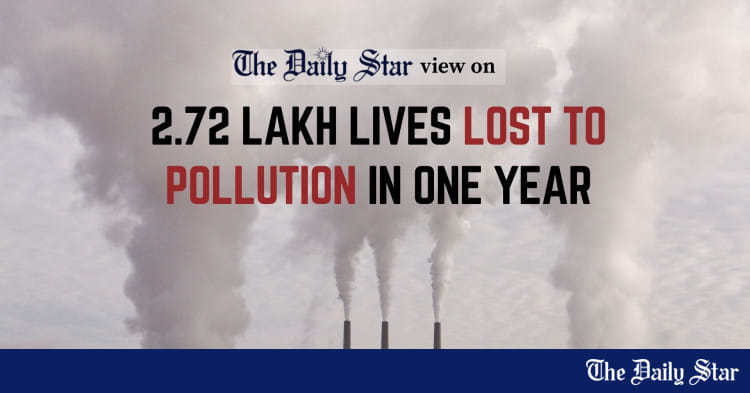
Pollution claims 2.72 lakh lives in one year​

Finds 2019 WB environment analysis on Bangladesh

1711664429880.webp


The Louhajang river in Tangail is choking on toxic waste from factories in BSCIC Industrial Area. The heavily contaminated water is destroying the aquatic biodiversity and making life difficult for the locals. The photo was taken from Khudirampur in Sadar upazila recently. PHOTO: MIRZA SHAKIL

Alarming levels of air pollution, unsafe water, poor sanitation, and exposure to lead caused over 2.72 lakh premature deaths in Bangladesh in 2019.

Environmental degradation also cost the country Tk 92,081 crore, which was 17.6 percent of its GDP that year, according to the Bangladesh Country Environment Analysis of World Bank.

Pollution disproportionately harms the poor, children under five, the elderly, and women, says the report released yesterday.

Addressing an event where the report was launched, Saber Hossain Chowdhury, minister of environment, said combating environmental degradation was a main agenda of the government.

"We admit that there are many environmental problems in our country. The present government has taken a 100-day programme to address the most crucial environmental issues," he said.

Some environmental problems are caused here while others are caused by the developed nations, he said while speaking as the chief guest.

"Development partners should offer grants, not loans, to resolve the environmental degradation caused by climate change."

The World Bank report says household and outdoor air pollution have the most detrimental effect on health, leading to nearly 55 percent of premature deaths, which alone cost around Tk 43,529 core or 8.32 percent of the GDP in 2019.

The presence of PM2.5 was more than twelve times higher than WHO's annual air quality standard, mentions the report.

Particulate matter, especially PM2.5, is the fine particles that float in the air. It is linked to asthma, heart and lung diseases, cancer, respiratory illnesses, and premature deaths.

Lead poisoning is causing irreversible damage to children's brain development, resulting in an estimated annual loss of nearly 20 million IQ points.

Major rivers in Bangladesh experienced a severe decline in water quality due to industrial discharge and unmanaged waste, including plastic and untreated sewage, the report states.
RIVER POLLUTION: About 60,000 cubic metres of toxic waste from more than 7,000 factories dumped into Dhaka rivers per day​

The rivers surrounding Dhaka receive about 60,000 cubic metres of toxic industrial waste every day from more than 7,000 industries mainly located mostly in Tongi, Hazaribagh, Tejgaon, Tarabo, Narayanganj, Savar, Gazipur, Ghorashal, and the Dhaka Export Processing Zone.

Untreated industrial waste and chemicals used for agriculture are significantly polluting the soil which ultimately affects the rivers through groundwater flows.

Abdoulaye Seck, World Bank country director for Bhutan and Bangladesh, said, "We have seen around the world that when economic growth comes at the cost of the environment, it cannot sustain. But it is possible to grow cleaner and greener without growing slower.

"To sustain its strong growth path and improve the liveability of cities and the countryside, Bangladesh simply cannot afford to ignore the environment."

Timely and urgent interventions for air pollution control; improved water, sanitation, and hygiene; and control of lead exposure could prevent over 133,000 premature deaths per year, he said.
"We have seen around the world that when economic growth comes at the cost of the environment, it cannot sustain."
— Abdoulaye Seck WB Country Director for Bangladesh and Bhutan​

Other speakers said investments in cleaner power generation, cleaner cooking fuel, and stricter control of industrial emissions could help reduce air pollution.

Enforcing environmental regulations coupled with investments and other incentives for clean cooking, scaling up green financing, setting up efficient carbon markets, and raising awareness to reduce pollution should be emphasized, they added.

Ana Luisa Gomes Lima, World Bank senior environmental specialist and co-author of the report, said, "With timely and right set of policies and actions, Bangladesh can reverse its environment degradation."​
 
Analyze

Analyze Post

Add your ideas here:
Highlight Cite Fact Check Respond

Eight ways to overcome waste pollution crisis​

29 Mar 2024, 2:38 pm

water-pollution.jpg


UNB:
Humanity generates between 2.1 billion and 2.3 billion tonnes of municipal solid waste a year, according to UN Environment Programme (UNEP).

When improperly managed, much of that refuse—from food and plastics to electronics and textiles—emits greenhouse gases or poisonous chemicals.

This damages ecosystems, inflicts disease and threatens economic prosperity, disproportionately harming women and youth.

On 30 March, the world will mark the International Day of Zero Waste.

The observance, led by the United Nations Environment Programme (UNEP) and the UN Human Settlements Programme (UN-Habitat), highlights the importance of proper waste management.

It also focuses on ways to rein in the conspicuous consumption that is feeding the waste crisis.

“Overconsumption is killing us. Humanity needs an intervention,” says UN Secretary-General António Guterres. “On this Zero Waste Day, let’s pledge to end the destructive cycle of waste, once and for all.”
Here are eight ways to embrace a zero waste approach:
  1. Combat food waste​

Some 19 per cent of food available to consumers is wasted annually despite 783 million people going hungry. Around 8 to 10 per cent of the planet’s greenhouse gas emissions come from the production of food that is ultimately squandered.

There are lots of ways to turn that tide. Municipalities can promote urban agriculture and use food waste in animal husbandry, farming, green-space maintenance and more. They can also fund food waste composting schemes, segregate food waste at source and ban food from dumpsites. Meanwhile, consumers can buy only what they need, embrace less appealing but perfectly edible fruits and vegetables, store food more wisely, use up leftovers, compost food scraps instead of throwing them away, and donate food before it goes bad, something made easier by a bevy of apps.
  1. Take on textile waste​

Less than 1 per cent of the material used to produce clothing is recycled into new items, resulting in over US$100 billion in annual material value loss. The textiles industry also uses the equivalent of 86 million Olympic-sized swimming pools of water every year.

To counter that, the fashion industry needs to become more circular. Brands and retailers can offer more circular business models and products that last longer and can be remade, governments can provide infrastructure for collecting and sorting used textiles, communicators—including influencers and brand managers—can shift fashion’s marketing narrative, and consumers can assess if their clothing purchases are necessary.

“Zero waste makes sense on every level,” says Michal Mlynár, UN-Habitat Acting Executive Director. “By retaining materials within the economy and enhancing waste management practices, we bring benefits to our economies, our societies, our planet and ourselves.”
  1. Avoid electronic waste​

Electronics, from computers to phones, are clogging dumpsites around the world as manufacturers continually encourage consumers to purchase brand-new devices.

Through robust policymaking, governments can encourage consumers to keep their products for longer while pushing manufacturers to offer repair services, a change that would bring a host of economic benefits. They can also implement extended producer responsibility, a policy that can ensure producers of material goods are responsible for the management and treatment of waste. This can keep raw materials and goods in the economic cycle and inspire consumer waste prevention, eco-design, and optimization of waste collection.

“As the world drowns in waste, humanity must act,” says Sheila Aggarwal-Khan, Director of UNEP’s Industry and Economy Division. “We have the solutions to solve the waste pollution crisis. We just need commitment, collaboration and investment from governments, businesses and individuals to implement them.”
  1. Reduce resource use in products​

Raw material use has more than tripled over the last 50 years, driving the destruction of natural spaces and fueling the triple planetary crisis of climate change, nature and biodiversity loss, and pollution and waste.

Producers can follow nationally determined eco-design standards to reduce energy and resource use while minimizing hazardous chemicals in production. These standards also ensure products are durable, repairable and recyclable while use.

This should be part of a larger effort to design products through what is known as the lifecycle approach. This entails reducing resource use and emissions to the environment throughout all stages of a product’s life, from production to recycling.
  1. Crack down on plastic pollution​

Plastics are commonly used in electronics, textiles and single-use products. Some 85 per cent of single-use plastic bottles, containers and packaging end up in landfills or are mismanaged. Because plastic does not biodegrade, it contributes to major health impacts as microplastics infiltrate food and water sources.
In addition to phasing out single-use plastics and improving waste management, establishing a global monitoring and reporting system can help end plastic pollution.
  1. Take on hazardous waste​

Chemicals are prevalent in daily life – electronics can contain mercury, cosmetics may have lead and cleaning supplies often have persistent organic pollutants. Chemical and hazardous waste require specialized treatment and disposal, yet some governments fail to meet standards set in the Basel, Rotterdam and Stockholm (BRS) conventions. Hazardous chemicals and waste cross borders, unauthorized or even illegally.

Governments can commit to multilateral environmental agreements (MEAs), like the BRS conventions, which institutionalize intergovernmental and cross-sectoral cooperation through binding targets and action plans.

Citizens can educate themselves about substances and waste types that are restricted or banned under the MEAs and demand that governments and industries remove them from the global market.
  1. Rethink how cities are designed and managed​

By 2050, 68 per cent of the world is expected to live in cities. Investing in energy-efficient buildings leads to long-term reductions in construction and demolition, which generate significant amounts of waste and account for 37 per cent of greenhouse gas emissions.
  1. Bolster waste management through investment and training​

Globally, around 25 per cent of waste is left uncollected, while 39 per cent is not managed in controlled facilities. Global waste management incurs a total net cost of US$361 billion annually. By ending uncontrolled disposal, reducing waste generation, and increasing recycling, governments can generate an annual net gain of US$108.1 billion by 2050.​
 
Analyze

Analyze Post

Add your ideas here:
Highlight Cite Fact Check Respond
  • Like (+1)
Reactions: Bilal9

Members Online

⤵︎

Latest Posts

Latest Posts