Home Watch Videos Wars Movies Login

[🇧🇩] Semiconductor Industry in Bangladesh

Latest Posts Countries Wars Q&A

[🇧🇩] Semiconductor Industry in Bangladesh
34
4K
More threads by Saif

G Bangladesh Defense

Policy support can help earn $10b from semiconductor manufacture by 2041
Says state minister for ICT

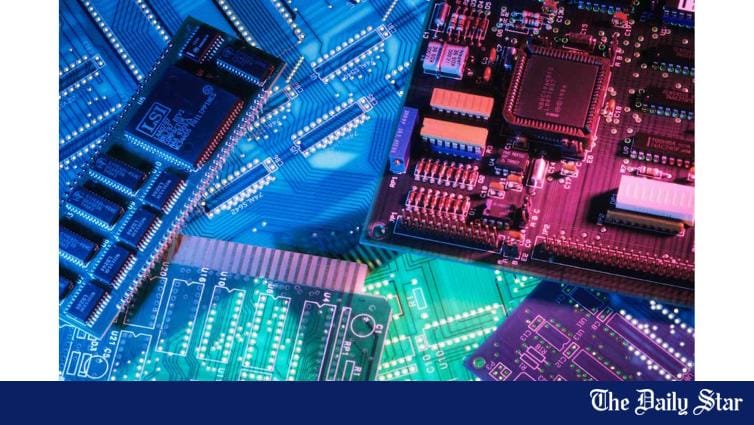
1715815499968.webp


Bangladesh would be able to earn $10 billion from semiconductor manufacturing by 2041 if proper policy support is ensured, according to Zunaid Ahmed Palak, state minister for telecom and ICT.

The uses of microchip and nanochips is growing day by day, so with the right policy support, it will be possible to earn at least $10 billion from exporting semiconductor items by 2041, he said.

Semiconductors are materials with electrical conductivity between conductors and insulators.

Chips, or integrated circuits, are made from semiconductors and serve as the backbone of modern electronics, powering devices like computers, smartphones and other digital technologies through their intricate circuitry.

He said there is a need for a semiconductor policy for the faster development of this sector.

He also urged for an industry-academia collaboration to create a highly skilled and technologically advanced workforce compatible for this sector as the demand is very high at home and abroad.

Palak was speaking at a seminar, titled "Unleashing the potential of the semiconductor industry in Bangladesh", organised by the Dhaka Chamber of Commerce and Industry (DCCI) at its office in the capital.

"We will focus on building 50,000 skilled manpower on microchip designing. Also, we are putting more emphasis on research and development," he said.

Palak informed that the government will invest in startups that work with chip design.

DCCI President Ashraf Ahmed suggested that for successful implementation of import substitution and export diversification, Bangladesh should prioritise the development of the semiconductor industry.

"Many countries are investing heavily in the semiconductor industry, creating a high demand for skilled workers," he said.

Besides, the government should focus on cultivating the skilled workforce required to meet the growing demand of the semiconductor industry in Bangladesh, he added.

He also underscored the importance of simplification of administrative procedures for setting up semiconductor businesses, including licensing, permits, and import/export regulations.

Mir Shahrukh Islam, managing director of Bondstein Technologies Ltd, said the semiconductor industry in Bangladesh is still at a very early stage.

"The high ambition of the government to scale it up to $1 billion from $5 million at present within the next six years would require significant improvement in the talent supply side," he said.

"We need to involve Bangladeshi diaspora global talents in the semiconductor industry to place ourselves in this niche market. Production linked subsidy is a must to attract FDI," Islam added.

ASMA Haseeb, a professor of nanomaterial and ceramic engineering at the Bangladesh University of Engineering and Technology, presented the keynote paper.

He said the global semiconductor market will reach $1,307.7 billion by 2032.

The main semiconductor manufacturing process includes design, chip fabrication, assembling, testing and packaging.

It is a labour-intensive industry and at least 81 percent of the world's semiconductor assembling, testing and packaging production is located in Asia.

Taiwan, South Korea, Singapore and India are few of the Asian countries that give special support to this sector in the form of grants, equity investment, favourable loans, R&D support, tax incentives etc.

But despite having a few design houses in Bangladesh with an annual market size of about $5 million, the local industry is yet to reach the expected level, Haseeb added.

GSM Jafarullah, managing director of the Bangladesh High-Tech Park Authority, Razib Hasan, co-founder and vice-president at Software Teton Private Ltd, Liakat Ali, additional managing director at Walton Digi-Tech Industries, and M Niaz Asadullah, a visiting professor at University of Reading, UK, also spoke.​
 
Analyze

Analyze Post

Add your ideas here:
Highlight Cite Respond
  • Love (+3)
Reactions: Bilal9
সেমিকন্ডাকটরে চোখ বাংলাদেশের


Analyze

Analyze Post

Add your ideas here:
Highlight Cite Respond
  • Love (+3)
Reactions: Bilal9

Semiconductor boom-hope or hype?
ATIQUL KABIR TUHIN
Published :
Jun 05, 2024 22:34
Updated :
Jun 05, 2024 22:34

In his book "Chip War: The Fight for the World's Most Critical Technology," noted American economic historian Chris Miller, argues, "Microchips are the new oil. This vital and precious resource has an even more profound impact on people's lives than oil". In the book, which has been named the Financial Times Best Business Book of 2022, he says microchips are "the most complex piece of machinery ever assembled by humans, and there is no other item with a greater influence on globalization and international politics."

To put it simply, the microchip, also known as an integrated circuit (IC), is a small piece of silicon that contains a complex network of electronic circuits. These chips are fundamental building blocks of modern electronic devices for a vast array of functionalities. Their demand is currently exceeding all initial expectations. From guiding complex missiles to heating your morning coffee, microchips are the hidden heroes behind everything from smartphones and televisions to the refrigerators and washing machines that keep our modern lives running smoothly. What's intriguing is their capability to manage numerous tasks, including processing, memory, storage, logic control, digital communication, sensing and detection, and power management. As technological progress marches forward, semiconductors are poised to become even more integral to the majority of devices used by humans in the future.

The global semiconductor market is a trillion-dollar powerhouse in the making, surging at 20 per cent annually. It is no surprise tthat a fierce global race is on. Tech giants like the US, China, South Korea, and Japan are pouring billions into securing their slice of the pie by increasing domestic chip production. Fueled by the US-China tech war and potential disruptions in Taiwan, the race for semiconductor dominance has become a top global priority.

To read the rest of the news, please click on the link above.
 

Analyze Post

Add your ideas here:
Highlight Cite Respond
  • Love (+3)
Reactions: Bilal9

Can Bangladesh be a semiconductor hub?
1718579328122.webp


The semiconductor manufacturing sector is well-known for its complexity, high stakes and intense corporate competition. Demand has always been driven by innovation, with every new technology changing the game.

Right now, artificial intelligence (AI) is leading the way in innovation and has the potential to catapult the semiconductor industry into a new growth trajectory. Specialised hardware, or semiconductors designed with AI in mind, will be essential for enabling AI applications. In the near future, the need for AI-specific chips will soar due to the expanding need for instant computing, seamless connectivity, and advanced sensing capabilities.

Asia has a market share of approximately 90 percent in chip assembly and testing, and more than 75 percent of the world's capacity for fabricating semiconductors is based here. Taiwan is a dominant force in the industry, holding a 68 percent market share and is home to numerous cutting-edge chip manufacturing facilities.

Nearly 90 percent of the cutting-edge chips for AI and quantum computing in use today are produced by TSMC, a well-known Taiwan manufacturer.

India has made significant progress with initiatives like "Make in India" and substantial investments in semiconductor plants, aiming to become a global hub. In the 2024 interim union budget, India substantially increased funding for semiconductor and display manufacturing support.

The Indian semiconductor market, valued at $34.3 billion in 2023, is forecasted to surge to $100.2 billion by 2032. Micron, a prominent American chip company, has pledged $825 million for a facility in India, expecting to generate more than 300,000 jobs by 2026.

In the midst of the chip competition between China and the United States, Vietnam seeks to draw investment by bolstering its semiconductor industry through tax breaks and incentives. Grants and collaborative research with private firms such as FPT are planned.

Vietnam is home to Intel's main facility, but it also wants to draw in other companies like Samsung and Nvidia. By 2030, the government wants to train 50,000 engineers and added semiconductors to national development initiatives. The country may become a major player in the semiconductor supply chain.

Bangladesh is witnessing a nascent emergence of the semiconductor industry, which forms the foundation of contemporary electronics. It is venturing into the semiconductor space because of growing demand for electronics worldwide and a deliberate drive towards digitalisation. Currently, the industry is mainly focused on low-end assembly and testing rather than high-end semiconductor manufacturing.

The country must take care of its vital infrastructure requirements if it hopes to develop a competitive semiconductor industry. To create a workforce with the necessary skills and knowledge, technical education and training must be improved. This development can be facilitated through collaborations with leading global educational institutions and professionals.

Research centres specialising in semiconductor technology and grants for university and industry research serve as growth-promoting factors for research and development. It takes a significant financial commitment to build cutting-edge fabrication facilities, but this can be accomplished with public-private partnerships and incentives for foreign investment.

It is essential to establish a thorough supply chain that includes vendors of machinery, components, and raw materials. This ecosystem can be developed by supporting startups and encouraging relevant companies to enter this market.

Additionally, implementing policies that support the semiconductor industry like tax incentives, befitting regulations, and protection of intellectual property rights, can attract and retain investments.​
 
Analyze

Analyze Post

Add your ideas here:
Highlight Cite Respond
  • Like (+1)
Reactions: Bilal9

Can Bangladesh become a semiconductor nation?
Abdullah Al MasudAbdullah Al Masud
Publish : 10 Jun 2024, 10:52 AMUpdate : 10 Jun 2024, 10:52 AM

1719388357173.png


Global semiconductor industry is passing through exciting times, characterized by heightened expectations for market growth, accompanied by a rat-race to secure resources and talents to fend off any potential disruptions in the supply of microchips to the global technology machines. Fueled by relentless innovation in artificial intelligence-based computing solutions, automotive and miniature electronics, and Internet of Things (IOTs), resulting into enhanced usage of complex microchips or integrated circuits (ICs) in any device one can possibly imagine, the global market for chips is projected to grow, according to McKinsey estimates, to more than $1 trillion by 2030, from its current $600 billion annually.

Resurgent market demand and increased government incentives have led to upsurge in chip making foundries, expanding the global capacity at an unprecedented rate.

Due to this high potential growth in a relatively short future, there is going to be a lot more demand for chip making foundry, chip designing and packaging and testing capacities in the future. Though the semiconductor industry is also seeing new innovations in the way chip is developed and produced, the existing segmentation in front end and back end will command entry of new players, most likely gravitating to the existing geographic locations and allowing for new entrants too, particularly due to the economic and political need for diversifying the production base, compounded to a large extent by the fallout from the US-China geo-political tensions leading to the US-China chip war. Much of the growth will gravitate towards existing geographies, however new entrants such as India and Vietnam in the Asia region, are also taking initiatives to attract enhanced investment alluring global chip manufacturing companies with government sponsored incentives.

Bangladesh does not want to be left behind. Media reports indicate that the government desires to raise exports of semiconductor products to $10bn by 2031.

Bangladeshi chip design companies are currently engaged in chip design services to global companies. One may find it interesting that a Bangladeshi company, Ulkasemi, designed chips for big-name companies that included Apple too, being the largest and oldest Bangladeshi owned chip design services company. Ulkasemi started in Bangladesh and extended to Silicon Valley, and then to other global locations, such as in Ontario and Bengaluru. The company maintains a large design centre that adheres to strict quality and security protocols where a bustling team of Bangladeshi young engineers create chip design solutions for the global technology companies. Ulkasemi is a TSMC Design Center Alliance (DCA) partner, TSMC being the world's largest producer of semiconductors and the main supplier of tech-companies, having 53% of global market share alone currently. In addition to being a partner of TSMC, Ulkasemi also works with almost all the major globally known foundries, which include Intel, Micron, Global Foundry, and Texas Instruments too.

Given the potential, Bangladeshi entrepreneurs and policy makers are seriously considering how Bangladesh can make a foray into the growing world market for semiconductors and related products. Admittedly, countries that can make an inroad into this industry will be the ones driving the world economies in the future years, as semiconductors are aptly considered the new "oil."

The technology mix and the positioning within the value-chain targeting a product segment or segments will be a critical determinant for gradual evolution into a sustaining manufacturing base from an initial start point. According to an industry expert I met at an international semiconductor event, who holds a key position in one of the world's top semiconductor equipment manufacturing companies, it is essential to locate the right "sweet spot" for entry. Given that the semiconductor industry is extremely knowledge intensive and sensitive to complex technology know-how and skills, and the right ecosystem that supports the industry is essential for potential success. One of the important elements is the supply network of the support vendors. In our neighbouring country, India, vendors are now creating presence, however it may be costly to have such a network unless there is an existing industry base or a critical mass of customers.

Establishing fabrication foundries, or fabs in short, requires substantial capital investments, necessitating thorough research and evaluation before committing resources. Due to the high cost and complexity of wafer fabrication, semiconductor has historically been concentrated in a few key geographies where a robust ecosystem supported the agglomeration of semiconductor firms. Countries with established semiconductor industries have developed extensive infrastructure, economies of scale, and government support, including financial incentives and intellectual property protection.

The manufacturing industry is divided into two primary stages: the front end (wafer fabrication) and the back end (assembly, testing, and packaging). The front end is more automated and capital-intensive, whereas the back end is labour-intensive.

Geopolitical tensions, particularly between the US and China, are prompting semiconductor companies to reconsider and diversify their production locations. Global consulting company, Kearney, in an analysis of Front-End Semiconductor Manufacturing Attractiveness Index, highlights three major factors influencing fab location decisions:

Business environment: Includes legal/regulatory frameworks, intellectual property protection, innovation outlook, and availability of skilled talent.

Incentives: Governments offer various incentives to attract semiconductor companies, such as tax breaks, subsidies, and utility deals.

Operating costs: Considers labour, utilities, and supply chain expenses crucial for the long-term viability of fab operations.

Among the established front-end manufacturing hubs, ie fabrication foundry countries, Taiwan and South Korea remain in the top spots of the attractiveness index, currently accounting for a total of 63% of the global semiconductor market, including all kinds of foundries. The high-end Asian alternatives are Japan and Singapore. Both have a high technology ecosystem and high government subsidy programmes, however none can match the cost advantages of Taiwan and South Korea. Among the established Western countries, the United States, Germany and France are the frontrunners, however these countries have some of the highest operating costs, nearly 40 % more than their Asian counterparts. Malaysia is among the top five countries, and has been branded as the low-cost overachiever by Kearney.

Among the emergent destinations that are poised as promising options for front-end manufacturing, India and Vietnam top the list considering the factors influencing the attractiveness index. These countries compensate for their lack of front-end fabrication experience and comparatively less robust business environments by offering generous subsidies and relatively low operational costs.

Industry analysts consider that now is the best time to make a foothold in the industry as there is unprecedented demand for new fabs and services, and many countries which are investing in capacity development at present will end up as gravitational geographies where the industry will likely locate in the future years. The agglomeration economies benefit the current industrial base of Malaysia in electric and electronics, South Korea and Taiwan in semiconductors -- these three countries have benefitted in the recent years from their respective comparative advantages in the cited sectors, which were cultivated through targeted policies and practices.

From the heydays of geographic concentration in a few hubs, the enhanced demand for chips have led to increased fragmentation and geographical dispersal in chip productions, compounded by global factors related to the geo-political tensions mentioned above. As a result, the global market for semiconductor is witnessing new entrants leading to growth in production of chips and services, and the semiconductor producing countries are pursuing their efforts to create conducive ecosystems to grab enhanced share of the chip market.

There are reasons to be optimistic about the future of the industry, nevertheless there are inherent risks too, since the technology in the semiconductor value-chain is extremely complex, only a few countries and companies could master the know-how and build super-charging ecosystems. In the race to create footholds, the countries will be required to continuously assess evolving market conditions and devise strategies to adapt to the new market conditions.

By targeting back-end manufacturing and fostering collaboration with other semiconductor-producing countries, Bangladesh can harness its young, ambitious workforce to capitalize on the industry's growth potential

How Bangladesh can grab a share

Bangladesh was not included in the list of attractive countries for front-end manufacturing, arguably due to the relative absence of the factors influencing the attractiveness index. However, this is front-end manufacturing or foundry, Bangladesh will be better off focusing on the back-end, ie packaging and testing, and chip design segment.

Bangladesh already has a chip design service industry, though a miniscule of the globally almost $50bn, which is projected to grow to more than $84bn by 2030. Among the few players, Ulkasemi has been able to achieve the crowning success, being the oldest and the largest in Bangladesh, as mentioned above. The founder and owner is a Bangladeshi American based in Silicon Valley and a veteran of the chip design industry, who gained long experience working in AMD and few start-up companies. Ulkasemi's technology prowess and market network gained considerable traction and the company leads the way into the chip design services from the heartland of Bangladesh to the world of tech-companies globally.

Given this head-start, Bangladesh can utilize the experience in chip design gained by Ulkasemi and others, to augment the size of the industry and train more and more engineers suited for work in the chip design services industry. Unlike the manufacturing segment of the chip industry value-chain, there are relatively low barriers to entry in the chip design services market and the scale of investment needed to make a headway is relatively lower than the staggering capitals required for a foundry and packaging and testing industry. Of course, the human capital and market network have to be there to gain traction. Bangladeshi diaspora, particularly professionals who gained significant experience in working with semiconductor companies, potentially can be instrumental in making a breakthrough.

To read the rest of the news, please click on the link above.
 
Last edited:
Analyze

Analyze Post

Add your ideas here:
Highlight Cite Respond
  • Love (+3)
Reactions: Bilal9
সেমিকন্ডাক্টরের ৬০০ বিলিয়ন ডলারের বাজারে বাংলাদেশের অবস্থান কোথায়?

 
Analyze

Analyze Post

Add your ideas here:
Highlight Cite Respond
  • Love (+3)
Reactions: Bilal9
এপল-মেটা-গুগলের চিপস ডিজাইন করছে বাংলাদেশ |


Analyze

Analyze Post

Add your ideas here:
Highlight Cite Respond
  • Like (+1)
Reactions: Bilal9

Boosting semiconductor industry could propel Bangladesh to forefront of technology, progress: Palak
Published :
Jul 11, 2024 21:25
Updated :
Jul 11, 2024 21:25
1720748883222.webp


State Minister for Posts, Telecommunications & Information Technology Zunaid Ahmed Palak on Thursday said that boosting the semiconductor industry could propel Bangladesh to the forefront of technology and progress.

Palak said this while addressing the launching of the strategic document of the Metropolitan Chamber of Commerce and Industry (MCCI) titled "Developing the Semiconductor Industry in Bangladesh" as chief guest at the MCCI office here.

Md Shamsul Arefin, Secretary, Information and Communication Technology Division attended the function as special guest. The event was moderated by MCCI secretary general and CEO Farooq Ahmed.

The State Minister said that the country's engineers need proper training for the development of the semiconductor industry, BSS reports citing an MCCI press release.

He said it is possible to create some 10,000 experts in the country over the next one decade through imparting proper training on microchip, designing, semiconductor, basic AI and future frontier technology.

Palak informed that a state-of-the art Nano lab would be set up on BUET campus through spending around $10 million.

He commended MCCI for its proactive initiative in launching the report.

The State Minister said artificial intelligence, microchip designing, robotics, and cyber security were already identified as the four frontier technologies and focus areas by the Prime Minister's ICT Affairs Adviser Sajeeb Wazed Joy.

Before concluding, he assured of his ministry's full support in ensuring Bangladesh's progress in the semiconductor industry.

The MCCI's report serves as a roadmap for potential investors and policymakers, guiding them on the path to developing the semiconductor industry in Bangladesh.

It also referred to the current global leaders in semiconductor design and fabrication, providing valuable insights into their ecosystem.

Md. Shamsul Arefin mentioned that it was high time for making a broad commitment to a high-tech future targeting the high economic growth.

For the semiconductor industry to flourish, he stressed the need for having a comprehensive national policy, tax breaks and subsidies, strengthened intellectual property laws and their enforcements, the availability of clean rooms, testing laboratories, manufacturing facilities, and the promotion of locally manufactured semiconductor chips.

While delivering the welcome remarks, MCCI President Kamran T. Rahman highlighted the MCCI's efforts to support the semiconductor industry in Bangladesh.

He stated that the semiconductors were crucial for future industrial ventures. "Through this report, MCCI aimed to make a significant contribution to that cause." he added.

A presentation was given by Dr. Yusuf Haque, Chief Technology Officer and Co Founder, eXo Imaging Inc. (USA), on how to bring semiconductor related technology to Bangladesh.

Dr. M. Rokonuzzaman, Professor, Department of Electrical & Computer Engineering, North South University, gave a presentation highlighting the key features of the report. He believed delving into the industry could help Bangladesh evade the middle-income trap while pursuing progress.

During his intervention, MCCI Senior Vice-President Habibullah N. Karim said that the report will be more than an academic guide for the semiconductor industry.

"It will also provide guidance on mobilizing investment, policy frameworks, and resources," he added.

Karim also expressed great optimism regarding the industry's potential to reach a billion-dollar valuation. Through this report, MCCI aimed to encourage more individuals to join the semiconductor industry and nurture a supportive ecosystem.

An open discussion also took place during this part of the event.

Topics that came up for discussion include the kinds of skills required for the semiconductor industry, having regular monitoring and evaluation of the set objectives, the availability of research and development grants with tax rebates, the setting up of a lead agency responsible for the implementation of the plans involving all stakeholders, the development of Bangladesh's own intellectual property in the semiconductor industry, the 'brain drain' challenge, and the accommodation of local metallurgical engineers in the semiconductor industry.

Distinguished individuals from academia, the business community were present at the event.​
 
Analyze

Analyze Post

Add your ideas here:
Highlight Cite Respond
  • Love (+3)
Reactions: Bilal9

Members Online

Back
 
G
O
 
H
O
M
E