Home Watch Videos Wars Movies Login

[🇧🇩] Strategic Aspect of Bangla-Japan Relation

Latest Posts Countries Wars Q&A

[🇧🇩] Strategic Aspect of Bangla-Japan Relation
71
3K
More threads by Saif

G Bangladesh Defense

Japan sees Yunus’ visit as chance to deepen ties

UNB
Published :
May 26, 2025 18:30
Updated :
May 26, 2025 18:30

1748302718407.webp


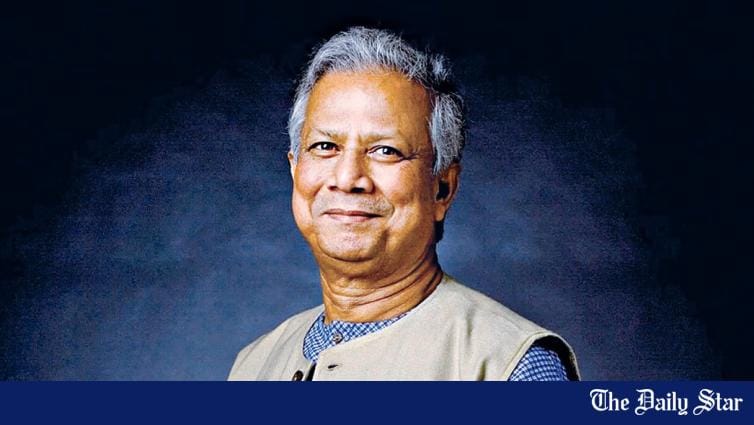
Japan on Monday said Chief Adviser Prof Muhammad Yunus’ official visit to Japan is expected to ‘further strengthen’ the friendly relations between the two countries.

The Chief Adviser will pay an ‘official working visit’ to Japan from May 28 to 31.

During his stay in Japan, Prime Minister Ishiba Shigeru will hold a Bangladesh-Japan Summit meeting with Chief Adviser Prof Yunus.

The Chief Adviser will also attend the Nikkei Forum 30th ‘Future of Asia’.

This will be Prof Yunus’ first visit to Japan as the Chief Adviser, said the Japanese Ministry of Foreign Affairs.

Meanwhile, Japanese Ambassador to Bangladesh Saida Shinichi talked to a select group of reporters at his residence on various aspects of the visit.

Prof Yunus visited Japan multiple times, including the visit to attend the 2004 Nikkei Asia Prize award ceremony and the participation in the Ministry of Foreign Affairs’ Opinion Leader Invitation Program in 2007.​
 
Analyze

Analyze Post

Add your ideas here:
Highlight Cite Respond
  • Love (+3)
Reactions: Bilal9

Dhaka to seek US$1b soft loan during CA's Japan visit

BSS
Updated: 26 May 2025, 22: 06

1748304419833.webp

Flags of Bangladesh and Japan BSS

Bangladesh will seek USD 1 billion soft loan from Japan during the upcoming official visit of Chief Adviser Professor Dr Muhammad Yunus to Tokyo, scheduled for 28-31 May.

"The main focus of this visit is budgetary support," said Acting Foreign Secretary Md Ruhul Alam Siddique while addressing a curtain-raiser press briefing at the Ministry of Foreign Affairs this afternoon.

Chief Adviser Yunus is expected to depart Dhaka early Wednesday for the four-day visit, during which he will hold bilateral talks with Japanese Prime Minister Shigeru Ishiba on 30 May, aimed at deepening cooperation across a wide range of strategic areas.

"The formal announcement of the soft loan is expected following the bilateral talks, after which an exchange of notes will be signed," Siddique said.

Tokyo will accord a red-carpet welcome to the Chief Adviser upon his arrival, including a guard of honour, he said.

The Acting Foreign Secretary said the visit will prioritise the enhancement of bilateral relations, with special focus on economic and strategic collaboration.

A total of seven Memorandums of Understanding (MoUs) are expected to be signed during the visit, covering energy cooperation, human resource development, manpower export, and the establishment of special economic zones.

Professor Yunus will also participate in the Nikkei 30th Future of Asia Conference to be held in Tokyo on 29–30 May, where he will deliver a keynote speech in a plenary session.

He was invited to the forum by Japanese Parliamentary Vice-Minister for Foreign Affairs Ikuina Akiko earlier this year.

The Chief Adviser is also a recipient of the prestigious Nikkei Asia Prize, awarded in 2004.

Highlighting the broader significance of the visit, Siddique said discussions will include a wide range of bilateral and multilateral issues, including trade and investment, political and economic cooperation, security, regional and global developments, and the issue of forcibly displaced Rohingyas from Myanmar.

Japan has reiterated its commitment to strengthening engagement with Bangladesh under the Bay of Bengal Industrial Growth Belt (Big-B) initiative and the broader Free and Open Indo-Pacific Strategy, he said.

As part of these initiatives, Japan aims to support high-quality infrastructure projects in Bangladesh and promote the expansion of Japanese manufacturing value chains, he added.

Diplomatic sources noted that both countries will seek to further enhance ties under the Japan-Bangladesh Strategic Partnership with an emphasis on people-to-people connectivity, cultural exchanges, and sectoral cooperation.

Director General of the East Asia & Pacific Wing Mohammed Nore-Alam and Director General of the Public Diplomacy Wing Shah Asif Rahman also addressed the media.​
 
Analyze

Analyze Post

Add your ideas here:
Highlight Cite Respond
  • Love (+3)
Reactions: Bilal9

Prof Yunus seeks JICA’s greater support for MIDI
Moheshkhali-Matarbari region seen as pivotal engine for future economic growth

Published :
May 29, 2025 18:19
Updated :
May 29, 2025 18:19

1748560399295.webp


Chief Adviser Professor Muhammad Yunus on Thursday called upon the Japan International Cooperation Agency (JICA) to bolster its support for the Moheshkhali-Matarbari Integrated Development Initiative (MIDI), aiming to transform the region into a vital engine for Bangladesh’s future economic growth.

The request was made during a meeting with JICA President Dr Tanaka Akihiko on the sidelines of the 30th Nikkei Forum: Future of Asia, held at the Imperial Hotel in Tokyo, reports UNB.

“The MIDI region represents the future of Bangladesh,” Prof Yunus said. “With access to the Bay of Bengal, we are developing deep-sea ports, highways, and railway links to connect the MIDI region with Nepal, Bhutan, and other parts of South Asia.”

JICA initially proposed the development of a deep-sea port at Matarbari. The interim government, under Prof Yunus’ leadership, is now formulating a comprehensive master plan to transform the entire MIDI region into a hub for ports, logistics, fishing, energy and power.

“Our vision includes building a megacity in the region,” Prof Yunus added, noting that airports are also being upgraded to accommodate increased travel demands.

Dr Tanaka reaffirmed JICA’s commitment to the MIDI development but emphasised the need for accelerated decision-making to expedite project implementation.

In response, Prof Yunus announced plans to appoint a senior official to oversee MIDI projects and coordinate efforts with JICA and other potential foreign investors.

The Chief Adviser also revealed plans to establish free trade zones within the MIDI area, inviting foreign investors to set up manufacturing plants aimed at export markets.

Besides, the government intends to create an exclusive fisheries zone in the region, enabling large fishing vessels to operate.

“We need to engage in deep-sea fishing,” Prof Yunus explained. “Currently, fishing vessels from neighbouring countries exploit these waters, while our trawlers are too small for deep-sea operations. By developing our capabilities, we can process the catch in the fisheries zone for both export and domestic consumption.”

Dr Tanaka said this was possibly the first time he had heard a Bangladeshi leader discuss deep-sea fishing initiatives.

The two leaders also discussed Bangladesh’s reform agenda following the July uprisings, the country’s democratic transition, and the Interim Government’s anti-corruption efforts.

Prof Yunus confirmed that general elections are scheduled to be held between December and June, after which he plans to return to his previous work once an elected government assumes office.

The Rohingya crisis was also discussed, with the Chief Adviser seeking increased JICA’s support for humanitarian responses.

Dr Tanaka expressed JICA’s willingness to participate in international efforts addressing the Rohingya crisis.​
 
Analyze

Analyze Post

Add your ideas here:
Highlight Cite Respond

Japan to recruit 1,00,000 Bangladeshi workers in 5yrs
Bangladesh Sangbad Sangstha . Tokyo, Japan 29 May, 2025, 20:01

1748564123798.webp

The national flags of Bangladesh and Japan. | File photo

Japanese authorities and businesses on Thursday announced plans to recruit at least 1,00,000 workers from Bangladesh in the next five years to meet the country’s growing labourers’ shortage.

Speaking at a seminar titled, ‘Bangladesh seminar on human resources’, chief adviser Professor Muhammad Yunus said that the interim government of Bangladesh would do everything in its capacity to create the job opportunities for Bangladeshis in Japan.

‘This is going to be the most exciting day for me, the most inspiring day. This will open the door for Bangladeshis not to only work but to know Japan,’ he said.

The chief adviser witnessed the signing of two Memorandum of Under standings – first between Bangladesh’s Bureau of Manpower Employment and Training and Kaicom Dream Street, a Japan-Bangladesh joint venture, and second among Bangladesh’s BMET and Japan’s National Business Support Combined Cooperatives, a business federation with over 65 receiving companies operating in the country, and Japan Bangla Bridge Recruiting Agency at the event organised in Toshi Kaikan conference hall in Tokyo.

Yunus noted that Bangladesh was a country of 180 million people, and half of them were under 27. The government’s job was to open the door for them.

Mitsuru Matsushita, representative director of supervising organisation Shizuoka Workplace Environment Improvement Cooperative, said that many Japanese companies were facing enquiries about Bangladeshis, and he believed the trend would continue.

‘Bangladeshi talents hold great potential. It is our duty to nurture their talent,’ he said.

Mikio Kesagayama, chairman of NBCC, recalled that about 14 years ago, Professor Yunus came to Japan and was telling stories about helping women through microcredit.

‘Our Federation looks to Bangladesh for young and capable labour. They can contribute to the development of both Bangladesh and Japan. In the coming five years, we are prepared to welcome more than 1,00,000 Bangladeshi workers,’ he said.

Sharing the future plan on the recruitment of Bangladeshis in the Japanese industries, Miki Watanabe, president of Watami Group, said that a school, they established in Bangladesh, trained 1,500 students every year, and they were then planning to raise the number to 3,000.

‘With technical education in Bangladesh, they can enter the job market in Japan,’ he said.

Hiroaki Yagi, chairman of Japan International Trainee and Skilled Worker Cooperation Organisation, shared the potential and challenges for Bangladeshis in the Japanese labour market.

He said that the number of language teachers in Bangladesh was still short.

Niki Hirobumi, state minister of the ministry of health, labour and welfare in Japan, said that his country was facing a declining population and thus would need the support of Bangladeshi workforce.

‘This can be promising not only for Bangladesh but also for Japan,’ he said.

In his welcome speech, Daud Ali, Bangladesh ambassador to Japan, said that by 2040, the Japanese labour shortage could reach 11 million, and Bangladesh could take the opportunity to send more skilled workers.

Foreign adviser Md Touhid Hossain, chief adviser’s special envoy Lutfey Siddiqi and principal coordinator on SDG affairs Lamiya Morshed were also present at the meeting.​
 
Analyze

Analyze Post

Add your ideas here:
Highlight Cite Respond
  • Love (+3)
Reactions: Bilal9

Yunus, Japanese PM to hold talks tomorrow eyeing greater cooperation

1748565212708.webp


Chief Adviser Professor Muhammad Yunus and Japan Prime Minister Ishiba Shigeru are set to hold bilateral talks tomorrow which will outline areas of cooperation to further strengthen the relations between the two friendly nations.

Ahead of the meeting, Prof Yunus said he is looking forward to his meeting with the Japanese prime minister to expand the ongoing collaboration between the two countries in different sectors.

"There are so many areas of collaboration between Japan and Bangladesh; I want to build on this," the chief adviser said when President and CEO of Nikkei Inc. Tsuyoshi Hasebe called on him at the Imperial Hotel.

Japan said PM Ishiba Shigeru's bilateral talks with Prof Yunus would render a "precious opportunity" for Japan to indicate its further support to the transition efforts of the chief adviser and his interim government.

Prof Yunus and Shigeru Ishiba will discuss "strategic bilateral" issues to strengthen the relations on all fronts.

"The meeting will discuss various strategic bilateral issues between Bangladesh and Japan – trade and investment, cooperation in the areas of agriculture, infrastructure, human resources development," said Acting Foreign Secretary Md Ruhul Alam Siddique.

Prior to the meeting, the chief adviser will be given a red carpet reception and a guard of honour, he said.

The chief adviser is scheduled to arrive at Prime Minister's Office of Japan at 10:00am (Tokyo time).

"The main focus of this visit is budgetary support," Ruhul said, adding that a total of seven MoUs are likely to be signed during the official visit of the chief adviser.

Chief Adviser's Press Secretary Shafiqul Alam on Tuesday said Bangladesh is expecting to get $500 million budgetary supports from Japan in addition to $250 million for the country's railway sector with likely support in other areas as the two countries eye to further strengthen relations.

Bangladesh has sought $1 billion from Japan in the form of "soft loan", and the announcement will come formally after the bilateral talks between the two leaders and an exchange of notes will be signed.​
 
Analyze

Analyze Post

Add your ideas here:
Highlight Cite Respond

Japan to recruit 1,00,000 Bangladeshi workers in 5yrs
Bangladesh Sangbad Sangstha . Tokyo, Japan 29 May, 2025, 20:01

View attachment 17971
The national flags of Bangladesh and Japan. | File photo

Japanese authorities and businesses on Thursday announced plans to recruit at least 1,00,000 workers from Bangladesh in the next five years to meet the country’s growing labourers’ shortage.

Speaking at a seminar titled, ‘Bangladesh seminar on human resources’, chief adviser Professor Muhammad Yunus said that the interim government of Bangladesh would do everything in its capacity to create the job opportunities for Bangladeshis in Japan.

‘This is going to be the most exciting day for me, the most inspiring day. This will open the door for Bangladeshis not to only work but to know Japan,’ he said.

The chief adviser witnessed the signing of two Memorandum of Under standings – first between Bangladesh’s Bureau of Manpower Employment and Training and Kaicom Dream Street, a Japan-Bangladesh joint venture, and second among Bangladesh’s BMET and Japan’s National Business Support Combined Cooperatives, a business federation with over 65 receiving companies operating in the country, and Japan Bangla Bridge Recruiting Agency at the event organised in Toshi Kaikan conference hall in Tokyo.

Yunus noted that Bangladesh was a country of 180 million people, and half of them were under 27. The government’s job was to open the door for them.

Mitsuru Matsushita, representative director of supervising organisation Shizuoka Workplace Environment Improvement Cooperative, said that many Japanese companies were facing enquiries about Bangladeshis, and he believed the trend would continue.

‘Bangladeshi talents hold great potential. It is our duty to nurture their talent,’ he said.

Mikio Kesagayama, chairman of NBCC, recalled that about 14 years ago, Professor Yunus came to Japan and was telling stories about helping women through microcredit.

‘Our Federation looks to Bangladesh for young and capable labour. They can contribute to the development of both Bangladesh and Japan. In the coming five years, we are prepared to welcome more than 1,00,000 Bangladeshi workers,’ he said.

Sharing the future plan on the recruitment of Bangladeshis in the Japanese industries, Miki Watanabe, president of Watami Group, said that a school, they established in Bangladesh, trained 1,500 students every year, and they were then planning to raise the number to 3,000.

‘With technical education in Bangladesh, they can enter the job market in Japan,’ he said.

Hiroaki Yagi, chairman of Japan International Trainee and Skilled Worker Cooperation Organisation, shared the potential and challenges for Bangladeshis in the Japanese labour market.

He said that the number of language teachers in Bangladesh was still short.

Niki Hirobumi, state minister of the ministry of health, labour and welfare in Japan, said that his country was facing a declining population and thus would need the support of Bangladeshi workforce.

‘This can be promising not only for Bangladesh but also for Japan,’ he said.

In his welcome speech, Daud Ali, Bangladesh ambassador to Japan, said that by 2040, the Japanese labour shortage could reach 11 million, and Bangladesh could take the opportunity to send more skilled workers.

Foreign adviser Md Touhid Hossain, chief adviser’s special envoy Lutfey Siddiqi and principal coordinator on SDG affairs Lamiya Morshed were also present at the meeting.​
Al-hamdu-lillah!

Best news I have heard all week. :)
 
Analyze

Analyze Post

Add your ideas here:
Highlight Cite Respond

Japan, Bangladesh to sign economic partnership deal by year-end: PM Ishiba

FE ONLINE DESK
Published :
May 30, 2025 22:26
Updated :
May 30, 2025 22:26

1748648159208.webp


Japan’s Prime Minister Shigeru Ishiba announced that Bangladesh, under the leadership of Nobel laureate Professor Dr Muhammad Yunus, is entering a new era of transformation.

During a bilateral meeting with Dr Yunus in Tokyo, Ishiba confirmed that the two friendly nations will finalise an Economic Partnership Agreement (EPA) by the end of the year to boost trade and investment, according to local media.

In a joint statement, both leaders reaffirmed their commitment to deepening economic ties and strengthening strategic cooperation. Ishiba praised Bangladesh’s ongoing democratic transition and assured continued Japanese support. Dr Yunus expressed gratitude for Japan’s unwavering assistance during the interim government's reform efforts.

Dr Yunus also sought Japanese support for key infrastructure projects, including expressways, bridges, and energy terminals, and called for increased Japanese investment in Bangladesh’s high-tech and industrial sectors.

The leaders also discussed regional geopolitics and the Rohingya crisis, with Dr Yunus urging Japan to intensify efforts for a lasting solution. Prime Minister Ishiba expressed admiration for Dr Yunus’s global contributions to poverty alleviation and indicated his interest in visiting Bangladesh soon.​
 
Analyze

Analyze Post

Add your ideas here:
Highlight Cite Respond

CA urges Japanese firms to invest in Bangladesh

Published :
May 30, 2025 20:19
Updated :
May 30, 2025 20:26

1748648243757.webp


Chief Adviser Professor Muhammad Yunus on Friday called upon Japanese companies to invest in Bangladesh and help its economic recovery and rebuilding efforts.

“Today, we are in a situation when we need your support most. We have come a long way. The rest of the journey should be of doing things together with fun and enjoyment,” he told a roundtable in Tokyo.

Japan External Trade Organization (JETRO) arranged the meeting at its headquarters, reports BSS.

Top executives of Japanese companies in Bangladesh were present at the meeting with significant business interests.

Prof Yunus said during the past 16 years, everything Bangladesh had was demolished in many ways.

“Our financial situation brought to negative situation, rather than zero. Banking system collapsed... our foreign exchange reserve went down, administrative and police system collapsed. That’s our starting point,” he said.

The Chief Adviser said the past ten months of his interim government’s journey have been about building things piece by piece.

“That’s why the support of the government of Japan and the business people of Japan will be extremely helpful,” he said.

Prof Yunus said his government’s commitment is to create a new Bangladesh because there were so many bad things in the old Bangladesh.

“We want to keep a distance from old Bangladesh. So, that’s our journey - to create a new Bangladesh. In that journey, you would be our friends and partners and you will be inspiring us. Wonderful to see you all. It is something that reassures us,” he told the Japanese entrepreneurs.

Prof Yunus said it is an opportunity to build the nation, leaving behind all the terrible things that happened in the past.

“We hope that will be a matter of the past... we have all the terrible experience, and we want to keep it as a thing of the past. We want to lay a foundation of a new future,” he said.

The Chief Adviser said Bangladesh got a “sign of life” with the departure of the autocratic regime and sought a “breathing space” to fix the mess.

He said the shortcomings that Bangladesh has now would soon be over.

Norihiko Ishiguro, JETRO Chairman & CEO, in his opening remarks at the event, said Bangladesh has seen remarkable growth and investment opportunities in recent years.

Fumiya Kokubu, Chairman of the Japan Bangladesh Committee for Commercial and Economic Cooperation (JBCCEC) and Director, Member of the Board, and Executive Corporate Advisor, Marubeni Corporation, said 85 percent of Japanese companies having business in Bangladesh hope the Economic Partnership Agreement (EPA) would be signed this year.

He called for bringing reform tax regulations to remove barriers for investors in Bangladesh.

Shinichi Saida, Ambassador of Japan in Bangladesh, said the most significant item that the Interim Government protected was the economy; no project was halted, and no businesses were suspended.

Shingo Ueno, CEO of Sumitomo Corporation; Mitsuru Izumo, CEO of Euglena Co., Ltd; Steven Winn, Chief Global Strategist of JERA; Kazunori Ogawa, Senior Managing Director of JBIC; Shigeyoshi Onoda, President of ONODA Inc.; Kazuya Nakajo, Executive Vice President of JETRO; and Mayumi Murayama, Executive Vice President of IDE-JETRO, spoke, among others, in the roundtable discussion.

Lutfey Siddiqi, Special Envoy of the Chief Adviser, delivered the concluding statement.​
 
Analyze

Analyze Post

Add your ideas here:
Highlight Cite Respond

Members Online

Back
 
G
O
 
H
O
M
E