Home Watch Videos Wars Movies Login

[🇧🇩] Strategic Aspect of Bangla-Japan Relation

[🇧🇩] Strategic Aspect of Bangla-Japan Relation
69
3K
More threads by Saif

G Bangladesh Defense

Bangladesh to sign first-ever EPA with Japan tomorrow

Dhaka eyes auto investment as deal keeps Japanese cars off duty-free list


5 February 2026, 00:00 AM
Refayet Ullah Mirdha


1770279920217.webp


Bangladesh is stepping into a new phase of trade diplomacy as it signs its first Economic Partnership Agreement (EPA) with Japan tomorrow, a deal meant to preserve duty-free market access after the country’s graduation from the least developed country club later this year.

A Bangladesh delegation led by Commerce Adviser Sk Bashir Uddin will leave Dhaka for Tokyo today to sign the agreement, Commerce Secretary Mahbubur Rahman told The Daily Star yesterday.

The EPA, approved by the Advisory Council on January 22, will give Bangladeshi exporters immediate duty-free access to 97 percent of their export basket, including ready-made garments (RMG) and nearly 7,379 other products.

In return, Japan will receive duty-free access to 1,039 products in the Bangladeshi market.

Automobiles from Japan, home to global brands such as Toyota, Honda and Subaru, will not enjoy duty-free entry under the deal, according to the commerce secretary.

Rahman said the move is deliberate to encourage Japanese entrepreneurs to invest directly in Bangladesh’s vehicle segment.

Officials believe this could prompt “handsome” investment in local vehicle manufacturing, possibly reshaping the country’s automotive industry.

Japan is already Bangladesh’s largest export destination in Asia, with annual shipments hovering around $2 billion, mostly garments.

Imports from Japan, however, have remained relatively steady at around $1.8 billion to $2.7 billion in recent years, according to data from the Bangladesh Bank and the Export Promotion Bureau (EPB).

Officials say the EPA could help narrow this trade deficit by boosting exports while drawing Japanese capital into industrial zones across the country.

Apart from tariffs, the agreement covers trade in services, investment, customs procedures and intellectual property rights, according to the commerce ministry.

“We are expecting a major shift of Japanese investment in Bangladesh under this EPA, as Japan is looking for a favourable investment destination and is choosing Bangladesh,” Commerce Secretary Rahman said.

At present, Japanese investment in Bangladesh stands at about $500 million, a small slice of Japan’s global investment. Still, several Japanese firms have already set up operations at the dedicated Japanese economic zone at Araihazar in Narayanganj district.

Under the deal, Bangladesh will open 97 service sub-sectors to Japan, while Japan will open 120 to Bangladesh. Officials expect this to speed up technology transfer and encourage long-term investment.

According to commerce ministry documents, garments will receive immediate duty-free access under Single Stage Transformation rules, a major win for the local RMG sector as the country prepares for the post-LDC competition.

For years, Bangladesh has been looking for trade agreements with major partners and blocs, including India, Turkey, Malaysia, China, the UAE, Indonesia, Nepal, Asean and the Regional Comprehensive Economic Partnership (RCEP), to widen its footprint in Asian, African and Latin American markets.

Until now, the country has only signed a Preferential Trade Agreement (PTA) with Bhutan in 2020. This EPA with Japan marks its first full-fledged trade deal.

Dhaka and Tokyo had been progressing towards this deal since 2022, when then prime minister Sheikh Hasina said Bangladesh was open to negotiating free trade agreements, including with Japan.

Subsequently, a joint study group was formed. Talks gathered pace in July 2023, with both sides signalling their intention to sign the EPA by late 2025 or early 2026, ahead of Bangladesh’s LDC graduation.

Momentum picked up after the Advisory Council gave its nod on January 22 this year, following Japan’s approval of the draft in December.

Last month, Japan also reaffirmed at the World Trade Organisation (WTO) that it would continue duty-free market access for Bangladesh for three more years, up to 2029.

Regarding the EPA with Japan, analysts say this sends a message about the country’s readiness to engage with major economies and trading blocs.

Abdur Razzaque, chairman of local think tank Research and Policy Integration for Development (RAPID), called the deal a positive signal but stressed that its success would depend on execution.

“It is a positive signal for Bangladesh to the foreign investors as it is a testimony that Bangladesh is capable of signing the deal even with Japan,” he said, adding that the country should actively attract Japanese investment, especially in export-oriented sectors such as man-made fibre industries.

Similarly, M Masrur Reaz, chairman of Policy Exchange Bangladesh, called the agreement an excellent development.

“This EPA will enable Bangladesh to be a partner of a country which is a member of the G-7. It will brighten our image,” he said.

If used well, the deal could also open new doors for foreign direct investment, Reaz added.​
 
Analyze

Analyze Post

Add your ideas here:
Highlight Cite Respond

BD, Japan sign full-fledged deal on economic partnership
Most exportable items to access fourth-largest economy sans duty


FE REPORT
Published :
Feb 07, 2026 01:07
Updated :
Feb 07, 2026 01:07

1770424140346.webp


Bangladesh and Japan Friday signed a landmark Economic Partnership Agreement (EPA) that ushers in a new era of bilateral trade and investment cooperation and marks Dhaka's first such comprehensive pact with any country.


Under the agreement, Japan will grant 100-percent duty-free access to 7,379 Bangladeshi products, including key export item readymade garments, providing a major boost to Bangladesh's post-LDC market diversification.

In return, Bangladesh will offer duty-free or preferential access to 1,039 Japanese products, facilitating greater inflow of technology-intensive goods and industrial inputs.

A key benefit for the apparel sector is the inclusion of the 'single transformation' rules of origin, removing complex conditions on sourcing raw materials and allowing Bangladeshi garments to enter Japan more easily.

The services chapter of the EPA opens Japan's labour market to Bangladeshi professionals in 16 sectors covering 120 categories, including IT, engineering, education, caregiving and nursing, ensuring greater employment opportunities and legal protection for Bangladeshi workers.

Bangladesh, for its part, has agreed to open 12 sectors with 98 sub-sectors for Japanese service providers.


Commerce Adviser Sk Bashir Uddin and Japan's State Minister for Foreign Affairs HORII Iwao inked the deal at a ceremony held in Tokyo.

Commerce Secretary Mahbubur Rahman, Bangladesh Ambassador to Japan Md. Daud Ali, Japan's Ambassador in Bangladesh SAIDA Shinichi, along with senior officials from both countries, were present at the signing ceremony, according to a news release issued by the Press Information Department (PID).

The commerce adviser, in his remarks at the ceremony, described the EPA as a reflection of the longstanding friendship between the two Asian countries.

"The agreement was not merely a commercial document, but an expression of Bangladesh's bright economic future and the deep mutual trust shared by the two nations," he was quoted as saying.

He expressed the hope that effective implementation of the pact would open a new chapter of shared prosperity.


Officials say the accord, concluded after seven rounds of negotiations in Dhaka and Tokyo, covers trade in goods and services, investment protection, movement of skilled manpower and broader economic cooperation.

Titled Bangladesh-Japan Economic Partnership Agreement (BJEPA), the agreement is a strategic "lifeline" designed to ensure continued duty-free access to the world's fourth-largest economy as Bangladesh prepares to graduate from the least-developed-country (LDC) status on November 24, 2026.

Aggressive tariff liberalization: Central to the EPA is a substantial reduction in and eventual elimination of customs duties on a wide range of goods.

1770424172710.webp


Under the Chapter 02, Japan will eliminate tariffs on numerous Bangladeshi products-categorized as "A" in the schedule-immediately upon the agreement's entry into force. For its part, Bangladesh has committed to a phased reduction in duties, balancing its domestic industrial needs with the treaty's liberalization goals.

The deal also incorporates "National Treatment" clause ensuring that imported goods are not subject to internal taxes or regulations more burdensome than those applied to domestic products.

Robust safeguards and rules of origin: To protect local industries from sudden import surges, the EPA includes "Bilateral Safeguard Measures." These allow either nation to temporarily suspend tariff reductions or increase duties if increased imports cause "serious injury" to domestic producers.

Rigorous "Rules of Origin" have been established to ensure that only genuine products from the member-nations benefit from preferential treatment. This includes specific criteria for "factory ships" and "vessels," requiring at least 50-percent ownership by nationals of the parties to qualify for originating status.

Opening services and labor markets: Moving beyond physical goods, the agreement opens significant avenues for trade in services, including financial and air-transport sectors. Bangladesh has made specific commitments in areas including air transport, environment services.

A dedicated chapter on the "Movement of Natural Persons" facilitates the entry of business visitors, intra-corporate transferees, and contractual service suppliers. While recognizing border security needs, both nations have agreed to process visa applications expeditiously to avoid hindering trade activities.

Intellectual property and digital trade: The EPA sets high standards for Intellectual Property (IP) protection, covering trademarks, patents, and geographical indications. Notably, it includes provisions for enforcement in the digital environment and border measures to seize infringing goods.

On electronic commerce, the parties agree to promote "trustworthy, secure and accessible electronic payments systems" and will reassess the moratorium on customs duties for electronic transmissions within three years.

Recognizing Bangladesh's developing-economy status, the EPA provides calibrated transition periods for compliance with several complex intellectual- property obligations.

Dhaka has been granted 10 years to align with key international instruments, including accession to the Patent Cooperation Treaty (PCT), the Madrid Protocol on trademarks and the regime for protection of new plant varieties.

Officials say certain sensitive areas-such as provisions on unfair competition and regulation of domain names-could receive an additional five-year extension if implementation challenges persist.

The agreement also establishes a formal Dispute Settlement mechanism to resolve conflicts through consultation or, if necessary, binding arbitration.

Trade experts say the deal would help Bangladesh retain competitiveness in Japan after graduation from least-developed-country status and attract fresh Japanese investment in manufacturing and infrastructure.

Both sides described the EPA as a strategic framework to deepen supply-chain integration, technology transfer and people-to-people connectivity in the coming years.​
 
Analyze

Analyze Post

Add your ideas here:
Highlight Cite Respond

EPA with Japan to benefit apparel
BGMEA says

The signing of the economic partnership agreement (EPA) with Japan marks a historic milestone in Bangladesh’s trade diplomacy, the Bangladesh Garment Manufacturers and Exporters Association (BGMEA) said yesterday.

The EPA represents not only a trade arrangement but also the natural progression of a trusted and long-standing partnership, the association said in a statement.

It said the trade body and the entire readymade garment (RMG) sector of Bangladesh remain deeply grateful to the government of Japan for its continued support in fostering sustainable economic growth and strengthening bilateral relations.

Japan has long been Bangladesh’s largest development partner and its biggest provider of official development assistance, with its support playing a pivotal role in the country’s infrastructure development, industrial expansion and broader economic transformation, the statement said.

As Bangladesh prepares for graduating from the least developed country (LDC) status, securing stable and predictable market access through bilateral trade agreements has become an urgent national priority, the association said.

In this context, the Japan-Bangladesh EPA is both strategic and timely. From a trade perspective, the EPA is expected to significantly improve market access for Bangladesh’s exports, particularly ready-made garments, which dominate Bangladesh’s export basket to Japan.

In fiscal year 2024–25, Bangladesh exported $1.41 billion worth of garments to Japan, while Japan’s total global imports stood at approximately $23 billion.

Japan is the world’s second-largest garment-importing country after the United States when considered as a single market. Despite this scale, Japan currently accounts for only about 3 percent of Bangladesh’s total garment exports.

As Bangladesh aspires to reach $100 billion in garment exports by 2035, having the EPA in effect and increasing Japan’s share to at least 10 percent should be a clear strategic objective.

An initial assessment of the EPA shows that it favours Bangladesh’s readymade garment sector by ensuring uninterrupted duty-free market access and maintaining favourable rules of origin.

At present, Bangladesh enjoys duty-free access to Japan under the GSP scheme. However, post-LDC graduation, Bangladesh would otherwise face Japan’s general Most Favoured Nation (MFN) tariffs, which range from 8 to 15 percent for knitwear and from 10 percent to more than 15 percent for woven garments.

The BGMEA also said that under the EPA, customs duties on garment items will be eliminated entirely from the date of entry into force.

Furthermore, Bangladesh is deeply thankful to Japan for the extraordinary flexibility extended in the rules of origin, particularly for garment products, the association said.

Chapter 3 and Annex 2 of the agreement specify that garments produced under single-stage processing will qualify for duty-free access in Japan under the EPA. This is similar to the current Japan GSP rules of origin and is among the most favourable arrangements for a garment-exporting country like Bangladesh.

As the EPA creates a favourable and predictable trade environment, it is now imperative for Bangladesh to develop a clear roadmap to fully utilise its benefits and potential in line with the $100 billion garment export vision.

Bangladesh currently runs a trade deficit of approximately $456 million with Japan. The BGMEA believes the EPA will also play a significant role in reducing this gap. It presents an opportunity to diversify exports beyond garments while encouraging greater engagement from Japanese garment importers, retailers, machinery suppliers, and long-term investors.

The Japan-Bangladesh EPA should be seen as the beginning of a broader and much-needed shift in Bangladesh’s trade policy direction.

The EPA should serve as a guiding light for further such agreements that will be required in the post-LDC period, along with the challenges of EU GSP+.

Therefore, the EPA with Japan can be used as a negotiating guideline across other countries for the Ministry of Commerce and the government to fast-track negotiations and move forward without delay, since time has already lapsed in preparation.​
 
Analyze

Analyze Post

Add your ideas here:
Highlight Cite Respond

Flagship EPA with Japan

FE
Published :
Feb 08, 2026 23:16
Updated :
Feb 08, 2026 23:16

1770596822901.webp


The Economic Partnership Agreement (EPA) between Bangladesh and Japan is significant not only because it marks Dhaka's first such deal with any country, but also because it offers a blueprint for trade diplomacy in the run-up to the LDC graduation. It appears that Bangladesh has managed to negotiate favourable terms in the EPA with the world's fourth largest economy. Under the agreement, Japan will grant 100-per cent duty-free access to 7,379 Bangladeshi products, including readymade garments. It is a major relief for apparel exporters. Coming at a time when garment exporters were getting increasingly concerned about the potential loss of preferential trade benefits and imposition of higher tariffs after LDC graduation, the EPA dispels the concern as far as the Japanese market is concerned. The sector will also benefit from the removal of some complex sourcing requirements, allowing Bangladeshi products to enter the Japanese market more easily. Apart from RMG, the sheer number of Bangladeshi products eligible for duty-free access speaks volumes for the scope of collaboration and export potential. However, to fully capitalise on the EPA with Japan, Bangladesh must accelerate efforts to diversify its export basket.

In return, Bangladesh will offer duty-free or preferential access to 1,039 Japanese products. But Japanese automobiles were deliberately excluded from enjoying the duty-free entry. It was done so to encourage Japanese firms to invest directly in Bangladesh's vehicle manufacturing. Japan is a global leader in the automobile industry and investment from companies such as Toyota and Honda in establishing assembly or production facilities is expected to give a big boost to the country's automotive landscape. Its ripple effects across the economy would be immense in terms of job creation, technology transfer and industrial growth.

Another notable dimension of the EPA is its inclusion of the services sector. As per the agreement, Japan will gradually open its labour market to Bangladeshi professionals in 16 sectors covering 120 categories, including information technology, engineering, education, caregiving and nursing. This provision creates a vast horizon of employment opportunities while also ensuring better legal protection and working conditions for Bangladeshi workers in Japan. Demand for skilled and semi-skilled labour is high in ageing East Asian economies such as Japan and South Korea. However, Bangladesh has so far been unable to fully tap into this market due to an acute shortage of skilled workers. To translate this opportunity into tangible gains, Bangladesh must urgently invest in skill development, particularly in technical training, language proficiency and internationally recognised certification systems. Strengthening institutional capacity in these areas will be critical if the country is to leverage the services component of the EPA as a new pillar of export earnings and overseas employment.

Finally, the EPA with Japan should be seen as a strategic first step in safeguarding Bangladesh's trade competitiveness as it prepares for LDC graduation. After the graduation by the end of the year, if not deferred, Bangladesh will lose after the grace period the preferential trade benefits and market access that LDCs are entitled to. Meanwhile, two of Bangladesh's main competitors in apparel segment - Vietnam and India - have already secured free trade agreements with the European Union. This heightens concerns among apparel exporters, as the erosion of trade preferences could significantly undermine the competitiveness of Bangladeshi products. The authorities must therefore proactively pursue EPAs and FTA with the EU and other major export destinations to minimise tariff shocks and retain market share.​
 
Analyze

Analyze Post

Add your ideas here:
Highlight Cite Respond

Penchant for last-minute sensitive deals

Neil Ray
Published :
Feb 08, 2026 22:58
Updated :
Feb 08, 2026 22:58

1770596954247.webp


The Japan-Bangladesh Economic Partnership Agreement (EPA) signed between the two countries on Friday last is likely to take the bilateral cooperation and collaboration to a new high. From duty-free access to several thousands of Bangladeshi products and the vice versa to technology transfer as enshrined in the deal, the scope of economic and technological cooperation between the two nations under the EPA extends far beyond commerce and trade. Duty-free access of apparels from Bangladesh to Japan, the fourth largest economy in the world, at a time when the latter graduates from its LDC status is particularly savouring.

This agreement is likely to stand out as a milestone achievement for the interim government. But a question will reinforce itself, if the timing for inking the deal was deliberately brought to this last leg of its tenure. Barely a week before the February 12 election, the signing of such important instruments of bilateral relations is hardly judicious for an unelected government. Yet the agreement, unless there are no non-disclosure clauses, is going to be hailed by different quarters.

In sharp contrast to this, the lingering of stalemate over the leasing out of the New Mooring Container Terminal to a United Arab Emirates (UAE)-based port operator, the DP World, points to the fact that the interim government's penchant for clinching big deals for long duration with tremendous and far-reaching economic consequences is insatiable. Even at this terminal stage it wants many such contentious deals to be concluded against the will of local stake-holders and advice of business leaders and economists. Add to this the approval of 135 new projects, many of which are controversial.

Even within the council of advisers, incongruous opinions persist. For example, the release of the Pay Commission's report on the pay package for government officials and employees at this late hour has needlessly brought the government and the employees on a collision course. This subject should have been off-limit to this interim government but its overenthusiasm is responsible for this controversial situation. One of the advisers tried to defend it by explaining that the government cannot implement the new pay scale but this exercise will make the task easier for the next elected government. The elected government will have no reason to rejoice over this unsolicited help, especially when more than Tk1.0 trillion is involved if the draft pay package has to be made a reality.

What is particularly worrying is that the trade agreement Bangladesh is going to sign with the USA has non-disclosure clauses. Does a deal involving such secret provisions fall within the jurisdiction of an interim government? Under the deal, the Bangladesh Biman will buy 14 Boeing aircraft with the government providing sovereign guarantee. Boeing aircraft have safety concerns and those who can afford avoid purchasing this aircraft. Similarly, the government has shown its eagerness to procure fighter planes and defence accessories from two other countries. Whether it can sign all these agreements or not is shrouded in mystery. One of the governing motives to seal the agreements so hurriedly may be the projection of the interim government's image in a positive light.

However, the public are not foolish. The reforms aimed at bringing transparency in governance seem to have been relegated to the back burner. While no education commission was formed at the time of constituting several commissions, now only days before its tenure comes to an end, this government presents a draft education act with no involvement of the stakeholders with the process. This is ludicrous. In fact, this is the result of a casual approach to this vital area of life. There is hardly anything new. It seeks to reintroduce examinations for class I and II and retain universal education up to class V instead of class VIII.

In fact, the interim government has made a mess of issues by treading where it should not have and leaving the most urgent ones unattended. This is evident from its undue interests in sensitive matters with long-term serious bearing on the country's economy and sovereignty. The twain ---local capacity building and long-term leases ---do not go together, only more so, when the interim government is about to leave if the February election goes well and an elected government is formed. It is time for it to accomplish only the routine duty. It should get prepared to leave before going for an introspection of what it did but shouldn't have done and what it failed to do but should have done on a priority basis.​
 
Analyze

Analyze Post

Add your ideas here:
Highlight Cite Respond

EPA with Japan: What will Bangladesh gain, and how much risk involved?

Fakhrul IslamDhaka
Updated: 09 Feb 2026, 18: 36

1770684873149.webp


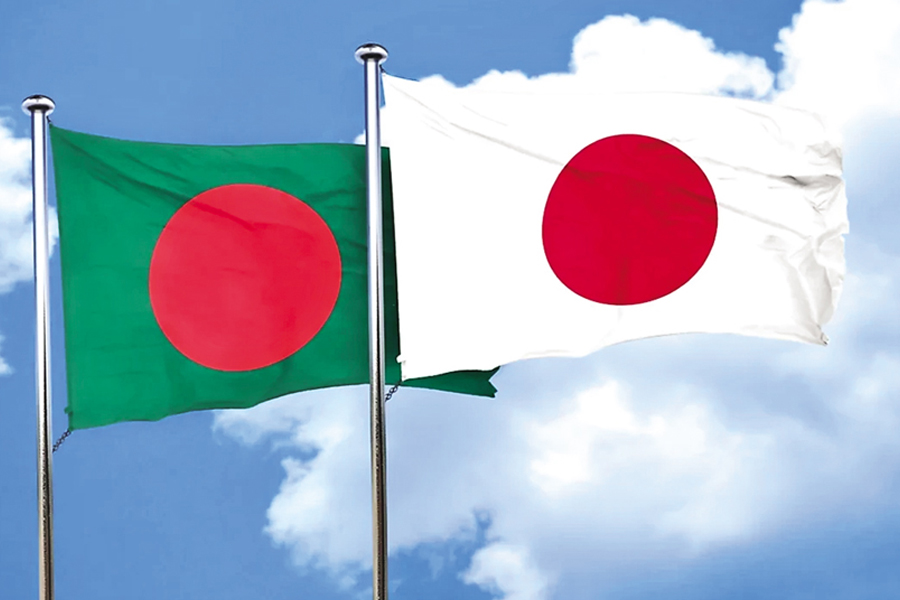
Flags of Bangladesh and Japan UNB

Bangladesh has signed an Economic Partnership Agreement (EPA) with Japan last Friday in Tokyo, the capital of Japan, by Bangladesh's Trade Advisor Sheikh Bashir Uddin and Japan's State Minister for Foreign Affairs HORII Iwao. HORII Iwao

The agreement was finalised after seven rounds of negotiations conducted in Dhaka and Tokyo regarding trade in goods and services, investment, and economic cooperation.

The 1,272-page agreement contains 22 chapters. The government has stated that this agreement will serve as an important framework to strengthen the ''strategic partnership'' between both parties.

The Ministry of Commerce said that the goal of the agreement is to facilitate cooperation and make the markets more transparent and competitive in various fields such as trade, investment, services, intellectual property, labour, and the environment between the two countries.

The agreement will act as an integrated and sustainable guide for the economic, business, investment, and social development of both countries. This agreement is not only commercial but will also strengthen political and diplomatic relations and contribute to regional stability and prosperity.

According to information from the Bangladesh Bank and the Export Promotion Bureau, Bangladesh lags behind Japan in bilateral trade. In the most recent fiscal year of 2024-25, Bangladesh exported 1.41 billion USD worth of goods to Japan. In that same fiscal year, Bangladesh imported 1.87 billion USD worth of goods from Japan.

According to the agreement, approximately 7,379 Bangladeshi products will receive 100 per cent duty-free access to the Japanese market.

Conversely, 1,039 Japanese products will receive duty-free or preferential treatment in the Bangladeshi market.

The agreement states that it will help strengthen a free, open, fair, and rule-based international economic system, serving as a foundation for the economic development, stability, and growth of both sides.

The establishment of a fair and competitive market will ensure mutual benefits to both parties, respecting environment, health, safety, and labour rights.

Maria Howlader, the General Secretary of the Japan-Bangladesh Chamber of Commerce and Industry (JBCCI), welcomed the agreement.

She told Prothom Alo, "As a result of this agreement, we are gaining duty-free access to the Japanese market, and secondly, investment from Japan in Bangladesh is likely to increase."

Moreover, Maria Howlader believes that this agreement will increase Bangladesh's productivity, efficiency, and the capacity to produce high-quality products.

She mentioned, "An opportunity has been created. Whether we can fully capitalise on it will determine what ultimately this agreement brings us."

What is in the 22 chapters

A major part of the agreement is concerned with simplifying and clarifying the trade of goods between Japan and Bangladesh. It has been stated that neither country will impose unreasonable restrictions on each other's goods. There will be no limitations other than the applicable tariffs. Certain protective measures can be adopted in special situations, such as when there is a risk of industrial disruption. However, both sides will abide by the rules of the international trade organisation.

1770684942106.webp


Bangladesh’s Commerce Adviser Sk Bashir Uddin and Japan’s State Minister for Foreign Affairs Hori Iwao shake hands after signing the EPA agreement in Tokyo, Japan, on 6 February 2026. PID/BSS

Additionally, the agreement includes topics such as rules of origin, tariff processes, and trade facilitation, sanitary and phytosanitary measures, technical regulations, standards and conformity assessment procedures; trade in services, movement of natural persons, investment, electronic commerce, government procurement, intellectual property, competition policy, subsidies, state-owned and designated monopoly enterprises, business environment improvements, labour, environment, transparency, cooperation, dispute settlement, and concluding provisions.

It has been stated that both parties will provide each other with proof of origin for products and will verify and exchange information about origins. There will be separate rules of origin for specific products. Certain conditions regarding quantity, capital expenditure, and processing procedures of products must be met. Procedures for trade goods and services must be straightforward, transparent, and effective; therefore, both parties need to publish customs systems, rules, and regulations. To minimise complexities, computerised systems should be used.

Another important aspect of the agreement is services and investment. Stakeholders argue that this agreement could create advantageous entry for the Bangladeshi service sector into the Japanese market, and Japanese investors can invest in a more transparent and protected environment in Bangladesh. Both countries' investors will receive equal opportunities and protection. Any bilateral investment disputes will be resolved through discussion and, if necessary, via mediation or arbitration.

In the realm of digital economy, e-commerce and online transactions are acknowledged, making digital trade more secure and effective. Furthermore, the acceptance of personal data protection, e-contracts, and digital signatures aims to ensure ease of business between the two countries.

While duty-free benefits help competitively with prices, producing high-quality products acceptable to Japanese consumers will likely become the most important task for Bangladesh. This agreement will contribute to increasing investment from Japan to Bangladesh, but more importantly, a business-friendly investment environment needs to be established in Bangladesh-----Kazuiki Kataoka, the country representative of JETRO.

The agreement also emphasises making government procurement processes more transparent and competitive. Businesses from both countries will have equal opportunities in government procurement.

The agreement secures the protection of intellectual property, such as copyrights, trademarks, patents, industrial designs, and protection of new plant varieties. It also includes provisions for effective enforcement of intellectual property in the digital environment and prevention of unfair competition.

Labour rights, fair wages, safe and healthy work environments, and social security have been prioritised in the agreement. Separate provisions are in place to ensure pollution control, natural resource conservation, and sustainable development, maintaining environmental accountability along with economic activities in both countries.

The agreement also emphasises ensuring labour rights, safe and healthy work environments, and social security; maintaining limited and transparent subsidies; making administrative processes simple with fewer documents while ensuring business regulations are transparent; and making government policy and information readily accessible.

What Bangladesh gains

According to stakeholders, as a result of the agreement, Bangladeshi products will be able to enter the Japanese market more easily. Duty-free privileges will reduce the prices of manufactured goods, making them more competitive. Export times and costs will also decrease. Bangladesh may become more attractive to those in Japan looking for diversification in their supply chains, as the agreement will ensure legal certainty alongside tariff exemptions.

Another major benefit is the simplification of rules of origin and tariffs, which will make exporting to Japan easier. The rules and procedures for proving origin will become clearer and more straightforward as a result of the agreement. If implemented effectively, exporting to Japan will become less costly and time-consuming. However, this will depend on how efficiently customs, certification, and verification processes can be managed, meaning administrative capacity needs to be increased.

From the day the agreement comes into effect, some Bangladeshi products will gain duty-free entry into Japan. Japan will gradually reduce tariffs on Bangladeshi products, step by step, over four, six, eight, eleven, or sixteen years.

Another major benefit is the simplification of rules of origin and tariffs, which will make exporting to Japan easier. The rules and procedures for proving origin will become clearer and more straightforward as a result of the agreement. If implemented effectively, exporting to Japan will become less costly and time-consuming. However, this will depend on how efficiently customs, certification, and verification processes can be managed, meaning administrative capacity needs to be increased.

The EPA encompasses not just goods but also investment and service trade structures. Bangladesh has relatively more regulations when it comes to foreign investments and service sector operations. Foreign citizens cannot open a branch or liaison office in Bangladesh without registering according to company law for specified sectors. While Bangladesh keeps its doors open in principle, it also wants to maintain control to ensure market equity. The EPA has not enacted anything new for Japanese companies in this respect.

The agreement mentions the movement of skilled manpower but with limitations. It aims to facilitate temporary movement for businesspeople and service suppliers, with the note that it does not ensure entry into the permanent job market or guarantee permanent migration.

The agreement has created opportunities for competent companies in Bangladesh's IT, engineering, supply, and related sectors to enter Japanese government procurement.

When asked about the agreement, former president of the Bangladesh Knitwear Manufacturers and Exporters Association (BKMEA), Md Fazlul Haque, told Prothom Alo that although the initiative to sign the EPA started during the Awami League's tenure, it was completed during the interim government, which is good news. He sees the EPA in a positive light.

Following Bangladesh's graduation from LDC status, reciprocity is no longer the issue; the main focus is now on improving competencies. Japan is a significant and familiar market for us. Both boosting exports to Japan and increasing Japanese investment in Bangladesh are critical tasks. However, Japan is not an easy market, and they take time for decision-making. Therefore, persistence is necessary to realise the benefits of the EPA.

What are the risks

According to the agreement, Bangladesh will also gradually lower tariffs on Japanese imports, which may reduce import tariff revenue, especially for those goods currently protected by high tariffs. This could create a shortfall in tax revenue, possibly increasing dependence on VAT and income tax for revenue collection. Lower tariffs could make Japanese products like machinery, capital equipment, and high-quality consumer goods comparatively cheaper, thereby increasing competition in certain domestic industries and reducing protection for infant industries.

Intellectual property is an important topic; there will be obligations in the future. Bangladesh will be able to defer some obligations for 5 to 10 years in certain cases. When this period ends, it will need to strengthen intellectual property laws and administrations, increasing implementation costs. Maintaining policy balance in certain industries might become difficult, according to experts.

Dispute resolution and rule-based pressure are also expected to increase. The easier entry of Japanese products may present challenges for local industries. Without improvements in production and quality, local enterprises may be vulnerable, experts caution.

Even if Japanese investments come in, the dominance of foreign companies could create pressure for local businesses. If the rules on labour rights and environmental protection are not strictly enforced, international criticism may increase. Due to capacity shortages, the implementation of tariffs, origin certification, intellectual property protection, and government procurement processes might become complex.

Meanwhile, the agreement mandates compliance with additional rules in sectors like agriculture, food, processed food products, and fishery products, which could raise costs, according to stakeholders.

When asked, Kazuiki Kataoka, the country representative of the Japan External Trade Organization (JETRO), told Prothom Alo that while duty-free benefits help competitively with prices, producing high-quality products acceptable to Japanese consumers will likely become the most important task for Bangladesh. This agreement will contribute to increasing investment from Japan to Bangladesh, but more importantly, a business-friendly investment environment needs to be established in Bangladesh.

According to information from the Bangladesh Bank and the Export Promotion Bureau, Bangladesh lags behind Japan in bilateral trade. In the most recent fiscal year of 2024-25, Bangladesh exported 1.41 billion USD worth of goods to Japan. In that same fiscal year, Bangladesh imported 1.87 billion USD worth of goods from Japan.

*This report, originally published in Prothom Alo print and online editions, has been rewritten in English by Rabiul Islam​
 
Analyze

Analyze Post

Add your ideas here:
Highlight Cite Respond

Members Online

Latest Posts

Back
 
G
O
 
H
O
M
E