Donate ☕
201 Military Defense Forums
[🇧🇩] - Terrorist BSF is pushing Indian Nationals into Bangladesh | Page 5 | PKDefense
Home Login Forums Wars Watch Videos
Serious discussion on defense, geopolitics, and global security.

[🇧🇩] Terrorist BSF is pushing Indian Nationals into Bangladesh

Reply (Scroll)
Press space to scroll through posts
G Bangladesh Defense
[🇧🇩] Terrorist BSF is pushing Indian Nationals into Bangladesh
62
1K
More threads by Saif

Date of Event: Jun 23, 2025
Bangladeshi villagers with sticks are enough to foil BSF's attempt to push in Indian citizens into Bangladesh.

 
Analyze

Analyze Post

Add your ideas here:
Highlight Cite Fact Check Respond
  • Like (+1)
Reactions: Bilal9
If you speak in Bengali in India the administration will arrest and deport you to Bangladesh. The Bengalis in West Bengal are being branded as Bangladeshis by the Modi administration. The chief minister of West Bengal even commented that in India speaking in Bengali is like committing sin.


Analyze

Analyze Post

Add your ideas here:
Highlight Cite Fact Check Respond

BJP states treat Bengalis like infiltrators in own country: Mamata
New Age Desk 12 July, 2025, 01:49 New Age products

1752284063385.webp

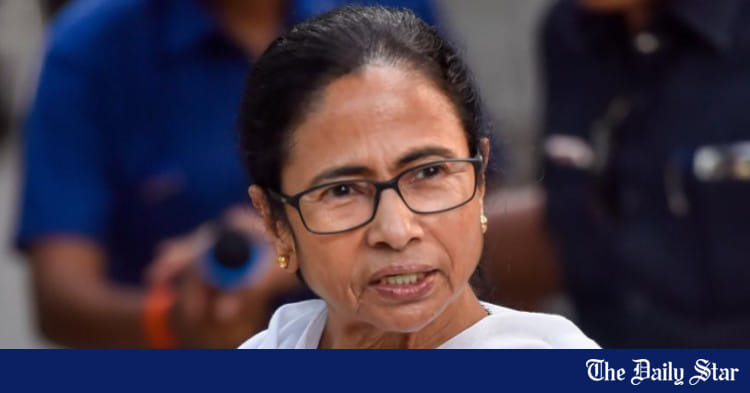
Mamata Banerjee. | File photo

BJP-governed states were treating Bengalis as infiltrators in their own country, chief minister Mamata Banerjee said on Thursday, adding: ‘Speaking Bengali does not make one a Bangladeshi,’ reports Times of India.

Reacting sharply to fresh reports that Delhi Police had snapped water and electricity connections to Vasant Kunj’s Jai Hind Colony, where a large number of Bengali-speaking migrants live, Mamata said: ‘How can we claim to be a democratic republic if the basic rights to shelter, water and electricity are being trampled upon?’ ‘We will not remain silent while people from Bengal are treated like trespassers in their own country. Bengal stands in solidarity with every oppressed voice. We will raise this issue in every possible forum,’ she added.

In a post on X, the chief minister said: ‘There are over 1.5 crore migrant workers in Bengal who live with dignity. But the same cannot be said for BJP-governed states, where Bengalis are being treated as infiltrators in their own country. Speaking Bengali does not make one a Bangladeshi. These individuals are as much citizens of India as anyone else, regardless of what language they speak.’

‘Having failed in their attempts to deprive Bengalis in West Bengal, BJP is now exporting their Bangla-Birodhi agenda to other parts of the country in a strategic and systemic manner. Disturbing reports have emerged from Gujarat, Maharashtra, Odisha and Madhya Pradesh, where Bengali-speaking individuals are facing targeted persecution. And now, this pattern of hostility has reached even the national capital,’ she alleged.

Referring to the news from Delhi, the chief minister said: ‘I am deeply disturbed by the alarming news of harassment emerging from Jai Hind Colony in Vasant Kunj, New Delhi — a settlement predominantly inhabited by Bengalis who build the city as part of its unorganised workforce... Their water supply was reportedly cut on orders from the BJP led govt. Electricity meters were confiscated, and power was abruptly cut the day before yesterday.’

Mamata’s statement comes a day before Calcutta High Court hears two habeas corpus petitions, alleging that six Birbhum residents, including three minors, who worked as ragpickers in Delhi were labelled ‘Bangladeshi’ and nabbed by police on June 18 and pushed into Bangladesh by BSF on June 26. The pleas said two families of migrant workers were picked up by Delhi Police during an ‘identity verification drive’ among the Bengali-speaking population.​
 
Analyze

Analyze Post

Add your ideas here:
Highlight Cite Fact Check Respond
  • Love (+3)
Reactions: Bilal9

Dhaka reiterates protest over border killings, push-ins
BSS Dhaka
Published: 16 Jul 2025, 22: 32

1752711842203.webp

Foreign Adviser Touhid Hossain talks to the media File photo

Foreign affairs adviser Md Touhid Hossain on Wednesday reiterated that no border guard force has the right to shoot and kill individuals along the border, stressing that those responsible for such acts should be brought to justice under Indian law.

“We have been consistently protesting such incidents, and we will continue to do so,” the adviser told reporters at the Foreign Service Academy this afternoon.

“It is illegal to shoot and kill someone for violating border laws. We are saying this clearly,” he said, reaffirming Bangladesh’s firm position on the issue.

Responding to a journalist’s query on whether the interim government’s stance on protesting border killings has softened, the adviser replied, “Not at all.”

On the issue of push-ins from India, adviser Touhid Hossain said such incidents are still happening, despite the existing legal arrangements between the two countries to take back the citizens.

“There is a prescribed process between the two countries to identify and take back citizens through the exchange of lists. Any push-in that does not follow this process is a clear violation of the rules,” he said.

The adviser noted that Bangladesh has recently taken back several citizens under the established procedure and urged India to continue adhering to the agreed process. “This is our expectation,” the adviser added.​
 
Analyze

Analyze Post

Add your ideas here:
Highlight Cite Fact Check Respond

55 more pushed into Bangladesh
Staff Correspondent . Sylhet 17 July, 2025, 01:03 Bangladesh travel packages

1752715479748.webp


The Border Security Force of India pushed 55 more people, including women and children, into Bangladesh through four border points in Sylhet and Sunamganj districts on early Wednesday morning.

With the latest push-ins, the number of people, including Rohingyas and Indian nationals, pushed into Bangladesh by the BSF since May 7 has increased to 1,915.

Border Guard Bangladesh 48 Battalion commanding officer Lieutenant Colonel Md Nazmul Haque said that BSF personnel pushed 55 people—12 men, 33 women and 10 children, into Bangladesh territory through different border points of Sylhet and Sunamganj districts between 4:00am and 7:00am.

Through border points in Sylhet, 19 individuals were pushed into Bangladesh through Kalairag border point at Companiganj upazila, 13 people through Mokampunji border point under Shripur union at Jaintapur upazila and two more through Naljuri border point at Goainghat upazila, the BGB officer said.

Through a border point in Sunamganj, the BSF pushed 21 people through Chhanbari border point under Noarai union at Chhatak upazila, he said.

The BGB officer said that their personnel at the border outposts concerned detained the people immediately after they were pushed in.

‘In the primary interrogation, the detainees admitted that they had entered into India illegally at different times in search of jobs,’ Lieutenant Colonel Nazmul said.

Of the 55 individuals, 23 were from Narail, 12 from Jessore, 10 from Satkhira, 4 from Sylhet, two from Barishal and one each from Habiganj, Narsingdi, Khulna and Kushtia districts, he said.

The BGB officer said that the detainees were handed over to respective police stations for taking necessary legal steps.​
 
Analyze

Analyze Post

Add your ideas here:
Highlight Cite Fact Check Respond

Indians themselves face trouble with the "push-in" drive into Bangladesh
Saleh Uddin Ahmed
Updated: 21 Jul 2025, 14: 56

1753231552780.png


India media as well as various international media are gradually publishing the heart-breaking stories of hapless Indian nationals being forcefully pushed into Bangladesh File Photo: Prothom Alo

The most ‘famous’ Bangladeshi in India right now is the former prime minister Sheikh Hasina. Since 5 August last year, many Awami League politicians have also crossed the border and taken refuge in India. Naturally, these Bangladeshis have been excluded from the ongoing ‘push backs’ that India is conducting at the border.

What a cruel irony of fate! While genuine Bangladeshis are being received as ‘guests’ in India, thousands of Indian citizens are being harassed across various Indian states, labeled as ‘Bangladeshis’ and subjected to push back. Among them are many Bengali-speaking Hindus and Muslims. The Indian government is using these poor people as tools to implement Prime Minister Narendra Modi’s political agenda of teaching Bangladesh a lesson.

BJP-ruled states are also using this push back tactic to win over non-Bengali voters in their respective regions and boost the BJP’s vote bank.
On 17 July, in protest of the “abuse of Bengalis in BJP-ruled states,” Mamata Banerjee’s Trinamool Congress organised a rally in Kolkata. According to the Bangla daily 'Anandabazar', Mamata’s near 45-minute speech at the rally was dominated by allegations of harassment of Bengalis in BJP-ruled states.

At the protest meeting, Trinamool’s All-India general secretary Abhishek Banerjee said that the abuse of migrant workers from West Bengal in BJP-ruled states and their detention under the label of “Bangladeshi” is a deliberate assault on democracy.

Indian newspapers and various international media outlets are gradually revealing the heartbreaking stories of these hapless Indian citizens being pushed into Bangladesh. But the Indian government remains unmoved. Although the Modi government has said little publicly on the matter, its actions speak volumes about its intentions.

A report by the BBC from Assam was published in the first week of June. Shona Banu, a 58-year-old resident of Barpeta district in the northeastern Indian state of Assam, told the BBC that she was summoned to the local police station on 25 May. Later, she was taken to a location near the Bangladesh border. She and around 13 others were forcibly sent into Bangladesh. She said no one told her why she was being sent to another country, and she was extremely frightened.

Shona Banu said she has lived her entire life in Assam that she is an Indian citizen, and not an “illegal immigrant” from Bangladesh.

“They pushed me at gunpoint. I spent two days in knee-deep water full of mosquitoes and leeches without any food or water,” Shona Banu told the BBC reporter, wiping away tears. After being kept in the border area for two days, she was taken to an old prison facility on the Bangladeshi side.
After spending two days there, Bangladeshi officials took Shona Banu and several others back across the border and handed them over to Indian authorities. Eventually, the Indian officials sent them back to their homes.

Even now, Shona Banu trembles when she recalls the experience.

It remains unclear why Shona Banu was suddenly sent to Bangladesh and then brought back. However, her case is one of several recent incidents in which Assam authorities, suspecting individuals to be ‘illegal Bangladeshis,’ have detained people declared ‘foreigners’ by so-called tribunals and pushed them across the border.

The BBC has found at least six such cases in which people reported that their family members were picked up, taken to a border town, and then ‘pushed’ into Bangladesh.

India’s Border Security Force, Assam Police, and state government officials did not respond to BBC’s questions.

An Al Jazeera report on Indian “pushbacks” reveals how India is using its own poor citizens in these operations.

On 31 May, a 67-year-old bicycle mechanic returned home in the northeastern Indian state of Assam after being stranded in Bangladesh for four days.

Ali’s week-long ordeal began on 23 May when police picked him up from his rented home in the small village of Khuadal in Assam’s Morigaon district. The government operation targeted those declared as “foreign nationals.” After being detained on 23 May, Ali was taken 124 miles away to a detention center in Matia, in Assam’s Goalpara district.

Three days later, early in the morning of 27 May, India’s Border Security Force (BSF) troops transported him, along with 13 others, including five women, in a van to the India-Bangladesh border. They were told that if they tried to return, they would be shot. An Indian journalist reported that the BSF fired four rubber bullets to intimidate them.

1753231641053.webp

Protest in India against the new citizenship law Photo: Reuters

After angry protests from Bangladeshi villagers, Bangladesh’s border guards (BGB) dumped Ali at a border point in India’s Meghalaya state. From there, he made a 10-hour journey through dense forest to finally return home.

According to a report published on 31 May in The Sentinel, an Assam-based newspaper, the BSF received 65 Indian nationals from BGB in connection with this incident.

The eviction of people under the label of “Bangladeshi” has sparked intense backlash in Assam. Protests have spread across Bengali-populated areas of the Barak Valley.

The crisis has deepened following a recent comment by the state’s Chief Minister, Himanta Biswa Sharma. He stated that in the upcoming census, anyone who declares Bengali as their mother tongue will be identified as a “foreigner.”

These incidents of “driving out Bangladeshis” are now spreading to other BJP-ruled states as well. Numerous cases from Delhi, Bihar, and Maharashtra have recently surfaced in the media.

A human being is not just a pawn for votes; they are citizens of a country, members of a family. If there are problems between two countries or between leaders, they can be resolved through dialogue, not by destroying the lives of one’s own citizens

It is quite common for migrant labourers from one Indian state to travel to another in groups for work. But these days, it has become increasingly difficult for Bangla-speaking workers to do so. In many Indian states, the policy of “if you speak Bengali, you must be Bangladeshi” is being enforced, leading to harassment and, in many cases, forced deportation to Bangladesh.

One such incident recently came up in the Kolkata High Court in a case involving migrant workers from West Bengal. These labourers had traveled to Delhi for work. There they were detained simply for speaking Bangla. They were suspected of being Bangladeshis. The allegation is that they were held illegally for more than 24 hours without even verifying their identity.

The petitioner’s lawyer informed the court that these six migrant workers from Paikar in Birbhum were detained in Delhi on suspicion of being Bangladeshis and were then sent to Bangladesh. The local police station reported that those detained on suspicion of being Bangladeshis were handed over to the BSF and subsequently “pushed” into Bangladesh.

According to a report in Kolkata’s daily Anandabazar Patrika, the Kolkata High Court posed a series of questions to the central government regarding this “Bangladeshi identification” operation: “Why did the drive to identify Bangladeshis suddenly begin across multiple Indian states? What is the reason behind it? Why was the month of June chosen for this operation across all states? Was this premeditated? Are people really being arrested simply for speaking Bangla?”

In the West Bengal Legislative Assembly, BJP opposition leader Suvendu Adhikari has now raised a new alarm over the alleged infiltration of Rohingyas. He claimed that Rohingyas are entering West Bengal through the Bangladesh border. In an unusual demand, he called for immediate house-to-house searches.

After the partition of India in 1947, migration between India, Pakistan, and then East Pakistan was a fairly normal occurrence for several years. For some, it was due to family reasons; for others, it was a voluntary choice. Governments at the time accepted this movement as natural. None of them maintained much documentation or official records of such migration.

Later, under the BJP government, various laws were introduced selectively to harass certain communities by demanding documentation. This harassment has sometimes been based on language, sometimes on religion, and sometimes indiscriminately, especially targeting Bangla-speaking labourers working in other states. One of the most extreme forms of such harassment is the “push-in” into Bangladesh.

If we compare this with the refugees who came to Bangladesh from India, a very different picture emerges. They were called “Bihari refugees.” Biharis settled in areas like Mohammadpur in Dhaka, Khalishpur in Khulna, Pahartali in Chattogram, and Saidpur in Rangpur. After Bangladesh’s

independence, many Biharis refused to take Bangladeshi citizenship for a long time. Logically, the government of Bangladesh could have pushed them back to India, since they had originally come from there. But no Bangladeshi government chose that inhumane path.

The claim that Bangladeshis go to India for livelihood is nothing more than propaganda or an illogical assertion. It is true that many Bangladeshis take risks to go to the Middle East, Europe, Canada and the United States in search of a better life and livelihood. But including India on that list is unreasonable.

According to the IMF’s 2025 survey, the per capita income of Indians is 2,937 dollars, while that of Bangladeshis is 2,774 USD, very close. India’s job market for professionals is far more competitive than in Bangladesh. And labourers certainly do not earn more working in Indian cities than they would in Bangladesh. In Indian cities where wages are slightly higher, such as Mumbai and Delhi, the cost of living is also exorbitant. So, it is not logical at all to argue that Bangladeshis would illegally go to India for work.

The Indian government must stop this “push back” practice. Numerous media reports have shown how many poor Indian citizens are being harmed by it and growing disillusioned with their own leaders.

A human being is not just a pawn for votes; they are citizens of a country, members of a family. If there are problems between two countries or between leaders, they can be resolved through dialogue, not by destroying the lives of one’s own citizens. That is deeply inhumane.

* Saleh Uddin Ahmed is a writer and political analyst.​
 
Analyze

Analyze Post

Add your ideas here:
Highlight Cite Fact Check Respond
  • Love (+3)
Reactions: Bilal9

Members Online

⤵︎

Latest Posts

Latest Posts