Home Watch Videos Wars Movies Login

[🇧🇩] Textile & RMG Industry of Bangladesh

[🇧🇩] Textile & RMG Industry of Bangladesh
440
18K
More threads by Saif

G Bangladesh Defense

Single month RMG export hits historic high​

It hit $4.97 billion in January, posting a 12.45% year-on-year rise

1708387407882.webp


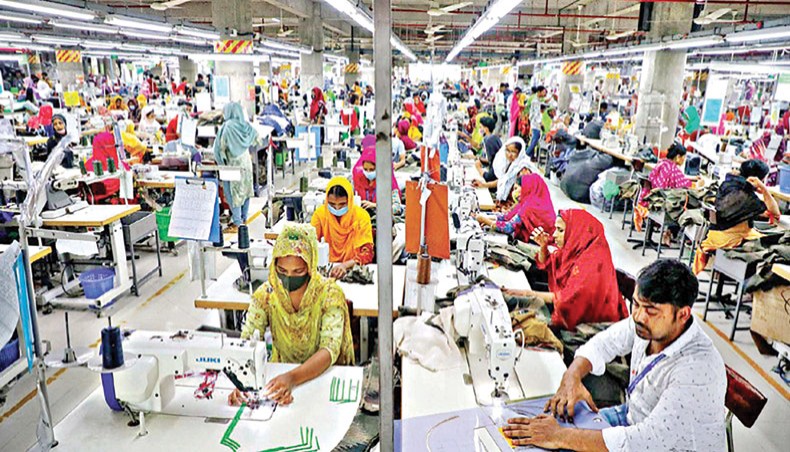
Bangladesh made the highest amount of garment shipment in a single month in January riding on the rebounding global economy and revival of the export.

In fact, January 2024 stands unique for its highest export turnover in a single month in the country's history, according to Bangladesh Garment Manufacturers and Exporters Association (BGMEA).​

The country shipped $4.97 billion worth of garments in January, posting a 12.45 percent year-on-year growth, according to data from the Export Promotion Bureau (EPB) compiled by the BGMEA.

After a depressive October-December quarter of 2023, the export growth curve has taken a positive shift.

In January, knitwear export grew by 17.32 percent year-on-year while woven rebounded by posting a 7.16 percent growth.

"This is a huge milestone and the reflection of our continued expansion, BGMEA President Faruque Hassan said in a statement.

"This is also a reflection of how we are diversifying our product and market base, and moving up in the ladder of value addition."

"We have seen retail sales growth in our major markets where the figures of the USA and the UK markets hit records during holiday seasons last year," the BGMEA chief also said.

Hassan said the burden of excess inventory at the buyers' end is now relaxed and new orders are expected to come.

The pressure on major economies caused by high inflation and interest rate is also getting reduced, Hassan said.

Therefore, it is expected that 2024 will be a year of come back in terms of trade and growth.

"However, we should not be overwhelmed by the instant response of the market."

"Particularly we need to be careful while planning new capacity and expansion, cause we cannot add more vulnerability to our existing overcapacity situation. So, quality investment, especially in backward linkage will be crucial for us for the next 5 years," Hassan said.​
 
Analyze

Analyze Post

Add your ideas here:
Highlight Cite Respond
  • Love (+3)
Reactions: Bilal9

Speeding up RMG product diversification​

SYED MANSUR HASHIM
Published :​
Feb 20, 2024 21:27
Updated :​
Feb 20, 2024 21:27

1708473174336.webp


The Dhaka Chamber of Commerce & Industry (DCCI) recently arranged a seminar on the export readiness of the country in the post-LDC period. The main presentation made by Dr. Selim Raihan, executive director of SANEM, hit the nail on the head when he had stated that "Bangladesh fetched $823 million from the nine new products in 2021 while Vietnam earned $145billlion, Thailand $6.61 billion and India $6.12 billion respectively". It is time to face the reality, no matter how much we like to indulge in self-glorification about how the country is No.2 in the global apparel trade. The 15 years period in question (2006-2021) saw continuity of government and a lot of progress has been made in terms of infrastructure development and power generation. Equally important is that the focus had remained on readymade garments (RMG) and the production of basic apparels.


Only recently, has the industry started to diversify its product line. The competitors have not been sitting around idly, as one can see from Vietnam's experience. Three other nations have been highlighted i.e. Vietnam, Thailand and India along with Bangladesh in terms of how many items have been added to the export basket over this period. Vietnam leads the pack with 41 followed closely by Thailand 31 and although India trailed both with 16, its number was nearly double that of Bangladesh which had nine.

According to a report published in this newspaper earlier this month, RMG exports to the US market had fallen by as much as 25 per cent in the last fiscal. When there's a downturn where people are struggling to pay their mortgages, to eat, meet utility bills, fashion takes a backseat. The high inflation and rising interest rates are indeed, a global phenomenon, and this is reflected by overflowing inventories amongst United States' (US) retailers.

The US alone represents the single largest export market for Bangladeshi apparels. So, any downturn in demand over there will have serious consequences here. Official figures from the Office of Textiles and Apparel (OTEXA)'s latest released data of February 8 show RMG exports witnessed a 25.07 per cent drop on year-to year basis. The US market is unique in the sense that the RMG industry never enjoyed GSP facilities over there. The terms put forward by the US to the industry has at least been met halfway thanks to the upgrading of physical safety standards over many years. The labour issue is another matter and it is difficult to determine precisely when it will be addressed, particularly when the industry faces daunting challenges.

With more than 80 per cent of annual exports out of Bangladesh coming from this sector, policymakers and industry have wasted more than a decade on two fronts: First, there was no attempt to diversify the economy. All the incentives, or at least the bulk of those went to the RMG sector. Second, as is now amply clear, (and on which RMG leaders also concur) diversification of product portfolio hadn't happened as a matter of concerted marketing strategy. The RMG sector has shown itself to be a resilient one. Unfortunately, it is hamstrung by the policy regime and the overwhelming confidence in itself that it can withstand the downturn is misplaced. While it may be easy for some owners to keep factories shut, what the millions of workers will do to put food on the table? There are no easy answers to such troubling questions.
 
Analyze

Analyze Post

Add your ideas here:
Highlight Cite Respond
  • Like (+1)
Reactions: Bilal9

BGMEA seeks govt support to boost RMG sector’s green transition​

Bangladesh Sangbad Sangstha . Dhaka | Published: 21:59, Feb 22,2024
facebook sharing button

twitter sharing button

whatsapp sharing button
226109_119.jpg

email sharing button

sharethis sharing button
Faruque Hassan, president of Bangladesh Garment Manufacturers and Exporters Association (BGMEA), has sought support of the government in ensuring faster and seamless services from government bodies, particularly Rajdhani Unnayan Kartripakkha (RAJUK), for the RMG entrepreneurs.

Faruque made the call as he paid a call on RAM Obaidul Muktadir Chowdhury, Minister of Housing and Public Works, at the Secretariat here today, said a press release.

Their discussions primarily focused on the current state and future prospects of Bangladesh’s ready-made garment industry.

The meeting, also attended by former president of BGMEA Md Shafiul Islam Mohiuddin, director Neela Hosna Ara, and chair of BGMEA Standing Committee on Labour and ILO Affairs ANM Saifuddin, included discussions about the challenges and opportunities facing the RMG industry.

Kazi Wasi Uddin, secretary at the Ministry of Housing and Public Works, and Mohammad Shamim Akhter, chief engineer at the Public Works Department were present at the meeting, said a press release.

The BGMEA president highlighted the significant progress made by the industry, especially in terms of workplace safety and environmental sustainability.

He emphasized the RMG industry’s transition towards sustainable business practices, particularly the growing number of energy-efficient and environmentally friendly garment factories in Bangladesh.

Currently, Bangladesh boasts the highest number of green garment buildings globally, with 207 factories LEED certified by the US Green Building Council (USGBC). Of these, 77 are Platinum rated and 116 are Gold rated.

Faruque expressed optimism that the industry’s green transition would enhance Bangladesh’s competitive edge in the global market and solidify its position as a leader in sustainable garment manufacturing.

However, he underscored the importance of government support, including policy assistance and easy access to finance, to further facilitate the growth of green industries in the country.

During the meeting, Faruque also urged the government to streamline business-related laws and regulations, including taxation, value-added tax (VAT), and other facets of cross-border trade, in order to facilitate a more business-friendly environment.​
 
Analyze

Analyze Post

Add your ideas here:
Highlight Cite Respond
  • Like (+1)
Reactions: Bilal9

Tk 10,000 proposed as minimum wage for textile workers​

Staff Correspondent | Published: 22:03, Feb 22,2024
facebook sharing button

twitter sharing button

226113_141.jpg


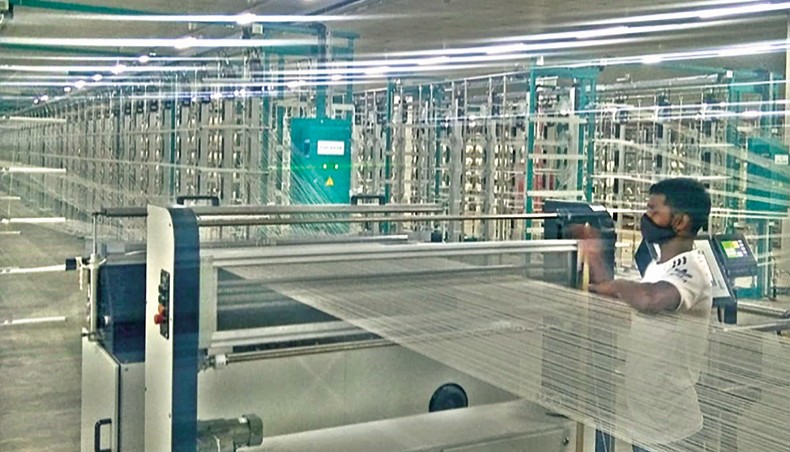
A file photo shows a man working in a cotton textile mill. The minimum wages board on Thursday finalised its proposals, recommending Tk 10,000 as the minimum wage for cotton textile sector workers. — New Age photo

The minimum wages board on Thursday finalised its proposals, recommending Tk 10,000 as the minimum wage for cotton textile sector workers.

The current minimum is Tk 5,710, which was set in 2018.

Before finalising the draft recommendations, the board visited a few textile factories across the country and held separate meetings with the factory owners and workers.

After getting the views of workers and owners, the board on Thursday finalised its draft proposals for the sector workers, officials of the minimum wages board said.

The minimum wages board secretary, Raisha Afroz, said that all members of the board finalised the draft minimum wages.

According to the draft proposals, the wage for a worker of grade 10 (the lowest grade) has been recommended at Tk 10,000, including basic pay Tk 5,000, 60 per cent of the basic pay (Tk 3,000) as house rent for the upazila town, Tk 750 as medical allowance, Tk 400 as travel allowance and Tk 850 as food allowance.

Minimum wage for the workers in district town has been proposed at Tk 10,350.

The amount includes Tk 5,000 as basic pay, 65 per cent of the basic pay (Tk 3,250) as house rent, Tk 750 as medical allowance, Tk 500 as travel allowance and Tk 850 as food allowance.

Minimum monthly pay for the workers in divisional town has been proposed at Tk 10, 700, including Tk 5,000 as basic pay, 70 per cent of the basic pay (Tk 3,500) as house rent, Tk 750 as medical allowance, Tk 600 as travel allowance and Tk 850 as food allowance.

The wage board secretary declined to disclose the proposed wage amount for the workers of nine other grades.

The workers’ representative to the wage board, Shahjahan Saju, said that they had finalised the wage proposals and the amount of all grades would be made public through a gazette notification soon.

The labour ministry on January 15 appointed representatives from the owners and the workers in the sector to the minimum wage board for the textile mills workers as the workers of the sector raised their voice demanding a pay hike after increasing the wages for the readymade garment workers in December 2023.

Amid the protest from workers, the labour ministry appointed Pahartali Textile and Hosiery Mills general manager Md Abdul Malek as the owners’ representative and Pahartali Textile and Hosiery Mills Workers Union senior vice-president Shahjahan Saju as the workers representative to the wage board.

There are some 7,000 textile units under the sector across the country and nearly 50 lakh people are working in the factories, they said.

 
Analyze

Analyze Post

Add your ideas here:
Highlight Cite Respond
  • Like (+1)
Reactions: Bilal9

RMG export to Europe reaches $13.92b in July-January period​

BSS
Published :​
Feb 24, 2024 19:23
Updated :​
Feb 24, 2024 19:29


1708819343568.webp


Bangladesh's RMG export to the European Union (EU) reached $13.92 billion during the July-January period of the current fiscal year (FY24), with a growth of 1.32 per cent compared to the same period of the previous fiscal year (FY23).

As per the latest statistics of the Export Promotion Bureau (EPB), Bangladesh's export to Spain, France, the Netherlands and Poland showed 6.05 per cent, 4.25 per cent, 11.77 per cent and 20.30 per cent growth respectively during the same period of the current fiscal.

However, apparel exports to Italy declined by 1.81 per cent. On the other hand, Germany the largest export market of Bangladesh in the EU, declined by 13.46 per cent fetching an amount of $3.51 billion in this July-January period compared to the same period of the last fiscal (FY23).

EPB statistics showed Bangladesh's RMG export to the USA reached $4.79 billion in the first seven months of FY24, a fall of 3.90 per cent.

At the same time, the country's export to the UK and Canada reached $3.31 billion and $871.27 million respectively, during this seven-month period of FY24, with a growth of 12.98 percent and 0.68 per cent respectively.

During this July-January period of the current fiscal year, apparel export to non-traditional markets grew by 11.69 per cent to $5.46 billion from $4.89 billion in the corresponding period of previous year.

Among the major non-traditional markets, export to Japan, Australia and South Korea increased by 8.74 per cent, 23 per cent and 17.57 per cent respectively.

However, apparel exports to India declined by 21.86 per cent.​
 
Analyze

Analyze Post

Add your ideas here:
Highlight Cite Respond
  • Love (+3)
Reactions: Bilal9

Green factories now 209 as two more RMG units obtain LEED certification​

Staff Correspondent | Published: 23:53, Feb 24,2024
facebook sharing button

twitter sharing button
226310_154.jpg

whatsapp sharing button
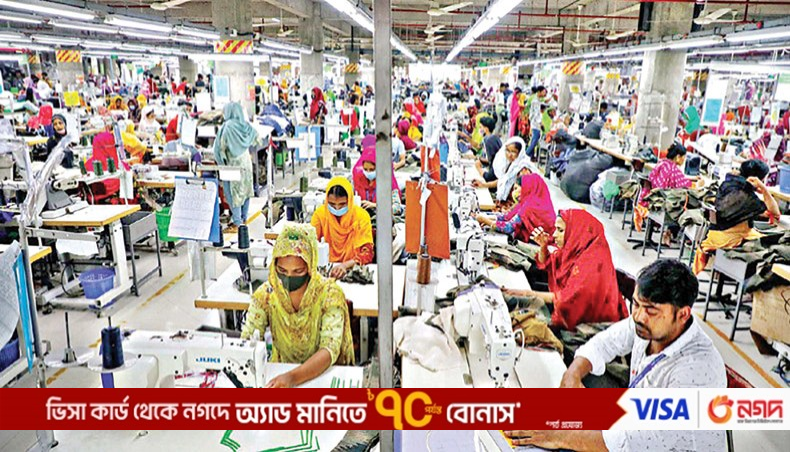
A file photo shows workers sewing clothes at a green readymade garment factory at Savar on the outskirts of Dhaka. — New Age photo

Two more readymade garment factories — Comfit Eco Ville Limited and Fakir Eco Knitwears Ltd — have received platinum certifications in Energy and Environmental Design (LEED) from the US Green Building Council and the total number of LEED certified green factories has now risen to 209 in Bangladesh.

Comfit Eco Ville Limited located at Mirzapur in Tangail is rated platinum by the US Green Building Council on February 20 with a score of 85 out of 110 while Fakir Eco Knitwears Ltd located in Narayanganj is rated platinum by the USGBC on February 21 with a score of 85.

Out of 209 LEED certified green factories, 79 received platinum rating and 116 achieved gold certifications, according to the Bangladesh Garment Manufacturers and Exporters Association.

According to the USGBC, to achieve the global Leadership in Energy and Environmental Design certification, a project has to earn points by adhering to prerequisites and credits that address carbon, energy, water, waste, transportation, materials, health and indoor environmental quality.

Platinum certification is the highest category in the ranking and projects have to earn more than 80 points out of 110, 60-79 points for gold and 50-59 points for silver category.

BGMEA president Faruque Hassan in a statement on Saturday said that the growing number of green factories in Bangladesh was a testament to the industry’s unwavering commitment to sustainability.

‘Our members have consistently shown exceptional leadership in adopting eco-friendly practices, from energy-efficient operations to water conservation initiatives,’ he said.

The BGMEA president also said that the dedication to environmental responsibility was not only commendable but also essential for ensuring the long-term sustainability of RMG industry.

According to the BGMEA statistics, the country is now home to 54 of the top 100 highest-rated LEED certified green factories in the world.

Faruque said that the global community was taking notice of Bangladesh’s green factory initiatives, and buyers were coming forward and investing in green energy infrastructure in Bangladesh.​
 
Analyze

Analyze Post

Add your ideas here:
Highlight Cite Respond

11 organisations to be recognised for developing textile sector​

1708991411981.webp


Eleven organisations, including 10 trade bodies, will be awarded for their role in developing the textile sector, expanding textile education and increasing exports.

The recipients are the Bangladesh Garments Manufacturers and Exporters Association, the Bangladesh Knitwear Manufacturers and Exporters Association, the Bangladesh Textile Mills Association, the Bangladesh Specialised Textile Mills and Powerloom Industries Association, the Bangladesh Cotton Association, the Bangladesh Garment Buying House Association, the Bangladesh Terry Towel and Linen Manufacturers and Exporters Association, the Bangladesh Textile University, the Bangladesh Garment Accessories and Packaging Manufacturers and Exporters Association, the Bangladesh Embroidery Manufacturers & Exporters Association, and Bangladesh Tanti Samiti.

They will be honoured at an event at the Bangabandhu International Conference Center on February 27.

Jahangir Kabir Nanak, minister for textiles and jute, shared the information on the occasion of National Textile Day at a press conference at his office at the secretariat on Sunday, according to a press release.

"The textile sector is an integral part of the country's economy, society and culture and it is also playing an important role in the country's socio-economic development, poverty alleviation, women's empowerment and employment generation."​
 
Analyze

Analyze Post

Add your ideas here:
Highlight Cite Respond

Apparel exports of $27b may be lost due to climate change: study​

Staff Correspondent | Published: 21:56, Feb 28,2024
facebook sharing button

twitter sharing button
226586_117.jpg

whatsapp sharing button
A file photo shows workers sewing clothes at a readymade garment factory at Savar on the outskirts of Dhaka. Bangladesh could loss apparel export earnings of nearly $27 billion and 0.25 million jobs by 2030 due to climate-induced disruptions, a global study projected. — New Age photo

Bangladesh could loss apparel export earnings of nearly $27 billion and 0.25 million jobs by 2030 due to climate-induced disruptions, a global study projected.

The study conducted by Cornell University and Schroders highlighted the threat posed by extreme heat and flooding to the global apparel industry and suggested immediate action to address these challenges.

Mapped in Bangladesh and Cornell University’s School of Industrial and Labor Relations Global Labor Institute on Wednesday jointly unveiled the findings on ‘Climate Resilience and Fashion’s Costs of Adaptation’ in an event held at Lakeshore Hotel in the capital Dhaka on Wednesday.

The study focused on production hubs in Bangladesh, Cambodia, Pakistan, and Vietnam and it calculated climate-driven losses over $65 billion in export earnings and nearly 1 million jobs by 2030 in the four countries.
Together, these four represented 18 per cent of global apparel exports in 2021, the report said.

The report also projected the losses to gross domestic product from high heat and humidity by 4.9 per cent for Bangladesh, 6.5 per cent for Cambodia, 5.1 per cent for Pakistan and 4.9 per cent for Vietnam by 2030.

It also mentioned that the ‘Pell-mell’ growth in fashion’s favourite production centres over three decades has created ‘urban heat islands’ with dangerously high heat stress for workers.

‘More building in flood plains and the accompanying blankets of concrete means more dramatic flooding. Sea-level rise and storm surges, rainfall and riverine flooding threaten to interrupt apparel production and transport, strand industry assets, and jeopardise workers’ health and livelihoods,’ the study mentioned.

According to the study, apparel workers in Bangladesh surveyed in 2023 noted that workplace heat has been considerably higher in recent years.

In 2022 survey of 67 Dhaka apparel workers accustomed to high heat found that more than three-quarters (78 per cent) wished for cooler working conditions in that city’s hottest and most humid months, the report said.

It also found that flooding also interrupted work and life, sometimes dramatically as a minor inundation of 0.25 metres from rainfall, riverine or coastal flooding in factories might cost hours or even days.

But major flooding of one metre more can halt or slow production and transport for weeks and apparel workers can find themselves stuck in their homes or risking illness by pushing through flood waters to get to their factories and maintain their incomes, the study observed.

Workers in Bangladesh apparel factories reported that they were docked pay even if they were a few minutes late due to transport hassles or were denied paid leave if they fell sick.

Workers estimated that they were late 10 times a month in May, June and July, and that even transport costs in flooded streets were higher.

The report found that workers missed three full days of work per month due to heat- and flood-related illness in the hottest and rainiest quarter of the year.

Those absences can mean losses of Tk 1,200 – 1,500 a month, or more than 10 per cent of their income in the highest-cost months of the year.

The study said that the workers interviewed for this report estimated spending Tk 3,500 for medicine and Tk 2,000 for electricity at home in the hottest months when fans have to run constantly to allow them to sleep.

Employers generally downplayed the extent to which temperature affected workers, report mentioned.

Jason Judd, executive director of GLI, presented the study’s findings on the impacts of extreme heat and flooding on apparel production hubs in key countries of the global supply chain.

He emphasised the need for investors to engage with apparel companies and their stakeholders, highlighting the current gap in risk management strategies that often overlook adaptation measures.

The study also examined the supply chain footprint of six global apparel brands, showing the impact of extreme weather conditions on workers and manufacturers.

Sheikh HM Mustafiz, managing director of Cute Dress Industry Ltd, said that apparel sector entrepreneurs in Bangladesh invested huge in establishing green factories and that would help to reduce temperature.

Kazy Mohammad Iqbal Hossain, climate action lead-global supply chain at Lindex, spoke about brand responsibility and the importance of collaborative efforts to address climate challenges.

Nazma Akter, executive director of Awaj Foundation, said that to produce low price denim and tee-shirts, Bangladeshi factory owners were destroying nature and making low payment to the workers.

She said that inequality between workers and factory owners was also affecting environment.

Nazma urged the government to realise compensation from the people who were making profits through polluting environment.

Matin Saad Abdullah, a BRAC University professor, highlighted the academic and technical opportunities arising from the research and data, emphasising the role of the academic community and investors in supporting industry-wide change.

MiB lead operations officer Afshana Choudhury also spoke at the event.

The event was presided over by Mohammad Mahboob Rahman, treasurer of BRAC University, who facilitated the panellist session and open floor discussion.​
 
Analyze

Analyze Post

Add your ideas here:
Highlight Cite Respond

Members Online

Latest Posts

Back
 
G
O
 
H
O
M
E