[🇧🇩] Textile & RMG Industry of Bangladesh

[🇧🇩] Textile & RMG Industry of Bangladesh
475
21K
More threads by Saif

G Bangladesh Defense

No overcapacity, forced labour in apparel sector

BGMEA says in position paper to commerce ministry amid US probe

Refayet Ullah Mirdha
1776904575176.webp


Bangladesh is a top producer of basic apparel items in the world. The sector accounts for some 80 percent of the country’s export earnings.

Bangladesh’s garment industry does not have overproduction capacity that could harm the American manufacturing sector and is free from forced labour, as exporters comply with internationally recognised labour laws, according to the Bangladesh Garment Manufacturers and Exporters Association (BGMEA).

The association made the remarks in a position paper submitted to the commerce ministry as the government prepares to attend a hearing of an investigation launched by the United States Trade Representative (USTR) on April 29.

The probe covers alleged overproduction capacity and forced labour in 60 countries, including Bangladesh.

Responding to the USTR’s “structural excess capacity” or “overproduction” concerns, the BGMEA said the terms do not have a universally accepted definition or measurable benchmark.

It argued that in a market-driven economy, production levels constantly adjust to shifts in demand, input costs and supply chain conditions. Determining “excess capacity” without clear parameters or methodology is a major challenge.

The association added that Bangladesh’s apparel sector has not expanded suddenly or in a way that would indicate structural excess capacity. The industry’s growth should be viewed over the long-term.

Over the past decade, the sector has followed a steady growth path, it said, driven by global demand and changing sourcing strategies rather than policy-induced expansion.

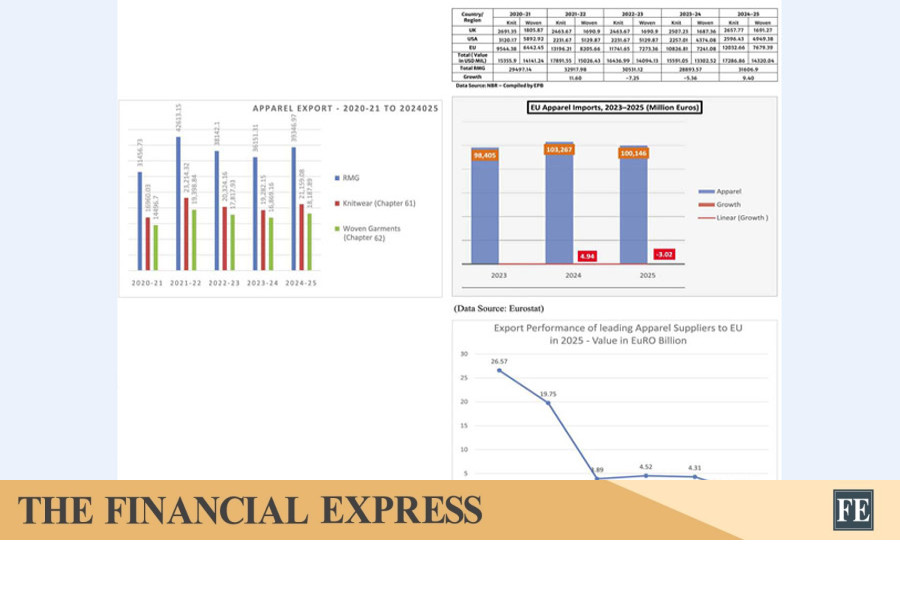
After more than four decades of development, Bangladesh exported garment products worth $39.3 billion in fiscal year 2024-25, accounting for nearly 7 percent of the global apparel market. It is now the world’s second-largest garment exporter after China.

In 2025, Bangladesh accounted for 10.73 percent of US apparel imports by volume and 10.53 percent by value, according to the American Apparel and Footwear Association (AAFA).

The BGMEA said the dominance of the sector in national exports shows structural constraints in economic diversification and reliance on a single industry, rather than excessive industrial capacity.

It added that the concentration of resources in apparel should be seen as part of a development pathway, not as evidence of overcapacity.

From a US perspective, the association said Bangladesh primarily exports labour-intensive, low to mid-priced apparel that is not produced in the US in significant volumes. In domestic production, the US focuses on advanced manufacturing and heavy industries rather than basic clothing items such as T-shirts and casual wear.

As a result, such imports do not adversely impact US manufacturing, but instead support consumers by providing affordable clothing, particularly for low and middle-income households, it added.

The BGMEA said Bangladesh’s role in the global apparel value chain complements the US economy.

It also said the government provides policy support, including cash incentives, to offset structural disadvantages such as inadequate infrastructure, longer lead times and limited backward linkage industries.

These factors add an additional seven to ten days of transit time and increase logistics costs, conditions that are not faced by competitors such as China, India and Vietnam.

On allegations of forced labour, the BGMEA said Bangladesh maintains a firm and unequivocal position that there is no forced labour in its export-oriented garment sector.

It said the industry operates under a strong legal and institutional framework that ensures compliance with national labour laws and internationally recognised standards.

Citing the official US Customs and Border Protection (CBP) dashboard, the BGMEA said 55 Withhold Release Orders (WROs) are currently active across all industries.

A WRO is a command by US Customs to stop, and hold imported goods at the border if they are suspected of being made with forced labour. A thorough review of the database confirms that there is no instance of any WRO issued against Bangladesh.​
 

RMG order flow hit by energy worries

BCI chief says

Star Business Report

1776905800788.webp

Anwar-Ul Alam Chowdhury

Foreign buyers are increasingly diverting garment work orders away from Bangladesh over concerns about energy reliability and an uncertain business climate, said Anwar-Ul Alam Chowdhury (Parvez), president of the Bangladesh Chamber of Industries (BCI), yesterday.

“Buyers are telling us that within the next two to three months, Bangladesh may face electricity shortages. Because of that, their top management is discouraging them from placing new orders here,” he said, citing recent communications from international sourcing teams.

He made the remarks at a discussion with senior officials of the National Board of Revenue (NBR) at its headquarters in Dhaka. The NBR organised the meeting as part of its consultation with businesses and other stakeholders ahead of formulating tax proposals for the next fiscal year, 2026-27.

The BCI president said some orders had already been redirected to India and other competing countries, while others were being withheld amid growing uncertainty.

He added that several large buying houses had warned local suppliers of potential disruptions, triggering anxiety across the export-oriented manufacturing sector.

“Orders for July and August, which were expected by now, have either slowed significantly or stopped altogether. We are still in discussions, but in many cases we have not been able to secure the orders,” he said.

Chowdhury cautioned that a further downturn could follow if the situation does not improve.

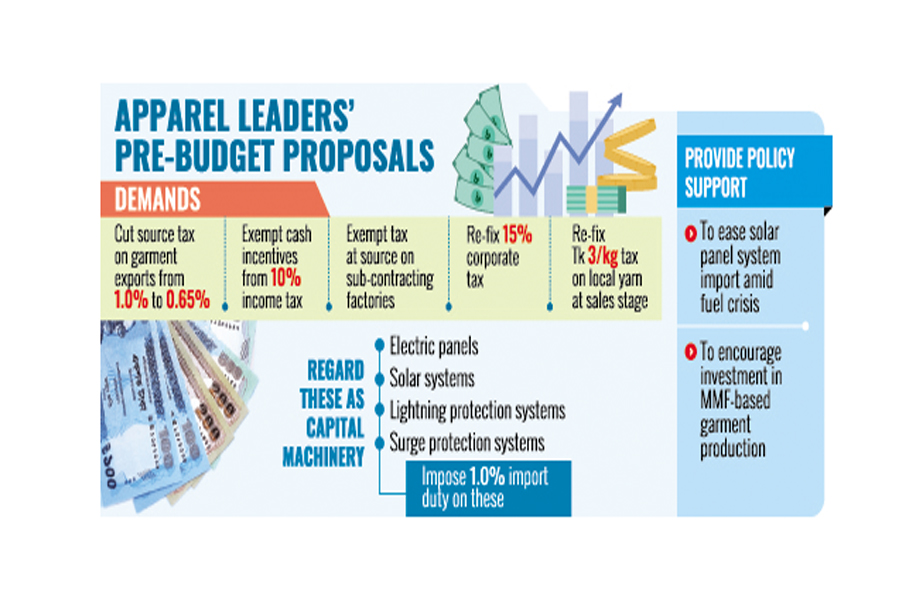
Beyond energy concerns, he also highlighted the burden of minimum tax on loss-making businesses. Under the current rules, companies must pay a minimum turnover tax of 1 percent even if they incur losses, a provision he said is particularly challenging for small enterprises.

He urged policymakers to introduce a slab-based system for smaller firms and called for clearer safeguards regarding provisions in the Income Tax Act 2023 that allow tax officials to access business systems and financial records for withholding tax verification.

Md Abdur Rahman Khan, chairman of the NBR, along with other officials from both organisations, were present at the meeting.​
 

Global buyers must share the cost in RMG’s green transition
23 April 2026, 09:00 AM

Mostafiz Uddin

1776992013183.webp

FILE ILLUSTRATION: COLLECTED

For years, Bangladesh’s export success was built on a simple promise to global buyers. We would deliver at scale, at speed, and at low cost. In return, the buyers invested, expanded, and hired millions of workers and helped turn the country into one of the world’s leading sourcing destinations.

The times, however, they are a-changin.

Across the global supply chain, decarbonisation is becoming a new commercial test. Buyers increasingly want suppliers to cut emissions, install renewable energy, upgrade machinery, improve energy efficiency, recycle effluent, track data more closely, and meet a growing list of environmental requirements. In principle, this is understandable. Climate change has posed many real challenges for us and the apparel sector, like many other industries, must reduce its environmental impact. However, I believe there is a serious problem in how this transition is unfolding.

Too often, decarbonisation and sustainability are being treated not as a shared responsibility but as a cost to be pushed down the supply chain. My personal observation is that, in Bangladesh, that means the burden is falling hardest on small and medium-sized enterprises. This is creating a dangerous divide especially when larger suppliers, with stronger balance sheets and easier access to finance, are better placed to respond to the pressing demand to go greener. They can invest in solar energy, efficient boilers, water recycling, modern machinery, energy audits, and compliance teams. Smaller factories, even if they are efficient, reliable, and vastly experienced, often cannot move at the same speed. They may lack access to affordable finance or not have the land, internal technical capacity, or margin room to fund major upgrades on their own. This means buyers are consolidating their sourcing base around bigger partners who can promise rapid progress on decarbonisation. Small and medium-sized enterprises (SMEs), including many that have served customers loyally for years, are being quietly edged aside. This should concern all of us.

Bangladesh’s SME manufacturers are the backbone of the economy. They create employment, support local communities, and often provide flexibility, specialised production, and entrepreneurial energy that larger groups alone cannot replace. If these businesses are slowly phased out because they cannot self-fund the green transition, then the country risks building a two-tier industrial model. One tier will consist of large suppliers able to keep pace with rising buyer demands while the other will be made up of smaller firms struggling to survive not because they are unwilling to improve, but because they are being asked to finance a global transition without any support.

For decades, international buyers benefited from Bangladesh’s low wages, competitive overheads (operating costs such as factory rent, utilities, staff salaries, and maintenance), and relentless pressure on prices. That cost advantage helped global brands, retailers and importers build profitable sourcing models. Now, when major investment is needed to decarbonise those same supply chains, many buyers appear to want the producing side to absorb the bill alone which is not entirely fair. If decarbonisation is genuinely a strategic priority, then it cannot be treated as a free add-on extracted from suppliers through tougher scorecards and shifting compliance demands. A factory cannot install new systems, reconfigure operations or invest in cleaner energy simply on goodwill. These are commercial decisions with real costs.

If the buyer still expects the lowest price, the fastest lead time and the highest compliance standard, while contributing nothing to the investment required, then decarbonisation becomes another mechanism for putting more pressure on the suppliers. And this will widen the existing gaps in the industry when it comes to being just and inclusive as many suppliers might fail to meet the goal, some might lose orders, while the rest may leave the industry altogether. This issue is not limited to ready-made garments. Similar pressures are emerging across other export-oriented sectors. Wherever global supply chains adopt stricter environmental standards, the same question arises: who pays? If the answer is always the supplier, then developing-country producers will once again carry a disproportionate burden. However, I believe there is a better way.

First, buyers should move towards genuine co-investment models. If a supplier is expected to make measurable decarbonisation upgrades, then the commercial relationship should reflect that. This could include longer-term sourcing commitments, preferred supplier agreements, shared financing structures or direct support for approved projects. A buyer that wants cleaner production should be prepared to help create the conditions for it.

Second, pricing must become more honest. For years, sustainability has been discussed as if it can be delivered without any serious cost implications, which is unrealistic. Cleaner production often requires capital expenditure and operational adjustment. Suppliers cannot be expected to deliver lower emissions while prices remain detached from the cost of achieving them.

Third, SME-focused green finance needs to expand. Bangladesh’s policymakers, financial institutions, and development partners should work together to design instruments that are practical for smaller manufacturers. Credit guarantees, concessional lending, pooled financing platforms, and technical assistance programmes can help here. Financial schemes should be easy for SMEs to access without requiring extensive technical or financial expertise, while also avoiding overly strict or impractical conditions.

Fourth, technical support must be widened beyond the largest players. Many SMEs need help with energy mapping, emissions data, equipment selection, project design and verification. Shared service platforms, industry associations and public-private partnerships could play a bigger role here.

Finally, buyers should adopt transition pathways that are realistic and inclusive. Not every supplier can transform overnight. But many can make meaningful progress if expectations are clear, timelines are sensible, and support exists. The right question is not which factories are already perfect; it is which factories are committed and capable of improvement if given a fair chance.

Bangladesh should not accept a future in which only the largest suppliers are allowed to remain in the game while smaller firms are left behind. That would weaken the diversity and resilience of our industrial base. It would also send the wrong message to the businesses that helped build this country’s export strength over decades. If global buyers want cleaner supply chains, they should not merely demand change from afar; they should contribute to the transition they say they want. They should support the suppliers, including SMEs, that have stood by them for years. They should also acknowledge that a truly sustainable global supply chain cannot be achieved if costs, risks, and responsibilities are distributed unfairly.

Mostafiz Uddin is the managing director of Denim Expert Limited. He is also the founder and CEO of Bangladesh Denim Expo and Bangladesh Apparel Exchange (BAE).​
 

Progress made, challenges remain in RMG sector
Saddam Hossain 24 April, 2026, 00:19

1776992597901.webp


The multi-billion-dollar readymade garment industry of Bangladesh has undergone sweeping reforms to improve workplace safety and restore global confidence in the industry since the Rana Plaza collapse, one of the deadliest man-made industrial accidents in history.

Despite progress, structural gaps and unresolved accountability issues continue to threaten the industry’s long-term sustainability, said rights groups.

This April 24 marks the 13th anniversary of the eight-story Rana Plaza building collapse in 2013, which killed 1,138 people and left thousands injured, caused by a deadly mix of factory conditions ignored by fashion brands.

Meanwhile, one of the worst tragedies of the fashion industry triggered an unprecedented scrutiny of Bangladesh’s highest export earning RMG sector.

During the years that followed, the industry undertook significant reforms in international and local collaborative efforts, including the remediation of thousands of critical structural, electrical and fire hazards.

Industries invested heavily in safety upgrade, while regulatory bodies strengthened compliance mechanisms resulting in Bangladesh being cited as one of the safest RMG sourcing hubs.

‘We have learned a lesson from the tragedy and transformed the sector significantly in the past 13 years, which prevented the repeat of such incidents in the RMG sector,’ said Mahmud Hasan Khan Babu, president of the Bangladesh Garment Manufacturers and Exporters Association.

He told New Age that entrepreneurs invested crores of taka in making a factory compliant, taking the safety issues as one of the core agenda for production units to stop further industrial accidents,’ he added.Daily newspaper subscription

Stakeholders say that factories are now modern, energy-efficient and environment-friendly.

Mohammad Hatem, president of the Bangladesh Knitwear Manufacturers and Exporters Association, said that the country’s RMG sector focused much on issues related to safety, compliance and worker rights.

Industry insiders, too, said that they had carried out an extensive reform in the industry with the support from the government, buyers, trade unions, the International Labour Organisation and other development partners.

They also said that each factory had spent -- on average -- Tk 5 crore on factory renovation, detailed engineering assessment, and retrofitting.

During the past 13 years, the government-led initiative and buyers-led Accord and Alliance inspected about 4,000 factories with the aim of resolving the safety issues in the units.

Following the widespread reform activities, the Bangladesh RMG sector is now cited as one of the top ethical manufacturers in the world.

In 2021, a McKinsey and Company report labelled Bangladesh›s RMG sector as a frontrunner in transparency regarding factory safety and value-chain responsibility.

In the same year, Hong Kong-based supply chain compliance solutions provider QIMA ranked Bangladesh second in ‘Ethical Manufacturing’ with a score of 7.7, only behind Taiwan, which scored 8.

In 2021, the United States Green Building Council awarded the BGMEA the USGBC Leadership Award for representing latest innovations in sustainability for healthy, equitable, and resilient buildings and communities.

Moreover, Bangladesh also amended its labour law thrice in 2013, 2018 and 2026 to safeguard worker rights and ensure workplace safety.

The country increased minimum worker wages by 56 per cent in 2023 and raised the increment to 9 per cent from 5 per cent in 2024.

In terms of LEED-certified green factories, Bangladesh also witnessed a big jump.

Before the Rana Plaza accident, there were only two green factories in the country.

Currently, the country has 280 USGBC LEED-certified factories, highest in the world and of these, 118 are platinum-rated, 143 gold-rated, 15 silver-rated and 4 are certified.

The Accord on Fire and Building Safety in Bangladesh and the Alliance for Bangladesh Workers’ Safety also helped the country’s factories to improve their fire, structural, and electrical safety measures.

The Alliance left the country in 2018 after remediating 93 per cent of the 700 factories it inspected, while the Accord, which worked until 2020, helped standardise fire and building safety in more than 2,000 RMG factories.

In June of 2020, the RMG Sustainability Council was established as the sole monitoring authority with equal participation from brands, manufacturers, and trade unions. As of January 2026, the RSC carried out over 26,000 inspections and remediated 1,910 factories.

It also provided training to over 19,000 safety committees. A safety committee is a joint labour-management platform that conducts factory inspections to identify safety hazards, respond to worker safety and health complaints, and actively communicate safety and health issues to workers.

‘Safety committee functions are being carried out efficiently across nearly 1,925 factories under the RSC coverage while currently these committees are reportedly functioning well,’ said AJM Zobaidur Rahman, head of the RSC Engagement and Logistics.

Factory managements, he also said, are encouraged to provide all-out support to the effective operation of all workplace committees, not only to the safety committees, to strengthen participation, ensure compliance and maintain a safe and healthy working environment across the RMG industry of Bangladesh.Bangladesh political commentary

However, BGMEA president Mahmud Hasan Babu said that there are mixed reactions among the owners regarding the RSC and they would sit with the RSC soon to resolve some issues, including sluggishness of the council.

Despite facing crises like the Rana Plaza collapse, the Covid pandemic and the global economic turmoil due to the Russia-Ukraine war over the years, the RMG sector’s export earnings have never experienced a hard hit.

Bangladesh exported apparel worth $38.82 billion in 2025, a 0.89 per cent increase compared with $38.48 billion in 2024.

Meanwhile, Amirul Haque Amin, president of the National Garment Workers Federation, told New Age that although the RMG sector witnessed a significant shift in the workplace safety, the associated sectors were yet to experience such a positive shift.

‘The textile sector and the accessories and packaging sector haven’t ensured safety measure yet,’ he added.

He also pointed out that while 14 cases were filed over the 2013 Rana Plaza disaster, courts could not provide any verdict in the past 13 years, although this period witnessed the tenures of three governments.

‘More than 30 brands imported clothes from factories at Rana Plaza, but only about 20 brands paid compensation to the Rana Plaza Trust Fund while 12 brands didn’t though they are doing business in Bangladesh,’ he added.

According to Clean Clothes Campaigns, 31 brands were linked to the Rana Plaza tragedy while 11 brands did not donate to the fund.

Labour leaders also said that the factory authorities are yet to regularise the remediation activities, adding that the government should do it in accordance with global standards.

They also said that safety issues had improved a lot, but this could not be seen as achieving sustainability, as accidents and fire incidents were still happening in the sector, along with the absence of earthquake safety.Daily newspaper subscription

Mohammad Hatem said that they also demanded punishment of actual criminals.

Following the Rana Plaza tragedy, the sector also improved guidelines for subcontracting and new member enrollments.

According to the BGMEA and the BKMEA, the factories must have an inter-bonding arrangement and be current members of any association in subcontracting.

Moreover, the original manufacturer would notify the buyer in advance and offer the contact information for the subcontract manufacturers in the case of subcontracting.

They also upgraded the membership criteria since the Rana Plaza disaster for bringing the existing members under compliance, along with zero tolerance of non-compliant companies for new memberships.

Industry insiders said that the authorities concerned must do their best to support the RMG industry to reach its full potential, along with implementations of existing polices and potential policy supports.

They also urged the buyers to ensure fair price so that the sector could sustain ethical manufacturing.​
 

Latest Posts

Back