Bangladesh Defense
Saif
Senior Member
- Jan 24, 2024
- 21,655
- 9,794
- Nation

- Residence
- Axis Group

Automation could displace 1.2m RMG jobs by 2041: CPD
Staff Correspondent 16 July, 2026, 23:25

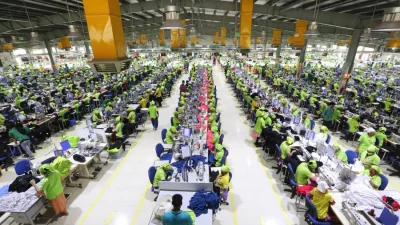
Automation could displace 1.22 million jobs in Bangladesh’s readymade garment sector by 2041, with women hardest hit, as the country already lost about 1.3 million jobs in 2024, according to a study by the Centre for Policy Dialogue. Maps
The study, unveiled at a webinar titled ‘Work in Flux: Foresight for the Future of Work in the Global South’, found that women accounted for nearly 90 per cent of the jobs lost in 2024, underscoring the growing vulnerability of female workers amid rapid technological and structural changes in the labour market.
The webinar was organised by CPD on Wednesday in collaboration with JustJobs Network, LIRNEasia, Southern Voice and the Citizens’ Platform for SDGs, Bangladesh, under the FutureWORKS Asia initiative supported by the International Development Research Centre.
Presenting the findings, CPD additional research director Towfiqul Islam Khan said that nearly 60 per cent of female employment in the country’s garment industry could disappear by 2041 as factories increasingly adopt automation and advanced technologies to remain competitive.
He also criticised Bangladesh’s low investment in education, noting that public spending remains around 1.3 per cent of GDP, while technical and vocational education and training remain poorly aligned with future labour market demands.
The study also highlighted growing vulnerabilities in the services sector, where about 25 million people are employed, many of them in informal and insecure jobs.
The study highlighted that Bangladesh’s labour market is undergoing significant transformation due to automation, Artificial Intelligence, digitalisation, climate change, and economic shifts.
Towfiqul Islam said the study identified 27 key drivers shaping the future of work through 2035, emphasising two main uncertainties: the pace of the global digital economy and changing national social aspirations.
Five persistent trends outlined in the study include irreversible digitalisation, a shift towards higher-value services, ongoing skills mismatches, exposure to external shocks, and the importance of institutional agility.
To tackle these challenges, the study recommends eight key policy measures, including reforms in education, lifelong learning programmes, employment-oriented industrial policies, improved labour market information systems, modern social protections for gig workers, and targeted support for vulnerable groups during transitions.
CPD distinguished fellow Debapriya Bhattacharya emphasised the need for Bangladesh to shift from simply diagnosing labour market issues to actively implementing solutions. He noted that while policies exist, weak execution and poor inter-institutional coordination hinder progress. As industries are embracing post-graduation from least developed country status, inadequate protection for displaced workers could exacerbate inequality.
He urged the government to manage the technological transition, align skills with market needs, and strengthen institutions to translate research into action.
Professor Mustafizur Rahman of CPD emphasised the growing global divide caused by artificial intelligence, noting that differences in intellectual property rights have led to some AI tools being publicly available while others require payment.
He highlighted the need for current workers to reskill and called for an education system aligned with industry needs for future job entrants.
To address labour market gaps, he advocated for stronger public-private partnerships, suggesting that AI should be a collaborative effort between government and the private sector.
LIRNEasia chief executive officer Helani Galpaya said the growing gig economy was not a universal solution due to the digital divide limiting women’s access to online work, and noted that digital platforms can shift risks onto workers.
President and executive director of JustJobs Network, Sabina Dewan, urged policymakers to focus on job quality rather than just increasing employment, advocating for global brands to fund worker reskilling in light of automation.
Gunjan Bahadur Dallakoti from the International Labour Organisation highlighted the need for greater support for small and medium enterprises to adopt digital technologies while strengthening labour institutions.
Ramiro Albrieu of CIPPEC Argentina urged Global South countries to invest in digital skills and adopt long-term planning to leverage their demographic advantages.
Staff Correspondent 16 July, 2026, 23:25
Automation could displace 1.22 million jobs in Bangladesh’s readymade garment sector by 2041, with women hardest hit, as the country already lost about 1.3 million jobs in 2024, according to a study by the Centre for Policy Dialogue. Maps
The study, unveiled at a webinar titled ‘Work in Flux: Foresight for the Future of Work in the Global South’, found that women accounted for nearly 90 per cent of the jobs lost in 2024, underscoring the growing vulnerability of female workers amid rapid technological and structural changes in the labour market.
The webinar was organised by CPD on Wednesday in collaboration with JustJobs Network, LIRNEasia, Southern Voice and the Citizens’ Platform for SDGs, Bangladesh, under the FutureWORKS Asia initiative supported by the International Development Research Centre.
Presenting the findings, CPD additional research director Towfiqul Islam Khan said that nearly 60 per cent of female employment in the country’s garment industry could disappear by 2041 as factories increasingly adopt automation and advanced technologies to remain competitive.
He also criticised Bangladesh’s low investment in education, noting that public spending remains around 1.3 per cent of GDP, while technical and vocational education and training remain poorly aligned with future labour market demands.
The study also highlighted growing vulnerabilities in the services sector, where about 25 million people are employed, many of them in informal and insecure jobs.
The study highlighted that Bangladesh’s labour market is undergoing significant transformation due to automation, Artificial Intelligence, digitalisation, climate change, and economic shifts.
Towfiqul Islam said the study identified 27 key drivers shaping the future of work through 2035, emphasising two main uncertainties: the pace of the global digital economy and changing national social aspirations.
Five persistent trends outlined in the study include irreversible digitalisation, a shift towards higher-value services, ongoing skills mismatches, exposure to external shocks, and the importance of institutional agility.
To tackle these challenges, the study recommends eight key policy measures, including reforms in education, lifelong learning programmes, employment-oriented industrial policies, improved labour market information systems, modern social protections for gig workers, and targeted support for vulnerable groups during transitions.
CPD distinguished fellow Debapriya Bhattacharya emphasised the need for Bangladesh to shift from simply diagnosing labour market issues to actively implementing solutions. He noted that while policies exist, weak execution and poor inter-institutional coordination hinder progress. As industries are embracing post-graduation from least developed country status, inadequate protection for displaced workers could exacerbate inequality.
He urged the government to manage the technological transition, align skills with market needs, and strengthen institutions to translate research into action.
Professor Mustafizur Rahman of CPD emphasised the growing global divide caused by artificial intelligence, noting that differences in intellectual property rights have led to some AI tools being publicly available while others require payment.
He highlighted the need for current workers to reskill and called for an education system aligned with industry needs for future job entrants.
To address labour market gaps, he advocated for stronger public-private partnerships, suggesting that AI should be a collaborative effort between government and the private sector.
LIRNEasia chief executive officer Helani Galpaya said the growing gig economy was not a universal solution due to the digital divide limiting women’s access to online work, and noted that digital platforms can shift risks onto workers.
President and executive director of JustJobs Network, Sabina Dewan, urged policymakers to focus on job quality rather than just increasing employment, advocating for global brands to fund worker reskilling in light of automation.
Gunjan Bahadur Dallakoti from the International Labour Organisation highlighted the need for greater support for small and medium enterprises to adopt digital technologies while strengthening labour institutions.
Ramiro Albrieu of CIPPEC Argentina urged Global South countries to invest in digital skills and adopt long-term planning to leverage their demographic advantages.