Bangladesh Defense
Saif
Senior Member
- Jan 24, 2024
- 21,040
- 9,685
- Nation

- Residence
- Axis Group

Plunged into darkness
Hundreds lost vision partially or completely

"Help me! I cannot see anything …!" Al Amin Howlader cried moments before he lost consciousness and fell to the ground as police opened fire on quota reform protesters indiscriminately.
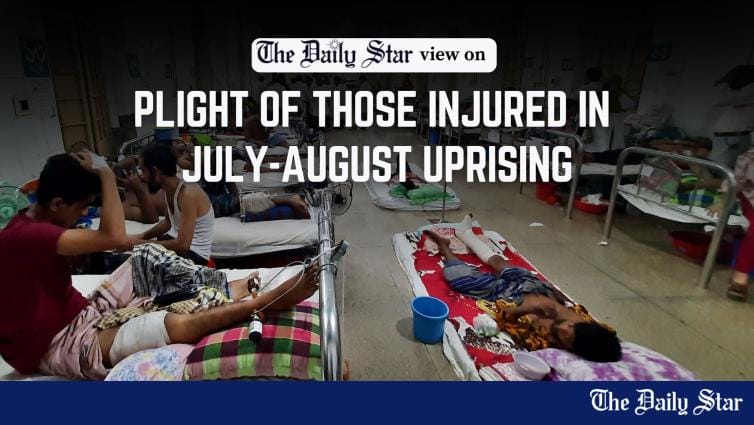
The seventh grader of a school in Barishal was rushed to a local health facility and then transferred to Dhaka, where the hospitals received hundreds of patients like him – blinded completely or partially by pellet wounds during the weeks of protests from mid-July to early August.
The National Institute of Ophthalmology and Hospital (NIOH) alone treated more than 700 patients who were shot in their eyes during the protests, according to its Director Professor Golam Mostafa.
Of them, 366 lost vision in one eye, and 17 in both.
Al Amin from Barishal said like the days before, the student of Hatem Ali Boys and Girls High School in the southern city joined his peers and seniors in the protests on Nathullabad Road on July 17, with unforeseeable peril awaiting him that afternoon.
"I had gone to support my seniors and fellows who were being attacked indiscriminately. However, I never expected them [police] to fire bullets and pellets at us," said the 14-year-old.
At least 22 pellets entered different parts of the schoolboy's body that day, including one into his right eye. Following the incident, he was rushed to Sher-e-Bangla Medical College Hospital in the city.
More shocks were waiting for the family there. Doctors asked them to take him home despite multiple pellets still inside his body, including in the eye, as the authorities ordered the removal of all patients injured in the protests by that night, said Al Amin's mother Sharmin Jahan.
With whatever cash she could manage, she left home with her wounded son the next day and visited multiple health facilities for treatment.
"The hospitals were flooded with patients, which caused delays. After several tests and a thorough examination at Grameen GC Eye Hospital, they recommended immediate surgery and referred him [Al Amin] to Ispahani Islamia Eye Hospital in Dhaka," Sharmin said.
Like Al Amin, around 1,300 others were admitted to the hospitals in Dhaka, including the NIOH, Lions Eye Institute, Bangladesh Eye Hospital, and Dhaka Medical College Hospital's eye department, according to Dr Syeed Mehbub Ul Kadir of Bangladesh Eye Hospital.
Of them, 630 underwent surgeries -- more than 90 percent of whom have lost vision in one or both eyes, he added.
Most were admitted with pellet wounds causing retinal haemorrhage that led to loss of vision, said Dr Kadir.
In just 10 days from July 17, as many as 445 patients were rushed to the NIOH's emergency care. At least 305 of them had surgery.
Another 261 patients were brought between August 4 and 10, and 181 of them underwent surgery, the hospital said in a bulletin on August 11.
The patients have either become visually impaired or are at risk of losing sight. Their rehabilitation is important and urgent, added the bulletin.
Similar cases were reported from around the country, although a concrete figure is not available yet.
In Al Amin's case, the pellet had penetrated his retina, said his doctor vitreo-retinal surgeon Dr Farhana Yasmin of Ispahani Islamia Eye Institute and Hospital.
The boy had the surgery on August 13. However, the doctors could not get the pellet out as it was deeply stuck in his optic nerve, making it nearly impossible for surgeons to remove it.
The pellet would not further harm Al Amin's eye, but the incident has led to a loss of vision in the injured eye, Dr Farhana said. "He would require follow-ups, and perhaps, another surgery," she said.
The doctor attended to at least five similar patients in the past two days.
"My friends have returned to school while all I do these days is sit indoors or lie on the bed," said Al Amin, currently at home after being discharged on August 14.
"I don't know how long it will take for me to return to my old life – enjoying chase with my school friends in the playfield."
Restaurant worker Kazi Faruk, however, still lies in his bed at the NIOH, wearing sunglasses.
An unseeable barrier now stands between him and a world he can no longer see after losing vision in both eyes.
Once filled with hope, Faruk's life took a tragic turn on August 5, the day Dhaka's streets erupted in celebration following Sheikh Hasina's fall and departure from the country.
It began as a regular day in his small room at his mess in Merul Badda. The Capital, the restaurant where he had worked for the past four years, was closed due to the unrest and curfew.
When the news of Hasina's exit spread, Faruk, like lakhs of others, joined the jubilant crowds.
As an active protester who had been demonstrating with Brac University students since July 16, he joined them on this day of victory as well.
As the protesters neared Badda Police Station, the celebration turned into horror.
Without any warning, police opened fire, and in the ensuing chaos, Faruk was struck by shotgun pellets, including in his eyes.
He was rushed to the NIOH immediately, but the irreparable damage was already done.
"We're still trying to regain his vision," said the hospital's Director Prof Mostafa.
"It's tragic for me to be shot on the day of celebration after our successful mission. The doctors are trying their best. I would be happy if I could regain vision in at least one eye," Faruk said, his voice tinged with sadness.
While the hospital is providing necessary care, Faruk's worries go beyond his immediate treatment.
"The hospital is giving me the supplies I need, but I have to buy the medicines that aren't available here. People are checking on me now, but I fear that if they stop, I'll be left alone," he added.
Faruk's family is also grappling with the uncertainty hanging over his future. Having lost his parents long ago, Faruk had faced many challenges in life, but nothing as devastating as this.
Hundreds lost vision partially or completely
"Help me! I cannot see anything …!" Al Amin Howlader cried moments before he lost consciousness and fell to the ground as police opened fire on quota reform protesters indiscriminately.
The seventh grader of a school in Barishal was rushed to a local health facility and then transferred to Dhaka, where the hospitals received hundreds of patients like him – blinded completely or partially by pellet wounds during the weeks of protests from mid-July to early August.
The National Institute of Ophthalmology and Hospital (NIOH) alone treated more than 700 patients who were shot in their eyes during the protests, according to its Director Professor Golam Mostafa.
Of them, 366 lost vision in one eye, and 17 in both.
Al Amin from Barishal said like the days before, the student of Hatem Ali Boys and Girls High School in the southern city joined his peers and seniors in the protests on Nathullabad Road on July 17, with unforeseeable peril awaiting him that afternoon.
"I had gone to support my seniors and fellows who were being attacked indiscriminately. However, I never expected them [police] to fire bullets and pellets at us," said the 14-year-old.
At least 22 pellets entered different parts of the schoolboy's body that day, including one into his right eye. Following the incident, he was rushed to Sher-e-Bangla Medical College Hospital in the city.
More shocks were waiting for the family there. Doctors asked them to take him home despite multiple pellets still inside his body, including in the eye, as the authorities ordered the removal of all patients injured in the protests by that night, said Al Amin's mother Sharmin Jahan.
With whatever cash she could manage, she left home with her wounded son the next day and visited multiple health facilities for treatment.
"The hospitals were flooded with patients, which caused delays. After several tests and a thorough examination at Grameen GC Eye Hospital, they recommended immediate surgery and referred him [Al Amin] to Ispahani Islamia Eye Hospital in Dhaka," Sharmin said.
Like Al Amin, around 1,300 others were admitted to the hospitals in Dhaka, including the NIOH, Lions Eye Institute, Bangladesh Eye Hospital, and Dhaka Medical College Hospital's eye department, according to Dr Syeed Mehbub Ul Kadir of Bangladesh Eye Hospital.
Of them, 630 underwent surgeries -- more than 90 percent of whom have lost vision in one or both eyes, he added.
Most were admitted with pellet wounds causing retinal haemorrhage that led to loss of vision, said Dr Kadir.
In just 10 days from July 17, as many as 445 patients were rushed to the NIOH's emergency care. At least 305 of them had surgery.
Another 261 patients were brought between August 4 and 10, and 181 of them underwent surgery, the hospital said in a bulletin on August 11.
The patients have either become visually impaired or are at risk of losing sight. Their rehabilitation is important and urgent, added the bulletin.
Similar cases were reported from around the country, although a concrete figure is not available yet.
In Al Amin's case, the pellet had penetrated his retina, said his doctor vitreo-retinal surgeon Dr Farhana Yasmin of Ispahani Islamia Eye Institute and Hospital.
The boy had the surgery on August 13. However, the doctors could not get the pellet out as it was deeply stuck in his optic nerve, making it nearly impossible for surgeons to remove it.
The pellet would not further harm Al Amin's eye, but the incident has led to a loss of vision in the injured eye, Dr Farhana said. "He would require follow-ups, and perhaps, another surgery," she said.
The doctor attended to at least five similar patients in the past two days.
"My friends have returned to school while all I do these days is sit indoors or lie on the bed," said Al Amin, currently at home after being discharged on August 14.
"I don't know how long it will take for me to return to my old life – enjoying chase with my school friends in the playfield."
Restaurant worker Kazi Faruk, however, still lies in his bed at the NIOH, wearing sunglasses.
An unseeable barrier now stands between him and a world he can no longer see after losing vision in both eyes.
Once filled with hope, Faruk's life took a tragic turn on August 5, the day Dhaka's streets erupted in celebration following Sheikh Hasina's fall and departure from the country.
It began as a regular day in his small room at his mess in Merul Badda. The Capital, the restaurant where he had worked for the past four years, was closed due to the unrest and curfew.
When the news of Hasina's exit spread, Faruk, like lakhs of others, joined the jubilant crowds.
As an active protester who had been demonstrating with Brac University students since July 16, he joined them on this day of victory as well.
As the protesters neared Badda Police Station, the celebration turned into horror.
Without any warning, police opened fire, and in the ensuing chaos, Faruk was struck by shotgun pellets, including in his eyes.
He was rushed to the NIOH immediately, but the irreparable damage was already done.
"We're still trying to regain his vision," said the hospital's Director Prof Mostafa.
"It's tragic for me to be shot on the day of celebration after our successful mission. The doctors are trying their best. I would be happy if I could regain vision in at least one eye," Faruk said, his voice tinged with sadness.
While the hospital is providing necessary care, Faruk's worries go beyond his immediate treatment.
"The hospital is giving me the supplies I need, but I have to buy the medicines that aren't available here. People are checking on me now, but I fear that if they stop, I'll be left alone," he added.
Faruk's family is also grappling with the uncertainty hanging over his future. Having lost his parents long ago, Faruk had faced many challenges in life, but nothing as devastating as this.