โ˜• Support Us โ˜•
[๐Ÿ‡ง๐Ÿ‡ฉ] - Victory Day Today | PKDefense

[๐Ÿ‡ง๐Ÿ‡ฉ] Victory Day Today

Reply (Scroll)
Press space to scroll through posts
G Bangladesh Defense
[๐Ÿ‡ง๐Ÿ‡ฉ] Victory Day Today
6
20
More threads by Saif

Saif

Senior Member
Joined
Jan 24, 2024
Messages
15,939
Likes
7,996
Nation

Axis Group

Nation celebrates Victory Day today
Today marks 54 years of independence

1765847177420.webp

Illustration: Biplob Chakroborty

The nation is set to celebrate Victory Day today, as the country was liberated from the Pakistani occupation forces on this day 54 years back through a nine-month-long bloodstained War of Liberation.

On December 16, 1971, Bangladesh was born as an independent country at the cost of the supreme sacrifice of three million people.

The government has taken extensive programmes to celebrate the great Victory Day, while the day will begin with a 31-gun salute in the capital this morning.

The president and the chief adviser are expected to pay tributes to the martyrs of the Liberation War by placing wreaths at the Savar National Martyrs' Memorial as the sun rises today.

Then, the Bir Shrestha families, war-wounded freedom fighters and brave freedom fighters, under the leadership of the liberation war affairs adviser, will lay wreaths there.

In addition, foreign diplomats in Bangladesh, political and social organisations and people from all walks of life will pay tribute to the martyrs of the Liberation War.

On the occasion, the national flag will be hoisted in all government, semi-government, autonomous and private buildings and Bangladesh embassies and missions abroad, while important buildings and establishments will be illuminated.

As part of the nationwide celebrations of Victory Day, the country is set to make a world record by parachuting with the highest number of national flags.

Like the previous years, the Ministry of Liberation War Affairs will organise three-day Victory Fairs in all districts and upazilas.

Victory Day songs will be performed at Suhrawardy Udyan at 3:00pm today, while new-generation artists will perform songs of Swadhin Bangla Betar Kendra simultaneously in 64 districts.

The president will felicitate the members of the Bir Shrestha families at Bangabhaban in the afternoon.

As per the government's special programmes to mark the 54 years of independence, 54 paratroopers from the Bangladesh Army, Air Force, and Navy will perform a flag-bearing skydive at Tejgaon old airport in the capital at around 11:40am today, setting a new Guinness World Record.

Prior to the parachuting, the three forces will conduct separate fly-past demonstrations at the same venue from 11:00am.

Earlier, Chief Adviser Professor Muhammad Yunus released a commemorative postage stamp on the occasion yesterday.​
 

How Bangladesh fought a global war without guns
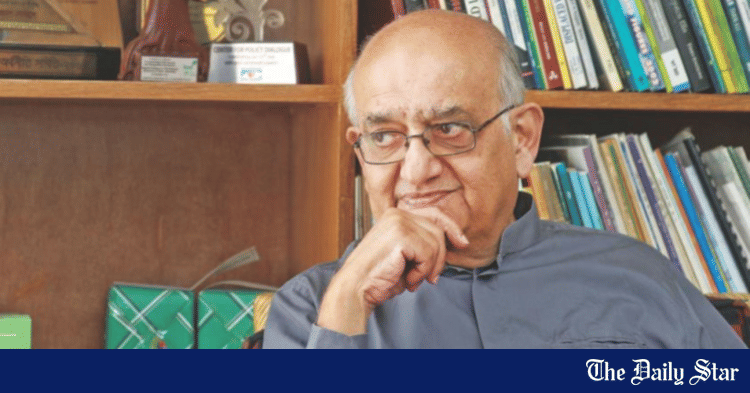
Prof Rehman Sobhan recounts the lesser-known diplomatic battle of 1971

1765847281242.webp


Prof Rehman Sobhan, economist and political analyst was special envoy of the Mujibnagar Government during the Liberation War in 1971. His campaign for Bangladesh's independence on the global stage, especially stopping aid to Pakistan, was remarkable. At the "Itihas Adda" hosted by The Daily Star on December 14, he shared his experiences of how he handled the global powers in that complex geopolitical environment. This is a summarised version of his speech.

The global political landscape during the Cold War involved contradictions leading to the creation of neo-colonised states that were drawn into military alliances. Pakistan opted early on to join the Cold War alongside the United States, expecting to receive aid and arms that would help it confront India. Pakistan uniquely joined two military pacts: the Baghdad Pact (centred in the Middle East, partnered with Turkey and Iraq) and the Southeast Asia Treaty Organization (SEATO, partnered with the Philippines and Thailand). The United States was the central partner in both treaties.

I opposed Pakistan's participation in these pacts. At that same time, leaders from the Third World -- including Nehru, Sukarno, Nkrumah from Ghana, and China -- organised the famous Bandung Conference to establish a middle ground between the Soviet Union and the United States, thereby creating a third force in global politics. I supported this movement by forming a society in Cambridge and attempting to partner with the heads of the African and Arab societies there.

A significant segment of thought in Pakistan challenged the official alignment with the US, advocating for leaving military alliances and occupying a middle ground in the Cold War, a process heavily influenced by the Bandung conference. However, the geopolitics of the region began to change after the 1962 India-China War. India, a key leader of the non-aligned movement, sought US aid to confront China after suffering a serious military defeat. In a corresponding shift during the 1965 India-Pakistan War, the United States failed to support its close ally, Pakistan. Pakistan's motivation for joining the military pacts had been the expectation of US support in any confrontation with India. Conversely, the US saw Pakistan primarily as an ally to help regionally oppose the Soviet Union's ambitions in the Middle East and China's ambitions in Southeast Asia.

This scenario led to a new alignment between Pakistan and China, preceding the Liberation War. Geopolitically, Pakistan was distancing itself from the US and moving closer to China. India, despite its ongoing close ties with the Soviet Union, was generally in a closer position to the US. Ironically, when the Liberation War commenced, there was no initial fear that the US would actively oppose Bangladesh's aims. Archival papers that I have reviewed showed that up until March 26th, the US State Department, in briefings to Kissinger, held a relatively open view regarding the position they should take on the emergence of a possible independence movement in Bangladesh. The general US stance was to support Pakistan's unity but to recognise that the Bengalis deserved democratic rights and more autonomy, especially after the Awami League under Bangabandhu won an overwhelming majority. The US was actively attempting to foster reconciliation within Pakistan to prevent a separatist situation.

It was initially unclear that the US would take a heavily partisan position. This only became evident immediately after the war broke out, when the US refrained from taking a strong or restraining stance on Pakistan, despite having no inherent reason to oppose the rights of Bangladesh. This inaction prompted the staff of the US Consulate in Dhaka to send the famous Blood Telegram, urging Kissinger to condemn and restrain Pakistan.

I got involved in the liberation struggle after traveling to Delhi, meeting with Tajuddin Ahmed and others, to present their case to Indian leadership. When M.M. Ahmed, Pakistan's economic advisor, prepared to go to the US seeking specialised economic assistance from the World Bank, the Pakistan Aid Consortium, and the US, Tajuddin was outraged that Pakistan would seek international funds to finance genocide. Tajuddin tasked me with immediately going abroad to start a global campaign to mobilise expatriate Bengalis to block this international financial support.

1765847314701.webp

Photo: Star

My main mandate was initiating an international campaign to halt aid to Pakistan, which was a central geopolitical objective for the Bangladesh government. Pakistan was heavily dependent on aid, primarily from the US and the World Bank, which held significant policy influence. The strategy was that without external assistance, Pakistan could not afford to sustain the liberation struggle. This mobilisation strategy targeting the Bengali diaspora was highly successful. Consequently, from May 1971 and throughout the war, the Pakistan Aid Consortium pledged no new aid.

This success was achieved because Bengalis across the world participated in the campaign. Upon arriving in London, I found governments unwilling to openly support Bangladesh. Despite personal connections to the then UK Foreign Secretary, Alec Douglas-Home, he refused to meet anyone from the Bangladesh side. The campaign in the UK, therefore, focused on the media and the political opposition. Extensive meetings were held with members of the Labour Party that became crucial in pressuring the British government.

A similar situation existed in the US, where no senior or consequential official would meet with the Bangladesh government. Attempts to use contacts at Harvard University to meet with Kissinger failed, forcing the delegation to deal only with low-level officials, such as deputy secretaries. The US campaign thus pivoted, focusing on the US Congress, international media, US media, and public opinion to create a major pressure group on the government. This campaign proved effective. Senior senators like Frank Church and Kennedy initiated the amendment to the aid bill in Congress, which specifically mandated the halt of aid to Pakistan while the genocide continued. Senators, including Kennedy (who visited refugee camps in Calcutta), spoke out in the Senate to pressure the government. When Pakistan's economic representative, M.M. Ahmed, arrived in Washington, the four major DC newspapers published editorials urging the US not to accept his plea. Bengali diaspora in the US began nationwide campaign to lobby their senators, culminating in the defeat of the entire aid bill on the floor of the House around November, thereby stopping all aid.

A parallel geopolitical factor contributed to the veto: the US rapprochement with China. The US finally recognised the People's Republic of China, and when the Chinese delegation took its seat in the UN, third-world countries celebrated. This enraged right-wing senators -- normally Nixon supporters -- who joined Democrats to veto the entire aid bill, resulting in the temporary suspension of all US aid globally.

The second major target was the international aid consortium led by the World Bank. I sought to meet Robert McNamara, the World Bank president, to halt the aid pledged twice a year. This was successful, aided by Americans and Bengalis within the World Bank. A special mission sent by the World Bank reported that genocide was underway and that no international aid should be pledged. A Bengali geographer and CSP officer named Arun leaked this report to the New York Times, where it became a headline and a vital factor in the campaign. I subsequently lobbied consortium members at their meeting in Paris, where they decided not to pledge any new aid; this decision was repeated during a second meeting. Throughout 1971, the consortium pledged no new aid, leaving Pakistan only with limited funds already in the aid pipeline, creating a critical economic situation that led to debt default.

The Final Phase and UN Theatre

The context of the US-China rapprochement, secretly mediated by Pakistan, was unknown to the campaigners. This reconciliation, revealed when Kissinger secretly flew to Beijing during a trip to Pakistan, was aimed at deepening the existing split between China and the Soviet Union. This geopolitics affected our campaign at the UN, struggling to gain support because the international community then maintained that any attempt to break up a member state was unacceptable -- a taboo issue in 1971, unlike today. When the UN General Assembly session began, I gained vital insider information from a Japanese diplomat after Security Council meetings. The consistent message was that while Bangladesh's cause was legitimate, no Security Council member would publicly proclaim support, advising that the solution must be achieved on the ground through the ongoing liberation struggle. By November, the situation changed because India, following the signing of its treaty with the Soviet Union, decided to accelerate the struggle by increasing support to the Mukti Bahini and becoming more actively involved.

Pakistan then shifted its strategy from insisting the conflict was an internal matter to internationalising the issue. This was based on the realisation that India might become more active and that Pakistan was likely to lose the war. Pakistan aimed for Bangladesh to be liberated through a bilateral international war with India, rather than through the actions of freedom fighters. Pakistan initiated an open war by bombing Indian airfields on December 3. India became more actively involved, and the struggle culminated in the Security Council and the UN.

On December 7th, the UN General Assembly passed a nearly unanimous resolution calling for a ceasefire, which was detrimental to Bangladesh and India as it would have stabilised the war before full liberation. I had to publicly improvise during a debate, stating that Bangladesh was not part of the ceasefire and would continue the liberation struggle to the end, regardless of international actions. The advice received from allies was to conclude the war on the ground as quickly as possible while ceasefire debates continued.

As the war neared its end, Zulfikar Ali Bhutto was sent to the US as the new foreign minister to argue Pakistan's case, although he primarily sought to project himself internationally, knowing Pakistan had lost. However, upon his arrival, the media informed him that the Pakistani army leadership in Dhaka had already initiated a ceasefire process and was willing to hand over power to the elected representatives of Bangladesh. This led to the "Polish Resolution," which proposed a ceasefire contingent upon restoring Bangladesh's elected leadership, regrouping the Pakistani army, and repatriating them, thereby allowing independent Bangladesh to emerge. Bhutto dramatically rejected the resolution at the UN, tearing up the paper and declaring he would fight to the last man. This refusal proved damaging, as the resolution's failure prevented the Pakistani army from regrouping and being repatriated, leading directly to the surrender of General Niazi at the Race Course and 93,000 Pakistani soldiers becoming prisoners of war.

Pakistan had publicly hoped that China would intervene until the very end. However, I had received insider information from my uncle, Pakistan's Ambassador to China, that China would only provide diplomatic assistance but would not intervene militarily. The notion that China would enter the war was therefore viewed as political theatre. The US also played into this theatre, with Kissinger's memoirs suggesting US support for Pakistan was necessary to maintain the new relationship with China. When China failed to intervene, the US deployed the Seventh Fleet to the Bay of Bengal, implying possible intervention, which strategic observers knew was unlikely. As the Seventh Fleet moved, the Soviet Union moved its Pacific Fleet to track its movements.

The determining factors in the emergence of independent Bangladesh were the success of stopping aid and the eventual failure of the geopolitical game to serve Pakistan, despite the support provided by the Nixon administration due to the Chinese relationship. This was the last theatre which went on and led to the eventual surrender of General Niazi and emergence of independent Bangladesh.​
 

The unfinished promise of victory

1765849158470.webp


BANGLADESH is no longer an object of anyoneโ€™s neglect. Half a century ago, the world looked upon this land through a mixture of pity and predicted failure, as if the newly liberated nation were destined to remain buried beneath the rubble left by genocide, famine, poverty and structural destruction. Today, when Bangladesh celebrates Victory Day, it stands among the very few nations that won independence not as a gift of history but through the deliberate choice of war. After the United States, Bangladesh is the only other country whose birth was declared through a proclamation of independence and then realised through armed struggle. Yet, this extraordinary triumph came at a cost so immense that no measure of progress can ever fully repay it. The soil of this country is not just soil; it is a cemetery of unmarked graves and a repository of the silent cries of children, women and men who never saw the light of an independent dawn.

Victory Day invariably invites pride, but it also provokes a certain ache of conscience. As the diamond jubilee approaches, the nation cannot help but return to that haunting question voiced repeatedly in the early years of independence: how did this unlikely country defy every prediction of failure? The most unflattering observers of the 1970s, including some of the worldโ€™s top economists, held the patronising view that if Bangladesh could solve its economic challenges, then any country in the world could develop. The implication was clear: Bangladesh was beyond hope. Yet five decades later, the numbers speak with quiet confidence. Economic output has multiplied more than seventy times. Per capita income has increased fifteen-fold. Electrification has reached millions. Access to clean water has expanded across rural and urban communities. Life expectancy has risen dramatically. Education has spread, though its quality continues to be a painful concern. These achievements are neither accidental nor trivial. They are the results of generations determined to prove, through sheer human resilience, that the country born of blood could stand upright among nations.

Still, the pride must remain tempered by honesty. If achievements illuminate the horizon like lanterns floating upward into a clear night sky, failures rest like shadows beneath them. No one is unaware of the statistics of graft, inefficiency and structural injustice. Public money continues to disappear through waste and corruption. In development budgets, nearly a third is believed to be lost before any progress reaches the ground, an erosion that amounts not only to economic damage but to a betrayal of the nationโ€™s founding blood. If even half of this loss were prevented, Bangladesh could build a fourth more schools, hospitals, roads and power stations. The theft of public wealth is not simply a crime; it is an assault on the very soul of independence. Patriotism is not measured by how loudly one celebrates Victory Day, but by how sincerely one protects the resources of the people.

In the financial sector, the wounds are deeper still. The banking system is burdened with defaulted loans amounting to the terrifying scale of lakhs of crores of taka. A quiet bleeding continues as defaulters, cronies and looters use their wealth and influence to evade accountability. Liquidity crises haunt institutions that were meant to support the nationโ€™s development. Such failures demand not rhetorical condemnation but ethical courage. If the country is to honour its martyrs, it must ensure that corruption is not allowed to hollow out the dream they died for. Victory Day must therefore serve as a solemn reminder that the liberation earned through collective sacrifice can be lost through individual greed.

The question that runs like an undercurrent beneath this national narrative is whether the new generations fully comprehend the depth of the sacrifice that created Bangladesh. Todayโ€™s youth, surrounded by technology, global connectivity and expanding economic opportunities, must also recognise that every privilege they enjoy rests upon an ocean of blood. The philosopher Sรธren Kierkegaard once argued that life can only be understood backwards, though it must be lived forwards. Bangladesh embodies this paradox. The nation lives forward in ambition, innovation and development, but it must continually look backward to find moral clarity. Only by accepting this dual gaze can the country fulfil what Rabindranath Tagore described in Gitanjali as the obligation โ€˜to awaken the soul of a nation slumbering in the dust.โ€™

To understand that soul, one must return to the human dimension of the Liberation War. History books offer the panoramic view of battles, strategies and political decisions. But the true texture of that struggle lies in the personal stories often lost in the footnotes. Ordinary villagers who sheltered fighters at the risk of certain death. Transport workers who smuggled arms concealed beneath sacks of rice. Teachers who used their schools as secret meeting points. Women who carried coded messages across checkpoints. Mothers who cooked for dozens of fighters knowing the Pakistan army could appear at any moment. Girls who hid families in their huts after their homes had been razed. Each act, no matter how small, added a thread to the tapestry of victory. Yet so many of these heroes remain unrecognised. Their names do not appear in history books. Their graves are unmarked. The nation owes them an overdue remembrance.

To revisit the liberation war is also to revisit its cultural memory. The war was not merely fought with rifles; it was carried on the currents of songs, poems and artistic defiance. Music became both armour and sanctuary. The patriotic anthems broadcast from the Swadhin Bangla Betar Kendra travelled across fields and rivers like whispers of freedom. Poems by Shamsur Rahman and Al Mahmud ignited hope when despair seemed inevitable. Culture anchored the nation when politics fractured it. It built a moral common ground when violence threatened to shatter the unity of the people. To reclaim this cultural heritage today is not an exercise in nostalgia; it is an act of national reawakening.

Historyโ€™s generosity has not always been extended equally. Women in the liberation war remain insufficiently documented and insufficiently honoured. Their stories seldom fit the traditional narrative. Many took up arms, trained in combat and served as fighters in the Mukti Bahini. Many more worked as informants, couriers, medics and organisers. They endured torture, humiliation and violence designed deliberately to break the nationโ€™s spirit. Yet their contributions are often reduced to symbolic references. The silence surrounding their sacrifices is a moral blind spot. Contemporary Bangladesh cannot advance meaningfully without acknowledging this historical debt. Virginia Woolf once wrote that for most of history, anonymous was a woman. In the context of Bangladesh, this anonymity is not merely literary; it is painfully real. To name these women, to document their stories, to honour their memory is essential to the completeness of the nationโ€™s liberation war narrative.

International involvement in 1971 is another chapter that demands renewed attention. Bangladesh did not fight its war of liberation in isolation. Indiaโ€™s military intervention was decisive. Global diplomats, progressive leaders and student movements across continents lent moral and political support. This international solidarity shaped the geopolitical landscape that allowed Bangladeshโ€™s birth. Understanding these alliances is crucial not only for historical accuracy but also for contemporary diplomacy. The world has changed since 1971, and global powers today navigate a far more complex political terrain. Yet the fundamental lesson remains the same: strategic partnerships rooted in moral solidarity can shift the course of history. Bangladesh must remember this as it engages with global powers, balancing national interest with the principles of sovereignty that the liberation war sought to uphold.

The ideals of 1971 remain powerful but often fragile in practice. Secularism, democracy, justice and economic dignity were the guiding lights of the liberation movement. To betray any of these is to become dishonest with blood. Whether in the suppression of dissent, violations of human rights, economic injustice or the erosion of democratic practice, any departure from these ideals is a wound inflicted upon the very foundation of the nation. The test of modern Bangladesh lies in whether it can uphold these values not in ceremonial speeches but in everyday governance.

Recent years have shown that cultural resistance continues to remain a potent force. The uprising of July 2024 demonstrated that the spirit of collective expression is alive. Walls across the country became murals of dissent, colour and conscience. This echo of 1971 suggests that the nation still knows how to defend its soul when necessary.

The economic transformation of Bangladesh is one of the most remarkable development stories of the postcolonial world. From a war-torn nation considered a global basket case, Bangladesh has emerged as an important economic player, especially in textiles, remittances, agriculture and small-scale entrepreneurship. Its resilience has been compared by some scholars to the postwar reconstruction of countries like Vietnam and South Korea. Yet the nation must remain vigilant. Economic growth without strengthening institutions can become a trap. Prosperity that concentrates into a few hands deepens inequality. Development projects that ignore environmental sustainability create future crises. Engagement with powerful nations must be pragmatic but principled. The nation must recognise that economic dependence can easily transform into political vulnerability. The legacy of 1971 requires that Bangladesh protect its autonomy in every negotiation, treaty and partnership.

Victory Day is therefore more than a ceremonial celebration. It is a moral checkpoint. It asks the nation whether its present reflects the promises of its past. It demands that citizens examine whether the freedom won in 1971 is being used to build a just, compassionate and forward-looking society. How Bangladesh treats its weakest citizens, how it distributes public resources, how it guards fundamental rights, how it remembers its martyrs and how it prepares its youth will determine whether this freedom remains alive or becomes a ritualistic memory.

The philosopher Hannah Arendt once wrote that freedom is the capacity to begin anew. Bangladesh has exercised this capacity repeatedly, through political upheavals, natural disasters, economic crises and generational transitions. But beginning anew does not mean forgetting what came before. Memory is not a burden; it is an ethical compass.

Bangladeshโ€™s journey from 1971 to the present is a living testament to the invincible courage of its people. But the journey is still incomplete. The sacrifices of the past must continue to illuminate the road ahead. Victory Day is not a date on the calendar. It is a responsibility, a memory, a promise and a reminder that the nationโ€™s freedom is a living entity. It thrives only when protected and dies whenever neglected.

As Bangladesh stands at the intersection of its past and its future, the question is not whether it will remember 1971. The question is whether it will honour 1971. And that answer must come not in speeches, not in parades, not in televised tributes, but in the daily choices that define a nationโ€™s character. If those choices are guided by honesty, justice, compassion and accountability, then the martyrs will not have died in vain. Then, and only then, will the victory of Bangladesh be complete.

HM Nazmul Alam is an academic, journalist, and political analyst based in Dhaka, Bangladesh. Currently he teaches at IUBAT.​
 
newagebd.net/post/country/285325/liberation-war-ideals-yet-to-materialise

Liberation War ideals yet to materialise
Moinul Haque 16 December, 2025, 00:09

1765849395831.webp

Members of the TSC-based cultural organisations sew a large national flag on the Dhaka University campus on Monday marking Victory Day. | Sony Ramani

Political leaders, intellectuals, economists, and rights defenders have said that the core ideals of the Liberation Warโ€” equality, human dignity, social justice and a discrimination-free democratic state โ€”have not been established in Bangladesh even after 54 years of the independence.

The nationโ€™s leadership, dominated by the elite, and repeated authoritarian rules have often undermined these aspirations, limiting meaningful progress for the ordinary citizens, they said.

The 2024 mass uprising has been cited as a renewed assertion of peopleโ€™s rights, demonstrating widespread commitment to democratic governance and social justice.

While the economy, especially the private sector, has remarkably grown, the gains have not translated into decent living standards, sustainable livelihoods, access to education and healthcare for all, including adequate protection for women and worker rights, observed civil society representatives.

Meanwhile, several local and international studies has warned that extreme wealth concentration and rising inequality in Bangladesh was leaving hundreds of thousands of people at risk of falling back into poverty, threatening social stability.

An ongoing study by Research and Policy Integration for Development has found that 54 per cent of Bangladeshโ€™s wealth is held by just 1 per cent of the population.

According to a recent World Bank report, the country struggled to curb rising income inequality between 2010 and 2022.

The report warned that nearly 6.2 crore people โ€“ around one-third of the population โ€“ remained vulnerable to slipping back into poverty if faced with illness, natural disasters, or other unexpected shocks.

Religious and corporate fascism, they warned, stalls progress, emphasising that unity, mobilisation, while sustained collective efforts are essential to secure justice, equality, and a truly democratic Bangladesh.

Bangladesh Nationalist Party standing committee member Abdul Moyeen Khan reflected on the countryโ€™s long journey since independence, highlighting the sacrifices of hundreds of thousands, who gave their lives in 1971, to secure the freedom.

He said that the nationโ€™s 54-year history had been marked not only by progress but also by repeated setbacks, with autocratic governments at different times suppressing the aspirations of those who fought for the independence.

Moyeen Khan pointed to the July 2024 protests, when students and ordinary citizens once again demonstrated their willingness to risk their lives for democratic rights, describing it as a pivotal moment reaffirming the nationโ€™s enduring spirit.

The country is now focused on the February 12 election, with around 1.8 crore voters hoping to restore a fully democratic system, fulfilling the vision of an independent and democratic Bangladesh in line with the vision of 1971, he observed.

Communist Party of Bangladesh former president Mujahidul Islam Selim said that Bangladesh had often lost the fruits of victory because movement leaderships remained in the hands of the educated elite, mainly representing the bourgeois, petty bourgeois, or national elite.

This weakness, he said, was recognised by the people while the political forces representing these elites were clearly identified.

Referring to the countryโ€™s mainstream political parties, Selim said that people increasingly believed that no fundamental development could occur under their dominance.

Responsibility for running the state, he further said, must shift to the working class.

The victory that we achieved against the Pakistani occupation forces on December 16, 1971 has been the greatest achievement of the people, a collective accomplishment rather than an achievement of any individual, party, or group, Selim said.

He said that free and fair elections were essential and forming an elected government was valuable for building a democratic, discrimination-free society.

However, he cautioned, elections alone are not sufficient as much work remains to achieve fundamental changes and genuine political democracy.

Former Jahangirnagar University professor and economist Anu Muhammad said that over the past 54 years politics of Bangladesh have strayed from the ideals of the Liberation War.

He went on to say that the people did not expect repeated military rule, one-party dominance, emergency measures, or authoritarian practices under civilian governments.

Governments were often elected in โ€˜undemocraticโ€™ ways and remained in power without real mandate in a clear departure from the countryโ€™s founding principles, he commented.

On the economic front, while the countryโ€™s overall economy has hugely expanded due to domestic and global factors, the gains of expansions failed to ensure decent living standards and sustainable livelihoods for all, or ensure equitable access to education, healthcare, and public rights.

Women and worker rights have also remained inadequately realised.

Mass movements, including the 2024 uprising, represented popular resistance, yet the Liberation War aspirations have remained unfulfilled, said Anu Muhammad.

Looking forward to the upcoming election, he said that expectations of meaningful changes remained limited.

He further said that the desired changes โ€” ensuring decent lives, sustainable livelihoods, a safe and democratic transition, and a discrimination-free Bangladesh in line with the ideals of the Liberation War โ€” required a level of social and political mobilisation that was currently lacking.

National Citizen Party convener Nahid Islam said that the core principles of Bangladeshโ€™s Liberation War have yet to be realised, even after 54 years.

He observed that the failure to establish these ideals was a key reason behind the July uprising that claimed hundreds of lives.

Nahid said that even after long 54 years, the people of Bangladesh had yet to enjoy their rightful dignity and entitlements as citizens while cultural, social, and economic divisions and inequalities have deepened.

The core ideals underlying independence have not materialised largely because the state machinery and those in power did not or failed to nurture or support them, often acting against them, he said.

Nahid alleged that the spirit of the Liberation War had been turned into a tool for political parties to pursue business interests.

He said that establishing equity, human values, and democracy required independent institutions capable of working for the people beyond partisan influence.

It is necessary, Nahid said, to initiate a new political culture โ€” one that embodies the spirit of the 1971 peopleโ€™s war, when political leaders were not dependent on bureaucrats, remained accountable to the people and represented public aspirations.

According to human rights activist Shireen Huq, the ideals set out in the Declaration of Independence of Bangladesh โ€” equality, human dignity, social justice and a discrimination-free democratic state โ€” remain largely unrealised, with progress over the decades being uneven and often reversed.

She said that while democratic governments were formed at different times, the country failed to democratise society, nurture democratic values among citizens, or build democratic institutions from the centre to the grassroots.

No government undertook sustainable and nationwide efforts required for such transformation while elections were wrongly treated as synonymous with democracy, even though elections are only a small part of the democratic process, she said further.

She argued that democracy must be cultivated, not merely โ€˜establishedโ€™ through voting, noting that an excessive focus on electoral outcomes reduced democracy to numbers.

Reflecting on the 1971 Liberation War, Shireen Huq said that economic justice was central to the independence struggle, particularly in response to the disparity between the eastern and western wings of Pakistan, where equality was understood to imply a socialist economic order.

However, the post-independence adoption of a free-market economy left little room for that vision.

As a result, she said, Bangladesh has failed to make meaningful progress on equality, democracy or social justice.

Ganosamhati Andolan chief coordinator Zonayed Saki said that the Liberation War carried clear and explicit commitments to equality, human dignity and social justice for all citizens, but these promises have remained unfulfilled even after 54 years.

In many cases, he said, the country had moved in the opposite direction.

Saki said that through the mass uprising of 2024, the aspiration for a discrimination-free Bangladesh had re-emerged, once again bringing to the fore the goals of establishing equality, human dignity, and social justice.

To achieve these objectives, he said, a democratic transformation of the state system and the establishment of a new political settlement are essential.

Saki said that a struggle must continue to ensure the rightful share of working people, protect the rights of all citizens, establish genuine dignity and justice, and create equal opportunities for everyone.​
 

Fascist AL distorted history of Liberation War for petty party gains: Tarique Rahman

BSS
Published :
Dec 15, 2025 18:56
Updated :
Dec 15, 2025 18:56

1765931417986.webp


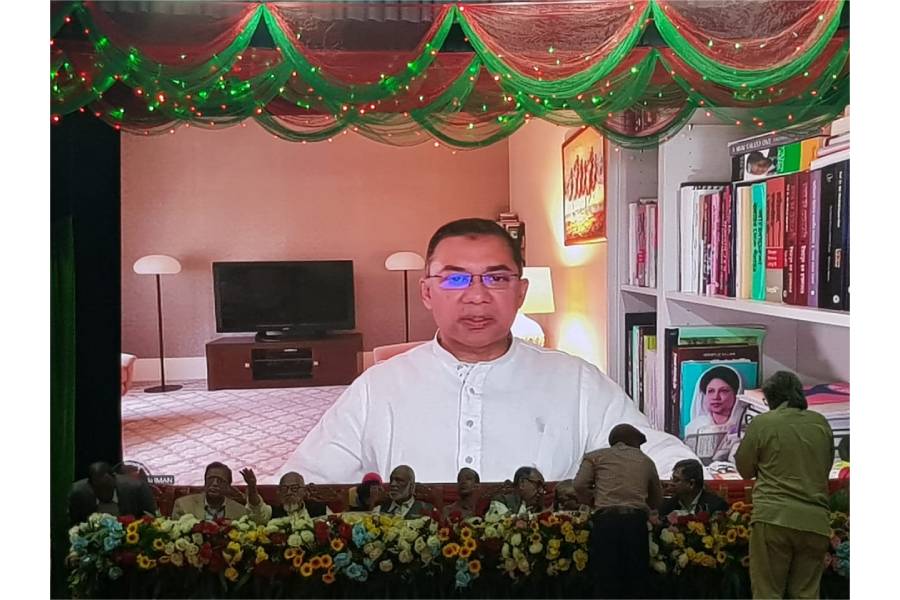
BNP Acting Chairman Tarique Rahman on Monday said the fascist Awami League (AL) distorted the history of Bangladeshโ€™s independence and Liberation War for their own petty party interests.

โ€œA deposed and fugitive clique has distorted the history of independence and the Liberation War for their own petty party interests and has attempted to politicize history. As a continuation of this attempt, the defeated forces of the Liberation War are now trying to establish a new history of victory,โ€ he said.

He made the remarks while speaking as the chief guest at a discussion marking the Great Victory Day. BNP organised the event at the cityโ€™s Institution of Engineers, Bangladesh.

BNP Secretary General Mirza Fakhrul Islam Alamgir presided over the discussion while BNP Standing Committee members spoke.

Tarique Rahman asserted that attempts to question the independence and Liberation War have existed in the past and continue to this day.

โ€œWhile the conspirators have changed their appearance over time, their character has not changed at all,โ€ he said.

He emphasized that Bangladesh is not a suddenly emerged territory; it was achieved through the supreme sacrifice of millions of martyrs and the honor of countless mothers and sisters.

He noted that numerous writings have documented the glorious history of this independence and Liberation War.

Regarding the path forward, Tareque Rahman outlined a vision, saying, โ€œTo counter the defeated clique, our Victory Day pledge should not be the politics of revenge or hostility; rather, it should be the establishment of a self-reliant, prosperous, and democratic Bangladesh with the aim of delivering the fruits of victory to every household.โ€

He also stressed that independence and democracy cannot stand on a sustainable foundation without ensuring the political and economic empowerment of the people.

The BNP Acting Chairman said that whenever democracy has been threatened in the history of Bangladesh, independence and sovereignty have been simultaneously endangered. He cited the events of November 7, 1975, and August 5, 2024, as evidence of this.

He argued that the state machinery can never be strong by disempowering the people. โ€œThe prerequisite for a strong state is the establishment of a government accountable and responsible to the people, chosen through direct popular vote,โ€ he added.

Tareque Rahman reiterated that BNP has always taken a firm stance in favour of free, fair, and impartial elections. โ€œHowever, a group acting against the interests of Bangladesh is creating obstacles to the conduct of elections under various pretexts,โ€ added the BNPโ€™s top leader.

He mentioned that even after the Election Commission announced the date for the national election after more than a decade and a half, the conspiracy has not ceased.

Referring to the shooting of Osman Hadi, a courageous proponent of democracy, as part of the conspiracy, Tareque Rahman posed critical questions, โ€œWho will be pleased if the interim government fails? Who will benefit if the government remains in power without an election? And whose interests will be protected if the government is not established by the peopleโ€™s vote?โ€

โ€œThe answers to these questions would clearly reveal the identity of the perpetrators,โ€ he added.

He firmly asserted that the attempt to intimidate freedom-loving and democracy-seeking people will fail. He called on everyone to rely on Allah and unitedly advance the movement for establishing peopleโ€™s rights. He said that every movement, including 1971, November 7, 1975, and the anti-autocracy movement of the nineties, has proven that the peopleโ€™s victory cannot be stopped when they are united.

Regarding the upcoming national election, he stated, โ€œThis is no ordinary election; it is more complex and important than any previous elections. The aspirations, interests, and potential of the present and future generations, and above all, the question of Bangladeshโ€™s sovereignty, are linked to this election.โ€

Tarique Rahman said that the next decade will be the decade of transformation. The BNPโ€™s goal is to build a self-reliant and prosperous Bangladesh by engaging the countryโ€™s half-female population, crores of youth, farmers, and working-class people. He expressed hope that this will make future Victory Days more glorious and meaningful.

During his speech, Tarique Rahman extended greetings for the Great Victory Day to people of all classes and professions, regardless of party affiliation, religion, or caste. He said, โ€œThe BNP is again seeking the cooperation and support of the people in the upcoming national election to deliver the fruits of victory to every home, rather than confining the message of victory merely to slogans.โ€

He prayed for the salvation of the souls of the martyrs of the 1971 Liberation War, the July Uprising and the struggle for democracy and peopleโ€™s rights, and wished a swift recovery to the injured.​
 

Spectacular fly-past, para-jumping, aerobatics by the armed forces

On the occasion of the Victory Day, the armed forces organised a spectacular fly-past, para-jumping and special aerobatic display. To further enhance the glory of 16 December, the event was arranged at the National Parade Square, Tejgaon, under the supervision of the armed forces with the support of the Ministry of Liberation War. Marking the 54th anniversary of Victory, a total of 54 paratroopers, including the chairman of the Bangladesh Investment Development Authority, Chowdhury Ashikur Rahman and 53 members of the armed forces, descended from the sky to the ground through free-fall jumps while carrying the national flag of Bangladesh. This photo story captures highlights of the event.

Dipu Malakar
Published: 16 Dec 2025, 16: 49

1765932114614.webp

Training aircraft fly in perfect formation celebrating the Victory Day, while a bird glides freely among them on its own wings.Dipu Malakar

1765932148658.webp

Helicopters are lined up flying in the sky, the national red and green flag and the flags of the Armed Forces displayed proudly.Dipu Malakar

1765932177893.webp

Streaks of red, green and blue smoke paint the sky during the aerobatic fly-past at the air show.Dipu Malakar

1765932206251.webp

The air show began at approximately 11:30 am on Tuesday and concluded at 12:15 pm.Dipu Malakar

1765932236032.webp

Five aircraft appear together over the sky of the old Tejgaon Airport area, dispersing colours as they fly. After circling several times, the aircraft depart.Dipu Malakar

1765932262274.webp

Five aircraft advance while releasing colourful trails.Dipu Malakar

1765932283477.webp

The aircraft then dispersed in five different directions, continuing to scatter colours.Dipu Malakar

1765932315360.webp

Parachuting started at 12:00 noon.Dipu Malakar

1765932346288.webp

This is the highest number recorded to date for such a display and no similar record has yet been entered in the Guinness World Records.Dipu Malakar

1765932382110.webp

The first paratrooper touched down at 12:06 pm, while the final paratrooper landed at 12:11 pm.Dipu Malakar

1765932405595.webp

MiG-29 fighter jets roared through the sky, completing multiple circuits.Dipu Malakar

1765932428726.webp

The armed forces presented a coordinated band performance as part of the programme.Dipu Malakar​
 

โ€˜East Pakistanโ€™ of 1971 in intelligence documents

Mohammad Sajjadur Rahman
Published: 16 Dec 2025, 08: 00

1765932642722.webp

Guerilla fighters during the liberation war in 1971 Photo taken from the book 'Muktijuddher Alokchitro'

It is now well known that the failure of Pakistanโ€™s military intelligence apparatus, particularly the Inter-Services Intelligence (ISI), played a significant role behind the division of Pakistan and the creation of Bangladesh in 1971. However, beyond the ISI, one of the key documentary sources for understanding how Pakistanโ€™s law-enforcement machinery perceived 1971 lies in the intelligence summaries of the East Pakistan Police and the fortnightly confidential reports of the East Pakistan Police Special Branch (SB). An analysis of these 1971 โ€˜Top Secretโ€™ reports reveals how the so-called โ€˜normalcyโ€™ initially projected by the Pakistani administration gradually transformed into a frightening and chaotic reality.

These documents are not merely detailed accounts of events; they are testimonies to the psychological defeat and administrative collapse of an โ€˜occupyingโ€™ force. As primary sources, these intelligence records occupy a strikingly dialectical position. On the one hand, they represent the official narrative of the Pakistani state, in which there was a conscious attempt to conceal the truth; on the other hand, every line of these documents contains irrefutable evidence of Bengali resistance.

In the intelligence documents, the evolution of the Awami League reads like a dramatic narrative. At the beginning of the year โ€“during January and February โ€“ the Awami League was seen by the intelligence police as a powerful political opponent, demanding the transfer of power through constitutional means on the basis of the Six-point and 11-point demands. But after 1 March, this perception underwent a radical change. During the non-cooperation movement, police reports show that the state apparatus itself was acknowledging that its administrative control had completely collapsed and that East Pakistan was being run under the directives of Sheikh Mujibur Rahman.

After 25 March, when the Pakistan Army launched genocide, the Awami League was transformed in the intelligence documents into a โ€˜bannedโ€™ and โ€˜treasonousโ€™ force. Yet even amid this transformation, the police administration was compelled to admit that it was the grassroots organisational structure of the Awami League that formed the primary foundation of resistance. Sheikh Mujibur Rahmanโ€™s call to turn village after village into โ€˜fortressesโ€™ was not merely rhetorical; reports of attacks on police stations clearly show that local Awami League leaders actually built resistance on the ground.

The reports place significant emphasis on the role of right-wing or Islamist political parties, particularly the Pakistan Democratic Party (PDP), Jamaat-e-Islami, and the Muslim League. In the police narrative, these groups were portrayed as โ€˜patrioticโ€™ and as collaborators with the government. From early April onward, these parties were attempting to give the military administration a civilian facade through the formation of โ€˜Peace Committees.โ€™ The activities of leaders such as Nurul Amin, Syed Khwaja Khairuddin, and Ghulam Azam โ€“ their frequent meetings at the Governorโ€™s House and preparations to participate in by-elections โ€“ are repeatedly mentioned in the reports.

On the other hand, a large portion of these reports is devoted to analysing the activities of left-wing and communist parties, which opens up a different dimension of the political history of the Liberation War. In the intelligence documents, leftist forces are primarily divided into two camps: pro-Moscow and pro-Peking. The pro-Moscow NAP (Muzaffar) and the Communist Party were identified as allies of the Awami League and as โ€˜Indian agents.โ€™ However, the position of the pro-Peking or Maoist groups โ€“ such as Mohammad Toahaโ€™s EPCP-ML, the East Bengal Workersโ€™ Movement, or the Sarbahara Party โ€“ was highly complex. According to intelligence information, these groups were opposed to the Pakistani state structure, but at the same time they viewed the Awami Leagueโ€“led independence struggle as โ€˜โ€™Indian expansionismโ€™ or a โ€˜bourgeois movement.โ€™ The reports note that leaders like Toaha or Abdul Haq had established their own โ€˜liberated zonesโ€™ and were fighting simultaneously against both the Pakistani forces and the Awami League. The picture of this three-sided conflict in remote areas of Noakhali, Pabna, or Khulna is vividly reflected in the reports. This demonstrates that the politics of 1971 was not merely binary; it was also marked by an intense current of class struggle and ideological conflict.

The communal outlook of the Pakistani state is deeply embedded throughout these reports. The Hindu community was consistently portrayed as โ€˜suspect,โ€™ โ€˜Indian spies,โ€™ or โ€˜anti-state.โ€™ Incidents of their displacement, looting of homes, and killings were often cursorily described as the acts of โ€˜miscreantsโ€™ or entirely ignored. In contrast, the Pakistani administration showed deep concern for the security of the Bihari or non-Bengali population. During the non-cooperation movement in March and afterward, attacks on non-Bengalis in various places were meticulously recorded by the police. Yet the nature of this documentation was one-sided. There was a clear tendency to downplay the massacres of Bengalis while exaggerating attacks on non-Bengalis, in order to legitimise the armyโ€™s brutality under the guise of โ€˜maintaining law and order.โ€™ Nevertheless, the historical truth is that these documents prove the 1971 conflict was not merely military; it was also deeply communal and ethnically driven, claiming innocent lives from various communities.

From May 1971 onward, the central figures in the intelligence reports became the โ€˜Mukti Faujโ€™ or โ€˜Mukti Bahini.โ€™ Although police terminology referred to them as โ€˜miscreantsโ€™ or โ€˜Indian infiltrators,โ€™ descriptions of their operations reveal them to have been an unstoppable guerrilla force. The documents show that instead of engaging in conventional frontal battles, the Mukti Bahini targeted the nervous system of the Pakistani state. They attacked police stations to loot weapons, blew up railway lines and bridges to sever communication networks, and carried out sabotage at power plants. This โ€˜hit-and-runโ€™ strategy kept the Pakistan Army and police administration in a constant state of anxiety. When police reports state that โ€˜the police fled in fear from the stationโ€™ or that โ€˜miscreants arrived by launch and burned down the police station,โ€™ these are not merely admissions of administrative failure; they prove that the Pakistani government had no remaining authority in rural areas.

To confront this loss of authority, the Pakistani government formed auxiliary forces such as the Razakars, Al-Badr, and Al-Shams. The intelligence documents provide detailed accounts of the organisational structure, activities, and attacks on these collaborators. The Pakistani state sought to keep local administration functioning through them. However, an analysis of the documents shows that this strategy backfired. Peace Committee members and Razakars became easy targets for the freedom fighters. Incidents such as the killing of Peace Committee chairmen or grenade attacks on their homes in districts like Faridpur, Khulna, or Noakhali regularly appeared in police reports. This proves that a form of โ€˜civil warโ€™ was underway in society and that the Pakistani Army was failing even to protect its local collaborators. This failure further deepened a mix of fear and respect for the freedom fighters among the general population and intensified distrust toward the Pakistani state.

In the intelligence documents, an extraordinary picture of sound warfare or โ€˜sonic warโ€™ and psychological warfare can also be found. The war was not confined to the barrel of a gun; it was waged through sound, rumours, leaflets, and symbols. Intelligence officers regularly reported hearing slogans of โ€˜Joy Banglaโ€™ in cities and villages or seeing the flag of independent Bangladesh flying. These โ€˜soundsโ€™ and โ€˜sightsโ€™ alone were enough to shatter the morale of the Pakistani administration. Freedom fighters distributed leaflets threatening government officials and police, creating intense psychological pressure. What police reports referred to as โ€˜rumoursโ€™ were in fact counter-flows of information that rendered Pakistani state propaganda ineffective. The sound of grenade explosions in the dead of night, slogans written on walls, or secretly distributed pamphlets โ€“ all were part of this sonic and psychological warfare that kept Pakistani forces in a constant state of invisible terror.

In writing the history of Bangladeshโ€™s Liberation War, these โ€œenemy documentsโ€ or โ€œhostile archivesโ€ can be used as important source materials. By portraying the military-political conflict as a mere โ€œlaw and order problem,โ€ these documents prove that a blind Leviathan, on the path to its own downfall, was leaving behind evidence against itself with its own hands.

Mohammad Sazzadur Rahman is a part-time lecturer, at Independent University, Bangladesh​
 

Members Online

Latest Posts

Latest Posts