New Tweets

[🇧🇩] Water & River Management of Bangladesh

G Bangladesh Defense
[🇧🇩] Water & River Management of Bangladesh
19
532
More threads by Saif


Bangladesh's rivers are dying, and so is its future

14 March 2026, 02:31 AM

Sabbir Ahmad

1773536223238.webp


A few days ago, I stopped by the Turag River near Aminbazar on my way to Savar. The water, a murky greyish brown, barely moved. A thick film of industrial waste floated on the surface; the smell was difficult to endure. A local fisherman indicated that he had not caught anything worthwhile in three years. “This river is dead,” he flatly suggested, as if it were obvious, the way one might comment on the heat or traffic. That casual acceptance stayed with me. How did we arrive at a point where a dead river is simply another feature of the landscape?

The world marks March 14 as the International Day of Action for Rivers to recognise the crucial role of rivers in sustaining livelihoods and ecosystems. This year’s theme, “Protect Rivers, Protect People,” feels like an ultimatum. The world also observes March 22 as “World Water Day,” focusing on access to fresh water. The 2026 campaign slogan for the day is “Where water flows, equality grows.” Naturally, these two days commemorate deeply interconnected themes.

For Bangladesh, a nation shaped by the sediments from the Ganges, Brahmaputra, and Meghna, the health of our rivers is not a peripheral environmental concern—it is the very foundation of our survival. A 2025 study by the River and Delta Research Centre (RDRC) reveals a grim reality: at least 79 rivers across the country have either died or are drying up. The crisis is most acute in the Khulna division, with 25 dying rivers, followed by 19 in Rajshahi and 14 in Rangpur. This decay mirrors a parliamentary statement from February 2024: that 308 rivers around the country have lost navigability. While the total river network in Bangladesh spans approximately 24,000km, the portion that remains navigable during the dry season is roughly 3,800km, a staggering decline that threatens the very lifeline of our delta. And yet, the gap between our riverine identity and our developmental choices has never been more consequential.

The picture is bleak in the capital. A recent study reveals that over the last three decades, Dhaka’s built-up areas surged by 288 percent, while its vital water bodies shrank by 60 percent. Consequently, the six rivers encircling the city—Buriganga, Shitalakkhya, Bangshi, Turag, Balu, and Dhaleshwari—are now functionally dead, choked by industrial and municipal waste. The Department of Environment’s 2023 report confirms that these waterways fail to meet the vital Environmental Quality Standards set by law. This is not just an ecological issue but also an economic one: the World Bank estimates river pollution costs the nation $2.83 billion annually, a figure set to balloon to $51 billion over the next two decades if we fail to act.

The drivers of this crisis are well-documented but politically inconvenient. According to the Bangladesh Inland Water Transport Authority (BIWTA), roughly 350 tonnes of waste are dumped into Dhaka’s rivers daily from approximately 7,000 industrial and residential sources. Another RDRC survey report on 56 rivers finds them to be extremely polluted. The ready-made garment sector, the backbone of our economy, discharges an estimated 5.6 crore tonnes of wastewater annually, mostly into the Buriganga. The dissolved oxygen levels has become too low to support aquatic life in Buriganga, Turag and Balu. For nearby slum residents, the cost is physical: Human Rights Watch reports chronic fevers, skin diseases, and respiratory illness. Besides, with the rivers being choked by the 63,200 illegal encroachers identified by the National River Conservation Commission (NRCC), the city’s natural drainage is also failing. The urban waterlogging that paralyses Dhaka with less than an hour of rain is not a natural disaster but the predictable result of replacing waterways with concrete.

Beyond our borders, the challenge takes on a geopolitical dimension that demands far greater urgency than it currently receives. Bangladesh is at the downstream end of 57 transboundary rivers, which means we are perpetually subject to our neighbours’ decisions. During the dry season, upstream diversions reduce rivers like the Ganges to trickles, allowing salinity to advance deep into the agricultural belt of our coastal districts, ruining farmland and displacing communities. During the monsoon, sudden uncoordinated releases from upstream dams trigger what are often described as flash floods. There is nothing natural about a flood caused by dam management decisions made without warning or accountability. The Ganges Water Treaty was ratified decades ago, yet we still lack access to transparent, real-time data on upstream operations. As the treaty comes up for renewal, Bangladesh must push for enforceable real-time data-sharing, early warning systems for dam releases, and a genuine framework for joint ecological stewardship of the shared watershed.

Domestically, the problem is not an absence of law but a chronic failure to enforce it. In 2019, the High Court declared rivers in Bangladesh as living entities with legal rights, designating the NRCC as their legal guardian. The court also directed that encroachers be barred from participating in elections and getting bank loans. In 2026, those directives remain largely symbolic. Eviction drives generate headlines; encroachers return within months.

Breaking this cycle requires structural reform. The NRCC must be empowered with genuine fast-track authority to penalise polluters and evict encroachers beyond the reach of political interference. Every major infrastructure project must pass a mandatory river impact assessment before approval. In the case of industrial pollution, the standard cannot remain voluntary compliance. Industries operating without functional effluent treatment plants are externalising the true cost of their production onto the public health of millions. It is basic hydrological common sense, not idealism.

At the community level, the Halda River offers a model worth national attention. The partnership between local fishermen and government agencies to protect the country’s last natural carp breeding ground shows what is possible when communities are given genuine ownership rather than treated as spectators to top-down policy.

There is no foundation more fundamental than the water that flows through this delta. A Bangladesh of high-speed internet and soaring skylines means very little if the rivers are retreating. If we fail to act urgently through enforceable law, assertive diplomacy, and genuine community stewardship, we will be the generation that presides over the irreversible loss of our most defining natural heritage, and our aspiration for equality may remain elusive.

Dr Sabbir Ahmad is a researcher and expert in project delivery and engineering.​
 
Analyze

Analyze Post

Add your ideas here:
Highlight Cite Respond

Canal-digging drive must resist partisan influences

1773710413221.webp


Rivers and canals are to Bangladesh what arteries are to the human body. The country is uniquely blessed with a vast, intricate capillary network of waterways, including rivers and canals. Yet its natural circulatory system has suffered severe sclerosis for decades, falling victim to myopic development. Siltation, rampant illegal encroachment, and chronic institutional neglect have choked these channels. In their absence, farmers have been forced to relentlessly draw down the country’s precious and finite groundwater reserves to keep agricultural production afloat.

The formal inauguration of a nationwide canal excavation and re-excavation programme by Prime Minister Tarique Rahman is thus a necessary intervention. By breaking ground on a 12-km stretch of the Sahapara canal in Dinajpur, the government has taken aim at a mounting environmental and economic threat. The launch—coordinated with simultaneous excavation efforts led by ministers and lawmakers in 54 districts—marks the first phase of the implementation of a colossal election manifesto pledge made by BNP to restore 20,000 km of rivers and canals across the country.

The economic and ecological rationale behind the initiative is compelling. Redirecting the agricultural burden back to surface water will strengthen rural water management. A freely flowing canal network serves a dual purpose: it functions as a drainage system to mitigate severe monsoon waterlogging while also acting as a reservoir to combat drought. Officials at the water resources ministry are right to note that better use of stored surface water could improve irrigation, boost agricultural productivity, and create employment opportunities for rural communities. More importantly, it could halt the dangerous depletion of the water table in northern districts.

Yet embedded within the DNA of this ambitious initiative is a political risk that the government must carefully navigate. Infrastructure and environmental projects in Bangladesh endure only when they achieve broad social consensus. If this colossal excavation effort is treated merely as a partisan agenda, it will inevitably fall short of its potential. The government must ensure that excavated canals do not fall into familiar traps: corruption, lack of maintenance, and swift re-encroachment by the politically connected. For the project to achieve genuine transformation, the effort must be deliberately and visibly depoliticised. It should evolve from a top-down government directive into a truly nationwide civic campaign. The state possesses the heavy machinery, initial capital, and hydrological expertise needed to break ground. But the long-term stewardship of these waterways must ultimately return to the communities that rely on them.

This requires fostering a profound sense of collective ownership. When a farming community feels that a canal belongs to them—rather than to a distant bureaucracy in Dhaka or a local political patron—they will be more inspired to protect its banks from encroachers and ensure its waters remain clear. The government has taken a commendable first step in recognising the crisis and mobilising the state’s apparatus to address it. The next step is to ensure that the effort grows into a shared national mission—one in which citizens, regardless of political creed, help carry the work forward.​
 
Analyze

Analyze Post

Add your ideas here:
Highlight Cite Respond

Restoring canals to fix water woes

Atiqul Kabir Tuhin
Published :
Mar 19, 2026 00:06
Updated :
Mar 19, 2026 00:06

1773878895685.webp


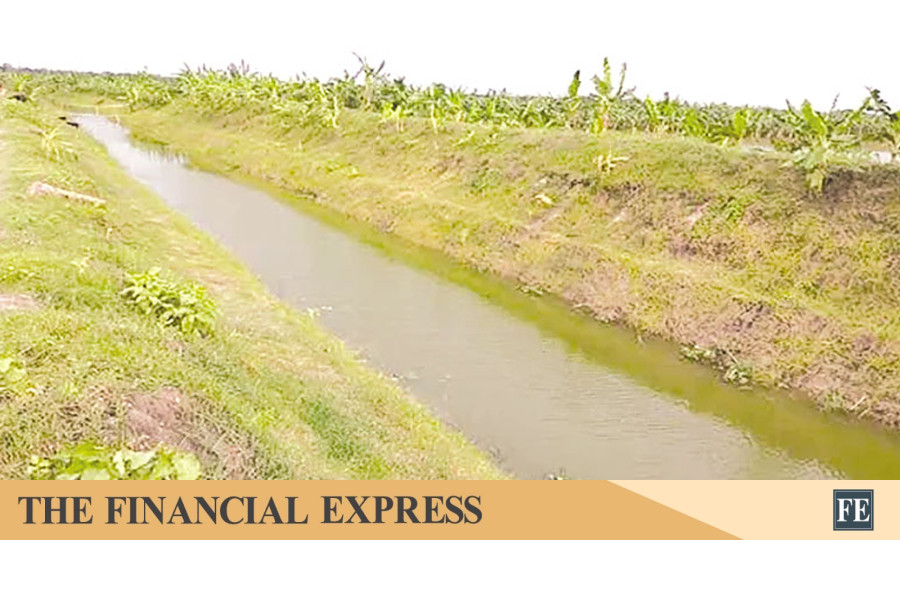
For Bangladesh, rivers and canals are as vital as veins are to the human body. The country is uniquely blessed with a vast network of waterways that crisscross the land, sustaining its life, agriculture and economy. Today, this intricate system is in grave peril due to decades of neglect. Many canals and rivers are already dead, while those that still flow face dire threats from pollution, siltation and encroachment.

The consequences of this neglect are far-reaching. In a country that proudly identifies itself as riverine, the degradation of rivers and canals has severely disrupted the natural water management system. For centuries, these waterways acted as natural drainage channels, irrigation sources and flood buffers. Their decline has forced increasing reliance on groundwater for agriculture, leading to a steady and alarming depletion of aquifers in many regions. This raises serious concerns about long-term water security, particularly in the face of climate change and erratic rainfall patterns.

At the same time, the disappearance of canals has intensified waterlogging across both urban and rural areas. Even moderate rainfall now inundates streets in Dhaka and other cities, while low-lying regions suffer frequent and prolonged flooding. What were once self-regulating natural systems have been replaced by costly and often inadequate artificial solutions.

Against this backdrop, the recent launch of a nationwide canal restoration programme by Prime Minister Tarique Rahman offers a glimmer of hope. The fact that the Prime Minister personally took part in re-excavation at Sahapara Canal in Dinajpur underscores the urgency and importance of the initiative. The launch — coordinated with simultaneous excavation efforts led by ministers and lawmakers in 54 districts — marks the first phase of the implementation of a major election pledge made by BNP to restore 20,000 km of rivers and canals across the country.

Earlier, the Ministry of Water Resources undertook a technical assistant project, titled, ‘Identification and Classification of Canals of Bangladesh and Preparation of a Geoinformatics Database’, worth Tk315.7 million as approved by the Planning Commission (PC) to classify canals and create a geo-informatics (GIS) database for the purpose. The project is to be implemented by the Water Development Board (BWDB). The Agriculture, Water Resources and the Rural Institutions Division of the Planning Commission will be extending the required support for the work. The digital database containing information on both existing and lost waterways would enable the government to bring all rivers and canals under a unified management framework.

The benefits of restoring rivers and canals are immense, both economically and ecologically. Reviving these natural waterways would improve drainage, reduce waterlogging, enhance agricultural productivity and restore ecological balance. A freely flowing canal network can serve a dual purpose—acting as a drainage system during the monsoon while also functioning as a reservoir to store water for the dry season. Redirecting the agricultural burden back to surface water would strengthen rural water management and reduce excessive dependence on groundwater. Healthy rivers also act as natural buffers against floods, absorbing excess water during heavy rains and releasing it gradually, while sustaining biodiversity, fisheries and livelihoods. Better use of stored surface water could significantly improve irrigation, create employment opportunities in rural areas and, crucially, help arrest the alarming depletion of the water table in northern districts.

However, restoration efforts must be accompanied by strict measures to prevent pollution. Ironically, in many areas rivers and canals are treated as convenient dumping grounds for domestic and industrial waste. The plight of the River Buriganga is a glaring example. Once the lifeline of Dhaka, it has been reduced to a heavily polluted channel, choked with industrial effluents, plastics, medical waste and untreated sewage. The relocation of tanneries from Hazaribagh to Savar was intended to alleviate this burden. Instead, pollution has effectively been transferred to the Dhaleswari River, where untreated wastewater continues to be discharged due to the inefficiency of the Central Effluent Treatment Plant. Therefore it needs to be ensured that all industries install and properly operate effluent treatment plants.

Beyond industrial waste, flow of untreated sewage into the waterbodies poses another serious threat. In and around Dhaka, large volumes of human waste are discharged directly into rivers and canals due to inadequate sewage treatment infrastructure. Expanding and modernising sewage treatment facilities must therefore be a central component of any long-term solution.

Encroachment, meanwhile, remains one of the most persistent and politically sensitive threats to the survival of rivers and canals. Across the country, waterways have been unlawfully occupied, narrowed or even erased to make way for settlements, factories and commercial establishments. If the ongoing restoration drive is to yield lasting results, the government must ensure that reclaimed canals are protected from falling back into the same cycle of neglect and renewed encroachment by influential quarters.

Ultimately, however, the success of this ambitious initiative will require more than government action. The state can initiate excavation, provide technical expertise and enforce regulations, but long-term sustainability hinges on active public participation in their upkeep. Restoring and protecting the waterbodies is a shared responsibility; only through an effective partnership between the state and the community can we restore these vital arteries to their rightful place and deliver lasting benefits.​
 
Analyze

Analyze Post

Add your ideas here:
Highlight Cite Respond

7 issues to be considered in river and canal dredging
In line with its electoral commitment, the BNP-led government has launched a canal dredging program. The programme was inaugurated by Prime Minister Tarique Rahman on Monday. Tuhin Wadud writes about the key issues that need to be taken into account regarding river and canal dredging.

Tuhin Wadud
Published: 18 Mar 2026, 08: 28

1773880757557.webp

Most canals in Bangladesh are nearly dead due to encroachment and pollution File photo

In our country, the government institutions responsible for river dredging are: BIWTA (Bangladesh Inland Water Transport Authority), BWDB (Water Development Board), BADC (Bangladesh Agricultural Development Corporation), BMDA (Barind Multipurpose Development Authority), LGED (Local Government Engineering Department), and the Department of Fisheries.

BIWTA does not have field-level offices. As a result, when it carries out river dredging, proper supervision is lacking. In many cases, BIWTA takes assistance from the Water Development Board.

BIWTA is mainly supposed to dredge rivers that have or will have navigational routes. However, by exerting influence, it also dredges rivers that have no connection to navigation. In Dinajpur, BIWTA dredged the Punarbhaba River. In this dredging project, embankments were built inside the river itself.

In Rangpur, the Ghaghat River was dredged by the Water Development Board four to five years ago, and now there is hardly any need for further dredging. Navigation will not be possible on this river. Yet, BIWTA has taken up a new project worth nearly 10 billion taka to dredge it again.

This is an example of how poorly planned a river dredging project can be. There were allegations that the project had been adopted during the Awami League government for the special benefit of a few top officials of the shipping ministry. Although reports were published on the matter during the tenure of the interim government, the project was not canceled.

A few years ago, the Dudhkumar River in Kurigram was dredged under BIWTA. Despite spending several hundred crore taka, the dredging caused more harm than benefit. The small amount of material that was dredged was dumped back into the river. With rainfall, that sand returned to the river again.

Because the dredging was done in a haphazard manner, riverbank erosion increased in the same year. BIWTA spent about 27.65 billion taka on a project that included dredging the Brahmaputra-Jamuna River and other works. Many media reports have shown that this dredging did not serve any real purpose. Even after this work, the old Brahmaputra in Mymensingh continues to face water shortages. The initiative to establish river navigation from Balasi Ghat in Gaibandha to Bahadurabad Ghat failed to be practical, and that money was effectively wasted.

BWDB has effectively destroyed countless rivers in the country. By blocking the water flow of the Baral River in Pabna-Natore, this institution has caused extreme devastation. BWDB is also responsible for the tragic condition of the Karatoya River, which flows through Bogura. A 10–12-foot sluice gate was installed across the nearly 300-foot-wide Karatoya River, effectively killing it.

1773880816129.webp

Prime Minister Tarique Rahman inaugurated the canal dredging program today, Monday, in Sahapara, Kaharol upazila, Dinajpur From BNP’s Facebook page

In the name of riverbank protection, BWDB has destroyed at least 10 tributaries and branch rivers of the Teesta River by building embankments. Rivers dredged by BWDB in recent years have not followed river-friendly methods. The Chikli River, flowing through Badarganj-Taragonj in Rangpur, was not dredged according to its actual width.

In Nilphamari, the soil from almost all dredged rivers, including the Dewnai River, was dumped on the riverbanks. Rainwater washes this soil back into the river. BWDB is also responsible for the water crisis in Bhobdah, Jashore. BWDB is one of the country’s largest institutions, with many skilled and experienced engineers. It is unacceptable for river or canal destruction, or any river damage, to occur under their supervision.

BADC is an institution under the agriculture ministry. This institution is eager to dredge rivers under the label of ‘canal.’ In Nilphamari district, there is a river called Bagdokra. After dredging it, they put up a signboard calling it “Bagdokra Canal.” A river flowing through Pirgachha in Rangpur is called Alaikmari. This river was also dredged and labeled a canal on the signboard.

The people living along these two rivers objected to calling the rivers ‘canals.’ There are countless examples of rivers being turned into canals. Another institution under the Ministry of Agriculture is BMDA, which is also skilled in works similar to those of BADC.

LGED has caused damage to numerous rivers by building bridges smaller than the actual width of the rivers. The institution has also constructed roads across many rivers without building proper bridges. Even when there is little water in small rivers, LGED takes projects for irrigation purposes, often spending money unnecessarily.

The Chekadara River in Nilphamari district is a clear example. LGED has turned the river into a pond. Another example is the Baishadara River in Pirgachha upazila, Rangpur district. The Department of Fisheries also dredges rivers into small ponds. In Kurigram, the Sat Bon River and the Payradanga River have been converted into ponds by the Fisheries Department.

These institutions often cause similar types of damage to rivers. Sometimes, a single river is split into two, sometimes into three. This may not be obvious at first, but examples make it clear. For instance, in Mithapukur upazila, Rangpur district, there is a river called Burail. This river was formed by the confluence of the Shalmara River and the Kafrikhal. The river is about 200 feet wide. If 30-40 feet is dredged in the middle and the dredged soil is dumped on both sides, the river effectively becomes three separate channels.

BWDB has divided the Manas River in Haragach, Rangpur, and the Burail River in Mithapukur into three separate channels. BADC has split the Alaikmari River into three channels. In Kaunia, the Barind Development Authority has created two separate flows in the Manas River by dumping soil across the middle at several points.

Rivers and natural canals never maintain a uniform width. They narrow in some areas and widen in others. When a dredging project is undertaken, the cross-section, slope, and current condition of the river are often ignored, and boundaries are not properly marked. Dredging is generally done according to almost the same measurements everywhere.

In some areas, rivers or canals are dredged narrower than their actual width, without considering the natural width. As a result, the river becomes much narrower than its original size. At the same time, river encroachers benefit. This has been observed in nearly all rivers.

Previously, river and canal dredging showed widespread lack of coordination. An example illustrates this clearly. In Badarganj upazila, Rangpur, there is a river called Chikli, which flows from the confluence of the Sonamati and Karatoya rivers. Both BMDA and BWDB had taken separate dredging projects on this same river.

Tensions arise between two institutions over the project. Each institution dredges a different section of the river. Even more concerning than having two projects is that the designs of the two institutions are different. Dredging the same river according to two different designs in the same location is extremely harmful to the river.

Currently, the government is preparing a list of rivers and canals that actually require dredging, and in the meantime, the canal dredging program has already been inaugurated. Previously, the institutions that dredged rivers and canals, either made them much narrower than their actual width or split a single river into multiple channels. Those dredged rivers and canals should not be included in the new list. For this reason, it is necessary to verify whether previously dredged rivers and canals were dredged according to their actual width; if not, they must be re-dredged to restore the correct width.

Prime Minister Tarique Rahman is highly committed to the dredging of rivers and canals in the country as well as to environmental protection. The river and canal dredging program was inaugurated yesterday, 16 March. In this situation, I am presenting several proposals for river and canal dredging:

1. Before dredging a river or canal, boundaries must be marked according to the CS (Cadastral Survey) records. Even if someone has recorded the river or canal land under a personal name, that ownership is invalid. There is no legal basis for changing the classification of rivers, canals, wetlands, or water bodies. Since these properties belong to the public, they cannot be donated or assigned to any individual. Even if a waterway is unrecorded, no one can claim it as private property. In such cases, the Deputy Commissioners should declare these flows as rivers through proper survey.

2. Dredged soil must not be dumped on the riverbanks. Dumping dredged material on river or canal banks destroys their natural form. Rainwater cannot flow away quickly, and floodwater may be obstructed from entering the land. When adopting a dredging project, proper management of the dredged soil must be ensured.

3. Rivers must never be referred to as canals. The National River Protection Commission has defined what constitutes a river. Flows that qualify as rivers according to this definition must be referred to as rivers. Previously renamed rivers labeled as canals should have their original names restored.

4. In most dredging projects, excavators remove soil and deposit it on one side first, then on the other side. This single-shifting method is common, but dredging should prioritise the width of the river rather than shifting soil.

5. River and canal dredging requires coordination committees at upazila, district, and divisional levels. The District Executive Engineer of the Water Development Board and the zonal Chief Engineer at the divisional level can serve as chairpersons of these committees.

6. All rivers and canals whose mouths have been blocked must be reopened.

7. The National River Protection Commission should be involved in river and canal dredging so that it can play an active role in monitoring and guidance.

It is assumed that river and canal dredging is being carried out as a special priority project under Prime Minister Tarique Rahman. The dredging must be conducted realistically, taking the type and condition of each river into account. The goal is not just to see how many thousands of kilometers of rivers and canals are dredged; it is equally important to ensure protection of agriculture and biodiversity and that the dredging achieves its intended purpose.

For a long time, we have been calling for the correction of defects in river dredging, but no action has been taken. Under the direction of Prime Minister Tarique Rahman, dredging is expected to be carried out as correctly and defect-free as possible. This is our expectation.

* Tuhin Wadud, Professor, Department of Bangla, Begum Rokeya University, and Director, Riverine People.​
 
Analyze

Analyze Post

Add your ideas here:
Highlight Cite Respond

Latest Posts

Back
PKDefense - Recommended Toggle