New Tweets

[🇧🇩] Monitoring Bangladesh's Economy

G Bangladesh Defense
[🇧🇩] Monitoring Bangladesh's Economy
1K
30K
More threads by Saif

Great news. The remittance becomes very important when you have trade deficit and nation is undergoing through foreign exchange crisis. High remittance has saved India many times in past when India was going through foreign exchange crisis.
As far as I know, India is the biggest remittance earner in Asia. If Bangladeshi remittance earners send money via bank, the amount of total remittance would be doubled. They need to say no to Hundi.
 
Analyze

Analyze Post

Add your ideas here:
Highlight Cite Respond
  • Erdogan (+4)
Reactions: Mainerik
As far as I know, India is the biggest remittance earner in Asia. If Bangladeshi remittance earners send money via bank, the amount of total remittance would be doubled. They need to say no to Hundi.

That is true. Not only in Asia but in whole world.
 
Analyze

Analyze Post

Add your ideas here:
Highlight Cite Respond
  • Trump (+4)
Reactions: Mainerik
India is the world’s largest recipient of remittances, with inflows reaching a record $135.46 billion in FY25, up 14% year-on-year, driven by high-skilled migration to the US, UK, and Gulf, notes the Deccan Herald and Razorpay.
 
Analyze

Analyze Post

Add your ideas here:
Highlight Cite Respond

Trade deficit widens as import bill climbs
Staff Correspondent 17 March, 2026, 00:07

1773711333413.webp

A file photo shows containers and cranes at the Chattogram Port in Chattogram. | AFP photo

Bangladesh’s trade deficit widened in the first seven months of the current fiscal year as imports increased while export earnings declined, adding pressure on the country’s external balance.Bangladeshi culture blog

Bangladesh Bank data showed that the merchandise trade gap rose to $13.8 billion in the July–January period of FY26, compared with $11.74 billion in the same period of FY25.

During the period, import payments grew by 4.6 per cent while export earnings fell by 1.1 per cent.

Total merchandise exports stood at $26 billion, with the ready-made garment sector generating $23.2 billion of the amount.

Export performance remained weak amid subdued global demand and continued price pressure from buyers. Producers also faced higher domestic costs.

Although some industries recovered from the political changeovers, overall export growth remained sluggish.

A few sectors posted moderate gains. Leather goods, engineering products and home textiles recorded some growth, but the increases were not enough to offset slower expansion in garment exports.

In contrast, imports rose to $39.88 billion in the seven-month period.

Payments for intermediate goods increased 4.8 per cent to $26.16 billion.

Fertiliser imports surged by 71 per cent, while petroleum imports rose by 31.6 per cent, reflecting stronger demand for energy and agricultural inputs.Politics

Imports of capital goods rose by 2.6 per cent to $5.92 billion, including a 5 per cent increase in capital machinery.

The figures indicate limited but continued investment in industrial capacity despite cautious business conditions.

The higher import bill also contributed to a larger services deficit.

The services account recorded a deficit of $3.44 billion as payments for various services increased faster than earnings.

Travel payments rose by 29.4 per cent, driven largely by spending on overseas education and medical treatment.

The primary income account also remained in deficit.

The gap reached $2.94 billion due to profit repatriation by foreign companies and interest payments on external borrowing.

Official interest payments alone amounted to $1.8 billion during the period.

Despite the widening trade and income deficits, the current account deficit narrowed significantly.

It stood at $381 million in July–January FY26, compared with $1.32 billion in the same period a year earlier.

The improvement mainly came from stronger remittance inflows. Workers’ remittances rose by 21.8 per cent to $19.43 billion during the period.

Remittances from Saudi Arabia increased by 51.2 per cent, from the United Kingdom by 72.7 per cent and from Malaysia by 43 per cent, although inflows from the United States fell by 46.3 per cent.

The rise in remittances was supported by increased use of formal banking channels and a relatively stable exchange rate.

The financial account posted a surplus of $2.01 billion, up from $331 million of a year earlier.

Net foreign direct investment reached $867 million, while higher loan disbursements and trade credit also contributed to the surplus, though repayments increased.

With stronger inflows in the financial account, the overall balance of payments recorded a surplus of $2.28 billion, reversing a deficit of $1.22 billion a year earlier.

Foreign exchange reserves improved during the period. Gross reserves stood at $33.18 billion, while reserves calculated under the IMF’s BPM6 method were $28.68 billion.​
 
Analyze

Analyze Post

Add your ideas here:
Highlight Cite Respond

Challenge of maintaining stability in the financial sector

Mainul Islam

Published: 17 Mar 2026, 08: 16

1773796271282.webp


On 25 February, following the removal of Dr. Ahsan H Mansur, garment industrialist Mostakur Rahman was appointed governor of Bangladesh Bank. This is the first time in the country’s history that a businessman has assumed the position of governor. The new government’s decision has raised questions.

Dr. Ahsan Mansur took charge as governor of Bangladesh Bank on 14 August 2024. A retired senior official of the International Monetary Fund, Dr. Mansur’s appointment was widely praised. At that time, the financial sector had nearly reached a meltdown.

Foreign exchange reserves, which had risen to $48 billion in August 2023, had been heavily plundered. The reserves declined dangerously, falling to just $20 billion by 5 August 2024.

The market exchange rate of the US dollar, which had been 87 taka per dollar in 2022, depreciated rapidly, reaching 125 taka per dollar by 5 August 2024.

Out of the country’s 61 banks, 11 were on the brink of bankruptcy.

During the fifteen-and-a-half-year rule of the fallen autocrat Sheikh Hasina, the banking sector suffered the most extensive plunder. Despite there being no need for as many as 61 banks in the country, licenses were granted through Hasina’s arbitrary decisions. These licenses were issued to create extraordinary opportunities for looting capital by her relatives, influential leaders of the Awami League, and oligarchic businessmen and “robber barons” who thrived under her patronage.

There is no second example anywhere in the world where a single individual or group has been allowed to establish control over seven banks.

Research conducted by the white paper committee formed by the interim government revealed that the S Alam Group embezzled and smuggled abroad nearly Tk 200,000 crore from these seven banks. Between 2017 and 5 August 2024, the group siphoned off about Tk 70,000 crore from Islami Bank Bangladesh through various means, pushing the bank to the brink of bankruptcy.

Former land minister Saifuzzaman Chowdhury plundered United Commercial Bank. Meanwhile, Salman F Rahman, industry and private investment adviser to Sheikh Hasina, left more than Tk 50,000 crore in defaulted loans through his company Beximco across various banks.

Although some stability returned to the banking sector during the one and a half years after Ahsan H Mansur was appointed governor of Bangladesh Bank, there was no significant progress in resolving the problem of defaulted loans. In fact, because there were no longer attempts to conceal bad loans as in the past, the ratio of classified loans reported by Bangladesh Bank rose steadily and exceeded 36 per cent by September 2025. After rules on loan rescheduling were relaxed, it fell again to 31 per cent in December, but this provides little reassurance.

An even more serious issue is that the majority of Bangladesh’s defaulted loans have already been smuggled abroad. None of these illicitly transferred funds has returned to the banking system; not a single taka has been recovered during the interim government’s one and a half years in office. Despite this, Mansur managed to handle the crisis in the banking sector with considerable success.

Bangladesh’s foreign exchange reserves rose rapidly during his tenure, surpassing $35 billion on 25 February 2026, the day he was removed from office. For more than a year, Bangladesh Bank managed to keep the exchange rate stable at Tk 122 per US dollar.

The troubled Islami Bank Bangladesh managed to recover and regain stability. United Commercial Bank also overcame much of its earlier crisis. Five Islamic banks that had reached the brink of bankruptcy were merged to form a combined Islamic bank, which has successfully begun operations.
Total bank deposits have again exceeded Tk 18 trillion, and bank lending is expected to grow by 11 percent in the 2025–26 fiscal year.

A governor’s strict oversight of banks may not always align with the preferences of the government. But the stability of the financial sector is far more a matter of sound policy than political loyalty
Despite intense pressure to reduce lending rates, Mansur did not yield, prioritizing the goal of reducing inflation. Remittances were expected to reach about $35 billion in the fiscal year ending 30 June 2026. However, due to the ongoing conflict between Iran and the United States–Israel alliance, there are concerns that remittance inflows may decline from March onward.

Bangladesh’s current account balance, which had suffered severe deficits during the final three years of Sheikh Hasina’s rule, has returned to surplus. The dangerous deficit in the financial account has also been eliminated. These data indicate that the country’s financial sector has regained stability over the past year and a half after emerging from the plunder of the authoritarian regime.

Unfortunately, at this juncture the interim government blocked the proposed amendment to the Bangladesh Bank Order, which was intended to strengthen the central bank’s autonomy. Proposals to amend the Money Loan Court Act and the Bank Company Act were also halted. As a result, the country lost a significant opportunity to reform the banking sector.

Mansur had proposed several reasonable reforms to address the crisis of defaulted bank loans, but these proposals were also thwarted. Was it appropriate to block these initiatives? And will any political government truly accept the issue of Bangladesh Bank’s autonomy?

It is regrettable that Governor Mansur, who achieved such commendable success, had to leave his position. Even though more than two years remained on his contract, it was abruptly cancelled without any discussion with him.

It is not unusual for a newly elected political government to appoint individuals of its choice to key positions. However, considering how successfully Bangladesh Bank managed the economic crisis under Mansur’s leadership, removing him in this manner is difficult to justify.

Had the contract been terminated through courteous discussion, the matter might not have been condemnable. But by dismissing him abruptly and appointing a businessman as governor, it sends the message that political loyalty is the primary qualification for the position. This could be dangerous for the economy.

If the new governor adopts a more lenient stance toward defaulted loans, the banking sector may once again face a serious crisis.

In the past, during Sheikh Hasina’s rule, the weak roles played by two Bangladesh Bank governors, Fazle Kabir and Abdur Rouf Talukder, allowed the culture of plunder in the banking sector to flourish.

Bangladesh Bank is the regulatory authority of the financial sector. Therefore, a governor’s strict oversight of banks may not always align with the preferences of the government. But the stability of the financial sector is far more a matter of sound policy than political loyalty.

* Moinul Islam is an economist and retired professor, Department of Economics, University of Chittagong​
 
Analyze

Analyze Post

Add your ideas here:
Highlight Cite Respond

Economic power of faith in Bangladesh
Mohammad Kabir Hassan and Zobayer Ahmed

Published :
Mar 18, 2026 23:55
Updated :
Mar 18, 2026 23:55

1773879061221.webp


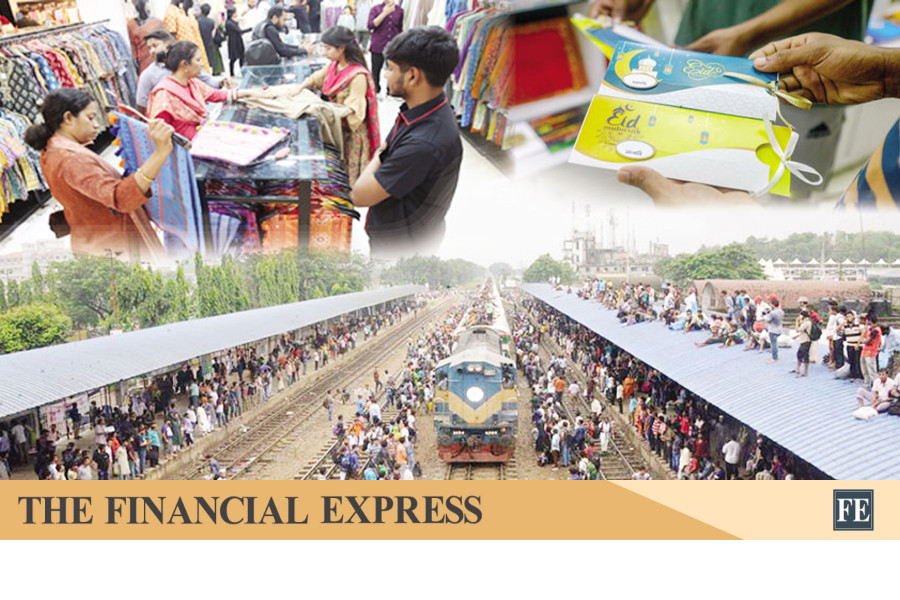
In Bangladesh, many people think of Ramadan as a time for spiritual reflection, self-discipline, and community support. Ramadan is important for religious reasons, but it also creates one of the strongest seasonal economic cycles in the country. Bangladesh’s economy changes significantly over about 30 days due to a rise in consumption, trade, travel, and social redistribution.

Almost 90 per cent of the country’s 170 million people observe Ramadan, which makes this economic change significant. There aren’t many religious events that have such a wide and strong effect on the whole country’s economy. The Ramadan–Eid cycle has become increasingly like a ‘trillion-taka seasonal economy,’ affecting everything from food imports and retail sales to remittances and rural livelihoods.

It’s important to understand this phenomenon for both economic analysis and policy design. When managed well, the economy during Ramadan can help small businesses, strengthen domestic markets, and lower poverty levels.

From Iftar to the Retail Boom: The most obvious effect of Ramadan on the economy is how people spend their money. During this time, families spend much more on food for iftar and Eid celebrations, as well as on clothes for Eid al-Fitr.

There is a significant increase in demand for basic goods such as chickpeas, sugar, edible oil, dates, lentils, and spices. During Ramadan, Bangladesh needs about 300,000 tons of soybean oil and sugar each month, which shows how much people eat. To keep supplies stable during this surge, government agencies, importers, and traders often need to work closely together.

To deal with seasonal demand pressures, policymakers often use temporary trade facilitation measures. These include relaxing import restrictions, lowering tariffs, and increasing supply through state agencies like the Trading Corporation of Bangladesh (TCB). These actions are meant to keep prices stable and prevent inflation from rising too high during the month of fasting.

The Eid shopping season brings in a lot of business, especially in clothing and shoes, as well as food. Traders say that during Ramadan, total Eid-related retail sales in Bangladesh are about Tk 2.5 lakh crore (about US$ 23–25 billion). In many cases, families spend almost 80 per cent of their seasonal budget on clothes and shoes.

Ramadan is also an important time for Bangladesh’s domestic clothing industry, which is already a major exporter. The Bangladesh Shop Owners Association says that some stores make 60–70 per cent of their annual sales in the four weeks leading up to Eid.

It’s important to note that this boom in consumption doesn’t only help big stores in cities. It affects the economy across the country.

Demand for sarees and traditional clothes is rising in the traditional weaving areas of Tangail, Sirajganj, Pabna, and Narsingdi. When city dwellers buy Eid clothes, they help rural artisans, small textile producers, and handloom workers. This shows how Ramadan consumption connects urban demand with rural livelihoods.

The informal sector is also doing well. To get Ramadan shoppers, thousands of street vendors, temporary market stalls, and small businesses pop up in cities. For many low-income families, this short season is a very important time to earn extra money.

The Logistics of the Eid Exodus: During Eid-ul-Fitr, a lot of people move to different places, which is another important part of the Ramadan economy.

Millions of people who live in cities go back to their hometowns every year to celebrate Eid with their families. The Bangladesh Jatri Kalyan Samity says that about 10 to 15 million people leave Dhaka during Eid. Millions more travel from other big cities like Chattogram, Khulna, and Rajshahi.

This big movement gives the transportation and logistics industry a huge boost. Bus companies, railroads, launch services, airlines, and ride-sharing services all have the most customers at this time.

The economic effects go beyond just the money made from transportation. Eid migration moves money from cities to rural areas. People who move to cities and people who live in cities bring gifts, cash, and goods back to their villages, which helps rural economies.

The transportation surge also stimulates related sectors such as: (a) hospitality and roadside restaurants; (b) retail markets in district towns; (c) fuel and energy demand; and (d) mobile financial services.

Ramadan also creates seasonal job openings, especially for temporary workers in retail stores, restaurants, delivery networks, and event planning companies. For thousands of young workers and casual laborers, Ramadan is a short but important time to find work that helps families make ends meet.

Remittances and the Flow of Funds:

The rise in remittances from Bangladeshi migrant workers living abroad is another big factor in the Ramadan economy.

Bangladesh is one of the top countries in the world for receiving remittances. More than 13 million people who live outside of Bangladesh send money home. During Ramadan and before Eid al-Fitr, remittances usually increase significantly because migrants help their families pay for the holidays.

Bangladesh received an impressive $3.29 billion in remittances in March 2025. Early data from March 2026 shows that the amount sent home during the first ten days of the month was 51.7 per cent higher than the same time last year.

This surge provides multiple macroeconomic benefits: (a) strengthening foreign exchange reserves; (b) boosting rural consumption; and (c) supporting financial sector liquidity.

For families in rural areas who rely heavily on remittances, Ramadan is often a time when they can buy more and eat more.In this way, the Ramadan economy isn’t just about the local economy; it’s also connected to international financial flows and labor migration.

Zakat and the Economics of Redistribution: The informal redistribution of wealth through Islamic philanthropy is probably the most distinctive feature of Ramadan’s economy.Muslims are encouraged to give Zakat and voluntary gifts such as Sadaqah and Sadqat al-Fitr (Fitra) during Ramadan. These systems move money from rich people to poor people.

Studies show that the Zakat pool in Bangladesh could be about 4 per cent of gross domestic product (GDP) each year. If done right, this could mean billions of dollars in social transfers every year.

A lot of this redistribution happens informally right now through family networks, mosques, charities, and other charitable groups. The Center for Zakat Management, the Zakat Welfare Foundation, and the As-Sunnah Foundation are examples of organizations that have started to make Zakat collection and distribution more formal and professional. Some of their programs are: help for small businesses; scholarships for schools; help with healthcare; and programs to help the poor get housing.

These activities get much more intense during Ramadan, which temporarily helps low-income families buy more things.

From an economic perspective, Zakat is a grassroots social safety net that complements government welfare programs.If Zakat is used alongside formal poverty-alleviation programs, it could be a powerful way to reduce inequality and encourage development that includes everyone in Bangladesh.

Economic Challenges Behind the Surge: The Ramadan-Eid economy has its pros and cons, even though it helps the economy.

One big worry is that prices are always changing. When demand for food products rises quickly, it can lead to market manipulation, hoarding, and price spikes that hurt low-income families more than others.

Another problem is that we depend on imports. Bangladesh buys a lot of sugar, edible oil, and other goods from other countries. When demand rises at certain times of the year, it can put pressure on foreign exchange reserves.

Also, some industries slow down after Ramadan. Retail clothing markets and other businesses that do well during Eid often see a drop in demand afterward, leading to short-term economic fluctuations.

To deal with these problems, policies need to be coordinated ahead of time, which includes: (a) strengthening market monitoring systems; (b) expanding subsidised food distribution programme; (c) supporting domestic agricultural production; and (d) encouraging digital payment systems for Zakat and charity.

Faith as an Economic Engine: Ramadan and Eid in Bangladesh illustrates how religious customs can affect a country’s economy. What starts as a spiritual practice turns into a powerful force for consumption, redistribution, and social solidarity.

The Ramadan-Eid cycle shows how closely faith, markets, and social welfare are linked. It moves billions of takas in consumption, strengthens economic ties between cities and rural areas, and directs charitable funds toward reducing poverty.

Policymakers, economists, and development practitioners must understand that religious practices should not be seen only through cultural or spiritual lenses. They are also important economic institutions that affect the flow of resources, social behaviour, and the country’s growth.

Bangladesh could turn this yearly surge into a long-term tool for inclusive economic growth and social resilience by making better use of the positive aspects of the Ramadan economy, especially by improving Zakat management and market governance.

In that way, the Ramadan-Eid economy is much more than just a temporary increase in spending. It is a strong reminder that faith can be a key part of national development when combined with sound policy and social responsibility.

Dr Mohammad Kabir Hassan is a professor of finance in the Department of Economics and Finance at the University of New Orleans. Dr Zobayer Ahmed is an associate professor at the Bangladesh Institute of Governance and Management (BIGM).​
 
Analyze

Analyze Post

Add your ideas here:
Highlight Cite Respond

The moral economy of Eid-ul-Fitr

Matiur Rahman
Published :
Mar 19, 2026 00:03
Updated :
Mar 19, 2026 00:03

1773879867541.webp


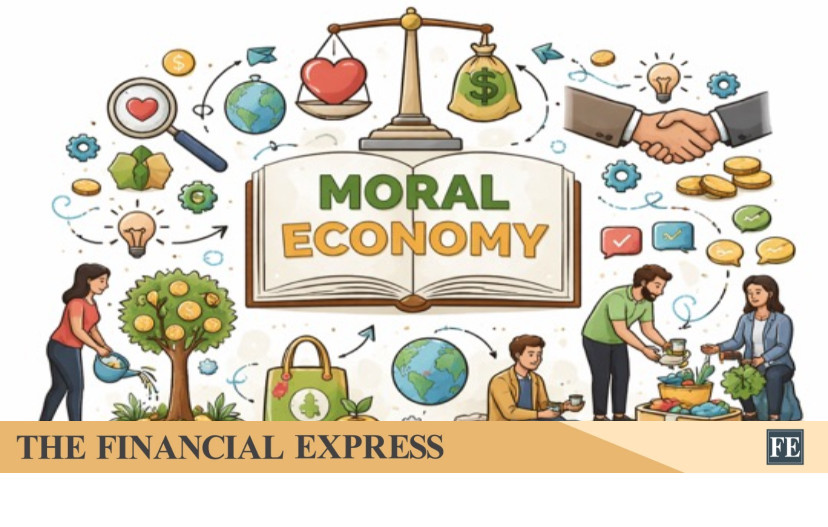
Eid-ul-Fitr is widely understood as a religious celebration marking the end of the fasting month of Ramadan. Yet in societies such as Bangladesh, Eid is not merely a ritual moment of prayer, festivity, and consumption; it is also a complex social institution embedded in a deeply normative framework of obligations, reciprocity, and redistribution. The festival creates a temporary yet powerful moral order in which economic practices are guided not only by market logic but also by ethical expectations and communal responsibilities. In this sense, Eid-ul-Fitr may be interpreted through the lens of “moral economy,” a concept in social theory that highlights the ways social norms, values, and collective notions of justice shape economic activities.

The idea of moral economy gained prominence through the work of the British historian E. P. Thompson, particularly in his influential article “The Moral Economy of the English Crowd in the Eighteenth Century”, published in 1971. Thompson argued that economic behaviour in traditional societies was embedded within a framework of customary rights and social obligations rather than purely market rationality. In his study of food riots in eighteenth-century England, he demonstrated that protests were not simply reactions to hunger or rising prices but expressions of a collective belief that authorities and merchants had violated a moral consensus about “fair prices” and social responsibility. According to Thompson, the poor acted on a widely shared expectation that economic transactions should conform to norms of justice and community welfare rather than unrestricted profit.

The relevance of Thompson’s moral economy becomes particularly evident in the cultural practices surrounding Eid al-Fitr in Bangladesh. During Eid, economic activities such as charity, gift-giving, and communal sharing are not treated as optional acts of generosity but as moral obligations embedded in religious and social expectations. The institution of Zakat al-Fitr, a compulsory charity paid before the Eid prayer, ensures that even the poorest members of society can participate in the festival. In this sense, the economy of Eid temporarily reconfigures the market by inserting ethical obligations that redistribute resources downward. The moral expectation that wealthier households must assist the poor reflects precisely the kind of communal norm Thompson described, where economic behaviour is regulated by shared ideas of justice rather than purely individual gain.

Another key theoretical contribution to the study of moral economy came from the political scientist James C. Scott in his seminal book The Moral Economy of the Peasant: Rebellion and Subsistence in Southeast Asia (1976). Scott introduced the concept of the “subsistence ethic,” arguing that peasants prioritise security and survival over profit maximisation. According to Scott, rural communities operate on an implicit social contract in which elites are morally obligated to protect the subsistence needs of the poor. When these expectations are violated, social unrest may emerge.

Scott’s framework is strikingly applicable to rural Bangladesh during Eid-ul-Fitr. In villages across the country, the festival reinforces a subsistence-based moral economy in which landowners, traders, and wealthier families are expected to support labourers, domestic workers, and marginalised households. The distribution of food, clothing, and financial assistance before Eid functions as a moral safeguard against social exclusion. Even in urban areas, employers often provide Eid bonuses to workers, a practice that goes beyond contractual obligation and reflects a culturally embedded expectation of fairness and reciprocity. These practices echo Scott’s observation that communities maintain stability through shared norms that protect the vulnerable from falling below a basic threshold of subsistence.

Beyond Thompson and Scott, the moral economy concept has also been enriched by broader sociological and anthropological debates. Scholars have emphasised that moral economies are systems of exchange grounded in ideas of fairness, justice, and collective welfare rather than purely market calculations. Such systems often emerge where communities perceive economic transactions as inseparable from ethical responsibilities and social relationships. In Bangladesh, Eid-ul-Fitr embodies this principle by transforming everyday economic life into a moralised domain where generosity, solidarity, and communal inclusion become the guiding norms.

Historically, Islamic economic thought has also contained elements that resonate with moral economy theory. Classical Islamic scholars emphasised that economic transactions must be guided by ethical principles such as fairness, the prohibition of exploitation, and the protection of the poor. The institutionalisation of zakat, sadaqah, and waqf historically functioned as mechanisms for redistributing wealth and maintaining social equilibrium. Eid-ul-Fitr represents a culmination of this ethical economy, where the spiritual discipline of Ramadan translates into tangible social solidarity.

In Bangladesh, the moral economy of Eid is visible not only in charity but also in everyday cultural practices. Markets become sites of intense economic activity during the weeks preceding Eid, yet moral expectations shape this commercial expansion. Traders are socially expected to maintain reasonable prices, while consumers often prioritise purchasing gifts for relatives and neighbours rather than individual indulgence. The widespread practice of giving Eidi—money or gifts offered to children and younger relatives—creates a micro-economy of affection and obligation that reinforces kinship ties.

Moreover, Eid temporarily dissolves certain social boundaries that structure everyday economic life. Domestic workers, garment labourers, rickshaw pullers, and other informal workers often receive bonuses or new clothing from employers and patrons. These acts are not merely acts of charity but reaffirmations of moral relationships embedded within social hierarchies. In Thompsonian terms, they reflect a paternalistic yet reciprocal moral order in which economic inequalities are mitigated through ritualised redistribution.

The urban landscape of Bangladesh during Eid also illustrates the dynamics of the moral economy on a national scale. Millions of migrant workers travel from cities such as Dhaka and Chattogram to their rural homes to celebrate with family. This annual migration is not economically efficient in a purely market sense, yet it persists because of the powerful moral expectation that Eid must be shared with kin and community. The massive movement of people and resources during this period reveals how economic decisions are shaped by emotional and ethical commitments rather than purely rational calculations.

From a sociological perspective, Eid-ul-Fitr thus functions as what Émile Durkheim might call a moment of “collective effervescence,” where shared rituals reinforce social solidarity. Yet it also performs a redistributive economic function. The obligatory charity of Zakat al-Fitr ensures that the poorest members of society can partake in the celebration, thereby symbolically reaffirming the moral unity of the community. This redistributive logic reflects the core principle of moral economy: that economic arrangements must serve the common good rather than undermine social cohesion.

Contemporary debates about inequality in Bangladesh further highlight the importance of Eid’s moral economy. As the country experiences rapid economic growth, rising consumerism and commercialisation increasingly shape Eid celebrations. Shopping malls, online marketplaces, and aggressive advertising campaigns have transformed Eid into a major commercial season. While this expansion stimulates economic activity, it also raises questions about whether the moral foundations of the festival are being overshadowed by market logic.

Yet even within this expanding consumer culture, the moral economy of Eid continues to assert itself. Many families consciously balance consumption with charity, ensuring that a portion of their Eid expenditures supports the poor. Civil society organisations and religious institutions often mobilise large-scale charity campaigns during Ramadan and Eid, reinforcing the idea that economic prosperity must be accompanied by social responsibility.

The resilience of this moral economy suggests that Eid-ul-Fitr serves as an annual ethical recalibration within Bangladeshi society. For a brief period, the festival reorients economic behaviour toward compassion, reciprocity, and social justice. It reminds society that markets alone cannot define the meaning of economic life; rather, economic activities must remain embedded within moral relationships and communal values.

In this respect, Eid-ul-Fitr offers a powerful counterpoint to the dominant assumptions of neoliberal economic thought, which often treats markets as autonomous systems governed solely by efficiency and profit. The moral economy perspective, by contrast, reveals that economic practices are always embedded in cultural norms and ethical expectations. In Bangladesh, Eid serves as a vivid demonstration of this principle, showing how religious traditions can shape economic behaviour in ways that strengthen social solidarity.

Ultimately, the moral economy of Eid-ul-Fitr represents more than a seasonal pattern of generosity. It reflects a deeper cultural philosophy in which economic transactions are inseparable from ethical responsibilities. Through acts of charity, gift-giving, and communal sharing, the festival reaffirms the idea that wealth carries obligations toward the wider community. In doing so, it embodies the very essence of moral economy envisioned by theorists such as E. P. Thompson and James C. Scott: an economy governed not merely by prices and profits, but by shared notions of justice, dignity, and collective well-being.

As Bangladesh continues its journey toward middle-income status, the enduring moral economy of Eid-ul-Fitr may serve as an important reminder that development should not only expand markets but also strengthen the ethical foundations of society. For in the end, the true significance of Eid lies not in the scale of consumption it generates but in the moral vision it renews—a vision in which economic prosperity is meaningful only when it is shared.

Dr Matiur Rahman is a researcher and development professional.​
 
Analyze

Analyze Post

Add your ideas here:
Highlight Cite Respond

Latest Posts

Back
PKDefense - Recommended Toggle