[🇧🇩] In Bangladesh, A Violent 'Student Revolution' is on بنگلہ دیش میں انقلاب

[🇧🇩] In Bangladesh, A Violent 'Student Revolution' is on بنگلہ دیش میں انقلاب
334
14K
More threads by Bilal9

G Bangladesh Defense
Status
Not open for further replies.
As soon as internet is restored - the following needs to be spread across social media -

1721703327051.webp
 
BD Internal security forces are using Spearhead system, which they acquired from Israeli firm Passitora (needless to say that is illegal since Bangladesh does not recognize Israel). These are mobile surveillance van that can hack into phones within a radius of about half a kilometer.
 
[H1]Hasina puts on brave face as anxiety grows[/H1]

Key points from the article -

  • As many as 174 people have died as a result of the government's ferocious crackdown on the student protests that escalated into civil unrest, according to a count by Daily Prothom Alo, a leading vernacular newspaper that notes the number could be much higher due to government restrictions. A Western diplomatic source estimates the number of injured at 10,000.
  • The foreign ministry in Dhaka, meanwhile, invited foreign diplomats to a briefing on Sunday, during which the US ambassador Peter Haas criticised authorities over the killings, according to Agence France-Presse (AFP). Haas spoke first as authorities opened the floor after playing a 10-minute clip made by Somoy TV, a pro-government TV station, according to a diplomatic source. "I am surprised you did not show the footage of police firing at unarmed protesters," he quipped, according to AFP.
  • Increased presence of army soldiers on ground.
  • Police in the Bangladesh capital said at least 532 people, including senior leaders of the main opposition BNP and the largest Islamist party, Jamaat-e-Islami, were arrested.
  • At least 61,000 people have been charged with violence over the unrest, according to Prothom Alo. Most of those charged are unidentified, a prelude to a looming legal crackdown ahead.
 
BD Internal security forces are using Spearhead system, which they acquired from Israeli firm Passitora (needless to say that is illegal since Bangladesh does not recognize Israel). These are mobile surveillance van that can hack into phones within a radius of about half a kilometer.
They got the delivery via Hungary. BAL is very close to Israelis behind the scene and with Modi connection, it is a no brainer.
 
The extended Sheikh family has married into a couple of Zionist Jews as well, if I am not mistaken.
Young Bengali kids don't know that it was Zia who brought Hasina from India because his political support was crumbling. He allowed BAL to the politics after 1975 and cunningly jailed Khondokar Mushtaq , even releasing snakes in Mushtq's rally. All of these he did to please India. These Zia supporters were all born after his death.
 
A communication from junior officers of the Bangladesh Army to their High Command asserts the potential of disclosure of sensitive information pertaining to Forces Goal 2030 as well as all Counterinsurgency (CI), administrative, Tactical Operations Battalion (TOB), and Border Observation Posts (BOPs) activities in Hill Chittagong, if any harm befalls unarmed civilians due to their support of an authoritarian and unqualified government. The communication stipulates that the highest echelons of the Army will be held accountable if the aforementioned demands are not adhered to within the next 24 hours. Attached screenshots were also provided to support their message.
1721739073851.png

1721739151670.png

1721739178329.png
 
Latest - amidst the current grave situation, Hasina decides to hand over operational control of Mongla Seaport to India. Clear signs that a deal has been struck to keep Hasina in power with Indian help by selling out national interest. News Source: Daily Manab Zamin

1000022630.webp
 
Latest - amidst the current grave situation, Hasina decides to hand over operational control of Mongla Seaport to India. Clear signs that a deal has been struck to keep Hasina in power with Indian help by selling out national interest. News Source: Daily Manab Zamin
Bangladeshis have now no other option than armed resistance. Army-police are killing unarmed people in hundreds if not thousands.
 
Bangladeshis have now no other option than armed resistance. Army-police are killing unarmed people in hundreds if not thousands.

Unfortunately, there won't be any armed resistance, having India on all 3 sides is the problem. There is no way an armed resistance can sustain. It has to be a mutiny within the army.

But we are seeing army troops firing at people, so I am not hopeful at all that anyone within army will stand up.

The other alternative is international pressure. The expats need to step up and continue the pressure and get army and BAL sanctioned. Once the businesses and money starts drying up, and there is nowhere to run off to because of sanctions, may be we can get them to turn on each other.

Report coming out that the businesses are asking Hasina to turn on net as they are losing business and rmg orders going to other countries. She will be forced to get the net on, and once it happens, the news and videos of atrocities must be spread around the world.
 
View attachment 7065

Bangladesh Army used APC and Helicopters with UN Peace Keeping OPS logo to crack down on Students. There will be serious consequences for BD army as far as their lucrative UN missions are concerned.

Yes. The idiots made our job easy. UN has already noticed this and gave a clear warning in the press conference. We just need to keep pressing to get them to ban BD military from any future UN missions
 
Unfortunately, there won't be any armed resistance, having India on all 3 sides is the problem. There is no way an armed resistance can sustain. It has to be a mutiny within the army.

But we are seeing army troops firing at people, so I am not hopeful at all that anyone within army will stand up.

The other alternative is international pressure. The expats need to step up and continue the pressure and get army and BAL sanctioned. Once the businesses and money starts drying up, and there is nowhere to run off to because of sanctions, may be we can get them to turn on each other.

Report coming out that the businesses are asking Hasina to turn on net as they are losing business and rmg orders going to other countries. She will be forced to get the net on, and once it happens, the news and videos of atrocities must be spread around the world.
Unless pro-West/Pro-China Arakan Army gets involved........... They are already heavily armed and can overrun border posts with ease. Most BD army guys are not used to real combat rather than scaring civilians anyway.
 
Unless pro-West/Pro-China Arakan Army gets involved........... They are already heavily armed and can overrun border posts with ease. Most BD army guys are not used to real combat rather than scaring civilians anyway.
yeah...not sure you saw the meme in social media - "cats in the border, tigers in city". This was done to the military over the years at the command of India. Low morale, no integrity, basically bd military has turned into a glorified armed Chatra League.
 
1721759357487.webp


This was what the security agency did to the leader of the student activist at the agency's safe house. He was released blind folded under international pressure.
 
Death everywhere
Decades later, your story will be one of many, told in the form of songs remembering the dark day when the government murdered Bangladeshis.


Arafat Kazi
July 23rd 2024
Netranews

The first death is cinematic.

He stands alone, fearless, facing with his bare chest a dozen policemen, cowering though armed and armoured. The shot has to be a mistake. Recoil makes the shooter's helmet fall off. Then the second shot, the kill shot, goes home. Everybody knows the name of the martyred Abu Sayed. Nobody knows the name of his murderer.

The second death, in comparison, looks like a mobile game. It's a top-down view of a police van mowing through two rickshaw drivers. Nobody knows the name of the dead. Nobody knows the name of the killer. The third death to go viral is also vehicular. An armored truck patrols a road with a corpse lying on top. There's another video of that same truck, a bored policeman tossing the student's body aside.

These are the deaths you see. The dramatic moments that define this revolution, filmed, by a one-in-a-million chance, at the point of impact. There are other deaths you hear about; deaths that aren't filmed but no less poignant.

Students committing extraordinary acts of courage, sacrifice, and intelligence. But also, students being murdered in cold blood. Those are the deaths you read about, how they disappeared or what their dreams were, pictures of children smiling with their relatives; everyday moments that become meteors of a revolution.

Then there are deaths you hear about.

These are both mysterious and personally connected. Your friend's neighbour was shot in the head. Your neighbour's friend hasn't come home. You may already have encountered these people, so you perhaps have an idea of a shy smile, a brown t-shirt, a strong cologne, and you think, 'ah, that's who it is, inna Lillahi wa inna ilayhi raji'un, I hope it was quick and painless.'

But most of these deaths don't go viral, so you don't have the same vivid picture of mothers weeping, potential nipped in the bud, a bright future now rotting in dirt. It's just one less person you'll see at dawats.

Reports and rumours fly like birds. There is a persistent one about how hospitals are overwhelmed, turning dying patients away because there is nowhere for them to wait. Everywhere you look, death. Every story you hear is tinged with death. You are individually and collectively unable to deal with so much death. So much disappearance. People have disappeared often enough. They disappeared in great numbers in 1990 and in 1971. But you at least didn't have to look upon their faces or confront their extinguished humanity so many times a day.

The last death you see is footage shot from a balcony. In the road below, a group of uniformed paramilitary men pull a living young man out of a gate. Shots are fired. The body is dragged off. A death both immediate and anonymous, visceral and mundane. You see a person die, witnessing the most intimate of human acts, but you know they will remain nameless, as nameless as the law enforcement officials executing them without consequence. The shot, and the subsequent slump, look like someone pressed a switch to shut off a toy.

Someone else presses a different switch. You are shut out of the Internet. A minute ago, you were part of the grand collective of humanity. At your fingertips was knowledge, entertainment, news, friendship, support. Now, you are as bereft as an outer planet in a remote orbit. No one can hear you scream.

Decades later, your story will be one of many, told in the form of songs remembering the dark day when the government murdered Bangladeshis. But for now, you cannot ask for help. You are the tiger's twitching paw. You are a fever dream. You are a statistic. You do not exist.

One of the infamous artefacts of Bangladesh's War of Liberation was the Pakistani general Rao Farman Ali's diary which contained a list of Bangladeshi intellectuals— the blueprint for the Dhaka University Massacre. On that same campus, today, law enforcement officials have tools to make much more advanced, detailed, specific lists. Tools the American government developed to fight urban wars in the Middle East, to eavesdrop on foreign governments. These same tools are used to target mobile phones that were present in a location and correlate those phones with social media posts and, often, successfully on to individuals and their addresses.


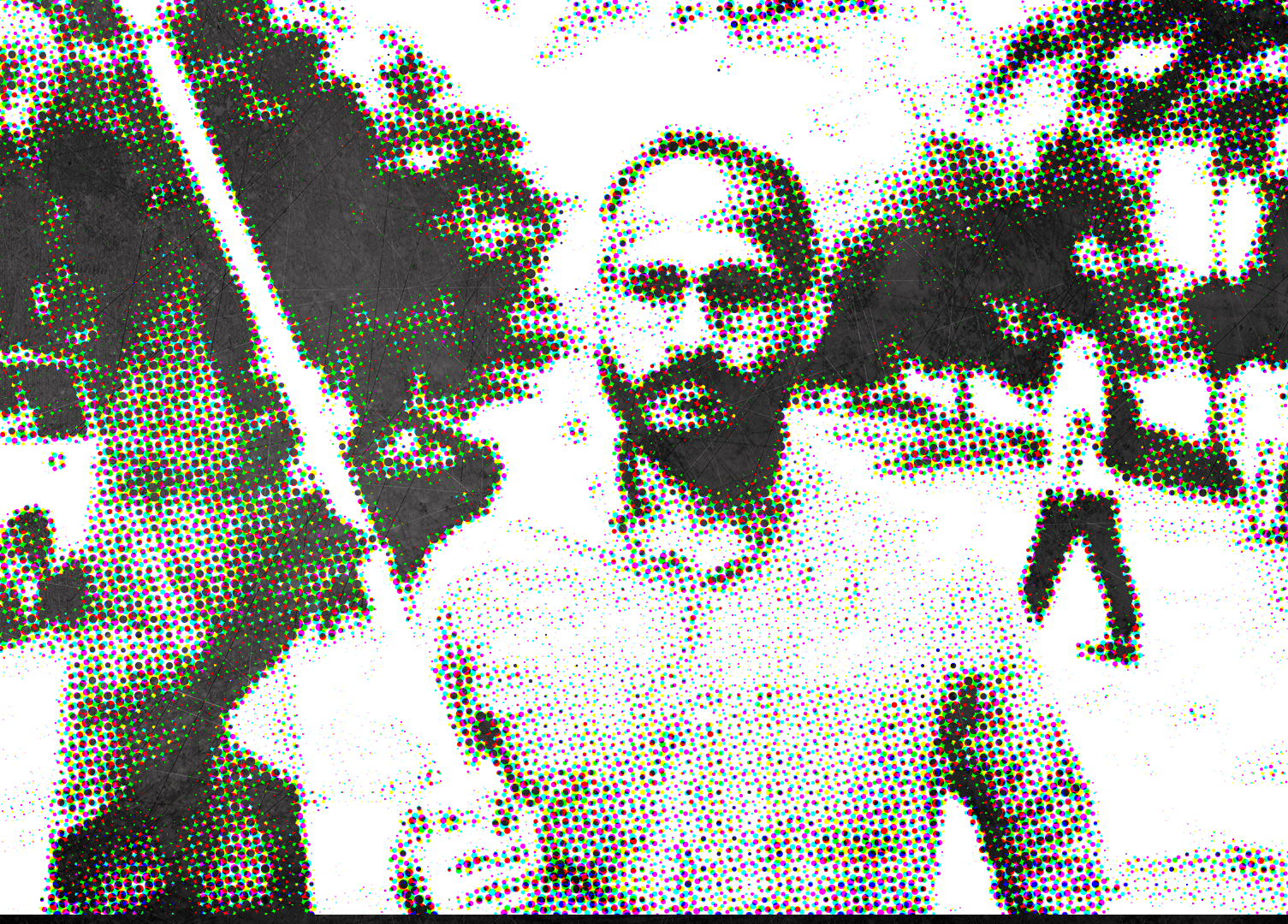
Abu-Sayeed_Netra_Death-Everywhere.png
Illustration: Netra NewsI
You think of Abu Sayed, the first death.

The man died like a hero — alone and unarmed against a group of shaking riflemen. But would he have been a hero if you didn't see his chest shake on impact? If you didn't see him stand there with his shirt off and his arms wide open, inviting sticks and stones that may break his bones, not expecting the bullets that killed him? You think about all the other deaths. The colleges of social media posts pronouncing victims. The picture of the crying woman, beaten and bloodied.

That was in broad daylight. When the police officer says "ajke jodi ber hon, direct guli korbo (If you come out today, we'll shoot directly), he knows he's being filmed. He doesn't care, as he also knows there are no consequences.

The vehicles running over protesters, the policemen sniping at hiding students through BRAC University's closed gates, and the headshots in residential areas. During the day, the city sleeps like a tiger, in fitful silence punctuated by twitches of gunshots and screams. At night, the jungle is humid with the acrid smoke of poison being disseminated by helicopters. Shut off from the world and each other, in a city that's burning, being tear-gassed and shot at on the ground and poisoned from above, being picked up, tortured, spat out a shattered corpse. Without even the flimsy protection of the social posts you would see in the first couple of days—help us escape, donate blood, has someone seen my sister?

Death comes closer, moving in the shadows.

Last week, death was a vivid flare. Each death was shocking. Now it's everywhere, all around you, touching everybody you know. Everybody experiences it in whispers. You do not know where your family is. You do not know how your family is. You do not know if your family is alive. Your family, similarly, does not know where you are, how you are, or whether you are alive. Your friends and family who live abroad endlessly share tips on how to somehow get through to Bangladesh. Call directly. Use an app. Try dialing 01188 instead of +88. The silence remains.

You are told, you tell your family: do not open the door. It is never good news. But it's late. A young cousin hears the knock, and instinctively opens the door. Without thinking, you walk out to see what's going on. You bluff, asking what they want. But they can see the fear in your eyes, the dismay in your cousin's. They know.

Decades later, your story will be one of many, told in the form of songs remembering the dark day when the government murdered Bangladeshis. But for now, you cannot ask for help. You are the tiger's twitching paw. You are a fever dream. You are a statistic. You do not exist.

Arafat Kazi is a Bangladeshi musician.
 
ANALYSIS


Hasina puts on a brave face as anxiety grows
With her control under question, Bangladesh's Prime Minister Sheikh Hasina attempts to reassert control


Netra News
July 23rd 2024


1721768013541.webp

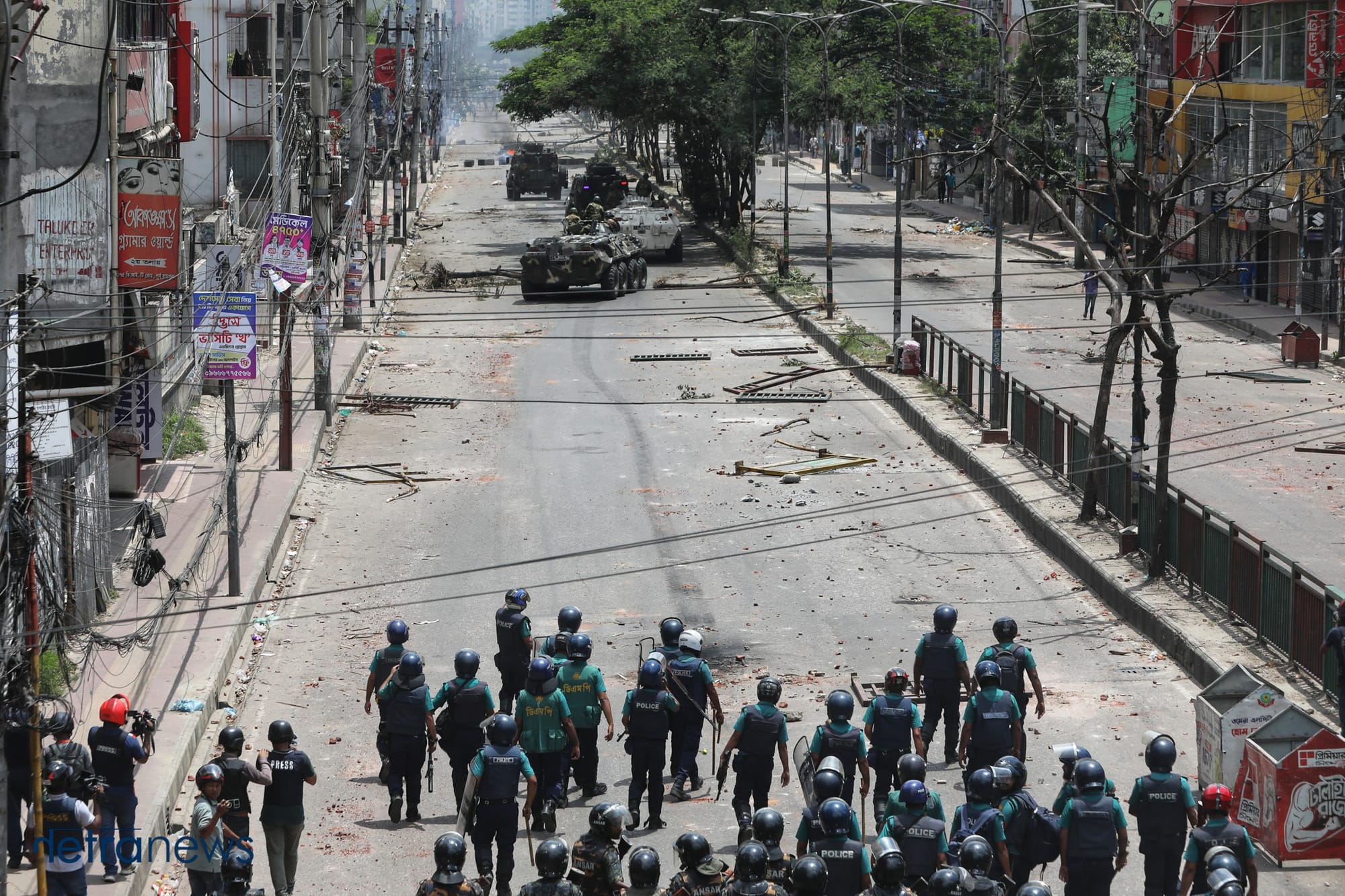
Military tanks, followed by police personnel, patrolled the ruins left by violence on the streets of Dhaka on Sunday, 22nd July. Photo: Netra News

Prime Minister Sheikh Hasina sought to reassure her allies on Monday as she navigates the biggest political crisis in her 15 years of uninterrupted rule, one that critics say is of her own making.

She summoned a group of business tycoons to her office on Monday as unease grows in the export-dependent economy over a prolonged internet shutdown and nationwide transportation blackout.

"We have already managed to bring it under considerable control," she reassured the businessmen. "The situation will gradually improve further. As it gets better, the curfew will also be relaxed."

For her political opponents, whom she unmistakably blames for the latest crisis, Hasina promised "even more stringent actions."

"It won't be let go so easily this time," she added.

She described how her government demonstrated tolerance despite students at Dhaka University insulting female leaders of the Chhatra League on campus and ransacking the rooms of some male members, who were forced to escape their dormitories. However, she refrained from blaming students for the violence, a charge she reserves for the opposition instead.

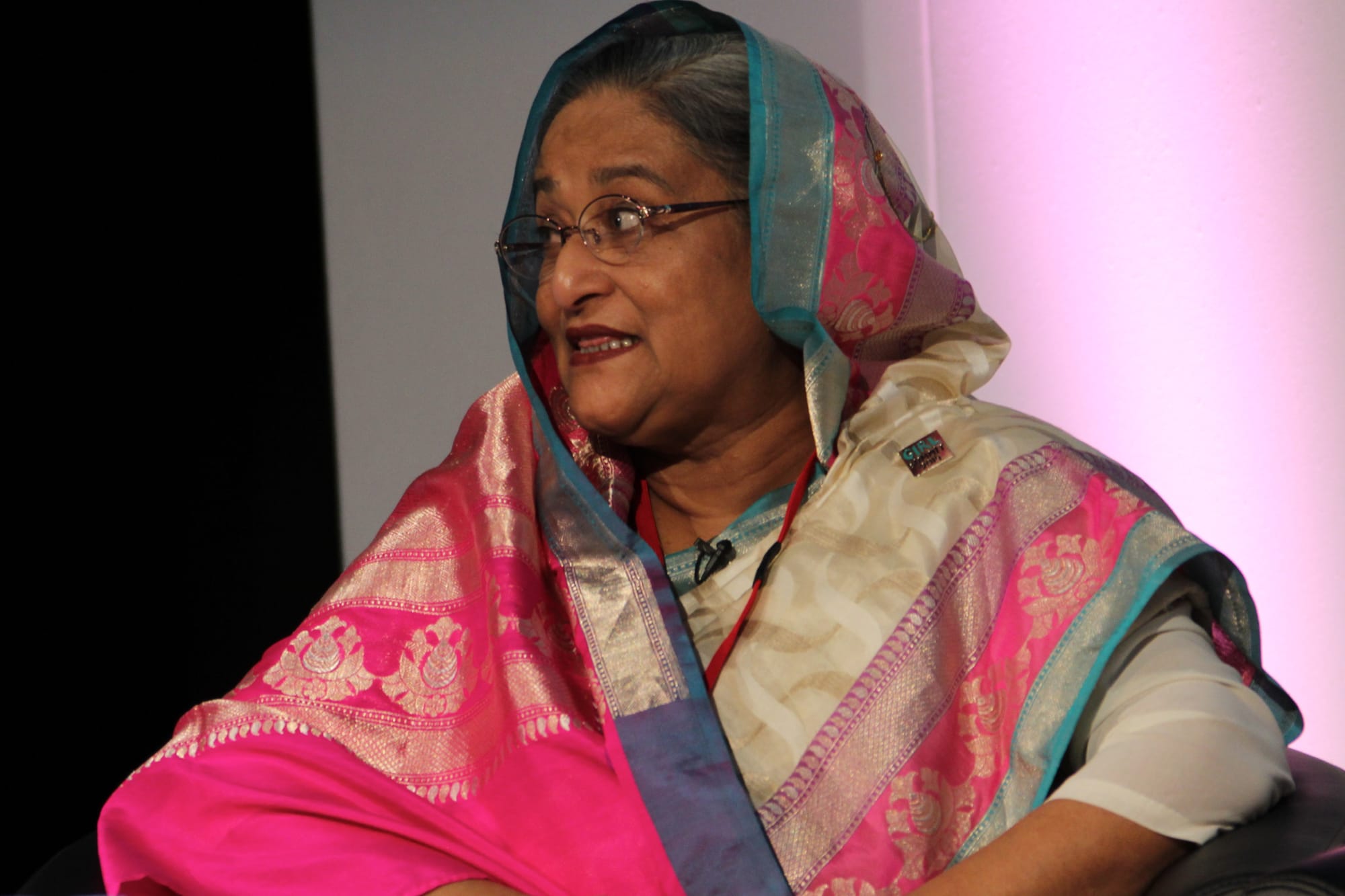
Sheikh_Hasina-_Honourable_Prime_Minister_of_Bangladesh_-14530081069--1.jpg
DFID - UK Department for International Development, CC BY 2.0 https://creativecommons.org/licenses/by/2.0, via Wikimedia Commons

In a sometimes slurring voice, the 76-year-old blamed the Bangladesh Nationalist Party (BNP) and its allies squarely for the violence during the clashes, asserting that ordinary students "could not have committed such destruction," a talking point increasingly promoted by her surrogates.

As many as 174 people have died as a result of the government's ferocious crackdown on the student protests that escalated into civil unrest, according to a count by Daily Prothom Alo, a leading vernacular newspaper that notes the number could be much higher due to government restrictions. A Western diplomatic source estimates the number of injured at 10,000.

Hasina did not refer to any of the students killed during the protest in her first public remarks since her sombre primetime TV appearance last week, which proved insufficient to assuage tensions.

The foreign ministry in Dhaka, meanwhile, invited foreign diplomats to a briefing on Sunday, during which the US ambassador Peter Haas criticised authorities over the killings, according to Agence France-Presse (AFP).

Haas spoke first as authorities opened the floor after playing a 10-minute clip made by Somoy TV, a pro-government TV station, according to a diplomatic source. "I am surprised you did not show the footage of police firing at unarmed protesters," he quipped, according to AFP.

The army chief, General Waker-uz-Zaman, inspected troops outside the National Parliament buildings on Monday, with our reporters on the ground noting an increased presence of soldiers.

General Waker-uz-Zaman, a relative of Hasina's, met the prime minister on Sunday. A day later, he boasted that his troops had improved the situation within 48 hours of their deployment.

In a first, video clips reviewed by a Netra News contributor showed troops shooting at protesters on Saturday in Dhaka, an escalation from their earlier strategy of restraint.

At Dhaka Medical College Hospital, a key barometer of Bangladesh's political violence, the arrival of injured and bullet-ridden people declined sharply on Monday. A reporter posted there saw only four bullet-ridden bodies on Monday.

20240720133304_132A9213-01.jpg
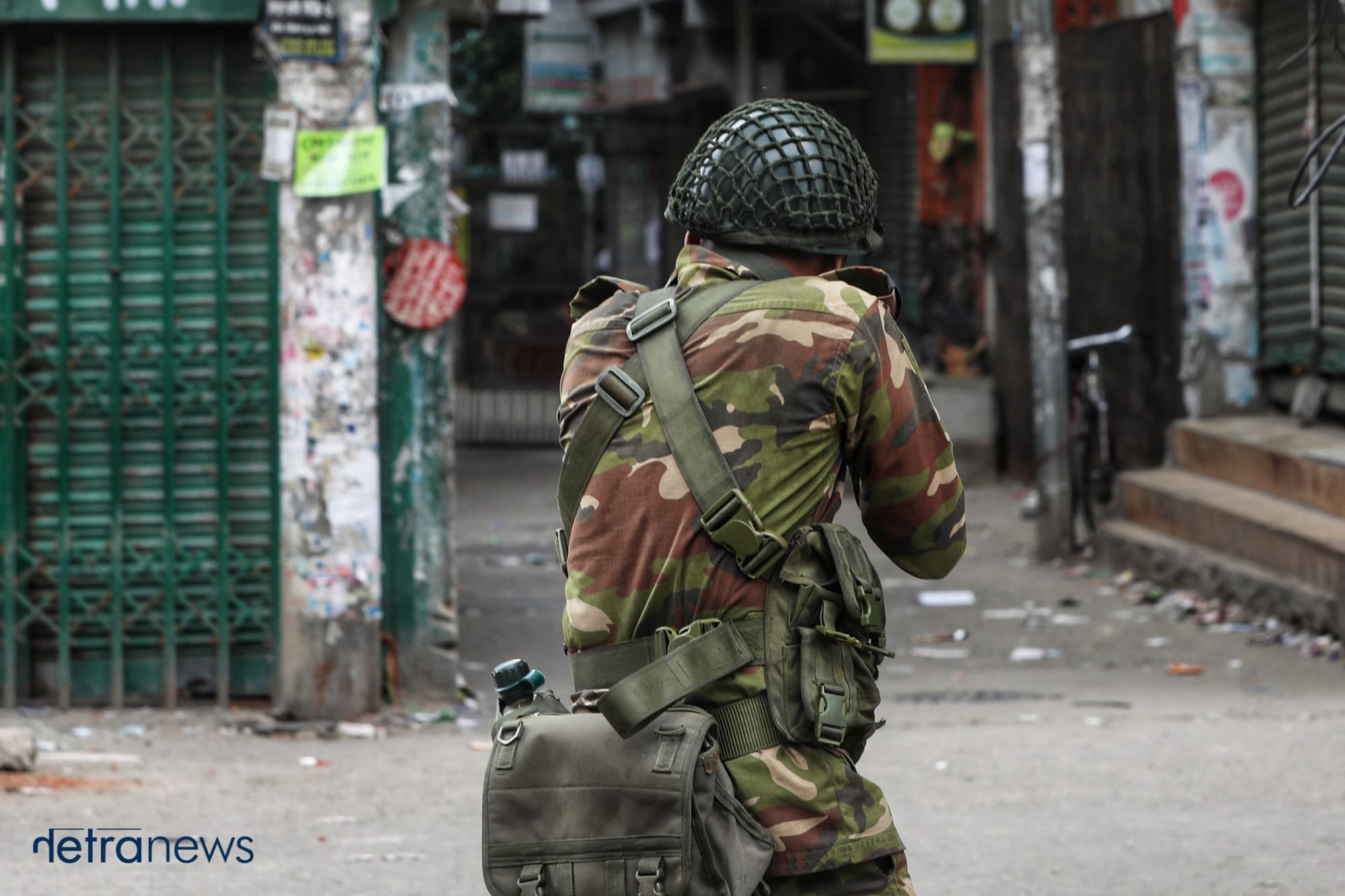
A Bangladeshi army soldier aims his weapon at protesters on Sunday, 22nd July. Photo: Netra News

Rickshaws and auto-rickshaws, operated by the low-income working class, returned to the roads in the capital despite the curfew, but long-distance transport remains suspended.

What contributed to the apparent calm was the decision by a key student leader to pause their protests. Nahid Islam, who returned from a disappearance during which he suffered torture, suspended the students' "shutdown protests" for two days.

He demanded that during this period, the government withdraw the curfew, restore the internet, reopen universities, and stop targeting student protesters.

It is unlikely that the government will comply with this call, as officials say the curfew will likely continue for a few more days.

Police in the Bangladesh capital said at least 532 people, including senior leaders of the main opposition BNP and the largest Islamist party, Jamaat-e-Islami, were arrested.

At least 61,000 people have been charged with violence over the unrest, according to Prothom Alo. Most of those charged are unidentified, a prelude to a looming legal crackdown ahead.
 
Status
Not open for further replies.
Back
Top