[🇧🇩] In Bangladesh, A Violent 'Student Revolution' is on بنگلہ دیش میں انقلاب

[🇧🇩] In Bangladesh, A Violent 'Student Revolution' is on بنگلہ دیش میں انقلاب
334
14K
More threads by Bilal9

G Bangladesh Defense
Status
Not open for further replies.
Aasha Mehreen Amin (granddaughter of former East Pakistan CM and Pakistan PM Nurul Amin, a close confidant and fellow Muslim Leaguer to Quaid-e-Azam Muhammad Ali Jinnah) wrote a balanced piece in the Newspaper she edits, the Daily Star.

Saluting the spirit of our young people
1722017919381.png

The more force and brutality were inflicted on them, the more their numbers swelled in the demonstrations, the more resolute they became. Photo: Amran Hossain


There is no shame in admitting that in the last few days many of us have cried helplessly, over the senseless deaths of students—teenagers or in their early twenties—the same age or close to the ages of our children. The first time we saw the video of Abu Sayed, one of the coordinators of the movement in Rangpur, being shot to death as he spread out his hands in surrender, our hearts broke at the ruthlessness of a law enforcer, repeatedly shooting at a young man who was practically unarmed. But our hearts filled with awe at the bravery of this young man who was so steadfast in a cause that demanded equal opportunity for young people to compete for government jobs.

Read more
What lies ahead for the nation

Amidst the anguish and despair, this is what stands out the most—the spirit and courage of our young people. Our young students have proved to us once again that they are a conscious generation—contrary to common perception of them. They are well aware of the reality they are surrounded by and do not live in a bubble. We got a glimpse of this clarity of purpose during the 2018 Road Safety Movement by school students after a few of their fellow students were crushed by a raging bus at a bus stop. Their outrage took a positive form as they organised themselves into monitoring groups and started checking vehicles for their fitness, licenses etc. They were doing the job the traffic police were supposed to be doing and trying to implement basic road safety rules that should have been enforced by the government a long time ago. They showed us what their state had failed to do, which was to keep people safe from the road crashes we have become notorious for. On the streets, we saw uniformed school kids stopping vehicles—even VIP cars going the wrong direction were turned back—and checking documents. What we saw in those young faces was hope, belief in a better future, a saner world where people do not have to worry whether they will come home alive, every time they step into the streets. Their selflessness, determination and immense courage, gave us an optimism we had forgotten how to feel anymore. Sadly, their movement was nipped in the bud with violence and intimidation, though it didn't erase the fact that they had made history during those days and shown the country their worth as leaders.

The anti-discrimination protests for quota reform started the same year and was considered successful as it led to the government to abolish the quota system altogether. This move, however, done in haste and possibly in a huff, proved to be controversial when the High Court ruled in July 2024, that it was unconstitutional and had to be scrapped leading to the second anti-quota protests. As we know, the anti-discrimination movement was never one to abolish all quotas but to come up with a logical, fair percentage for the various marginalized groups.

The young leaders of the current movement—Students' Movement against Discrimination—from what we saw through clips of videos aired by the media (before the internet blackout), seemed to have a much more determined and organised plan. Their agenda was the same as before—to have a reasonable quota system that would give more opportunity for regular, non-quota BCS candidates a chance to compete for government positions. They were challenging the system that gave 30 percent quota to freedom fighters, their children and grandchildren, a quota which, even many freedom fighters feel, is outdated and unnecessary after 53 years of independence.

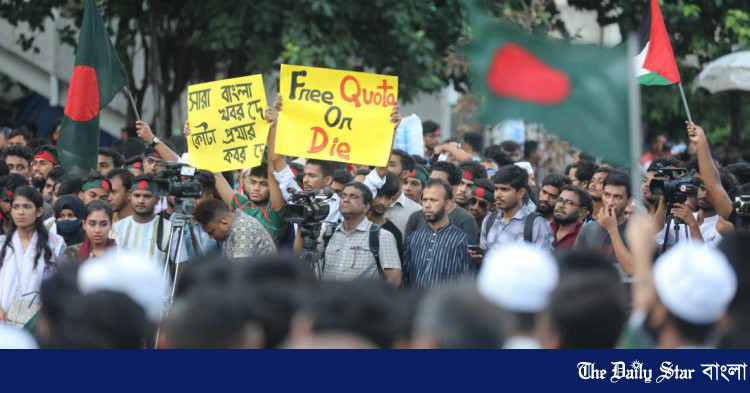
The peaceful demonstrations started to spread all over the country, and were joined not only by students of public universities but private universities, colleges and even schools—young people who joined in out of solidarity for their brothers and sisters. This fraternity of students was something so beautiful to witness that we, the grownups, could not help but feel proud despite the inconvenience of prolonged traffic jams and restrictions on movement. The cause they were demonstrating for in the heat and rain, for hours on end, was justified and there seemed no reason for the government not to endorse it with open arms.

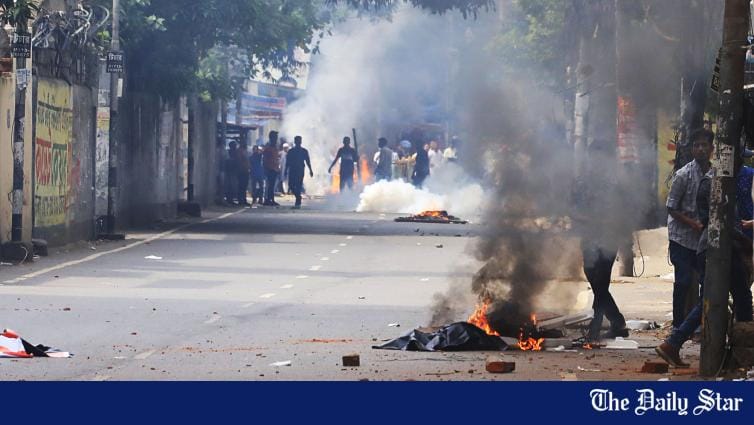
But what happened in the following days is a painful reminder of the disconnect between our leaders and their young population. The government decided to "nip it in the bud" yet again but this time their strategy backfired badly. The students refused to back down, even after they were beaten mercilessly by ruling party goons, even when the pellets from police shotguns pierced their young bodies and blinded their eyes, even when live bullets went through their hearts. The more force and brutality were inflicted on them, the more their numbers swelled in the demonstrations, the more resolute they became. It is this fearlessness that has shown us what these young people are made of.

Read more
Govt has completely failed to understand the youth

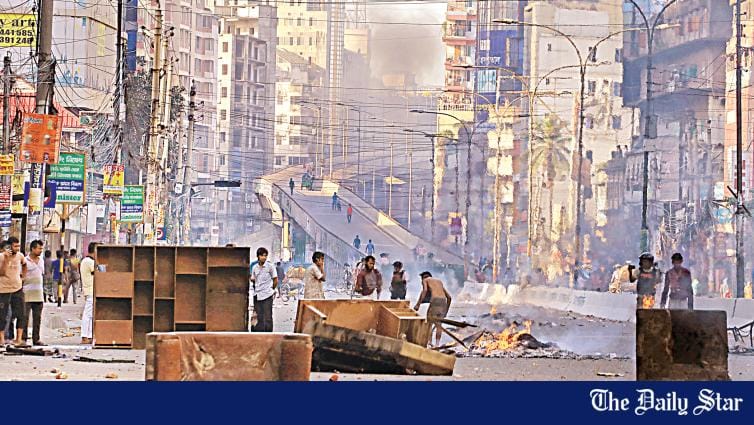
While the movement was derailed by the government's disproportionate use of force that took the lives of at least 146 people, many of them students and innocent bystanders, which gave the scope for political and extremist elements to carry out vandalism and arson attacks, the steadfastness of the student protesters of the current quota reform movement remained. While we can never reconcile ourselves with this unprecedented level of violence and deaths, we will never forget those bright young faces, their fiery speeches and articulate understanding of the realities they live in. Those heroes who literally took the bullet to bring about change will be remembered as crucial figures of a tipping point in history.

[HR=3][/HR]
Aasha Mehreen Amin is joint editor at The Daily Star.
 

Abu sayed's death in police firing: Cops' FIR runs counter to known facts
Says the Rangpur student was killed in firing, throwing of bricks by protesters

1722035481847.webp


Video footage shows police shooting at Begum Rokeya University student Abu Sayed, who posed no physical threat to the law enforcers, during the quota reform protest near the campus on July 16. He died soon afterwards.

But contradicting what is evident, the First Information Report (FIR) filed by police says Sayed was not a victim of police firing.

"The protesters fired weapons and threw chunks of bricks from different directions, and at one stage, a student was seen falling to the ground," reads the report, adding that classmates took Sayed, 23, to Rangpur Medical College Hospital where doctors pronounced him dead.

Sub-inspector Bibhuti Bhushan Roy, in-charge of the campus police camp, wrote the report.

In the FIR filed with Tajhat police station on July 16, the SI accused 2,000-3,000 unidentified people, including BNP and Jamaat-Shibir activists, of the killing.

When SI Bibhuti was contacted and asked about the footage, he said, "I have just filed the case. The officer carrying out the investigation will verify it."

In two video clips, verified by the Amnesty International, at least two police officers fired 12-gauge shotguns directly at him from across the street. Sayed clutched his chest on impact, and the officers fired at least two more times.

Amnesty International used satellite images to geolocate the positions of Sayed and the police officers and found that they were at a distance of about 15 metres during the shooting. Also, Sayed posed no apparent physical threat to the police, Amnesty International said in a statement on July 18, adding that the police's attack on Sayed was reckless and unprovoked.

Sayed's death certificate said he was "brought dead" to the hospital.

Tuhin Wadud, a teacher of the university who saw Sayed's body at the hospital, said there were shotgun pellet wounds all over the body.

Razibul Islam, head of the forensic medicine department at Rangpur Medical College Hospital, said he died of internal haemorrhage caused by the pellets.

He said an autopsy report will be prepared soon but declined to give details.

Asked about the FIR, Deputy Commissioner (Crime) of Rangpur Metropolitan Police Abu Maruf Hossain said many non-students, including Jamaat-Shibir and BNP men, reportedly used firearms during the protests. The matter will be clear once the investigation concludes.

WHAT IS IN THE FOOTAGE?

Sayed had his arms wide open with a stick in his right hand. He appears to dodge a brick chip. Gunshots were heard. A man, possibly the one filming, shouted, "He got shot."

Sayed again stretched his arms, and a second later, he took a few steps back and sat on the ground.

A man rushed to him and helped him stand up. There were blood stains on his neck, nose and other parts of the body.

Three more protesters then joined and carried him away.

Sayed's killing sparked widespread outrage, with many questioning the justification of police's use of lethal weapons on unarmed protesters.

In the following days, at least 156 people were killed and several thousand wounded in deadly clashes across the country.

The government enforced curfew to tackle the situation, and on July 23 issued a circular, taking merit-based recruitment in civil service to 93 percent from 44 percent. The remaining seven percent will be reserved.

Talking to this newspaper yesterday, rights activist Nur Khan Liton said police's account in the FIR was unacceptable because the shooting took place in broad daylight and it was a cold-blooded killing.

He said police should warn first and then can only shoot aiming at the legs when they have no other option to protect lives, properties and firearms. "The problem is the government party men who get jobs in the police force do not care about the rule of law," he told The Daily Star.

WHO SHOT HIM?

A source in the police said an officer named Yunus Ali fired a weapon at Sayed during a protest on July 16 without authorisation from higher officials. No details could be known.

DC Maruf said that no action has yet been taken against any policeman involved in the shooting.

He only mentioned that police used shotguns, adding that expert opinions would be sought, and actions would follow if rules were violated.

Meanwhile, a four-member committee, led by Additional Commissioner Saifuzzaman Faruki of Rangpur Metropolitan Police, has been formed to investigate the incident. The committee was asked to file its report in two weeks.

Sayed, the youngest of nine siblings, was a student of English. His grieving father and brother said he dreamt of joining the civil service and changing his family's fate.

A day before his death, he wrote on Facebook that he was ready to sacrifice his life for the cause.

His brother Ramzan said he tried to collect the autopsy report from the hospital on Thursday but was asked to obtain it from the court. The family has not filed any case.

[Kongkon Karmaker contributed to this report.]​
 

3 quota protest organisers 'picked up' from hospital
Say their families, hospital staffers

1722035622173.webp

Nahid Islam, Asif Mahmud and Abu Baker Majumder. Photo: Courtesy/Prothom Alo

Nahid Islam, Asif Mahmud and Abu Baker Majumder, three key organisers of the Anti-discrimination Student Movement, were picked up today from a city hospital where Nahid and Asif were undergoing treatment, their family members and hospital staffers said.

A group of people in plainclothes went to the Gonoshasthaya Nagar Hospital in the capital's Dhanmondi at 3:30pm and forcibly took the three out to an undisclosed place. The discharge process was not completed, they said.

A medical officer, requesting anonymity, told The Daily Star, "Asif's health was not stable for discharge.

"The hospital staff and doctors requested them to reconsider picking them up, but they did not pay heed."

The families and hospital staffers pointed finger at the intelligence agencies. This newspaper, however, could not verify the allegation independently.

The plainclothes men picked up Nahid from his cabin on the sixth floor of the hospital. They then went to Asif's cabin on the second floor. They also picked up Baker while he was bringing food for Asif, said the families and hospital staffers.

They took away the mobile phones of Nahid, his sister Fatima Tasnim, Asif and Baker.

"They [plainclothes men] forcibly dragged the three out of the hospital rooms. Enquired about their identity, they refused to disclose who they are. They didn't even tell me where they were taking them. Asif and Nahid were visibly shaking," Fatima told The Daily Star.

She said her brother is not involved in any anti-government activities. "They are not affiliated with any political parties. We urge all to ensure our safety."

The plainclothes men left the hospital within about eight minutes, she said.

This is the second time the trio -- all students of Dhaka University -- have been picked up in just a week.

Nahid was picked up in the early hours of July 20 allegedly by law enforcers from a house in the capital's Sabujbagh. He alleged that he was tortured physically until he was unconscious. When he gained consciousness, he found himself under a bridge in Purbachal. He went to his home by a CNG-run auto rickshaw.

Both Asif and Bakar were picked up on July 19. The two wrote on Facebook that they were blindfolded and left in Hatirjheel and Dhanmondi areas of on July 24. Neither of them mentioned who took them.

Speaking to The Daily Star around 5:30pm, Fatima said that she came to know that she and Nahid's wife could be picked up.

Ever since Nahid and Asif were admitted to the hospital, law enforcers stayed there and even disconnected the Wi-Fi to prevent them from accessing internet, she alleged.

This newspaper tried to reach Faruk Hossain, deputy commissioner (media) of Dhaka Metropolitan Police, for comments around 7:30pm, but he did not pick up the phone.​
 

Four more injured in clashes die in Dhaka
four people die from quota protest injuries

1722035739591.webp

Photo: Amran Hossain/Star

Four more people, who suffered bullet wounds during the recent clashes centring the quota protests, died at different hospitals in Dhaka between today and yesterday.

The deceased are Imtiaz Ahmed Dalim, 20, a student of Southeast University; Mainuddin, 25, a madrasa student; Sohel Rana, 20, and Yeasin, 17.

Imtiaz's father, Nawsher Ali, said his son was shot in Rampura on July 19. Imtiaz died at Dhaka Medical College Hospital around 4:00am today.

Mainuddin was shot in Rayerbagh on July 21. He also died at DMCH around 2:00am today, said his mother, Mahfuza Begum.

Yasin was shot in Jatrabari on July 21 and was admitted to Mugda Medical College Hospital. He died undergoing treatment around 11:00pm yesterday, said his cousin Babul.

Sohel was shot in Rampura on July 19. He was admitted to the Intensive Care Unit at Bangabandhu Sheikh Mujib Medical University, where doctors declared him dead last evening, said Manik Saha, a sub-inspector of Rampura Police Station.

Doctors of the forensic medicine department at DMCH conducted autopsies on the four bodies today, said sources at the mortuary.

With these four deaths, at least 160 lives have been lost since July 16, when six people were killed in clashes between agitators on one side, and law enforcers, Border Guard Bangladesh, and ruling party activists on the other.

Thirty people died on July 18, 66 on July 19, 25 on July 20, 14 on July 21, six on July 22, three on July 23, four on July 24, and two on July 25.

The overall death toll from the violence may be higher, as The Daily Star could not reach many hospitals where dozens of critically injured patients were taken. Also, many families reportedly collected the bodies of their loved ones from the scene, and this newspaper could not contact those families.

The Daily Star's count of the victims is based solely on hospital sources.​
 

Whom do information blackouts during protests ultimately benefit?
1722035929321.webp

Visual: Ehsanur Raza ronny

When the internet was initially made accessible to the public in the late 1980s, the once-secret communication tool developed by the US military was regarded as a passing fad, reserved for the technically competent and the computer savvy, and not something that would significantly alter daily life. Now, as I write this in the relative information darkness of a country-wide internet shutdown, on a text editor in lieu of Google Docs, with only yesterday's newspapers for fact-checking purposes, it is a sobering reality that we are crippled without access to the internet.

As Bangladesh struggles to contain the outpouring of frustrations of quota reformists, general students and dormant anti-government political opponents who would take advantage of the quota reform movement, internet shutdown is one of the major aspects of control that the Awami League government has exercised to curb the protests.

On July 19, news reports on TV channels communicated the government's official line that nationwide internet outage is due to a fire at a supposedly critical building in Dhaka, contradicting statements made by State Minister of Telecommunications and ICT Zunaid Ahmed Palak that specifically mention enforced shutdown of internet access. Since the night of July 18, internet access has been intentionally withdrawn from the capital, as well as large swaths of the country. Previously, since early July 18, mobile data was completely inoperable across the whole city. This is nothing new, and it was an expected measure from a government that has repeatedly put down mass uprisings by controlling the flow of information.

During past elections and mass mobilisations, the effect of choking the free flow of information has clearly backfired. For example, during the previous quota reform movement and road safety movement in 2018, the nationwide shutdown of Facebook, Messenger, YouTube and mobile data led to a wildfire of rumours and speculations. Whether true or not, such rumours do not do the party any favours.

It is in stark contrast to the general attitude of the Awami League-led government when things are going well. "Smart Bangladesh," "Digital Bangladesh," and the general promise of growth through neoliberal application of technology has long been an election mandate of the party, and to be absolutely fair, the government has largely followed through by steadily increasing the bandwidth of internet connectivity, state-led funding and nurturing of tech parks, startup accelerators, recognition of innovators in the tech industry, and more. However, the price of unmasking a forward-thinking, technology-enabling government is apparently student deaths at the hands of police and Bangladesh Chhatra League during mass uprisings.

When it comes to accepting the blame or taking accountability of state-sponsored violence against students, the proponents of internet and technology-led innovation are equally fickle. The star and darling of startup founders and accelerators, Zunaid Ahmed Palak, has made comments that directly blame Facebook and social media platforms for the deaths of students. Facebook/Meta's complicity in political violence and genocide on a global scale is well-documented, but for Facebook to intentionally target a fourth-year student of English in Rangpur for summary execution—or at least 39 others confirmed killed in the protests as of this writing—is a bit of a stretch. Perhaps the state minister meant it less literally; perhaps he meant the "idea" of Facebook: unfiltered, uncontrolled stating of opinions, political organising, video documentation of police and BCL brutality, requests for help from general people so that high school and university students don't have to face the horrors of it all alone.

The alleged cancellation of 10 Minute School's next round of funding from the state-run Startup Bangladesh, of which Palak is a prominent figurehead, can be interpretated as a vengeful retaliation against 10MS founder Ayman Sadiq's public proclamation of support for the quota reformists. The message is clear: stick to the party line or be prepared to pay for it.

Forcing telecommunication operators to shut down mobile data access or reduce network bandwidth is also a common tactic, and we have seen it employed quite effectively to cut communications between protesting groups across the country. The neoliberal machine of the AL government has ensured, through bullying of tax collectors and regulatory bodies, that every private provider of information technology infrastructure is beholden to the government's requests for access or control.

This is a fact that we have also seen applied to foreign entities. Fearing the loss of access to vast user bases, companies like Meta and Google are commonly seen answering requests by the Bangladesh government for data on specific groups or individuals, and monitoring of supposedly encrypted network traffic on these platforms revealing more about users than they are aware of. While other parts of the world are fighting tooth and nail through enforcement of policies like the EU's General Data Protection Regulations (GDPR) and via anti-trust commissions to protect user data, it is exactly here that we see our own government not only taking steps in the opposite direction, but actively utilising predatory data privacy policies of internet and social media platforms to surveil users in Bangladesh.

It is irony of the highest order that the interconnected nature of everyone's lives through the internet and social media—as promoted and established in part by the Awami League's electoral pledges—is also the bane of the party's existence, and one that requires a variety of measures to control. Whether it's the draconian Digital Security Act (now the Cyber Security Act), ICT Act, or more literal tools like BTRC's network jammer vans, threats against internet service providers and telcos or surveillance tools that monitor and track "persons of interest," the government has shown time and again that they have no qualms using information blackouts during elections and protests to establish their agendas.

Then why promote digital innovation and technology adoption in the first place, if your first order of business during a political crisis is to plunge the country into a medieval-era information blackout?

The answer is simple, and it is a sobering reality for tech innovators and proponents of technology to contend with. The more technology adoption there is, the more dependency there is on mediums of communication that ultimately end up in government control and regulations, the wider the blackout. We have seen how protesters use platforms like Facebook and Messenger to organise and coordinate their movements; by first funnelling them into positions where they depend on platforms like these and then creating a blanket enforced outage when the proverbial excrement hits the fan, the information blackout is double effective and actually crippling.

In a country where political representation, freedom of expression and mass mobilisation around common political issues is severely repressed, it is vital that information blackouts are resisted at the root level. Understanding how information flows are surveilled and where access to information can be severed is a critical component of ensuring rights to personal freedom of speech, political protest and assembly. It is important to realise that every political protest will inevitably turn to violent dispersal and information warfare, be it through misinformation or state-enforced blackouts.

If the state has indeed taken steps to provide internet access and digitisation of services with the malicious intent of accessing, surveilling and effectively controlling the flow of information, then it provides dissenters no other option but to take their organising and mobilising offline. It is a scenario where civil unrest can lead to increasingly dangerous and potentially violent situations with plenty of misinformation spreading post-fact, whereas, providing public forums for expressions of discontent without intentional information blackouts can minimise misinformation and unnecessary violence.

If the events of the quota reform movement are looked back upon, it is not going to be any stretch of the imagination to assume conversations post-fact are also full of misinformation and biased attempts at manipulation of public opinion. Numbers—of dead, injured, and picked up for questioning—will continue to be questioned, while events and narratives—that of law enforcement, the protesters, and state actors—will hold less and less value over time. This is a direct by-product of the information blackout imposed on the nation's media houses and civilians.

After being in power for 15 years, it is not strange to expect the Awami League to be comfortable in their position of power enough to let the conversation flow without attempting to control or disrupt it. Dialogue is the basis of any democracy, and if the AL is to show to the world that Bangladesh is indeed a functioning democratic nation—in reality or as just a perception—it is paramount that the government allow information technology to operate uninterrupted, even during times of political crisis. If not for the sake of ensuring freedom of speech and assembly, then for the sake of their own political image.

Shaer Reaz is a former journalist and technology enthusiast, founder and entrepreneur.​
 

Quota Reform Protests: Students share what happened at ULAB on July 17

1722036408339.webp

Photo: Collected

On July 17, at least five students were injured during an attack by leaders and members of the Bangladesh Chhatra League (BCL) in front of the University of Liberal Arts Bangladesh (ULAB) campus on Mohammadpur's Beribadh Road.

Md Rayhan Kabir Shuvro, a student of ULAB, claimed that at around 2:50 pm, students began gathering with the intention of participating in the Quota Reform Movement and were attacked.

"People of all ages started attacking with rods, hockey sticks, metal pipes, etc. without so much as a conversation. Some of the students were injured, and the attackers forcibly took away phones from the female students and swore at them in obscene language. A student by the name of Anirban Saha was missing for about an hour. I, and a representative of Somoy TV, looked for him at the local police station and were told that nobody from ULAB had been taken into custody. Later on, we were told by witnesses that he was taken by the councillor's men. A local van driver by the name of Abdur Rahman found him injured and sent him home in a pickup," said Shuvro.

Shuvro informed that the attack was done under the command of local Councillor Asif Ahmed Sarker. "Councillor Asif was present at the scene, when I asked him the reason for his being there, he told me he was sitting at the Bot Tola because it was hot and he wanted to catch some wind."

Samia Islam*, another student of ULAB, stated, "Our protest was supposed to start around 2 pm, but not a lot of people were gathered at that time. I wasn't there myself, but some students had gathered. They weren't protesting at the time, but some police officers stationed there were talking to the students. Just as they were talking to the police, the local councillor, along with some of his men, started attacking the students. Some of the students were beaten up pretty badly. They ran towards the university campus where the guards refused to open the gates. However, someone managed to open the gates from the outside and they were able to enter and take shelter in some nearby friends' places through a different path. After this, we went over to the area from where we were to protest the attack."

Samia also added that the police and a RAB vehicle were stationed nearby, but they did nothing to prevent the attack. "We got into an argument with the police and RAB officers stationed, demanding why they didn't help us when students were being beaten up right in front of them. After this, we were protesting peacefully for one and a half hours, and returned around the evening," she added.

Ibtesham Chowdhury, a student who was present during the attack, narrates his experience when it unfolded, "10 to 15 of us were there; we didn't block the road or start protesting. A while later, a group of school and college students arrived at the place while chanting slogans, and we went to stand with them. When the police arrived, we started talking to them and within 10 minutes, Councillor Asif was at the scene with his men from Chhatra League and Jubo League. He asked about the authorities and demanded to see IDs, and we were attacked during the conversation. We dispersed and took refuge in the campus. One of the students was heavily injured. Five students in total were injured; one of them had their arm displaced."

Ibtesham mentioned that the attackers tried snatching the students' cameras. "When I was attacked, my phone was broken from the impact. But thankfully, my injuries were not particularly serious. We later blockaded the road in protest of attacking students."

Rahat Musannah*, another student who was injured during the attack, shared, "ULAB students organised a movement for quota reformation the day before (July 16). Councillor Asif and his men arrived and directly threatened us to not return the next day. In spite of that, my friends and I went to the scene. Hearing news of our presence, members of BCL from Dhaka Uddan arrived and started beating us. Somehow, we managed to run inside the campus. I fell down, and they took the opportunity to beat me mercilessly. A rickshaw puller and some locals came forward to rescue me and send me home."

Arif Ahmed*, a student who was present during the aftermath of the attack, mentioned that the initial plan was to go to Dhaka University for the Janaza prayer, but they were thwarted. "Some of the students then planned to take position in front of the ULAB Campus and were peacefully protesting. I joined and was informed of the situation regarding the Councillor and his men attacking the students. As I got to the scene, I found the place to be under the control of BCL, and they were chasing away anyone who was there. So I had to return home as there was nobody else, but later on, more students from nearby areas gathered to protest. The police and RAB were all present."

The students of ULAB expressed an intention to continue their movement today (July 18) in front of their campus.

*Names have been changed upon request for privacy​
 

3 quota protest organisers 'picked up' from hospital
Say their families, hospital staffers

View attachment 7124
Nahid Islam, Asif Mahmud and Abu Baker Majumder. Photo: Courtesy/Prothom Alo

Nahid Islam, Asif Mahmud and Abu Baker Majumder, three key organisers of the Anti-discrimination Student Movement, were picked up today from a city hospital where Nahid and Asif were undergoing treatment, their family members and hospital staffers said.

A group of people in plainclothes went to the Gonoshasthaya Nagar Hospital in the capital's Dhanmondi at 3:30pm and forcibly took the three out to an undisclosed place. The discharge process was not completed, they said.

A medical officer, requesting anonymity, told The Daily Star, "Asif's health was not stable for discharge.

"The hospital staff and doctors requested them to reconsider picking them up, but they did not pay heed."

The families and hospital staffers pointed finger at the intelligence agencies. This newspaper, however, could not verify the allegation independently.

The plainclothes men picked up Nahid from his cabin on the sixth floor of the hospital. They then went to Asif's cabin on the second floor. They also picked up Baker while he was bringing food for Asif, said the families and hospital staffers.

They took away the mobile phones of Nahid, his sister Fatima Tasnim, Asif and Baker.

"They [plainclothes men] forcibly dragged the three out of the hospital rooms. Enquired about their identity, they refused to disclose who they are. They didn't even tell me where they were taking them. Asif and Nahid were visibly shaking," Fatima told The Daily Star.

She said her brother is not involved in any anti-government activities. "They are not affiliated with any political parties. We urge all to ensure our safety."

The plainclothes men left the hospital within about eight minutes, she said.

This is the second time the trio -- all students of Dhaka University -- have been picked up in just a week.

Nahid was picked up in the early hours of July 20 allegedly by law enforcers from a house in the capital's Sabujbagh. He alleged that he was tortured physically until he was unconscious. When he gained consciousness, he found himself under a bridge in Purbachal. He went to his home by a CNG-run auto rickshaw.

Both Asif and Bakar were picked up on July 19. The two wrote on Facebook that they were blindfolded and left in Hatirjheel and Dhanmondi areas of on July 24. Neither of them mentioned who took them.

Speaking to The Daily Star around 5:30pm, Fatima said that she came to know that she and Nahid's wife could be picked up.

Ever since Nahid and Asif were admitted to the hospital, law enforcers stayed there and even disconnected the Wi-Fi to prevent them from accessing internet, she alleged.

This newspaper tried to reach Faruk Hossain, deputy commissioner (media) of Dhaka Metropolitan Police, for comments around 7:30pm, but he did not pick up the phone.​

One day there will be exemplary punishment for the so-called "iron lady" and her goons.

You cannot unleash acts of terror on a population exercising its free rights to protest govt. policy and get away scot-free.

This has been flushed across all major media outlets in Bangladesh.


How can the rulers erase so much bloodstain?
1722123461073.webp

The government tried to contain the quota reform movement with a hardline and brutal approach, which raised casualties. FILE PHOTO: AMRAN HOSSAIN
As of Thursday, at least 156 people have died in six days' of violence, per the tally recorded by this daily. The exact number of deaths is unknown; there is no certainty if it will ever come to light. One state minister said, "If law enforcement agencies come under attack, they will return fire. It is only natural that there would be some casualties."

On July 16, we saw the cold-blooded killing of Abu Sayed, student of Begum Rokeya University in Rangpur and a coordinators of the quota reform movement, at the hands of police. A viral video of his final moments showed he was quite far from law enforcement. He posed no threat, yet the police member shot him. This does not match the government's narrative.

Within such a short period of time, an unprecedented level of bloodshed took place. This exceeded even the number of deaths during the nine years' of movement against Ershad's autocratic regime, the biggest movement in independent Bangladesh. That movement was violent too; it saw arson and vandalism, too.

Now, the main question is: why did the situation escalate last week, resulting in so many deaths and injuries?

The quota system had been abolished following the quota reform movement in 2018. During a press conference on July 14 this year, Prime Minister Sheikh Hasina said she had been "utterly dismayed" and had "abolished the quotas" at that time. A circular was issued accordingly. Challenging that circular, some freedom fighters' children filed a writ, responding to which the High Court annulled it on June 5 this year, effectively reinstating the quota system. The government appealed against this decision on July 6. Not relying on the government, students of public universities began their movement again, and it was completely peaceful. On July 9, two students filed a petition, which led to the court issuing a stay order against the earlier verdict. In spite of the stay order, protests continued. The Appellate Division set the hearing date for July 21. In the meantime, several ministers made comments about the movement, such as the protesters were not following the law, they are defying the constitution, the issue must be resolved through court, the government will not bypass the court, etc. Some of those comments were condescending towards the protesters. Still, they remained peaceful.

How, then, did the protest take such a violent turn?

On July 14, the protesters submitted a memorandum to the president, saying they would launch an all-out protest if their demands were not met within the next 24 hours.

During the press conference on the same day, the PM asked, "If the freedom fighters' grandchildren won't get quotas, should the grandchildren of Razakars [Pakistani collaborators] get quotas?"

In response, DU students brought out processions that night. They chanted loudly, "Who are you, who am I? Razakar, Razakar," which naturally caused an uproar. However, the students claim that the full version of the slogan was, "Who are you, who am I? Razakar, Razakar. Says who? Says who? Shoirachar, Shoirachar (autocrat)."

On July 15, AL General Secretary and Road Transport and Bridges Minister Obaidul Quader said Bangladesh Chhatra League (BCL) would give a "fitting reply" to the student protesters who had "labelled themselves as Razakars and showed arrogance." BCL President Saddam Hussain said, "BCL is prepared to tackle this (quota reform movement) through political means."

That afternoon, BCL launched its attack on the protesters.

On July 16, the protesters and BCL both called for a rally in front of DU's Raju Memorial at 12pm and 3pm, respectively. When the unarmed general students started gathering near Raju Memorial, BCL activists attacked them with metal rods, sticks, hockey sticks and guns. Many students were injured, and eventually, the protesters were dispersed.

At night, BCL members, aided by the police, searched for and found the protesters in DU, RU and JU's residential halls and beat them up. Many were driven out of the halls.

This provoked the protesters further. On July 17, the DU coordinators of the quota reform movement asked the students to gather at Shaheed Minar with sticks.

This is the first time that the protesters took up a weapon in this movement. The same situation arose in JU and RU. Police, along with armed BCL members, conducted waves of assaults against the protesters in all three campuses.

The protesters managed to put up a strong resistance as they were bigger as a group. By that night, the members and leaders—even the female ones—of BCL, a student organisation that is disconnected from the general students, were all driven out of the residential halls and the campuses of DU, JU and RU.

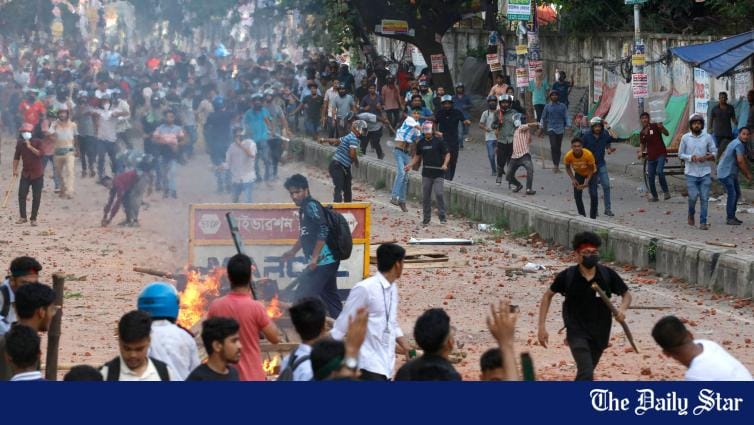
A major reason why a peaceful movement became violent is the attempt to quash it using BCL's muscle power and police-BGB's mindless shooting. BCL's "Helmet Bahini" indiscriminately used sticks and hockey sticks on the protesters. Who are the armed individuals, who were photographed along with the BCL men, assaulting the students? Are they BCL members? It is assumed that they may have been outsiders, whose machete attacks injured many students, which further enraged the protesters.

Police and BGB fired lethal and non-lethal bullets at the students, as evidenced by published videos and photos in newspapers. This is not the conventional way of dispersing a protest. It seems it was not the police or BGB's goal to fire shots in order to scare the protesters and disperse them; it seemed they meant to shoot at the protesters.

Throughout the protest, the government repeatedly mentioned a "third party." Some intelligence high-ups mentioned that certain elements had "infiltrated" the movement.

The quota reform movement was led by anti-discrimination students' movement. This apolitical movement gained popular support from the entire student community. Undoubtedly, certain members of Chhatra Dal, Shibir and leftists, along with BCL members also joined the cause. More than 50 BCL leaders resigned from their posts and aligned themselves with this movement. But the leadership and majority participation came from general students. Chhatra Dal and Shibir never came close to assuming the leadership.

Yet, the government tried to contain the movement with a hardline and brutal approach, which raised casualties.

Why did AL leader Obaidul Quader, who is a former journalist and veteran politician with roots in student politics, want to use BCL to deal with such a widely supported movement? Now he can never escape the blame for what happened; his part in this mayhem will be revisited time and time again.

Even Law Minister Anisul Huq, who is an experienced lawyer, failed to show prudence. By the time he asked to sit with the students and announced intent to expedite the appeal hearing date, the situation had already spiralled out of control. Had the government sat with the students for a discussion beforehand, the situation could have unfolded differently.

This reminds me of Pablo Neruda's poem "I'm explaining a few things":

Come and see the blood in the streets.
Come and see
the blood in the streets.
Come and see the blood
in the streets!

Since independence, we have not seen so much blood being spilt during a movement. On whose hands is this blood? Can the rulers answer this question?

Translated from Bangla by Mohammed Ishtiaque Khan.

Golam Mortoza is the editor of The Daily Star Bangla.​
 

Bangladeshi students in US hold human chain in solidarity with quota reform protesters
FE ONLINE DESK
Published :
Jul 18, 2024 17:45
Updated :
Jul 18, 2024 17:45
1722126287910.webp


Bangladeshi students studying at different universities in the United States have organised a human chain to protest the attacks on the students advocating for quota reform across Bangladesh. The demonstration took place at 7:00 pm local time on Tuesday (July 16), in front of Michigan State University's Skandalaris Football Center.

The event was organised by the Bangladesh Student Association (BSU), a group of Bangladeshi students at Michigan State University, according to a press release issued by the organisation's President Mosaddek Syed.

1722126320712.webp


Bangladeshi students from various US universities joined the human chain, displaying placards with their demands and carrying the national flag.

They called for logical reform of the quota system in Bangladesh and a fair investigation and prosecution of the attacks on protesting students.​
 

They are on verge of losing their eyesight
Published: 27 Jul 2024, 16: 20

1722126538192.webp

Nafis Ahsan was shot in the body and eyes on his way to office. The photo was taken after he was treated at a hospital Collected

Nafis Ahsan, 30, was going to office in Mohakhali from his house in the capital's Rampura through Merul Badda on 18 July. He usually takes a rickshaw, but was walking to his workplace that day as there was no rickshaw available in the area due to the severe clashes between the police and the quota protesters.

Even before realising anything, Nasif was shot in the body and eyes with pellets. Although the pellets have been removed from his body, he is yet to regain his sight.

This correspondent spoke to Nafis over the phone. He told Prothom Alo, "I will probably never regain my sight."

Nafis works at the Mohakhali branch of a private bank. He lives in the Natun Rasta area in West Hazipara in Rampura. Nafis was hit with 22 pellets in his chest, forehead and hands and two in his eyes. He sustained a critical injury in his left eye.

Nafis was taken to the Lions Eye Institute and General Hospital in the capital's Agargaon after sustaining the injuries. Nafis' uncle works as a physician there. He and another specialist conducted an eye surgery on Nafis.

Speaking to Prothom Alo over the phone on Thursday, Shahidul Haque said, "He was brought to the hospital at around 12:00 pm. I checked him and consulted with two senior physicians. By that time, we had his CT scan report. There were two pellets deep inside the eyeball of his left eye."

He further said, "He (Nafis) is almost blind in his left eye. He doesn't have any vision in his left eye."

Abdur Rahim, executive official at the administrative section of Lions Eye Institute & General Hospital, told Prothom Alo that more 150 persons went there for treatment in the three days from 18 July to 20 July. In addition to eye injuries, many of them had injuries on other parts of their body.

According to the hospital authority, among the patients admitted to the hospital in those three days, around 50 had major or minor injuries in their eyes and 20 of them had to undergo surgery, including 11 major surgeries. Four of those who underwent surgery are likely to not regain their eye-sight ever. Nafis is one of them. The three other patients are Faisal Ahmed, Rafiqul Islam and Mehedi Hasan.

Faisal Ahmed has just completed his HSC from the Nirjhar Cantonment Public School and College in Mirpur. His admission to Jagannath University is underway.

Faisal was shot in his eye at around 5:30 pm on 18 July. He was demonstrating with other protesters in the area between Mirpur-10 and Mirpur-2.

Faisal told Prothom Alo over the phone, "The situation was escalating at the Mirpur-10 roundabout. The foot over bridge there was set on fire. Police were firing tear shells and rubber bullets from the Mirpur-2 end. We too were proceeding towards Mirpur-2. I didn't even realise that I was shot in my eye."

He was shot in his right eye, "I can no longer see things clearly anymore. It is almost like seeing nothing. The physicians are saying there is almost no possibility of regaining vision this eye."

Bangladesh Lion Foundation chairman AKM Rezaul Haque told Prothom Alo they had conducted surgery on nearly 20 patients. Some of them have completely lost their sight. However, the physicians are trying hard for their full recovery.

*This report appeared on the print and online versions of Prothom Alo and has been rewritten in English by Ashish Basu​
 

Cases after violence: Over 2 lakh accused in Dhaka city
1722208279620.webp

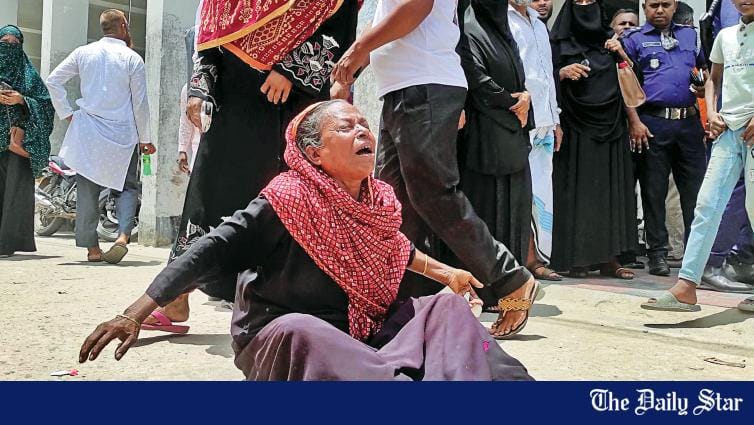
Jhunu Begum, 65, wailing in front of a Narayanganj court moments after her grandson, 19-year-old mason Arif Hossain, was taken away in a prison van. Jhunu was pleading to the police that her grandson was innocent and that he was not involved in politics. Arif was picked up from his Parameshwardi home in Narayanganj on July 23 following the recent violence. Photo: Saurav Hossain Siam

Over 2.13 lakh people, most of them unnamed, are accused in around 200 cases filed with police stations in the capital over the recent violence centring the quota reform movement.

Almost all the cases were filed by police, and in at least 16 of them, between 5,000 and 10,000 people have been accused, records show.

Law enforcers have arrested over 2,500 people, including political leaders, activists and students, in the last 12 days in different parts of the city, according to the court documents.

However, the actual numbers of cases and arrests could be much higher and are likely to rise further as law enforcers continue to raid different neighbourhoods in the capital.

The country witnessed violence on an unprecedented scale over the last week. The peaceful demonstrations turned deadly on July 15 when Chhatra League attacked the protesting students on different university campuses.

In the following days, violence escalated in Dhaka and elsewhere, leaving at least 162 dead as per The Daily Star data. However, the death toll from the violence between agitators, law enforcers, Border Guard Bangladesh members, and ruling party activists, could be much higher as this newspaper could not reach many hospitals, where dozens of critically injured patients were taken.

Also, many families reportedly took the bodies of their loved ones from the scene, and this newspaper could not contact those families.

The Daily Star's count of the victims is based solely on hospital and police sources.

According to Prothom Alo, at least 210 people were confirmed dead as of yesterday.

The government is trying to bring the situation under its control by imposing night-time curfews, deploying army across the country, and carrying out raids.

Meanwhile, rights activists, family members of those arrested or injured, and political parties are decrying law enforcers' high-handedness and misuse of power. The government maintains that the cases are based on specific evidence.

CASES FILED IN CAPITAL

Dhaka Metropolitan Police filed 229 cases with 50 police stations as of yesterday.

This newspaper has so far been able to get documents related to 178 cases filed since July 17. The number of accused in these cases is 2,13,834. Of them, only 1,310 were named.

It is not known how many people are accused in the remaining 51 cases.

The unnamed accused leaves room for the law enforcers to arrest anyone they want.

Police had not mentioned any name or number of accused in 60 cases, and in at least two, 10,000 unnamed people were accused.

One of the two cases was filed with Badda Police Station on July 18 over violence near Brac University in Merul Badda area.

The other one was filed with Lalbagh Police Station on July 21 over violence in Azimpur. The accused are unnamed BNP-Jamaat activists.

The Metro rail authorities filed a case against 9,000 unnamed people in connection with vandalism at Mirpur-10 metro station on July 19.

Another case was filed against 8,000, two cases against 7,000, seven against 6,000, and three against 5,000.

Most of the accused face charges of gathering illegally, rioting, assaulting law enforcers, and damaging properties.

ARRESTS IN DHAKA

Police produced 2,506, including 98 yesterday, before the Chief Metropolitan Magistrate's Court in at least 158 cases between July 17 and July 28.

In 15 cases filed with Jatrabari Police Station, 335 people were arrested. The area saw continuous violence for almost a week starting on July 17.

Mirpur police arrested 168 people under 10 cases while Uttara (east) arrested 164 under 10 cases, Paltan police arrested 145 under eight cases, and Badda police arrested 130 people under four cases.

Mirpur, Uttara, Badda and Paltan areas too witnessed fierce clashes.

Five cases were filed over killing policemen, a student and a police informant. One was filed under Cyber Security Act.​
 

Who can provide more security than the family?
Questions Nahid's mother

1722208398752.webp


Momtaz Nahar, mother of Nahid Islam, one of the key coordinators of quota reform protests, yesterday questioned the move by authorities of picking up the organisers one by one on the grounds of "providing security".

"Who can provide more security than the family?" she said replying to a query of a journalist at Minto Road when Nahid's family went to the DB office to see him.

However, they were not allowed to meet him, she said.

A day before, detectives picked up three organisers, including Nahid, from a city hospital and yesterday DB took more two organisers into their custody "to ensure their security".

"We came [here] to meet my son. But we were not allowed. DB did not allow us to enter the office. Not only us, even Nahid's teachers were not allowed to meet him. I want to see my son. He must be returned to me safely," Nahid's mother said.

"I have not been able to contact Nahid since he was picked up. He was picked up for a second time... This time from a hospital. Nahid's physical condition is not good. I want the release of all [quota protest coordinators], who have been detained, including my child," Momtaz said.​
 

The prolonged internet shutdown sets a dangerous precedent
1722208937781.webp

Visual: Anwar Sohel

The recent nationwide internet blackout in Bangladesh, beginning on July 18 and lasting over 150 hours, represents a grave threat to democracy and human rights that demands urgent attention. This unprecedented act of digital repression not only violated the fundamental rights of 170 million Bangladeshis but also set a dangerous precedent for authoritarian control in the digital age.

The shutdown occurred against a backdrop of mounting student protests, though the government initially attempted to obfuscate its role in the blackout. Officials, including ICT Minister Zunaid Ahmed Palak, first attributed the outage to security concerns, then to an arson attack on the cables in Mohakhali at nearby data centres by miscreants. Palak even suggested that broadband internet would be restored within a day. However, this explanation, or rather excuse, quickly crumbled under scrutiny. The truth, as confirmed by international observers like Cloudflare and Telenor, was that it was a deliberate, government-ordered shutdown.

Cloudflare, one of the world's largest cloud service companies, used global internet traffic monitoring tools to confirm that the blackout was indeed government-ordered. Telenor, the parent company of Grameenphone, corroborated this assessment, stating that local authorities had mandated the shutdown of 3G and 4G networks. The extent of the blackout is particularly troubling given Bangladesh's multiple internet connectivity options. The country has access to submarine cables through Bangladesh Submarine Cable Limited, land fibre connections through India, IIG VSAT connectivity for limited data links, and 3G/4G mobile networks. Put simply, the diverse infrastructure makes it implausible that a single localised issue could cause such widespread disruption, further supporting the assertion that this was a calculated move by authorities.

As internet access slowly returned after more than 150 hours, it came with draconian restrictions. Reportedly, the Bangladesh Telecommunication Regulatory Commission (BTRC) issued guidelines to International Internet Gateways (IIGs) that included mandatory deep packet inspection by the Department of Telecommunications, blocking of Facebook and related services, disabling caches, and limiting access to specific areas and institutions. This calculated move to sever digital communications coincided with student protests, revealing the shutdown's true intent. By denying citizens access to social media platforms, messaging apps, and news websites, the government effectively silenced the nation and prevented the outside world from witnessing what was happening inside Bangladesh.

When governments impose internet shutdowns and restrictions, particularly during protests, they hinder the flow of vital information to citizens. This includes preventing people from contacting emergency services like fire departments and healthcare providers. Moreover, these shutdowns impede international and local media outlets, as well as human rights organisations, from documenting potential human rights violations. Such violations may include killings or excessive use of force by law enforcement agencies. By cutting off communication channels, authorities effectively create an information blackout that compromises public safety and accountability.

Interestingly, amid the nationwide blackout, reports emerged that Augmedix, a US-based healthcare multinational corporation, maintained active internet access. This selective availability raises questions about the government's priorities and potential preferential treatment of certain entities.

The shutdown, however, is part of a disturbing global trend. In 2022, there were over 180 internet shutdowns across 35 countries worldwide. Governments increasingly deploy this tactic to cover up grave human rights violations, including state violence against peaceful protesters, electoral interference, extrajudicial killings of political dissidents, and arbitrary arrests and detentions.

The UN Human Rights Council, via establishing the Universal Declaration of Human Rights (UDHR), has unequivocally stated that internet shutdowns have "indiscriminate and disproportionate impacts on human rights." In today's interconnected world, internet access is essential for the realisation of numerous fundamental rights, including freedom of expression and access to information, the right to education, the right to health, the right to work, and freedom of assembly and association. By imposing this blackout, the Bangladesh government has effectively violated these rights for its entire population, contravening its obligations under international human rights law.

The shutdown's impact extends beyond civil liberties. In an increasingly digital economy, such disruptions can have severe economic consequences. Businesses relying on online transactions, e-commerce platforms, and digital communication tools suffer significant losses. The global nonprofit organisation NetBlocks estimates that the 150-hour shutdown could have cost Bangladesh's economy over USD 500 million, further burdening a nation already grappling with economic challenges.

Moreover, the blackout jeopardised public safety and health. During times of crisis, access to timely information can be a matter of life and death. Recounting my personal experience, doctors were not available to see outdoor patients at Birdem Hospital due to the ongoing nationwide curfew. However, online consultation and public health information also became inaccessible due to the internet shutdown. By cutting off internet access, the government potentially hindered emergency services, disrupted healthcare communications, and prevented citizens from accessing crucial public health information.

We and the world must respond accordingly to this flagrant violation of digital rights. The United Nations should launch an investigation into the shutdown and its human rights implications. International and development partners should insist on respect for digital rights and internet freedom. Tech companies and telecom providers operating in Bangladesh should publicly disclose any requests for government orders to shut down services. Civil society organisations should document the impact of the shutdown on human rights, the economy, and public services to build a case for accountability.

And lastly, the Bangladesh government must provide a full, transparent explanation for the shutdown, and implement legal safeguards to prevent future arbitrary internet restrictions.

The fight for internet freedom is synonymous with the struggle for human rights and democracy.

Mahiya Tabassum is a journalist at The Daily Star.​
 

Denial and intimidation will not solve this crisis
Ensuring students' safety is a key priority

1722209116341.webp

VISUAL: STAR

We are dismayed at the law enforcement measures being taken by the government which, in an already volatile situation ensuing from the brutal crackdown on protesters, will only serve to intensify public distrust and fear. Let's focus on the way students are being dealt with, leaving aside the violence and destruction caused by groups taking advantage of their movement. According to media reports, police have picked up five key organisers of the quota reform protests. First, they detained Nahid Islam, Asif Mahmud, and Abu Baker Majumder from a city hospital on Friday afternoon; Nahid and Asif were undergoing treatment there after being picked up and tortured earlier. Then, on Saturday evening, detectives picked up Sarjis Alam and Hasnat Abdullah.

Meanwhile, police have filed a First Information Report (FIR) regarding the death of university student Abu Sayed which completely contradicts the widely circulated video footage of him being shot by police from a close range. The FIR accuses 2,000-3,000 unidentified men, including BNP and Jamaat-Shibir activists, of the killing. It is incredible what lengths are being taken to distort the facts. The Amnesty International has independently verified the video footage using satellite images to geolocate the positions of Sayed and responsible police officers, and found that they were about 15 metres apart during the shooting. As seen in the video, Sayed posed no threat to the police. Yet they repeatedly shot him, leading to his death.

In addition to these intimidating and unlawful measures, we have also heard of various cases being filed against university students along with the arrests of thousands of other people, many associated with BNP and Jamaat. For example, according to a report published yesterday, police on July 21 sued 20 students of Sher-e-Bangla Agricultural University, along with many unnamed people, for "demonstrating unlawfully" and "assaulting police".

If the government is trying to "normalise" the situation through such tactics, it is the wrong way to do it. No matter what kind of counter-narratives it creates, the government cannot ignore people's concerns about the unprecedented number of deaths centring on the quota reform movement. Instead of trying to mitigate the severe deficit of trust, of the students in particular, the government has decided to take the hardline once again. Picking up protest leaders while they are undergoing medical treatment is illegal, and will only serve to further corrode students' faith in its sincerity to solve the crisis and harm any prospect of dialogue with them. Similarly, denying the role of law enforcement and other security forces in the deaths of students and other people and arresting student protesters will further add fuel to the fire.

This is not the time to try to control the situation with fear, intimidation, and distortion of facts, nor will it be helpful. The government must immediately release the five student organisers and allow them to get treatment and home. It must ensure their safety and that of all other students, put a stop to legal harassment, and discard the FIR in question (and others that may follow) that deliberately falsifies truths. And it must own up to the fatal mistakes it has made and sincerely try to heal the deep wounds inflicted on the students and the public as a whole.​
 

The cost of crisis. Who will bear it?

1722209616779.webp

Streets around the capital of Dhaka wore a devastated look over the past week, with a spate of violence breaking out centring the quota reform movement, which significantly impeded economic activities and led to huge losses. PHOTO: STAR

Violence comes with a hefty price tag for the economy. Beyond the immediate death toll mostly in police shootings, the convulsion of violence that gripped Bangladesh in the middle of this month has left a debilitating impact on the economy.

The impact of violence amounts to direct and indirect costs as it disrupts economic activity, increases instability and erodes human productivity.

In Bangladesh, crushing quota protests and subsequent violence were met with a sudden curfew and a crippling internet shutdown.

During the spell of unrest, many lost their lives and many others became disabled while public assets were vandalised or went up in flames in arson attacks.

While the curfew stemmed the tide of violence, it came as another shock to the already fragile economy.

People have been unable to get access to their bank accounts or pre-pay their gas and electricity bills due to the internet outage.

Panic buying has been reported in Dhaka and other major cities, with supermarkets and other stores running low on essential goods.

Many businesses were simply unable to operate, from food delivery services and e-commerce to the nascent outsourcing sector. It also remains to be seen how the internet disruption has affected Bangladesh's garment sector, which accounts for about 85 percent of the country's exports.

Details of the economic damage are still emerging. Export orders may be diverted and inward remittances may slow.

"Some insiders worry that instability will see the country lose orders to competitors elsewhere in the region. The impact of the protests will place further stress on an economy that was already ailing," Pierre Prakash, programme director for Asia at the International Crisis Group, said in a report on July 25.

The Foreign Investors' Chamber of Commerce and Industry estimated that the economic cost of seven days climbed to $10 billion.

The burden of human and economic toll is becoming heavier. But who will bear the cost?

The families of the dead will fend for themselves. Those who were disabled in the mayhem will suffer for the rest of their lives.

To mend the public assets, the government will use taxpayers' money, which means a massive financial haemorrhage at a time when Bangladesh needs to avoid waste.

The government, hamstrung by the economic crisis, will have to pause development projects, which will take a huge toll on the economy in the future.

Md Shafiqul Islam, the owner of a printing shop, said he has to pay his workers regardless of losses. The man had to close his factory for about six days as violence convulsed the country.

As the protests turned deadly, the poor paid the price by spending more to buy essentials. Consumers were already struggling due to a rising trend of inflation for two years.

All costs of the man-made crisis will be passed down to ordinary people, especially the poor and marginalised groups, said Mustafa K Mujeri, a noted economist.

Historically, these groups are the worst sufferers of any crisis due to their limited coping capacity, said Mujeri, executive director of the Institute for Inclusive Finance and Development.

"So, the burden of the crisis is hitting them harshly," Mujeri said.

The internet blackout also affected the encashment of inward remittances through banks and mobile financial services, which may put a strain on the country's foreign exchange reserves.

The IT sector is slowly returning to normal after the resumption of the internet, but it is still facing slow internet speeds.

Restaurant owners are staring at mounting losses as they were already struggling to stay afloat after the devastating Bailey Road fire, said Bipu Chowdhury, joint organising secretary of the Bangladesh Restaurant Owners Association.

After some recovery in the five months since the blaze, restaurant sales fell by more than two-thirds in the space of two weeks this month.

Economic gloom has also clouded the garment industry, a time-sensitive sector.

"Any delay in shipments will hurt the sector," said Faruque Hassan, a former president of the Bangladesh Garment Manufacturers and Exporters Association.

During the pandemic, companies kept their manufacturing units open, but the unavailability of the internet stalled them. Besides, backward linkages were impacted and the supply chain was seriously disrupted. Some companies faced cancellations of orders and some were forced to send products by air.

Although the crisis now seems to be easing, its impact on exporters will linger for a month, because it has created a huge backlog of unfinished tasks.​
 

'আন্দোলন চলবে', সোমবার সারাদেশে বৈষম্যবিরোধী ছাত্র আন্দোলনের বিক্ষোভ
'বৈষম্যবিরোধী ছাত্র আন্দোলনের সমন্বয়কদের তুলে নিয়ে ডিবি কার্যালয়ে জিম্মি করে অস্ত্রের মুখে স্ক্রিপ্টেড বিবৃতি দিয়ে ছাত্রসমাজের দাবিগুলোর প্রতি সরকার চরম ধৃষ্টতা প্রদর্শন করেছে।'

1722209880598.webp

কোটা সংস্কার আন্দোলনের দাবিতে গত ৭ জুলাই শাহবাগে শিক্ষার্থীদের অবস্থান। ছবি: পলাশ খান/স্টার

দাবি আদায় না হওয়া পর্যন্ত আন্দোলন চলবে উল্লেখ করে সারাদেশে সোমবার ছাত্র-জনতার বিক্ষোভ কর্মসূচি ও প্রতিবাদ সমাবেশ ঘোষণা করেছে বৈষম্যবিরোধী ছাত্র আন্দোলন।

আজ রোববার রাতে বৈষম্যবিরোধী ছাত্র আন্দোলনের সমন্বয়ক আব্দুল কাদেরের গণমাধ্যমে পাঠানো বার্তায় এ কর্মসূচির কথা জানানো হয়েছে।

এর আগে ডিবি কার্যালয়ে হেফাজতে থাকা আন্দোলনের ছয় সমন্বয়ক কর্মসূচি প্রত্যাহারের ঘোষণা দিয়েছিলেন।

পরে বাকি সমন্বয়কদের পক্ষ থেকে পাঠানো বিবৃতিতে বলা হয়, 'সরকারের নিরাপত্তা বাহিনীর গুলিতে ও ছাত্রলীগের আক্রমনে নিহত শত শত শহীদের আত্মত্যাগ তিরস্কার করে ডিবি কার্যালয়ে বন্দুকের নলের মুখে জিম্মি করে সমন্বয়কদের মাধ্যমে জোরপূর্বক স্ক্রিপ্টেড বিবৃতি আদায়ের তীব্র নিন্দা ও প্রতিবাদ জানাই। আমাদের দাবি আদায়ে আমরা অবিচল ছিলাম, রয়েছি এবং থাকব। প্রিয় দেশবাসী ও ছাত্রসমাজ, বিগত কয়েকদিন যাবৎ গণহত্যা, গণগ্রেপ্তারের পর সরকার এখন এক নতুন নাটকের সৃষ্টি করেছে। বৈষম্যবিরোধী ছাত্র আন্দোলনের সমন্বয়কদের তুলে নিয়ে ডিবি কার্যালয়ে জিম্মি করে অস্ত্রের মুখে স্ক্রিপ্টেড বিবৃতি দিয়ে, ছাত্রসমাজের দাবিগুলোর প্রতি সরকার চরম ধৃষ্টতা প্রদর্শন করেছে।'

'শুধু তাই নয়, সারাদেশে রাষ্ট্রীয় বাহিনী ও ছাত্রলীগ সন্ত্রাসীদের হাতে নিহত শহীদদের পরিবারকে হুমকি-ধমকি ও ভয়ভীতি দেখিয়ে, আর্মড ফোর্সকে ব্যবহার করে ঢাকায় এনে সরকার তাদের থেকে মিথ্যা জবানবন্দি নেওয়া ও সমস্ত দায় আন্দোলনকারীদের ওপর চাপিয়ে শহীদের রক্তের সঙ্গে তামাশা করেছে। আমরা দ্ব্যর্থহীন ভাষায় বলতে ভাই, জীবনের শেষনিশ্বাস পর্যন্ত ছাত্রসমাজ শহীদের রক্তের সঙ্গে বেইমানি করতে পারে না।'

বার্তায় আরও বলা হয়, 'দেশে কোটা সংস্কার আন্দোলনকে কেন্দ্র করে সরকার সাধারণ শিক্ষার্থীদের ওপর নির্যাতনের স্ট্রিম রোলার চালিয়ে যাচ্ছে। ব্যাপক হত্যাযজ্ঞের পর সরকার সারাদেশে রেইড করে গণগ্রেপ্তার করেছে। হাজার হাজার মামলা ও গ্রেপ্তার করা হচ্ছে। জানালার পাশে পড়ার সময় কোমলমতি শিশু সামিরকে হেলিকপ্টার থেকে গুলি করে হত্যা করা হয়েছে। প্রাইভেট বিশ্ববিদ্যালয়ের শিক্ষার্থীদের ওপর স্মরণকালের সবচেয়ে বড় বর্বরোচিত হামলা চালানো হয়েছে। এমনকি স্কুল ও কলেজের কোমলমতি শিক্ষার্থীদের ওপর ন্যক্কারজনক হামলা চালিয়ে অসংখ্য শিক্ষার্থীকে আহত ও শহীদ করা হয়েছে। এই অবস্থায় আমরা কঠোর ভাষায় বলতে চাই, আমাদের দাবি আদায় না হওয়ার পূর্ব পর্যন্ত ছাত্রসমাজের আন্দোলন চলবে।'

'আগামীকাল সারাদেশে ছাত্র-জনতার বিক্ষোভ কর্মসূচি এবং প্রতিবাদ সমাবেশ। আমাদের দাবি আদায়ের সঙ্গে একাত্মতা ঘোষণা করতে বাংলাদেশের সব নাগরিককে অনুরোধ করছি', বলা হয় বার্তায়।

এর আগে ছয় সমন্বয়কের পক্ষে রেকর্ড করা এক ভিডিও বার্তায় রোববার লিখিত বক্তব্য পড়ে কর্মসূচি প্রত্যাহারের কথা জানান বৈষম্যবিরোধী ছাত্র আন্দোলনের অন্যতম সমন্বয়ক নাহিদ ইসলাম। লিখিত বক্তব্যে নাহিদ ছাড়াও সারজিস আলম, হাসনাত আবদুল্লাহ, আবু বাকের মজুমদার, আসিফ মাহমুদ, নুসরাত তাবাসসুমের সই ছিল।​
 
Mahmudur Rahman describes the situation in Bangladesh under Hasina's rule.


Last edited:

'Unprecedented deaths in a non-political protest'
Ainjibi Samaj lawyers demands probe into violence, slam wholesale arrests, remands
1722295590336.webp

Photo: Rashed Shumon/Star

Bangladesh has never seen so many deaths in a non-political movement like it saw in the recent violence over quota reform protests, said a group of lawyers today.

The lawyers under the banner of Ainjibi Samaj at a human chain held at Supreme Court premises said the right to assembly is enshrined in the constitution.

Saying government is violating the constitution in every step, they said opening fire at protesters is a criminal offence and all those responsible for the deaths should be tried.

Senior Supreme Court lawyer ZI Khan Panna pointed out that the students are being portrayed as 'criminals' by the government.

He said, "In 1971, students raised the first flag of the country at Dhaka University. It was the students who started the language movement in 1952 from Battala. Since the regime of Pakistan to the date, we have never seen so many students killed because of a totally non-political demand."

Criticising picking up people from home through block raids, Panna wanted to know under which law enforcers are doing so. Government in many steps dishonoured the country's constitution that was earned through supreme sacrifice of many people.

Criticising additional commissioner (DB) of Dhaka Metropolitan Police Harun Ar Rashid, Panna said the official will have to give explanation of detaining six coordinators of the students' quota reform protests violating direction of Appellate Division of Bangladesh Supreme Court.

He urged the lower court judges to follow the direction of Appellate Division.

Panna said everyone has to explain why people are being granted remand or being sent to the prison without even knowing their age after wholesale arrests.

Senior Supreme Court lawyer Sara Hossain expressed grief over those who were killed while protesting. She said, "We want to know why they (students and common people) died, how many died, where they died, and who killed them."

"Thousands of students and the general public were subjected to mass arrests. I heard yesterday that not a single person has been granted bail in the Dhaka court," she added.

Lawyer Jyotirmoy Barua demanded that every murder should be investigated and every person responsible should be brought to justice.​
 

Stop arrest, abduction of students
Over 100 univ teachers urge govt

Over a hundred university teachers yesterday demanded that harassment of students by abduction and mass arrest be stopped, and they be released immediately.

Expressing solidarity with the protesting students' demands, they also called upon the authorities concerned to reopen all universities right away.

They observed a one-minute silence in remembrance of those killed in what they termed "July massacre".

University Teachers Network, a platform of public and private university teachers, made the demands from a "Anti-Repression Teachers' Rally" at the foot of Aparajeyo Bangla at Dhaka University.

Prof Saeed Ferdous, of Jahangirnagar University's anthropology department, who presided over the rally, said the government is showing its two faces.

During the day, they are expressing grief over the deaths and offering compensation to the victims' families to get sympathy, but at night they abduct people and force people to issue statements to the media.

The government should stop this, he said, calling for an end to the abductions and killings.

He said the government is considering students their opponents, but they took to the streets to overhaul the country.

Students are making history by challenging the systematic repression at educational institutions by pro-government student bodies and the anarchy in the state and at educational institutions over the past five decades since independence, said Prof Ferdous.

"We support every demand of the students," he said.

Referring to pre-liberation era history, Prof Abdul Hasib Chowdhury, former president of Buet Teachers' Association, said in February 1969, Prof Shamsuzzoha embraced martyrdom while protecting students and now they have gathered here as his successors.

"Our students, who are fighting for their rights and against inequality, are the successors of freedom fighters," he said.

Prof Kamrul Hassan Mamun, of Dhaka University's physics department, said a professor from the University of California, after watching foreign media, expressed concern over the situation in Bangladesh. "But where are the teachers of our country? Why so a few teachers are here?

Nasir Uddin Ahmed, associate professor of Jagannath University's English department, criticised police for filing cases against students and urged the authorities to stop such practices. He also demanded reopening of universities so that students can return to studies.

Dhaka University teacher Rushad Faridi, BRAC University teacher Saimum Reza Talukder, Khulna University Prof Abdullah Harun Chowdhury, and Jahangirnagar University Prof Masud Imran, among others, spoke at the rally.

Meanwhile, the Dhaka University authorities yesterday urged law enforcement agencies and other concerned to ensure no innocent student is harassed over the recent violence.

The university administration has instructed students to report to the Proctor's Office if they face any harassment, said a press release.

Students will be provided with necessary assistance in such cases, it added.​
 

End mass arrests, arbitrary detention
Amnesty urges Bangladesh govt

Amnesty International yesterday urged Bangladesh to end mass arrests and arbitrary detention of student leaders and protesters.

In a statement, Smriti Singh, regional director for South Asia at Amnesty International, made the call responding to reports of the arrest and detention of student leaders, protest participants, and members of opposition parties following the quota-reform protests, with over 9,000 arrests over the weekend in Bangladesh.

"The mass arrest and arbitrary detention of student protesters is a witch- hunt by the authorities to silence anyone who dares to challenge the government and is a tool to further perpetuate a climate of fear. Reports suggest that these arrests are entirely politically motivated, in retaliation for the exercise of human rights. It is essential that the Bangladeshi authorities respect people's rights to freedom of expression and peaceful assembly," reads the statement.

"The authorities must ensure that any arrests comply with due process safeguards and are fully in accordance with international human rights law and standards, including but not limited to the right to a free and fair trial, the right to be informed of the reasons for arrest and the place of detention, and the right to be brought promptly before a judge, and to have access both to legal counsel and to their family.

"The authorities should ensure that peaceful activists are not prosecuted on trumped-up charges as punishment for participating in protests. Peaceful protest is not a crime, and this witch-hunt must end," said the rights body.​
 

Protesters take to streets again
Face obstruction from law enforcers; 80 detained; demo organisers reject call for nationwide mourning

1722295930414.webp

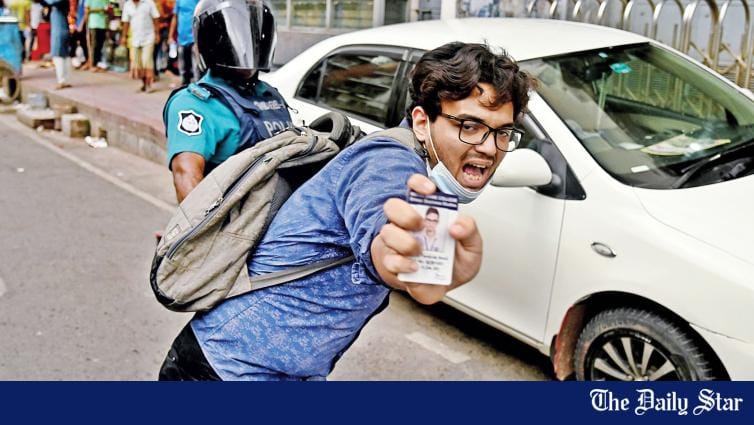
A boy screams and shows his ID card to prove he is a student while being dragged away by police during a demonstration in front of Independent University in the capital's Dhanmondi-2 yesterday afternoon. The otherwise peaceful gathering was obstructed by law enforcers and several were detained from there. Photo: Star

Quota reform protesters yesterday staged demonstrations across the country, including in Dhaka and Chattogram cities, but law enforcers dispersed them at many places and detained at least 80.

Ruling party men also obstructed them from holding demonstrations in some places.

Students from different universities and colleges held the demonstrations to protest the "detention of six coordinators of the quota reform protest by the Detective Branch of Dhaka Metropolitan Police and forcing them to issue a statement on ending protests".

In Chattogram, police detained at least 10 students after breaking up a protest by some 100 students in Jamal Khan area yesterday afternoon.

Witnesses said university and college students gathered at Cheragi intersection around 3:00pm to hold a rally. A large number of police, BGB, APBn, and army personnel were deployed in the area.

Tension rose when 100-150 leaders and activists of the Jubo League and Chhatra League, led by Chattogram City Corporation ward-21 Councillor Saibal Das Sumon, reached the area and verbally abused the protesters.

1722295980766.webp

university teachers gathered at the Aparajeyo Bangla in DU, during the Anti-Repression Teachers Rally organised by the University Teachers Network, where they called for an immediate end to the harassment and mass arrests of students. Photo: Star

At one stage, the Jubo League and Chhatra League men beat up two students and handed them over to police, who got them on to a prison van.

As some students attempted to free the detainees, police used truncheons.

Protesters then gathered near the Kadam Mubarak mosque and chanted slogans.

Around 4:00pm, police fired stun grenades and teargas canisters at them. Three cops and a journalist, videographer Abu Jabed of News 24 TV, were injured in the incident.

Another group of protesters threw brick chunks at police near Andarkilla Shahi Jame Masjid around 5:00pm, prompting law enforcers to fire rubber bullets and teargas at them.

Mostafizur Rahman, deputy commissioner (south) of Chattogram Metropolitan Police, said police took action as all gatherings and protests are banned during the pause in curfew.

In the capital, law enforcers yesterday detained at least 70 people from different areas.

1722296014081.webp

police stationed near the capital's National Press Club to avert protesters, who had announced holding a programme there yesterday afternoon. Photo: Star

Abdul Kader, a coordinator of the quota reform protest, on Sunday night announced on social media that they would stage demonstrations in eight locations in the capital -- Science Lab, Gate-8 of North South University, Jatiya Press Club, BNS Centre in Uttara, Mirpur-10, ECB Chattar in Mirpur, Rampura, and Mohakhali.

Witnesses said several hundred protesters gathered near the ECB Chattar around noon. Police chased them around 1:00pm when they started chanting slogans.

Law enforcers detained at least 18 demonstrators there.

Police detained at least 10 protesters from Mirpur-10 intersection, 10 from in front of Star Kabab in Dhanmondi, two from Purana Paltan, six from Badda, and 10 from Uttara.

Seeking anonymity, two security staffers of a private university in Bashundhara Residential Area said, "Students were standing in front of gates 1, 2 and 5 of the university since 10:00am. Police detained at least 15 of them and got them on to three police vans until 1:30pm."

Students at Jahangirnagar University held a protest demanding unconditional release of the coordinators of the quota reform protest and the other detainees.

Several JU teachers expressed solidarity with the protesters.

1722296053766.webp

Students disperse as sound grenades were lobbed at them by cops at the Cheragi Pahar Mor in the port city. The protesters had gathered there to press for their nine-point demand yesterday afternoon. Photo: Star

In Rajshahi, several hundred students of Rajshahi University blocked the Dhaka-Rajshahi highway from 12:20pm to 1:00pm protesting the detention of the six coordinators of the quota reform movement.

They chanted slogans demanding justice for the deaths of the fellow students and those responsible for the deaths be held accountable.

At Barishal University, Chhatra League activists allegedly attacked protesters near the university's administrative building around 2:00pm, leaving at least 15 students injured.

Sujoy Subho, one of the injured, said some 40-50 Chhatra League men, armed with sticks, attacked students when they were discussing their next course of action.

Students of Government Brojomohun (BM) College held a protest in Barisal city's Nathullabad Central Bus Terminal area.

In Noakhali, students blocked the Dhaka-Noakhali highway in front of Noakhali Zilla School from 2:00pm for three hours.

In Thakurgaon, over 200 students took out a procession with black flags demanding justice for the recent killings of students.

In Mymensingh, police broke up a demonstration by students in the city's Firoz-Jahangir Chattar in the afternoon.

In Cumilla, pro-Awami League men, armed with sticks and iron rods, obstructed around 60 Comilla University students from moving towards the Dhaka-Chattogram highway.

The students later staged demonstrations in front of the university around 3:00pm.

In Sylhet, a group of students of Shahjalal University of Science and Technology staged a protest at the main entrance to the university at 3:00pm. They later took out a procession.

Bangladesh Udichi Shilpigosthi, a cultural platform, could not hold a protest rally in front of the Jatiya Press Club yesterday afternoon as the area was cordoned off by law enforcers.

Meanwhile, some coordinators of the quota reform protest yesterday rejected the government's call for nationwide mourning today for those killed in the recent violence.

They urged the students of all educational institutions and the general people to cover their face with red clothes and upload their photos online today instead.

The coordinators made the call in a press release, signed by Mahin Sarker, a coordinator of the Anti-discriminatory Student Movement. Copies of the release were sent to the media around 9:30pm.

"We would like to tell the government that no movement in the history of Bengal could be suppressed by firing at students. Immediately accept our nine-point demand and bring stability to the country," said the statement.

Their demands include an apology from Prime Minister Sheikh Hasina, and resignations of Home Minister Asaduzzaman Khan, Road Transport and Bridges Minister Obaidul Quader, Education Minister Mohibul Hasan Chowdhoury, Law Minister Anisul Huq, State Minister for Information and Broadcasting Mohammad Ali Arafat, and State Minister for Post, Telecommunications, and Information Technology Zunaid Ahmed Palak.

As per the Saturday's decision by the government, the ongoing curfew in Dhaka, Narayanganj, Gazipur and Narsingdi will be relaxed from 7:00am to 6:00pm today.​
 
Status
Not open for further replies.
Back
Top