โ˜• Support Us โ˜•
[๐Ÿ‡ง๐Ÿ‡ฉ] - Those who have laid down their lives to free Bangladesh | Page 4 | PKDefense

[๐Ÿ‡ง๐Ÿ‡ฉ] Those who have laid down their lives to free Bangladesh

Reply (Scroll)
Press space to scroll through posts
G Bangladesh Defense
[๐Ÿ‡ง๐Ÿ‡ฉ] Those who have laid down their lives to free Bangladesh
82
3K
More threads by Saif


105 children killed in July uprising
Govt publishes draft list of 737 killed

1728268625311.png

Photo: UNB

At least 105 children were killed during the recent student-led uprising in July and August, Women and Children Affairs Adviser Sharmin S Murshid said yesterday.

Each victim's family will receive Tk 50,000 as compensation, Sharmin, also the social welfare adviser, announced during a press conference at the secretariat.

The list was finalised by the Health Services Division under the Ministry of Health and Family Welfare, reports UNB.

The monetary grant and a certificate will be distributed on World Children's Day today among families of the deceased children.

The ceremony is scheduled to take place at the Osmani Memorial Auditorium.

Additionally, Murshid noted that Tk 82,70,898 has been allocated to assist students injured during the Anti-Discrimination Student Movement through the Social Service Office and the Upazila Patient Welfare Association.

The ministry is also in the process of securing $5 million from the World Bank to fund rehabilitation and treatment for those affected by the uprising.

She also said the Ministry of Women and Child Affairs currently operates 12 daycare centres and is advocating for the establishment of daycare facilities in all government institutions by June 2026.

The government is also exploring the possibility of introducing private-sector daycares to enhance employment opportunities and provide essential services.

Meanwhile, the interim government yesterday published a preliminary list of at least 737 people who died during the student-led mass protests in July and August.

The names and identities of the dead were collected from different public and private hospitals, reports our staff correspondent.

The list is available at เฆ›เฆพเฆคเงเฆฐ เฆœเฆจเฆคเฆพเฆฐ เฆ—เฆฃ เฆ…เฆญเงเฆฏเงเฆคเงเฆฅเฆพเฆจเง‡ เฆจเฆฟเฆนเฆค เฆ“ เฆ†เฆนเฆค เฆฌเงเฆฏเฆ•เงเฆคเฆฟเฆฌเฆฐเงเฆ—เง‡เฆฐ เฆคเฆพเฆฒเฆฟเฆ•เฆพ.

Being a preliminary list, it's a work in progress and is being updated. The website's filtering function was not working accurately as of last night. However, initial analysis indicates that the majority of fatalities occurred in Dhaka, and most of the victims were students.

Earlier on September 24, the government published a draft list of 708 names on the website of the Health Services Division under the Ministry of Health and Family Welfare.

The draft list was scrutinised again and the preliminary list was released yesterday.​
 

Death in mass uprising: Nahid steps in to assist Monir's family
Says Alaol Kabir, secretary to info adviser

1728270039336.png

Photo: Collected

Information Adviser Nahid Islam has stepped in to support the family of Monir Hossain, who was killed during the quota reform movement, the ministry said today.

The development came after The Daily Star on October 3 published a report titled "A Family Wracked by Tragedies," which outlined the hardships faced by Monir's family following his death.

Monir was shot dead on July 20 during the quota reform movement. Within two months, both of his parents also passed away.

Sanjida Akter Mim, Monir's sister, met with the adviser at the secretariat this morning.

Speaking to The Daily Star, RHM Alaol Kabir, private secretary to the information and broadcasting adviser, said Mim has been connected with the July Shaheed Memorial Foundation to ensure she receives immediate financial assistance.

Her younger brother Moinul, who suffered a mental breakdown after losing his family, will receive proper medical treatment from the government, said Alaol Kabir.

"He [Moinul] will be treated either at the National Institute of Mental Health or Bangabandhu Sheikh Mujib Medical University," he told this newspaper.

Alaol Kabir said, "Mim has one year left to complete her graduation, and we are trying to secure a suitable job for her after that."

After the meeting, Mim said, "For personal safety reasons, I visited the secretariat. Adviser Nahid assured me of job assistance and promised that necessary steps would be taken to ensure the safety of both me and my brother."​
 

Fugitives involved in July-killing will be brought back to country: Attorney General
FE Online Desk
Published :
Oct 13, 2024 00:00
Updated :
Oct 13, 2024 00:00

1728783364129.png


Attorney General Md Asaduzzaman on Saturday said the fugitives having link to July-August mass killings under Awami League regime and their allies to eliminate the 36-day movement of anti-discrimination student movement will be brought back to the country.

โ€œMaximum efforts will be made through the courts to bring back those involved in the July-August killings. If they do not come back and face justice, they themselves will suffer,โ€ the Attorney General told a shadow parliament on โ€˜Responsibility for the July killings' at FDC in the capital, BSS reports.

Asaduzzaman said, โ€œThe incident of mass killing carried out by a civilian group using the law enforcers to consolidate power, will be tried under the International Crimes (Tribunals) Act, 1973.โ€

The tribunal will be reconstituted within the next week and to ensure transparency, the legal aspect of broadcasting the trial proceedings on television is being reviewed, he said, adding, โ€œThose involved in the July-August killings will be brought to book very soon for their crimes against humanity.โ€

โ€œEveryone who tried to turn Bangladesh into a failed state will also be brought to justice,โ€ said Attorney General.

โ€œSheikh Hasina had told so many lies . . . even she defeated Joseph Goebbels, propaganda minister of Adolf Hitler,โ€ Attorney General said adding, โ€œIf Goebbels were alive, he would have wished to be a student of Sheikh Hasina.โ€

He alleged that the country was ruled by one person for the past 15 years, with the parliament governed by authoritarianism.

He further said former Chief Justice ABM Khairul Haque committed a crime by altering the judgement regarding the provisions of the caretaker government, allowing the Awami League to exploit this change. A case has been filed against Khairul Haque, which is currently under investigation, he added.

Debate for Democracy chairman Hasan Ahmed Chowdhury Kiran said that the unprecedented killing of unarmed students during the peaceful movement of July-August will remain as significant black mark in Bangladesh's history.

"Former Prime Minister Sheikh Hasina, along with the Awami League and their allied political parties, is primarily responsible for these murders," he said.

In order to properly prosecute those responsible for the July killings, Debate for Democracy chairman Hasan Ahmed Chowdhury presented a 10-point proposal which included preparing a list of planners, commanders, killers and politicians and making a documentary on mass killing.

They also suggested arranging a referendum on whether the individuals and political parties involved in the July-August massacre have the moral right to do politics in the future.

Eastern University won the debate defeating Dhaka College on the theme โ€˜Administrative dictatorship is more responsible than party dictatorship for July killingโ€™.

The judges were Dr. SM Morshed, Dr. AKM Mazharul Islam, Journalist Moniruzzaman, Journalist Md. Saidul Islam and poet Jahanara Parveen.​
 

Student injured in Ctg protests dies

1728950154180.png

Kawser Mahmud

Kawser Mahmud, a BBA student at BGC Trust University who sustained critical injuries during student protests in Chattogram's New Market area on August 4, passed away last night.

Kawsar succumbed to his injuries while undergoing treatment in Dhaka's Combined Military Hospital around 10:30pm.

He will be buried in Mughaltuli of Choumuhuni area under Chattogram's Double Mooring Police Station, said his younger brother Sultan Md Naim.

Kawser lived with his family in the port city's Commerce College Road. His father Abdul Motaleb has a grocery shop there.

With his death, so far 10 persons died in the anti-discrimination students' movement in Chattogram.

"My brother was indiscriminately beaten by Awami League and Chhatra League men during protest in New Market area on August 4 morning. Although he managed to return home, he later fainted and was admitted to intensive care unit of Islami Bank Hospital in Agrabad. As his condition deteriorated further, he was shifted to ICU in Chattogram Medical College Hospital on September 22, and later to CMH," said his brother.

"He remained unconscious for 17 days. After he regained consciousness, he told the family about the incident. Both his kidneys failed sue to the beating, alongside other physical complications," Naim added.

According to the death certificate, Kawser Mahmud likely died due to acute urinary tract infection, severe kidney injury, and multiple organ failure, said Shahinuzzaman, a sub-inspector of Cantonment Police Station in Dhaka.

The actual cause of death will be determined through autopsy, he added.​
 

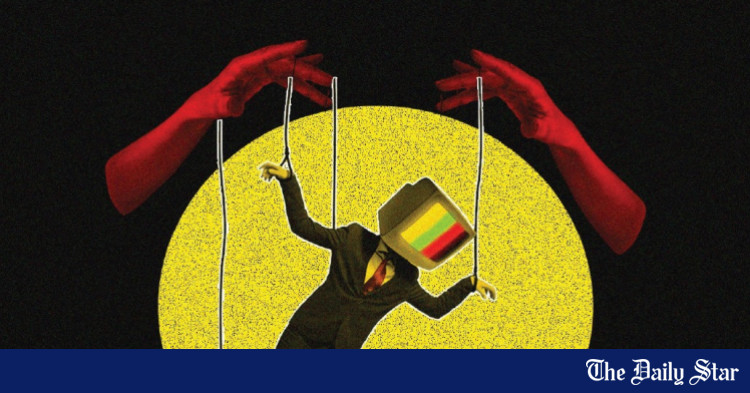
Mediating the July massacre
Kajalie Shehreen Islam

โ€œI am extremely disturbed by how the media are being used to legitimise this mass killing,โ€ read a text message from my former student, who is a journalist working for a local television news channel, on July 21.

According to a preliminary report of the Office of the United Nations High Commissioner for Human Rights (OHCHR), published on August 16, at least 650 people were killed in Bangladesh during Julyโ€™s movement-turned-massacre. Of them, 400 were killed between July 16 and August 4, and 250 on August 5 and 6, following the resignation of Sheikh Hasina from the post of prime minister and the fall of the Awami League government. Many of those injured during this yearโ€™s quota reform movement have subsequently died, and lists by local human rights organisations have put the number of dead at over 800. Unofficial estimates put the number of dead in the thousands, including not only unarmed students at peaceful protests, but also passers-by going about their day, as well as children who were sitting at home by the window or playing on rooftops.

Thinking back to the media coverage of the last two weeks of July and the first week of August, however (when I watched more local news at a stretch than I have in years), the movie playing in my mind consists of flashing, recurring images: Sheikh Hasina at press conferences labelling quota reform protesters first as razakars, and later as terrorists; former Awami League General Secretary Obaidul Quader calling upon Bangladesh Chhatra League (BCL) activists to give a fitting reply to those who (apparently) labelled themselves razakars; former Additional Commissioner of the Detective Branch (DB) of Dhaka Metropolitan Police (DMP) Harun or Rashid stating that the protest coordinators were being held in custody for their own safety; former Law Minister Anisul Huq claiming that the government had had fruitful dialogue with the protesters; former Home Minister Asaduzzaman Khan claiming that no children had been killed in the violence; Sheikh Hasina again, crying over the decades-old loss of her own loved ones; former Minister of State for Information and Broadcasting Mohammad A Arafat talking about the restraint the government had shown so far and how so many bullets were still left to be used; the arson, looting, and destruction of state property by โ€œBNP-Jamaat-Shibir-razakar-terroristsโ€; more of Sheikh Hasina crying over the destruction at a couple of metro rail stations, over the burnt down Bangladesh Television (BTV) buildings, over injured BCL activists; and of course, Sheikh Hasina reiterating how no one knew the pain and grief of losing loved ones better than her.

1729038145933.png


But where were the mothers who had lost their young sons just days before? Where was the father whose six-year-old daughter died in his arms as he rushed to bring her down from the rooftop where she was playing, lest she be killed by the helicopters shooting from aboveโ€”and she was indeed shot in the head, while he was carrying her away. Where were these stories in the media, and particularly the electronic media, which could be anywhere and everywhere following the protests, the protesters, the violence, the retaliation, the resistance, and the resilience? It was unquestionably the duty of the mainstream mediaโ€”especially during the internet blackout when people had no other source of news to turn toโ€”to provide people with actual, factual information about their country, their people, and their government.

Unarmed students being shot in the chest. A student who was distributing water among protesters being killed 15 minutes later. Another student shot and thrown off a police vehicle, left to die. A young man hanging on for dear life to the edge of a building, shot until he finally let go and fell. A man shot in the leg while still trying to drag his injured friend to safety, but the friend being shot again, at closer range this time, and knowing that he was dying, asked his friend to let go, which he finally did, leaving him and limping away to escape. We saw all this first on social media, images and footage which robbed us of sleep at night and any peace of mind during the day.

The night before the fall of Sheikh Hasina and Awami League, one of my students called me in a frantic state. BCL goons with machetes had attacked her, her mother, and two of her friends in their own neighbourhood. Her brother had been beaten up, picked up, taken away, and beaten up some more. When I spoke to her again later, she cried and cried as she recounted her brotherโ€™s injuries to meโ€”both his hands were broken. But she cried the hardest as she told me that the whole time, the police stood by, watching, and did nothing.

Thousands of stories like these never made it to the mainstream media. Hundreds of injured are still in hospital. Numbers of dead have, as usual, turned into statistics rather than stories of lives lived and unjustly taken. Even journalists were killed and injured in the violence. But the media only gave us statements about โ€œnormalcyโ€โ€”how law and order was being maintained during the curfew; how, at various points, the protesters had supposedly negotiated with the authorities and called off the movement; how important people were urging students to go back home and to the classroom; how the only violence being perpetrated now was by BNP-Jamaat-Shibir-razakar-terrorists.

Throughout the July massacre, the bulk of mainstream media coverage was of government leaders and officials spewing their propaganda repeatedly, shamelessly, endlessly. Only a handful of cases, after being shared on social media, were covered by the mainstream media when they could not be ignored any longer. But even then, the coverage was minimal.

1729038176866.png


By not reporting on these atrocities, by not holding accountable those responsible for committing them through their orders and their actions, the media did indeed legitimise them. For the past 15 years, the media helped shape and disseminate the discourse of the powerful about who was โ€œpro-liberationโ€ and who was โ€œanti-liberationโ€; about who were the patriots and who were the enemy; about who deserved protection and who it was acceptable to vilify and persecute. During the July massacre, what people had come to expect from state-owned television and media was also what they got from private television networks and many newspapers because they were, in essence, state-controlled. It was only because the people โ€œtook the media into their own handsโ€ through social media that they were able to fulfil the role of the media to inform, to educate, and to persuade.

During the internet blackout, all people had were the mainstream media. What they themselves experienced or witnessed with their own eyes, and even recorded on their own cameras, they had no way of sharing. Many peopleโ€™s phones and cameras were seized and later destroyed in order to prevent them from sharing what they had captured once the internet was back, demonstrating just how powerful the roles of social media and the general people were during the movement. Failed by the media, people turned to social media; and when that was largely disabled by the government, they worked their way around it through virtual private networks or VPNs. People went beyond sharing information by producing memes, reels, artwork, poetry, music, and skits. Online and offline, people came together, in protest, in resistance, in an awakening. And the government that refused to give them their rights came crashing down like a house of cards.

Alongside the wrath against the authoritarian regime was peopleโ€™s outrage against its media, which became apparent as soon as the government fell. Those media outlets perceived to have acted as the stateโ€™s propaganda machinery over the past 15 years, and especially during the past month, were vandalised, including Somoy TV, Ekattor TV, and ATN Bangla, among others. Journalists associated with them have been called outโ€”some even attacked, and some have been arrested on various charges. The line between freedom of speech and expression, and the freedom to design and disseminate propaganda can become blurry and requires addressing. But the remedy is not to suppress the media all over again. While some media outlets blatantly towed the government line over the past several years and even in July and the first week of August, others have had to navigate the political reality of authoritarian rule in order to survive. Many of the faces we see on screen or the by-lines we read in newspapers are not the ones who determine editorial policy, and not everyone has the luxury to quit on moral grounds, though some journalists have resisted at various times. Threats, and threats realised, such as through filing of the 2018 Digital Security Act against several journalists, served to intimidate many, and almost did away with investigative reporting in general, and any criticism of the government in particular. Except for the shamelessly partisan, many Bangladeshi journalists themselves felt trapped in their jobs where they could not speak the truth, let alone speak truth to power.

Trust in the media has eroded worldwideโ€”the highest percentage of people who trust the news media most of the time was in Finland, at 69 percent in February of this year, according to Statista. The lowest was in Greece at 23 percent. There were no statistics available for Bangladesh in this particular study, but the lack of trust has been violently visible. The right to freedom of expression and information through the media must be guaranteed, and no one, including state officials, should be above criticism. For this, it is essential that media ownership and control be free from political as well as corporate influence, both of which have been eating away at the integrity of our media.

1729038216841.png


An article published on University College Londonโ€™s (UCL) The Constitution Unit blog on the role of media in democracies and why it matters lists the features of a โ€œfree and healthyโ€ media: independence, pluralism, impartial media outlets, high journalistic standards, and the complex issue of regulation of standards balanced with the need for media independence. The article also lists risks which the media face, including threats to broadcaster impartiality, threats to media independence, polarising content, weakened local and investigatory reporting, disinformation and misinformation, and monopolies.

For Bangladeshi media, the aforementioned โ€œrisksโ€ seem to have become its characteristics, and the features of a free and healthy media perhaps seem remote and idealistic. Long-practised self-censorship and the suppression of disagreement/debate/dissent will take time and practice to overcome. But independence must be exercised, balance and objectivity maintained, investigative reporting revived, dis/misinformation countered, and monopolies broken down. It is only by ensuring independence of the media, by allowing diversity of views, encouraging impartiality, and rewarding high journalistic standards that a truly democratic media can be established for a truly democratic society.

The purpose of media regulation is to facilitate all the above, not to suppress media freedom. It is past high time that we de-normalise the maladies which have become the most common characteristics of the Bangladeshi media, and work towards establishing and strengthening the qualities of a free and healthy media appropriate to, and necessary for, a true, healthy, and functioning democracy.

Kajalie Shehreen Islam is an associate professor at the Department of Mass Communication and Journalism in the University of Dhaka.​
 

'Our dreams shattered by a bullet'
Rayhanโ€™s family after his HSC results

1729038904471.png

Rayhan Ahmed. Photo: Collected

Rayhan Ahmed's HSC results were published this afternoon.

Rayhan, who was shot during a march of the anti-discrimination movement in Dhaka, was a student of Gulshan Commerce College.

He passed with a GPA of 2.92, but his family, devastated by his death, could only mourn his passing as the news arrived, reports our Noakhali correspondent.

Rayhan was the only son of Md Mozammel Hossain and Amena Begum, residents of East Durganagar village in Noakhali Sadar upazila's Noannai Union.

On August 5, Rayhan was shot dead by police while taking part in the protest in the Badda area of the capital.

The next day, on August 6, he was laid to rest in the family graveyard.

"We had such big dreams for him. All of them were shattered in an instant with that one bullet. I don't know how to go on," said his father Md Mozammel Hossain, a caretaker in Badda.

His mother, Amena Begum, said, "My son is no longer with us. What use is his result now? He was supposed to do even better. Despite our financial struggles, we sent him to study in Dhaka so that he could build a better life. But one bullet took him from us forever. I appeal to the government to find those responsible for his death and ensure they face the highest punishment."

Rayhan's classmate, Mushfiqur Rahman Sifat, echoed the family's grief. "Rayhan was very talented. He was taken from us too soon, and his absence is deeply felt."

MA Kalam, the principal of Gulshan Commerce College, said, "Rayhan was one of 394 students from our college who passed the HSC this year in the commerce department, earning a GPA of 2.92. His passing is a tragedy we never expected."​
 

Rabbiโ€™s martyrdom yet to get recognition
Sisters struggle to get official acknowledgement for their 17-year-old brother

View attachment 8955

In the early hours of August 5, two young women were frantically searching for their 17-year-old brother, Ismail Hossen Rabbi, who had gone missing after leaving home the previous day to join the Anti-Discrimination student movement, breaking the lock on their tin-roofed house.

After hours of desperate searching, an Ansar member at the Dhaka Medical College Hospital morgue showed them several photographs. Among them, they found Rabbi -- lying lifeless on a stretcher, a single gunshot wound visible on his forehead, part of his brain exposed.

"Seeing the photo of my brother, my whole universe turned upside down," said Mim Akter, one of Rabbi's sisters.

The sisters requested the morgue authorities to release their brother's body but were told they first needed to prove their relationship.

When they asked how to do so, the authorities instructed them to bring police officers from the Jhigatola police box, who had reportedly left Rabbi at DMCH.

"However, when we sent our maternal uncles to the Jhigatola police box, they were chased away," Mim said.

"We begged the morgue authorities, explaining that the police wouldn't come, but they didn't listen," Mim added. "We were terrified they would disappear his body, just as we had heard happened to other students."

Later that afternoon, when protesting students arrived to retrieve the bodies of others, the sisters asked for their help. With the students' assistance, they managed to recover Rabbi's body from the morgue and, after pleading repeatedly, secured a death certificate from Ward 7.

However, the certificate only listed his name and date of death, without mentioning the cause, even though his forehead visibly bore a bullet wound.

Mim and her sister Mitu then hurriedly carried the body away, fearing the police might stop them.

"All my life, I thought my brother would carry our coffin one day. Never in my worst nightmare did I imagine that we would be carrying his," Mim said. "There are even videos of us, with the help of students, carrying my brother's body from the hospital," she added.

Despite possessing ample evidence -- including photographs of Rabbi's body, videos of their struggle to retrieve him, and a death certificate -- the sisters remain unable to secure their brother's martyr status.

Rabbi's name is absent from the martyr list, leaving them uncertain where to seek recognition for his sacrifice.

Furthermore, their attempts to file a case in court have been thwarted due to the lack of a postmortem report, a critical document they were never given.

After Rabby's burial in Madaripur, his sisters and student movement coordinators met with the DMCH director, who denied their request for a death certificate listing the cause of death, instructing them to get one from the local government instead.

"After getting the certificate from our Panchkhola Union Parishad chairman, we returned to submit it to the hospital authorities. However, the director said that he had been directed by the newly appointed health adviser to take more time, and the certificate would be provided eventually," said Mitu Akter, Rabby's sister.

"More than a month has passed, and that time has still not come. My brother still hasn't received official recognition as a martyr," she added.

In the meantime, the family spoke with several coordinators about where to go for the enlistment process, but they simply pointed to one another, and no one seemed to know the exact place to get this done.

"Is this our responsibility? If the government requires verification, they should direct us to a specific location. Many families of martyrs like us are in the same situation; they also don't know where to turn. Many bodies have disappeared or been burned to ashes. How will they be enlisted? This independence was earned at the cost of their lives -- do their lives hold no value? Will they receive no recognition?" asked Mim.

According to Mim, Rabby was a second-semester student at Shariatpur Polytechnic Institute.

Rabby's father, Md Miraz Talukder, a van driver by profession, lives hand to mouth. His mother, Asma Begum, teaches Arabic to students, while Mim manages daily expenses through private tutoring and sent money to Rabby to cover his living costs at the mess.

"When I found out he had joined the protest in Shariatpur, we brought him back to Sayedabad, where we live. He had even been hit by a rubber bullet on July 19 at Shahbagh," said Mim.

"By the end of July, when many students were losing their lives and social media was flooded with images and videos of injured or dead students and civilians, he refused to stay home, despite our pleas."

"On August 4, while we were at tuition, he somehow managed to unlock the door and leave. After that, I couldn't reach him by phone.

"In our last conversation on August 3, he said, 'You're worrying about me? What about Mugdha Bhai or Abu Sayed Bhai? They're already martyrs. If I die, I'll be one too.' He did become a martyr, but hasn't received that recognition yet."

On September 25, the sisters managed to meet with Information Adviser Md Nahid Islam alongside the family members of another victim -- Miraj Hossain.

The adviser assured all martyrs and injured individuals will be included in the official list.​

Each one of these murders must be avenged, murderers should be sought out and punished under the law.
 

Govt to give Tk 3 million compensation to family of each student movement martyr
FE ONLINE DESK
Published :
Oct 17, 2024 21:11
Updated :
Oct 17, 2024 21:11

1729214577478.png


The government will provide Tk 3 million to the family of each person killed in the Anti-Discrimination Student Movement, Special Assistant to the Chief Adviser Mahfuz Alam said Thursday.

Mr Alam made the announcement during a briefing at the Foreign Service Academy in Dhaka, following a meeting of the Advisory Council.

Syeda Rizwana Hasan, Adviser on Forest, Environment and Climate Change, also attended the briefing.​
 

From classroom to martyrdom: A tribute to the fallen HSC examinees

1729381849532.png

Visual: Star

Every year, as the results of the Higher Secondary Certificate (HSC) exams get published, the media features bright-eyed successful students with their proud parents and/or teachers. This year, it was different. HSC examinees who lost their lives during the July uprising made the headlines. The studies that defined them as students or university applicants bore a broader meaning. They are the young revolutionaries whose sacrifices have made changes possible and led us to reflect on the paradoxes of life and death.

These martyred students achieved more in the years that they lived than many of us would do in decades. The breadth of their lifespan does not include the depths of their dying or the meaning they gave to their own lives. Their purposeful existence, though not long in years, was rich enough to defy death's physical limits. Their deaths strip away the triviality often associated with examinations and youthful aspirations, as their academic successes serve as reminders not only of unrealised potential but also of poignant sacrifices that lend new weight to the freedoms we may take for granted. Their GPA scores now stand as symbolic markers of their existential struggle against a system they deemed unjust. These students have become part of a larger narrative that transcends individual loss. By reflecting on their contributions, we can understand how death both shapes and defines lifeโ€”both now and in the future.

The omnipresence of death is a core belief in almost all religions. Without an awareness of the inevitable end of our physical life, the metaphysical union with our maker would lose its significance. The Islamic belief regards martyrdom as a sacred act, granting the departed a special place in paradise. This glorification of death eases grief by transforming a loss into an act of spiritual victory. Similarly, Hinduism and Buddhism view death within the larger cycle of Samsara, where life and death are interwoven in an endless sequence of births, deaths, and rebirths. This circularity allows death to be accepted as a form of transition. Conversely, to think of death transformed into something beyond its inherent finality is central to Bardo Thodol, or the Tibetan Book of the Dead. The transitional state, bardo, is where the soul wanders through various stages of consciousness before reaching rebirth or liberation. In bardo, reality becomes fluid, subject to distortions and projections shaped by the mind's own fears, desires and attachments.

The HSC results of those who have left us can be interpreted as a type of bardo for the livingโ€”the families and communities still grappling with the loss. No words are enough to console the grieving parents and loved ones. The pain of separation for them is excruciatingly real and concrete. Yet, the meaning of these students' lives is paradoxically illuminated through their deaths. While their near ones look at the vacant chair at the dinner table or the absence of sibling rivalry, we look at their unfulfilled dreams and grant their stories an eternal quality, glorifying their defiance against formidable opponents.

The posthumous announcement of the exam results functions as a simulacrumโ€”a representation that hints at a reality that is no longer accessible. The young ones are not with us to claim their achievements. Their successes have become a kind of "hyperreality," where the meaning of their education and potential is magnified by the tragedy of their deaths. It is as though they died to give meaning to the very concept of life itself, asserting that life's worth is not measured by longevity or conventional milestones, but by the depth of one's commitment to an ideal, even at the cost of one's existence.

Then again, the crest of their success rests on the trough of a revolutionary wave that forms our political history. A revolution needs many waves to reach the shore. To think of the sacrifices of only one generation as the sole grand narrative would be a disservice to the other sacrifices that went into the fight to overthrow autocratic regimes, whether in 1990, 1971, or beyond. The stories we choose to highlight reveal much about our national character. When a revolutionary leader like Matia Chowdhury dies without receiving due recognition, we overlook her contribution to "Bangladesh 1.0". By denying her the honour of being buried as a national hero, we falsify our history.

We have pressed a "reset button" as if to suggest that history (re)originated on August 5, 2024. If we forget the leaders and the dates that defined the foundation of our nation, we are denying the sacrifice of those who gave us our national flag and territory. If we pick only our recent heroes, then we risk picking up dead flowers to place in the vase of our history, disconnected from the tree that birthed many such flowers throughout the twists and turns of our history. "Reset" is a term more applicable to machines and artificial intelligence. For organic life or human intelligence, we need to be appreciative of the nuances of both life and death. Erasing history is a crime for which the fallen government has paid heavily. There is no sense in repeating the same mistake. I look at the pictures of those bright-eyed faces who had the potential to become so many things. Yet they became the guiding lights for us so that we don't lose our way in blind hatred and revenge.​
 

Members Online

Latest Posts

Latest Posts