Home Watch Videos Wars Movies Login

[🇧🇩] Aviation Industry in Bangladesh

[🇧🇩] Aviation Industry in Bangladesh
79
6K
More threads by Saif

G Bangladesh Defense

Airbus wants Biman to consider aircraft deals on merit, not politics
Says Wouter van Wersch, executive vice president of the plane maker

1764639800288.webp

Wouter van Wersch

Airbus, Europe's largest aeronautics and space company, wants Bangladesh to evaluate Biman Bangladesh Airlines' aircraft procurement based on the merits of the offers rather than political considerations, amid reports that Bangladesh has placed an order for 25 Boeing aircraft as part of a trade agreement with the United States aimed at reducing additional tariffs.

"The decision should be based on the offers, not politics. We want Biman to take the decision based on fact, based on commercial, technical and capacity-building value," Wouter van Wersch, executive vice president (International) of Airbus, said in an interview with The Daily Star and two other aviation reporters of Bangladesh during a visit to Dhaka last week.

He was accompanied by Edward Delahaye, vice president and head of customer accounts for India and South Asia. They also met top government and Biman officials during the short trip to pursue Airbus' offer.

Their visit came shortly after ambassadors and high commissioners from France, Germany, the United Kingdom, and the European Union in Dhaka jointly pressed the government to consider Airbus aircraft for Biman at a programme in early November.

Asked whether the EU would put political pressure like Boeing, Wouter said, "There is no political pressure. Airbus is an important European company, and Bangladesh-Europe relations are strong. That is why ambassadors speak up. They support us in many countries, not only Bangladesh."

Asked whether the EU would put political pressure like Boeing, Wouter said, "There is no political pressure. Airbus is an important European company, and Bangladesh-Europe relations are strong. That is why ambassadors speak up. They support us in many countries, not only Bangladesh."

"They are advocating for a fair, transparent evaluation — the same as we are. The decision must be based on the merits of the offers."

When asked whether the EU is using its export leverage to pressure Bangladesh to buy Airbus and reduce the trade deficit, he said, "Europe wants a level playing field and a factual evaluation. We do not want the aircraft choice to be political. The decision should be based on the offers, not politics."

Biman's fleet is currently dominated by Boeing, with 14 of its 19 aircraft from the US manufacturer. Airbus recently submitted a fresh proposal to sell 14 aircraft to the national carrier.

Earlier in August, Bangladesh agreed to buying Boeing wide-body aircraft as part of a trade agreement with the United States aimed at reducing additional tariffs. According to media reports, citing commerce ministry officials, an order for 25 Boeing aircraft has been placed with the first aircraft expected by 2029.

Meanwhile, several experts have pointed out that when fleet expansion decisions are shaped by diplomacy rather than technical assessment, airlines often face downstream challenges: mismatched aircraft sizes, underutilised wide-bodies, expensive maintenance obligations, and gaps in route planning.

Biman's own experience over the past decade illustrates this. The airline has historically operated a mixed Boeing fleet but struggled with underutilisation of certain wide-body aircraft due to lack of long‑haul flights and pilots.

About expert criticism that a mixed fleet of Boeing and Airbus aircraft would burden Biman, Wersch said, "Even if Biman continues with Boeing, they would still need training for new aircraft. We have helped about 80 airlines transition from Boeing to Airbus. Our cockpit commonality – from A321 to A350 – saves significant cost because pilots can fly multiple types."

He added, "If Biman chooses a mixed fleet, we are ready. Many airlines operate mixed fleets, but Airbus offers major efficiency advantages due to cross-type commonality."

The Airbus executive also discussed aircraft availability before delivery. "We always do that with every customer. Our leasing team in Toulouse works closely with all major lessors who operate Airbus aircraft. We can help build a solution to source capacity before our own delivery slots."

"If Biman selects Airbus, we will push and convince lessors to provide aircraft as a bridge until our deliveries start. We are not a lessor, but we will facilitate availability depending on what lessors have," he added.

Asked how long it will take to secure leased aircraft, Wersch said, "If Biman selects Airbus aircraft, we are ready to work with lessors to secure earlier capacity and bridge the gap until our aircraft arrive."

On the A321neo and A350, he said their success contributes to longer lead times. "That is why we encourage all customers, including Biman, to decide early to secure delivery slots."

About the difference between Airbus' previous and latest proposal, he said, "We cannot go into commercial details. However, the number remains 14. We follow Biman's requirements fully."

He added, "We provide the correct economic and commercial conditions, and we believe our products bring strong value and profitability potential for Biman."

Asked whether the interim government can progress with the Airbus proposal, Wersch said, "We cannot comment on the government. Biman is our customer, and we are counting on them to progress the deal. We have seen the same information in the media about political decisions. What matters to us is that our offers are evaluated on their merits."

On whether Biman needs more aircraft beyond the 25 it intends to buy from Boeing, he said, "Regarding the market's perspective the answer is yes. The market is big enough. Bangladesh has significant traffic.

The presence of Emirates, Qatar, Kuwait, Saudia, Turkish – all operating large aircraft to Dhaka – shows the market is strong. Biman can take a larger share."

The senior Airbus official added that with the right aircraft and the new Dhaka terminal, "Biman can compete better… there is room for more than 25 aircraft. We believe in the growth potential of Bangladesh aviation. With the new terminal and the right fleet, Biman can grow significantly."

On the A350-900's cost-efficiency, fuel economy, and safety, he said, "Absolutely. It has the lowest seat-mile cost due to advanced aerodynamics, materials and engines. The cabin is award-winning and wider than the 787. Its range is also superior. The A350-1000 is the longest-range aircraft in the world."

"For Dhaka-Los Angeles or Dhaka-New York, the A350-900 is the only aircraft that can do it non-stop," he explained. "The A350-900 can fly the route non-stop with more passengers and more cargo. The 787 cannot do this today without a technical stop. Flying direct saves fuel, time and operational cost."

He also highlighted opportunities beyond commercial aircraft, including Earth observation satellites and potential additional units of the C295 transport aircraft. "Our defense products have been operating in Bangladesh for more than 10 years, and we continue supporting them," Wersch said.

He added that Airbus works with both Army Aviation and the Air Force. "The Army Aviation operates two C295s. Discussions continue, but we cannot disclose defence details. You can say that Airbus is ready to help Army Aviation increase its capabilities. Discussions on Earth observation are ongoing."​
 
Analyze

Analyze Post

Add your ideas here:
Highlight Cite Respond
Biman chooses Boeing
National carrier decides in principle to buy 14 aircraft from Airbus’s rival

1767316707694.webp


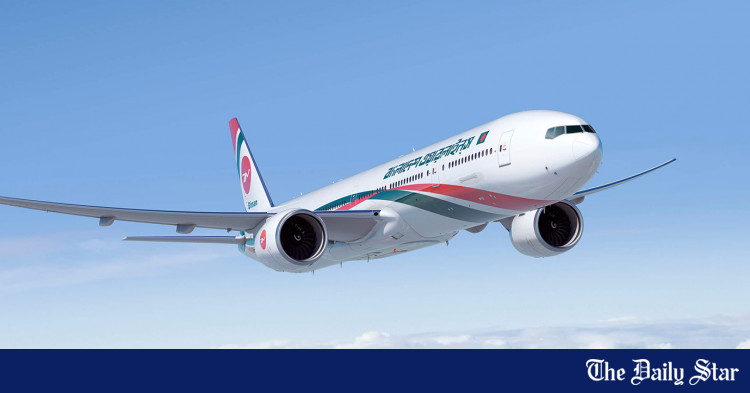
Biman Bangladesh Airlines has decided in principle to purchase 14 aircraft from Boeing -- to expand its fleet and modernise the national flag carrier.


The decision was taken at Biman's annual general meeting held on Tuesday, Boshra Islam, general manager (public relations) of Biman, told The Daily Star today.


Aviation and Tourism Adviser Sk Bashir Uddin, who is also chairman of Biman's Board of Directors, chaired the meeting.

Biman's decision ruled out Boeing's rival Airbus's proposal to sell aircraft to the national airline. During the meeting, the board of directors principally approved the purchase of 14 Boeing aircraft, subject to price negotiations and other terms in line with recommendations of Biman's techno-finance committee, Boshra Islam said.


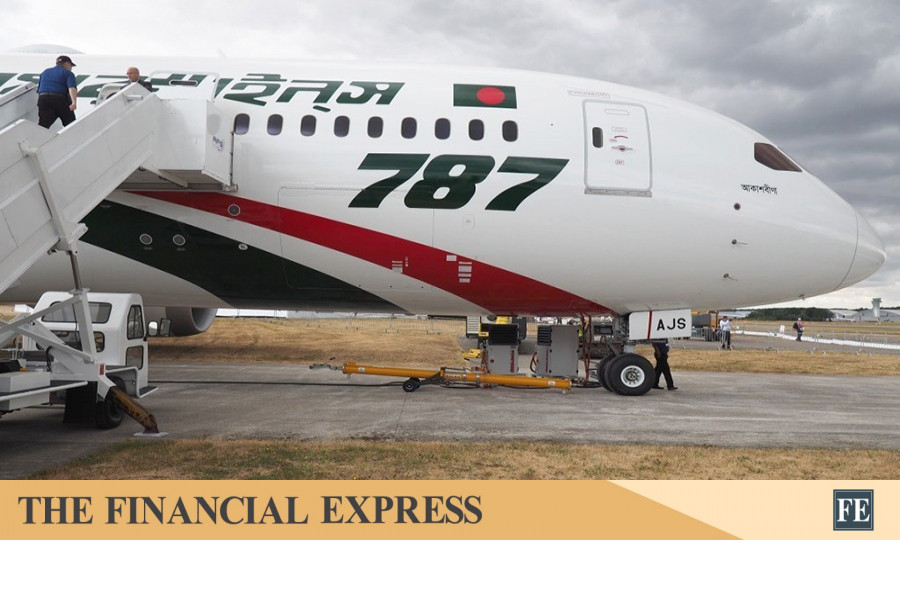
Biman will buy eight Boeing 787-10 Dreamliners, two Boeing 787-9 Dreamliners and four Boeing 737-8 MAX aircraft.

The interim government had earlier pledged to purchase 25 aircraft from Boeing as part of efforts to reduce the trade deficit with the United States. Following further evaluation and scrutiny, Biman finalised the decision.

Board members said the move was taken considering the need to enhance the country's aviation capacity, strengthen international connectivity, and meet future passenger and cargo demand. Once the aircraft are inducted into the fleet, opportunities will be created to expand operations in both state and commercial sectors, according to sources at the meeting.


After completing required approvals and financial procedures, the final contract will be signed with Boeing, followed by phased delivery of the aircraft, the source added.

Airbus has long been urging Biman to buy its aircraft, arguing that adding Airbus models alongside the existing fleet would make the national carrier more flexible, resilient, and competitive. Envoys from France, Germany and the United Kingdom, together with senior Airbus officials, had said at a rare press conference in November last year that Europe is willing to support Bangladesh's growing role as a key aviation player and that Biman needs modern, environmentally friendly aircraft, which Airbus is well-positioned to provide.​
 
Analyze

Analyze Post

Add your ideas here:
Highlight Cite Respond
Air passenger demand high, BD fleet capacity low

Aviation prospects abound, but fleet proportionately undersized

Profitable new destinations beckon but airline fails to fly for aircraft shortages: Officials


GULAM RABBANI
Published :
Jan 08, 2026 08:42
Updated :
Jan 08, 2026 08:42

1767919260041.webp

Bangladesh's state-run airline feels incapacitated to increase flight frequencies and fly to potentially profitable new international destinations, belying rising passenger demand and revenue growth, sources say.

Biman Bangladesh Airlines is caught in such a paradox because the national airline has received no response from international lessors despite issuing tenders multiple times in recent years.

On the other hand, the aviation authorities have also failed to finalize any plane-purchase order with aircraft manufacturers over the past five years.

"We attempted three to four times over the past few years to lease aircraft but received no response from the lessors," Boshra Islam, Biman's spokesperson, told The Financial Express.

However, she could not specify the exact reason for the lack of response from the prospective lease-givers.

Kazi Wahidul Alam, a former board member of Biman and aviation expert, says the core problem lies in the airline's inability to act swiftly under government procurement rules, at a time when global aircraft supply is tight and leasing decisions are often made within days.

He suggests holding direct negotiations with the lessors, bypassing the lengthy government tender process to achieve immediate results.

The national carrier's fleet has now just 19 aircraft, after returning two leased planes last year when their contracts expired. Of these, four are Boeing 777-300 ER, four Boeing 787-8, two Boeing 787-9, four Boeing 737 and five Dash 8-400 aircraft.

Biman currently operates flights to 22 international destinations and plans to expand its network to Male, Jakarta, Colombo, and Sydney-all considered potential profitable international routes.

Sources say two Dash-8 aircraft manufactured in Canada joined the Biman fleet as its latest purchases in February and March 2021. Since then, Biman authorities have been unable to expand the fleet for inordinate indecision as to whether to purchase aircraft from Europe or the United States. In the face of a surge in international air travels and increasing competition from foreign airlines, Biman unveiled an ambitious decade-long plan in March 2024 that includes the purchase of at least 26 new aircraft and expansion of its route network.

Despite adopting such ambitious plan, the authorities couldn't make any firm decision or place orders with any manufacturer for a long time, even as two aviation giants -- Europe's Airbus and the US-based Boeing, repeatedly submitted their proposals.

However, finally the Biman Board of Directors, in a meeting held on December 30 last, took an "in-principle" decision to purchase 14 aircraft from Boeing.

Under the previous Awami League government, a policy decision had been announced to purchase 10 Airbus aircraft. However, that plan shifted dramatically after the fall of the Sheikh Hasina government in a mass uprising.

Amid changing political dynamics and mounting pressure linked to US President Donald Trump's tariff policies, the proposed aircraft order has now swung in Boeing's way.

Boshra Islam said Biman would have to wait seven long years, until November 2031, to receive the first Boeing delivery.

Consequently, an immediate solution to the aircraft crisis remains a far cry, and it is already affecting operations.

Biman has suspended flights on Dhaka-Sylhet-Manchester route from March 1 this year to free up aircraft for transporting Hajj pilgrims starting next April.

Biman follows the way every year, during Hajj season.

The airline's announcement on the launch of services on the Dhaka-Karachi route from January 29 this year under a bilateral agreement may deepen the aircraft crisis.

Biman Bangladesh Airlines resumed flights to Japan's Narita in September 2023. After 21 months of restarting the much-anticipated Dhaka-Narita service, Biman last May announced the suspension of operations on this route, effective from July 1 in 2025.

The national flag-carrier management says the decision was based on three factors- the hajj operations, shortage of aircraft in its fleet, and financial viability of the route. However, insiders have said the airline was compelled to take the decision as it has been incurring heavy losses since resuming the service.

The airline had planned to launch direct flight from Dhaka to New York in the United States. However, reports say, it has been unable to do so due to the lower quality of Hazrat Shahjalal International Airport (HSIA) in Dhaka.​
 
Analyze

Analyze Post

Add your ideas here:
Highlight Cite Respond
Govt to guarantee Biman’s purchase of 14 Boeing aircraft

By Rashidul Hasan

1768525815378.webp


The government will provide a sovereign guarantee to Biman Bangladesh Airlines to buy 14 aircraft from US planemaker Boeing, as the two sides are likely to sign a deal within this month, sources at the national flag carrier said.


The first aircraft from Boeing for Biman is scheduled for delivery in November 2031, with the remaining aircraft expected to arrive by October 2035, Boshra Islam, general manager of Biman, told The Daily Star yesterday.


A sovereign guarantee is a commitment by the state to cover the debt or financial obligations of another entity if it defaults, reducing risk for lenders and improving access to financing for large or strategic investments.

“The government will give a sovereign guarantee to Biman to get the loan for buying aircraft from Boeing,” Boshra said.


Asked about financing, she said Biman will issue a request for proposal to get the loan. “We will get the loan from those organisations that will offer the lowest interest rate,” she added.

Biman has posted profits for the fifth year in a row. The state-owned carrier recorded a net profit of Tk 785 crore in the fiscal year 2024–25, a rise of 178 percent from the previous year.

At its annual general meeting on December 30 last year, Biman decided in principle to purchase 14 aircraft from Boeing to expand its fleet and modernise operations. The meeting was chaired by Aviation Adviser Sk Bashir Uddin, who is also the chairman of the national carrier.


Biman currently operates a fleet of 19 aircraft, 14 of which are Boeing-made. Under the new plan, the carrier will buy eight Boeing 787-10 Dreamliners, two Boeing 787-9 Dreamliners and four Boeing 737-8 MAX aircraft.

The interim government earlier pledged to buy 25 aircraft from Boeing as part of efforts to reduce the trade deficit with the United States. Following further evaluation, Biman finalised its decision.


The decision ruled out a competing proposal from Airbus to sell aircraft to Biman.

Under the previous Awami League government, a policy decision was announced to buy 10 Airbus aircraft, Boeing’s European challenger. After the fall of Sheikh Hasina’s government in the 2024 mass uprising, and amid pressure related to US reciprocal tariffs, the interim government shifted in favour of Boeing.

Board members said the move reflects the need to expand aviation capacity, strengthen international connectivity and meet future passenger and cargo demand.

The final contract with Boeing is likely to be signed within this month, followed by phased delivery of the aircraft, the sources said.

The board reviewed Boeing’s proposal dated November 24, 2025, along with a revised draft agreement submitted on December 20, 2025, before granting policy-level approval on December 30.

Biman has faced a severe fleet shortage in recent years after failing to manage aircraft availability through leasing, disrupting existing routes and delaying the launch of new services.

Aviation analyst and former Biman board member Kazi Wahidul Alam said aircraft purchases usually require a down payment of about 10 percent of the total price, usually arranged through banks.

“Only after the down payment is made and the aircraft purchase agreement is signed does the order become officially confirmed,” he said.

Recalling Biman’s 2007 deal with Boeing, he said the signing process was complex. “Initially, the plan was to sign the agreement in Dhaka. Later, we were required to go to the US Department of Commerce to finalise it,” he said.

Alam, however, said, “Relying solely on a single manufacturer undermines commercial competitiveness.”

Airbus, Europe’s largest aerospace company, has urged Biman to assess aircraft purchases based on commercial and technical merit rather than political considerations, amid reports that Bangladesh has agreed to buy Boeing aircraft as part of a trade arrangement with the United States aimed at easing additional tariffs.

Wouter van Wersch, executive vice-president for international at Airbus, told The Daily Star in December last year that Biman’s aircraft decision should be based on offers, not politics.

“We want Biman to take the decision based on fact, based on commercial, technical and capacity-building value,” he added.

In November last year, ambassadors and high commissioners from France, Germany, the United Kingdom and the European Union also urged the government to consider Airbus aircraft for Biman at a joint press conference in Dhaka.​
 
Analyze

Analyze Post

Add your ideas here:
Highlight Cite Respond

Boeing aircraft deal soon: Foreign adviser

FE ONLINE REPORT
Published :
Feb 01, 2026 20:21
Updated :
Feb 01, 2026 20:21

1769993521328.webp


Bangladesh government is going to sign a deal with US aviation giant Boeing very soon to procure new aircraft for the state-owned carrier Biman Bangladesh Airlines, the country’s foreign affairs adviser has said, citing an acute shortage of planes that has forced the airline to suspend operations on several Middle Eastern routes.

Speaking on Sunday in Dhaka, Md Touhid Hossain said Biman’s limited fleet was constraining its international network at a time of growing demand.

“Biman cannot fly on many Middle Eastern routes due to a shortage of aircraft,” he said, adding that a deal with Boeing was expected to be signed soon.

Hossain made the remarks at the closing session of a two-day election-related workshop organised for members of the Diplomatic Correspondents Association, Bangladesh, with the support of the Media Resources Development Initiative.

Responding to a separate question on trade relations with the United States, the adviser said details of ongoing negotiations over Washington’s reciprocal tariffs on Bangladeshi exports could not be made public. “Whether the tariff will be reduced or by how much should not be disclosed for the sake of a successful negotiation,” he said.

Turning to domestic politics, Hossain expressed optimism about voter participation in the forthcoming 13th national parliamentary election, predicting turnout would exceed 55%. He noted that turnout in Bangladesh’s 1991 election stood at 55%, which he described as a benchmark.

“No election in Bangladesh has ever been held without incident,” he said, adding that authorities had taken action in response to recent election-related disturbances. “What matters most is holding a credible election. The election will be completed peacefully, and people will be able to exercise their right to vote.”

Hossain said the government had briefed foreign stakeholders on measures taken to address election-related violence and maintain stability during the polling period.

Asked about public comments by foreign diplomats stationed in Bangladesh on the election process – remarks that are less common in countries such as India – the adviser said he did not see this as a failure on the part of diplomats. “It has become a tradition in our country,” he said. “People here want to hear the views of foreign diplomats.”

The foreign affairs adviser also said the ministry had no information regarding a possible post-election visit to Japan by the chief adviser.

On the issue of diplomatic passports, Hossain said some advisers had already surrendered theirs in order to obtain ordinary passports more quickly for visa processing, adding that he himself had not yet done so.

The event was also addressed by the UN Development Programme’s resident representative in Bangladesh, Stefan Liller, who said the UN and its partners remained committed to supporting peaceful, inclusive and credible elections in the country through continued collaboration.​
 
Analyze

Analyze Post

Add your ideas here:
Highlight Cite Respond

14 Boeing planes at Tk 30,000-35,000cr: Interim govt eyes long-term deal

Adviser Bashir says annual payments may be Tk 1,500-2,000cr


8 February 2026, 17:16 PM

1770599101612.webp

File photo: BSS

The government is going to sign a deal with Boeing to purchase 14 planes valued at around Tk 30,000-35,000 crore.

Civil Aviation Adviser Sk Bashir Uddin disclosed the development at a press conference at his Secretariat office.

“A techno-financial analysis has been completed based on the proposals received from both Airbus and Boeing. A negotiation team was formed with Adviser Wahiduddin Mahmud, leading it to negotiate the price with Boeing,” he said.

“This negotiation is still ongoing. If we complete this process, Alhamdulillah, but if not, unfortunately, we won’t be able to complete our procurement,” the adviser said.

“The aircraft buying proposal that we are making may be valued at around Tk 30,000 to Tk 35,000 crore. We will have to pay this amount over 10 years. In fact, it may take even longer than that, because the payment schedule is very long-term. It may take as long as 20 years to complete the payment. So, if you consider this, we may have to pay around Tk 1,500 crore to Tk 2,000 crore per year,” added the adviser.

Asked about the purchase of aircraft from the US plane maker, the adviser said, “We promised to buy 25 aircraft. Our context was under WTO Section 21, where the United States declared a national emergency. Under this national emergency, they have framed a global agreement, called the ART Agreement, and sadly, this agreement leaked from Bangladesh.”

The adviser said, “In return, we have been humiliated, but I don’t think anything was disclosed from this leaked document that would harm national interests. Whenever any agreement is in the early stages, there is always a non-disclosure agreement. This Non-disclosure agreement means that if anyone wants to buy property or enter into any bilateral contract, there is a non-disclosure clause until the contract is executed. Once the contract is executed, the agreement will certainly be disclosed. I don’t see any issue with the disclosure.”

Bashir also said, “A total of 16 million passengers flew from Dhaka airport last year. Of them, only two million passengers were carried by Biman. The reason for this is that we don’t have the capacity to carry passengers.

The adviser said that out of the total 19 aircraft, Biman has only 14 flyable planes.

“With these 14 planes, our network and our master plan for the airline show that we need 47 planes by 2035,” he also said.​
 
Analyze

Analyze Post

Add your ideas here:
Highlight Cite Respond
  • Love (+3)
Reactions: Bilal9

Airbus wants Biman to consider aircraft deals on merit, not politics
Says Wouter van Wersch, executive vice president of the plane maker

View attachment 22689
Wouter van Wersch

Airbus, Europe's largest aeronautics and space company, wants Bangladesh to evaluate Biman Bangladesh Airlines' aircraft procurement based on the merits of the offers rather than political considerations, amid reports that Bangladesh has placed an order for 25 Boeing aircraft as part of a trade agreement with the United States aimed at reducing additional tariffs.

"The decision should be based on the offers, not politics. We want Biman to take the decision based on fact, based on commercial, technical and capacity-building value," Wouter van Wersch, executive vice president (International) of Airbus, said in an interview with The Daily Star and two other aviation reporters of Bangladesh during a visit to Dhaka last week.

He was accompanied by Edward Delahaye, vice president and head of customer accounts for India and South Asia. They also met top government and Biman officials during the short trip to pursue Airbus' offer.

Their visit came shortly after ambassadors and high commissioners from France, Germany, the United Kingdom, and the European Union in Dhaka jointly pressed the government to consider Airbus aircraft for Biman at a programme in early November.

Asked whether the EU would put political pressure like Boeing, Wouter said, "There is no political pressure. Airbus is an important European company, and Bangladesh-Europe relations are strong. That is why ambassadors speak up. They support us in many countries, not only Bangladesh."

Asked whether the EU would put political pressure like Boeing, Wouter said, "There is no political pressure. Airbus is an important European company, and Bangladesh-Europe relations are strong. That is why ambassadors speak up. They support us in many countries, not only Bangladesh."

"They are advocating for a fair, transparent evaluation — the same as we are. The decision must be based on the merits of the offers."

When asked whether the EU is using its export leverage to pressure Bangladesh to buy Airbus and reduce the trade deficit, he said, "Europe wants a level playing field and a factual evaluation. We do not want the aircraft choice to be political. The decision should be based on the offers, not politics."

Biman's fleet is currently dominated by Boeing, with 14 of its 19 aircraft from the US manufacturer. Airbus recently submitted a fresh proposal to sell 14 aircraft to the national carrier.

Earlier in August, Bangladesh agreed to buying Boeing wide-body aircraft as part of a trade agreement with the United States aimed at reducing additional tariffs. According to media reports, citing commerce ministry officials, an order for 25 Boeing aircraft has been placed with the first aircraft expected by 2029.

Meanwhile, several experts have pointed out that when fleet expansion decisions are shaped by diplomacy rather than technical assessment, airlines often face downstream challenges: mismatched aircraft sizes, underutilised wide-bodies, expensive maintenance obligations, and gaps in route planning.

Biman's own experience over the past decade illustrates this. The airline has historically operated a mixed Boeing fleet but struggled with underutilisation of certain wide-body aircraft due to lack of long‑haul flights and pilots.

About expert criticism that a mixed fleet of Boeing and Airbus aircraft would burden Biman, Wersch said, "Even if Biman continues with Boeing, they would still need training for new aircraft. We have helped about 80 airlines transition from Boeing to Airbus. Our cockpit commonality – from A321 to A350 – saves significant cost because pilots can fly multiple types."

He added, "If Biman chooses a mixed fleet, we are ready. Many airlines operate mixed fleets, but Airbus offers major efficiency advantages due to cross-type commonality."

The Airbus executive also discussed aircraft availability before delivery. "We always do that with every customer. Our leasing team in Toulouse works closely with all major lessors who operate Airbus aircraft. We can help build a solution to source capacity before our own delivery slots."

"If Biman selects Airbus, we will push and convince lessors to provide aircraft as a bridge until our deliveries start. We are not a lessor, but we will facilitate availability depending on what lessors have," he added.

Asked how long it will take to secure leased aircraft, Wersch said, "If Biman selects Airbus aircraft, we are ready to work with lessors to secure earlier capacity and bridge the gap until our aircraft arrive."

On the A321neo and A350, he said their success contributes to longer lead times. "That is why we encourage all customers, including Biman, to decide early to secure delivery slots."

About the difference between Airbus' previous and latest proposal, he said, "We cannot go into commercial details. However, the number remains 14. We follow Biman's requirements fully."

He added, "We provide the correct economic and commercial conditions, and we believe our products bring strong value and profitability potential for Biman."

Asked whether the interim government can progress with the Airbus proposal, Wersch said, "We cannot comment on the government. Biman is our customer, and we are counting on them to progress the deal. We have seen the same information in the media about political decisions. What matters to us is that our offers are evaluated on their merits."

On whether Biman needs more aircraft beyond the 25 it intends to buy from Boeing, he said, "Regarding the market's perspective the answer is yes. The market is big enough. Bangladesh has significant traffic.

The presence of Emirates, Qatar, Kuwait, Saudia, Turkish – all operating large aircraft to Dhaka – shows the market is strong. Biman can take a larger share."

The senior Airbus official added that with the right aircraft and the new Dhaka terminal, "Biman can compete better… there is room for more than 25 aircraft. We believe in the growth potential of Bangladesh aviation. With the new terminal and the right fleet, Biman can grow significantly."

On the A350-900's cost-efficiency, fuel economy, and safety, he said, "Absolutely. It has the lowest seat-mile cost due to advanced aerodynamics, materials and engines. The cabin is award-winning and wider than the 787. Its range is also superior. The A350-1000 is the longest-range aircraft in the world."

"For Dhaka-Los Angeles or Dhaka-New York, the A350-900 is the only aircraft that can do it non-stop," he explained. "The A350-900 can fly the route non-stop with more passengers and more cargo. The 787 cannot do this today without a technical stop. Flying direct saves fuel, time and operational cost."

He also highlighted opportunities beyond commercial aircraft, including Earth observation satellites and potential additional units of the C295 transport aircraft. "Our defense products have been operating in Bangladesh for more than 10 years, and we continue supporting them," Wersch said.

He added that Airbus works with both Army Aviation and the Air Force. "The Army Aviation operates two C295s. Discussions continue, but we cannot disclose defence details. You can say that Airbus is ready to help Army Aviation increase its capabilities. Discussions on Earth observation are ongoing."​

The US has Bangladesh Govt. convinced that the latter must pay proper share for any trade imbalance if Bangladesh has to avoid punitive tariffs. Paying that proper share means Bangladesh buying US agri products (oil seeds, cereal, food grains), US cotton and of course - Boeing aircraft for the national air carrier. No amount of complaints by Airbus will change this.
 
Analyze

Analyze Post

Add your ideas here:
Highlight Cite Respond

14 Boeing planes at Tk 30,000-35,000cr: Interim govt eyes long-term deal

Adviser Bashir says annual payments may be Tk 1,500-2,000cr


8 February 2026, 17:16 PM

View attachment 24423
File photo: BSS

The government is going to sign a deal with Boeing to purchase 14 planes valued at around Tk 30,000-35,000 crore.

Civil Aviation Adviser Sk Bashir Uddin disclosed the development at a press conference at his Secretariat office.

“A techno-financial analysis has been completed based on the proposals received from both Airbus and Boeing. A negotiation team was formed with Adviser Wahiduddin Mahmud, leading it to negotiate the price with Boeing,” he said.

“This negotiation is still ongoing. If we complete this process, Alhamdulillah, but if not, unfortunately, we won’t be able to complete our procurement,” the adviser said.

“The aircraft buying proposal that we are making may be valued at around Tk 30,000 to Tk 35,000 crore. We will have to pay this amount over 10 years. In fact, it may take even longer than that, because the payment schedule is very long-term. It may take as long as 20 years to complete the payment. So, if you consider this, we may have to pay around Tk 1,500 crore to Tk 2,000 crore per year,” added the adviser.

Asked about the purchase of aircraft from the US plane maker, the adviser said, “We promised to buy 25 aircraft. Our context was under WTO Section 21, where the United States declared a national emergency. Under this national emergency, they have framed a global agreement, called the ART Agreement, and sadly, this agreement leaked from Bangladesh.”

The adviser said, “In return, we have been humiliated, but I don’t think anything was disclosed from this leaked document that would harm national interests. Whenever any agreement is in the early stages, there is always a non-disclosure agreement. This Non-disclosure agreement means that if anyone wants to buy property or enter into any bilateral contract, there is a non-disclosure clause until the contract is executed. Once the contract is executed, the agreement will certainly be disclosed. I don’t see any issue with the disclosure.”

Bashir also said, “A total of 16 million passengers flew from Dhaka airport last year. Of them, only two million passengers were carried by Biman. The reason for this is that we don’t have the capacity to carry passengers.

The adviser said that out of the total 19 aircraft, Biman has only 14 flyable planes.

“With these 14 planes, our network and our master plan for the airline show that we need 47 planes by 2035,” he also said.​

This man (Adviser Sheikh Bashiruddin) is a jewel in Dr. Yunus' cabinet, especially for our aviation sector. Being a highly successful businessman he was a superb pick - and he stayed above all corruption and acted as a patriotic citizen in negotiating trade details with the US. A man of his brilliance and stature is unheard of in subcontinental politics (or even business, I will say). A visit to one of his many well-managed ultramodern computer-controlled and robotics-equipped factories is convincing enough, which yours truly has seen.

He was the primary US tariff trade negotiator (along with the brilliant Dr. Khalilur Rahman) and earned us the rewards in that scenario, unheard of in other countries.

I hope BNP will utilize him as an adviser in some capacity - but alas, he may not be interested. BNP is already going with Dr. Khalil as an adviser - it seems, which is nevertheless positively encouraging for all Bangladeshis.
 
Analyze

Analyze Post

Add your ideas here:
Highlight Cite Respond

Members Online

Latest Posts

Back
 
G
O
 
H
O
M
E