New Tweets

[🇧🇩] The U.S.A.---A Strategic Partner of Bangladesh

G Bangladesh Defense
[🇧🇩] The U.S.A.---A Strategic Partner of Bangladesh
157
7K
More threads by Saif


US trade deal discussed with BNP, Jamaat before signing: FM

UNB
Published :
Mar 04, 2026 20:19
Updated :
Mar 04, 2026 20:27

1772669755869.webp


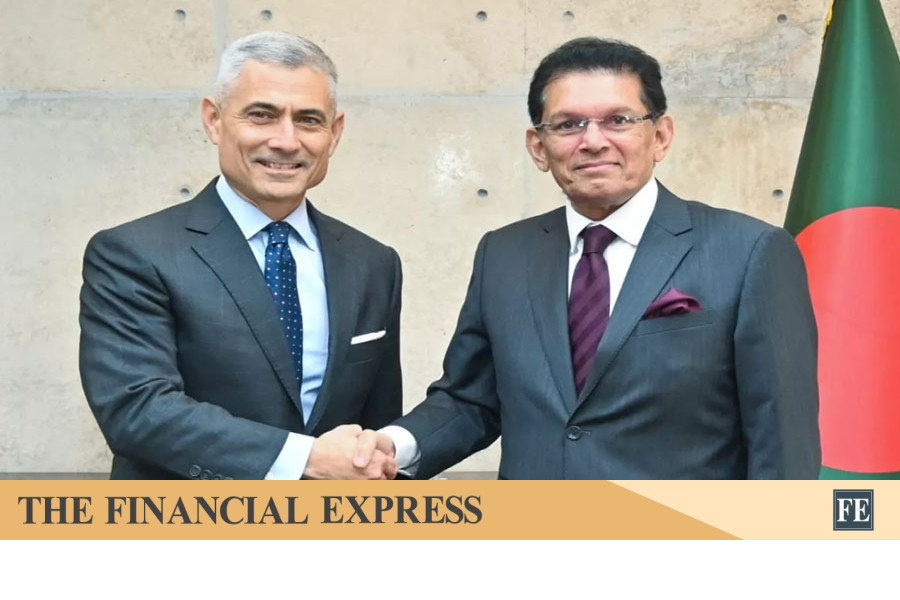
Foreign Minister Dr Khalilur Rahman on Wednesday rejected claims that the reciprocal trade agreement between Bangladesh and the US was signed abruptly just days before the recently held national election.

He said the matter had been discussed in advance with the leadership of the country’s two major political parties - BNP and Jamaat-e-Islami- and both of which had agreed to the deal prior to its signing.

"The US Trade Representative spoke to the heads of our two key parties before the elections and they also agreed to it. So it's not like we did this in the dark,” Dr Khalilur said in response to a question on whether there had been any pressure to expedite the signing of the deal ahead of the recently held national election.

The Foreign Minister said there are entry and exit clauses and the government can review it if it desires so.

US Assistant Secretary of State for South and Central Asian Affairs Paul Kapur, who met the Foreign Minister at the Ministry of Foreign Affairs, underscored the importance of implementing the provisions of the agreement on ‘reciprocal trade’ to foster greater bilateral trade and investment.

The Foreign Minister reiterated the government’s commitment to policy continuity, particularly in the economic domain.

Assistant Secretary Kapur, in the meeting, discussed key US priorities in Bangladesh, expanding market access for American businesses, strengthening cooperation on illegal immigration, and deepening collaboration on regional security and counterterrorism.

The deal says Bangladesh shall endeavor to increase purchases of US military equipment and limit military equipment purchases from certain countries; and shall endeavor to facilitate the increase of purchases by its national flag carrier (Biman Bangladesh Airline) of U.S. civilian aircraft, parts, and services.

Bangladesh will submit a full and complete notification to the WTO of all subsidies that it provides, as required under Article 25.1 of the WTO Agreement on Subsidies and Countervailing Measures within six months of entry into force of this agreement.

Biman Bangladesh Airline intends to purchase 14 Boeing aircraft, plus a purchase option of additional aircraft.

The deal also says Bangladesh shall endeavor to purchase, or to facilitate the purchase by Bangladeshi companies, of U.S. energy, including long-term offtake agreements for U.S. liquefied natural gas, with an estimated value of $15 billion over 15 years.

Khalilur, who played a leading role on Bangladesh's side in negotiations with the US before the agreement, said the deal was not concluded just three days before the elections but a year ago, in February 2025.

The Centre for Policy Dialogue (CPD) recently said the reciprocal trade agreement between the US and Bangladesh is “highly discriminatory” and must be revoked.

“We are stunned and bewildered….I do not know how a government could enter into such an agreement,” said CPD Research Director Khondaker Golam Moazzem at a media briefing on the social and economic policies of the new government for the first 180 days and beyond.​
 
Analyze

Analyze Post

Add your ideas here:
Highlight Cite Respond

Is Bangladesh under diplomatic and psychological pressure over trade deal with US?

Moshahida Sultana
Updated: 05 Mar 2026, 21: 21

1772757319476.webp

Containers at Chattogram port File photo

2 April 2025. Spring had arrived in the Rose Garden of the White House. In a speech delivered there, US President Donald Trump described the day as “one of the most important in the history of the United States” and declared it “Liberation Day”, or a day of “economic independence”.

Signing an executive order, he declared a “national emergency” to address the US trade deficit and later imposed additional “reciprocal” tariffs ranging from 11 per cent to 50 per cent on countries with which the United States had the largest trade deficits.

Trump had said at the time, “From now on, we will be smart again and a very rich country.” He claimed the new policy would boost domestic production, create jobs, and “bring in trillions of dollars to cut taxes and pay off the national debt.”

Many economists said the formula used to calculate the “reciprocal” tariffs was overly simplified and had little connection to real trade barriers.

Some argued that it was less about reducing trade deficits and more about pursuing geopolitical interests. Importers said the tariffs would come directly out of their pockets. For consumers, the message was simple: they would have to buy goods at higher prices.

On 14 April, five small American businesses filed a lawsuit against the Trump administration. The businesses included a wine importer from New York, a cycling apparel brand from Vermont and an educational materials manufacturer from Virginia.

They argued that the tariffs posed a serious threat to their survival. Under the International Emergency Economic Powers Act (IEEPA), they said, the constitutional authority to impose such tariffs lies with Congress, not the president.

Despite being aware of the legal dispute, Bangladesh’s interim government signed a non-disclosure agreement with the United States in June 2025 while the case was still ongoing.

As the terms of the agreement were kept secret, questions immediately arose among citizens about whether the interim government had the authority to sign such a deal. The move drew widespread criticism. When parts of the agreement were later leaked, a ministry official was blamed and subsequently dismissed from service.

On 29 August, when the United States Court of Appeals ruled that most of the global tariffs were illegal, it dealt a major blow to the foundation of Trump’s aggressive trade policy. The law he had invoked to impose the tariffs, the court said, did not actually grant him such authority.

The world then came to understand that there was serious constitutional debate over whether the president could unilaterally impose such tariffs.

Even after the case moved to the Supreme Court of the United States, Bangladesh continued negotiations with the United States for a reciprocal trade agreement for five months.

First, it should have been clear that signing a new trade agreement with the United States under those circumstances would expose any country to an uncertain and risky legal environment. Expecting that the lower court ruling would be overturned in the Supreme Court was unrealistic.

Second, in practice these tariffs were essentially a tax on American consumers and businesses. While they generated large revenues for the US treasury, they also harmed many small businesses. If the tariffs were ultimately ruled illegal, complicated administrative questions would arise over how the collected duties should be refunded.

Third, there were concerns that the United States’ executive branch could easily reinterpret emergency laws and turn tariffs into a political tool—citing one law today and another tomorrow—thereby eroding confidence in the trade commitments and stability offered by the United States.

Considering all this, it would have been prudent to stay away from new trade agreements until the legal status of the tariffs became clear and Congress reasserted control.

Yet Bangladesh completed the agreement with the United States on 9 February—just three days before the election. Only ten days later, on 20 February, the US Supreme Court declared the reciprocal tariffs illegal.

While other South Asian countries were moving cautiously—reviewing the terms of potential deals and observing the steps taken by others—why did Bangladesh rush to sign the agreement?

Ignoring these questions, the then chief adviser Muhammad Yunus described the deal as a success.

Questions have arisen as to why he considers it a success when the terms reportedly restrict Bangladesh’s policy independence and appear discriminatory. What exactly is the benchmark of that success?

Since the fall of the Sheikh Hasina government on 5 August 2024 and her flight to India, anti-India rhetoric has intensified in Bangladesh’s political arena.

In such circumstances, the interim government appears to have failed to objectively assess Bangladesh’s economic interests. The decision to sign the agreement quickly may have stemmed from a perceived need to choose between “Indian dominance” and “American dominance”.

Another factor cited by the interim government was pressure from the country’s ready-made garment sector, which accounts for a large share of Bangladesh’s exports.

Trump’s strategy behind imposing high reciprocal tariffs was to gain leverage in bilateral bargaining with individual countries. Bangladesh initially faced a tariff of 37 per cent, which was gradually reduced to 20 per cent and finally to 19 per cent.

However, when setting the final 19 per cent rate, the United States reportedly imposed several conditions in the trade agreement in exchange for removing reciprocal tariffs on ready-made garments.

These conditions included requirements to use US cotton and allowing the United States to determine export volumes. Even business leaders themselves have questioned whether these conditions are realistically implementable.

Ironically, the interests of the garment exporters—whose concerns were cited to justify the agreement—now appear uncertain. The interim government had claimed success by pointing out that India faced a 50 per cent tariff while Bangladesh faced only 19 per cent. But the US Supreme Court ruling effectively nullified that claim. A universal 10 per cent reciprocal tariff is now in effect for all countries.

This episode illustrates how decisions driven by populist rhetoric or the interests of particular business groups can ultimately harm national interests.

Rather than framing the issue as being for or against India or the United States, the interim government should have prioritised Bangladesh’s own interests. Opposing Indian dominance does not mean accepting American dominance.

Notably, India has still not signed such a deal. Even after the Supreme Court decision, India has refrained from negotiations with the United States, citing uncertainty.

So what about Bangladesh? The United States is now urging Bangladesh to honour the agreement, amid uncertainty over implementing a temporary 10 per cent tariff for 150 days under another law. Because Bangladesh knowingly signed the deal, the United States is reportedly attempting to exert diplomatic and psychological pressure for compliance.

The agreement reportedly states that Bangladesh can withdraw from it within 60 days of signing. As the deal has not yet been approved by parliament, the current government could request time for parliamentary review. If so, the agreement would not take immediate effect.

However, even before that process begins, a special envoy of Trump—Paul Kapur—visited Dhaka on 3 March to hold discussions with various stakeholders.

Significantly, besides the trade agreement, the United States also wants Bangladesh to sign two specialised defence agreements—General Security of Military Information Agreement and Acquisition and Cross‑Servicing Agreement.

One major risk of such defence agreements is that they could compel Bangladesh to purchase expensive military equipment and restrict its ability to maintain relations with other countries.

Bangladesh is geopolitically sensitive and must maintain diplomatic balance with multiple countries to protect its interests. Such agreements could therefore create long-term strategic complications.

The key question now is what the current government will do with this unequal trade deal.

It is already known that budget allocations have been made in line with the agreement. Bangladesh has begun purchasing wheat from the United States at higher prices. In other words, the interim government had already progressed considerably in implementing the deal’s conditions.

An interesting development is that the interim government’s national security adviser Khalilur Rahman has now been appointed foreign minister in the elected government. His role in the negotiations with the United States has been widely discussed. Under these circumstances, the decision the current government takes regarding the agreement will be closely watched.

Recently, alongside Israel, the United States has also attacked Iran. Such actions create a form of psychological pressure on other countries.

In this context, Trump’s special envoy visited Bangladesh with proposals for additional defence agreements even before the start of the parliamentary session.

Meanwhile, Iran’s restrictions on the use of the Strait of Hormuz have pushed oil prices higher. Alongside managing this crisis, the new government’s responsibility is to build a sustainable economic structure for the long term.

A key task now is to objectively assess how the trade agreement with the United States might harm Bangladesh’s economy.

For several reasons, the agreement appears discriminatory against Bangladesh. It raises the overall tariff burden on Bangladeshi exports to around 34.5 per cent. In effect, instead of gaining advantages for garment exports, Bangladesh may face a heavier tariff burden.

In exchange, Bangladesh is offering tariff concessions on 6,710 US products while receiving limited reciprocal concessions on only 1,638 products. This creates risks for domestic agriculture and reduces government revenue.

The agreement would also require Bangladesh to purchase US-made Boeing aircraft as well as large quantities of LNG and agricultural products each year. This could reduce the country’s ability to import cheaper goods from nearby markets and increase subsidy pressure and geopolitical risks.

Granting greater advantages to US companies in sectors such as electricity, telecommunications, infrastructure, oil, gas and insurance could weaken domestic industries and strategic sectors.

Under the agreement, Bangladesh may also have to align with US export restrictions and trade controls, which could harm trade with third countries. Moreover, if Bangladesh signs any trade deal that conflicts with US interests, the United States could cancel the agreement and reimpose punitive tariffs.

In such a situation, Bangladesh should not be shaken by the psychological and diplomatic pressure currently being exerted by the United States. The interim government made a mistake; if the elected government repeats the same mistake, Bangladesh may lose another opportunity in haste.

Instead, Bangladesh should request time for review, monitor the ongoing legal uncertainties, highlight the limitations of its economic capacity, and most importantly inform the United States that the agreement will be reassessed and revised through the national parliament.

Moshahida Sultana is an associate professor in the Accounting Department at the University of Dhaka.​
 
Analyze

Analyze Post

Add your ideas here:
Highlight Cite Respond

US asstt secy talks foreign policy, economic ties with BNP

He holds meeting with Jamaat also

Staff Correspondent 05 March, 2026, 21:58

1772758950738.webp

United States assistant secretary of State for south and central Asian affairs Paul Kapur. | UNB photo

United States assistant secretary of state for South and Central Asia S Paul Kapur on Thursday met with a delegation from the Bangladesh Nationalist Party and discussed areas of bilateral interest.

The three key issues discussed included diplomatic relations, foreign policy, and economic ties between Bangladesh and the United States.

The meeting, held at the US ambassador’s residence in Gulshan, Dhaka, also focused on strengthening ties, reviewing the new government’s policies, and exploring future avenues for cooperation, said BNP delegation head and party standing committee member Abdul Moyeen Khan.

Speaking to reporters after the meeting, Moyeen Khan said that the US had always been a friendly nation to Bangladesh and had supported the country in various ways in the past.

He said that it was natural for the US officials to visit Bangladesh, with a new government in place, to understand Bangladesh’s policies, and discuss future initiatives, as well as its relationships with other countries, particularly with the United States.

Earlier in the day, a delegation of the opposition in the Jatiya Sangsad, the Bangladesh Jamaat-e-Islami met Paul Kapur also at the US ambassador’s residence.

The delegation was led by the party’s nayeb-e-amir Syed Abdullah Mohammad Taher.

The US official arrived in Dhaka on Tuesday night from New Delhi on a two-day visit.​
 
Analyze

Analyze Post

Add your ideas here:
Highlight Cite Respond

US trade deal: Bangladesh may lose Tk 1,327cr a year in revenue

Says CPD, urges review of agreement

1773207915052.webp

File photo: Reuters

Bangladesh could lose about Tk 1,327 crore in annual import tax revenue by granting tariff benefits to more than 6,700 US products under the reciprocal trade deal signed with the Trump administration, according to the Centre for Policy Dialogue.

The think tank raised the fiscal implications of the Agreement on Reciprocal Tariff (ART) at a media briefing in Dhaka yesterday, urging the government to review the deal signed a month ago.

“Bangladesh needs to thoroughly assess the implications of the ART with a fiscal-budgetary lens and open discussions with the US Trade Representative to review the agreement,” the CPD said.

The briefing was organised to recommend measures for the upcoming national budget for fiscal year 2026–27, which begins in July.

CPD warned that the agreement could have significant implications for Bangladesh’s fiscal and budgetary framework and may also raise questions about the country’s economic sovereignty.

According to the think tank, the deal includes provisions touching on trade relations with third countries and attempts to limit where goods can or cannot be sourced from.

Speaking at the event, CPD Distinguished Fellow Mustafizur Rahman said the US Supreme Court’s decision to strike down President Donald Trump’s global tariffs has opened a fresh window for discussion.

“If Bangladesh wishes, it can reassess the agreement,” he said in response to a question.

Bangladesh initially faced a proposed 37 percent tariff after Trump announced reciprocal tariffs under a national emergency law on April 2 last year. The rate was later reduced to 35 percent, then to 20 percent during negotiations, and finally to 19 percent under the deal signed by the interim government three days before the February 12 general election.

The agreement drew criticism from several economists and analysts, who argued that many of its provisions favour US interests and could have long-term implications for Bangladesh.

Later, the US Supreme Court declared Trump’s global tariffs illegal. Trump subsequently introduced a 15 percent universal tariff.

As a result, Bangladesh now faces an effective reciprocal tariff of 15 percent. Combined with the country’s existing average tariff of 16.5 percent, the total effective tariff burden on Bangladeshi exports stands at about 31.5 percent.

According to a paper presented by CPD at the event, Bangladesh will have to grant duty-free access to around 4,500 US products immediately under the agreement, while another 2,210 product categories are expected to receive duty-free treatment over the next five to 10 years.

Using government data, the CPD said import duties on US goods generated about $108.3 million, or roughly Tk 1,327 crore, in fiscal year 2024–25.

“If the structure of imports from the United States remains unchanged, at least this amount could be lost annually once the agreement is fully implemented,” said CPD Executive Director Fahmida Khatun.

Beyond the direct revenue loss, she cautioned that the arrangement could also create complications under World Trade Organization rules.

Bangladesh’s unilateral decision to grant duty-free access to US goods does not constitute a formal free trade agreement, which normally allows exceptions to the Most Favoured Nation (MFN) principle.

As a result, the move could be viewed as inconsistent with Bangladesh’s MFN obligations at the WTO, potentially allowing other member states to challenge it before the organisation’s Dispute Settlement Body, according to CPD.

The agreement may also carry broader fiscal implications linked to procurement commitments.

“If Bangladesh is required to purchase certain goods from the United States under the deal, the government may need to adjust its public procurement policies,” Fahmida said.

Such commitments could increase public spending, particularly if US imports prove more expensive than alternative sources.

Mustafizur added that the growing tendency to use trade as a geopolitical tool is weakening the WTO system.

He noted that several provisions in the agreement carry financial risks and that much of its implementation would depend on the private sector.

However, he said, if the government wants to encourage private companies to import from the United States, it may have to offer subsidies.

“Otherwise, the question arises as to why they [private sector] would choose to import specifically from the United States,” he said.​
 
Analyze

Analyze Post

Add your ideas here:
Highlight Cite Respond

Why the trade agreement with the US is problematic
17 February 2026, 12:00 PM
Kallol Mustafa

View attachment 24611
FILE VISUAL: STAR BUSINESS

On February 9, the interim government led by Muhammad Yunus signed a trade agreement with the United States. Although the interim government has claimed that reducing the reciprocal tariffs imposed by the United States will help preserve Bangladesh’s export market, no other South Asian country that has been subjected to reciprocal tariffs has signed such an agreement with the US so far. As a result, the signing of this agreement just three days before the national election by a temporary interim government, while maintaining strict secrecy, has raised concerns for various reasons. In particular, the inclusion of strategic conditions related to national security and geopolitics in addition to tariff concessions, has raised questions about how far Bangladesh’s interests have been protected in the agreement.

Through this agreement, the US-imposed reciprocal tariff on Bangladeshi exports has been reduced from 20 to 19 percent. The existing average general tariff rate for entry into the US market is 15.5 percent. On top of this, an additional reciprocal tariff of 19 percent will be imposed. That means the total tariff burden on Bangladeshi products in the US market will stand at 34.5 percent. The interim government has not disclosed the concessions Bangladesh must provide, but a contract released by the Office of the United States Trade Representative (USTR) shows that the country has been entangled in a wide range of conditions in exchange for a small tariff concession. This article will analyse those conditions to examine whether they serve Bangladesh’s national interest.

Extensive tariff concessions for the United States

Under this agreement, Bangladesh will provide tariff concessions on 6,710 US products, while receiving reciprocal tariff concessions on 1,638 products. Among these, 4,500 products from the United States will enjoy duty-free access to Bangladesh from the very day the agreement comes into force. These products fall under the EIF (Enter Into Force) category. They include livestock, meat, fish, chemicals, textiles, machinery, and various industrial goods.

In addition, tariffs on 1,539 products listed under Category B-5 will be reduced by half immediately after the agreement comes into effect. The remaining half will be reduced gradually over the next four years. From January 1 of the fifth year, these products will become completely duty-free. Similarly, for the 672 products listed under Category B-10, tariffs will initially be reduced by half, and the remaining half will be reduced gradually over the following nine years, reaching zero on January 1 of the tenth year. (Schedule 1, Annex I) These massive tariff concessions may expose local agricultural and industrial products to competition from US goods and may also reduce government revenue from tariffs.

Removal of non-tariff barriers to US industrial exports

The agreement places strong emphasis on reducing non-tariff barriers to US exports. It states that Bangladesh cannot implement import licensing policies such that they hinder the import of US goods (Article 2.2, Section 2).

Previously, even if US industrial and medical products were approved in the United States, they had to undergo additional testing and marketing approval before being exported to Bangladesh. The US identified this as a non-tariff barrier and obtained Bangladesh’s commitment to remove it (Annex III, Section 1).

As a result, Bangladesh will have to make several concessions, including recognising US Food and Drug Administration (FDA) certification and prior marketing approval for medical equipment and pharmaceuticals (Article 1.1, Annex III); accepting vehicles manufactured according to US federal motor vehicle safety and emission standards (Article 1.2, Annex III); and removing any import bans or licensing requirements on US remanufactured products or components (Article 1.3, Annex III).

Removal of non-tariff barriers to US agricultural and biotechnology products

In the name of removing non-tariff barriers, Bangladesh has also promised to reduce testing requirements for US agricultural and biotechnology products (Annex III, Section 1).

These commitments include recognising US sanitary and phytosanitary measures and other standards as alternatives to Bangladesh’s own standards for US food and agricultural products (Article 1.4, Annex III); recognising the standards of the US Department of Agriculture (USDA) Food Safety and Inspection Service for meat, poultry, eggs, and similar products (Article 1.5, Annex III); formulating policies within 24 months of signing the agreement to allow biotechnology products recognised as safe in the US to enter Bangladesh without additional testing or labelling (Article 1.6, Annex III); and refraining from imposing import bans on poultry products from regions located more than 10 kilometres away from areas affected by avian influenza virus in the US (Article 1.8, Annex III).

The removal of these so-called non-tariff barriers effectively means losing the ability to ensure biosecurity in food and agricultural imports. Previously, US cotton had to undergo chemical pest treatment upon entering Bangladesh. That will no longer be possible. Controversial genetically modified products cannot be restricted under this deal, and Bangladesh cannot even require mandatory labelling, which may pose a threat to public health.

Mandatory import of costly US goods

Under the agreement, Bangladesh must purchase 14 aircraft from Boeing. Over the next 15 years, Bangladesh must purchase US energy products, particularly liquefied natural gas (LNG), worth $15 billion (approximately Tk 1.8 lakh crore). In addition, Bangladesh must purchase US agricultural products worth $3.5 billion (approximately Tk 42,000 crore). This includes purchasing 700,000 tonnes of wheat annually for five years and purchasing soybeans worth $1.25 billion, or amounting to 2.6 million tonnes within one year. Furthermore, Bangladesh will have to increase the purchase of military equipment from the US while reducing purchases from other countries (Section 6, Annex III).

Traditionally, Bangladesh has imported limited quantities of US agricultural and energy products due to higher costs and longer delivery times. The new US deal prevents Bangladesh from importing these products at more competitive prices and faster delivery times from the international market. This will cause financial losses and may require subsidies or special incentives to private sector importers. Meanwhile, increased imports of military equipment from the US will raise both financial costs and geopolitical risks.

Granting US companies the same privileges as domestic firms

According to the agreement, Bangladesh must facilitate US investors in the extraction and export of mineral resources and provide US companies with equal opportunities in the power generation, telecommunications, transportation, and infrastructure sectors (Article 5.1, Section 5).

Additionally, Bangladesh will not be allowed to impose any limit on US capital investment in the oil, gas, insurance, and telecommunications sectors (Article 1.16, Annex III). The existing requirement for domestic and foreign private insurance companies to reinsure 50 percent of their business with the state-owned Sadharan Bima Corporation will not apply to US insurance companies (Article 1.15, Annex III).

US multinational corporations possess far greater financial and technological capabilities than domestic companies. Providing them with equal opportunities will harm local industries. It will also reduce sovereign control over these sectors. For example, despite domestic gas shortages, Bangladesh would still have to permit US companies to export gas.

Restrictions on subsidies and protection for domestic industries

Developing economies often provide subsidies and incentives to domestic public and private institutions to overcome financial and technological limitations. Without such support, employment suffers and foreign dependency in strategic sectors increases. Under the agreement with the US, Bangladesh must refrain from providing non-commercial assistance or other subsidies to state-owned enterprises. Moreover, Bangladesh must disclose all subsidy and incentive information related to manufacturing institutions to the US and eliminate subsidies that distort market competition (Article 5.2, Section 5).

Bangladesh must also comply as quickly as possible with WTO agreements on fisheries subsidies and control so-called harmful subsidies in the fisheries sector while reforming subsidy systems (Article 1.23, Annex III). Within six months of the agreement taking effect, Bangladesh must submit detailed information on all types of subsidies to the World Trade Organization (Section 6, Annex III).

Incorporation into the US national security framework

Although the agreement is presented as one for reciprocal trade, it effectively ties Bangladesh to the US national security framework. Under the agreement, if the United States adopts border or trade measures in the interest of national security, Bangladesh must adopt “complementary restrictive measures” in alignment with US policies (Article 4.1, Section 4).

Bangladesh must comply with US export bans and take effective measures to prevent violations of US export control laws. This will prevent Bangladesh from maintaining neutrality in conflicts between major powers and will effectively force Bangladesh to align with US sanctions or trade wars.

Additionally, Bangladesh must adopt technologies in its ports, terminals, and logistics networks that prevent data leakage to third countries and restrict the use of software considered harmful to US national security (Article 1-5, Section 3, Annex III).

Restrictions on agreements and trade with third countries

To prioritise US interests, the agreement includes provisions that may hinder Bangladesh’s independent sovereign decision-making. It restricts Bangladesh from entering into any agreement or understanding with a third country that contains scientifically unsubstantiated, discriminatory, or biased technical standards that could harm US exports (Article 2.3 (3), Section 2).

Bangladesh will not be able to sign any digital trade agreement with another country that undermines US interests (Article 3.2, Section 3). Furthermore, if Bangladesh enters into any free trade or preferential economic agreement with a non-market-based country (China and Russia, as considered by the US) that undermines this agreement, the US will be able to cancel the agreement and reimpose punitive tariffs (Article 4.3 (4), Section 4).

Bangladesh will also not be able to purchase nuclear reactors, fuel rods, or enriched uranium from countries considered risky to US interests. However, exemptions may apply where no alternative supplier or technology exists, or where agreements had already been signed before this agreement took effect (Article 4.3 (5), Section 4).

Therefore, through this so-called trade agreement, arrangements have effectively been made to establish US dominance over Bangladesh’s economy, trade, and foreign policy. From industry and agriculture to energy and infrastructure, all sectors of Bangladesh have been subordinated to US commercial interests. Bangladesh has been drawn into US geopolitical projects, and its ability to build relationships with third countries has been restricted.

In short, this agreement is against the national interest and violates Bangladesh’s independence and sovereignty. An agreement signed by a temporary interim government while keeping the people of the country in the dark cannot be considered legitimate. According to Article 6.6 of the agreement, it is supposed to come into effect 60 days after the completion of all legal processes. It is hoped that the newly elected government will take the initiative to cancel this agreement through discussion in the national parliament, as it runs contrary to national interests.

Kallol Mustafa is an engineer and writer who focuses on power, energy, environment, and development economics.​
Another chetonabadi A$$-wipe who is parroting Indian propaganda. We should identify these people and vigorously debate/neutralize/expose them for who they are.
 
Analyze

Analyze Post

Add your ideas here:
Highlight Cite Respond
  • Like (+1)
Reactions: Saif
Another chetonabadi A$$-wipe who is parroting Indian propaganda. We should identify these people and vigorously debate/neutralize/expose them for who they are.
I am for Free Trade Agreement with the USA. The current trade agreement does not give Bangladesh enough access for its products to the US market. What do you say?
 
Analyze

Analyze Post

Add your ideas here:
Highlight Cite Respond

Members Online

Latest Posts

Back
PKDefense - Recommended Toggle