New Tweets

[๐Ÿ‡ง๐Ÿ‡ฉ] The U.S.A.---A Strategic Partner of Bangladesh

G Bangladesh Defense
[๐Ÿ‡ง๐Ÿ‡ฉ] The U.S.A.---A Strategic Partner of Bangladesh
154
7K
More threads by Saif


US trade deal discussed with BNP, Jamaat before signing: FM

UNB
Published :
Mar 04, 2026 20:19
Updated :
Mar 04, 2026 20:27

1772669755869.webp


Foreign Minister Dr Khalilur Rahman on Wednesday rejected claims that the reciprocal trade agreement between Bangladesh and the US was signed abruptly just days before the recently held national election.

He said the matter had been discussed in advance with the leadership of the countryโ€™s two major political parties - BNP and Jamaat-e-Islami- and both of which had agreed to the deal prior to its signing.

"The US Trade Representative spoke to the heads of our two key parties before the elections and they also agreed to it. So it's not like we did this in the dark,โ€ Dr Khalilur said in response to a question on whether there had been any pressure to expedite the signing of the deal ahead of the recently held national election.

The Foreign Minister said there are entry and exit clauses and the government can review it if it desires so.

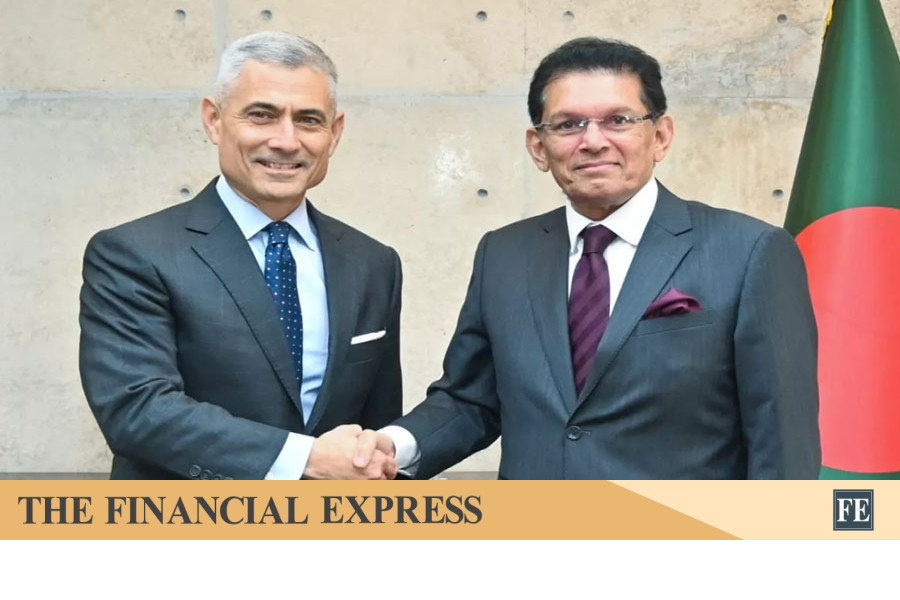
US Assistant Secretary of State for South and Central Asian Affairs Paul Kapur, who met the Foreign Minister at the Ministry of Foreign Affairs, underscored the importance of implementing the provisions of the agreement on โ€˜reciprocal tradeโ€™ to foster greater bilateral trade and investment.

The Foreign Minister reiterated the governmentโ€™s commitment to policy continuity, particularly in the economic domain.

Assistant Secretary Kapur, in the meeting, discussed key US priorities in Bangladesh, expanding market access for American businesses, strengthening cooperation on illegal immigration, and deepening collaboration on regional security and counterterrorism.

The deal says Bangladesh shall endeavor to increase purchases of US military equipment and limit military equipment purchases from certain countries; and shall endeavor to facilitate the increase of purchases by its national flag carrier (Biman Bangladesh Airline) of U.S. civilian aircraft, parts, and services.

Bangladesh will submit a full and complete notification to the WTO of all subsidies that it provides, as required under Article 25.1 of the WTO Agreement on Subsidies and Countervailing Measures within six months of entry into force of this agreement.

Biman Bangladesh Airline intends to purchase 14 Boeing aircraft, plus a purchase option of additional aircraft.

The deal also says Bangladesh shall endeavor to purchase, or to facilitate the purchase by Bangladeshi companies, of U.S. energy, including long-term offtake agreements for U.S. liquefied natural gas, with an estimated value of $15 billion over 15 years.

Khalilur, who played a leading role on Bangladesh's side in negotiations with the US before the agreement, said the deal was not concluded just three days before the elections but a year ago, in February 2025.

The Centre for Policy Dialogue (CPD) recently said the reciprocal trade agreement between the US and Bangladesh is โ€œhighly discriminatoryโ€ and must be revoked.

โ€œWe are stunned and bewilderedโ€ฆ.I do not know how a government could enter into such an agreement,โ€ said CPD Research Director Khondaker Golam Moazzem at a media briefing on the social and economic policies of the new government for the first 180 days and beyond.​
 
Analyze

Analyze Post

Add your ideas here:
Highlight Cite Respond

Is Bangladesh under diplomatic and psychological pressure over trade deal with US?

Moshahida Sultana
Updated: 05 Mar 2026, 21: 21

1772757319476.webp

Containers at Chattogram port File photo

2 April 2025. Spring had arrived in the Rose Garden of the White House. In a speech delivered there, US President Donald Trump described the day as โ€œone of the most important in the history of the United Statesโ€ and declared it โ€œLiberation Dayโ€, or a day of โ€œeconomic independenceโ€.

Signing an executive order, he declared a โ€œnational emergencyโ€ to address the US trade deficit and later imposed additional โ€œreciprocalโ€ tariffs ranging from 11 per cent to 50 per cent on countries with which the United States had the largest trade deficits.

Trump had said at the time, โ€œFrom now on, we will be smart again and a very rich country.โ€ He claimed the new policy would boost domestic production, create jobs, and โ€œbring in trillions of dollars to cut taxes and pay off the national debt.โ€

Many economists said the formula used to calculate the โ€œreciprocalโ€ tariffs was overly simplified and had little connection to real trade barriers.

Some argued that it was less about reducing trade deficits and more about pursuing geopolitical interests. Importers said the tariffs would come directly out of their pockets. For consumers, the message was simple: they would have to buy goods at higher prices.

On 14 April, five small American businesses filed a lawsuit against the Trump administration. The businesses included a wine importer from New York, a cycling apparel brand from Vermont and an educational materials manufacturer from Virginia.

They argued that the tariffs posed a serious threat to their survival. Under the International Emergency Economic Powers Act (IEEPA), they said, the constitutional authority to impose such tariffs lies with Congress, not the president.

Despite being aware of the legal dispute, Bangladeshโ€™s interim government signed a non-disclosure agreement with the United States in June 2025 while the case was still ongoing.

As the terms of the agreement were kept secret, questions immediately arose among citizens about whether the interim government had the authority to sign such a deal. The move drew widespread criticism. When parts of the agreement were later leaked, a ministry official was blamed and subsequently dismissed from service.

On 29 August, when the United States Court of Appeals ruled that most of the global tariffs were illegal, it dealt a major blow to the foundation of Trumpโ€™s aggressive trade policy. The law he had invoked to impose the tariffs, the court said, did not actually grant him such authority.

The world then came to understand that there was serious constitutional debate over whether the president could unilaterally impose such tariffs.

Even after the case moved to the Supreme Court of the United States, Bangladesh continued negotiations with the United States for a reciprocal trade agreement for five months.

First, it should have been clear that signing a new trade agreement with the United States under those circumstances would expose any country to an uncertain and risky legal environment. Expecting that the lower court ruling would be overturned in the Supreme Court was unrealistic.

Second, in practice these tariffs were essentially a tax on American consumers and businesses. While they generated large revenues for the US treasury, they also harmed many small businesses. If the tariffs were ultimately ruled illegal, complicated administrative questions would arise over how the collected duties should be refunded.

Third, there were concerns that the United Statesโ€™ executive branch could easily reinterpret emergency laws and turn tariffs into a political toolโ€”citing one law today and another tomorrowโ€”thereby eroding confidence in the trade commitments and stability offered by the United States.

Considering all this, it would have been prudent to stay away from new trade agreements until the legal status of the tariffs became clear and Congress reasserted control.

Yet Bangladesh completed the agreement with the United States on 9 Februaryโ€”just three days before the election. Only ten days later, on 20 February, the US Supreme Court declared the reciprocal tariffs illegal.

While other South Asian countries were moving cautiouslyโ€”reviewing the terms of potential deals and observing the steps taken by othersโ€”why did Bangladesh rush to sign the agreement?

Ignoring these questions, the then chief adviser Muhammad Yunus described the deal as a success.

Questions have arisen as to why he considers it a success when the terms reportedly restrict Bangladeshโ€™s policy independence and appear discriminatory. What exactly is the benchmark of that success?

Since the fall of the Sheikh Hasina government on 5 August 2024 and her flight to India, anti-India rhetoric has intensified in Bangladeshโ€™s political arena.

In such circumstances, the interim government appears to have failed to objectively assess Bangladeshโ€™s economic interests. The decision to sign the agreement quickly may have stemmed from a perceived need to choose between โ€œIndian dominanceโ€ and โ€œAmerican dominanceโ€.

Another factor cited by the interim government was pressure from the countryโ€™s ready-made garment sector, which accounts for a large share of Bangladeshโ€™s exports.

Trumpโ€™s strategy behind imposing high reciprocal tariffs was to gain leverage in bilateral bargaining with individual countries. Bangladesh initially faced a tariff of 37 per cent, which was gradually reduced to 20 per cent and finally to 19 per cent.

However, when setting the final 19 per cent rate, the United States reportedly imposed several conditions in the trade agreement in exchange for removing reciprocal tariffs on ready-made garments.

These conditions included requirements to use US cotton and allowing the United States to determine export volumes. Even business leaders themselves have questioned whether these conditions are realistically implementable.

Ironically, the interests of the garment exportersโ€”whose concerns were cited to justify the agreementโ€”now appear uncertain. The interim government had claimed success by pointing out that India faced a 50 per cent tariff while Bangladesh faced only 19 per cent. But the US Supreme Court ruling effectively nullified that claim. A universal 10 per cent reciprocal tariff is now in effect for all countries.

This episode illustrates how decisions driven by populist rhetoric or the interests of particular business groups can ultimately harm national interests.

Rather than framing the issue as being for or against India or the United States, the interim government should have prioritised Bangladeshโ€™s own interests. Opposing Indian dominance does not mean accepting American dominance.

Notably, India has still not signed such a deal. Even after the Supreme Court decision, India has refrained from negotiations with the United States, citing uncertainty.

So what about Bangladesh? The United States is now urging Bangladesh to honour the agreement, amid uncertainty over implementing a temporary 10 per cent tariff for 150 days under another law. Because Bangladesh knowingly signed the deal, the United States is reportedly attempting to exert diplomatic and psychological pressure for compliance.

The agreement reportedly states that Bangladesh can withdraw from it within 60 days of signing. As the deal has not yet been approved by parliament, the current government could request time for parliamentary review. If so, the agreement would not take immediate effect.

However, even before that process begins, a special envoy of Trumpโ€”Paul Kapurโ€”visited Dhaka on 3 March to hold discussions with various stakeholders.

Significantly, besides the trade agreement, the United States also wants Bangladesh to sign two specialised defence agreementsโ€”General Security of Military Information Agreement and Acquisition and Crossโ€‘Servicing Agreement.

One major risk of such defence agreements is that they could compel Bangladesh to purchase expensive military equipment and restrict its ability to maintain relations with other countries.

Bangladesh is geopolitically sensitive and must maintain diplomatic balance with multiple countries to protect its interests. Such agreements could therefore create long-term strategic complications.

The key question now is what the current government will do with this unequal trade deal.

It is already known that budget allocations have been made in line with the agreement. Bangladesh has begun purchasing wheat from the United States at higher prices. In other words, the interim government had already progressed considerably in implementing the dealโ€™s conditions.

An interesting development is that the interim governmentโ€™s national security adviser Khalilur Rahman has now been appointed foreign minister in the elected government. His role in the negotiations with the United States has been widely discussed. Under these circumstances, the decision the current government takes regarding the agreement will be closely watched.

Recently, alongside Israel, the United States has also attacked Iran. Such actions create a form of psychological pressure on other countries.

In this context, Trumpโ€™s special envoy visited Bangladesh with proposals for additional defence agreements even before the start of the parliamentary session.

Meanwhile, Iranโ€™s restrictions on the use of the Strait of Hormuz have pushed oil prices higher. Alongside managing this crisis, the new governmentโ€™s responsibility is to build a sustainable economic structure for the long term.

A key task now is to objectively assess how the trade agreement with the United States might harm Bangladeshโ€™s economy.

For several reasons, the agreement appears discriminatory against Bangladesh. It raises the overall tariff burden on Bangladeshi exports to around 34.5 per cent. In effect, instead of gaining advantages for garment exports, Bangladesh may face a heavier tariff burden.

In exchange, Bangladesh is offering tariff concessions on 6,710 US products while receiving limited reciprocal concessions on only 1,638 products. This creates risks for domestic agriculture and reduces government revenue.

The agreement would also require Bangladesh to purchase US-made Boeing aircraft as well as large quantities of LNG and agricultural products each year. This could reduce the countryโ€™s ability to import cheaper goods from nearby markets and increase subsidy pressure and geopolitical risks.

Granting greater advantages to US companies in sectors such as electricity, telecommunications, infrastructure, oil, gas and insurance could weaken domestic industries and strategic sectors.

Under the agreement, Bangladesh may also have to align with US export restrictions and trade controls, which could harm trade with third countries. Moreover, if Bangladesh signs any trade deal that conflicts with US interests, the United States could cancel the agreement and reimpose punitive tariffs.

In such a situation, Bangladesh should not be shaken by the psychological and diplomatic pressure currently being exerted by the United States. The interim government made a mistake; if the elected government repeats the same mistake, Bangladesh may lose another opportunity in haste.

Instead, Bangladesh should request time for review, monitor the ongoing legal uncertainties, highlight the limitations of its economic capacity, and most importantly inform the United States that the agreement will be reassessed and revised through the national parliament.

Moshahida Sultana is an associate professor in the Accounting Department at the University of Dhaka.​
 
Analyze

Analyze Post

Add your ideas here:
Highlight Cite Respond

US asstt secy talks foreign policy, economic ties with BNP

He holds meeting with Jamaat also

Staff Correspondent 05 March, 2026, 21:58

1772758950738.webp

United States assistant secretary of State for south and central Asian affairs Paul Kapur. | UNB photo

United States assistant secretary of state for South and Central Asia S Paul Kapur on Thursday met with a delegation from the Bangladesh Nationalist Party and discussed areas of bilateral interest.

The three key issues discussed included diplomatic relations, foreign policy, and economic ties between Bangladesh and the United States.

The meeting, held at the US ambassadorโ€™s residence in Gulshan, Dhaka, also focused on strengthening ties, reviewing the new governmentโ€™s policies, and exploring future avenues for cooperation, said BNP delegation head and party standing committee member Abdul Moyeen Khan.

Speaking to reporters after the meeting, Moyeen Khan said that the US had always been a friendly nation to Bangladesh and had supported the country in various ways in the past.

He said that it was natural for the US officials to visit Bangladesh, with a new government in place, to understand Bangladeshโ€™s policies, and discuss future initiatives, as well as its relationships with other countries, particularly with the United States.

Earlier in the day, a delegation of the opposition in the Jatiya Sangsad, the Bangladesh Jamaat-e-Islami met Paul Kapur also at the US ambassadorโ€™s residence.

The delegation was led by the partyโ€™s nayeb-e-amir Syed Abdullah Mohammad Taher.

The US official arrived in Dhaka on Tuesday night from New Delhi on a two-day visit.​
 
Analyze

Analyze Post

Add your ideas here:
Highlight Cite Respond

Members Online

Latest Posts

Back
PKDefense - Recommended Toggle