[🇧🇩] Ship Recycling Industry in Bangladesh

[🇧🇩] Ship Recycling Industry in Bangladesh
20
3K
More threads by Bilal9

G Bangladesh Defense

Ship-breaking must ride out compliance challenges

Wasi Ahmed
Published :
Mar 25, 2026 00:35
Updated :
Mar 25, 2026 00:35

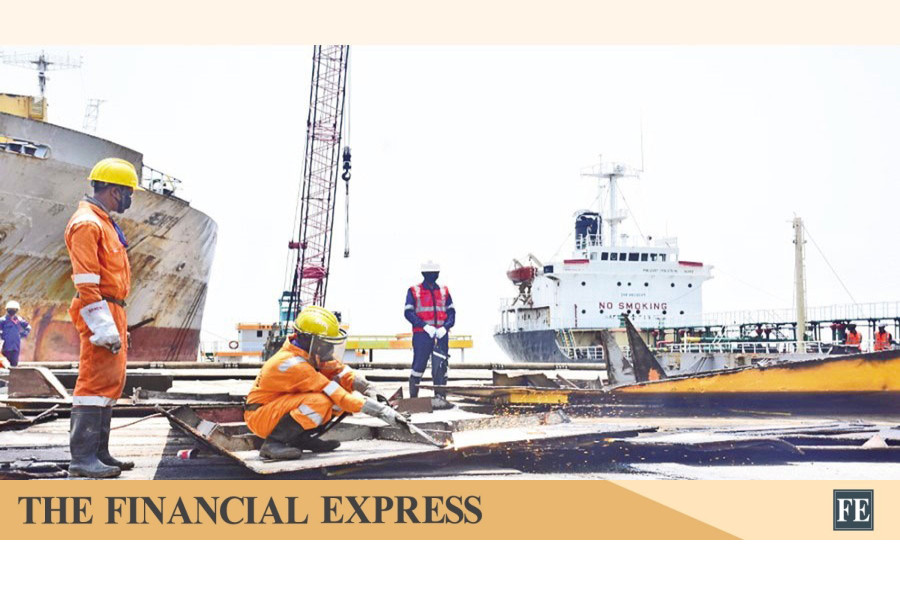
1774397987997.webp


Ship-breaking, long recognised as one of Bangladesh's most promising industrial sectors, is currently navigating a difficult phase. Once hailed as a thriving source of raw materials and employment, the industry now finds itself slowed by regulatory hurdles and tightening global compliance demands. Unless addressed promptly, these challenges threaten to undermine the sector's potential to remain a vital contributor to the country's economy.

The industry's woes are tied closely to international scrutiny. The Norwegian Ship Owners' Association (NSA) has explicitly warned against allowing ships to be recycled in Bangladesh unless it is done in accordance with the Hong Kong International Convention for the Safe and Environmentally Sound Recycling of Ships. The European Union (EU) has taken an even firmer stance: accounting for nearly 20 per cent of global scrap vessel sales, it is moving towards banning the export of scrap ships to Bangladesh and other South Asian countries that are perceived as non-compliant.

These are not vague warnings but action-driven measures aimed at significantly reducing the number of vessels available for dismantling. As a result, the Bangladeshi ship-breaking industry is already feeling the pressure.

Data from the NGO Shipbreaking Platform (NSP) paint a stark picture. In the first half of 2025, imports of end-of-life vessels into Bangladesh dropped by 36 per cent compared to the same period in 2024. Only 57 ships were imported between January and June this year, down from 89 a year earlier. Annual figures also highlight the downward trajectory: Bangladesh dismantled 130 vessels in 2024, compared to 170 in 2023, 122 in 2022, and 254 in 2021.

Industry insiders point to the absence of the mandatory Document of Authorisation to Conduct Ship Recycling (DASR) as a key reason for the slowdown. Without this document, which is central to compliance under the Hong Kong Convention, yards cannot legally import ships.

The Ministry of Industries has recently instructed the Bangladesh Ship Recycling Board (BSRB) to take measures to issue DASR certificates for compliant yards. A notification has already been circulated, emphasising that DASRs will be issued once final approval of the Ship Recycling Facilities Plan (SRFP) is in place.

Bangladesh ratified the Hong Kong Convention in 2023, a significant step forward in aligning with international standards. However, the criteria for issuing DASRs have yet to be finalised, leaving local ship recyclers in limbo. As Kamal Uddin Ahmed, adviser to the Bangladesh Ship Breakers and Recyclers Association (BSBRA), observed: "We're unable to bring in ships because no yard has been issued the required DASR yet. Without it, imports are not permitted under the Hong Kong Convention that Bangladesh has ratified." He added that bureaucratic hurdles, including lengthy delays in securing environmental clearances, have worsened the situation.

Despite these setbacks, ship breaking remains an indispensable part of Bangladesh's industrial fabric. Since its emergence decades ago, the sector has created a mixed legacy-contributing significantly to the economy while raising serious concerns about worker safety and environmental degradation.

The economic upside is substantial. The industry employs around 300,000 workers and indirectly supports a wide range of heavy and light engineering industries. Iron rods and billets recycled from dismantled ships are of particularly high quality and supply nearly 80 per cent of the raw material required by domestic re-rolling mills. This, in turn, feeds the construction sector.

Bangladesh enjoys a unique advantage in ship breaking and recycling because nearly every component of dismantled vessels finds a local market. From steel to spare parts, furniture, and machinery, the industry ensures maximum utilisation of resources. Advanced economies have long abandoned ship breaking due to high labour costs and strict compliance requirements, making Bangladesh, along with a few other South Asian countries, a competitive hub for the industry.

While international criticism often paints the sector as unsafe and environmentally hazardous, there has been notable progress in recent years. Fourteen ship-breaking yards have already achieved "green yard" status, meeting international standards for safe and environmentally sound practices. Another dozen yards are reportedly in the process of upgrading their facilities.

This shift indicates a growing awareness among industry players of the need to align with global benchmarks. However, for this momentum to continue, supportive measures from the government are essential. Timely issuance of DASRs, streamlined clearance processes, and targeted investments in compliance infrastructure could rejuvenate the sector.

The ship-breaking industry sits at a crossroads. On the one side are the immense opportunities-continued employment for hundreds of thousands, self-reliance in steel supply and the chance to establish Bangladesh as a global hub for environmentally sound ship recycling. On the other side are significant threats-declining vessel imports, mounting international restrictions and bureaucratic inertia at home.

The path forward lies in proactive engagement. Bangladesh must ensure full implementation of the Hong Kong Convention, not only to satisfy global partners but also to safeguard its workers and environment. Establishing a transparent and efficient system for issuing DASRs is the first crucial step. Beyond that, greater investment in safety training, waste management, and yard modernisation will be vital.

Ship breaking in Bangladesh is too important a sector to be allowed to falter. The industry has supported the country's steel supply, created vast employment opportunities, and fostered allied industries for decades. But sustaining these benefits requires urgent attention to compliance issues and regulatory bottlenecks.

The choice is clear: either adapt swiftly to global standards or risk losing an industry that has been central to the nation's economic resilience.​
 

JICA steps up support to modernise Bangladesh’s ship recycling sector


1784762517965.webp


Japan International Cooperation Agency (JICA) is strengthening its support for Bangladesh’s ship recycling sector through a series of initiatives aimed at improving workplace safety, environmental compliance and institutional capacity in line with international standards.

The initiatives were discussed at a meeting between Commerce, Industries and Textiles and Jute Minister Khandaker Abdul Muktadir and a JICA delegation, led by its Chief Representative in Bangladesh, Takahashi Junko, at the Ministry of Commerce on Wednesday.

Commerce Minister said Bangladesh’s ship recycling industry plays a significant role in the country’s economy by generating employment and supplying recycled steel to local industries.

He said that JICA’s support would help modernise the sector by strengthening occupational safety, promoting environmental protection, encouraging the adoption of advanced technologies and streamlining regulatory procedures.

According to officials, the ongoing JICA-supported Ship Recycling Project seeks to build the country’s capacity to develop a safer, more efficient and environmentally sustainable ship recycling industry while helping local enterprises become part of global industrial supply chains.

Under the project, JICA is providing technical assistance to assess the operational capacity of ship recycling yards, train government officials and industry stakeholders, prepare modern technical guidelines, and strengthen the regulatory framework governing the sector.

The project will also support the verification and certification of Ship Recycling Facility Plans (SRFPs) and improve the approval process for Ship Recycling Plans (SRPs), enabling Bangladesh to align its practices with internationally accepted standards.

To simplify regulatory procedures, the project is assisting the government in developing a one-stop online approval system, which is expected to reduce administrative complexities and speed up clearances from multiple government agencies involved in ship recycling activities.

JICA Chief Representative Takahashi Junko said the agency was working closely with the relevant authorities to address both administrative and technical challenges facing Bangladesh’s ship recycling industry.

She said the project’s main objective is to establish an internationally compliant and environmentally friendly ship recycling system capable of supporting the sector’s long-term sustainable growth.

The meeting also reviewed ways to enhance the competitiveness of small and medium enterprises (SMEs) by improving their access to technology, training and skills development so they can participate in domestic and international supply chains.

Director General of the Bangladesh Ship Recycling Board ASM Shafiul Alam Talukder, Joint Secretary of the Ministry of Commerce Mahbuba Khatun Minu also attended the meeting.​
 

Online platform planned for ship recycling approvals

Star Business Report

1784764275608.webp

Khandakar Abdul Muktadir

The government plans to introduce a single online service system to simplify the approval process for the ship recycling sector.

The system would allow businesses to complete different government approvals more quickly and easily, said Commerce, Industries and Textiles Minister Khandakar Abdul Muktadir yesterday.

He made the remarks after meeting a delegation from the Japan International Cooperation Agency (JICA), led by its Bangladesh Chief Representative Takahashi Junko, at the commerce ministry.

Muktadir said the ship recycling industry plays an important role in Bangladesh’s economy by creating significant employment opportunities.

He said sustainable growth of the sector requires stronger safety measures, better environmental protection, modern technology, and a simpler approval process.

The minister added that the JICA Ship Recycling Project, being implemented with JICA support, would help improve the sector’s capacity and develop an internationally recognised system.

Under the project, initiatives will include assessing the capacity of ship recycling yards, training workers, preparing modern guidelines, verifying and certifying facility plans, and improving the approval process for ship recycling plans.

“Building the capacity of local entrepreneurs and connecting them with the international industrial system is one of the government’s key goals. With JICA’s support, Bangladesh’s industrial sector will become more competitive,” Muktadir said.

Takahashi Junko said JICA is working with relevant organisations to address the administrative and technical challenges facing Bangladesh’s ship recycling industry.​
 

Ensuring safe shipbreaking practice


1786922246683.webp


The death of nine workers at a shipbreaking yard in Sitakundu on Friday once again brought to light the appalling safety standard of dismantling old ships. Despite deaths and disabilities of workers at regular intervals, hardly any improvement is noticeable in the workplace safety situation. Actually, safety of workers seems to be nobody's concern. Otherwise, how could the management of Ferdous Steel and Shipbreaking Yard send workers into the hull of a demolished LNG tanker to investigate a strange smell without any safety gear? When the workers fell ill after being exposed to toxic gas, they allegedly did not receive medical treatment in time. Worse still, a regulator reportedly inspected the vessel and cleared it as free of toxic gas. The shipyard had even received an international certification as a "green shipyard", supposedly meeting certain safety standards. The incident exposes the gap between compliance on paper and safety in practice, while raising serious questions about how such compliance certificates are obtained.

Ship breaking began as an economic activity quite by chance when a storm-blown Greek ship was grounded at Sitakundu in 1965. The local people tore off whatever they fancied to be of value and subsequently many ancillary businesses like old furniture shops, and old electrical equipment shops grew up. Over the decades, Bangladesh has emerged as a major ship-breaking hub, outcompeting yards in Europe and the Gulf. Its competitive edge, however, has largely stemmed from cheap labour and lax enforcement of environmental and workplace safety standards. But it has come at a huge human and environmental cost. In the absence of safety measures, labourers work often under life-threatening conditions and a good number of them die or become disable every year. Since 2014, 161 workers, including a dozen this year, have died at Sitakunda's shipbreaking yards. The environmental cost is no less alarming as shiploads of toxic waste are stealthily discharged near the coasts, taking a heavy toll on marine ecosystem and surrounding environment.

Although shipbreaking yards have in recent years begun transforming themselves into "green yards" through improved infrastructure, waste-management systems and compliance with international standards, serious safety deficiencies still persist. Most yards still rely on the tidal beaching method, in which vessels are run aground on the shore and dismantled largely by hand. The method is more hazardous than the dry-dock systems used in many other countries. Besides, many yards still lack proper systems for risk assessment, gas monitoring and worker training, while personal protective equipment remains inadequate. The role of regulatory agencies also warrants scrutiny: whether departments such as the Department of Explosives and the Department of Environment conduct proper inspections before issuing clearances is a legitimate question. Weak enforcement of environmental and workplace safety laws, ineffective inspections and owners' disregard for worker safety have allowed the situation to persist. The latest incident shows that neither the regulators nor the shipyard authorities have been carrying out their responsibilities with due diligence. Poor compensation provided for is another reason why factory owners do not pay adequate attention to workers' safety.

It is time to hold accountable the shipyard owners, the Bangladesh Ship Breakers and Recyclers Association (BSBRA) and the relevant regulatory bodies for their failure to ensure workplace safety. The Prime Minister's Office has already formed a high-level committee to assess the safety loopholes in the industry. What is needed now is a concerted effort by all stakeholders to ensure foolproof safety standards and strict compliance, rather than leaving workers exposed to life-threatening hazards. The ship breaking industry presents Bangladesh with both opportunity and dangers. The priority must be to maximise its benefits while minimising its human and environmental costs.​
 

The global injustice behind Bangladesh’s shipbreaking industry

Dr Mohammad Zulfikar Ali

The shipbreaking industry needs an industry-specific civil liability framework: one that compensates workers who are killed, injured or made ill by their work, while also changing current industry practices by putting an effective civil remedy system in place. The recent deaths of workers at a shipbreaking yard owned by Ferdous Steel demonstrate how urgently such a remedy is needed in a country like Bangladesh, where compensation based on negligence is all but unknown.

The Shipbreaking Liability Certificate (SLC) scheme I propose in my book, Worker Injustices in the South Asian Shipbreaking Industry: Developing a Framework for International Legal Accountability, is designed to meet that objective. It could also be applied regionally or globally, wherever practices common in Bangladesh, India and Pakistan—beaching ships and relying heavily on manual labour—are followed. Under the SLC, a shipowner would be required to maintain shipbreaking insurance until a ship was completely demolished, covering claims by any worker who suffered a minor or serious injury, developed a work-related illness or died as a result of the work. Workers and their families should not have to go from door to door seeking compensation; compensation is their right. The scheme would supplement compensation available under labour law, which is far too low given the profits generated by the global industry.

1789255849297.webp

A worker dismantles a ship on the banks of the Karnaphuli River in Chattogram’s Bakalia area, outside the designated shipbreaking zones of Sitakunda and Mirsarai. Concerns have been raised over hazardous working conditions, environmental pollution and inadequate safeguards for workers. The photo was taken on May 7, 2023. Photo: Rajib Raihan

One of the underlying problems is that existing domestic and international legal frameworks provide no effective mechanism for addressing shipowners' financial responsibility. Because of this legal gap, every major party in the business chain—the shipping industry, cash buyers and open-registry countries—can benefit financially from the industry, while none bears adequate legal responsibility for the deaths, injuries and diseases that shipbreaking workers routinely suffer.

The theory of rectificatory justice, which seeks to address wrongs by correcting unjust losses and gains, provides an important framework for regulating the shipbreaking industry. Its emphasis on remedying injustice offers a way of thinking through how the wrongs suffered by shipbreaking workers might be put right: namely, by addressing the lack of adequate and prompt compensation for those who suffer work-related deaths, injuries and diseases. Since it is unrealistic to expect casualties in the yards to be eliminated altogether in the near future, an SLC built on the principles of rectificatory justice would at least introduce an effective system of remedy and deliver some measure of justice to workers and their families.

Seen through the lens of rectificatory justice, one of the most relevant factors is the profit earned by the dominant actors in the shipbreaking industry, particularly those in the global maritime business. Those profits highlight an underlying injustice: the economic benefits generated by the industry are not matched by adequate recognition of, or responsibility for, the harms suffered by workers. This is where postcolonial theory becomes relevant, as it raises the question of whether the existing legal order has granted significant power and economic advantage without corresponding responsibility to dominant entities based largely in developed nations.

Postcolonial theory is relevant to shipbreaking law for two main reasons. First, these laws were adopted long after the formal end of colonialism. Yet they can still serve the interests of international shipowners based predominantly in developed nations, paying greater attention to facilitating maritime commerce than to the working conditions and human consequences in shipbreaking yards. Second, in practical terms, the existing legal frameworks do not adequately acknowledge that developing countries often have limited financial, institutional and technical resources with which to raise standards across their shipbreaking industries.

Postcolonial analysis also draws attention to the proposition that global institutions and regulatory structures can be biased in favour of developed nations. That imbalance can be seen in the design of the Hong Kong International Convention for the Safe and Environmentally Sound Recycling of Ships (Hong Kong Convention). Although it is the principal international instrument specifically governing ship recycling, the Convention permits a business model under which companies from major shipping countries can sell end-of-life ships containing hazardous materials to ship-recycling companies in South Asia, subject to the Convention's regulatory requirements. Yet it does not impose direct financial liability on those shipowners for compensating workers who suffer work-related deaths, injuries and diseases in the yards, nor does it create the comprehensive liability regime necessary to ensure that the costs associated with those harms follow the commercial actors that benefited from the vessels.

The global injustice argument, grounded in postcolonial theory, therefore provides a distinctive basis for legal reform. Shipbreaking is an integral and profitable component of the global maritime industry. Yet the existing international framework imposes no comprehensive civil liability on international shipowners for work-related deaths, injuries and diseases suffered by shipbreaking workers, or for the wider environmental damage associated with the industry. This provides the basis for arguing for a new liability framework. Applying a rectificatory global justice approach, the proposed SLC would establish a civil liability mechanism that makes shipowners financially responsible for specified harms and requires adequate compensation to be available to affected workers and their families.

Before such a framework can be established, however, it is important to examine human rights abuses in the industry through the lenses of global injustice and postcolonial theory, while asking more directly whether shipowners should bear financial and legal responsibility for the harms associated with the end-of-life disposal of their vessels. Drawing on several international reports and case studies from the EU, international oil transport and the wider shipping industry, my research argues that a global regulatory framework would represent an important step forward. Its effectiveness would depend on its capacity to require every relevant party involved in the shipbreaking chain to assume an appropriate share of responsibility for deaths, injuries and work-related diseases suffered by workers in South Asian yards.

1789255905619.webp

In Bangladesh, end-of-life ships are dismantled using the beaching method, in which vessels are driven onto tidal shores and broken apart largely through manual labour, often without the infrastructure and safeguards found in purpose-built recycling facilities. Photo: Rajib Raihan

Raising standards, however, must not make shipbreaking in South Asia commercially uncompetitive. If South Asian countries improve their environmental and workplace standards, costs will inevitably rise, and shipowners may consequently stop selling their vessels to yards in the region. Competition from newly established yards elsewhere, operating at lower costs and under weaker standards, could then pull the industry away from South Asia altogether.

Against this background, the central challenge for the South Asian shipbreaking industry is to reconcile the high prices paid to shipowners with better labour and environmental practices. The region has retained its global competitiveness partly by offering shipowners high prices for end-of-life vessels, and yards are able to sustain those prices in part by minimising expenditure on labour, occupational health and safety, and environmental protection—at considerable cost to workers and the environment. One estimate suggests that South Asian shipbreaking companies spend 82 per cent of their total shipbreaking costs on purchasing the ship, leaving very little for maintaining adequate environmental and workplace safety standards. This business model contributes to a ‘race to the bottom’ in the shipbreaking industry. The industry remains heavily dependent on cheap but unsafe practices—beaching, importing ships without adequate pre-cleaning and dismantling vessels largely through manual labour—to maintain the high purchase prices offered to shipowners.

This business model contributes to recurring deaths, injuries and work-related diseases among workers, as well as pollution with long-term consequences for coastal and estuarine communities. Yet affected workers often lack the legal means and financial resources necessary to pursue adequate compensation, while environmental harms are similarly difficult to remedy through existing mechanisms. Many shipbreaking workers lack formal employment contracts, identity cards or effective registration. This context prompted the first major question of my research:

What legal and liability framework is required to make the international maritime industry accountable for harms to human life and health—including workers’ deaths, physical injuries and work-related diseases—in shipbreaking countries?

An examination of national and international legal frameworks reveals a persistent failure to balance the substantial economic benefits enjoyed by the global shipping industry against the human costs borne by workers in the shipbreaking industry.

An examination of national and international legal frameworks reveals a persistent failure to balance the substantial economic benefits enjoyed by the global shipping industry against the human costs borne by workers in the shipbreaking industry.

The regulatory frameworks adopted by India, Bangladesh and Pakistan are strongly influenced by each country’s demand for steel recovered from dismantled ships and by the local employment the industry generates. These economic needs create powerful incentives for each country to retain a significant share of the global shipbreaking market. The three countries may therefore be reluctant to impose stronger regulatory requirements for fear of losing business to competitors elsewhere. Such policies may help retain the industry, but they are insufficient to create safe workplaces or ensure adequate compensation for workers who suffer work-related deaths, injuries and diseases.

International regulatory frameworks present an even broader set of problems. Many global industries operate with both preventive regulation and mechanisms for liability and compensation. The international legal framework governing shipbreaking, by contrast, focuses primarily on prevention, while providing no dedicated international compensation scheme for workers who are killed, injured or made ill in shipbreaking yards. In practice, the preventive framework has also struggled to deliver adequate occupational health and safety protections across South Asian yards.


1789255970048.webp

Vessels are dismantled near the Bangladesh-China Friendship Bridge-1 in Dhaka’s Postagola, despite designated shipbreaking yards in the city. Such unauthorised dismantling raises concerns over environmental pollution and inadequate regulatory oversight. The photo was taken in 2023. Photo: Anisur Rahman

These weaknesses in the existing legal framework amount to a form of global injustice for two further reasons. First, the Hong Kong Convention places primary responsibility on ship-recycling states to ensure that facilities operating within their jurisdictions meet occupational health, safety and environmental requirements. Yet developing countries may lack the financial, technical and institutional resources needed to implement these standards effectively. As other authors have argued, this allocation of responsibility can leave developing countries bearing much of the cost of workplace safety and worker protection, while international shipowners continue to benefit from the comparatively low cost of recycling their vessels in South Asia. The result is an unequal distribution of benefits and burdens between the global shipping industry and developing shipbreaking countries, their environments and their workers. Second, although shipbreaking imposes substantial human costs on workers in developing countries, the Convention does not establish a dedicated civil liability and compensation regime for work-related injuries, deaths or diseases.

A critical examination of the existing regulatory options, therefore, reinforces the need for a more equitable balance between the benefits that the South Asian shipbreaking industry provides to the global maritime industry and the losses borne by workers further down the business chain. That balance is what the proposed SLC is designed to achieve, while also changing industry practices. The central claim is that the industry requires a global civil liability mechanism not only to compensate shipbreaking workers who suffer work-related deaths, injuries or diseases, but also to reshape industry practices by strengthening accountability throughout the transfer of ownership and responsibility for every ship, from cradle to grave. Such a mechanism would distribute responsibility among relevant parties across the business chain while seeking to preserve the industry's commercial viability.

Dr Mohammad Zulfikar Ali is a lecturer at Curtin Law School, Curtin University, Perth, Western Australia.​
 

Latest Posts

Back