[🇧🇩] Save the Rivers/Forests/Hills-----Save the Environment

[🇧🇩] Save the Rivers/Forests/Hills-----Save the Environment
611
22K
More threads by Saif

G Bangladesh Defense

Cox's Bazar beach facing severe existential threat


1789106969491.webp


Waves crash against an eroded portion of Cox's Bazar beach, exposing damaged geobags as the shoreline continues to recede. — FE Photo

COX'S BAZAR, Sept 10: Cox's Bazar, home to one of the world's longest natural sea beaches, is increasingly facing a threat of destruction due to unchecked sand extraction,

destruction of beach vegetation and casuarina trees, unplanned urbanisation and mounting pressure from tourism infrastructure.

Locals claim that at least 500 feet of the beach's sandy stretch has disappeared into the sea over the past five years. Although geobags have been placed at several points to combat erosion, the measure has failed to provide a lasting solution.

In many places, the bags have torn apart, shifted from their original positions or become exposed as sand beneath them has been washed away, making the erosion even more visible.

During a recent visit to Laboni, Sugandha and Kalatali points of Cox's Bazar beach, signs of severe erosion were found at several locations. In some areas, sections of the

beach have dropped several feet, while in others, the removal of sand from beneath geobags has created gaps and cavities. In several places, waves have battered and torn the geobags apart, scattering their remains across the beach.

The situation is not only damaging the natural beauty of the beach but also creating discomfort for tourists. As the sandy stretch and natural dunes continue to shrink, tourism-dependent businesses and the fragile coastal ecosystem are also coming under growing threat.

A tourist couple, Jesmin Bokhari and Shah Rukh Bokhari, who travelled to Cox's Bazar from Mirpur in Dhaka with their family, said the condition of the beach had deteriorated significantly.

The environment of the beach has become very poor. Looking at the eroded shoreline, it feels as if a war has taken place here. Instead of temporary repairs, the authorities should take a long-term approach to solving the problem, they commented.

Local residents said that only a few years ago, many parts of the beach had extensive sandy stretches, rows of casuarina trees and natural dunes covered with beach vegetation. Today, powerful waves are crashing directly onto many of those areas.

Erosion becomes particularly severe during the monsoon, they said. Despite repeated efforts to protect the shoreline with geobags, the expected results have not been achieved.

Tourism entrepreneur Shahed Selim said Cox's Bazar beach suffers severe damage every year during the monsoon.

"The beach is gradually losing its existence because of sand extraction from the sea and the destruction of beach vegetation and casuarina trees," he said.

According to people concerned with the issue, interference with the natural movement of seawater, encroachment on the beach, pollution, inadequate drainage and unplanned urbanisation have further complicated the situation.

H.M. Faridul Alam Shaheen, joint convener of Dharitri Rokkhae Amra, a local environmental organisation, blamed sand extraction and unplanned activities for the worsening situation.

"Geobags are being placed in the affected areas, but they are not working. They are also affecting the natural beauty of the beach. Every year, a significant amount of money is being spent on geobags, but it seems that the entire expenditure is going into the water," he said.

Experts opine climate change is not the only factor behind the erosion. Unplanned tourism development and the destruction of natural sand dunes have also contributed significantly to the deterioration of the beach.

They believe that geobags may temporarily reduce the impact of waves, but they cannot provide a long-term solution. Instead, restoring natural dunes and bringing back the beach's ecological balance should be prioritised.

Fazlul Kader Chowdhury, president of the Cox's Bazar Civil Societies Forum, said the beach was globally renowned for its natural beauty.

"But if uncontrolled sand extraction, destruction of dunes and vegetation, and unplanned development continue, the beach's natural defence system will become even weaker," he said.

Oceanographer Abdul Qayyum suggested that sand be brought from other areas to replenish the eroded sections.

Salahuddin Ahmed, sub-divisional engineer of the Cox's Bazar Water Development Board, said the agency had faced various obstacles while attempting to work on beach erosion control two years ago.

"Because of those obstacles, we currently have no ongoing work there," he said.

However, Cox's Bazar Deputy Commissioner Md A. Mannan said initiatives were underway to identify erosion-prone areas and formulate a permanent project.

"We are identifying the areas where erosion control measures are necessary and preparing a Development Project Proposal (DPP) for submission to the government. We hope work can begin through a government-funded project once the necessary allocation is secured," he said.​
 

Bangladesh unveils $1.85b plan for green transition


1789107535848.webp


Bangladesh has outlined a $1.85 billion investment plan to execute an equitable green economic transition, becoming the first country in Asia to incorporate a dedicated Just Transition chapter into its Nationally Determined Contributions (NDC 3.0).

The framework translates the country's climate targets into actionable and bankable investment opportunities, according to an action plan presented at a national high-level dialogue in Dhaka on Thursday.

The dialogue was jointly organised by the Department of Environment, International Labour Organisation (ILO), South Asian Network on Economic Modeling (SANEM) and the Embassy of Sweden.

The strategy was developed through a cross-mapping of 14 national strategy documents, including the Eighth Five-Year Plan, Perspective Plan 2041 and Bangladesh Delta Plan 2100. It consolidated 258 commitments into 33 core priorities.

These priorities form an action matrix containing 69 traceable and time-bound activities across six key sectors-energy, transport, construction, agriculture, waste management, and industrial processes and product use (IPPU).

The final implementation plan will be incorporated into NDC 3.0 this month before being presented to international development partners and global investors at COP31 in November.

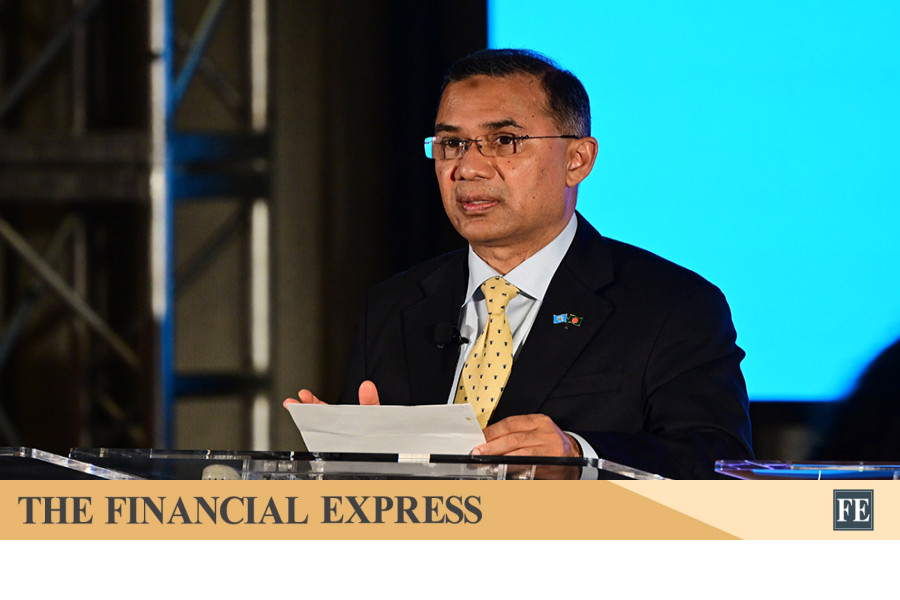
SANEM Executive Director Dr Selim Raihan and ILO Just Transition Technical Officer Elisa Benistant Fremigacci jointly presented the action plan and its annexes at the dialogue.

Speaking as the chief guest at the event, State Minister for Environment, Forest and Climate Change Shaikh Faridul Islam said the government was focusing on field-level measures to clean major rivers and reduce air and noise pollution.

Referring to his recent visits to facilities in Rajshahi, he stressed the need to improve occupational safety and health standards for factory and waste-management workers.

Workers are central to economic growth and therefore need fair wages, stronger social protection and skills upgrading to cope with technological changes, he said.

Bangladesh is also targeting 10,000 MW of renewable energy within five years as part of its clean-energy transition, including through wind power projects such as those in Cox's Bazar.

The government is forming an inclusive, multi-sectoral team to present strong research and policy positions at COP31, the state minister added.

Speaking at a panel discussion, Dr Fahmida Khatun, distinguished fellow at the Centre for Policy Dialogue (CPD), said a just transition must focus on creating employment through the green transition.

She called for sector- and occupation-level mapping to identify where jobs would be gained or lost and proposed adding a green jobs module to the Labour Force Survey to establish a reliable baseline. She also stressed the need for data disaggregated by sex, age, geography, and formal and informal employment to better target social safety-net programmes such as the Family Card.

Emission-reduction tracking should be paired with employment and decent-work indicators, she said, calling for an institutional mechanism to integrate data across the Bangladesh Bureau of Statistics, government ministries, employers and worker organisations.

Moustapha Kamal Gueye, director of the ILO's Just Transition Priority Action Programme, said climate ambition requires building human capacity among workers, businesses and communities to transform energy, agriculture and transport systems.

Social justice and decent work are essential to climate mitigation and adaptation rather than merely additional benefits, he said, stressing that social dialogue should be formally institutionalised instead of remaining ad hoc.

Bangladesh Employers' Federation Secretary General Farooq Ahmed said a just transition required a whole-of-society approach involving all stakeholders, not just employers and workers.

He noted that Bangladesh accounts for only 0.47 per cent of global carbon emissions, yet remains disproportionately vulnerable to climate change because of its geographical position.

He identified three key responsibilities: raising public awareness, mobilising financial and technical resources, and developing a framework for resilience and preparedness.

He also called for climate issues to be communicated in simple and accessible language and stressed the need to build the capacity of small and medium-sized enterprises to adapt to environmental and technological changes.

Mesbahuddin Ahmed, chairman of the National Coordination Committee for Workers' Education, recalled past industrial disruptions caused by globalisation and cautioned against repeating instances where workers lost jobs without opportunities for retraining.

The current green transition must prioritise worker reskilling and involve worker organisations from the outset, he said.

Sector-level specialisation is also crucial to understanding future workforce needs and designing appropriate training, he added, stressing that a just transition must go beyond policy documents to deliver real jobs, job security and effective skills transfer.

ILO Country Director Max Tunon moderated the panel discussion.​
 

Who will pay for the climate crisis?

Atia Ibnat Rifah & Azizul Hakim Rakib
Published: 12 Sep 2026, 09: 34

1789193202840.webp

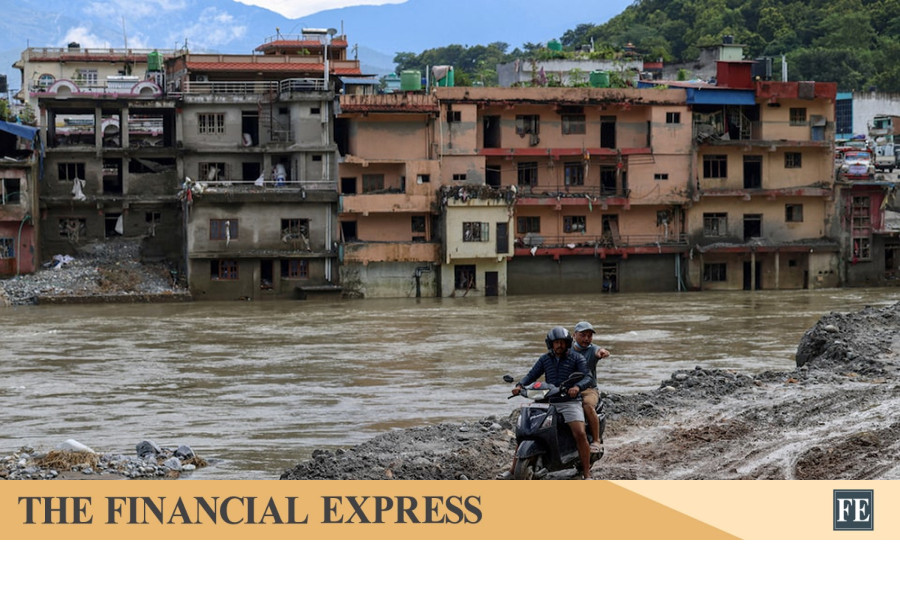
A man walks past damaged buildings after the flash floods and mudslide, at Trishuli, Nuwakot district, Nepal, 29 August 2026. Reuters

Nepal has demanded climate compensation after the recent devastating landslides and floods that killed thousands and caused widespread damage. The question that Nepal has raised by demanding compensation from major emitters like the United States, India, and China is not unique to Nepal. Rather, it is one of the world’s biggest justice questions: who will ultimately pay for the damage caused by climate change?

To find the answer to this question, we need to look back. Since the Industrial Revolution, much of the world’s economic growth has been based on coal, oil, and gas. These fuels have fueled unprecedented prosperity in the economies, urbanization, and lifestyles of industrialised countries. But the environmental costs of that prosperity are not just on their shoulders.

Global warming is increasing, sea levels are rising, rainfall patterns are changing, cyclones and heat waves are intensifying, droughts are getting longer in some places, and the risk of floods and landslides is increasing in others. And the biggest impact of all this is often falling on countries that have played a relatively small role in creating this crisis.

This is where the biggest paradox of climate change lies. The countries or populations that have contributed the least to global warming often suffer the most. A coastal farmer in Bangladesh, a small farmer in Africa, or a family in a remote village in the Himalayas did not make the decision to join the global carbon economy. But they are paying the price of climate change with their lives and livelihoods.

So the question arises, is this just bad luck, or is it a matter of responsibility?

This is where the concept of climate justice comes into play. Not all countries are equally responsible for the climate crisis, nor are all countries equally affected. As a result, the argument that everyone should be equally responsible for the solution does not stand the test of fairness.

Countries that have achieved economic prosperity by emitting large amounts of greenhouse gases for a long time cannot be limited to reducing emissions in the future. They must also face the question of taking responsibility for a part of the damage caused today due to those past emissions.

There is a debate over the word ‘compensation’. Many in developed countries want to see climate finance as a continuation of development aid. On the other hand, affected countries argue that getting money for damage they did not cause due to the climate crisis is not kindness. It should be part of a fair international system.

The difference between the two positions is very important. Aid usually depends on the goodwill of the donor. But compensation depends on liability. When asking for aid, the poor country is a beneficiary; but when it demands fair compensation, it speaks of its rights. This change in language is very important in climate politics.

Of course, there is a hard reality here. It is not possible to hold any specific country responsible for the entire damage of every flood, cyclone or landslide in the world. In addition to climate change, local topography, deforestation, unplanned urbanization, weak infrastructure or a lack of disaster management can also make a disaster more severe. Therefore, an effective compensation system should not be based on emotions, but on scientific evidence, historical emissions, current emissions, economic viability and the scale of damage.

But this complexity does not negate the need for compensation. On the contrary, it shows that we need a more fair and effective international system.

The world is already talking about ‘Loss and Damage’. The UN climate process has decided to create a fund for this. This is undoubtedly an important step forward. But creating a fund is not the same as ensuring sufficient money compared to the need.

This is the major weakness of the current system. The scale of damage from the climate crisis is increasing rapidly, while compensation money still depends largely on voluntary commitments and political will. Uncertain and inadequate financing cannot be a sustainable solution to the damage of a crisis that has accumulated over decades and whose effects will continue for decades to come.

The bigger question is, where will this money come from?

Relying solely on the national budgets of developed countries will be difficult to meet in the long term. Proposals such as a global levy on the excess profits of the fossil fuel industry, certain types of charges on international aviation and shipping, mandatory contributions from high-emitting countries, or creating new sources of finance through the international financial system could be seriously considered for climate compensation. It is not unreasonable to create a link between an economy that has long benefited from its dependence on fossil fuels and an economy that has benefited from climate damage.

Another issue is whether loss-and-damage finance should come in the form of loans. On paper, a loan may count as climate finance. But from the perspective of justice, the picture is very different. If a country that has suffered economic losses due to floods, cyclones, or rising sea levels has to borrow again to deal with those losses, the burden of the loss is simply shifted from the present to the future. Therefore, financing for loss and damage needs to be as grant-based and predictable as possible.

The greatest injustice of the climate crisis may not simply be that some people are losing their homes, land and livelihoods. It may be that those who contributed least to creating the crisis are being asked to pay the highest price for it.
Here, the question of the responsibility of the developed world is even clearer. Just as it is not right to simply claim that the development of industrialized countries is not entirely due to climate change, it is also not consistent with reality to deny the role of their historical emissions. Today''s climate crisis is not the result of any one year's emissions; it is the result of accumulated emissions over many decades. Therefore, determining responsibility only by looking at current emissions leaves out a large part of history.


At the same time, the reality of the current world must be acknowledged. Countries like China and India are now among the world's largest emitters, although their historical responsibility and per capita emissions are not the same as those of developed Western countries. As a result, a future climate compensation system cannot be stuck in a simple division of ''West vs. the rest of the world''. Those with greater historical responsibility, higher current emissions, and greater economic capacity must take proportionately greater responsibility.

That is, the basis of climate compensation should be justice, not revenge.

Another important aspect of this justice is where the money will go. The responsibility does not end when money is deposited in international funds. If money is also stuck in the bureaucratic structures of the affected country, or if the needs of local people are neglected in the name of large infrastructure projects, then that funding will lose its original purpose.

The ultimate beneficiaries of climate compensation must be the people who are actually suffering—coastal farmers, landless families in river erosion, displaced people, small-scale fishers, agricultural workers, and communities whose livelihoods have been lost due to climate change.

This debate is therefore particularly important for Bangladesh.

We have long been known as one of the world’s most climate-vulnerable countries. Although our emissions are very small compared to the global crisis, the impact of climate change on our development, agriculture, water, coastal life, and human migration is becoming increasingly visible. As a result, climate financing for Bangladesh is not just another matter of international aid; it is a question of future development and justice.

1789193267576.webp

Climate change in Bangladesh. Survival calls for effective climate adaptation Logic/UNDP

However, we also need to be careful about one thing. Demanding compensation alone is not enough. What the international framework for compensation will be, what damage will be considered compensable, how liability will be scientifically determined, how the money will be distributed, and how it will reach local people—these are questions that countries like Bangladesh need to take a stronger stance on.

Much of the discussion on climate change has been about how to prevent future disasters. Then came the question of how to adapt people to those changes. Now comes the more difficult question—who will pay for the damage that has already been done?

The answer to this question is not just a question of money. It is also a question of history. It is a question of development models. It is a question of power. And most of all, it is a question of justice.

Nepal’s recent claim has only brought that question to the fore. But the question is much bigger than Nepal. As the number and scale of climate disasters increase in the coming days, the world will have to decide—will we keep climate-affected countries dependent on sympathy and relief, or will we accept their losses as part of a just international obligation?

Climate change does not respect national borders. Its consequences do not stop at the borders of the countries least responsible for causing it. If the benefits of carbon-intensive development have been accumulated disproportionately in one part of the world while its costs are increasingly borne elsewhere, then the international system must find a fairer way to share those costs.

The greatest injustice of the climate crisis may not simply be that some people are losing their homes, land and livelihoods. It may be that those who contributed least to creating the crisis are being asked to pay the highest price for it.

* Atia Ibnat Rifah, and Azizul Hakim Rakib are postrgaduate students at the Department of International Relations, University of Rajshahi. They are also independent researchers researching in the field of climate change adaptation, environmental governance and politics, climate justice, and gender studies.​
 

Sunderbans towards risk?
Gouranga Nandy 13 September, 2026, 00:00

1789256698511.webp


THE national energy sovereignty is in a critical position. Maheskhali is the only spot where all of imported liquefied natural gas is unloaded. It is important to overcome this structural bottleneck. A technical failure or local disaster on a single location can plunge the country into darkness. We saw this in August. Since the replacement of coal, we have an increased dependence on liquefied natural gas. And, this dependence may continue for a long time.

The government has, however, initiated radical infrastructural changes. The goal is a complete decentralisation of the energy grid by 2029. As part of this, the power and energy minister has, as reports published on August 11 say, said that new floating storage and re-gasification units will be set up at Payra, Hiran Point and Mongla.

The move to the west coast to break the monopoly of Maheskhali is a good initiative and the work is scheduled to be completed by 2029. The recent fires and technical outages at the Maheskhali plant have not only disrupted power supply but has also crippled industrial production and proved that the national grid is vulnerable. As a result, ‘decentralisation’ has become the main goal for survival.

The first choice for this strategy is a site near the Payra seaport, where Petrobangla has already finalised a term-sheet agreement with US-based Excelerate Energy to set up a floating storage and re-gasification unit. The project is expected to serve as a major driver for the growing industrial areas in the south and the west.

The government has also taken a step towards full infrastructural sovereignty. It has scrapped long-standing talks to import gas from India through the Bhomra–Khulna pipeline. It was originally designed to connect Bangladesh to India’s H-Energy network. However, by severing the cross-border connection, the government has ensured that the success of the south-west network is fully dependent on domestic infrastructure and coastal projects. This determines the future of Bangladesh’s energy map within its own borders despite immediate financial pressure. This will, of course, also come at a high cost.

To avoid the need for a huge, specialised line to the capital, Petrobangla is looking forward to using the Tk 4,500-crore Bhola-Khulna transmission pipeline. The 205-km project, with a capacity of 180 million cubic feet a day, was originally designed to transport domestic gas from Bhola. However, it is now considered for use for liquefied natural gas transmission. The proposed Hiran Point and Mongla terminals are considered to integrate the imported liquefied natural gas into this network to create a ‘south-western energy loop.’ Instead of incurring the cost of a separate route to Dhaka, this loop will allow imported gas to use the Bhola-Khulna infrastructure, which will serve the regional industrial needs of Khulna and Jashore. It could transform the local distribution pipeline into a strategic artery for the entire south-western industrial sector.

In fact, Gas Transmission Company Limited suffers from a serious financial crisis. In one financial year, the company has incurred a huge loss of Tk 12.12 billion. This is not just an operational shortfall but also a systemic failure caused by the ‘capacity payment’ trap. Under the contracts, the company is forced to pay millions of takas to foreign companies to maintain gas compressor stations that often remain idle because of low domestic gas flows. Despite gas supply being stagnant, the company has been spending on payments to foreign companies to operate and maintain the often-inactive infrastructure.

This cash drain has been compounded by the strict restrictions of the International Monetary Fund on government borrowing. The restrictions effectively prevent the state from allowing the company to operate independently. As a result, both the company and energy future are dependent on high-interest foreign loans and whims of international development partners.

The International Monetary Fund and the World Bank finance and manage this shift to a decentralised grid. One of the conditions for borrowing from them is that there should be no fuel subsidies. This is why the Power Development Board has recently increased the wholesale price of electricity from 17 per cent to 21 per cent. In fact, the IMF and World Bank recommendation to eliminate the subsidies can be explained by three factors. The first is to completely remove the cost from the consumer. The second is to take away the power to set prices from politicians and hand them over to an automated formula that allows prices to fluctuate in line with global markets. And the third, the market-based exchange rate has weakened the value of the taka, making it more difficult to repay the Tk 4,500 crore loan for the pipeline.

The irony is that electricity prices have been rising for years. The increase in share is a direct result of the ‘automatic tariff formula,’ which is needed to cover the cost of idle machinery and ‘capacity payments’ that drain GTCL funds.

The issue is whether we should take a high-stake gamble on the Sunderbans to build alternative infrastructure. Constructing a gas corridor near the world’s single largest contiguous mangrove forest is a task as daunting as walking on an ecological tightrope. The Sunderbans is home to the Royal Bengal tigers and the endangered Irrawaddy and Gangetic dolphins. The forest is not suitable for constructing pipelines using the conventional ‘open-cut’ method. Excavation using the conventional method would destroy the ‘pneumatophores,’ breathing roots, and risk the spread of various diseases, including ‘top-dying.’ To address this problem, international lenders have mandated the use of horizontal directional drilling technology. It involves tunnelling deep into the riverbed and under the roots without breaking the forest surface, which has a huge cost; and, the risks are also higher.

Beyond the excavation, there is the ‘dangerous’ threat of exposing acid sulphate soils. Excavating coastal clay can expose dormant soil to oxygen, creating an acidic flux. If this happens, this acidic flux can destroy local aquatic life as soon as the first rains come. It is a high-stakes gamble, where the existence of a UNESCO world heritage site is pushed to the brink of destruction in exchange for building energy infrastructure. We have already put the Sunderbans at risk by building a coal-fired power plant at Rampal, very close to the forest. Now, by making way for alternative energy import, are we pushing the Sunderbans towards greater risk of extinction?

In building an infrastructure for the imported liquefied natural gas, Bangladesh is moving from a centralised hub to a risky, high-stake decentralised network in which the mangrove ecosystem is at risk of complete destruction. In addition, this decentralised infrastructure is being built with international loans and rising consumer spending. Will this attempt to use horizontal directional drilling technology to drill deep into the Sunderbans and integrate its ‘south-western energy loop’ bring about the desired rapid industrial development? Or will the people have to bear more responsibility for the destruction of their lives, livelihood, and material systems in the name of development?

Gouranga Nandy is an independent journalist.​
 

Latest Posts

Back