[🇧🇩] LDC Graduation For Bangladesh

[🇧🇩] LDC Graduation For Bangladesh
93
3K
More threads by Saif

G Bangladesh Defense

LDC graduation could cost Bangladesh $17.5b in exports: UNCTAD

Mahmudul Hasan

1775005431488.webp


Bangladesh could lose more than $17.5 billion in exports following its graduation from the least developed country (LDC) category, the steepest projected loss among all graduating nations globally, according to a new United Nations report.

The figure represents nearly a third of the country’s $54.8 billion in total exports recorded in 2023, according to the Trade Preferences Outlook 2025, published by the UN Conference on Trade and Development (UNCTAD).

“The trade effects of losing LDC preferences could be substantial in certain cases,” it said, projecting that Bangladesh can face a 32.24 percent decline in its total exports after it transitions to a developing country.

The warning comes just over six months before Bangladesh’s scheduled graduation on November 24, 2026. Nepal and Lao PDR are also scheduled to graduate this year, with the third and final review process by the UN currently underway ahead of the final transition.

The new BNP-led government, which took office in February, has sought a three-year deferral, pushing the graduation date to November 2029, citing disruptions in preparedness caused by prolonged global crises and domestic economic pressures.

The request came amid repeated calls from exporters who say the country is not yet prepared to compete without preferential trade access.

GARMENTS, FOOTWEAR TO BEAR THE BRUNT

The UNCTAD report, released in late February, found that around 97 percent of the projected export losses would stem from the apparel and footwear sectors – the twin pillars of Bangladesh’s export economy, which together account for nearly 90 percent of the country’s goods exports.

The European Union (EU) looms largest in the risk picture. Some 77 percent of the total projected loss is linked to preference erosion in the EU market, which currently grants duty-free access to Bangladeshi apparel and footwear under its Everything but Arms initiative for LDCs.

The EU is Bangladesh’s biggest export destination, accounting for nearly 47 percent of total exports in 2024. The United States follows at 16.15 percent of total exports, with other developed markets at 15 percent. Canada and Japan together account for around 5.82 percent.

Post-graduation, Canada is projected to contribute 8.6 percent of the total export decline, while the United Kingdom would account for 6.9 percent.

The loss of preferential market access conditions can result in a substantial decrease in exports of preference-receiving countries as evident in projection for fellow graduating nations.

According to the UNCTAD report, Lao PDR is projected to see a 12.8 percent decline in exports, and Nepal a 3.82 percent drop.

FTAs AND TRANSITION DEALS

The report noted that several graduating LDCs have moved to negotiate free trade agreements (FTAs) with key partners to lock in tariff preferences beyond their LDC status.

For instance, Bangladesh has initiated FTA talks with both Japan and the EU, among others.

However, the report cautioned that reciprocal trade agreements come with their own costs, requiring countries to open their own markets, potentially raising competition, triggering adjustment pressures and reducing customs revenues.

Countries with limited market power, it added, often face challenges in effectively negotiating and achieving their economic interests in trade negotiations with partners that enjoy significantly greater markets

UNCTAD noted that with 14 LDCs nearing graduation, smooth transitional arrangements are gaining traction.

The report noted that the EU, the United Kingdom and Canada have introduced mechanisms allowing graduating LDCs continued access to preferential treatment for three years after graduation, offering some cushion against abrupt trade shocks.

The EU has also moved to reform its GSP+ scheme to improve accessibility for vulnerable economies, including future LDC graduates. Some of the recent reforms aim to better accommodate populous graduating LDCs such as Bangladesh.

Meanwhile, the UK and Canada have introduced analogous preference programmes of their own, titled “Enhanced Preferences” and General Preferential Tariff Plus (GPTP), respectively.

‘STRUCTURAL WEAKNESSES EXPOSED’

Economists say the findings should serve as a wake-up call.

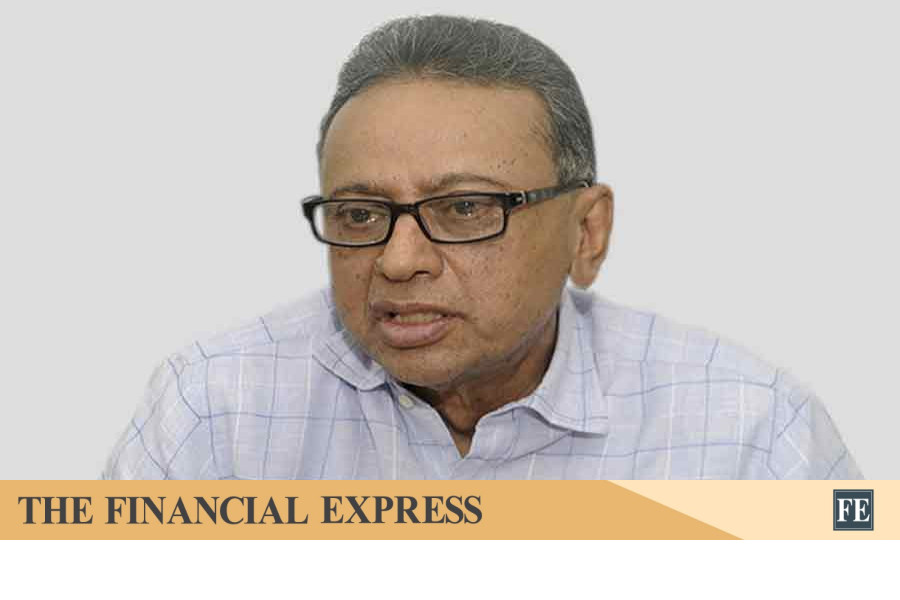
Ashikur Rahman, principal economist at the Policy Research Institute of Bangladesh (PRI), said the UNCTAD projections highlight how deeply the country’s trade competitiveness depends on preferential access.

“While this estimate does, on the surface, look very high, with more than 90 percent of exports benefiting from such preferences, the transition to a post-LDC regime will expose structural weaknesses, particularly our heavy reliance on a narrow set of products and markets,” he said.

Rahman said the message is clear: graduation cannot be treated as a symbolic achievement alone.

“It must be accompanied by urgent and credible reforms: securing trade agreements, especially with the EU, improving logistics and energy reliability, and enabling firms to move up the value chain. Without this, preference erosion could translate into real economic stress.

“With the right reforms, however, graduation can become a turning point towards a more resilient and competitive export economy,” he added.​
 

Bangladesh not fully ready for LDC graduation yet: Khasru

FE ONLINE REPORT

Published :
Apr 05, 2026 13:49
Updated :
Apr 05, 2026 13:49

1775433763304.webp


Bangladesh is not yet fully prepared to graduate from the Least Developed Country (LDC) category, Finance and Planning Minister Amir Khasru Mahmud Chowdhury said on Sunday.

Speaking to reporters after a multi-stakeholder consultation at the NEC conference room in Sher-e-Bangla Nagar, he said the country still faces significant challenges, including rising external and domestic debt, risks from high-cost borrowing, and weaknesses in overall financial management.

The meeting reviewed Bangladesh’s preparedness for graduation based on an independent assessment.

The minister warned that the ongoing energy crisis and global supply disruptions could have prolonged impacts on the economy, extending beyond the energy sector to food and other essential commodities, thereby fuelling inflation. Although Bangladesh has so far tried to contain domestic price adjustments despite rising global fuel prices, such pressure may not be sustainable over the long term, he added.

He said the government is trying to avoid imposing sudden burdens on people, but continued pressure on public funds would ultimately pass through to consumers. “Decisions must be taken cautiously to balance public welfare and macroeconomic stability,” he said.

Describing the situation as one of “daily crisis management”, he said most economic indicators remain under stress. The government is working to stabilise the economy, but pressures persist due to energy subsidies, higher global prices, and import dependence.

Khasru emphasised the need to strengthen economic capacity through reforms and efficiency improvements to place the economy on a stronger footing.

The minister said there remains scope to defer the graduation timeline, during which the government plans to strengthen key macroeconomic fundamentals. If reforms are implemented within the stipulated timeframe, LDC graduation could become a realistic target, he added.

Among others, Foreign Minister Dr Khalilur Rahman, Commerce Minister Khandaker Abdul Muktadir, the prime minister’s economic affairs adviser Dr Mashiur Rahman, UN Under-Secretary-General Rabab Fatima, and State Minister for Planning Zonayed Saki were present.​
 

Bangladesh’s preparations for LDC graduation weak: UN report

Special Correspondent
Dhaka
Published: 05 Apr 2026, 21: 33

1775434444646.webp


Bangladesh has shortcomings in its preparations for graduating from the list of Least Developed Countries (LDCs). In the context of current macroeconomic instability and weak performance, discussions are increasingly focused on pre-graduation risks.

A meeting on LDC graduation was at the NEC conference room in Sher-e-Bangla Nagar in the capital held today, Sunday. Finance Minister Amir Khosru Mahmud Chowdhury chaired the event.

At the meeting, the UN-OHRLLS (United Nations Office of the High Representative for the Least Developed Countries, Landlocked Developing Countries and Small Island Developing States) presented a review report on Bangladesh’s preparedness, highlighting gaps in preparation.

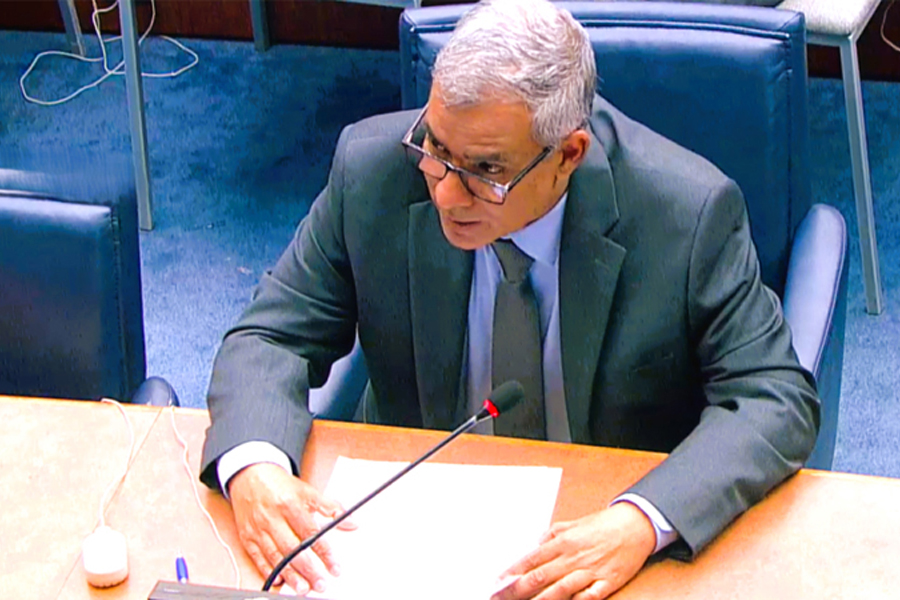
At the meeting, Mohammad Abdur Razzaque, chairman of the private organisation RAPID (Research and Policy Integration for Development), presented various aspects of the UN report.

The report identifies several shortcomings and risks in Bangladesh’s preparation for LDC graduation. For instance, difficult political transitions and prolonged economic crises are eroding the country’s socio-economic achievements, putting its graduation at risk. There is also inadequate preparation to address potential trade losses after graduation. Moreover, given the current macroeconomic instability and weak performance, discussions are largely centred on pre-graduation risks.

The report further notes that, in reality, financial preparedness to tackle the challenges of LDC graduation remains weak. Implementation of the Smooth Transition Strategy (STS) is also limited.

According to the UN report, a request has been made to defer the graduation timeline by three years due to insufficient preparedness.

No scope for graduation at present

Speaking after the meeting, Finance and Planning Minister Amir Khosru Mahmud Chowdhury said that, in the current context, Bangladesh has no scope to proceed with graduation from LDC status. He described the state of the economy as very poor.

He added that consideration of LDC graduation would come only after overcoming the difficult economic situation inherited from the previous government.

Following the Bangladesh Nationalist Party (BNP) government assuming office, a formal letter was sent to the United Nations in February seeking a delay in LDC graduation. The minister reiterated the position today.

What is LDC and how graduation works

The United Nations classifies relatively less advanced developing countries as Least Developed Countries (LDCs). These countries receive various forms of support and concessions from the international community to facilitate their development and eventual graduation.

The Committee for Development Policy (CDP), under the UN Economic and Social Council (ECOSOC), recommends which countries should graduate from LDC status.

LDC countries are reviewed every three years. Graduation eligibility is assessed based on three criteria: per capita income, human resources, and economic and environmental vulnerability. A country must meet at least two of these criteria or have per capita income at least double the threshold. These benchmarks may change over time.

Bangladesh met all three criteria in the 2018 and 2021 triennial reviews. In 2021, it was recommended that Bangladesh would graduate from LDC status in 2024. However, due to the COVID-19 pandemic, the timeline was extended by two years for preparation. The current deadline for graduation is set for November 2026.

Bangladesh was first included in the LDC category in 1975. As an LDC, the country has benefited from various facilities, including duty-free access for exports.​
 

PM writes to UN Secy Gen for LDC graduation deferral

FHM Humayan Kabir

Published :
Apr 08, 2026 09:32
Updated :
Apr 08, 2026 09:32

1775693725794.webp


Prime Minister Tarique Rahman has requested the United Nations to defer Bangladesh's graduation from the Least Developed Country (LDC) category by at least three years to ensure a sustainable transition amid internal and external shocks.

The premier on Sunday wrote to UN Secretary-General António Guterres seeking the deferral, officials said on Tuesday.

The request, submitted to the UN chief on Monday, comes as Bangladesh grapples with a "preparatory period" that officials say was effectively derailed by a "polycrisis" of global and domestic shocks, a highly placed source told The Financial Express.

Bangladesh was scheduled to graduate from the LDC category to a developing nation in November this year.

If the UN accepts the request, the country will get an additional three years-until November 2029 -- to complete its transition.

Following calls from leaders of top business chambers, trade bodies and some economists, the interim government had earlier recommended coordinating with fellow graduating countries such as Nepal and Lao PDR to pursue a deferral until 2030, leaving the final decision to the elected government.

In his formal communication, Tarique Rahman noted that while Bangladesh meets the three eligibility criteria -- per capita income, Human Assets Index and Economic Vulnerability Index -- the five-year preparatory window was largely consumed by crisis management.

In the letter, he said the newly formed government inherited a severely strained macroeconomic environment marked by prolonged capital flight, limited access to finance for the private sector, a weakened capital market, rising poverty and mounting pressure on the banking sector.

Highlighting the deterioration of macroeconomic indicators, he said these challenges have been compounded by overlapping shocks, including the lingering socio-economic impacts of the Covid-19 pandemic, climate-induced disasters such as the 2024 floods, and global price volatility driven by geopolitical tensions -- further constraining fiscal space and institutional capacity.

The prime minister also underscored the burden of hosting displaced Rohingya people from Myanmar, despite declining international aid.

Citing the "Graduation Readiness Assessment" report prepared by the UN-OHRLLS and the IMF's recent outlook, Mr Rahman formally requested the UN to defer Bangladesh's graduation.

He said that due to political instability and a prolonged interim government period, Bangladesh lost valuable time during its five-year preparation phase and only adopted the Smooth Transition Strategy (STS) in February, necessitating an additional three years.

Another official at the Ministry of Finance said recent political upheavals, including the July 2024 uprising and the subsequent transition of power, alongside irregularities in the financial and banking sectors, declining foreign exchange reserves, persistent inflation and the fiscal burden of hosting over a million Rohingya refugees, have weighed heavily on the economy.

The primary concern behind the request is the looming loss of international support measures (ISMs) following graduation.

Once Bangladesh graduates, it will face a "preference cliff" -- losing duty-free and quota-free market access to major economies.​
 

Diplomatic push at highest level to defer graduation

FE
Published :
Apr 10, 2026 23:20
Updated :
Apr 10, 2026 23:20

1775868517343.webp


Since Bangladesh met all three criteria, namely, per capita Gross National Income (GNI), the Human Asset Index (HAI) and the Economic and Environmental Vulnerability Index (EVI), required to qualify for graduation from the LDC category during the 2018 and 2021 reviews, the UN finalised its graduation date for November 24, this year, allowing a five-year preparatory period. But the preparatory period could not be effectively utilised due to understandable reasons such as the multiple shocks of both global and domestic origin that the economy had been subjected to over the past years. In this context, the incumbent BNP government upon assuming office requested through a letter to the technical UN body concerned to extend the preparatory period for graduation. Against this backdrop, according to highly placed sources in the government who informed this paper, Prime Minister (PM) Tarique Rahman is learnt to have written recently to the UN Secretary-General Antonio Guterres for a deferral of the country's LDC graduation by at least three more years so that the transition is sustainable, resilient and truly irreversible. If the graduation deferral until November 24, 2029, as requested by the PM, is granted through the due process of the UN General Assembly, the country would get the breathing space necessary to complete the transition phase smoothly.

Notably, the interim government of Dr Muhammad Yunus, before it left office, was pressed by leading business chambers, trade associations and many economists for extension of the graduation preparatory period expressing concerns that the economy might be deprived of international support measures (ISMs) such as preferential trade access and concessional financing amounting to an annual loss of USD17.5 billion in exports, according to UNCTAD, if the graduation took place as per schedule. In the circumstances, the interim government recommended exploring coordination with other graduating countries such as Nepal and Laos PDR to seek an extension of the preparatory phase until 2030. The move made clear the intent of Dhaka to push its case at the highest diplomatic level, instead of relying just on the technical review process by the Committee for Development Policy (CDP), a subsidiary body of the UN Economic and Social Council (ECOSOC).

However, the interim government left the final decision on the deferral issue to the government to be elected upon its (interim government's) expiry. In this connection, referring to the initial 5-year preparatory phase being consumed largely by crisis management, the PM's note to the UN Secretary-General also dwelt on the fact that the economy that his newly elected government inherited was a severely strained one. As for instance, the macroeconomy underwent overlapping crises including capital flight over a prolonged period during the previous political government. Also, the growth of the private sector was hampered by its limited access to bank credit. And the capital market, which could be a potential source of finance for the private sector, too, was weakened. Small wonder the banking sector was under stress and to make matters worse, the fragility in the financial system undermined the poverty reduction efforts.

The multiple shocks to the economy caused macro-economic instability that included slower GDP growth, high inflation, declining foreign and local investment, and a reduced tax-to-GDP ratio. The Covid-19 aftereffects, 2024 floods, global price volatility and the burden of hosting a million displaced Rohingya population from Myanmar piled on the burden already weighing heavily on the economy. And declining international support for Rohingya refugees is further complicating the problem. All these issues have together severely constrained the fiscal space and institutional capacity of the government. Amid those challenges, a Smooth Transition Strategy (STS) was adopted in February 2025, leaving little time for implementation. So, the present economic realities as stressed in the PM's note to the top UN diplomat, it is believed, would make a strong case for the sought-after three-year deferral of Bangladesh's LDC graduation.​
 

Even if deferred, Bangladesh must prepare for eventual LDC graduation

Fahmida Khatun

1776301059947.webp

VISUAL: ALIZA RAHMAN

Unless the government’s request for deferment is granted, Bangladesh is set to graduate from the Least Developed Country (LDC) category in November this year. This would be a historic milestone for the country as this is the culmination of decades of steady progress in income levels, human development, and structural changes. The country has consistently surpassed all three graduation criteria: per capita gross national income (GNI), human asset index (HAI), and economic vulnerability index (EVI). However, behind this achievement lies a troubling truth: while it may appear ready to graduate officially, Bangladesh is still not fully equipped to handle the practical aspects of the transition.

There are key differences between eligibility and readiness. Graduation is not just about past achievements. It is a future-oriented assessment of whether a country’s economy, institutions, and policies can sustain progress without international support and various forms of flexibility. Recent evidence suggests we should proceed with caution on this matter. Bangladesh’s readiness for LDC graduation is under strain due to macroeconomic pressures and structural weaknesses. The country is entering the final stage of its graduation process during a fragile macroeconomic period. A consistently high inflation rate over the past three years reduced real incomes and pushed many people back into poverty. This setback in poverty reduction is the first of its kind in recent decades and highlights deep vulnerabilities that must be addressed.

External sector pressures are also significant. Foreign exchange reserves have fallen sharply—from $46 billion at the end of 2021 to $30 billion (BPM6) as of April 9, 2026. This covers import expenses of four or five months only. The taka has depreciated continuously, raising the domestic costs of essential imports such as fuel, food, and industrial input. In this circumstance, policy options to address post-graduation shocks are quite limited.

Fiscal fragility compounds these risks. Bangladesh’s tax-GDP ratio was only 6.6 percent in FY2025, one of the lowest worldwide. This greatly restricts the government’s capacity to invest in critical sectors such as infrastructure, human capital, and social safety nets, among others. Fiscal capacity is further constrained by high debt servicing. The country now faces a moderate risk of debt distress, up from low risk, mainly due to downward revisions in export data that weaken key debt indicators under stress scenarios.

The financial sector poses perhaps the most immediate systemic risk. Non-performing loans (NPLs) have surged to 30.6 percent of total banking sector loans as of December 2025. Such a high NPL ratio indicates significant governance failures, regulatory gaps, and politically driven lending practices. Such a stressed banking system is ill-prepared to sustain the investment growth needed to boost competitiveness in a post-LDC landscape.

Overall, these macroeconomic indicators suggest that Bangladesh is approaching LDC graduation amid increased economic vulnerability rather than stability. The most immediate and tangible impact of this transition will be on trade. The country’s export success, especially in the RMG sector, has heavily relied on preferential market access and policy flexibilities provided by the World Trade Organization (WTO). Revocation of these preferences post-graduation will fundamentally alter the country’s competitive landscape. The European Union is the most vital market for Bangladesh, accounting for about 44 percent of its exports. As trade policies evolve, safeguard measures could lead to tariffs of 12 percent on average on Bangladeshi RMG products, even if the country qualifies for GSP+. On the other hand, countries like Vietnam and India enjoy zero tariffs through free trade agreements. This disparity could significantly diminish Bangladesh’s market share.

That Bangladesh’s capacity to offset these preference losses is limited adds to the concerns. Export diversification has progressed slowly, with dependency on RMG products increasing rather than decreasing. Structural challenges such as high logistics costs, which are currently about 16 percent of GDP, port congestion, energy shortages, and compliance issues continue to raise the cost of doing business.

In effect, Bangladesh risks transitioning to the post-LDC phase with weakened external competitiveness at a time when global trade itself is becoming more fragmented and protectionist. The country was initially set to graduate in 2024, but the graduation period was extended due to the global shock caused by the Covid pandemic. The two-year extension till 2026 was intended to be a phase of strategic readiness, including reforms, diversification, and institutional strengthening. However, this period has, unfortunately, been overtaken by a series of overlapping crises. The pandemic was followed by worldwide commodity shocks, supply chain disruptions, tighter financial conditions, and rising geopolitical tensions. Domestic political upheaval in July-August 2024 led to a change of government, which shifted policy focus from long-term reform to stabilisation. In this context, following the national election in February 2026, the new government promptly applied for a three-year deferment of LDC graduation considering the ongoing macroeconomic stress, a political transition, and global uncertainty.

Although a smooth transition strategy (STS) with 157 actions was adopted in February 2025, its meaningful implementation has been hindered by insufficient preparation. Institutional coordination remains weak and implementation capacity strained. Therefore, a three-year deferment would provide critical breathing space to stabilise the macroeconomy, address major trade uncertainties, especially with the EU, strengthen financial governance, and accelerate STS implementation.

However, this extension should not lead to complacency. It must be rooted in a well-defined, efficient reform plan with specific, measurable milestones.

This preparation must contain a stringent reform agenda. Macroeconomic stabilisation should be prioritised. Revenue collection must be improved via comprehensive tax reforms, establishing a credible plan to increase the revenue-GDP ratio to at least 10 percent in the short to medium terms. Public spending should be reoriented to focus on investments that boost productivity and on social protection.

In the banking sector, tackling NPLs, strengthening regulatory discipline, and improving governance are crucial to restoring confidence and enabling credit for productive investments. The banking sector reform measures must be an ongoing process. Political intervention in the sector’s decision-making process must be curtailed to achieve better outcomes.

Enhancing competitiveness requires structural reforms. Key steps include reducing logistics costs, improving port efficiency, ensuring a reliable energy supply, and helping firms meet global compliance standards. To effectively diversify exports, it is essential to create sector-specific hubs, implement performance-based tax incentives, and establish a dedicated technology upgrading fund for SMEs. Active support should be directed towards sectors such as pharmaceuticals, agro-processing, electronics, and light engineering through targeted policies and investments. In addition, trade diplomacy efforts should focus on early negotiations with the EU and on developing institutional capacity to handle tariff changes after LDC graduation. Bangladesh needs to prepare for a future where it can comply with WTO rules without preferences.

Institutional coordination must be enhanced by establishing high-level mechanisms with clear accountability. And last but not the least, it is essential to incorporate climate resilience into the development strategy. Bangladesh must obtain concessional funds while enhancing its domestic capacity for climate adaptation and mitigation.

Dr Fahmida Khatun is an economist and executive director at the Centre for Policy Dialogue (CPD). Views expressed in this article are the author’s own.​
 

Latest Posts

Back